1 free read left. Create a free account for unlimited reading + AI research.
Create free account
Emotional connections between your fans and your characters
Key insights
6 takeaways- 01Building emotional connections between players and characters is a primary driver of brand loyalty, player retention, and long-term commercial success in a competitive market.
- 02Successful narrative integration allows companies like Rovio, Supercell, and Activision to bridge gaps between game releases and expand into new geographic markets.
- 03Expanding game IP into narrative media facilitates broader business strategies, including improved user acquisition, cross-promotion, and opportunities for licensing and merchandising.
- 04Humanizing protagonists by introducing flaws is essential for character resonance, as flawless characters often fail to engage audiences.
- 05Effective character-driven storytelling requires a shift from goal-oriented game mechanics to immersive, narrative-focused design that prioritizes emotional expression.
- 06Because game design and narrative production require distinct skill sets, developers should collaborate with specialized creative professionals to ensure brand alignment and high-quality execution.
Ask AI about this video
Transcript
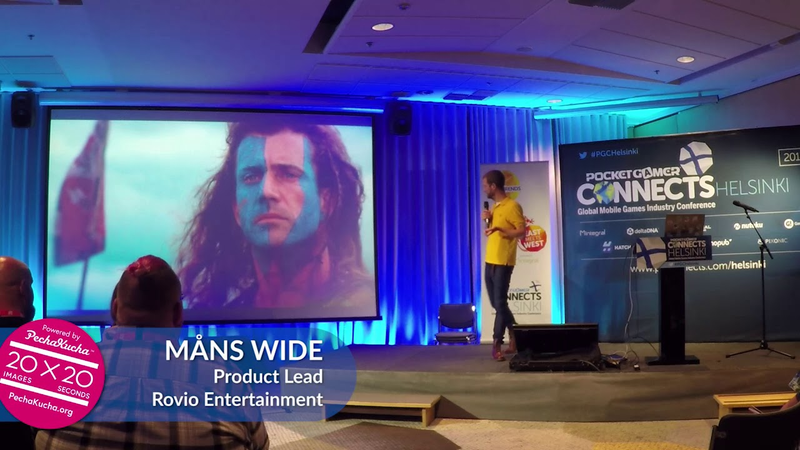
[Music] [Music] hello everyone thank you for being here thanks to Pocket Gamer to you know invite me yes I'll be talking about how to establish emotional connections between your characters and your players turning them into fans hopefully and also why you should care about the process and maybe a little bit about what to do as next steps so a few words about myself I used to run the animation studio at Rovio here in Espoo for two years then I transitioned internally to the toons TV
platform and did acquisitions of third-party video content have been independent now as an animation producer again for a few years and I'm currently working with a couple of games properties and peter berg is also also known for their for their kids games apps and yes so I'll be sharing a little bit about how fans actually how your fans will connect why that's a good thing and as I said what to do about it [Music] do I need to point this huh so when you know when this connection happens you can you can you can see you can feel it in yourself as well you start to root for you know a certain character or and you start wondering okay how do they get
out of that trouble therein and and so on but in a word really what happens is emotional investments so actually yesterday there was a great speech where I think it was Storyful from tribe flame who said that you get so invested in a game that is it's hard kind of to switch to another game in the same genre and I think here this this is very much related to that and the whole thing you know it happens through stories and we as humans we're hardwired to respond to stories and we just heard about you know how even music plays place to that that the whole you know empathy part of your brain gets gets triggered with certain mechanisms and stories are one way to really really do a good job at that so just as a brief example I'm going to
mention the story of Carla Nellie and it's it's the beginning segment of the Pixar movie up and in just about five minutes the filmmakers do a great job at establishing an emotional connection between the viewer and Carl because you see how Carl and Ellie grow up as kids together they get married they renovate their house have great dreams together live a great life as a married couple then the first bump in the road that they can't have kids so one dream is shattered but they come up with a new dream and it's to get to Paradise Falls someday so they start saving up money to get there of course as often happens in life things come up something needs to be fixed around the house a tire breaks whatever and of course the piggy bank gets it in the end they grow old and
then Carl realizes when they're when they're cleaning the house that actually were old now and we've never been to Paradise Falls we haven't fulfilled our dream and he's just gone out to the travel agent he's got the tickets he's going to surprise Ellie at this at the same spot we've seen them many times during their life already and just before the surprise Ellie falls ill and she dies and it is heartbreaking and there's no dialogue it's all told through a brilliant brilliant brilliant storytelling and we have set up the character that we are so deeply invested and we want to know what happens to him how does he get out of this will he ever be happy again what happens next that's what we want to know and and this is is the power of story of course from the point of view of of a game designer or CEO who runs a company around
character based games the point is that he just said it's love so and the main point with love is you can't copy love it is not a mechanic that you can just clean off you know the the next top grossing game from the chart it is by design something that is between your fan and this certain character and that is really the differentiator that you can have for your for your game and for your IP of course this then unlocks all kinds of possibilities so you can use narrative content to create more brand awareness it's a something that Activision has done with Scotland there's Academy which is and it's one of their stated goals is to reach new audiences with the show they want to go out to geographical locations that that you know they their game isn't isn't
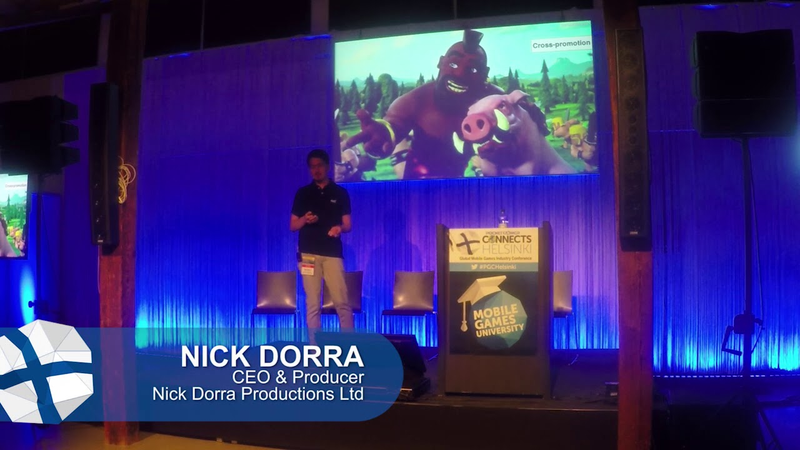
that popular in yet or just to get new people engaged with with the characters you can also think about it as user acquisition such as pastry from seriously say yesterday it's a way to get new players interested in the characters through the through the storytelling narrative and then bring them to the game and altered seven have done a really really good job at this they have an amazing following on YouTube but they also have their their TV show and everything you can think about cross promotion so you take the characters from your original game you create a narrative content that creates this emotional link via storytelling and then you get the players to migrate to your to your new release and of course I think supercell is a really really good example about this it's it's really a
no-brainer that after having all those super fun short films with all these characters that have an amazing number of views on YouTube and everywhere that you take the characters then and you put them in clash Royale because of course the players want to know what happens to these to these characters that are so hilarious and we've seen their antics and and we've played with them okay so what are the next adventures another thing is of course longevity so taking the characters creating narrative content will enable you to get enough exposure over a long enough time to actually unlock the possibility of for example licensing and Merchandising and again I have this directly from all 57 they they told me that you even though they had this massive following on YouTube this massive few numbers no American retailer was going to stock
their product on the shelves until they got the show somewhere on television so everybody was just asking ok which broadcaster is carrying your show no no we're big on YouTube yeah call me back when when you when you have a broadcaster so that is a part of the business that still works in very old fashioned with a very old fashioned metrics but it is the way it is and another idea of course with longevity is that that you can also bridge the gap that I think Rovio did a great job with from you know it was a long time from the first Angry Birds game the inception of the idea okay we'll make a movie all the way to having the anchors feature in theaters so creating I know words tunes in between there was I feel a very good way to really keep the interest of the fans in the brand and in the characters and then of course putting all that
together you take your you take your characters from your original game you create narrative content also you get new viewer new fans from the viewers you drive them to your game you drive into your new your release again back and you unlock the possibilities for for new businesses for example accessing merchandising and and also that you know possibilities of a movie of TV series sales all of that stuff and then briefly what to do about it first of all I urge you to really realize that making narrative storytelling and making a great game of very different skill sets and mindsets it's it's as different as if you're if you need if you want to make a triple a game versus a great match three game it's a completely different way of thinking about things the skill sets are different all of that so-so approach it
with with this in mind the whole experience of the fan is different on a mobile game it's a very active forward living experience whereas with watching narrative content it's it's much more lean back immerse Asian also the hooks of course that need to be built into either a game or a piece of narrative content are very different I feel the hook in Angry Birds is ingenious where the pigs mock you when you don't clear a level at least it works for me very well but it's very different from how you build a narrative hook in storytelling where for example you know we build up to this moment so that we are invested in red okay what is going to happen to him now that he has been cast out of his own village by by these pigs design also
character design for example Activision has the stealth elf for four Skylanders and and and they realized that when they started to take that into mental development for the for the animated series okay the character doesn't have any pupils it's going to be super hard to make the character convey and emotions and that's very hard to get the players to relate to the character so what they did is they actually tweaked the design a bit so in the series the character has very kind of almost not noticeable but still the character has pupils in in this series and these are things that you know professionals will be able to help you with but it's just something to keep in mind that nothing is ever quite straightforward of course and final difference the user journey even is different Liam knows exactly what he is supposed to be doing next
whereas with narrative content the audience wants to know you know okay what happens so it again the the whole the whole mindset of the fan is also going to be different so my piece of advice would be to to get to get good help on your adventures in this area because these are just a few things that you'll end up you know dealing with just highlighting the myriad options in distribution all these questions and development that I touched on a few already even thinking about brand alignment like where does the narrative content sit within everything else that you're doing are you doing it for profit are you doing it for the maximum amount of eyeballs what why do you why do you actually create this how does it fit in in your oval or overall branch strategy all questions that you know you want to
discuss with with somebody who you know really knows knows their stuff so to recap you can create emotional investment through storytelling in order to build stronger brands and better profits by working with the right professionals I'm happy to point you to a great Studios great creatives I have a pretty good network in Finland also also globally so I'll be I'll be around for the rest of the day and I'm also happy to take questions now yeah thank you very much so we do have time so those people haven't do you have any questions yes I love that this room is not so big so
what I'd like to suggest that as a chapter desired to you scenes I've noticed that in lot of media's let's say we have heroes and villains most of the times it is usually to feelings who are surprisingly they just had that something that really appeals to people so as attractor designer do you feel like it's much more fun and much more interesting to design a feeling for the story or to hero or the story yes just as a disclaimer I can't draw to save my life I can't right so I'm a producer and I work with great artists who can but I have noticed the same thing and I think I can even share this anecdote that in the beginning when we developed Angry Birds tunes we we ran into the problem that even the script writers were
writing hilarious stories about all the other characters and especially the pigs but all stories about read sort of fell flat it was like he's so boring because he's this great hero and he is flawless so we actually had to go back and really dig deep in the development phase into okay what makes red actually you know what are his flaws what is something that gets us to like him because nobody really you know if there's like this polish statue of a being you don't you don't get that emotional connection and I think as I said I didn't know but I would I would expect that with where the character designer it could be a similar thing that you don't get to play maybe with all the kind of funkiness of of an Evo villain and there is this sort of thing that you just need to figure out okay what flaws what kind of bits of humanity do I put into also my hero to
make him less perfect but more relatable anything else come on people don't be shy you can ask well I would like to ask Nick do you have any example of stories where actually didn't work or the emotional connection was inverted like you said the people ended up liking the the villain hero or something like that well I think there are a lot of there are a lot of stories of course that you know you go to the movies and they don't work so it is it is not like every attempt even by by a movie making professional is always going to succeed and you know it's it's trial and error also in that trade but I think Andy actually actually I think there has been quite a quite a bit of talk about only
the Final Fantasy movie being always being like the ones that really worked in terms of video game adaptation into movies I would argue that that the Angry Birds movie did pretty well as well but you know anyway that is that is something that you know a lot of people have been struggling with like what it why can why can't we turn comic books into these great movie franchises and there are problems with you know getting great game franchises turning them into into successful movies where you know the games industry is huge and and compared to that the comics industry is teeny tiny and Nick Van Dyck who runs Activision's part that is focusing on their own their narrative storytelling he he was saying that they just you know they realized that they need different skill sets
different mindsets that if you're a great game designer you'll end up thinking certain ways and thinking that okay maybe I can I can apply this to storytelling as well a bit too much whereas it's a very different skill set and an approach so getting those parties to work together the the game designer who knows the characters who knows the property inside out it has so much valuable knowledge and then instilling that you know into a screenplay with with with a great writer who knows you know how to build dramatic story hooks I think that's the way then to to to go [Music] [Music]
Summary
Establishing emotional connections between game characters and players is a critical strategy for building brand loyalty, increasing player retention, and driving long-term commercial success. By leveraging narrative storytelling, developers can transform casual players into dedicated fans who are deeply invested in a character’s journey. This emotional investment acts as a powerful differentiator in a crowded market, as players are less likely to abandon a game when they feel a personal connection to the protagonists.
The process of building these connections requires a distinct shift in mindset from traditional game design. While game mechanics focus on active, goal-oriented engagement, narrative content encourages a lean-back, immersive experience. Successful character development often hinges on humanizing heroes by introducing flaws, as flawless characters frequently fail to resonate with audiences. Furthermore, technical considerations—such as character design choices that facilitate emotional expression—are essential for effective storytelling across mediums like television or short-form video.
Integrating narrative content into a broader business strategy offers significant advantages, including expanded user acquisition, cross-promotion opportunities, and the potential for licensing and merchandising. Companies like Rovio, Supercell, and Activision have successfully utilized narrative content to bridge the gap between game releases and reach new geographic markets. However, because game design and narrative production require different skill sets, collaboration with specialized creative professionals is often necessary to ensure brand alignment and high-quality execution. Ultimately, while the transition from game-based IP to narrative media is complex and prone to trial and error, a well-executed storytelling strategy provides the longevity and emotional depth required to elevate a game property into a lasting franchise.