2015
Company
Documents about 2015
From the Eudaimonic to the Demonic in Gameplay Narratives
This paper examines the tension between eudaimonic and demonic framings of digital gameplay, using close readings of two texts: Michael W. Clune's memoir Gamelife (2015) and psychotherapist Alexander Kriss' The Gaming Mind (2019).
- The paper argues that the recurring figure of the demon in accounts of play captures pleasures and experiences that resist the humanistic, eudaimonic terms through which game research has usually justified videogames' cultural value.
- Eudaimonic gameplay research typically contends that games enrich self-understanding and insight into the human condition, contrasting with purely hedonic pleasure.
- The paper analyses Michael W. Clune's memoir Gamelife (2015) and psychotherapist Alexander Kriss' The Gaming Mind (2019) as its two central texts.
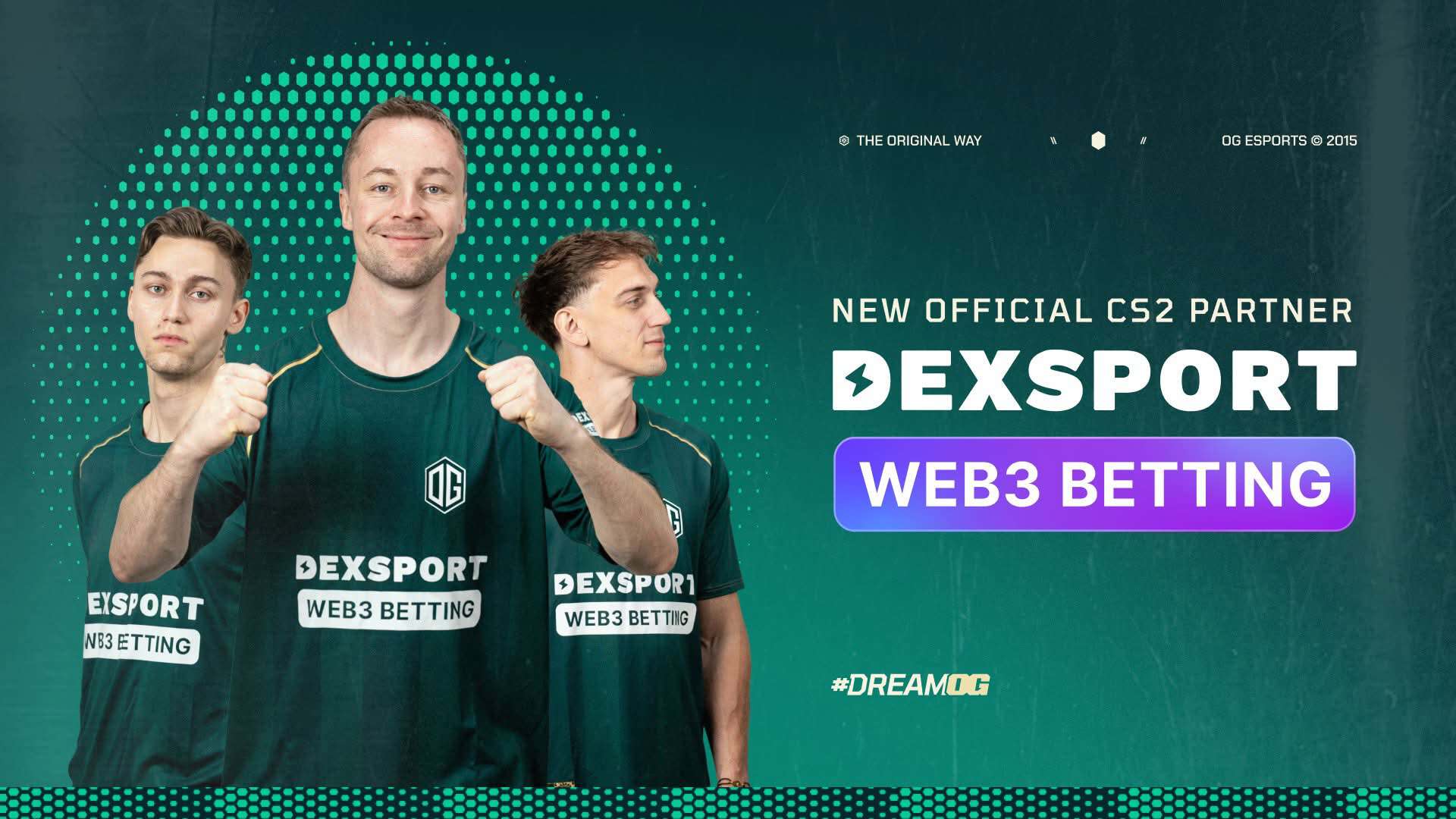
OG Esports Signs Dexsport as Headline Sponsor for CS2 Team
OG Esports has entered into a headline sponsorship agreement with the Web3 betting platform Dexsport, specifically targeting its Counter-Strike 2 division.
- OG Esports has rebranded its Counter-Strike 2 team to OG.Dexsport following a headline sponsorship deal with the Web3 betting platform.
- The agreement designates Dexsport as the official betting sponsor for the CS2 roster for a one-year term, featuring branding across team assets and fan activations.
- Chiliz Group, which acquired a 51% stake in OG Esports in September 2025, is central to the organization's current strategy of aligning commercial partnerships with Web3 and fan-engagement platforms.

UK Games Fund: A Fresh Start for Growth
The UK Games Fund has secured a further £28.5 million over the next three years to keep supporting the UK's independent game development sector.
- The UK Games Fund has secured £28.5 million in new government funding to support independent developers over the next three years.
- The funding is divided into three tiers: £20,000 for the Starter Fund, up to £100,000 for the Prototype Fund, and up to £250,000 for the Content Fund.
- The Content Fund is specifically designed for high-growth companies that have already secured third-party investment to facilitate further expansion.
Evolution of Play Report
The Evolution of Play, a 169-page inaugural 2026 edition from Quantic Foundry, tracks long-term shifts in gamer psychology across 11 years, from May 2015 through February 2026.
- The analysis tracks shifts in gamer psychology across twelve motivation categories over an eleven-year period, spanning from May 2015 to February 2026.
- The findings are based on a dataset of 1,924,157 gamers, primarily core-oriented players who engaged with a motivation profiling tool.
- The respondent base is heavily skewed toward PC gaming, with 81% of participants utilizing the platform.

DreamHack Birmingham Announces Samsung as Official Partner
DreamHack Birmingham 2026 has secured Samsung as an official partner for its upcoming festival, scheduled for March 27–29 at the Birmingham NEC.
- DreamHack Birmingham 2026 will take place from March 27–29 at the Birmingham NEC, marking the event's return to the UK after a decade-long hiatus.
- Samsung has been named an official partner for the event, featuring a 'Galaxy Café' activation hub that showcases the Samsung Galaxy S26 Ultra and hosts mobile gaming competitions.
- The event features a substantial esports line-up with over $1.7 million in total prize money distributed across various tournaments.

South African Indie Developer Releases Game After 13-Year Journey
The release of the indie title Cadence on February 12, 2026, marks the conclusion of a 13-year development cycle for South African programmer Peter Cardwell-Gardner.
- South African developer Peter Cardwell-Gardner released the minimalist puzzle game Cadence on February 12, 2026, following a 13-year development cycle.
- The project was developed by the solo studio Made With Monster Love and features mechanics that allow players to compose and share musical patterns via Steam Workshop.
- Development began in 2013 and faced significant financial hurdles, including a failed £25,000 Kickstarter campaign in 2015.
What Steam's 2026 Biz Update Tells Us About the Ecosystem
The 2026 Steam business update highlights the platform's evolving ecosystem and Valve’s strategic philosophy regarding digital distribution.
- In 2025, 5,863 games earned over $100,000 and 2,395 games grossed over $500,000, representing nearly double the figures recorded in 2020.
- Approximately 25% to 30% of games achieving financial success in 2025 were released within that same calendar year, indicating that new titles remain viable despite market saturation.
- Valve maintains a non-curatorial, algorithmic distribution model that treats older catalog titles with the same visibility priority as new releases to foster long-term platform sustainability.
What Worked for Video Game Crowdfunding in 2025
Video game crowdfunding on Kickstarter experienced a notable resurgence in 2025, reaching approximately $26 million in total pledges.
- Video game crowdfunding on Kickstarter reached approximately $26 million in total pledges in 2025, marking the highest annual total since 2015.
- While the number of successful campaigns has remained stable at 443 in 2025, the average amount raised per project increased to $58,000, up from $39,000 in 2016.
- Modern successful campaigns have shifted away from early-development funding, instead prioritizing advanced development states and the release of playable demos to secure backing.
Of Reviews and Women: A Study of Women Discourses on Gender in Videogame Magazines
Drawing on a sample of 14,836 reviews from 15 Western video game magazines published between 1981 and 2021, this study examines how women reviewers wrote about gender in the medium.
- Women wrote only 637 of the 14,836 reviews (4.29%) across 15 Western video game magazines from 1981 to 2021, while men wrote roughly 70% and anonymous authors about 24%.
- Women authored reviews in only 10 of the 15 magazines studied, underscoring how rarely women held a voice in the gaming press.
- Of the 51 reviews engaging with gender themes, mostly from the 1990s and 2000s, findings were mixed: some reproduced stereotypes such as 'games for girls' framings and sexualized character descriptions, while others were neutral or critical.
Europe's Gaming Reset
The European gaming industry is currently undergoing a significant transition, moving away from a decade of rapid, acquisition-led growth toward a period defined by operational discipline and sustainable engagement.
- The European gaming market has contracted to 18.0 billion in 2023, down from a 2015-2023 growth peak of nearly 20 billion.
- Industry growth is shifting from acquisition-led expansion to a focus on operational discipline, leaner business models, and sustainable engagement.
- CD Projekt has achieved profitability through internal reform and cost discipline, while Ubisoft is currently undergoing restructuring involving significant layoffs and a reliance on legacy intellectual property.

What’s Going to Stop the Steam Machine Failing Again?
The reintroduction of the Steam Machine represents a strategic shift for Valve, aiming to establish a stronger foothold in the living room console market.
- Valve has announced a new cube-shaped Steam Machine featuring six times the horsepower of the Steam Deck, with a new controller and a release scheduled for next year.
- Unlike the failed 2015 iteration which relied on multiple third-party partners, the new Steam Machine is a single, internally developed hardware proposition from Valve.
- The addressable market for Steam has grown significantly, with user game entitlements increasing from roughly $9 billion in 2015 to $90 billion today.

The $100,000 Developer Surcharge
The introduction of a $100,000 surcharge on H-1B visas by the U.S. government is poised to significantly reshape the domestic video game industry by increasing operational costs and hindering access to specialized international talent.
- The new $100,000 H-1B visa surcharge creates a significant financial barrier that threatens to stifle innovation and creative experimentation within the U.S. video game industry.
- Smaller studios are disproportionately at risk, as they lack the capital to absorb these high fees, which may entrench large, risk-averse incumbents and reduce overall market competitiveness.
- Between 2015 and 2024, the gaming industry recorded 6,161 H-1B approvals, averaging 616 per year, highlighting a consistent reliance on specialized foreign talent for engineering-heavy workflows.