1 free read left. Create a free account for unlimited reading + AI research.
Create free accountArticle The Game Business
1 free read left. Create a free account for unlimited reading + AI research.
Create free accountArticleThe Game Business
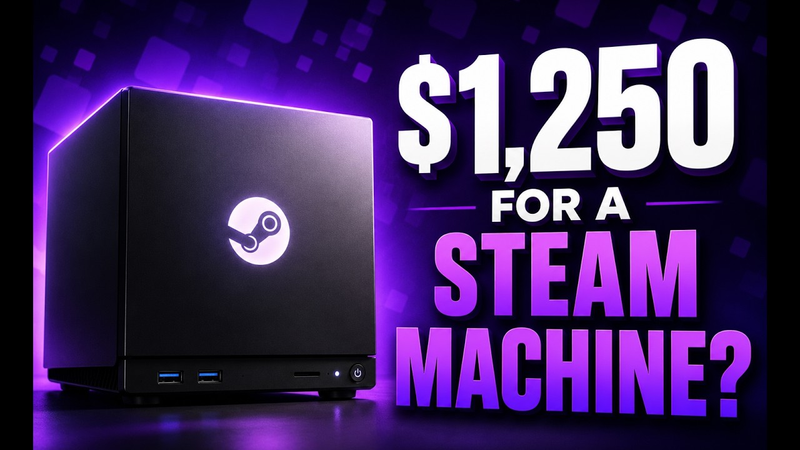
The reintroduction of the Steam Machine represents a strategic shift for Valve, aiming to establish a stronger foothold in the living room console market. Unlike the failed 2015 iteration, which suffered from fragmented hardware configurations and a lack of clear identity, the new cube-shaped device is developed internally by Valve. This streamlined approach, paired with the established success of the Steam Deck, suggests a more cohesive product strategy. While the device is expected to appeal primarily to an enthusiast niche, its emergence signals a competitive challenge to the traditional console dominance of PlayStation and Xbox.
The market landscape has evolved significantly over the last decade, with PC gaming experiencing substantial growth. Steam users now hold approximately $90 billion in game entitlements, a tenfold increase since 2015. Despite this, the Steam Deck has primarily served existing Steam users rather than attracting new demographics, with over 90% of its owners already part of the ecosystem. Consequently, the new Steam Machine faces the challenge of balancing high-end performance with a price point and distribution strategy capable of expanding its reach beyond the core PC gaming audience.
The competitive pressure on Microsoft is particularly notable, as the company increasingly aligns its hardware strategy with PC-based architecture. With the next generation of Xbox consoles expected to function similarly to living room PCs, the Steam Machine directly encroaches on Microsoft’s hardware and platform ambitions. While the device may not immediately disrupt the market, it introduces a new variable in the console space that could drive innovation and provide a necessary alternative in a sector currently showing signs of user decline.

The Game Business · 2026

The Game Business · 2026

The Game Business · 2026

The Game Business · 2026

The Game Business · 2026

The Game Business · 2026

The Game Business · 2026

The Game Business · 2026
The Game Business · 2026

The Game Business · 2026

The Game Business · 2026

The Game Business · 2026

The Game Business · 2026