UK reports and market data
Documents

Is the Past the Future of Gaming?
Remakes and remasters have become a cornerstone of the video-game market, now generating roughly two hundred releases each year and projected to reach about thirty titles in 2025.
- Remakes and remasters have become a major industry pillar, with roughly 200 releases annually and projections indicating 30 high-profile titles for 2025.
- Commercial performance for remakes frequently outperforms original releases, evidenced by the Resident Evil 4 remake achieving 10 million sales within two years.
- Nostalgia is the primary consumer driver, with over 80% of 1,500 surveyed gamers citing the desire for emotional comfort as their main motivation for purchasing updated titles.


Bringing Digital Creativity to Secondary Schools: United Kingdom
The United Kingdom’s current secondary education curriculum suffers from a narrow focus on theoretical computer science, which has contributed to a notable decline in qualification uptake and a persistent gender gap in digital education.
- The UK secondary curriculum is shifting toward a proposed 'Digital Creativity GCSE' to counter declining qualification uptake and a persistent gender gap in digital education.
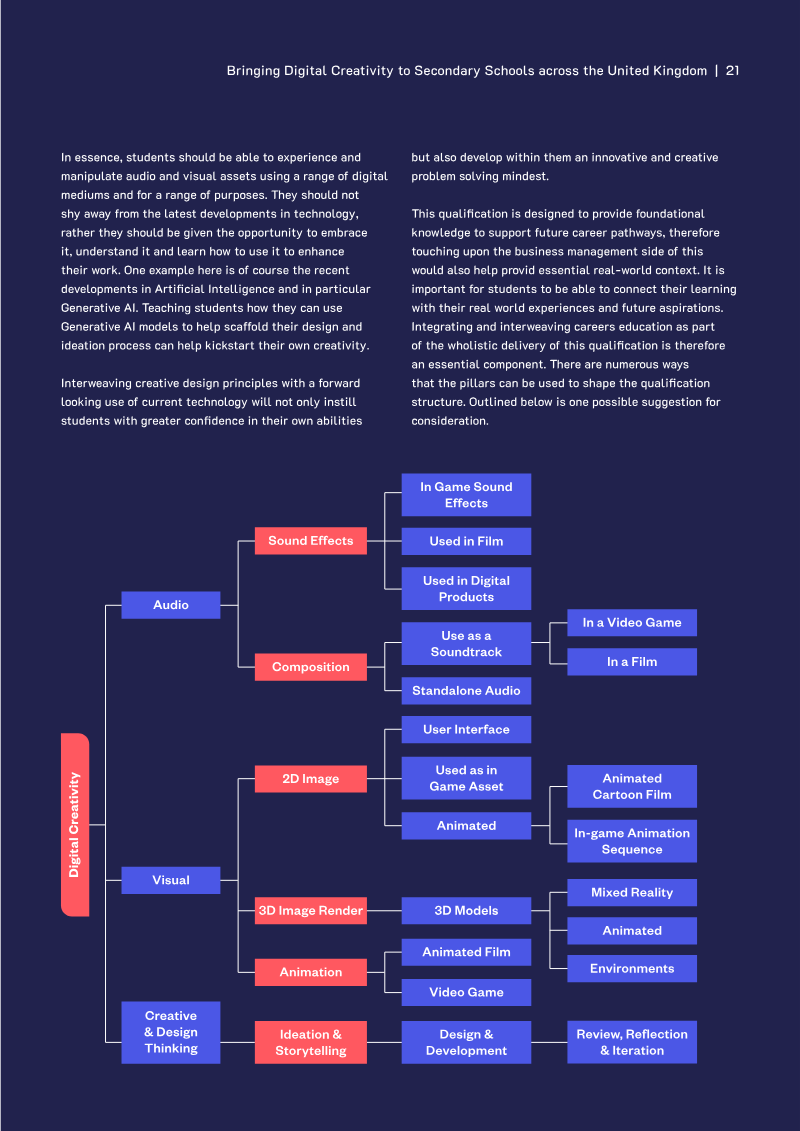
- The new qualification pivots from theoretical computer science to active, project-based production, focusing on audio, visual, and design-thinking disciplines.
- Curriculum design prioritizes accessibility by ensuring coursework does not require high-specification hardware, aiming to mitigate the digital divide in under-resourced schools.


UKIE Annual Review 2024
Ukie’s 2024 annual review presents a comprehensive account of the UK video-games sector’s performance, strategic direction and advocacy work over the past twelve months.
- The UK video games sector is a £6 billion economic engine supporting 76,000 jobs, with consumer spending rising 4% to £7.82 billion in the 2023-24 period.
- Video game technology spill-overs contributed £760 million to UK GDP and created nearly 10,000 jobs as of 2021.
- International trade activities at events like Gamescom and GDC generated over £70 million in business wins and attracted more than £150 million in foreign direct investment for 180 UK companies.

Finding your way within a black ocean | Mihai Pohontu from Amber
The gaming industry is currently navigating a period of significant contraction, characterized by a post-pandemic market dip, reduced venture capital investment, and widespread workforce reductions.
- The gaming industry is currently in a 'Black Ocean' state of market saturation and contraction, marked by 13,000 reported layoffs in 2023, though the actual impact on independent studios is estimated to be ten times higher.
- Artificial intelligence is being deployed as a tool for operational efficiency—specifically in automated quality assurance, bug testing, and concept art—rather than as a primary driver for workforce reductions.
- Developers are increasingly adopting cross-platform strategies and web-based shops to bypass the control of first-party app stores and mitigate the impact of regulatory challenges against companies like Google.

Panel: A Decade of Farm Heroes Saga: Reflecting on the Evolution, Impact, & Future...
Farm Heroes Saga maintains its position as a cornerstone of the mobile gaming industry by prioritizing a player-centric development philosophy that balances rigorous quantitative analysis with direct community engagement.
- Farm Heroes Saga became the first UK-developed mobile game to reach $1 billion in lifetime revenue in 2017.
- The development team prioritizes 'outcomes' over 'output,' focusing on player motivations and desired emotional experiences rather than simply increasing feature volume.
- Data-driven decision-making serves as the backbone of the design process, utilizing hypotheses based on metrics like daily active users, game rounds, and event funnels to guide pre-production and post-production.

Retaining players and providing support faster | Samantha Pang from Helpshift
The gaming industry is currently navigating a period of contraction characterized by reduced venture capital investment and a shift toward consolidation.
- The gaming industry is shifting from rapid expansion to a focus on player retention and high-quality experiences due to reduced venture capital and market consolidation.
- Helpshift, a Keywords Studios company, minimizes player churn by providing in-app support that prevents users from leaving the game environment to seek assistance.
- AI and machine learning are replacing traditional human-led support models by automating issue categorization and providing targeted, self-service resolutions.


Supercharged: Powering the Future of the UK Video Game and Interactive Entertainment Industry
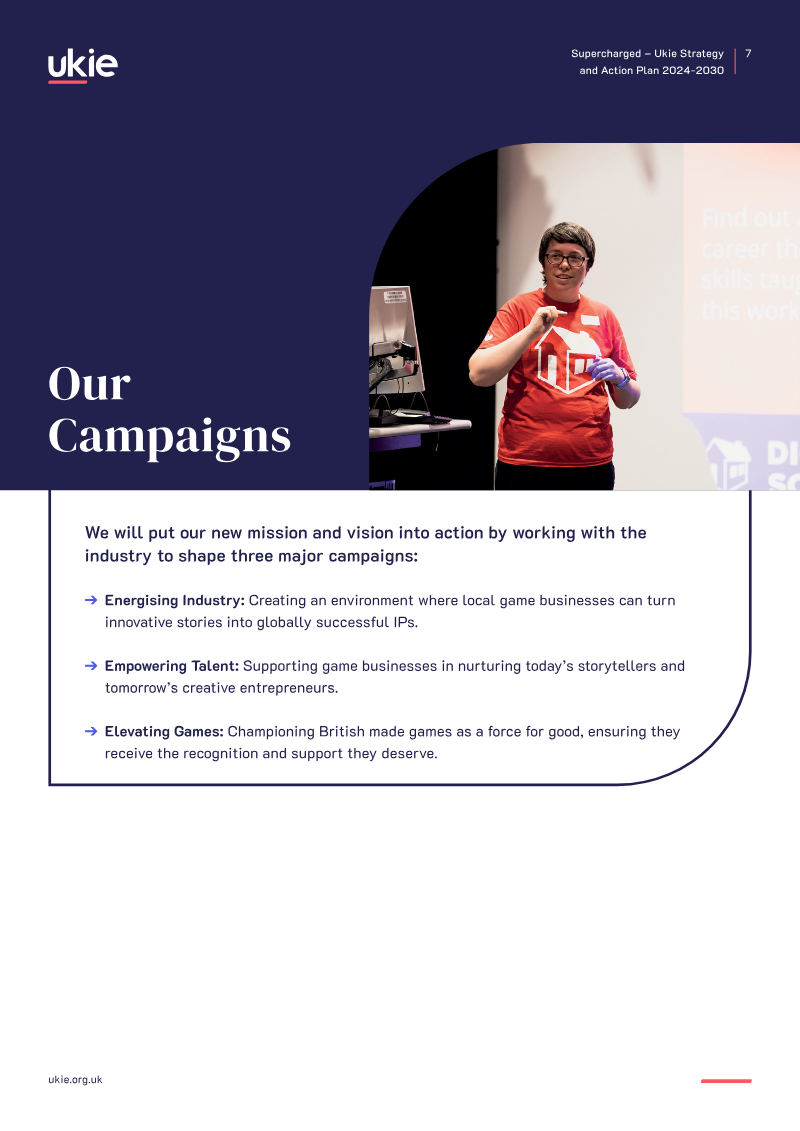
The new five-year strategy and action plan sets out a comprehensive roadmap for the UK video-games and interactive-entertainment sector, positioning it as the world’s leading hub for new intellectual property and innovation by 2030.
- The UK video game industry has launched a five-year strategy aiming to establish the nation as the global leader in intellectual property and innovation by 2030.
- The 2024-25 action plan prioritizes lobbying for more competitive tax reliefs, increased investment, and the introduction of a Digital Creativity GCSE.
- Strategic efforts to strengthen the workforce include the expansion of the #RaiseTheGame diversity, equity, and inclusion programme and the creation of a sector-wide skills network.

Kwalee’s John Wright On Attracting Valuable Users With A Loyalty-Driven Approach
The mobile gaming industry has reached a critical inflection point where the traditional hypercasual model is no longer viable due to escalating user acquisition costs and the depreciation of tracking identifiers.
- The shift from hypercasual to hybrid-casual mechanics—integrating meta-layers and live operations—has increased average revenue per user (ARPU) from the traditional $0.30–$0.50 range to $1.50–$2.00.
- Studios must transition from high-volume, short-term user acquisition to a loyalty-driven model that prioritizes long-term retention to counter rising acquisition costs and the loss of tracking identifiers.
- Treating games as part of a broader portfolio ecosystem allows studios to mitigate revenue decay by cross-promoting players across multiple titles rather than relying on isolated products.

NSPCC’s Kevin Antao And Andy Sallnow On How To Prevent Child Abuse In Games
Gaming serves as a primary digital gateway for children, with 91 percent of individuals aged 3 to 15 engaging in interactive entertainment.
- Gaming is a primary digital gateway for children, with 91 percent of individuals aged 3 to 15 engaging in interactive entertainment.
- Nearly one-fifth of all contacts to Childline are now directly linked to gaming-related issues, highlighting a significant surge in predatory behavior and harmful interactions.
- The industry must shift toward a 'safety by design' model, where protective measures are integrated into the fundamental architecture of games rather than treated as secondary features.

Why Is Gaming Spend Not Up More? / M&A and Funding Trends / Earnings Season Begins
The gaming industry is currently navigating a period of stagnation characterized by a complex interplay of macroeconomic pressures and structural shifts.
- Gaming content spending in the U.S. is down 6% to 7% from 2021 levels when adjusted for inflation, despite a nominal year-to-date increase of 2%.
- M&A deal volume has plummeted by 60% year-over-year, reflecting a broader retreat of investment activity to pre-pandemic levels.
- Funding is heavily skewed toward early-stage ventures, with 85% of current deals concentrated in pre-seed and seed rounds, leaving late-stage studios facing down-rounds or closure.

The Economic Impacts of Video Game Technology Spillover: UK and Nordic Economies
The analysis quantifies how video-game technology generates measurable economic benefits beyond the entertainment sector, arguing that spill-over effects constitute a significant engine of growth for advanced-technology economies.
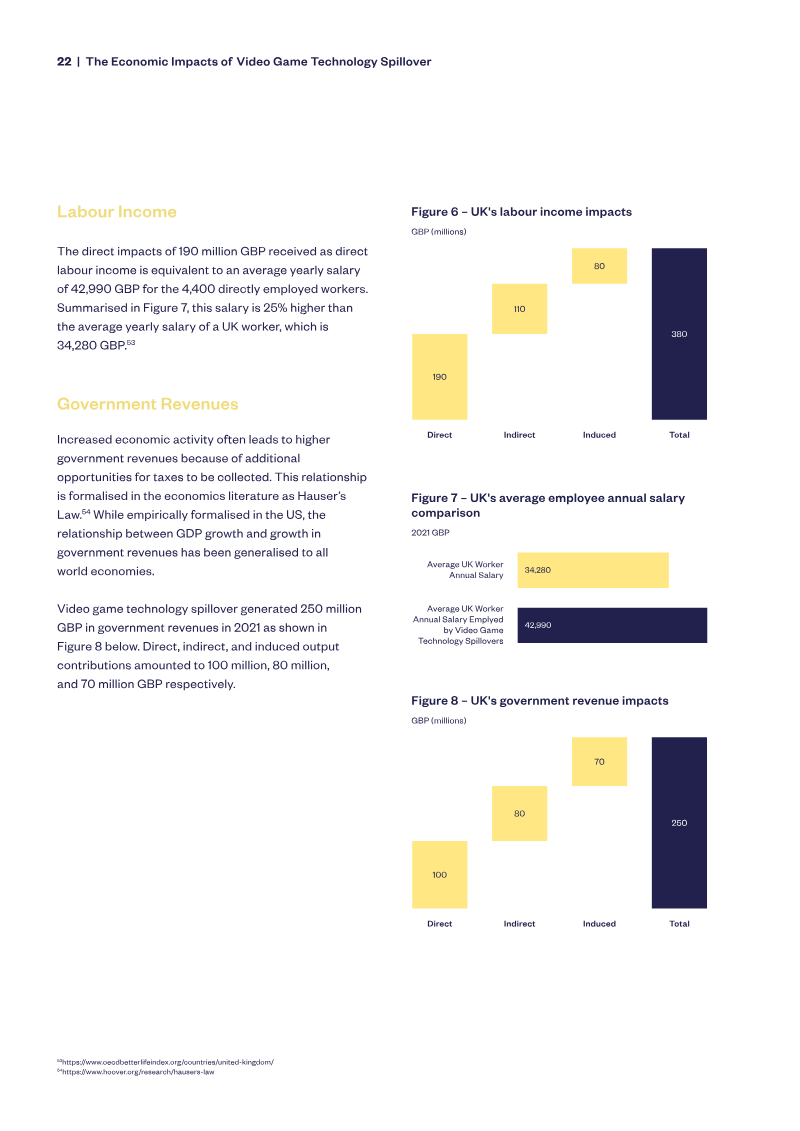
- In 2021, video game technology spill-overs contributed £1.3 billion in total output and £760 million to UK GDP, while sustaining 9,900 non-gaming jobs.
- Spill-over activity from the UK games industry accounts for 13% of the sector's gross value added and 19% of its total employment.
- Non-gaming roles supported by game technology—primarily in IT, business services, and energy—command average salaries 25% higher than the UK national mean.
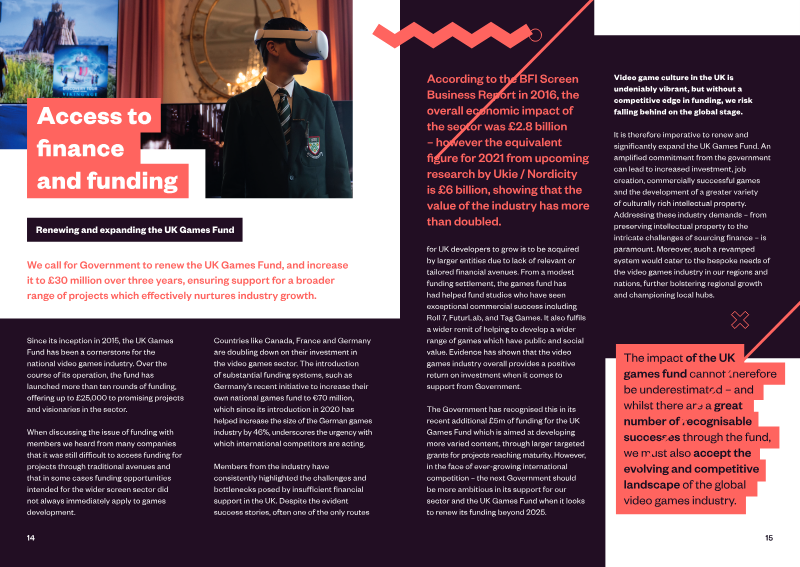

Video Games Industry Manifesto: UK
The United Kingdom video games industry serves as a vital engine for national economic growth, having doubled its total impact to £6 billion between 2016 and 2021.
- The UK video games industry doubled its total economic impact to £6 billion between 2016 and 2021.
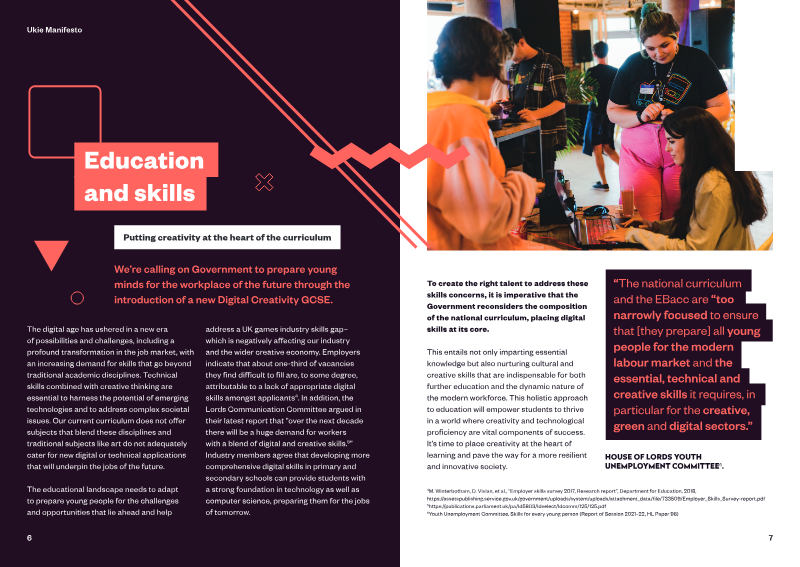
- A persistent skills gap has resulted in an 8% vacancy rate, threatening the nation's status as a global hub for game development.
- The industry is calling for the creation of an industry-specific skills body and a modernized national curriculum to address the workforce deficit.