1 free read left. Create a free account for unlimited reading + AI research.
Create free account
Why do they buy? Key player motivations for monetisation
Key insights
7 takeaways- 01The CAPS framework—Cosmetics, Access, Power, and Status—provides a hierarchical strategy for aligning monetization mechanics with core player psychological motivations.
- 02Effective monetization strategies must be tailored to the specific game genre to ensure that spending feels like a natural extension of the gameplay rather than an intrusive barrier.
- 03Cosmetics serve as the entry-level tier for personal expression but require high social visibility and player interaction to be a viable primary revenue stream.
- 04Access-based monetization focuses on removing barriers to gameplay, such as energy systems or exclusive narrative paths, requiring a tightly balanced economy to remain effective.
- 05Power-based monetization drives revenue by offering durable upgrades that provide competitive advantages in PvP or help players overcome difficult progression curves.
- 06Status is the highest tier of monetization, leveraging leaderboards and social rankings to incentivize spending through public recognition and community standing.
- 07Modern successful titles often utilize the battle pass model to integrate cosmetics, access, and status into a single, recurring purchase loop.
Ask AI about this video
Transcript
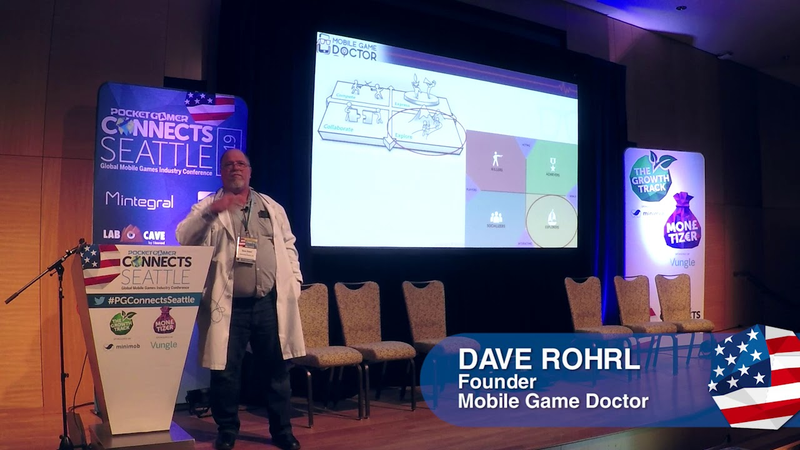
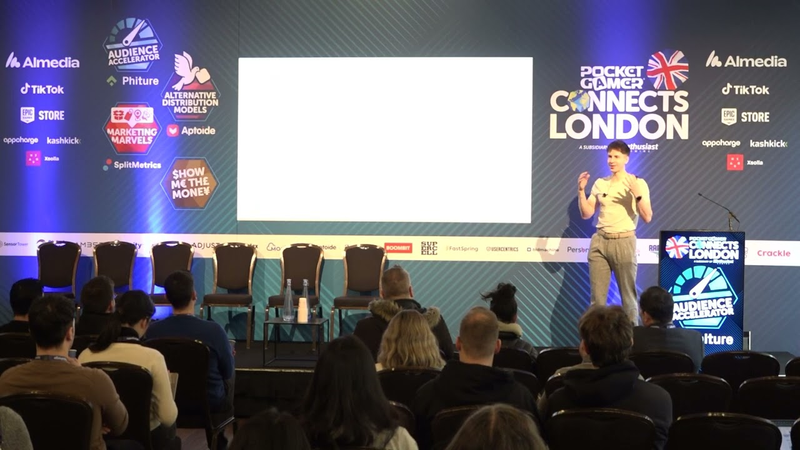
hey everyone my name is Dave Oskar invited me to do something on this track a couple of weeks ago so hopefully there's something coherent in here I'm a little under the weather today so I can't actually tell so you can tell me afterwards if you brought some Tomatoes maybe a good time to use them if you're feeling a little tired could be a good time for a nap I don't know so a little bit of background on me and then we'll dive into the subject at hand oh and I should add no refreshing change of pace I'm actually not a middleware vendor and the big green button is not doing anything there we go so there's a little bit of background I've been working in the industry now for about 25 years in design production and studio leadership cut my teeth on edge attainment products in the 90s at learning company heard
that there was such a thing as games on the internet spent about five years at Pogo designing and producing web games built and ran their digital download service started PopCap's first remote studio in San Francisco where I was put into plants vs. zombies as crazy Dave thereby using up 14 minutes and 59 seconds of my 15 minutes of fame thank you for joining me for the last remaining moment was early employee and design director at Zynga and then an executive producer and creative director at play them helping them pivot into facebook games and casual games for the last five years I have been running a company that I founded called mobile game doctor we're basically a bunch of really senior game designers that parachute into projects at all states the development mostly on the mobile free-to-play side helped folks figure out thorny design problems plug over why do we make games well speaking for
myself and hopefully for all of you we make games because we love games because honestly we could make a lot more money doing something else but even though we do it because we love it it turns out that making money is kind of useful right so thinking about how are you going to at a base level extract revenue from your players is a really irrelevant question right and one of the things I like to do in terms of the way that I learn and process information is kind of look for big themes and schemas that I can put these things into alright and as we know if you're working in mobile these days you're working in free-to-play you're giving your game away trying to come up with compelling reasons for people to part with their money okay which is a good challenge monetization can be kind of complicated we're gonna hear a lot today about real-time psychometrics about fraud prevention about managing your add waterfall it's way too much for me I
like simple stuff big bold strokes frameworks I can work with so I took a step back and had to think about look what is it that we can actually sell the players effectively how does it fit into a framework in a hierarchy what are the success patterns we've seen over and over and over for actually getting players to monetize in free-to-play games so I thought deeply about what the answer might be and it turned out it was caps the expected result of course so this is a little framework right it's a little acronym I came up with and I'll walk everybody through and I should give a quick tip of the hat to gabe zickerman this is somewhat derived from some of his work on gamification and incentive programs that work there and out but with some pretty significant twists over the last few years it's also worth noting that these kind of for purchase categories or purchase motivations exist
in a fairly strict hierarchy in terms of how much revenue they can drive per player and they also fit pretty neatly into established ways of looking at player psychology and motivation things like amy-jo kim's online interaction matrix or richard Bartles taxonomy of multiplayer players and hopefully these are somewhat familiar diagrams to you if you play it all in the game design space so let's take a quick look at each of the four letters in the acronym and see what they're about what they do how they get you there what your game needs to have so the C stands for Cosmetics right and it's a very intentionally put at the low end of the spectrum at mobile game doctor we work with big companies like King we work with little bitty Indies and often I run into folks who say you know and I asked them how they're planning on monetizing their game we're going to do it through cosmetics it's
usually a fatally flawed assumption doesn't work particularly well in fact a quick look at the top 100 will show you that there are literally zero mobile only games in the top hundred grossing slots that monetize principally through cosmetics there are a few cross-platform ones you'll actually see a couple of screenshots in here but zero mobile only games so cosmetics quick definition these are non functional items right that are principally intended to play in a personal expression and creative space they're going to allow you to look cool make something cool not do too much beyond this and this really is kind of the original free-to-play monetization right if you sort of think back to maplestory right which is very strict about not selling advantage right this is sort of where it all kicked off these may be items that you're going to use to decorate your avatar they may be full player skins they may be bits and pieces
that you're going to use to assemble something cool that you're going to show off to your friends right bye did I not put fortnight in here hang on I'll get to it [Music] for your game to successfully sell cosmetics at all it's got to meet a couple of design filters and I'm actually going to roll out the less important one first because that's what I'm doing with the main hierarchy so the first is one I call visibility it's really hard to sell cosmetics in the context where you can't see what you have achieved with them right this is actually a screenshot from the apex legends as you might have guessed from the name of my company I'm mostly focused on mobile also from the way I talk about stuff obviously this is a PC game but let me ask you a question in this picture do I look like a badass I don't know right so me being able to see me as a secondary success criteria the more I can see myself the more I
care about what I look like but the primary success criteria really is socialness right it's my ability to be seen by other players who can give me recognition for being creative for having made something outstanding right and that means either having a game where this is inherent in something like a virtual world or creating real incentives for players to go out of their way to interact in more single-player spaces like the classic visiting loops from the vill games in terms of those taxonomy x' we talked about earlier this plays into the self-expression quadrant right and largely socializers these are people who want to be seen doing cool stuff they care about seeing being seen by their peers P stands for access right access is all about getting at content right so sometimes this is just about skipping
through the grind right this is my current game in heyday I'm not gonna tell you how many months I have been trying to save up without paying to get from 56,000 to 68 or 75,000 to build the next cool thing but I'll give you a hint it's a lot right so for me I want to be able to play and interact with those things not even so much because they drive my economy but because there is tiny new thing right so this is an access sale if I'm monetize for that the typical one that's been with us since the beginning of Western free-to-play is really looking at play limitations in terms of things like energy or live systems right I want to play more I want to keep going right this again is kind of a third tier sale right in terms of ability to monetize per user but it can be effective what we're seeing more and more of in the modern mobile space is access to exclusive content right all the interactive fiction games that we're
seeing like choices and episodes really lean into this as you can see here right then avatar of me which I must say striking likeness right has just been asked by a cute girl if I want to go stargaze with her so I can say no for free where I can you know pay a little money and see what happens from there right it's exciting it's titillating and I know it's stuck behind a paywall it's fairly effective you'll also see this really frequently in VIP programs right this is a screenshot of the VIP programs from big v games where if you are a level 11 VIP which means by the way that you've spent hundreds and hundreds of dollars in the game now you get access to exclusive slot machines that there's literally no other way to access so what does your game need to have to actually make this work so
compelling content players actually have to care about seeing the next thing they have to go through that grind and what I call leverage content right at the end of the day we have a couple of important equations right everybody is always thinking about CPI versus LTV what does it cost us to bring a user in bruges is - you know what can we get from them in terms of lifetime revenue but I spend I have spent a lot of time and done a lot of work and honestly failed on some things or early in my career and free-to-play by not thinking about what does it take to create content what do we get in terms of revenue out of that content how much time does it take us to build versus for players to consume and how do we sort of build up that tremendous labor force that's going to let us get it it's a lot easier to leverage say a candy crush level than a full story out of choices right we're a tremendous amount of labour goes in so you need to make sure that you've got a huge workforce
you've got very strong revenue generation out of each of those new stories that launches you also need a tightly balanced economy economy design and getting that right is a complicated problem depending on the genre you're working in we actually find ourselves doing a lot of work in idle games where the math gets fairly brain exploding pretty quickly getting it right is a bit of both an art and a science one of the best examples I've seen recently actually is the balance in coin master which does a brilliant job of stranding you just short of where you want to be to preserve your resources sort of going into the next round of play when I finished my energy most of the time I'm at least 75% of the way through my next village and thinking about monetizing just to complete it so it doesn't get rated and destroyed this appeals to Tammy Jo Kim's explorers and also shockingly Richard Bartles explorers right this is really about
players who want to make the map who want to see everything who want to experience what your game has to offer the P stands for power so power in any PvP game is about getting that subtle little edge to the future opponents right players who were out there playing stuff that's PvP geared things like golf clash clash royale are definitely strongly driven by competitive motivations being able to goad them into spending a little bit to get a little bit of a power edge works really well kind of selling victory outright generally doesn't but enabling players to to get a little bit of edge in terms of their power curve right especially a durable edge has worked well this works to a lesser extent in single-player
games where you're really working with a difficulty curve so things like level based progression games candy crush saga right where you have levels that are balanced to be punishing right to be barely doable if at all giving yourself a few extra moves or a couple of extra power-ups to get through it again is that power cell that will typically give you a higher revenue per user than just selling the access selling the additional lives so to sell this kind of power what do you actually need to have so PvP and grind progression is a canonical example right here's a little screenshot from clash Royale when you spend to upgrade in clash Royale which has a really well balanced grind economy right really stiffs you on that gold currency overtime you're generally upgrading your unit by 10% it's adorable upgrade you're not paying just once to smite your foe but to get that little bit of edge that
takes your zap spell from leaving around some low health goblins on to wiping them all out right it's worthwhile purchase and with a well balanced currency system they've been able to drive huge amounts of purchase volume out of it your balance needs to be right if you're on the single-player side right you need to be delivering a proper sawtooth difficulty curve it provides players with lots of easy relaxed gameplay and then periodic challenges that are going to motivate them to monetize so that they know that they can get on to the easy relaxed gameplay that comes after that whose goes to competitors we're in Bartles taxonomy killers right players who want to demonstrate dominance usually over the game or usually sorry over other players thank you low-grade fever and the s really the highest monetization motivation that we see right we're not a consistent basis is for status right
this is really about taking your level of achievement and making it highly publicly visible right such that other players are going to tend to react to you in meaningful ways so this comes in the form of things like leaderboards which may be global they may be social you may notice I'm not anywhere on this global leaderboard I kind of do show up on the social leaderboard little self-esteem boost right and also a different kind of competitive feeling at a different target market this goes heavily after folks that are trying to prove dominance worldwide I just want to be better than a couple of my buddies for this to work generally you want easily encapsulated progression tears right so it has to be fairly easy for players to talk about how far they've gotten in that journey I'm a daily hearthstone player II have been for about five years and whenever somebody sees me playing hearthstone right
sitting at a bar the first question that always comes up is what rank are you playing at it's an easy compact status question right and you know I feel totally inadequate for being a rank 5 player and all these people know wow that's really that's badass I'm ranked 12 player you need visibility across whatever is a meaningful social network for your audience the more casual your audience is the more that tends to be about their friend circle the more hardcore it is the more it's about a community of common interest and like skill level and one of the ways that you can really power this up and bring in I think extremely strong additional motivations is by turning this into a group versus group competition right so things like leading plans where players are ousted or feel pressure right if they're not spending and they've got to get in it's
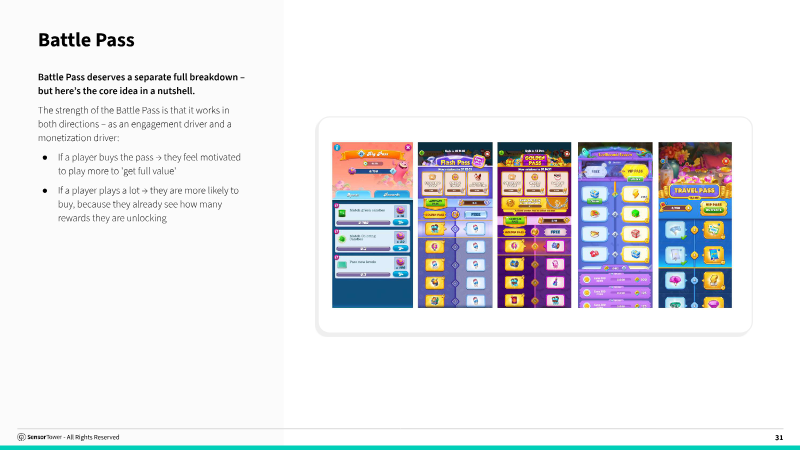
an extremely potent motivator and actually helps you open up beyond just the competitors but also into the collaborators that are strongly driven by senses of social commitment or desires to support and interact positively with other players obviously this all sort of gives that the achiever Quadrant for bartels right folks who want to be at the very top of it these don't all necessarily work just in isolation look you can get combo points one of my favorite current monitor schemes that's doing a great job of driving revenue I think everyone is kind of familiar with is the Ford night battle pass right which is a really really elegant system that I just want to pick apart very briefly before my time runs out and the little light turns red so for folks who aren't familiar to get a Babel pass you have to pay a monthly fee equivalent to about ten bucks and fortnight bursar it's every six weeks every season when you do you
start to earn lots of prizes based on how far you progress but to earn these cosmetics you've still got to play the game you still got to win victories you still got to kill opponents right so the only way to get these unique high-end items that project status and identity is a top player is yeah you were in the cosmetic you earn the status through the grind demonstrating that same kind of prowess that you get off a global leaderboard so in summary when you're working on your game and you're thinking about how you want to make some money be sure to bring some caps all right Cosmetics access power status and try to remember that they do live in a real hierarchy if you were a single player game that's planning on monetizing off cosmetics with low social necessity it's probably not going to work frankly if you're on mobile and
Cosmetics is your plan it's probably not going to work period I don't know if we have any time for questions because I'm very verbose but I am going to be around all day today and tomorrow so find me or hit me up at these coordinates it's all very good we can go for some questions and thank you very much for that so thanks today anyone any questions off the top of their mind or shall I was one at the back there I'm going to try to come to you so just two seconds we need the mic so that we can all actually that's gonna be tough can I get you to pass the mic cross thank you that was awesome hi um I had a question about how you said that the different monetization tactics had like lived in a sort of hierarchy so I'm kind of
interested in like Cascia games and stuff like that so I was wondering how if you tie in like some sort of power boost up over your opponents to like a factor of RNG how that would change the hierarchy if at all so it's interesting I was involved in a discussion with kind of a bunch of game company CEOs about the question of impact of gotcha on monetization and one of the things that's really true about gotcha loot boxes whatever you want to call them right is they are not a monetization mechanic in the same way that these are in terms are addressing player needs they are a way of kind of rationing rewards using a random distribution right so what is underlying the Gotcha has to be important and relevant to the player right most typically if you're looking at something like a mid core game it's going to be power where you're gonna try to get all the shards of the new badass character that's just been released as the game ratchets power
creep up and up and up right overall estimate is if you sort of remove that and go back to direct purchase which is where we were all at four or five years ago right before you got you really hit the West in a big way it would be a significant but non-fatal impact to revenue and probably in the 30% range but you know if you do have something that's really desirable for the player if you could hide it behind that kind of probability table and get that sort of variable reward right and variable interval reinforcement which is really kind of powerful from a straight behavioral psychology perspective you can certainly get a nice bump on that that makes sense sure capture is a way of rushing it is an amplifier right it's not an inherent goal in itself how many people go into a game saying I want to buy a loot box today okay not so many hands no somebody no any any
more questions on that note I'm going to say thank you very much all right I think David deserves an extra round of applause for doing all that at short notice as well sir
Summary
The mobile gaming industry faces the persistent challenge of converting free-to-play users into paying customers. To address this, a hierarchical framework known as CAPS—Cosmetics, Access, Power, and Status—serves as a strategic guide for developers to align monetization mechanics with core player motivations. This framework draws on established psychological taxonomies, such as those identifying socializers, explorers, killers, and achievers, to categorize how and why players spend money within a game.
Cosmetics represent the lowest tier of the hierarchy, focusing on personal expression and aesthetic customization. While popular, they rarely sustain a mobile-only title on their own, as they require high social visibility and player interaction to be effective. Access follows, involving the removal of barriers to content, such as energy systems or exclusive narrative paths. This tier relies on compelling content and a tightly balanced economy to maintain player engagement. Power, the third tier, provides players with a competitive edge in PvP environments or assistance in overcoming difficult progression curves in single-player games. It is highly effective for driving revenue through durable upgrades.
Status occupies the highest tier, leveraging public recognition and achievement to motivate spending. By utilizing leaderboards, social rankings, and group-based competition, developers can create powerful incentives for players to invest in their standing within the community. Modern successful titles often combine these elements, such as the battle pass model, which integrates cosmetics, access, and status into a single, recurring purchase loop. Ultimately, the effectiveness of these strategies depends on the game’s genre and its ability to foster social necessity, ensuring that monetization feels like a natural extension of the gameplay experience rather than an intrusive barrier.


















Comments