1 free read left. Create a free account for unlimited reading + AI research.
Create free account
How to win in eSports! | Evil Geniuses eSports Head Coach Aaron "Gotcha" Chung
Key insights
6 takeaways- 01Professional esports success is increasingly tied to holistic player development, emphasizing rest, nutrition, and physical well-being to sustain cognitive performance.
- 02Professional esports careers are typically concentrated between the ages of 17 and the mid-20s, relying heavily on refined muscle memory and hand-eye coordination.
- 03Evil Geniuses maintains competitive excellence through a rigorous regimen of 35 to 40 hours of weekly team practice, scrimmages, and systematic gameplay analysis.
- 04Successful professional players must possess a high capacity for teamwork and the ability to suppress individual egos to accept critical performance feedback.
- 05The esports industry is experiencing significant financial growth, with major tournament prize pools for titles like Dota 2 reaching as high as $20 million.
- 06The talent pipeline is becoming institutionalized as educational organizations establish collegiate programs and offer scholarships to formalize the path to professional play.
Ask AI about this video
Transcript
[Music] [Applause] China's CDC the International [Laughter] [Applause] ladies and gentlemen the champions of
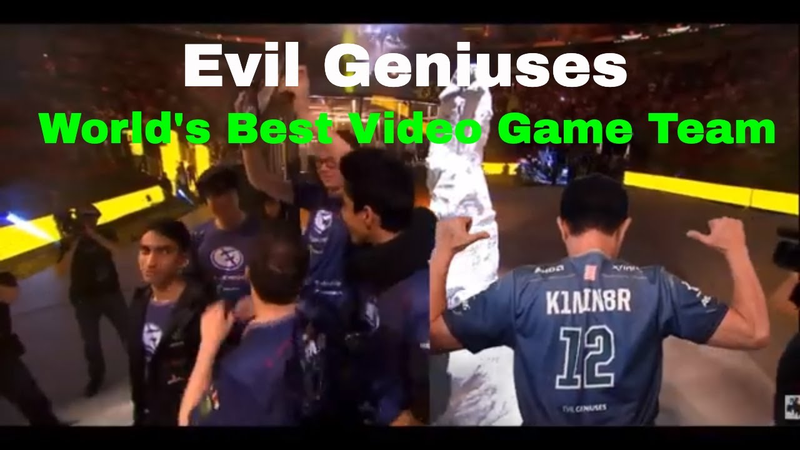
the Internationale [Applause] [Music] as you just saw evil geniuses did in fact win the International 2015 for dota 2 and even more recently last year in 2018 the eg Call of Duty World War 2 team won the 2018 Call of Duty championship in addition to dota 2 and close Duty eg also competes in other games such as pub G Super Smash Brothers Rainbow six siege rocket League and they have even announced a fortnight team they are one of the oldest professional eSports team in gaming history having been found in 1999 and so how has evil
genius has been successful for for that period of time what do they do in terms of life as an eSports player and even as an eSports coach what does their training regimen look like well today we got a chance to talk with Aaron gadget Chung who is the head coach of evil geniuses and was himself a former professional eSports player so with that let's take it over to Aaron Chung right now Gamemakers I thought we'd first start by talking about you know the origin story how did how did eg start and when did you get him off with it with EGA yeah so he's been around for a long time they've been around for about 20 years so go back to like 1989 they were one of the first big eSports orgs of all time and they had been involved in games like quake csgo
obviously Ripper succeed for myself dota 2 rocket League even League of Legends at one point so they just been around for a really long time they're one of the more established orgs in the scene even currently I got involved with eg several months back of October in 2018 I had just been playing siege casually and a bit competitively as well in more like the amateur leagues and then I was invited to become a coach for Jesus right and I know you mentioned some of the games that eg is involved involved in I know like you guys are also going to be moving into fortnight can you talk about what the current sort of games that you guys are competing in today yeah so some of the main games that were competing today dota is definitely on the forefront of that list they're just one of our biggest teams and have always been one of our biggest we also have the rocket League team we have the realistic siege team we also last year our Cod won
the cognitive championship as well we have a new roster now in cod so we have quite a few things going for ourselves right and I know eg is one of the oldest you know sort of professional American teams and consider premier organization but you know in terms of like the biggest successes for eg would you say was like the International and what are some of the other things that you guys that you you're you're sort of proud of from my perspective yeah I mean we need a cogwheel championship was a huge thing probably one of the biggest things of all time for us was winning ti5 okay doubt I think they won about like six and a half million seven million dollars just for themselves huge yeah that was the biggest sports prize in all of history at the time so really big deal the International price bulls have just been going up and up and up last year was like 20 million and we hit we got third in that tournament right but yeah
definitely a dota has accomplished a lot even our siege team has accomplished quite a bit we were second quite a few big tournaments yeah and so I thought maybe it'd be great for you to talk to us about you know the lifestyle of someone in eSports and so probably two aspects first could you talk to us about you know what is a typical day or work week look like for an eSports player yeah and then you as a head coach what what is what is your sort of typical day-to-day what does that look like as well sure um so a typical day in like a esports players life would probably look like kind of like a reverse Baker schedule almost like being heads would get up nice and early and you know yeah their entire day started probably the opposite for for a professional player they probably get up and around 1 or 2 o'clock in the afternoon you know they even have breakfast just like anybody else and then they play a lot of games quite frankly so they would play in public games rank games
pub matches and essentially wait until practice time yeah at that point we get together and we do things like dry run we do things like those are essentially drills that we do in our game after that we scrimmage against other teams for about four or five hours and then some pros they continue to stream afterwards on like twitch and that engage with fans and viewers and that's what stuff so in short summary they play a lot of games that get to do it by getting paid for it yeah and then for you as you know the head coach right what is your sort of day-to-day life look like sure so my a lot of my responsibilities as a coach is also being an analyst so will take a lot of time looking at the video footage of other teams and looking at what they're doing and how they're setting up siege in particular is a very tactical first-person shooter so it comes down to a lot of strategy
so we analyze our opponents vod's we also come up with new strategies ourselves and have to practice them on executing them and making sure that everyone knows what they're doing and then while we're actually scrimmaging other teams we have everyone record at their point of view so we can go back and see everyone's perspectives say okay on this round you could have done this better or we could do this together at the team instead of that so a lot of it is just helping the team improve overall and then getting more data on opponents so that's we drill down into a little bit more of that in terms of like the training techniques and so you mentioned a lot of your players are you know are playing our scrimmaging right as a coach you were talking about you know more than alysus but are there other sort of you know training techniques or they're like secret techniques that you have like what are some of the things besides just playing that you can do to get
better as an eSports player um I mean I think you know making sure that you have efficient rest and you have a decent diet and you know you're drinking plenty of water I think in any sports right those things are important it's kind of the same thing in eSports as well like if you're just not getting enough adequate rest and water and nutrition like you're not gonna play well it's as a as a more tactical first-person shooter you have to be able to think about what your opponents are doing what's happening and things like that and if you're just not thinking well then so part of the you know part of succeeding as players that also you know a lot of what we do for 1st group shooters is work on our aim and work on our team play yeah so you know their in-game aim training that you do as well and then just getting together with your team and trying to figure out what you can do better every day in terms of like the profile of you know the most competitive eSports player great I'm
wondering you know so if me I'm an old guy I try to play some of these games I just get destroyed right so just wondering like is there a certain age range that you think you know you have to be so that your you know your your twitch reaction time is fast enough like from your perspective what is like the profile of the ideal player and do you think like when do you start dropping off like aged wives or whatever so that your yeah not as fast as me to be sure I mean a lot of people obviously start gaming really really early on they're five six years old even younger nowadays like everyone has their iPhone games and their console games so yeah I don't think that there is necessarily an age restriction though I mean what's unique about games is that you don't have to be physically in the best shape possible for your character or for whatever you're playing to be the best shape possible right so a lot of it just comes down to muscle memory and and training you're training your eyes and your hand-eye coordination and your aim
and that sort of thing so what are you seeing now in terms of like the most competitive players like what's the typical age range that you're saying yeah so in most professional play not just in siege but across like most games you have to be about 17 years old to compete in any tournament that's just yeah just like a legal restriction because they don't want people you know dropping out of high school it's yours just yeah so around 17 is when people start playing and typically the age range is gonna be between 17 and maybe like 23 24 or somewhere in that range that's gonna be a typical you know eSports player and then just in terms of like the time commitment for a great from some of the audience out there who want to kind of train and get better right what do you think is like the minimum amount of time you need to kind of invest and spend two to be competitive at that level at the professional level yeah I mean it depends on the game because as a game matures you know how difficult it is to get into that scene or break into the
scene becomes that much higher so if you look at like csgo that's been around forever right it's almost impossible unless like you've been there for a very very long time to get into the scene at all yeah whereas like in a younger game like siege like you can still very much get in but you do have to put in a lot of time and effort and you have to have a really really good understanding of the game you have to train hard with your team and things of that nature so I mean if you just look at what we do as a team we'd say we put yeah 35 to 40 hours a day just dedicated to I'm not day week dedicated to just playing the game scrimmaging as a team practicing with the team and so and then you know as a head coach I'm not sure if you're also responsible for like recruitment right but you know how do teams generally kind of find up-and-coming new players and you know what do you guys generally do to try and find those guys and have them join your team yeah I mean for the most part one thing that's been eating unique about our team and has given us a bit of an
edge as our team has had its core roster or run for quite a long time and we haven't changed out that many people okay only a couple people here and there and so our core of you know three four people have been around and together for about three years which is kind of unique to our team and has given us a lot of success so I work more so on player development and team development we take roster changes more so as a team rather than Mike and individual just saying hey you know we could do this and bring this person in or anything like that in terms of you know scouting those opportunities there's lots of leagues that people compete in so you have the professional league so obviously people look to other professional teams say who could we potentially get from another team there's also amateur leagues like Challenge league which is one week below Pro League where a lot of up-and-coming players are trying to get into pro league and so we we look at that pool as well we say you know who who can potentially be molded into a professional player go from there so and then from your perspective what do you think are the most important qualities
or characteristics of an eSports planner to make them as successful as possible so Mike what would you look for what have you seen enable these players to become you know the best right so like an allsports some basic qualities I think are must so number one competitiveness just wanting to win and want to be the best I noticed that all the best players at all times secondly a willingness to receive criticism and to work on things that they can improve Hut there's lots of players out there that have egos and don't want to be put into check they just want their own thing and want to just play by themselves more so than playing together as a team and improving as a team so notice that the players that lose the ego and say hey there are ways that I can improve in ways that I can get better and I'm looking to get better every day those players are the ones that really stand out and continue to thrive in the professional setting so yeah yeah one one one area of interest of mine is just you know we've seen the
dramatic success of fortnight and then apex legends kind of burst onto the scene as well it's kind of dropped a bit from from there but I'm just wondering from your perspective as is like a coach and isn't you know the eSports player right if you're thinking about fortnight and apex legends as an eSport great could you talk about what you think are you know how would you how would you compare those two what would you say would make one a better game for eSports versus another yeah um and for tonight an apex are quite a bit different than CG obviously they're not really first-person tactical shooters but I would say for tonight definitely appeals to a younger crowd I mean if you just look at the graphics and animation it's definitely more cartoonish yeah it seems a lot more children friendly than apex is and so certainly for Knight has a huge pool huge audience to draw from whereas apex I think is for a more mature audience looking to just get some really really
good gameplay out of a battle royale so both are tremendous games I think both have a lot of potential I mean any game that has a lot of interest there's opportunity for making it to the sport right okay and then just might the last question for you is like you know in terms of eSports or the future of eSports right what do you think is coming up in terms of life trends or changes to the industry right um I mean eSports as a whole is already a multibillion-dollar industry there's tons of companies that are interested in you know sponsoring teams and all that sort if you look at the scene as a whole it's just been getting bigger and bigger and it doesn't seem like it's stopping anytime soon tournament prizes are becoming bigger and bigger dota 2 for example last year that their price was twenty million dollars which is humongous yeah colleges are starting to pick up teams for eSports in particular for legal legends for dota for for everything really and they're starting to offer
scholarships for them to come over and so I think that's gonna happen more more even high schools are beginning to develop their own eSports program to you know help people become professionals so I think eSports is gonna be around for a really long time I think just like any other sport it's just going to become beer beer as well great all right well everybody we are here with Aaron gotcha Sean thank you very much for your time [Music] [Music] [Music]
Summary
Evil Geniuses, a premier professional esports organization founded in 1999, maintains a long-standing reputation for competitive excellence across titles such as Dota 2, Call of Duty, Rainbow Six Siege, and Rocket League. The organization’s success is anchored in a rigorous professional structure that balances intensive in-game practice with strategic analysis. Head coach Aaron "Gotcha" Chung emphasizes that the professional lifestyle requires a disciplined regimen, typically involving 35 to 40 hours of weekly team practice, scrimmages, and systematic review of gameplay footage to refine tactical execution.
Beyond technical skill, the organization prioritizes holistic player development, stressing the importance of adequate rest, proper nutrition, and physical well-being to maintain the cognitive sharpness required for high-level competition. Successful players are characterized by a strong competitive drive, a capacity for teamwork, and a willingness to accept critical feedback to overcome individual egos. While the typical professional career spans from age 17 to the mid-20s, the industry relies on muscle memory and hand-eye coordination rather than traditional athletic physical conditioning.
The esports landscape is currently experiencing significant growth, characterized by rising tournament prize pools—notably reaching $20 million in recent Dota 2 events—and increasing institutional integration. Educational institutions are increasingly formalizing the pipeline for talent by establishing collegiate programs and offering scholarships. As the industry matures, organizations like Evil Geniuses continue to scout talent through amateur leagues and internal development, positioning themselves for long-term sustainability within a multibillion-dollar global market. The future of the sector appears robust, with continued expansion into new titles and deeper integration into mainstream sports and academic frameworks.