Monetization reports and market data
Documents

BITKRAFT Summit 2025 Day 2: India Insights - Anuj Tandon
The Indian interactive media and gaming market is currently undergoing a significant transformation, driven by strong macroeconomic growth and a massive, young, internet-connected population.
- India's mobile gaming market has seen significant growth in in-app purchase revenue, rising from under $200 million four years ago to over $1.2 billion today.
- The Indian government has provided regulatory legitimacy to the gaming and esports sector, including the creation of the Indian Institute of Creative Technology (IICT) to train specialized talent.
- Domestic capital is increasingly driving liquidity in the Indian market, enabling startup exits to public markets, as evidenced by the performance of the publicly listed gaming company Nazara.

Clash Royale's Fake Comeback? The UA Pop-and-Drop Debate
The annual letter from the CEO of Supercell serves as a strategic reflection on the company’s performance, characterized by a near-record revenue year despite a 4% decline.
- Supercell experienced a near-record revenue year despite a 4% overall decline, highlighting the company's struggle to maintain growth in a mobile market expanding by only 3% annually.
- Clash Royale’s reported 500% growth in new player acquisition and doubled re-engagement are attributed by critics to aggressive user acquisition spending rather than organic product improvements.
- The $150 million failure of Squad Busters demonstrated a disconnect between early beta metrics and long-term retention, revealing that the company initiated marketing pushes before achieving sufficient product validation.



The Dual Frontier: A Retailer’s Framework for Agentic Commerce
Retailers frequently adopt LLM-powered chat widgets without addressing the core friction points that shape shopper behavior.
- Retailers must prioritize high-quality, structured catalog data, as insufficient data in an agentic environment causes total exclusion from a shopper's consideration set rather than just lower conversion rates.
- A 32-point readiness diagnostic across four pillars—catalog, infrastructure, organizational capacity, and strategic urgency—determines the viability of agentic commerce, with scores of 26–32 indicating immediate readiness and 0–9 requiring foundational work.
- Retailers should adopt a calibrated data-sharing strategy, categorizing signals into 'share freely,' 'share selectively,' and 'protect' to balance recommendation accuracy with the need to safeguard proprietary competitive advantages.

TWiG #371: Clash Royale's Death Spiral, Blizzard's Comeback, and Why AI Hype is Killing Games
The modern gaming industry is currently navigating a period of significant structural tension, characterized by the breakdown of traditional mobile growth models and the evolving power dynamics between developers and content creators.
- The gaming industry faces a structural shift where long-term success depends on integrating influencers into the product flywheel, as evidenced by Supercell’s friction with creators during the resurgence of Clash Royale.
- Aggressive monetization strategies, particularly pay-to-win mechanics, are increasingly straining community relations and threatening the sustainability of mobile titles.
- Blizzard has successfully revitalized core franchises like Overwatch and Diablo by shifting toward narrative-driven live operations and refined monetization models.
Casual Games Report 2025: Finding Growth in a Flat Market
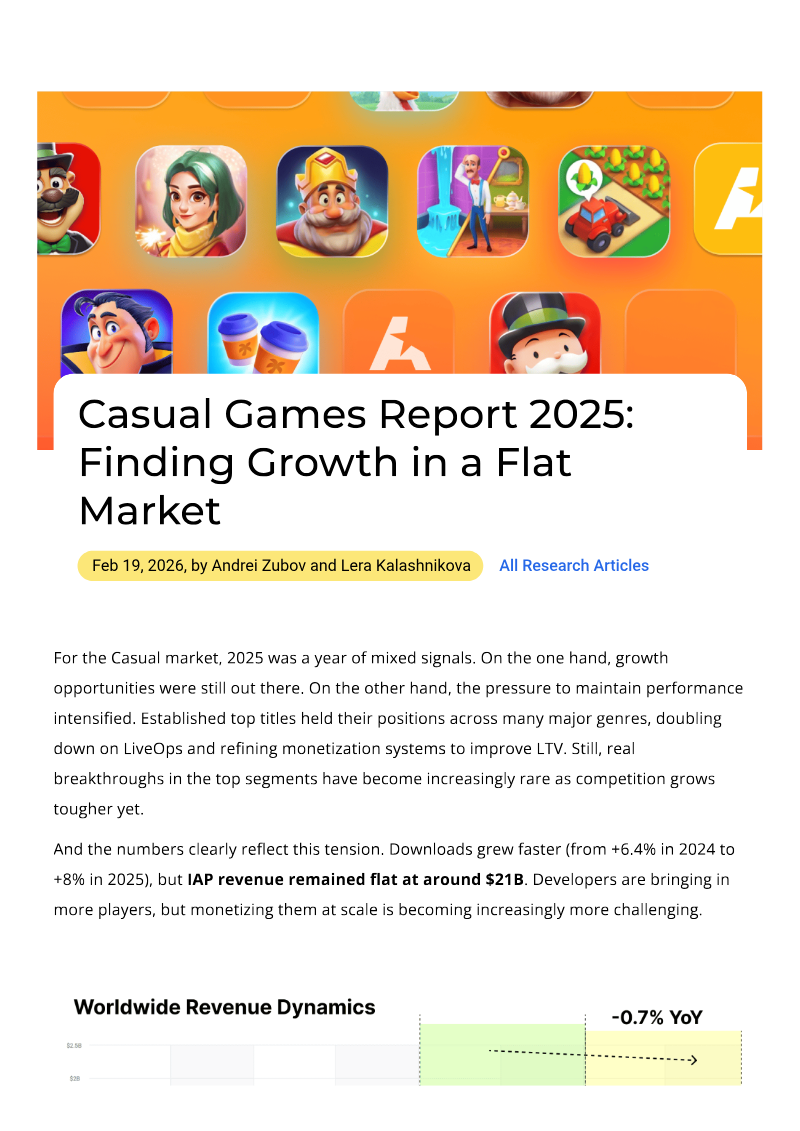
The 2025 casual games market is defined by a paradox of rising engagement and stagnant financial performance.
- The casual games market faced stagnant IAP revenue at $21B in 2025 despite an 8% increase in downloads, highlighting a growing challenge in monetizing players at scale.
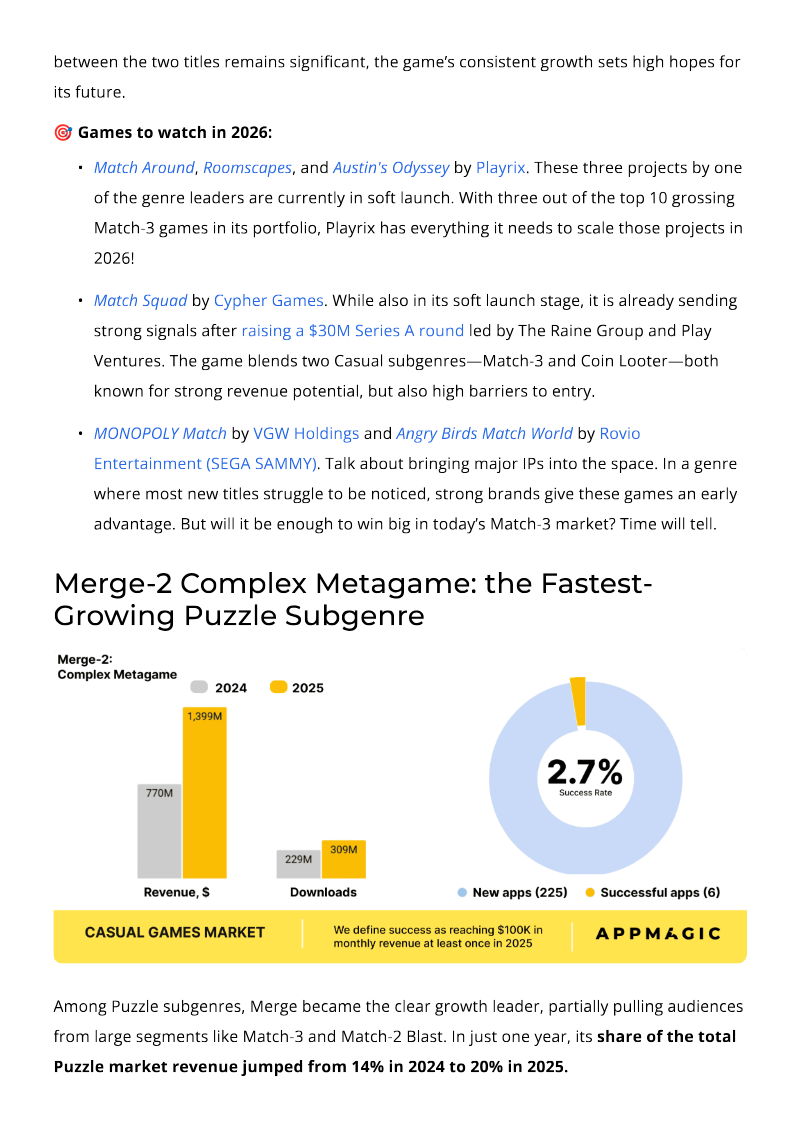
- The Puzzle genre was the only top-grossing category to grow, with revenue reaching $8.2B (+7.6% YoY) and downloads increasing by 9.9%.
- Merge games emerged as the fastest-growing puzzle subgenre, with revenue jumping 80% YoY and its share of the total puzzle market rising from 14% in 2024 to 20% in 2025.

🎙️ Mobile Ad Monetization basics: What every studio gets wrong by Felix Braberg
Mobile ad monetization requires a shift in focus from vanity metrics like eCPM to a holistic understanding of revenue generation.
- Prioritize Ad ARPDAU (Ad Revenue Per Daily Active User) as the primary performance metric, as focusing solely on eCPM is misleading because high rates can be offset by low fill rates.
- Implement a mediation platform to create a competitive marketplace, which can effectively double revenue compared to relying on a single ad network.
- Limit ad frequency to five to seven views per user, as the value of impressions diminishes significantly beyond this point and excessive ads damage long-term retention.
From Extracting Resources To Building Games | Inside Look
The mobile gaming industry requires a disciplined, analytical approach to growth that mirrors the resource extraction strategies of heavy industry.
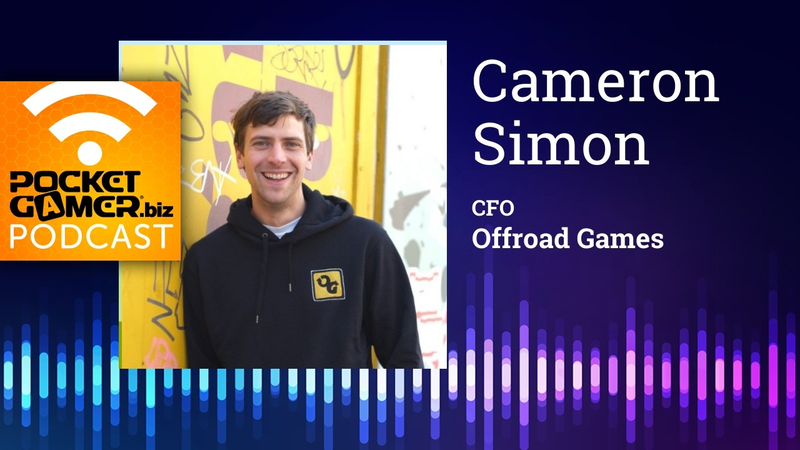
- Offroad Games manages studio runway and financial health by maintaining radical transparency with the team regarding KPIs and company goals to build trust and alignment.
- The studio treats player acquisition and retention similarly to mining operations, focusing on identifying high-value 'ore bodies' (player cohorts) and maximizing their lifetime return through consistent LiveOps.
- Offroad Games prioritizes sustainable, responsible growth by maintaining a lean team structure and utilizing contractors rather than aggressive hiring, ensuring the studio can protect its runway.
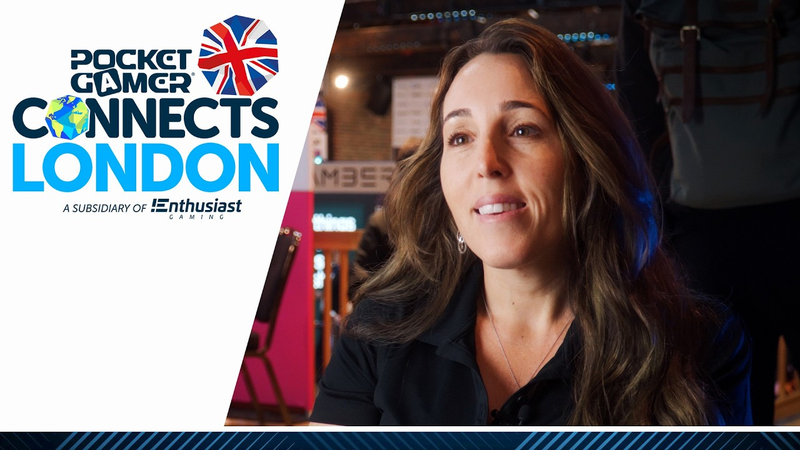
Rewarded marketplaces and how surprise equals engagement | Lisanne Vera from Kashkick #PGConnects
Rewarded marketplaces function as a specialized user acquisition channel for mobile gaming, bridging the gap between casual play and financial incentives.
- Rewarded marketplaces like Kashkick generate higher-intent users by nurturing them through a funnel that educates players on specific game objectives and reward requirements before they reach the App Store.
- User acquisition for rewarded platforms relies on 'surprising' the audience with unique content to overcome ad fatigue, as generic ads are frequently ignored by users accustomed to scrolling past promotional material.
- Personalized, UGC-style (User Generated Content) advertising is more effective than standard display ads because it frames the rewarded gaming experience as a relatable, authentic opportunity rather than a traditional advertisement.

Female-First as a Moat: Dorian's Business of Fandom UGC with founder Julia Palatovska
Dorian functions as a no-code platform designed to democratize game development by empowering creators, particularly women and Gen Z artists, to build interactive fiction and dating simulations.
- Dorian utilizes a 50/50 revenue share model to incentivize creators to treat interactive fiction and dating simulation projects as professional businesses.
- Top titles on the platform generate six to seven figures in annual revenue by focusing on character-driven narratives rather than high-polish mechanics.
- The platform employs an iterative, data-driven development cycle where creators test concepts as pilots and refine them based on real-time fan feedback before scaling.

Angry Birds RUSH: Rovio's next $1BILLION mobile game!
Angry Birds RUSH represents a strategic effort to capture the billion-dollar mobile gaming market by synthesizing the established Angry Birds intellectual property with the high-engagement mechanics of the luck-battle genre.
- Rovio is developing Angry Birds RUSH as a third-generation social-meta game, aiming for a $1 billion market valuation by evolving beyond the casino-style mechanics popularized by Monopoly GO!.
- The core gameplay loop utilizes physics-based runner mechanics inspired by Burrito Bison to differentiate the title from existing market leaders while leveraging the Angry Birds intellectual property.
- Development follows a lean startup methodology, using bi-weekly prototyping and non-IP assets to validate core mechanics through actual install reads and retry rates before applying the brand.
The State of Video Gaming in 2026: Growth and Where to Find It
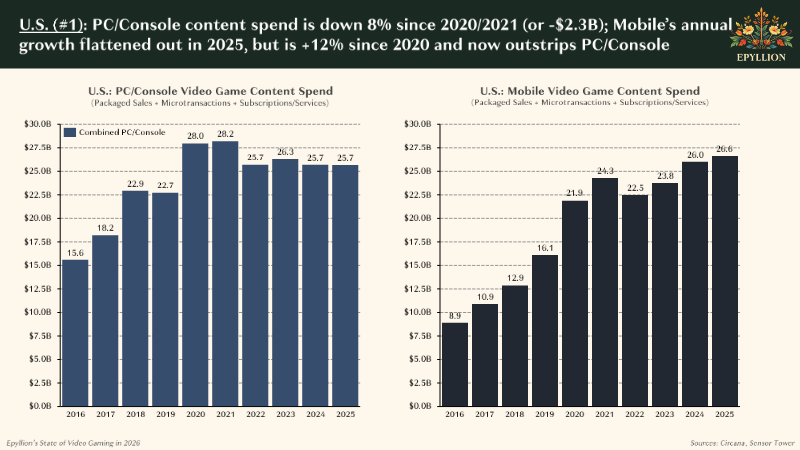
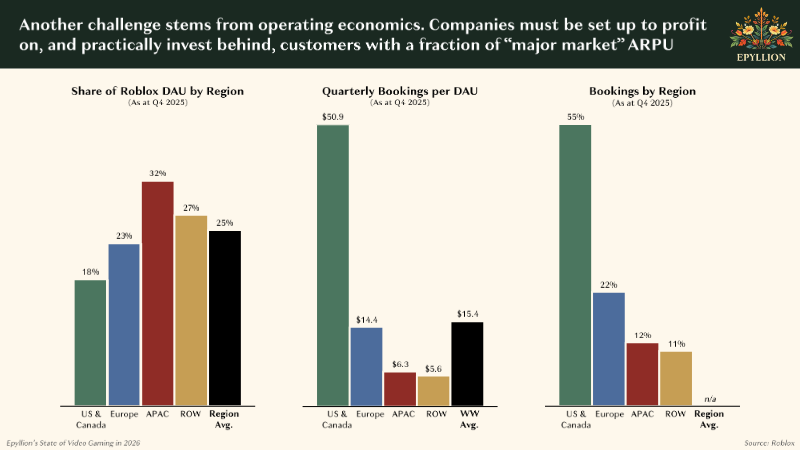
The global video game industry in 2026 stands at a critical juncture, characterized by record-high consumer spending that masks deep structural instability.
- The industry is experiencing a sharp bifurcation where record-high revenue masks structural instability, evidenced by a 55% decline in private funding and 44,000 industry layoffs.
- Growth is increasingly concentrated in emerging markets like Southeast Asia, Latin America, and the broader APAC region, which have seen a 41% surge in value since 2022.
- Chinese developers and platforms like Roblox are the primary drivers of global expansion, accounting for approximately 50% of all industry growth since 2021.
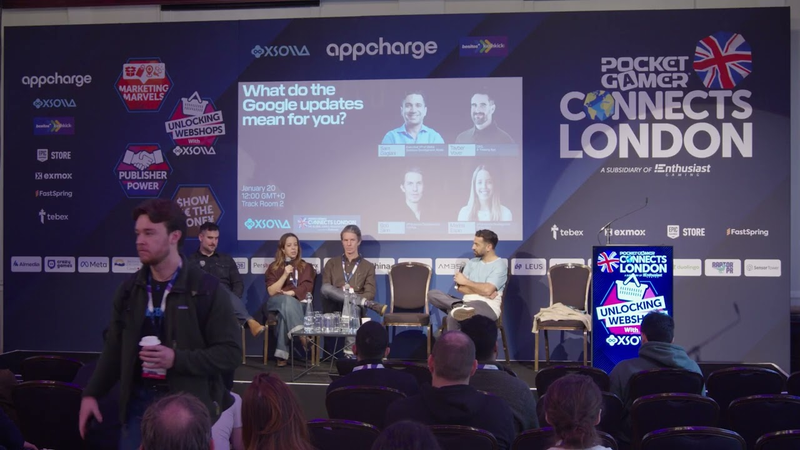
Panel: What Do The Google Updates Mean For You?
The mobile gaming industry is currently undergoing a strategic pivot as developers respond to the tightening regulatory environment and restrictive payment policies enforced by major app store operators.
- Mobile game developers are shifting toward direct-to-consumer web shops and cross-platform ecosystems to bypass the restrictive payment policies and high fees imposed by Apple and Google.
- The adoption of proprietary web portals is becoming a standard industry strategy to reclaim control over player relationships and diversify revenue streams beyond mobile-only marketplaces.
- While large studios are building internal payment stacks, smaller developers are leveraging third-party tools to minimize the technical overhead required to launch web-based storefronts.