In-Game Advertising reports and market data
448 game industry reports, presentations and talks about in-game advertising from writers such as PocketGamer.biz, Two & a Half Gamers and Deconstructor of Fun, newest from 2026. Every document has a summary and key insights with the page they come from, and 2,019 charts and tables are extracted as data.
Key figures
In-game advertising significantly outperforms traditional metrics for younger audiences, driving an 86% boost in brand affinity among under-18s and increasing brand recall by 7 points and purchase intent by 9 points for those under 34.
Anzu, 2026 · Gaming the Future: How to Make an Impact With Younger Generations, p. 17
Ad-supported titles now represent 84% of all mobile game downloads, establishing advertising as a foundational revenue model generating $12 billion annually across 19 global markets.
Sensor Tower, 2026 · Gaming Deep Dive: Ad Monetization 2026, p. 2
Hardcore games prioritize high-fidelity video content, which accounts for 56% of their advertising creative.
GameAnalytics, 2025 · The Q1 2025 Gaming Ad Snapshot: North America and Europe, p. 7
Gen Z shows a strong preference for rewarded advertising, with 61% of respondents reporting that they enjoy offerwalls within mobile games.
Tapjoy, 2025 · Mobile Gamer 2021: Gen Z Edition, p. 17
Two-thirds of gamers view in-game advertisements as having a neutral or positive impact on their experience, with 34% noting that product placement enhances realism.
Comscore, 2024 · Level Up – Harnessing the Power of Gaming Audiences, p. 15
Documents
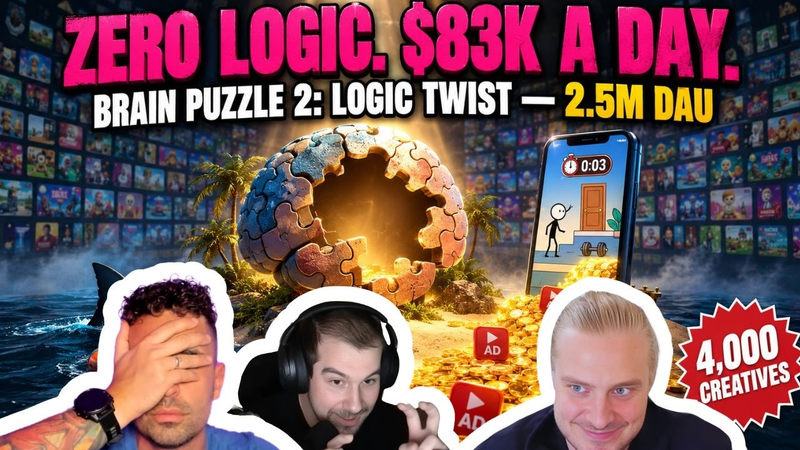
🧩 Zero Logic, 2.5M DAU: Brain Puzzle 2 Makes $83K/Day With the Dumbest Ad Setup We’ve Ever Seen
Brain Puzzle 2: Logic Twist demonstrates the commercial viability of high-volume, low-complexity mobile gaming by achieving 2.5 million daily active users and generating approximately $83,000 in daily ad revenue.
- Brain Puzzle 2 generates $83,000 in daily ad revenue from 2.5 million daily active users by prioritizing high-volume acquisition over long-term player retention.
- The game achieves profitability in under 30 days by targeting tier-3 markets like Brazil, India, and Indonesia, where cost-per-install metrics remain low at $0.10 to $0.20.
- The studio maintains a relentless creative pipeline by deploying 4,000 unique advertisements every month to drive continuous user influx.
“There will never be another Subway Surfers”: Sybo's CEO on what comes next
Sybo Games, the Copenhagen-based studio behind the mobile gaming phenomenon Subway Surfers, continues to maintain its flagship title as a global leader nearly 15 years after its launch.
- Subway Surfers maintains 100 to 150 million monthly active users and one million daily new installs nearly 15 years after its launch.
- The original Subway Surfers has achieved nearly 5 billion lifetime downloads with virtually zero user acquisition spend, relying instead on organic marketing.
- Approximately 90% of the original game's revenue is generated through an ad-funded model, whereas the new Subway Surfers City focuses on robust in-app purchase mechanics.
🚨📢BREAKING NEWS: New Adnetwork AdSURGE is here, Supercell Kills Squad Busters, Ubisoft Quits Mobile
The mobile gaming industry is currently experiencing a significant shift characterized by the emergence of new ad-tech infrastructure and a wave of high-profile project cancellations.
- Miniclip, in partnership with Tencent and Easybrain, has launched AdSurge, a new ad network leveraging first-party data to compete in the mediation and ad-tech space currently dominated by AppLovin and Unity.
- Supercell is shutting down Squad Busters, with the game being pulled from stores on December 1 and servers closing on December 14, marking a rare global launch failure for the studio.
- Ubisoft is exiting mobile game development in Europe, highlighted by the closure of its Helsinki-based studio RedLynx and the cancellation of Rainbow Six Mobile.
What’s going on at Rovio, Miniclip’s new ad network, Squad Busters’ last rites, RedLynx closes, more
The mobile games industry is currently undergoing a period of significant restructuring, characterized by studio closures, project cancellations, and a strategic pivot toward established intellectual property.
- Mobile game spending declined by 7% in Q3, with only three of the top 20 grossing titles being less than two years old, highlighting a significant barrier to entry for new games.
- Major publishers are aggressively pruning portfolios, resulting in the cancellation of Supercell’s Squad Busters, Ubisoft’s Rainbow Six Mobile, and Fingersoft’s Lego Hill Climb Adventures.
- Ubisoft is closing its Helsinki-based studio RedLynx as part of a broader industry trend of studio closures and project cancellations.

💰 You Hit $1,000/Day in Ad Revenue. Now Here Are the 5 Tricks Ad Networks hope you NEVER Learn
Achieving a daily ad revenue milestone of $1,000 marks a critical transition point for mobile game publishers, where incremental optimizations yield significant financial returns.
- Implement dynamic bid floors to counter DSP 'bandit models,' which can recover 5–20% of lost revenue by shifting the publisher from a price taker to a price setter.
- Maintain presence across at least six to seven major ad networks—including AppLovin, Meta, Google, Unity, and Mintegral—to maximize demand, with each additional high-quality network typically contributing a 5–10% revenue increase.
- Monitor ad-display and ad-hidden callbacks to identify and block user-hostile creative formats, as networks often extend rewarded videos to 120–190 seconds without publisher consent.
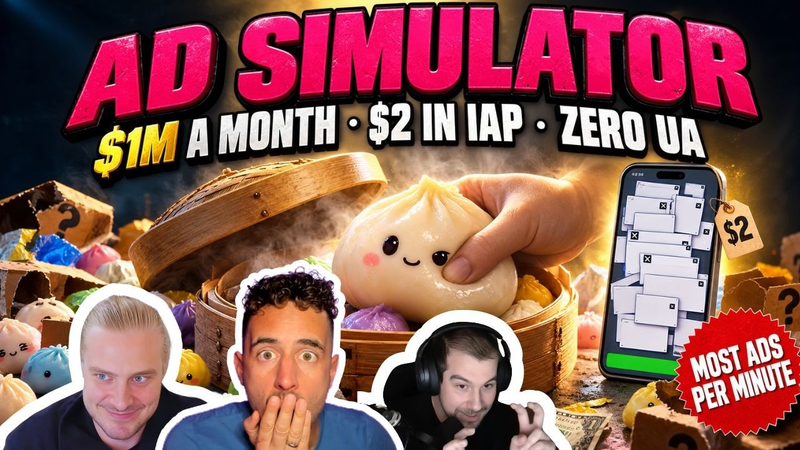
🥟 Mystery Dumpling Unbox ASMR: The Game that isn't a GAME (It's an Ad Simulator)
Mystery Dumpling Unbox ASMR exemplifies the rise of the ad simulator, a category of ultra-casual mobile applications designed to monetize viral trends rather than provide sustainable gameplay.
- Mystery Dumpling Unbox ASMR generates approximately $1 million in monthly revenue, or $30,000 per day, by operating as a transient ad-based simulator rather than a traditional game.
- The application achieves 300,000 daily downloads and 1.1 million daily active users through organic search traffic and keyword optimization, requiring zero investment in paid user acquisition.
- The monetization strategy relies on high-density ad formats, including permanent MRECs, frequent interstitials, and Google’s in-game billboards, while intentionally excluding rewarded video.
How to Win with H5 Gamers
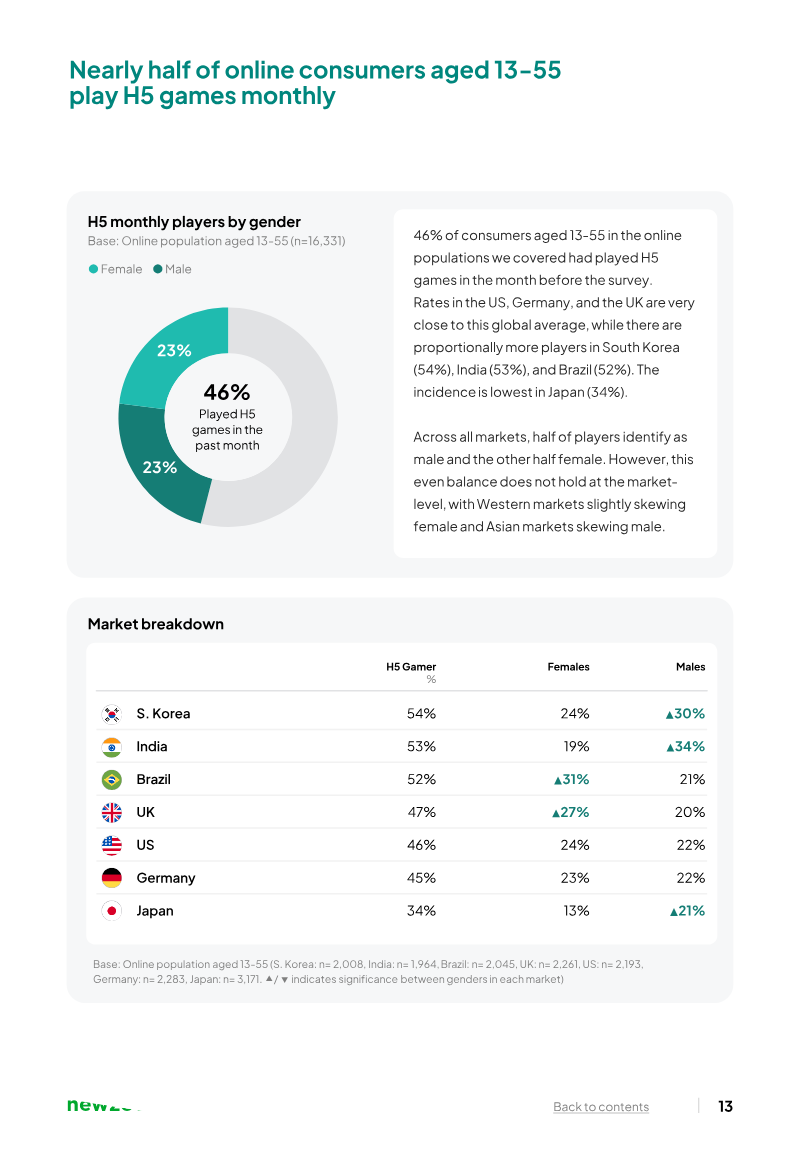
HTML5 gaming has emerged as a significant, mobile-first sector that captures the attention of 46 percent of online consumers aged 13 to 55 on a monthly basis.
- HTML5 games increase user time spent on websites and social platforms by approximately 40 percent, serving as a highly effective retention tool.
- The sector reaches 46 percent of online consumers aged 13 to 55 on a monthly basis, driven by a low-friction, mobile-first, free-to-play model.
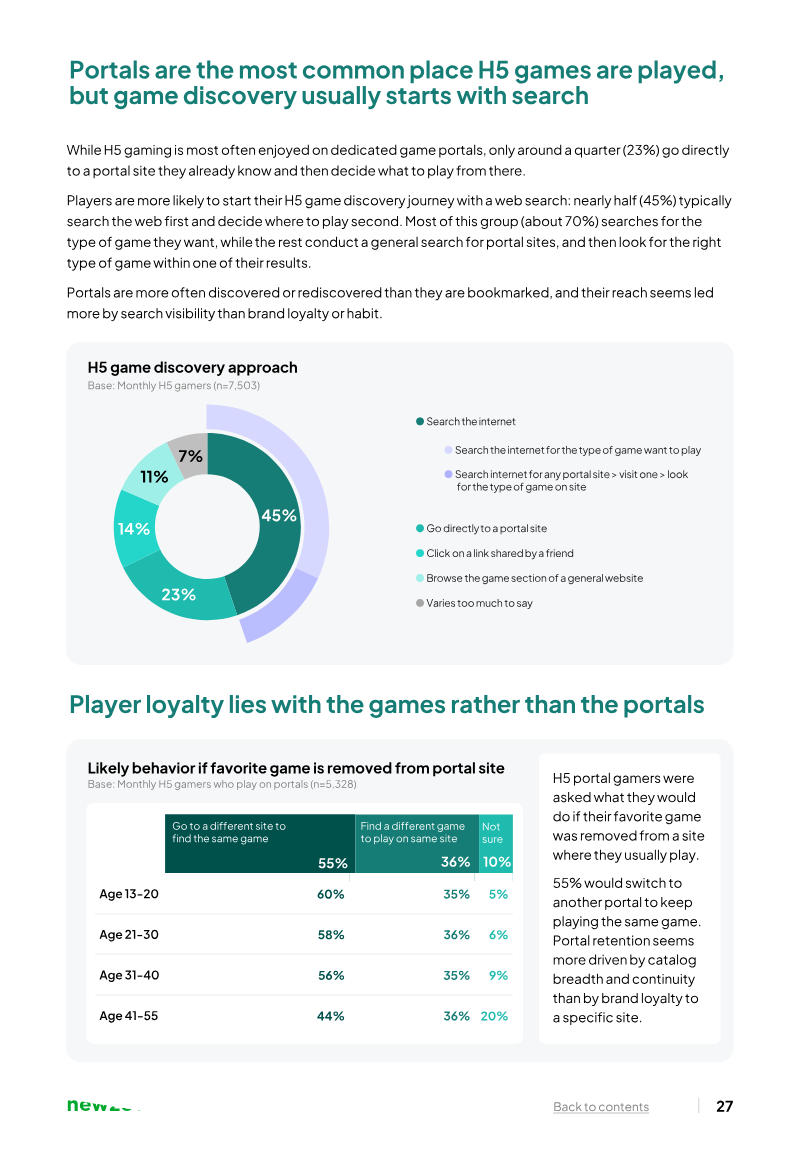
- 69 percent of players prefer ad-supported experiences over paid, ad-free alternatives, making non-intrusive advertising the primary monetization strategy.
🚨📢 BREAKING NEWS: AppLovin Just Cut Off Everyone's Data: The MeowDoku Studio Got Sued & more
The mobile gaming industry is currently undergoing significant shifts in data privacy, intellectual property enforcement, and cross-media expansion.
- AppLovin has restricted access to user-level ad data on its MAX mediation platform, shifting to aggregated reporting to prevent competitors from using its ad stream to train rival bidding algorithms.
- Oakever, the studio behind the popular title MeowDoku, is facing significant legal challenges, including a copyright infringement loss to Hungry Studio and a lawsuit from Avia Games regarding unauthorized advertising assets.
- The mobile gaming industry is seeing a shift in intellectual property dynamics, as evidenced by Sega and Netflix partnering to develop film and television projects based on the Sonic and Crazy Taxi franchises.
Microsoft Moves Halo to Activision, Discord Courts Fanduel & Is RPG Grind Gone? |Games for Breakfast
Microsoft is undergoing a significant structural transformation, marked by 268 layoffs across its first-party studios and the strategic reassignment of the Halo franchise to Activision-led teams.
- Microsoft has laid off 268 employees from Halo Studios (formerly 343 Industries) and is shifting the development of future Halo titles to an Activision-based team.
- Discord is updating its age verification processes to facilitate the integration of advertisements for FanDuel, a move linked to the platform's broader push into sponsored content.
- The role of 'grind' in modern RPGs is being criticized as an outdated mechanic used to artificially extend game length, with hosts suggesting that developers should instead offer level-boosting options or better-integrated side content to prevent player frustration.
TWIG #402: Xbox Bets on Kojima, Halo Gets Handed to CoD and AppLovin Hits the Road
The gaming industry is currently undergoing a period of intense structural realignment, characterized by aggressive consolidation and a strategic pivot toward transmedia expansion.
- Microsoft is restructuring its internal studios into vertical business units—Activision, Bethesda, and King—to streamline operations and reduce corporate hierarchy.
- The Halo franchise has been moved under the Activision umbrella as part of a strategic effort to stabilize the brand's performance.
- Microsoft has taken control of Hideo Kojima’s espionage project, Physint, following Sony's withdrawal due to concerns over high production costs and limited commercial reach.
Could Game Pass get a tier with ads soon?
Microsoft is reportedly evaluating a tiered Xbox Game Pass model for 2027, potentially introducing an ad-supported subscription option to supplement its standard offerings.
- Microsoft is reportedly considering a new, lower-priced Xbox Game Pass tier that includes advertisements and excludes day-one game releases, potentially signaling a shift away from their previous high-price subscription strategy.
- Roblox is expanding its platform strategy by allowing developers to release standalone applications for their games on PC, console, and mobile, a move that complicates the traditional relationship between game engines and storefronts.
- The Triple-I Initiative, a showcase focused on mid-market indie games, is transitioning to a twice-yearly event schedule starting October 8, aiming to highlight titles that generate significant wishlists without relying on major AAA publishers.
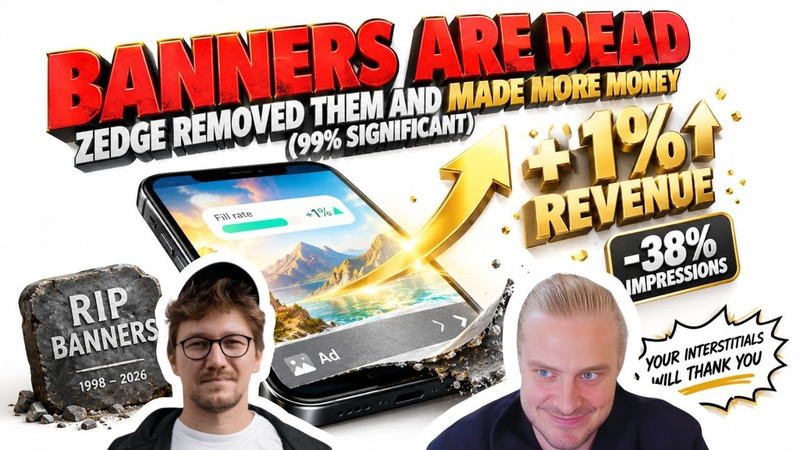
🪦 Are Banners Dead? Zedge Removed Them, Cut 38% of Impressions, and Made MORE Money
A recent experiment conducted by Zedge, a personalization app with 721 million installs, challenges the long-standing industry assumption that banner advertisements are a necessary component of mobile monetization.
- Zedge removed all banner advertisements from its app, resulting in a 38% reduction in total ad impressions while simultaneously increasing overall revenue by 1%.
- The removal of banners led to a 1.77% improvement in primary user engagement metrics, suggesting that banner-free environments foster better user retention.
- Eliminating banners consolidated ad demand into higher-value formats like interstitial and rewarded video ads, which saw significant gains in fill rates and performance.