VideoDeconstructor of Fun
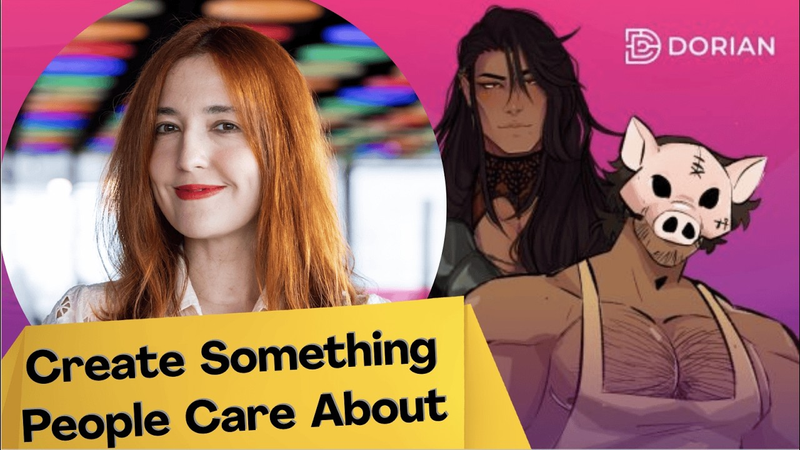
Female-First as a Moat: Dorian's Business of Fandom UGC with founder Julia Palatovska
16 Feb 202648 min video
Transcript
If a founder or an operator is listening to this podcast and they want to build something like what you've built, UGC4X, what are the sort of a three preconditions that must be true before they even start? I would um recommend to analyze what kind of games they want to enable for UGC creators in this niche. What are the references? I would recommend to partner with creators who are already creating for this niche and work with them as closely as possible to test your first tools and ask what they need to turn this content into a game because likely there are already
adjacent UGC creators who are not making games in this niche but they're making content in this niche. This was very successful approach for us very early on. And then the third one is [music] Julia Blatovska. Your company Dorian basically pitches itself as the Roblox for storytellers. It's a no code platform where by your numbers creators are overwhelmingly women or sexual minorities and top titles can hit six to seven figures in a single year. So here's the real question. Why does UGC work in romanty or dating sims or interactive fiction while most UGC platforms basically drown in slop?
Hi Mishka. Hi everyone. Um nice to be
here. Uh so I think that this comes to three reasons. Uh the first one is the audience. The second one is our tools and the third one is our creators and what kind of creators we're serving. We found uh this big and fast growing niche. You probably heard of um uh the game like Love and Deep Space that hit a billion dollar in revenue uh and growing fast uh in a very short period of time. And generally speaking, our goal is to enable Dorian creators to produce something similar, similar successes uh to Love and Deep Space in the same um niche because our audience is largely overlapping. And um this comes to um our creators who are mostly artists coming from such webcomic platforms as Webune.
um and similar where creators um can um be successful hobbyists and have big audiences but usually they cannot generate revenue. Whereas in Dorian we allow them to produce free-to-play mobile games and turn their passion into the main source of income and make games that reach six to seven digits in a year. And these creators um can make everything solo or as two person teams and they do not need to produce slop. They can control every step of the process and produce something that they can be proud of. And this uh comes to the tools that we made accessible on Durian. you as a solo creator or a team of two amateurs um formly amateurs should I say can um make an entire
free-to-play game yourself. Um Dorian is very accessible and um accessible specifically to artists who are all um taking slop very seriously. They wouldn't especially if you refer to AI swab they wouldn't use AI tools um they are very proud they they of their work and being artisans of their craft and we just enable them to translate their art into playable pretty deep games with our tools and then when it comes to audience audience appreciates that these are humans behind every game they know the artist's name. They have often times followed them on socials for years and now these creators can build a portfolio of games that invite fans to uh participate in the journey have high
replay value and this has been um fantastic for um these creators to continue taking more and more pride in their work and become um professional game creators very quickly. I definitely want to talk more about AI, but first I I need to understand better the uh the creators on your platform. And I was wondering like what was the um the biggest perhaps wrong assumption that you had about creators when when you started and kind of like a year in to Dorian. I think that um the biggest um wrong assumption was that we um would um start with providing art for our creators. So we started with this system um within the platform that would allow writers
um make games and use our art systems. I think that us uh building the entire back end for art management where creators can upload their art, can re-upload it, iterate their content and u upload art in on the fly so that fans who started playing their game can see updated game instantly without a new build. You can upload your art and change it um every day if you want to. This um was a huge unlock because uh when we saw what artists can produce um it's a big also marketing uh boost because art um sells much better to our female demographic uh than just storytelling. So storytelling is important but art is top of the funnel, right? And um the main
motivation for the audience because most of the games on the platform are dating sims uh is to uh fall in love, develop relationships with fictional characters. And of course uh art is um core to this motivation on the fandom side.
And how do you think about creator acquisition? Is it like community or is it about partnership or is it like funding programs sort of like accelerator or SDK distribution like platform essentially grows through the growth of an audience but the growth of the audience kind of requires the growth of the creators as well if I understand correctly.
Absolutely. We have tried everything uh that is possible. We started mostly with uh partnering with influential creators in the communities that we wanted to bring over and um this is how we seeded
uh a few thousand of the first games on Dorian and uh once we hit great unit economics and uh saw commercial games with commercial potential then uh we started Ed uh being more intentional and organizing mostly game jams and accelerator programs where we would um invite specific type of creator to participate and accelerate them from um zero to this repeat successes that we have seen on the platform in the last year and a half. Well, basically by by focusing on creators who already have an audience, you're building your audience.
This is true. Although we have built distribution successfully. So we find
this phenomenal effect that uh when um there are hits on the platform specifically games as we discussed that hit six to seven digits and we hope to hit um eight digits uh more regularly in the next two years. Uh when you um have this hits, every platform needs hits then we see very successful distribution of fans across the platform. So with each hit all boats rise on the platform.
What's the sort of a most common failure that you see with new creators joining Dorian? It can be challenging when um creators um who come to the platform, they might have played games but they have um never um built games. and they think one of
the biggest surprises for them is that there is way more work after you hit certain traction with your we call it usually pilots than before. Um I think that it's often an assumption for um creators initial assumption that they need to do everything they can to realize their vision, add a lot of polish and then make a big launch as big as possible uh and then just results come in. Whereas uh in mobile free-to-play games, you are much better off if you release um MVP. We call it usually pilots. We often recommend to release like up to 10 pilots based on your initial idea or vision and then compare basically AB test. We have AB testing tools and people can creators can see all of their data and analytics.
They can see where they lose users. they can see where they monetize fans and all of this is super accessible on Dorian and then they can iterate and basically for many it's a surprise how much iteration you need to do once you hit some traction and um working with phandom data how important it is
so success brings more work
but once you once you understand this process is it risks it for you. So you do not to have to commit to the vision that might not work. you can uh do absolute minimum uh release MVP, collect data and sentiment and then commit to something that works because uh releases and games and Dorian are usually episodic and most of the creators release one um episode per week, sometimes two, but uh basically top
games often top series often continue for over a year. Um and uh you as like usually by the end of the first successful series, a creator is way more professional and experienced than before they start.
So what does the creator P&L look like? What I mean by that is what is the time spent per season for the creator? Uh how much the platform takes from the overall pot? um what are the sort of a revenue patterns? Is it like upfront that they're getting from the season and then there's kind of like a thing long tail or the other way around? And just how does the the economics work from the creator perspective?
So um in terms of revenue share, uh it's split 50/50 between Dorian and creators. Uh we share everything that we get after
platform fees 50/50. Creators do not have to pay anything to use Durian. All of the tools are entirely free. We also take care of distribution and marketing for many creators. Of course, they also market themselves, but we have been pretty successful with distribution and growth of Dorian fandom. Um, and then in terms of the costs, usually the biggest upfront cost is creating your first what we call pilot art set. So, usually it's uh a few characters. Durian provides uh creators with backgrounds. Um, and we have an extensive library of backgrounds. So, usually you've got to make um three to five character sprites to start. and um or commissions that and that's your upfront cost. And then for for this reason, majority of creators
become profitable very very quickly uh once they go through this pilot process because it is recommended that you try a few versions of your first episode to see what works. Um to make one episode, you you can make it in one day. Uh most people take up to a week. I would not recommend to start with longer than part-time week for your first episode. Um and um as a former VC who invested with London Venture Partners, I can tell you that majority of durian creators um who usually come as amateurs, they grow faster and get more successful results than many venturebacked startups that I firsthand.
many venturebacked startups go extinct like let's say 99%.
And it's a very I think it's a very different process of what I see on Dorian and what I see in VC backed startups. Not to be disrespectful to either side because obviously I hugely respect founders who start something new. But I think that if you have such a low entry cost and you can experiment uh try things um alone without reporting to anyone else and without your vision being diluted. you can um take more risks and you can try things that uh nobody has tried and this is part of our success. They um serve audiences that are largely underserved. Gen Z women, hugely misunderstood by the games industry. And
I hope that uh the next uh billion dollar uh success for Genzi women will be built on Dorian
web stores. You've seen what good looks like, but have you seen great? Appch charge is the direct to consumer platform backed by the likes of Supercell [music] and built by monetization pros from Moonactive, Platika, Huge Games and others, people who know the difference. App charge powers over half a billion dollars in transaction a year for top studios optimizing every detail. Deeply personalized web store offers, custommade design, industryleading monetization features, in-game payments SDK and more. 70% of top grossing games already have a web store, but the ones scaling fastest, they're doing it with app charge. Learn more at appcharge.com.
Game devs, here at Heroic Labs, we know that great gameplay is what players love. But integrating metagame features like challenges, progression, and rewards is crucial for retention and monetization. But coding them is a tedious and timeconuming [music] process. That's why top studios have turned to Hero from Heroic Clouds. Hero provides [music] a complete suite of battle tested metagame features that are quick to implement, letting you spend more time on the core gameplay experience. Ready to ship fully featured engaging games? [music] Check out her today at heroiclabs.com. H I I want to actually double click on that. Hugely understood by the the the game industry. Um, so as you said, like Dorian is very explicitly female first, queer friendly fandoms. Um, and when people ask like what do women want? The way I understood this, correct me if I'm wrong, it usually means what theme? But
the real sort of a question is what is the need state and what is the need state that that you're serving rather like what is the the genre or or um or a theme. So what I'm trying to ask is like what do Gen Z women want? for uh many of them the biggest motivation on the platform is exploring storytelling. So storytelling is incredibly important and building uh universes that um do not exist anywhere else is what has made um all of our commercially successful creators successful. They come deeply from this fandoms. So
they basically understand this fandom's best and usually it is fantasy around relationships, fantasy around different love interests. Uh usually in romantis like so romance plus fantasy spaces. Um, for example, there was a big surprise for us when one of the biggest games on the platform um was and is um a dating sim where you can date uh humanoid sharks. So, it's an underwater world called Shark Bait produced by a solo cosplayer uh Rose McPai. And this creator created um underwater god world where um you can
have a fantasy of building relationships with sharks. And it's actually a big hyper obsession for many people. Uh and it tapped into this niche that this creator deeply understood and could serve with now multiple games in their portfolio. And generally speaking, I want to say that if you are succeeding in certain um subg genre on our platform, the portfolio strategy can be very strong because you basically can then retain your audience throughout your portfolio of games. Um with similar universe, storytelling and art style can be very successful. So, if if I understand correctly, the
the the season is is about romantic relationship between humans and sharks.
Humanoid sharks.
Humanoid sharks. Oh,
that's that's interesting. Um, wouldn't have guessed that. And that kind of leads me to my next question. Yeah, that leads me to this is like what do maleled studios systematically misunderstand about this audience? I think that there is a lot of misunderstanding around how much storytelling matters and um how much um deeper game mechanics matter. I think that uh oftentimes people um in at game studios um overemphasize and focus on game mechanics too much as if
um game mechanics for women are just kind of make it or break it. Whereas of course gay mechanics are important. Um storytelling is why for example people play love and deep space. It's a midcore game but um if you read any uh of the forums around love and deep space you will see that people really care about blocking those story lines. And um I think that game mechanics is what makes it addictive. It's important, but then a lot of the games could do so much better if they prioritize story line more and it wasn't like just slapped on top of the game mechanics. So starting with the game mechanics might be um
much less strong than starting with storytelling and then thinking how you weave game mechanics into this um more naturally more intuitively. Um, I'm curious to understand like are there any hard boundaries that you enforce to keep these experiences safe and the fandom culture thriving?
Yeah, it's very important in um in UGC platforms. Uh so we have automated um moderation that doesn't allow uploading certain um graphics and texts. Uh they will be not accepted by the system in the first place. We also have human moderators um from the community who help us moderate. And then I do want to say that
creators on our platform take this very seriously. For many of them, this is the main source of income. So they self moderate more than anyone else. And we have been very lucky to uh have fantastic community that is very collaborative and understanding how safety is important.
Are there any early signals that correlate that this series will do really well or is it like surprise like with that shark humanoids? Um you can usually u tell a lot from early uh testing of the art style and character designs. This is the earliest signal that we can uh see. So you can decide um on the uh character design level even
on the sketch level in some cases before you even make your first pilot. This is very strong signal the art style and character design which is why many of our um creators are doing a very smart thing. they would post character sketches on social media and ask for um feedback and reaction. So um some of our creators redesign characters on the sketch level before they finalize the first designs based on social media feedback. This works beautifully and then of course uh it is possible to do UA tests on that level. This works also great. Um and then um you can um see uh then you want to test um
retention and monetization in the first episode and usually uh I would recommend AB testing this and this is what we do with many creators. Discoverability is always a challenge on on any of the platforms, UGC included, and you talked about how the artists are essentially showing their sketches early on and getting that early hype and visibility. I I'm curious about the discoverability on your platform like how do you approach algorithmic or editorial or communitydriven like how how does your um discovery stack has evolved over time? The good news for any people who listen to this podcast and want to try Dorian is that uh the platform is not yet oversaturated with games. So um discovery is very good at this point. It's mostly
curated. We have a discover page that's curated. We are not at the point yet when uh we are ready for algorithmic discovery. Um we want to get to this point and we have a very solid plan. We have tested algorithmic discovery in extensively. It's a little too early at this point, but because we get an incredibly strong signal from fans um on which games they choose, where they quit, creators can also see this where they spend money. Uh the signal uh can allow very very granular algorithmic discovery once we get there. So the dream for me is um to host multitude of fragmented communities at the same time with as fair discovery as
possible. You know that discovery is hard. It's true. Um at this point it's um a little early to not be discovered um as a creator if you join now. But uh we have a vision for this.
And how do you think about replayability in especially since the games are interactive fiction? Like is it um are there like retention loops or how does it work
as a platform? Uh as a UGC platform we're constantly evolving. What the platform was two years ago, one year ago is very different from now. So, it is our commitment to continuously give creators what can make them the most successful. We're looking what fans like, what they engage with, and then try to add tools in the most accessible
format for artists. Um and in terms of replay value, it has increased a lot thanks to very sophisticated tools that we have built in the last two years. You can add points based systems. You can add progression systems. We are now releasing um a game where we partnered with one of um creators on the platform together where there will be our first chance mechanic and some more. So this is constantly evolving and as a result we got to top games being replayed six times on average which is incredibly exciting and uh we hope to see more games like this this year.
Attention app and game developers. Are
you ready to unlock the secrets behind the world's top performing apps and games? With Sensor Tower, you get the ultimate competitive edge. Whether it's breaking into new markets, fine-tuning your UA strategies, or boosting monetization. Dive into data like never before. Track global trends across app stores. Analyze market leading inapp purchase and inapp ad strategies and benchmark your performance with realtime insight. The best part, Sensor Tower doesn't just deliver data, it helps you turn it into action with intuitive tools and expert analysis. It's everything you need to make smarter, faster decisions. Thousands of app and game studios from indie creators to global giants trust Sensor Tower to help them win. So why not you? Start your free trial today at sensortowwer.com. That is sensortow.com.
And when when you're looking at different KPIs as a platform, like what would be the one, two or three KPIs that really matter for Dorian? I would say that um the most important KPIs is um obviously monetization because this is the promise um for our creators that they can turn what they know so well and their passion into earnings. So monetization is number one and of course um retention um across games. This is what creators pay a lot of attention to moving their fans from episode to episode. Uh cliffhers are incredibly important for this reason and are a tested
extensively. But of course, number one is monetization. In the last year, we have had several studios that were started to build games on Dorian with creators quitting their day jobs and basically doing Dorian full-time. We um absolutely must help them grow and create the workplaces which is very exciting uh making our contribution into the growth uh of the industry amongst everything that is going on.
And as you think about scaling of the platform like what's the most difficult for you? Is it just discovery? Is it the quality control? Is it tooling? Or is it monization that you were talking about?
Making tools as more accessible for uh creators
who we serve u already successfully and want to serve. Um as I mentioned, it is very important as we grow and as the industry moves forward that um what you can make on Dorian gets more and more sophisticated. What we have built is pretty phenomenal. An artist can make a full-fledged dating scene with huge replay value. Uh but the industry and Dorian do not stay still, right? So we need to um provide better and better tools and they need to be democratized. And this is this democratization and how creators can really build the best experiences for their fans that delight fans and that keep fans in their games is where we have made a huge
progress. But it's never enough. It's always a moving target.
The creators on Dorian's platforms are typically, the way I understand, artists and writers. And in that world, AI is not seen as a tool. It's quite often perceived as a value extracting business model. So, I'm curious in what type of a stance you as a platform take since your creators are, you could say, anti- AI in many ways. As a platform, we um do we cannot control what uh creators upload as long as it's um meeting the guidelines and it's appropriate. uh there is no way for us to know whether they used AI for their art or text.
That said, uh we have repeatedly seen that human art is doing way better than AI art on our platform where in the cases where creators declared in their conversations that it was AI art and I think that because um we have a platform of phenomenal artists u human artists artists they um can produce art uh fast and really well without uh using AI tools. So I think that in most cases they see themselves as artisans, you know, like Italian artisans in the world of fast fashion or Spanish artisans for that matter. And
this is working super well. So in we are an open platform. Uh we just if someone claims that there is a copyright issue, they just send us a notice and should they approve it, we will take them down. But otherwise people can upload um what they want. But the community clearly is voting for human art specifically.
In the game of growth, everyone is looking for that power up. [music] Vibes is exactly that. It's built by industry people, so they actually get the challenges you're dealing with. As a result, [music] they become the fastest growing gamified rewards platform out there. And the results are kind of nuts. With their AI powered targeting, you're [music] not just buying installs, you're bringing in the right players. And now they've got this new rorowass optimization engine, so your campaigns basically level up automatically. Vibes
is built different. It's designed for growth, and I guess you could say it's powered [music] by good vibes. Check out their DOF exclusive case studies by following the link in the description and go to vybs.co. [music] That's v ys.co. [music] Share your email and join the weightless list. [music] This podcast is brought to you by Apps Flyier. In today's digital world, understanding your app's journey from [music] discovery to download is more than just insightful. It's essential. Enter Appslier, [music] the leader in mobile attribution and marketing analytics that allows you to measure the full potential of your marketing efforts, making [music] every ad dollar work smarter. With Apps Flyier, that's your new reality. Dive deep into datadriven insights that reveal [music] exactly where your users come from and how they'll interact with
your app. App Slier [music] where your app's potential meets performance.
What do you think happens to UGC platforms overall when AI is making content supply effectively infinite? What will matter? Is it taste? Is it trust? Is it distribution? I think that what matters is u taste makers and curation and at the same time um for UGC platforms you do need um algorithmic discovery that then can help different types of communities to find the content that they like and then different types of communities are going to engage with different um content that is relevant to them. So in our case, we aim to be a platform that is more crafted, more
human angle. Um because this is what our community loves and our creators obviously appreciate. But then there will be some platforms that are the opposite and um we will see a lot of developments in both directions like you you made the reference of fast fashion and hot couture if you will. Um, do you foresee that the marketplace will require certain type of a labeling where this is humanmade sort of as a provenence of a first class product feature?
No, I don't uh think so. I think that some might choose this, but I think that it's uh going to be increasingly hard to
actually identify this or curate this, but you can build a brand uh around what kind of approach you choose. And uh you can build a brand uh just like what is couture brands or more artisan brands um to make it a little bit more casual because there are phenomenal brands that are not necessarily odd couture but take a lot of pride in um their craft craftsmanship. So I think that you can build a brand around this and uh people who consume your content or make uh your content they will choose based what to consume and where to make and distribute based on this brand. So in our case we um
see that um artists and more recently we added um sound and um voice acting management systems. voice acting are incredibly important uh when they're coming from human creators and this is where uh we see our brand. So that does that mean in the industry where everybody is going AI everywhere, Dorian is sort of taking a contrarian bet.
I think that we're taking a bat on giving creators tools that give them a lot of control um over their quality. and they are phenomenal at controlling
their quality because they have taste for that their fandoms share. So we will give our creators everything that they ask for. We talk a lot to our creators and listen to them. We uh see what their fans like and we are developing our tools collaboratively. Um, if there are tools that are AI enabled that our creators will be interested in, we will work with them on this. But um, at the same time this needs to be human directed because this is where we see um, success. It needs to be creator friendly, human directed. This is our position and branding.
So, so you can't create a series out of
a prompt.
You can, you absolutely can. We're an open platform. Um, and then the market will decide. Um, so far, uh, the market wants human art.
Got it. Well, Julia, you've built a really impressive platform in a very short amount of time by focusing on a very clearly defined niche. And if a founder or an operator is listening to this podcast and they want to build something like what you've built, UGC4X, what are the sort of a three preconditions that must be true before they even start? I would um recommend to analyze what kind of games they want to
enable for UGC creators in this niche. What are the references? I would recommend to partner with creators who are already creating for this niche and work with them as closely as possible to test your first tools and ask what they need to turn this content into a game because likely there are already adjacent UGC creators who are not making games in this niche but they're making content in this niche. This was very successful approach for us very early on. And then the third one is understand fans and their main motivation and just
test as much as possible. I think that you will always want to start with volume and um producing as many games and experiments as possible until you hit um certain traction and results and then you will need to figure out how to make whatever generated results more accessible for more people. So then you will start caring about hits.
Those are very good advice. Julie, thank you so much for joining the podcast and telling more about UGC platforms because this is the uh the hype and not even the hype. This is where the game industry is growing at the moment when you look at Roblox, when you look at Epics investments, uh when you look at your success. Um so thank you very much for sharing quite detailed um operational insights from behind the
cover of the UGC platform. Thank you so much for inviting me. I hope it's useful um for people and I would love to see anyone who wants to give it a try uh contact me after this podcast. We will welcome them with open arms. All right, link in the description below for Dorian and for Julia. Thank you very much for listening and thank you again, Julia, for joining the podcast.
Thank you so much for having me.
You did it. [music] You made it to the end of the episode. As a fan of the show, it would help us out if you'd subscribe and leave us a review on the podcast service of [music] your choice. Those stars and likes, while a small action on your part, mean a lot to us and help to grow the show. More importantly, are you a member of the Deconstructor of Fund Slack group? If you have 5 years or more of games industry experience, go to deconstructorofund.com/ [music]
Slack and apply to join. Join the games industry best professional community filled with peers always willing to lend a hand. Or subscribe to our newsletter to get all the latest [music] insights from the Deconstructor of Fun content creators. Thanks for listening.
[music]
Auto-generated captions from YouTube — names and numbers may be misheard.















Comments