VideoBITKRAFT Ventures
BITKRAFT Summit 2025 Day 2: India Insights - Anuj Tandon
24 Feb 202625 min video
Transcript
Good afternoon everyone. My name is Anush Tundan. I'm partner at Bitcraft. I'm going to talk about the Indian market. Those of you who were were here yesterday for the LPJ. There might be a couple of slides that might be repetitive, but I'm going to go deep uh to give you an understanding of the interactive media market, which is basically the new form of gamified apps that are sort of uh taking revenue off uh gaming uh so to say and and sort of the consumer market is changing and evolving habits. So, first uh they're going to be some busy slides. Uh so I'm going to break that down for you guys to just summarize how what those slides mean and u make you understand the landscape about the market. Going to give a quick macro of the Indian market why it's so exciting.
Then we're going to talk about regulations uh the fun part and then we're going to talk about a little bit of the u the consumer behavior and trends and and what is working and what is uh building revenue in India. So quickly starting with some uh macroeconomic uh uh you know terms and and and uh the the situation in India uh India is still the fastest growing economy in the world. It despite all the uh drama around the tariffs uh still growing at 6.8% which is uh more than double of the global average in terms of uh the economic growth. uh it's uh the PFC which is the principal final consumption some term of economics it basically what it means is the consumption for uh Indian economy where users where families are spending on the expenditures is higher than China that means people are not holding back and
and that is causing economic growth. Uh the other is MPC similar factor it is sort of increasing it is slightly lower that means this this factor when it increases means people start spending less on essentials but more on entertainment. So as we gradually grow from a 4 trillion economy to an 8 trillion economy in the next 5 to 6 years, we see that this number keeps increasing and more and more uh people have money to spend on entertainment apart from essentials. And that is uh when we talk about that for any country that's different. But for a country with a size of 1.42 42 billion people. Even if that differential is like $5 or $10, that's a massive user base that you're looking at in terms of monetization. So, so that's the number three point. Moving on, uh this is another fascinating fact that India despite being 1.42 billion people that we have the average age is around 29. That means still a very young
country. you have more people working than uh than retired that means it needs more jobs. Yes, of course. But there are more people who will be in the spending range for the next 10 years. Uh so that's very important to understand that we've not peaked our age uh age barrier. Uh and we have close to 900 million internet connected users in India right now which will reach around uh say to a 1.1 to 1.2 2 billion people who will be connected on internet. Uh so a massive massive user base for any person building for consumer internet uh gaming consumer apps gamified apps any of that. And the average hours spent by an average smartphone user in India is among 5 hours less than Indonesia and Brazil a little but still if you if you think about it 5 hours spent by say 400 500 million people every day that's massive engagement that we're
looking at. Uh another very strong point that and this is repetitive of yesterday's slide is just to to give you an idea of the domestic market that is uh now putting its money in the stock markets similar to 2010 to 2015 China when when the economic priority was around $5 trillion their economy people started to put their savings into the public markets now this is very interesting when it happens is because India was largely dependent on foreign capital to sort of finance its stock market and now it's domestic capital that is that is giving liquidity very important for startups because that gives you ability to exit to the public markets and we started seeing uh that happening now in the last few years u like Nazara which is the only public listed gaming company in India now is trades at 82 90p whereas if you see international peers like net marble plate craftton they're all in the
range of 12 to 25. What that gives these guys ability is to buy assets globally at a much cheaper multiple and the public markets in India reward them at a much higher multiple that sort of increases the flywheel of capital leading to M&As. So that's that's very important to understand that Indian entrepreneurs will have that leverage of domestic capital in the next four to five years. If you are if you're sort of building and thinking of listing anywhere uh if you have user base in India think about you know probably listing there. So just to give an idea about the online gaming uh law that happened uh in uh this I guess it was last month. Yes. When it was enacted uh India had classified gaming as two video games and um RMG real money gaming that was what classified by the industry not by the
government. uh the RMG sector in India was approximately enterprise value of 18 to20 billion that was what was created in the first wave of gaming then uh basically what real money gaming means is you can put cash in and you can take cash out that's a typical cuh casino setting but online so what happened was RMG got banned by the government uh through this law because they felt that as a middle- inome country which is sort of still coming out of uh uplifting millions of people from poverty every year. It is not socially right to be enabling gambling at a large scale. Although that societal measure was very very thoughtful so to say. uh it came a bit late when these companies had already raised uh billions of dollars of capital had an enterprise value of like I said 18 to20 billion dollars and they have now balance sheets of close to a
billion dollars which is looking to deploy outside India to diversify to uh acquire businesses in India to maintain business continuity. What that also means is uh um you know gaming as such video games and esports have got legitimacy policy clarity and the government wants to promote it. If if you've if you've heard about technology in India IITs are some of the biggest exporters of of uh great technical talent globally. India is creating now IICT which is Indian Institute of Creative Technology which will create gaming uh gaming uh technologies people will get trained so that shows the legitimacy of gaming in India is sort of increasing and there's regulatory clarity just to give an idea about the India's media and entertainment landscape right um while there are digital media and entertainment consists of you know OTT u music streaming What we focus on in at
Bitcraft is really the the interactive media what we call which includes u you know short form video interactive audio audio books um uh it includes um uh content in in uh ed tech learning gamified ed tech learning so these are focus areas and and of course gaming as part of it so when we see the split if the new digital media and entertainment market gaming still acquires 60% % of that uh content uh is around 23% social which is uh social interactions is around 13%. And this market is expected to grow by 18 to 22% uh through a 6.5 billion market opportunity from a 2.2 to 2.3 billion which is at this right now. Uh this is actually done by uh a research report done by us and our partners at Red Seir in India. So it's it's we did a lot of surveys and
understood and looked at data and we sort of predict this small uh uh sort of segment to be a a massive growth opportunity where people can actually uh see spending powers increase in this segment. Again uh just to give you guys an idea of what monetizes in India as content categories uh within this interactive media market you had astrology, Bollywood, cricket and devotional what we called as ABCD of content uh that used to make money uh from Indians right ABCD that's what we used to call it now out of which the BC which is the Bollywood and cricket are dominated by incumbents and large players like Reliance, Geo, Tatas they dominate this sort of category. So very less space for startups to innovate and disrupt whereas A uh DG L which are the additional
fields. G is gaming, L is live streaming and and learning. A has astrology but it has audio and D has devotional and dating. So these are the sub segments which we see in the in the interactive media space where we've seen startups have sort of um disrupting the market. They are sort of um creating monetization green shoots. They're sort of making u consumer to spend and engage. And this is where a lot of the global uh companies who are looking to sort of enter the Indian market, they will find the white space to sort of come and build uh businesses over here in uh and and these are just some of the examples that we have for some of these categories. I'll talk about these in uh detail in the next slides again to give an idea of what are people spending time in each of these categories right um most of the users are spending time on social media that's
why you have so many uh Instagram users and ex users from India social media is still the uh largest uh category where people in India spend time video streaming is 20% audio streaming this is a very very interesting this Not just music. This is audio streaming is a unique Indian category because and I'll talk about why it is so popular in the next next few slides. Gaming is 11% but it is still the fastest growing. So there is still even though we have 400 million uh gamers in India on mobile, it is the largest market on Google Play for game downloads. It is still has a massive potential to grow. uh the media formats again you can you can slice and dice the media formats based on long form short form what works what doesn't work again next slide I'll talk a little bit about that so when we when we split the the u
categories of interactive media we have the traditional media which is dominated by large players where startups do not play and then you have the new interactive media uh categories such as gamified learning micro drama fandom audio streaming, devotional tech, social discovery and and uh short form videos. Now we we have sort of we track at Bitcraft all these sectors very very closely. We have thesis across all these sectors and we have done uh in the the highest tier 2 focus and the adapted for evolve for user behavior which is the short form videos. We just announced our uh our uh investment in cuckoo yesterday which is u which is the best sort of platform suited for this and uh it is localized for regional content uh it you know for the reducing attention spans that is happening uh because short form video is micro dramas but just made of say under 2 minutes. So you have dramas
with episodes of under 2 minutes. People just scroll it up uh and watch the next episode in in an apostic format. And that's uh that's the uh the media format which is seeing the highest growth at the moment. when you again go doubleclick a little more u I think to win in India you have to understand that India is more like European Union then it is a monolith country like China what I mean by that is there are 14 official languages within India uh that which is more like a EU uh you have a loosely even though it's it's not federated uh as well as the United States uh there is more central control but with the difference of languages there's a culture difference across different regions of India like I'm from north India and and if I go to the south my
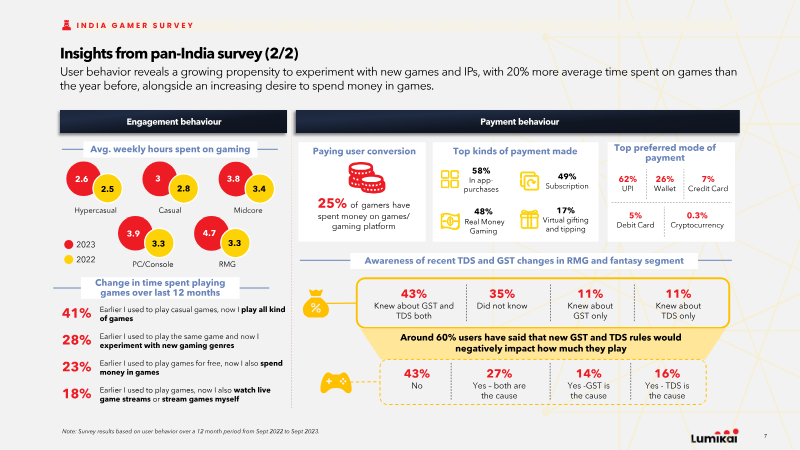
lang I would not be able to speak the language of some of the southern states and that's common there are few common things between all of us but but that is important to understand when you try to penetrate the market the cultural sensibility ities and localization play a massive role. So if you want to really grow big in India, 90% of the interactive media apps ask users to localize or personalize using that region. So that's an important aspect to sort of win. One of the other things which is sort of uh works for a country which is sort of emerging u and especially in India which is still a very valueconscious market uh and a price sensitive market people say inapp purchases microtransactions what we see is actually not even micro it's nanot transactions but achieved at massive scale so when you have like a 100 million users and everyone is paying say 10 cents that that itself on a
weekly subscription brills the revenue to a massive level and we've seen that uh because the Indian public digital infrastructure like the UPI uh which the government has built allows businesses to take money from users automatically through subscriptions. So that's a very very important uh sort of monetization differentiator between how people pay in say China in US and western markets as compared to India where subscription is a massive form of uh small subscriptions, weekly subscription, daily subscriptions uh you know quarterly subscriptions. These are very very uh new forms of monetization that are gaining massive popularity in in the market. Moving on uh audio. This is I think one of the most interesting stories of India's and I I'll give you a little bit of history why it is. Uh so ripoffs of
iPad of AirPods are very popular in India, right? There are cheap ripoffs of AirPods which are available and you can work with Android devices which are very very popular in India. Now a lot of people in India which are bluecollar workers whether it's the Uber drivers whether it's the security guards whether it's the delivery guys um they are most of the time using both their hands and they are on their airpods the ripoff ripped off airpods all the time now that has led them what do they listen for entertainment and how do they grow themselves so they have started consuming audio books this is not Spotify. This is not music. This is not podcasts. These are audio books. These are audio stories in their regional languages for self-help, for learning English, for for growing themsel rich dad, poor dad in their local language if you remember that book. So, it's self-help and growing. So, this category
is very unique and we have seen this is growing to grow by 30 to 35% yearon year. So again massive opportunity for uh getting user uh growth and revenue growth as well. And some of the players here like I said cuckoo is one of the companies that we have invested in. You have Pratilipi Pocket and like I said the content categories is what do these peoples like to listen is vernacular content is important for them. It is which is their local language. story s yes fiction they also listen to um and what is also important to them is tailored suggestions so algorithmic u so these these platforms like cuckoo pocket headphone have been able to create many Spotify for audio books as a business and that's growing by 30 35%. For example, uh Cuckoo does uh revenue of over $und00 million just by audio book subscription in India and that has grown
from 10 to 100 million in 2 years. So a new category, new consumer behavior that is taking form. Another big category which is sort of uh is already pretty big is the micro drama market. I think 2024 the global micro drama was a $9 billion market largely driven by China uh because of their uh the the innovation that happened with the Tik Toks. The micro drama become first test was tested there. It become a huge rage and sort of India follows a very similar pattern in user behavior of massive being the only mobile penetrated massive market which loves to see local uh TV industry. If you look at the local TV industry is dominated by local content uh not the global content. It started with global content. So this is again a very very recent phenomena that has happened. In fact it's just a 1 and a half year old
phenomena. Late 2024 is when micro drama really started happening. There were a flurry of five to 10 companies that got investment early stage investment powered by AI generated content as well as PGC which is professionally generated content including AI is using is being used for localization. For example, you get Turkish drama, you get Korean drama, you use uh AI tech to change the lip sync and sort of generate massive content. This is uh expected uh I'll just skip the slide. This this is expected to be around 200 million again in a year this market and is expected to grow to 2 billion in the next uh four years. Again massive growth you're seeing 100x growth in the next four to 5 years. Again last I'll just take two more minutes is to talk about okay gaming
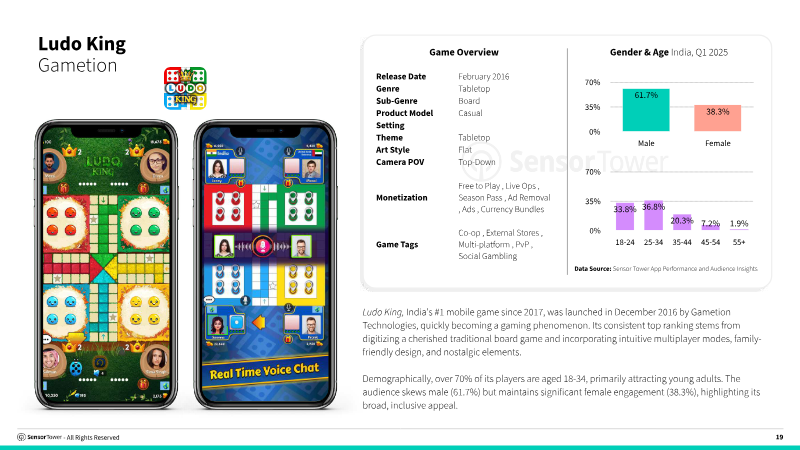
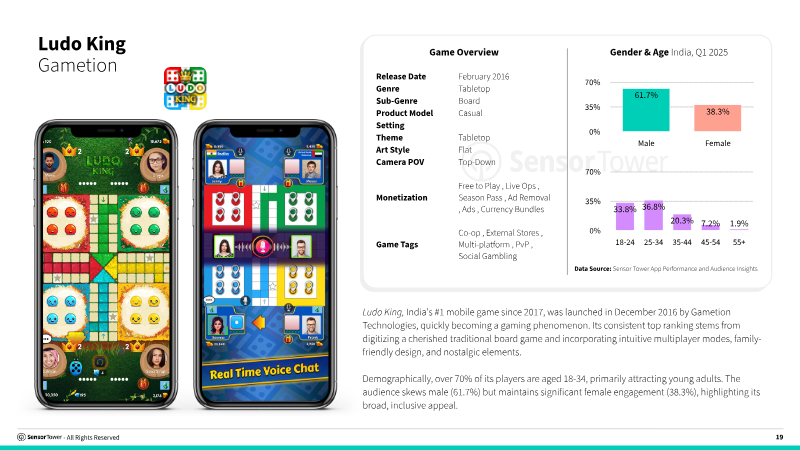
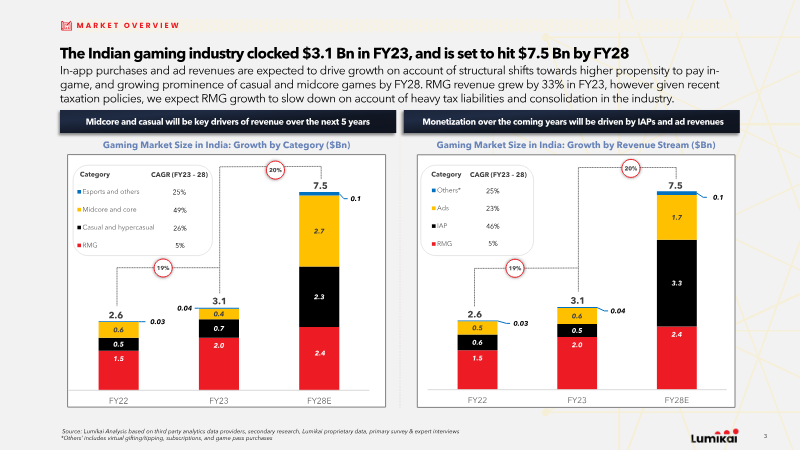
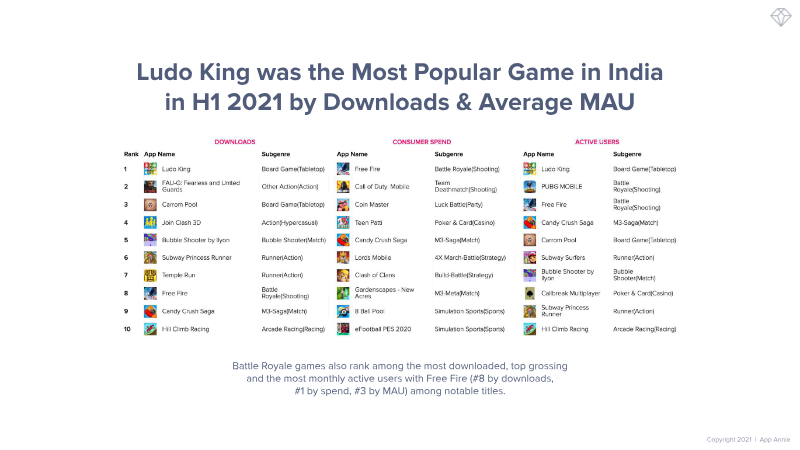
what works in India right and that's that's something very important to understand I think India is a very social country when it comes to gaming if your game has social elements for example you have voice chat for example in in your game you have any any form of chats that's the greatest hook to get users to play your game and build communities ities. Um, we relate a lot to the local communities and any game and one of the largest reason we see PUBG Mobile still making over uh $200 million of inapp purchase in India is largely because it has a very social gameplay and a post gaming content which we call esports is done after that. Core gaming is going mainstream. Uh just to give you an idea, four years back the the mobile gaming opportunity for inapp purchase was less than $200 million. Now it has crossed 1.2 billion. That is the
amount of spends that are happening on inapp purchase. So it's a significant market for for mobile gaming companies to sort of u look at. Uh there are two concepts of gaming studios in India. One is Indian studios making for the Indian audiences. uh which is still rising. There's a lot of AAA games being built but it's still a market which is evolving. And then the first second is make Indian studios making global content which is uh made famous by Turkey and Vietnam and India's probably third biggest market in in in that for for global studios and it's it's sort of rising in that and uh I would say again very important important if you're a gaming studio building a game for the Indian market is to not just vernacularly localize the game if you really are thinking about it is to culturalize Culturalize doesn't mean changing stuff. It just means keeping sure your
microtransactions are priced right in what region and and and just making sure your game works on you know choppy 4G connections. So there's a little bit of technical work that needs to be done to win in India. So I've I've I've actually sort of gone through this already the vernacular culturally relevant content AI. So AI is also uh um a very important theme for emerging markets and it's not just India, it's Middle East, Vietnam, whatever emerging markets in gaming you have, AI is actually democratizing a lot of the game development that is happening. U a lot of uh a lot of game developers who do not have the resources of building uh very expensive concept art, very expensive animation etc. AI is helping them produce stuff better quality and in faster time. So it's in a way people who have a great idea can potentially create a better game in the next two to three years once the super
tech cycle settles and it will make emerging markets better at creating uh faster content and better content. Apart from that, I think uh why I think this is the best time to probably be next two to three years is the best time to be investing in India is I think it's a no-brainer. 2010 China there was just one public listed gaming company. 20 25 India is just one public listed gaming companies. There was a small group of 150 companies in gaming that was re really bubbling under the surface similar to China at that time and now if if you had invested 50 million in that aspect you would have hit at least three to four unicorns in your portfolio. I think very similar markets, the macro trends, the the sort of u um the because of the RMG ban, a lot of young entrepreneurs coming out of that uh those companies with great consumer
insights and the monetization green shoots starting to take place. Um we we sort of in a in a way the best period to be investing in the market. Sorry, I had to rush through a few slides because of the time limit. I hope you took something out of it. U here around feel free to catch up with me about the market. Thank you so much.
Auto-generated captions from YouTube — names and numbers may be misheard.
Key insights
7 takeaways · ~3 min read- 01India's mobile gaming market has seen significant growth in in-app purchase revenue, rising from under $200 million four years ago to over $1.2 billion today.
- 02The Indian government has provided regulatory legitimacy to the gaming and esports sector, including the creation of the Indian Institute of Creative Technology (IICT) to train specialized talent.
- 03Domestic capital is increasingly driving liquidity in the Indian market, enabling startup exits to public markets, as evidenced by the performance of the publicly listed gaming company Nazara.
- 04The audio streaming sector is a high-growth category in India, expanding at 30-35% annually, with platforms like Kuku FM growing subscription revenue from $10 million to $100 million in just two years.
- 05India functions more like the European Union than a monolith, requiring developers to account for 14 official languages and distinct regional cultural differences to succeed.
- 06Successful monetization in India relies heavily on small-ticket, high-frequency subscriptions (weekly or daily) enabled by the country's public digital infrastructure, such as the UPI payment system.
- 07The 'ABCD' content categories—Astrology, Bollywood, Cricket, and Devotional—dominate the market, with startups finding the most disruption potential in Astrology and Devotional content, as incumbents control the Bollywood and Cricket segments.
Ask AI about this video
Cite this video
Citation
Generating citation…












Comments