Transcript
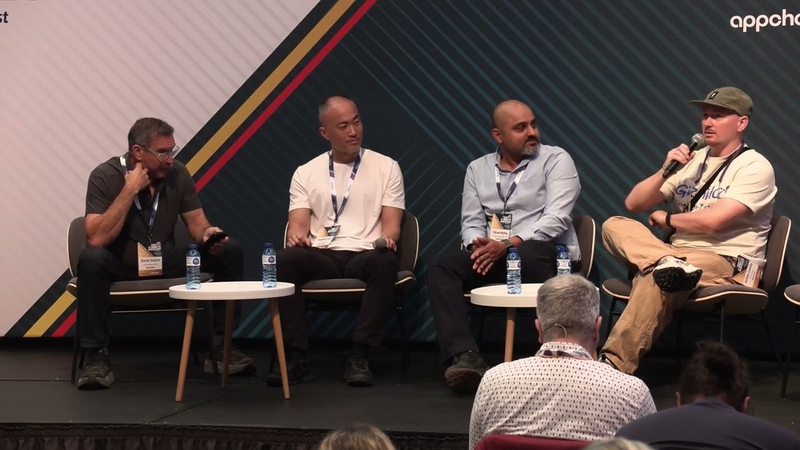
There's there's quite a quite a spoiler alert. in the the the the title of this of this fireside chat because what do the Google updates mean for you for you? Japan is next. So, uh that's a that's a massive spoiler alert right there. Um well, as soon as you're ready to kick it off, then uh Sam, I'd like to sort of give the floor to you to introduce your panelists.
Oh, there we go. Great. Hello, everyone.
Welcome. Thanks for coming. Uh, how many in this room are developers, publishers?
Raise your hand, please. Three, four. Great. You, of course. Um, I'm Sam Gaglani. I'm the EVP of global uh, business development at Exola. I'm going to introduce my panel here. Uh, Bob, you start.
Hi, everyone. Uh, Bob Slinin, I head of business development for uh, Fun Plus. We're a developer focused on freetoplay gaming. Uh, headquartered in Switzerland. The bulk of our teams are in China. Um, we make a lot of Forex games, State of Survival, DC, Dark Legion, etc. And we've been doing quite a lot on DDC over the past couple years.
Marina,
I'm Marina. I'm BP of BD Tilding Point. We're also mobile first game developer and publisher. We mostly have IP based games. We have Star Trek, Warhammer, Spongebob. We've been leveraging a lot of IPs through the years. And besides that, we do UA financing. We've acquired a couple of studios like Batch from Canada, Kids Games. So, we've expanded our reach um through different segments
and we've also done a lot with Exola and D2C in general in the last three years especially.
Yes. It's been awesome. Thank you.
Thank you.
Everyone knows Taber because he's been on stage for the last 40 minutes, but for the people that are new in the room.
Sure. I'm Taber. I'm the CEO of a Thinking Ape Games and we are part of Embracer and the Deca Group. And so we are located in Vancouver. We have six live games that have been around for you know over a decade. And um uh as part of Deco we have 36 games in that portfolio and I'm responsible for all the growth and user acquisition as well as being CEO of Thinking Apes. So busy guy. Yeah,
busy guy over here. So thank you all for coming. Um today we're going to talk about I think at a high level uh what's been going on uh in the world with uh the regulations. So, everyone in this room, I'm sure you've been noticing there's been a lot of changes recently. How many are confused? Raise your hand. Um, because I'm sort of confused about
it. So, for the last, I would say three weeks, our team has really been like looking at what the regulations mean. Um, what we're going to talk about today is what we kind of see, uh, happening. I'm going to be asking these guys their take on it. Um, however, there are two dates. everyone in this room should know about right now January 21st and if you know what January what's happening on January 21st you can raise your hand if you don't I will tell you and January 28th January 21st is when uh in the United States uh a judge his name's Judge Donado is going to re re-review the Apple versus Epic case. This is a big deal guys because what could potentially happen is he could say maybe we overreached in that initial ruling and we are going to claw back what happened or he could say it's all good we're going to continue on. So that is
literally two days away as there are huge implications for you uh people that are uh steering users or offering uh call to actions to direct people outside of their apps to a web store or DTOC destination. Um, January 28th is a date that these three are all very familiar with because that is when Google and makes you enroll in a program in the United States which basically says you need to install an API API tracking link. You need to now start paying a commission for either steering users or having users go to a direct to consumer uh experience. that also could be ruled by the United States court system to say that's not quite what we had in mind. So those are two dates to keep in mind in the United States. What's going on in Europe essentially means you still have to pay Apple and Google something in the United
States right now. If you're on the iOS device and you want to redirect users, it's a 0% commission. If you're on the Google platform right now, it's sort of you should be enrolling. I don't I'm gonna ask these guys what they've done and they may or may not say. And you currently do not have to pay, but you could have to pay on January 28th. Is anyone still confused? Because I just threw a lot of information at you. Um, I have it in a chart form. If you want to DM me privately, I can we can talk about it. But it is very confusing. I think by design and this is something we will go into. So that being said, the preamble, have you guys interpreted it the same way? We have talked about this at length. Um I will start with you've been talking a lot. So I'll start with Bob because Bob I know has and then we'll go to you and then Taber. But Bob, what do you think? Is
this uh I'll let you kind of take it from
No, no. I think I mean as you all have sensed and probably are living along with us it's a incredibly complicated constantly moving landscape with the regulatory environment Sam didn't even touch on a couple of other markets Japan and Brazil included where there are pending changes so um I think the only clear thing is that this will continue to change and there will continue to be a lot of back and forth market by market and depending on the market there'll either be governments involved as in the case with the EU in the US you'll have individual ual litigation that may drive it. It's incredibly complicated. I think you know the way we look at I think at a high level all of that makes sense and I think the US is the most interesting and challenging market at the same time and it was the most extreme settlement in the sense that you can technically link out directly from your app to your own payments and pay no commission and there's no tracking. Obviously that's being contested, but I think that that's the most liberal currently as of today.
Literally today, and we'll see in a couple days. I guess I think what the way we think about it is there's sort of two levels of the business. There is a lot what Taber was talking about, which is building a direct to consumer business, building relationships with your players, your customers, and web shops, broader consumer experiences. I mean, Taber and others talked about that quite eloquently and in detail before, but that business is in some ways outside of this regulatory battle. If you direct to connect to your players in another channel outside of the game, you can do whatever you want and you can build a consumer relationship just like any other e-commerce business or subscription business. And I think we've been focusing on that a lot for three plus years now and have built quite a sizable business where players transact directly with us and achievements and community and a whole bunch of other things that live outside of our mobile apps. Um, and then there is this other how how much can you do inside your game to direct people to payment and that's
where all of this regulatory craziness is ongoing and is complex and will continue to change. So we kind of look at it at two levels and we are experimenting in the the markets where the regulations are changing but we continue with a longer term approach of this direct to consumer.
Yeah, I mean I absolutely agree. I think in our case for sure we're following very closely because the that potential fee post the 28th it makes a huge impact and and what we've been doing most is external links. So for us, if that comes into play, it definitely puts us in we need to make a decision. Are we going to remove the links from Google, for sure we're going to continue on iOS, but like for sure we're not going to be able to pay like all like if you add all of the fees
one on top of the other, then it kind of defeats the purpose of why we're doing this from the beginning. So we're following very closely have we have our own cheat sheets to try to follow every market every regulation but it's as you
said earlier they it does feel like they make it make it difficult almost on purpose. Um, for example, the fact that Japan is the same regulation for iOS and Google, it's positive because I mean at least or well,
it's complex if you look it is complex. I agree, but like at least they look at both and I was reading it like they see both stores in the end as the same product, right? So like why would you have different regulations for the same idea or the same concept? Well, in in the for different reason, but
in the EU and and and the US, it's like different regulations for each.
So, in our case, we have been doing mostly US like our focus because our focus for our games, US is the primary market as I assume. Same for you. So, we've been doing in the past two years a lot more in the US versus EU and that's when we've where we've been having external links etc. So, for us definitely the regulations make a difference. So the way we approach it is we take advantage of the windows that
exist because we don't know how they will evolve but when they exist we we want to leverage those. We're not going to wait.
Yeah it's a moving target.
I think we do have the resources to experiment a bit and to implement those and and while those windows exist which might be actually a long period of time we want to take advantage of them. We don't want to wait and for the regulations. We're willing to take those maybe small risks
experimentation in a way. Yeah. So we're more in the experimentation mindset with external links rather than conservative. That's why we've been working with you guys aggressively. Aggressively like intensively in the last two years on it. Yes.
Favor.
No comment. No.
You're going to go on the whole panel with no comment.
I can't say that on the panel. I I always preface this with saying that the most important partners in our business are Apple and Google. Okay. Um
well said, very true.
So um is anybody from Apple or Google here?
No. Okay. But it is being filmed. So uh the thing that I would say is what we try to do is make it so that everything that has to do with any kind of linking inside the app is server driven so that we can be reactive to what whatever it is that we need to do to be compliant to whatever policies happen. Um, in general though, our business is designed around long-term retention and a long-term customer. So, as I mentioned in the last panel, we focus on a DTOC strategy rather than worrying about, you know, how many people are we going to drive from inapp to the web shop. We think about how do we create the best experience for our customers.
And is that a that it sounds like that's now like standard operating procedure on any new app you're going to release, right? So you've added that as a workflow for your dev teams, right?
Correct.
So these are three big Go ahead.
No, no, I was just going to say that to to like to be open with the audience. For us at least, it's been a challenge
because we are very used to doing marketing in a certain way. And we were doing a lot more uh like of this external links rather than focusing maybe on the D2C just because we've always been mobile publishers. So we had our marketing I assume like you guys very polished and we had our finals very defined like so it has been a challenge to rethink how to do UA and while community earlier or other channels more as you were discussing in the previous panel inspire getting inspiration from other industries valuing more CRM loyalty program so it has been as I assume for a lot of you here once you have nailed your UA standard strategy rethinking it it is a challenge and you needed maybe new talent in the team and
so it hasn't been
different mindset and
yeah things that in the past you would think are less important
now take a different perspective and you cannot rely so much in your typical bring people to the app get them to to to spend there transact through Apple
like okay if we're really doing this we need to change marketing community and all of those teams as well
and and Bob you guys have a huge team like because of the nature of your company So you're are you because you've been doing it for a while like it's no secret but is the amount of manpower or people power that you're now throwing at it exponentially grown or because you've started to see this better you know margin play or was it always part of fund plus's strategy? Um, yeah, it's a great question. I mean, we have been doing this for a while and when I say this, I mean, again, Faber's point is is correct. We are a mobile first company. The huge majority of our players play on Apple and Google. So, we, you know, we continue to build games with that experience in mind. But, you know, broadly speaking, we've had the ambition to be a crossplatform gaming company like a lot of people. And so, we have a PC presence. And as you continue to think about that evolution of where players are going to play, the idea of
having a direct relationship with players makes a lot of sense. So I think, you know, we talked about this last year. There is clearly a tactical element to building web stores and margin pressures and building a successful business, but there is this longer term idea of how do you interact with your players and how do you change that experience. So the question of the teams, um, we have it, it's pretty much it's part of the playbook. When we launch a new game, we launch the mobile versions, we launch a PC version, and we launch a web store. And there's a central platform team that builds a web store. And then,
I think, you were touching on this before, we have um quite big live games teams. And then we have live ops teams that run, you know, again, we make strategy games. They're heavily event driven and there's all sorts of pretty deep community and similar idea.
Those teams also manage the web shop experiences. there. It's not the same experience, but there's very much a similar mindset, which is because we have achievements, because we have community. There's quite a deep experience in what was once a web shop is now broader DTOC experience. So there's a
lot of the same mindset.
Um, and even the, you know, the types of packages, we have a a separate currency that only lives in the web,
exclusive currency or
so that means there's a different merchandising, different monetization, which again, we've been learning a lot in this last couple years of what works and what doesn't. But yeah, so the teams aren't exponentially bigger because we have kind of a playbook and a toolkit that the teams can leverage
that you've leveraged over several years. And the reason I'm bringing that up is because these are three companies that have quite a large like each each of these companies have big or big people behind them like I think you're over a thousand
1500
1500 couple hundred
or yeah 300
table
100. Now, people in this room are like, "Well, there's like four of us or maybe 10." If you were in their shoes, this is the highlevel question. If you were in their shoes, I mean, is it a huge lift? This is the million-dollar question, right? Like, do I do it? If I do it, how
much more extra time is it going to be? Taber earlier I think you had touched on it but high level if you were like talking to someone that's thinking about doing it it's a small studio midsize 20 30 person shop what would you suggest?
Yeah do it.
It's worth it. Right.
It's worth it. Yeah. I something I got wrong early in my my career. I used to be the head of product and something I didn't really think enough about was the relationship with the paying customer on a like individual basis. So,
you know, be kind of like, "Oh, one of our whales stopped spending." I'm like, "I tell the UA team to like ramp up budgets. We'll get another one." And like, can you imagine if you ran a restaurant and like your best customer that comes in every week just stops coming in and like they're going to like figure out what's going on or like uh you know any kind of store that you have a relationship with. Like in games, we're just kind of like, "Oh, well, you know, they're not playing anymore. No big deal." Now, we think about it differently. Like we want these people to come back. If if we like have a VIP
team that goes and says, "Hey, you know, we we notice that you're friends with this, you know, player who is, you know, really big in the game and they stop playing, can you help us figure out how do we get them back in? What do they want? Where are they? Why aren't they talking to us?" Like, it's really important to keep those relationships alive. So, it's not even about just the web shop. It's just a tool that allows you to create a better connection with your customer
pipeline. Yeah.
And like the platforms don't have the best tools for that anymore. I wish that they did, but they don't.
They don't. And I'm curious to hear your your
just to add to that and to the small team perspective. When we started, we didn't have a lot of people dedicated to that. So we put together very simple web shops and actually even now we're working on improving the web per se because we realized that for more than a year our webops were not even when we were purchasing there and all not not very optimized. So we started with small teams or like somebody who actually was a product manager also working on the web shop. So I do think that putting it
together and I'm sure you guys have tools that it is simple and you don't need a lot of people on the team to do it at least that that's what that was our experience when we started doing it more as a experimental and let's see if this really is worth it to then invest more resources and dedicate more of the team time on it. I think in the beginning it was more of like some people that were doing something else started to work on the web shop. So we didn't hire a D2 city specific dedicated to it. No, it was more like okay let's try this out get resources we find online get inspiration from what other web shops are doing. We can see from playa or you can see a lot of best best practices and that's the good thing about web shops that you can see what others are doing and get inspiration from that. So I I would for sure recommend and and we've discussed this often and when we do mentorships especially in Barcelona for for studios that are starting
or you're doing that. Oh that's cool.
Yeah. Well, we we're yeah, we're sponsors to to one of the an accelerator
and and and the the topic is games VCN
and yeah and you are too and the topic is coming up very often because in the end for them every every every dollar matters like for all of us but when you're starting even more and
it's an opportunity at hand why not taking it and and yeah
yeah just I mean just add on to the question of the you know do you do it yourself or or not I mean we ended up bu building a team and we already had but we already had a sort of a central platform team. I guess I would say to add on to the two points there's the one thing is one you know think about the longer term strategic goal like this this idea really how do you connect with your players and this is a really a unique opportunity to actually build a onetoone relationship if you don't have it already.
Um but that's it requires a whole different marina you're talking about a whole different skill set right there's a bunch of different things you need to do.
Yeah. Um but you know the I guess the other point of it is there is a lot of technical work that needs to happen and even at our scale we don't run any of
the back-end payments because it's a whole different skill set that we have no pretense of having um and we work with a range of partners even though we actually run the customerf facing part we partner with and a whole bunch of other you know reasonably hardcore payments partners we were partner with PayPal or Aden or you name it we have partners for different regions some of whom are like really just pure back-end payments providers. Some do more. And so I guess they'd say there's sort of a stack depending on how big you are. You know, if you're really small, just or one of the other people on the
Excella. There you go. We're on Exola. You know, there are people who can do a very good job of the the entire thing. And if the bigger you get, the more you want to bring in house and that's how we started. you know, we initially we had we really outsourced everything and then we've slowly built more and more um and we're at a stage where I think the payments part and you look at e-commerce companies 25 years ago it was really hard to optimize payments and it's still hard. I mean all this stuff it's very different the merchandising the processing the was talking about the you
know basket abandonment all this stuff so you there are partners who are incredibly good at it so I think it's this you know you start small and then you figure out which parts you want to do and which parts you have teams and expertise to
also I guess for some games no I don't know how you guys if you do the same for all your games uh for us because we have some strategy games but then other casual titles we also decide where do we put more effort into we know in Like in Star Trek timeline for example, the percentage of revenue that we see can come from like the outcome of those efforts is more rewarding than in Spongebob Crusty Cook for example. We have a different audience and it will take more time. We're also putting efforts behind it, but we also know with limited resources, where do we allocate more time in optimizing the web shop, in thinking more about live, we have stronger monetization teams to make sure with our webops experiments, we're not breaking the games economy because that's also a bit of a of a risk. So,
we've also decided where to put more efforts. We have like three games that are our key web shop games and the others we do have a web shop but we know the revenue is not yet super significant. So Bob, you know, your companies are very sophisticated in that you're at that optimization phase in your payment, you know, when you're working with payment providers. For smaller studios, I think you know like Bob said, you launch, you start seeing that revenue come in and then you start to get to a phase where fun plus uh fun plus is where they are optimizing and they are using several providers and they're doing it for you know basically margin is what it comes down to like would you say that's a big piece of it?
Yeah. Yeah. Yeah, I mean there's obviously an advantage like any business the closer you can go to the source the better and if you partner directly with a payment provider but you know again we have reasonably large teams and so we have 10 maybe 12 different payment providers and we have to manage those so
in some ways we almost operate like a ad stack waterfall depending on the market we might have a more advantageous rate with Mastercard from partner X versus Y so yeah it gets quite complicated
but I think the the other point of course is yeah it's it's more and there was there's been a bunch of panels on this idea of unlocking or opening up and I think you know this is this will be increasingly strategic's points very valid though it depends on the type of game I think the more casual the game the lower the friction needs to be and you have to but again like everything test and experiment but I think our our types of games are tailor made for this we have a bunch of incredibly engaged players we have onetoone relationships with them outside the app already there's a logical step forward with building a building on the already direct relationship I should say.
So TA I was going to ask one but did you want to add anything or
um well I think you know your original question but how much extra lift is it like if you've ever authored an IP like generated the data that you have to send
to Apple that then communicates back to your API. It's the same for Google and it's the same for Apple and Exola has done a really good job of making that part like seamless and it's actually faster for us to do an Exola offer than it is to do an IP because You have to we don't have to go to the store and get an approval. It's all through system. Yeah. So we actually use isola to experiment to be faster. It's not easier to do.
Interesting. So my question now is like where do you think there's a power like I said we're keeping this high level because we did do a workshop but do you think there's a shift in power between I know I don't know how you want to touch this subject but like I see personally I I think there's a shift but what we're seeing now are the platforms making very Byzantine you structures on how they're going to extract that DTOC offering. I wouldn't say there's a massive power shift yet.
We'll see in the next week, I guess. But high level, where do you kind of see this going 5 10 years? You can be as politically correct as you want or not. It's up to you. I will start with Marina. I mean I mean in our case as he was saying before we still like Google and Apple are so they still have a lot of power at least for our games and and the way we look at it we've been talking even to them a lot about web shops how we think about them so it's been in the conversation with them too so even the fact that it's part of the conversation that the new regulations coming forward clearly there is a at least a change of power I don't know if like the power is like somewhere else now they still have it but like a couple of years ago we were not having this conversation so definitely true it's a new um paradigm in a way
paradigm for sure
that's for sure um
I think that the direction they're going now with um you can have external links and webshops but you still you still pay us revenue it is uh at least for us um not uh enough as in okay then then I'm going to remove the links I'm going to work much more on the D2C strategy. So I get people to my web shop from uh from other places which is also something on the conversation as in will it last forever because obviously
it's a way for developers to then send people to the web shops from their community or other places and maybe at some point no Google and Apple and I've been reading a lot about it. They say okay on that we'll also find a way to make you pay for it. That's why I was saying earlier the windows that exist now we can and we're also 100% compliant with everything. We don't want any issues with them at all.
Y of course.
Um when I was saying we take risks like we are kind of adventurous in trying but we're always compliant.
Um so we think that the current the current
policies might not be like exactly what where we're going to end up. I think in the future we'll see with external links and web shops I think less fees from Google and Apple than where it's landed now because as I said earlier if you combine their fees plus the web shop fees it's high so I don't think this is our ultimate destination
I think they are rethinking about what other features can they give developers so the web stores remain um useful for discoverability for like points, rewards. So things like that I know are very centric in their conversation like rethinking the the stores a bit and I think it's going to go more direction in that direction like a new shape of the stores maybe where we can see more value hopefully. Um
do you see them lowering their fees just outright down to like 12 to 15%. It's maybe five years from now.
Are there any lawyers in the room? I'm being mean to lawyers.
Is it time for questions? No.
Um, I think anytime that you have a significant room full of lawyers deciding what's going to happen for product strategy, the end user is not going to have a great time. They're not about that. Yes. Right. So,
I think we're in that state right now. I don't think it's permanent because uh I don't think it's going to be good for the customer and I think at some point um everybody's going to realize that and start to act in the best interest of the customer. I think that's the final outcome. How we get there and what it looks like along the way. We tend to be quite risk averse. Um I think that's just nature of my like I'm a very riskaverse person in general. Um, so for us at least, we're going to wait and see what happens and try to be the best partner that we can both with you guys
and with Apple and Google,
of course.
But yeah, I don't know. Lawyers running the show is never
I would say lawyers and high paid consultants is what I'm seeing because some of these uh these uh schemes they've come out with I'm like I has to be someone from McKenzie that came up with that. Everybody that I talk to at Apple or Google, any of our account managers, they all are very very customer focused, very player focused. They want what's best for the player and the customer. So, I can't really I don't know where the disconnect is happening, but it's not with the the people that I know at those companies. They're all great.
Yep. No, I mean I think that look if if you rewind 10 years ago I mean everyone you think about the app store and and it's this dominant you know both the app stores are incredibly do but you think of the revolution that's happened in the last 10 years and you think of the fact you went from
hundreds of low hundreds of millions of gamers to billions of gamers
that's Apple and you know that's the app store that's Apple and mobile devices and the stores that come with it. So you know there's this incredible explosion in value that's happened. Now obviously like any new market there's been a shift
and you have two you know two dominant players. I think Taber's point is right. There is, you know, the ultimately the players have benefited enormously from the devices and the content that all of us have built for that. But the economics are are becoming more challenging and the balance of value is evolving and also technology is making there are more and more platforms to play on. And that's and I think if you look at
the consoles who are 20 years or more ahead in this platform cycle,
you look at someone like Xbox and the shift they're starting to make which is they're really starting to think about the player can interact with the games anywhere.
Correct.
So you can see how this is starting to evolve and Apple has the Mac store and Google has Google Play for PC. So you can see I think there's going to be this shift to players helping support players so they can play wherever they want um on whatever device they want. But yeah, there is definitely going to be a bumpy road between that ideal use case and the reality today because there's so much money at stake. It's a 200 billion dollar industry and mobile over half of
that.
So there's a lot of people with a lot at stake. So hence of course it's going to be
very very complex and and market by market there'll be battles legally as reference
as you said. I I would s I would argue or not I would I would think that at some point or moving forward for the rest of your careers DTOC will always be a pillar of your strategy. Right? You're always going to have a DTOC destination or could you see that disappearing? No. Right? Because you want to have that relationship.
Feel like a fool for not having engagedness.
That's the line of the day.
Yeah. from the previous panel when they ask what do you regret what would you do differently I think we would have
started earlier and started earlier really
optimizing everything earlier like
yes
yeah we we had um a web game web version of one of our games for a long time and when flash died it was a flash game we were just like ah well we'll just shut it down it's just like people some people do web payments there it's a
better margin but we hadn't made it a core part of our business and I'm was like why what were we thinking we're so just focused on like what's the next game and growth and like getting more users and we'll get more users and then eventually everything will something. And now I'm like we had all these people that were engaged with the game and we didn't engage with them.
In our case, we're soon launching some of our games on the web. So we're going to I mean our own portal.
Interesting. Yeah.
Yes.
So I think we started this a year ago more or less actually. So, we're going to take seven of our games um our best games into the web our own portal and that's going to be like our main destination for dealing point and kind of try to also build more community around cross games because in the end we have a large portfolio and a lot of players who play one game are a good target player for another game. So, we're going to go a lot more into the like a reward system across games. Yeah.
Yeah. So we're thinking to your question about do you see D2C in your career forever at least the way we're thinking
about it is yes crossplatform and we're trying to figure out how to do exactly but crossplatform um with our mobile bill and the web bills with more uh
that is the theme I'm seeing a lot of
uh loyalty system VIP a better VIP management system too so um combined with a new funnel so we drive more people to that destination instead of to our apps necessarily. So again, this is all early days for us in that web um adventure, but we're going to double down in 2026 on that and it has a lot to do with our direct to consumer strategy and and web all of that. So we'll see how it works out, but it's something we're excited about.
Great. And Bob, I know that's the DNA of the company, right?
Yeah. I mean, absolutely. We Fun Plus started out once upon a time making games for Facebook and then moved with everyone else to mobile and we the original studio was sold, but yeah, absolutely. I think the the key point is just think about your players and think about the technology is continuing to
shift as we we saw mobile came and social before that and now I think crossplatform is more and more of a reality and having a direct relationship with your players allows both the players to play wherever they want but also us to interact with the players in a multitude of ways. So it's I think it's absolutely beneficial.
I'd say reality and also a must crossplatform.
Well look kids don't care about platforms. The first game that a kid plays is Minecraft. Every kid in the world plays Minecraft as their first game. For some reason, parents are like, "That's the safe game."
It was for me
when I gave it to my kid,
right? And then they play Roblox. Both of those games you can play on any platform. And they're not high def. They're just games. And they go and play them on their iPad, then they play on the computer, then they play on their phone. They don't care.
They expect they expect to find them whatever they Exactly. Yeah.
No, it's like a
So, we're running short on time. I did If does anyone have questions? Uh you smiling. No, maybe. Um if anyone has a question. Yes, go for it.
Uh thank you. Um I'll jump into the question. So in the US uh with the changes that are coming from from Google's end um there's the key date of the 28th which is the enrollment date at the moment as I understand it the fees it's not yet certain not yet clear it just says future so there is a scenario where we have an enrollment date coming but not knowing when fees correct could be could be coming coming at all right or how far along they they will be coming but we don't know when and there's a lot of tech work involved as well with the enrollment So I'm just curious to know how are you thinking about um that enrollment date if these are not clear by then
within the rounds of what you you can
share of course
just I guess the really quick answer on our side is we're there's been so much uncertainty on the Google side we haven't been very active in the direct link code as I said at the beginning we've really focused more on this ongoing process of you know building a direct to consumer relationship But yeah, I think it's no, it's it's incredibly complex. I mean, and you can continue to operate outside of the app as normal. I think the key element is this is really if you're if you have been linking out directly from the app, then you are in this.
Yeah, we we have uh we haven't rolled yet, but we are like I mean we're still talking to to like to make a decision, so I cannot give you a final answer. I think the I mean from what we've seen on the fees of like the between 9% 20% depending if it's cosmetics or things that affect the game play which is also a little bit open. So we are trying to get information both from the source not
from Google talking to our partners like sola trying to decide if we're going to enroll or not. I think most probably we're going thinking more like opt out and see what happens or we're trying to to get as much clarity as we can to then make a decision because we're on the same page as exactly what you said like a bit uncertainty the fees has been shared know the 5% plus then nine or 20%. Um, if that's the case and like we may end up just not having external links, focus more on the D2C and continue pushing on iOS because there's zero 0% fee there, but not have it on Google just because it wouldn't make sense. So, we're there now. Most likely we don't opt in and if we need to remove the links after the 28, we will and we'll focus more on iOS. That's our current approach to the situation, but we don't have a lot more information that what's they are all super cautious. No, what we what they share. Yeah, we just turned off all the links and we'll wait and see. Like it's not part of our core strategy to link out from the store. So for us, it's just it's an easy choice to wait and see. It's just too risky to
Yeah. riskreward isn't there.
Also, the API integration bit unclear like what's it going to take? When is it going to be released? Like is the expectation that developers will integrate the API? Like what period of time? It seems like a a big effort. No. And Google's also requiring people to integrate more of their Google Play like player um social stuff in order to be uh the other level up stuff. And so like that's what we got to do that and that's like a whole bunch of tech work. So focused on that and for the linkout we'll just turn it off until we figure out what's the right thing to do.
Thanks for the question. We are at time so if you guys have any more questions you can just find us off stage. Thanks everyone. Thank you guys so much for your time. Thanks everyone. Byebye. Thank you.
Auto-generated captions from YouTube — names and numbers may be misheard.
Key insights
Distilling the key insights…
Ask AI about this video
Cite this video
Citation
Generating citation…






















Comments