Mobile reports and market data
Documents

Can Alternative App Stores Thrive Post-DMA?
The mobile application ecosystem is undergoing a fundamental transformation as regulatory interventions, most notably the European Union’s Digital Markets Act, dismantle the long-standing duopoly held by Apple and Google.
- The EU’s Digital Markets Act is dismantling the Apple and Google mobile duopoly to foster a fragmented, competitive ecosystem modeled after the diverse multi-store landscape of the Chinese market.
- Aptoide has scaled to 430 million annual users and 10 billion cumulative downloads, currently processing approximately $87 million in annual transactions.
- Alternative app stores are incentivizing developers with more favorable revenue splits, such as Aptoide’s 90/10 model for direct-to-consumer distribution.

TWIG #310 Can Royal Kingdom Reach the Peak? Who Wins the War of the You Giants?
The gaming industry is currently navigating a period of strategic recalibration, characterized by a shift toward iterative product development and the struggle to translate traditional intellectual property into digital success.
- Subscription models like Microsoft’s Game Pass are currently functioning as loyalty programs for existing users rather than effective engines for new market acquisition.
- Mobile developers are shifting toward iterative product development, exemplified by Royal Kingdom’s attempt to evolve the match-three genre through midcore-lite mechanics and intensified content treadmills.
- The gaming industry is facing significant operational friction, specifically regarding the difficulty of maintaining mentorship and team cohesion within hybrid work environments.
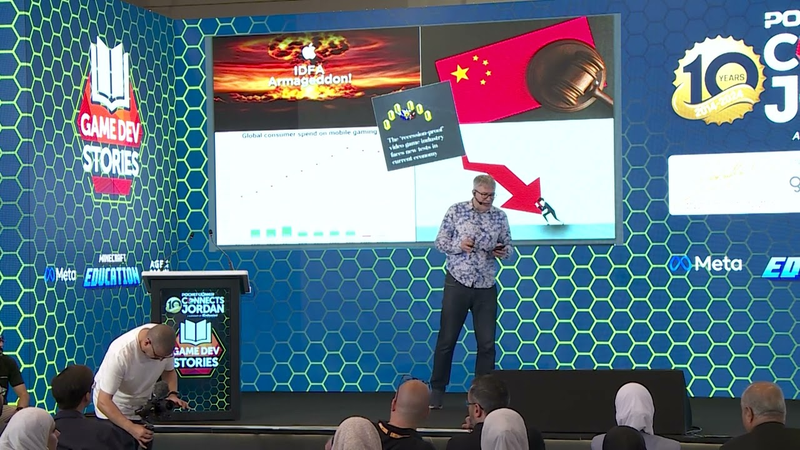
Intro: Introduction & Welcome - Chris James, Steel Media.
The Pocket Gamer Connects Jordan 2024 conference serves as a strategic platform to connect, support, and celebrate the global games industry, with a specific focus on the burgeoning Middle East and North Africa (MENA) market.
- The global gaming market is valued at $188–$189 billion, supported by a player base of 3.4 billion people that is projected to grow to 3.76 billion by 2027.
- The MENA region is the fastest-growing gaming market globally, currently experiencing a 9% growth rate and serving as a strategic hub for talent and studio development.
- Investor confidence is rebounding, with over $1.1 billion in early-stage funding recorded during the third quarter of 2024.

Week in Mobile Games E37: Pokémon Trading Card Game Pocket's blockbuster launch & Royal Kingdom hype
The mobile gaming industry is currently navigating a period of significant volatility, characterized by a shift away from traditional performance-based user acquisition toward brand-centric development and long-term intellectual property cultivation.
- Pokémon Trading Card Game Pocket generated over $120 million in its first three weeks, demonstrating the high market potential of leveraging nostalgia and simplified mechanics.
- The mobile gaming market is experiencing high volatility, with top-tier titles often suffering revenue declines exceeding 50% from their peak launch performance.
- Warcraft Rumble has seen a 92% decline in monthly earnings, highlighting the difficulty of maintaining long-term player engagement for major franchises.

Inside Timi Studio: How Call of Duty Mobile Set the Stage for Delta Force
TiMi Studio Group’s evolution from a mobile-centric developer to a global powerhouse is defined by a strategic shift in platform priority and genre focus.
- TiMi Studio Group is shifting from a mobile-first strategy to a PC-first development model with the upcoming Delta Force title to capture Western audiences accustomed to higher production values.
- The studio has scaled its development team from under 200 people for Call of Duty: Mobile to 400 people for Delta Force to support a more rigorous content cadence.
- Delta Force utilizes Unreal Engine 4 to enable cross-progression across PC, console, and mobile while explicitly excluding cross-play to maintain competitive integrity.

Triple Match City: New Evolution of casual (Match 3D) games
Triple Match City represents a significant evolution in the casual gaming sector by successfully merging traditional match-3D mechanics with hidden-object gameplay.
- Triple Match City is scaling rapidly in revenue, reaching approximately $40,000 per day despite having a relatively small user base of roughly 21,000 daily active users (DAU).
- The game exhibits a significant disparity in monetization strategy between platforms, with iOS users experiencing no intrusive ads up to level 200, while Android versions utilize a more aggressive ad-heavy approach.
- Core gameplay mechanics focus on a 'hidden object' style 3D match experience that requires zooming and scrolling, designed to induce player error through cluttered inventory benches and stacked assets.

TWIG #309: EA’s AI problems, Monopoly GO’s decline, and Pokémon Pocket’s success
Electronic Arts is navigating a complex transition toward generative AI by isolating development initiatives from its core creative studios to mitigate internal friction.
- Embracer Group has divested its mobile division, Easybrain, to Miniclip for $1.2 billion, a move that successfully eliminated the company's primary corporate debt.
- Pokémon TCG Pocket generated over $100 million in revenue within its first three weeks, driven by a monetization model that effectively utilizes the Pokémon brand to normalize loot box mechanics.
- Scopely is shifting Monopoly GO! toward high-budget, celebrity-led marketing campaigns to combat user churn and address market saturation in North America.

TikTok's LiveOps Enchantment
The mobile gaming industry is undergoing a fundamental shift, moving away from a reliance on new title launches toward the sustained monetization of established portfolios.
- Games older than five years now account for over 64% of total in-app purchase revenue, signaling a shift from new title launches to the monetization of established portfolios.
- LiveOps has become the primary mechanism for extending game lifecycles and maximizing long-term profitability in an increasingly saturated mobile market.
- The period between late December and mid-January, known as Q5, is a critical growth window characterized by heightened user engagement and reduced advertising costs.
Unlock Your Game's Next Level with TikTok
TikTok serves as a vital engine for mobile game growth, offering developers a strategic pathway to scale user acquisition and deepen player engagement.
- The 'Q5' period, spanning mid-December through January, offers a 13 percent reduction in cost-per-mille rates, providing a strategic window for cost-effective user acquisition.
- Utilizing TikTok's LiveOps tools, such as Smart Plus and value-based optimization, can increase in-app purchase spending by 1.6 times while simultaneously reducing acquisition costs by up to 28 percent.
- Developers should adopt a hybrid-casual model that integrates midcore mechanics and live events to extend product life cycles and improve long-term retention.

Can Mobile Games Be an Option for Teaching Algebra?
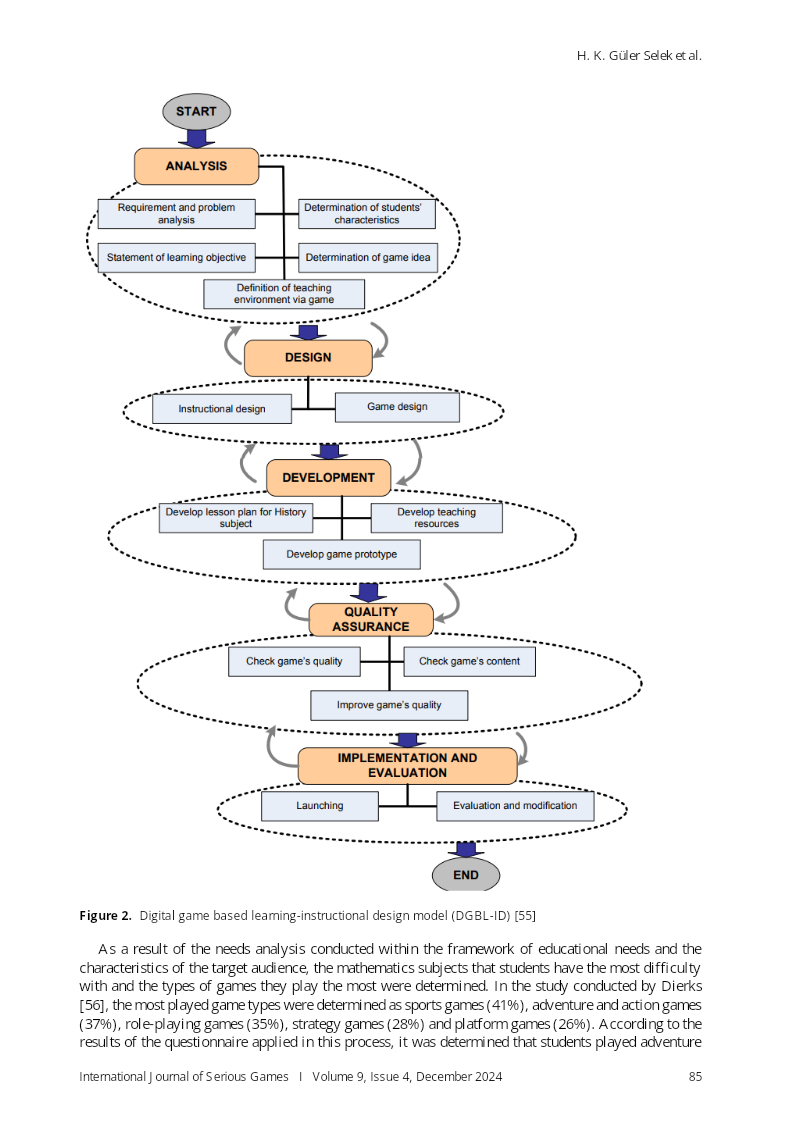
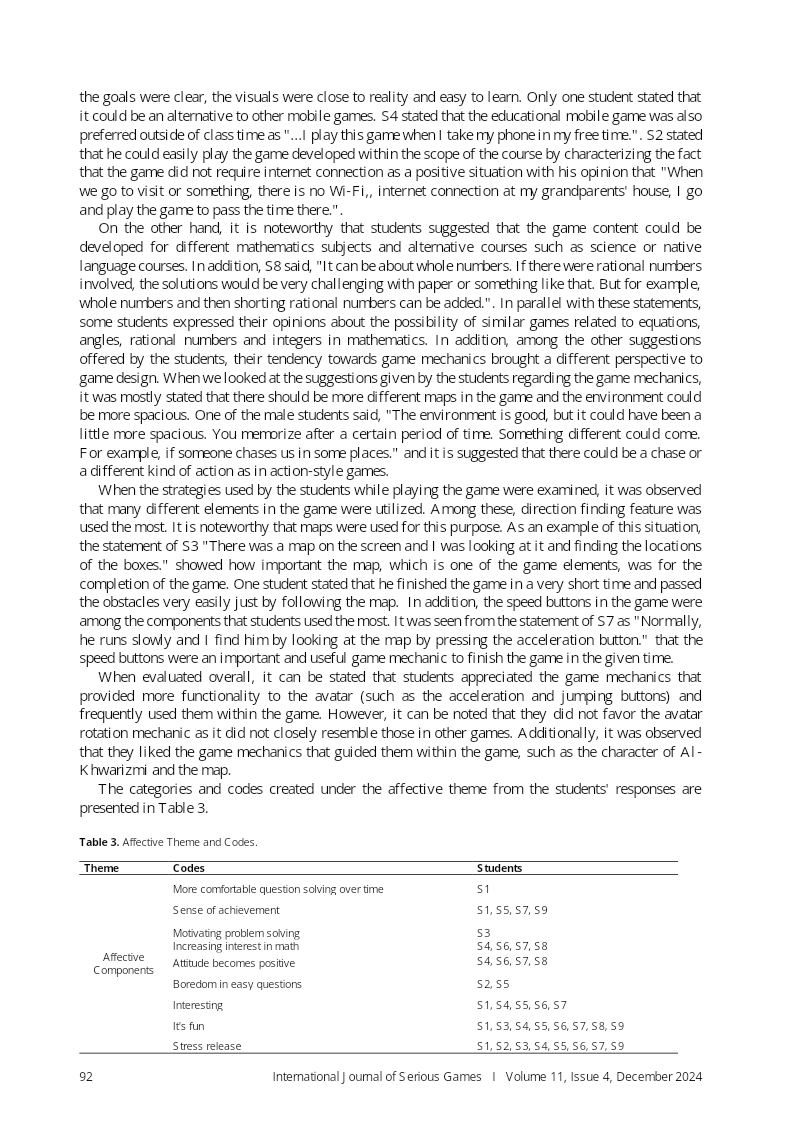
Mobile game-based learning serves as a viable pedagogical tool for teaching algebra to seventh-grade students, particularly those who struggle with traditional mathematics instruction but possess high digital gaming proficiency.
- Mobile games effectively increase student motivation and mental processing speeds in seventh-grade algebra, particularly for students who struggle with traditional instruction.
- While mobile platforms improve student attitudes toward mathematics, they do not inherently teach formal mathematical reasoning or replace the need for explicit instruction.
- Research indicates that students using mobile algebra games often rely on trial-and-error strategies rather than developing new cognitive approaches to problem-solving.

The 84% Problem: What Bad Ads Are Costing Game Publishers
The gaming industry faces a critical retention crisis driven by the prevalence of disruptive, deceptive, and poorly placed advertisements.
- Approximately 84% of players uninstall games due to disruptive, poorly placed, or inappropriate advertisements, directly impacting publisher retention and revenue.
- Publishers must actively police ad partners and implement manual monitoring or automated ad-quality tools to prevent offensive, deceptive, or category-specific content (such as political or religious ads) from appearing in their games.
- The transition from waterfall mediation to header bidding has increased revenue competition but significantly reduced publisher control over the specific ads displayed to users.

Unfiltered Game Breakdown: Episode 1
Mobile game developers face significant challenges in retaining players during the critical first-time user experience, where friction often leads to immediate churn.
- Game success is often determined by execution rather than the core mechanic, as competitors can capture an audience by refining the delivery of a previously existing concept.
- Onboarding must be intuitive enough to retain players within the first five minutes, as users are likely to churn quickly if the game's objectives or mechanics are not immediately clear.
- Developers should prioritize cross-platform availability, as limiting a game to either iOS or Android restricts the potential player base and is considered an outdated development strategy in 2024.
Writers
Games and companies
Games