Transcript
Welcome to the Naavik Gaming Podcast, where it is our mission to explore the business and future of video games. We bring together the industry's brightest builders, investors, and thinkers to keep a pulse on current events, dissect emerging trends in games, share lessons learned, and have a great time. This podcast is also part of Naavik's growing ecosystem, which ranges from free and premium research to consulting and advisory services. For more information, visit www.naavik.co. This episode is brought to you by Reforge Labs. In today's crowded market, it's harder than ever for mobile games to get noticed. Studios spend thousands of dollars and weeks sifting through data to find ad creatives that work. It's just too expensive and time-consuming, and that's why Reforge Labs exist. Reforge Labs uses AI to
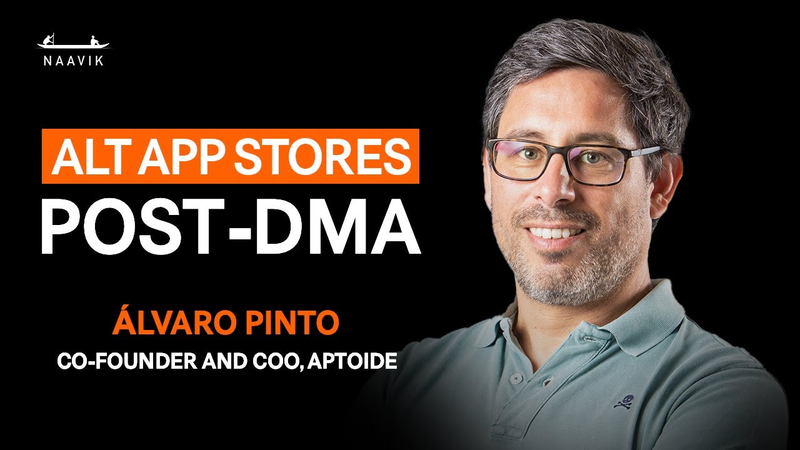
rapidly create video ads for mobile game studios like yours, helping you test and find a winning creative without breaking the bank. In 24 hours or less, Reforge Labs delivers ads that capture attention and elevate your game above the noise. Make marketing easy and fast with Reforge Labs so you can focus on building the game you love. To learn more, simply visit reforgelabs.com or check out the link in the show notes. And with that, let's dive into the episode. Hello, and welcome to the Naavik Gaming Podcast. I'm your host, Niko Vuori. In today's episode, we are diving into the world of alternative app distribution with a focus on Aptoide, one of the largest independent app stores globally. Uh they've got over 430 million users, they've got a library of 1 million apps, and a cumulative 10 billion downloads. And you probably haven't heard of them, but you are going to hear about them today. Uh Aptoide is interesting cuz it offers a unique platform both developers and for users who are seeking alternatives to of course the mainstream
duopoly of app stores, Apple and Google. And this is of course extremely topical, which is why we wanted to have this episode because it's hot off the heels of the Europe's Digital Markets Act, which promises to break up the duopoly of Apple and Google, not just in Europe, but likely globally as well. It's going to have repercussions around the world. So, to talk about these alternative app stores is Alvaro Pinto. He's the co-founder and chief operating officer at Aptoide. He has extensive experience in these types of operations and business development, and he has been one of the instrumental driving forces of Aptoide's growth and global expansion and getting to that eye-popping 10 billion download number, which kind of blows my mind. So, Alvaro, welcome to the pod. Great to have you here. Oh, likewise, Nico. Thank you for the invitation. It's a pleasure to be here with you today. Wonderful. Well, the pleasure's all mine. So, this is an amazing story. I will confess, I hadn't heard I'm one of those people who hadn't heard about Aptoide in advance of this episode. And when I started digging into the numbers and some of the the metrics that you guys
have been posting since I think you found it in 2011, it's kind of mind-blowing. The numbers are huge, and yet you're kind of flying under the radar. Maybe not so for longer if if you're going to be on the Navic podcast, of course we're going to blow blow everything up here. But let's let's talk about your background first and then we're going to dive into Aptoide. What's your background? How did you come to start and found Aptoide in 2011? And what's your journey been over the last decade plus? Sure, sure. So, starting in the early days, first I I study I study law. And and then but I since the early days I love technology. And I start programming with the first computers. And then I was able to while while I was at high school, I I launched a bulletin board service with a friend. So, we we managed that for 2 3 years. And actually while I was studying in law school here in Lisbon, Portugal, I I I I I spent 1 year developing a game and I launched my own game. It was a Formula 1
game team manager. It was something inspired in the game back in the days of There was this computer quite popular in Europe called Sinclair ZX Spectrum and and so yeah, so I I I I had I used to play a lot with my friends this this game and a few years later I decided to to develop the same game for and launch it for for the Commodore Amiga and I launched it for Commodore Amiga. I I sold a few copies of it but it was fine and I spent many many nights playing with with friends. And because I studied law, I I started my career working actually for the Portuguese government bridging technology and law and trying to bring, okay, technology technology and digital solutions for, well, all these different services in in in mainly in in the justice department and so I spent a few years there and then I decided in the early days of the the internet
to launch my own company with with a friend and so we started a company back in 1998 to develop web portals, e-commerce solutions and we did a few projects here in Portugal and we launched a big e-commerce platforms for like the top the the air company here or a couple of the the the the local TVs and it was a great experience. Then we sold the company to a big retail store because we were developing a game gamification solution for their for their their their their their their employees and they wanted to to have the the technology and continue to develop and they acquired the company because because of that technology. So, it was after that project that I I was invited by Paulo, the other co-founder and CEO of the company, to join Aptoide. And this was in the early days of the
smartphones. So, back in 2007 7 it was launched the iPhone, then in 2008 it was the the Android the first Android device. And actually the project started back in 2009. It was a summer internship. And the idea was simple behind it. Okay, there's this new platform Android. It makes sense to have a distribution solution for for apps and games. So, let's do something that is similar to what you can find in Linux distributions because we have some background on open source. And we decided to okay, it makes sense to have a distribution like APT-GET which comes from Debian distributions. And it's a way for you to have different repositories and be able to access them and install the packages in your computer. So, it it's a decentralized solution for an app store distribution solution which is quite different from what you have in
Google or Apple's Apple solution. And it was that the the first concept. And on top of that we wanted to make sure that um anyone could have a store. It's not one one single store. It's multiple stores like you have in the repositories of Linux. So, the idea was simple is okay, let's give the freedom for people to have their own store. You are a game developer, you can have your own store. You are you want to to distribute some apps, you can do it. So, that was the initial concept of of Aptoide. So, yeah, very early insight it seems like you guys had into this idea. Of course, decentralization these days is very hot hot hot because of you know web 3 and crypto and uh know, decentralization is the is the name of the game. But back in those days, that wasn't necessarily so obvious. Um and it wasn't I don't think I mean, I was building early mobile as well. And I don't recall there being a massive backlash to Apple and Google having essentially, you know, the the gatekeeper role. Um it was just exciting to be able to build apps and you know, as a developer myself, uh it was, you
know, thrilling to put it there and then have that big audience, right? That's the thing that they of course promise. You know, I'm a iPhone user and hence I have never uh looked at alternative app stores uh for for Android and hence I haven't heard of Aptoide. So, long-winded intro there to to the question, why did you have this insight? Why did you think it was uh needed your solution was needed, this decentralized solution that allowed any developer, whether it be game developer or app developer, to put something up there and then have essentially free access to consumers, but without the big distribution advantage, I'm presuming in those early days at least, that would have come with Apple and Google if you'd gone and built there. Yeah, sure. It was the early days and what we we realized back back then it was that, okay, this is going to be huge for sure. It's everybody will have a one of these devices, be it an Android or iOS, but Android definitely will grow and this this means that this will be huge a huge
market and we strongly believe that to have op- an open solution for distribution makes full sense. Again, because our back- ground on open source, uh we we we we love the idea of having something that's and and actually the the first versions we launched were open source, so everything was open source. Not only the platform itself, but also the the native app. So, the idea is, okay, anyone can pick it up and even improve it if they want and then pick this. So, this gives much more freedom and more than that, it gives space to innovation, which is actually something we we feel it's still still lacking in this market. So, in the distribution of of of mobile apps. So, we thought, okay, this can be something that democratizes the distribution of games and apps and so it's accessible to anyone and it makes full sense in this market that will boom in in the coming years. So, now we're about a decade and a half later into your life. Obviously, you've
had a lot of success and and have grown I'm presuming in ways that you couldn't even imagine back in those days. How has your original vision and the product evolved over this decade and a half since you first got going? I think looking looking back so we we what what I think was always a priority for us and was to to build something exciting that we feel that oh, this is exciting. This is innovative. So, let's bring new trends, new technologies to the table. And we did several things along the way. So, of course, first we launched this open source store which was different from the rest of the world and and and and with with this distribution that what was not decentralized. But then just to give you a few examples, okay, with the social media and social networks, we launched for example, a timeline back in the days for people to follow their friends and see, okay, what are the trends? What what are my friends
playing? So, something that was similar to social media and social networks and we thought, okay, this this makes sense in this context. Or for example, we we embraced blockchain in the early days and we launched our own token and then tried to solve several of the problems they were facing in in the the distribution of of games and apps. So, just to give you examples, nowadays, for example, of course, we are focused on AI. So, we always try to bring innovation to this market and I think this is a big differentiator, I would say, comparing with other platforms or the incumbent platforms. Yeah, yeah. Uh we're going to talk about your numbers in a second cuz they're they are huge um and really impressive. Uh I'm curious, where do your users come from? Uh do do they come with a certain philosophy in mind? They're open source enthusiasts or they're decentralization enthusiasts or blockchain enthusiasts uh these these days. Obviously, you know, back in those the early days that wouldn't have been a thing. Um or is it just any, you know, it's just the average person who are just looking for
apps and they stumble upon Aptoide um and they're like, "Oh, this is cool. There's a whole bunch of stuff here. There's a million apps I can I can access." Where do your users come from and how has that changed over time over the the decade and a half you've been been around? Yeah, sure. So, we we in the early days the most of our users were coming from actually from some countries in Eu- Europe. For example, Spain was our in the early days was our top market. Then it shifted a little bit to LatAm and and then it started to become global. And so, for example, in 2015-2016, we we opened two offices in Asia because we were seeing a a boom of of users in Southeast Asia and we decided to open an office there. There we we saw also the opportunity, okay, to to partner with Chinese companies. We opened another office there. So, it it expanded to the rest of the world. And nowadays, of course, the the the most important markets for us are US and Europe. And uh and because
there's two different audiences. We see users and paying users or gamers that are paying and we mostly the the the the users we have paying in our platform are gamers. And and and most of these users are based mostly US and Europe. The the in terms of the the rest of the users that get games and also other apps from from Aptoide, they are quite spread, uh, in different geos across the across the block. Yeah, I mean, the numbers at the start I I rattled off almost a half a billion users, which by the way, I don't know how you measure that. Is it half a billion lifetime users or monthly actives or just out of curiosity, how how do you measure that? Yeah, this this is the yearly number of users combined and we have a platform that aggregates different distribution channels. I can explain or give you more details on that, but so this is the yearly numbers in in that platform. Got it. So yeah, so about a half a billion users a year, which is huge, and then 10
billion downloads. What have you guys done to help drive this? You know, you mentioned, it sounds like early on it was kind of organic and then kind of changed by geo, presumably because of adoption rates of smartphones and things like that in the early days and it's always good to be early, not too early, but, you know, it's good to be early. Over the years then, what have you been doing in order to drive those numbers to get to that near nearly half a billion a year and 10 billion downloads? So, different things. When in the early days were as you were saying, it was more mostly organic and people were excited about, "Okay, let's app my own store." Or for example, we had several apps and games that were not available in Google in Google Play, for example, because because of Google's policies, they were not there. It was not what was not spam, it was not malicious apps or games, but were in a gray area for them and they were not allowed to be distributed. So, we we we supported those. For example, that was one of the drivers of our growth. So, we
were able to to grow in the early days because of those those apps. Then we shift and the shift happened between 2007, 2018 and 2019 because we launched our own token. We start to be more focused on IAPs, in-app purchases and and monetization through through that. And so we launched our own solution for IAPs in the early days backed in in in blockchain technology and our token. And we started to be more and more focused on gaming. And nowadays we are much more focused on gaming than in other categories of apps. And what we saw is that okay, we with with the token and with the with the with our own wallet, we can offer incentives to users. We can give them more bonus, more for them to spend in their games. And we started to nurture that. And actually that's what's been been growing since then in the platform.
And that's our our growth engine for for the last few years. So we are really focused on gamers. And especially paying users, people that spend time and spend money in games. And that's our our core audience and where we've been growing in the in the last years. Perfect. There's a lot to unpack there cuz I was also Web3 developer for for a number of years. And you know, distribution, of course, especially on the mobile platforms, was and still is a big problem. You know, Apple's rules, Google's rules. They're softening up a little bit. But I can very easily imagine as a developer, I would have absolutely would have loved half a billion if if only I'd known. A half a billion users with sounds like rules that are much more open and you know, any developer can then put up a store there. So sounds like that's what you've been leaning into. Is it fair to say that Web3 and and that the kind of crypto / blockchain movement has been a big driver of that or is that coincidental that it happened at the same time? Yeah, it was it was for for a while.
Nowadays it has a role but not so so so so strong and so relevant as it was back in 2018, 2019. Because we we we launched our token in in 2018 and appcoins and the idea behind it was also to be able to have a solution for in-app purchases and payments in in games and apps and based on blockchain technology again decentralized and accessible to anyone anyone could develop the technology to integrate appcoins in the game in a very straightforward way and but open meaning that okay it's not an SDK that is defined by us and the rules are set by us no it's something that is open and people can define their own model based on appcoins and this was was something we thought this will open the market and on top of that we also thought there was some issues for example in promoting games and we launched also use the token
to try to to have a new offer for user acquisition based on the attention of the users that this was popular in some platforms and we also follow that that that movement okay let's have something that is based on the time the people people spend playing and they are rewarded by that and we launched these two concepts back in 2018 we worked on the on the project for around three years but actually in the middle of the way we we we dropped it and we dropped it because we understood that although the technology made full sense on paper there was some constraints in terms of what was available for us to be able to scale and have something that uh cost-wise because we are talking about many times about micro payments that it doesn't cost a fortune to the user and it's it's scalable in a way that we have thousands and thousands of transactions
on a in a minute for example and and so we were unable to accomplish that with technology that was available at the time and when the one we tried to to develop but even trying to partnership with other third-party companies and projects. And so, we somehow dropped it, and nowadays, we have our own wallet, our IP, but we are based in more traditional ways of payment and processing payments. Well, I have a whole line of questions on AppCoins later on, so we'll we'll we'll talk about it when we get there. But yeah, I'm really curious to hear to hear more about how it works and what it offers to developers. I know you've touched on some of that already, but I want to get kind of deeper into it. But in the meantime, I want to talk a little bit about what's your revenue model. The And whatever you're able to share, I I would love to hear about kind of top-line numbers and anything that you're able to share. I understand, of course, if you Sure. Sure. Sure. Sure. And and So, in the early days of the company, we our our revenue stream was mostly coming
from advertising. And and we shifted this back in 2016-17, and we started to develop the the our billing solution for in-app purchases. And currently, that's the main source of revenue for the company. It's in-app purchases. And so, we developed our own own solution for payments, covering payments across the globe. So, of course, the the more standard ones, but also local payments. And and and so, we provide a wallet that's is very easy to use and very convenient to any user across the globe and get can get the the their items their in-app items. And that also have a gamification engine to to provide them more bonus and more credits for them to to use in in games and apps. So, that's the main source of revenue nowadays. Okay. And are you able to share anything about the kind of the magnitude of any numbers, specific numbers? Our our
audience is very likes data, as do I. So, whatever you can share, I'd I'd love to hear about that. And then the second piece second piece there which is tied is is uh it sounds like the model is very similar to the actual, you know, to Apple and Google. You're taking a percentage cut of each transaction that happens and of course, you provide the payment infrastructure which, you know, means that they they have, you know, developers and users have a very easy time of it. What is your percentage cut and has that changed over time? You know, what does the the developer economic model look like versus the Aptoide economic model? Sure. So, we first on the numbers. So, last last year we transacted a total of around 87 million US dollars in in our platform. And and so, that in the early days, the revenue share model was more beneficial to to developers. It was 81 19 to to to to us. And comparing of course with the 70 30. And and then we we shift to like 2 years ago to 75 25. So, be on then we we have
some also for example, we provide a solution for for developers to do direct direct distribution direct to consumer. And in this model, it's it's different. The revenue share is 90 to the developer and 10 to us because we believe with the opening of the market with the MA etc. and we'll probably talk about this but we believe that direct to consumer is something that is already happening but it it will it will grow considerably in the coming years and so, we work to provide convenient solution for developers because they integrate our our SDK and they are able to distribute not only on on Aptoide, also on other channels that are connected with us because currently we cover almost 20 different channels that are linked to our platform. And so, the developer does one integration and it distributes
across all these channels but also he can for example do his own acquisition or promote his game in his own website and use our direct to consumer solution with the same build of the game. So this is it's it's it's more convenient it's easy to use and we believe it adds value to for the developer. So one single integration covers multiple multiple channels. Uh I mentioned at the start you have 1 million apps and if if you have any updated numbers happy to hear about them. Uh I'm presuming but you correct me if I'm wrong here that the distribution of the revenue is probably that a power law distribution where a small number of your games sounds like mostly games are generating the vast majority of that revenue and then there's kind of a longer tail that tapers off. Uh curious to hear if that that assumption is correct and what kinds of games are driving the lion's share of the revenue on your platform. Sure. Yeah yeah it's true. So it's similar to what you you get in other
platforms. As we all know it's the same with Google and Apple and all other other big players and and the typically the games that that revenue-wise are more relevant for to us are typically mid-core games and strategy RPGs and all these games that have these players gamers playing for a long time and investing a lot in the games. That's the kind of audience that we we have and that in in terms of monetization is the most appealing and the most interesting one and the one we've been trying to nurture also in terms of what we are offering to to to them. That's a perfect segue to my next question which is what are you offering developers? It sounds like you when you made that shift towards more of the gaming side of things you know a number of years ago you you made a very conscious choice it seems that hey we're going to be nurturing this gamer game developer and gamer ecosystem. I'm sure not at the expense of other developers. I'm sure you still support
them, but it sounds like most of the tools you've been building have been for game developers. What exactly are you providing these developers in terms of, you know, revenue generation abilities, app visibility, distribution, reach? Obviously, you talked quite a bit about the decentralized nature where, you know, it's not just on Aptoide, but it's, you know, it's not a walled garden. You can go and go direct to consumers as well. What are you offering developers that is unique to you and not available to other developers on Google Play or or iOS? Yeah. One one thing that we really realized a few years ago was that, okay, it's a big challenge to to propose to developers, to game developers, a platform where when even though we we reached very respectable numbers, it's still far far away from Google and Apple. And so, it's it's really difficult for to for you to convince a developer, okay, you should integrate not only our Aptoide, but also other alternative stores because them individually, each of them represents a fraction of what they get
in terms of users, monetization in Google Play or in Apple App Store. So, we we came up with this solution. We we called it back in the day as Catapult, and we launched this platform where it's a like a one-stop shop where developers sign up, submit their games, they do one integration, and then they can decide where to distribute. And so, what we are trying here with with with this platform is to to connect to connect between our the developer and multiple these multiple channels in a way that well, they have access to a dashboard where they can see distribution per channel in a single dashboard. They can see the monetization across these different channels in a single dashboard, and that's one of the things we developed in the last few years, that it's it's different from what you get in in other in other platforms. So, first, this this
one-stop shop. Then, of course, we provide multiple services direct-to-consumer. It's just an example of something we came up recently, and so we added also in terms of service to to for developers to to have a easier life um in in this situation in alternative stores. And in terms of of promoting these games, we work not only in the promotion of Aptoide, but also in all these different channels. So, we are connected with the different different stores, for example, from Xiaomi, Oppo, APKPure, One Store. We distribute to all these channels. And we when we launch a game, we make sure that our plan for promoting the game not only covers Aptoide, but also these multiple channels. And this is quite convenient because okay, to go one after one for developers to to reach all these channels and to okay, engage with
them, do their integration, talk with the different people across different channels to promote the game, it's it's it's it's it's it's a heavy load. So, this means that with this platform, it's very easy for them. We take care of that part, and so the distribution across the multiple channels and the promotion becomes quite straight forward for for for the developers. Uh okay, so yeah, because distribution, of course, is one of those big big big issues that all developers face. You know, it's you can't just say if you build it, they will come. You know, you need to do the hard lifting on on the distribution side. Uh the other flip side of this is also I think you we mentioned AppCoins a few times now, and you're very early to to blockchain technology. You know, you predate the the the crypto boom. I I think you mentioned 2017, 2018. Um Um Yeah, so so that's pretty early and that's definitely that was in the middle of that crypto winter and we hadn't yet gotten to that to that next crypto phase of wild enthusiasm, another round of
tulips, tulip mania. So tell tell me a little bit about what what motivated you to go down this path. What What did you see that many others didn't see about blockchain technologies at that early stage because it was still very raw. I got into crypto in 2016, so I remember very much how hard it was and wallets were a nightmare and scams were you know, rife. Everything was just it was the wild west and it to certain degree still is, but but then it really was the wild west. What made you think that this is something developers would embrace? What made you think that this is something that they would trust or even understand at that point in time when it was really that early and the word crypto was used mostly as a derogatory term at least in that that time frame. Well, we we were to be honest there was okay, nobody was sure about okay, what is what's the future of this? Is this going to resonate with with developers or even users? We really don't know. What we know is that the concept behind
it it's it's a new trend and the concept behind it makes full sense to us and we we strongly believe that in a market that has two big players, if you want to change things, you need to come up with something that is innovative and of course disrupts the market. And blockchain was about disruption. So it made full sense to us to to try to to to to bring them something that would make the the payments in in the app economy different from what was proposed by these big players and then the distribution and acquisition different from completely different and with something that eventually they could follow if they see, okay, this is definitely the future of distribution, but as you know, um, it's really it's the the the innovator's dilemma and and and it means that they will take time. So, let's take the opportunity and be pioneers on this.
That was what what we we felt at the time, but of course, as all of the pioneers on the blockchain, nobody really knew if this would work or not. And we strongly believe that it will Today, it's still although we dropped the project, somehow we still believe in it and we we are open to to explore new ideas based on blockchain as soon as we feel that the technology is there, we have the means to to do it and to make something that can scale based on the on on on that concept. Yeah, yeah. What kinds of decisions and technology decisions did you make around that time around AppCoins? You know, is it Ethereum-based, ERC-20s, or is it um, your own proprietary technology? Yeah, tell me a little bit more about the kind of under the hood in the weeds technical stuff that you guys looked at and chose. Yeah, it was it was I would say we we we followed a more more conservative path because we
we went to Ethereum network and ERC-20 tokens and because we do okay, we have these big challenges of trying to disrupt the distribution. So, that's enough for us to to to to to think about and to spend our time and our effort and our teams. We decided, okay, let's follow what is the trend here and even because we saw that, okay, in terms of technical solutions, there's more options here. So, let's follow this because this is still emerging. We are still not sure that this is solid ground. So, let's make sure that we follow the majority of the projects that are appearing, showing up, so to make sure that we benefit from all the the the improvements this will get uh earlier probably than other platforms or the other solutions. So, that was was our our path and the decision we made back in the days.
And what's next for Aptoide then? Where are you taking it, if anywhere? Um Sure. Um I think so. We What we see today is is is quite interesting because, you know, we we we've been in the the market for almost 15 years. Uh the company started back I I didn't didn't explain this, but the company the project was started in 2009, but the company actually started back in 2011, and that's when we incorporated Aptoide. And then but it's interesting to to see how the market evolved and okay, it was um it it was a long journey and a tough one, for sure, because it's not easy in this market and with the big competitors that that are in place. So, and to to give you an example, uh back in the days in the early days like 2012 12 13, we we used to go to Mobile World Congress in Barcelona. It was one of the biggest events for for mobile. And we
used to have this dinner with the other stores, the alternative stores at the time. And typically we were preparing our own dinner together and then having dinner and discussing discussing business. And then so we were we we were doing this with companies such as SlideMe, GetJar, uh Opera, Yandex. So, These guys nowadays they they vanished and looking looking into what is the the of course the the the the landscape now, it's quite different. But to say that it was really difficult for companies to survive in this in in in in this industry and in the distribution of mobile games and apps. And but we we feel that things are changing for the first time, really changing. And with the DMA and the and and and all the changes from regulators and the the push from regulators and we we've been engaged with with the regulators especially in Europe for for a long
time. We see that uh clearly the market is opening. And just to give you an example, we launched this year our game store for iOS. And well, this was impossible until 2024. So, it took from 20 20 27 to 2024 to to open to be able to open the market and to be able to have an alternative game store in iOS. It's still not there. There's friction. There's of course, challenge ahead, but what we are seeing is that this is moving fast at the pace is is is is is is faster nowadays. We see, for example, in the last couple of months, so many news about things that will probably happen in the coming months that will reshape this this this industry that we strongly believe that the the coming we have still wind and in the coming years we have a huge opportunity. Of course, we will also have more competitors.
Right. Yes. We we we we think this is this is healthy and it's good. And actually, that's good for us. We want to have more. We want for developers to consider alternative stores. And if we are pitching this to developers by ourselves alone in the market, it's not easy. We believe that having more players in the market helps this. And it will become healthy. And the market is so big that there will be space for different stores, different distribution models, and and even niche stores can make a lot of money across the globe. So, it's not an issue. And and we believe that this the market will will be reshaped in 2 3 years in 2 3 years time. Yeah, yeah. I I know you've been a big proponent and and been involved actually, it sounds like in the process of opening up the market, especially in Europe. Tell me tell us tell our listeners a bit more about how you've been pushing this, who's been involved in these efforts, how long has it taken,
how hard has it been to get to this point, and then we'll talk a little bit more about what you see happening in the future. You just touched on it a little bit there about what you think is going to happen in the next 2 to 3 years opening up competition and so on. But, I want to go a little bit deeper a layer deeper there. So, let's let's start with what was your role and what was Aptoide's role in opening up these the markets. You're the first person on the on the podcast who has had an inside look in the European markets doing this, and so I'm really curious, and I know our listeners are really curious to hear how did this come to be and what was your role and others' role in this process? So, so we we we start to to to talk and engage with European Commission back in 2014. So, 10 10 years ago, okay? Oh my goodness me, things don't move very quickly, do they? No, unfortunately. I think they are moving faster nowadays, but and that's good news. Hopefully much faster than than before. But, in 2014 we we we we we we did our first complaint because we were seeing a
lot of constraints in the market and and and and and several things that we felt that Google is doing they are not they are infringing the law. This is is they are abusing their dominant position, and we we we need to to to react to this. And so, it was our first complaint. If you Google it, you will find several news about about what we did back in 2014. It was the first time we engaged with them. And since then we've been talking with the commission and providing them of course some insights specially on the technical side about what's going on and what are the things we feel that are fair or unfair in this market that that needs to be fixed. And then the second important moment in the this relation with with with the with the regulators was back in 2019. We had some issues because all of a sudden many users across across the globe started to started to being prevented from using Aptoide. Aptoide
was vanishing from their devices all of a sudden. And then and this was something that was happened of Google Play Protect and and and we we can again to the commission and again a complaint about this. And actually this time we did it also in the US with the Department of Justice. So also since then we've been talking with the Department of Justice and also helping them out to understand what's going on in this industry and the constraints we we the the alternative stores have been facing. And the developers actually because this is also a constraint for the developers to be able to have the freedom to distribute themselves if they want. And that's something that is happening. So besides those then we also been talking with several regulators across the globe. For example in Japan and we we we met them several times. And so we've been proactively trying to to push and try to to make
sure that the regulators fully understand what's going on technically and more in detail. And I think we had some contribution to to what you see today in in in Europe with DMA but also what you see today in other countries. For example, Japan just approved a new law to also to similar to DMA that will open up the the Japanese market starting in 2025. So, we were part of the process. Of course, it's well it was not because of us, but there was a contribution definitely from from Aptoide in this in this after efforts and in these changes that are happening now more than a few years ago for sure. Yeah, yeah. Well, I mean congratulations. The persistence pays off and I you know, this is a decade plus process you've you've been involved in. So, congratulations on the outcome that you've got and I think it's a huge win for for developers. It's a huge win for consumers in my in my opinion. I'm editorializing here a little bit. I'm sure we have some listeners who may not
agree who may work for the for these large you know, duopoly type companies. Um, what do you think the impact is going to be globally? I mentioned it at the in my intro that I think personally think that this is you know, the dominoes will start to fall so to speak where you know, you've seen Japan now starting next year. Do you see this as a continuing trend across the world? Is is this just the starting point and now we're going to see the United States and other larger you know, large economies also follow suit here? I mean, obviously European Union is a is a is a big block. You know, probably the second biggest block second or third biggest block after you know, some of the Asian countries after the United States. So, where do you see it going next and how quickly do you see this now accelerating in terms of taking on its own life and and actually becoming kind of a self-perpetuating self-fulfilling prophecy? I feel that with DMA and what started to happen in in Europe and then was followed by other countries also happening in the US especially with the lawsuits from Epic etc. which is a big push also definitely. But, we are seeing
Japan, UK so new laws it's flourishing now in different countries. So, this will speed up definitely and well, if we try to imagine the the the this market in two three years from now, ironically, you can look into for openness, you can look to China. Because actually in China there's there's multiple app stores. I remember a few years ago when we first open our office there back in 2016 and that some some some partner was saying, "Okay, today there's around 400 app stores in China." And I'm not sure if there's 400 today, but if you look into the market share, the biggest one has 30 something percent and then some follow with 20% and this is quite splitted and spread between different stores. So, that's exactly
what I think will happen in the market. Of course, the the the incumbents and the big players will still have a big big very big slice of the market, definitely, but uh imagine that 30% or 40% of the market all of a sudden is in the hands of different stores and different distribution platforms. So, this is the kind of landscape that I believe we will we will find in two three years time from from from now. Yeah. Do you think it's going to be similar to China where you do have a couple of players who have, you know, 20 30% or is it too late? Is that boat sailed because Apple and Google have got such a big share and it's going to be very hard other than like you mentioned niche niche stores. Is that where you see it going more? It's like these smaller niche things that are doing very specific things and have very specific use cases, very specific incentives for developers and and consumers or or do you see is there an opportunity for somebody like an Aptoide to nab a lot of market share now
because you've been in market for a long time. You've got a lot of the tooling in place. I think it'd be very hard for a brand new startup to come and and take a lot of market share cuz goodness me, you've got a decade and a half under your belts and you know, a lot of learnings and and tooling. Um yeah, what is what is the market look like? Does it look like what it looks like in China with a couple of other big players in addition to Google and Apple or is it more okay, there's going to be a sliver 10% or whatever, a small part of the market that's going to be split across lots of different niche stores? Mhm. Mhm. Mhm. I think big players, of course, you have Google and Apple, definitely. And then um third and fourth and fifth you will have like, I would say, three, four, five big stores and then you will have niches and and and smaller smaller players very targeted. And and niche, I mean, in different verticals, but it can also be in different geographies. For example, I imagine that you could have, let's say, Korea and you have an example of one store that that has success in that specific
market. I think there will be more space for for for app stores that are targeting specific audience, specific geographies. And because you have this in some countries a cultural gap where it makes sense to have a store that is tailor-made for that specific market. And Korea is a good example of Japan or and and and so I believe you will also have that. But I think that it will be a mix of okay, you have Google and Apple for sure. Companies such as Aptoide because of all the experience and expertise and you're saying, okay, we we have all all the tools to to to to be able to to to offer something that is compelling for the market on both sides of of course of the of the market, developers and and and users. But then you will have also these big players. Like, okay, you uh there was an were announcements and and launches from Epic, from Microsoft. And I think these will be also key players
in in the future. At least some of them will will succeed for sure. And then the the investment they will are willing to make in this market is considerable, and I believe that they will have relevant share of of the market. So, I would say that you will have four five at least more stores on top of the two other two two incumbents. One thing I know that you guys focus on a lot, and maybe this ties into some of the specific things that that you can do for developers. I know you're you're known for prioritizing user privacy, and also reducing geo-restrictions. Why has this been a focus of yours, and how does it benefit users and developers compared to other app stores? So, I think so in in in early days, those two things were really compelling and were key differentiator for us to succeed compared with other stores that were there in the market in alternative stores. So, one geo-restriction. So, because we were an
open platform and a user-generated platform, meaning that people could upload content to to the platform like you can do in YouTube. Same same concept. This meant that there many times we had like apps that were not available through Google Play, for example, were available to users in a specific market through our platform. And this was was relevant because of course many times companies decided not to distribute or for some reason was not available, and we could give access to to users. And this was a use case that definitely made made some difference. The other one is that since day one, because you know Google and Apple always saying, "Okay, we are very secure platform, so we are a safe harbor for for for users." And and which is actually true, they are quite safe, but for example, I remember we had
some some study from a Japanese university a few years ago comparing different stores and we were at the time like 3 years ago at the same level as Google and Apple in terms of security. So, we were we were scanning everything making sure that all the content that we have is is safe for users and then and then so we practice is very similar to those two companies. But on top of that, we we also think that it's important for for the privacy of users. And one of the things we do for example, of course, we don't use the data from users to any other means to any other to to to use in other platforms or that we have. We are only focused on this industry, but on more important than that for example, if you want to download a game or app an app from from our platform, you don't need to sign up with us. We don't have any information about you. We don't collect your data
and keep it in our service. Actually, our policies try to to keep as less as possible information because we think this in order to respect users, but also to make sure that okay, all systems are have can fail and we don't want to have this exposed in any ways. So, we strongly believe that having of course, we need some information for sure from users, but not trying to collect it is really a key part of what we do and we make sure that we have minimum information about users. So, we we we try to protect this as much as possible. Uh one thing I forgot to ask earlier on and I was inspired because you just mentioned a lot of the work that you seem to do to make sure that is secure. Obviously, it it come for free and you need a team to do that. How big is your team? You mentioned offices around the world. How many offices you have and how many employees are are working and roughly the spread across the different functions, you know, whether it's
marketing or engineering or product or whatever. Yeah, yeah. So, in total we are 100 people. Most of of of the of the team is based based in Portugal. Different regions because we we we we the hybrid policy people can live anywhere in the country. We have some also living abroad, but mostly living here in Portugal. The Portuguese and foreigners and and then we currently we used to have an office in Singapore in a a couple of years ago we decided to close it. Didn't make any sense anymore because uh we were growing back in the days a lot in Southeast Asia. Now is not not so so much of a growing driving growth geography. So, we we decided to to close that one and we keep one in in an office in in China. So, currently we have two offices on in China is more more about engaging with with developers, especially game developers for sure and the industry there is is is
huge and and growing. And but also with with partners meaning for example device manufacturers that that are relevant for us for example to to to bring more channels and more opportunities to to the developers in in our platform. And and in terms of okay, but the the our marketing and bizdev teams are very small ones. We are talking about in total maybe 10 people and and most of the team is technical team engineering, but also product team. So, the the the biggest teams we have within the company are are the the product different products. So, the App Store, of course, the wallet is the second That's product and Catapult, which is now it's being rebranded as Aptoide Connect. It's the platform for distribution across across multiple multiple channels. Then we of course we have everything infrastructure, microservices,
and technology developing like the SDK and all the technology. For example, the platform that that validates and creates content is developed by this team AppTech. And so they make sure that okay, the content is all screened in our platform. Typically, everything is automated, of course, sometimes with user intervention, but but this is also a key part. All the the backend part of of the the store is quite relevant, and actually people sometimes don't realize how how much is going on in the background on an app store. It's not only about the front end. It there's a lot of services behind, and it's quite quite complex operation. And talking about complexity, you're also now available on on web, you're on TV, or some some TV smart TVs, and and automotive platforms as well. I'm guessing, you know, Android Auto {slash} something like that. Um
tell me more about those initiatives. It seems like you've got your hands full with your core technology and the core product, the app store. But you also have these pushes into alternative channels like, you know, TV and cars, it sounds like. So what's the thinking behind that? How does that help developers and and consumers? And how big a part of your business are they? And how big do you see them becoming in the future? Sure, sure. So Aptoide TV is a is a is is an old project, so we launched in the early days of Android TVs, and it's it's been in a in a plateau. It's not something that is going to be, to be honest. Nevertheless, it helped us also to reach more users, and to to be more compelling to to developers because okay, it's another channel and you can also distribute with us to to for for for Android TVs. The the the automotive market it's a a different story. So, we back in 2019 we did a joint venture with a big company called Faurecia, which is one of the
biggest 10 top 10 suppliers of the automotive industry. It's a French company and because they understood that okay, we really need to move into digital. It's not only about building tires and and stuff like that and bumpers and it's it's it's more about digital now and we we need the the help of someone that really knows this business. So, we did a joint venture for the automotive and it it was it's it's a very interesting project because definitely the digital experience is expanding within inside cars and this is with connected cars and and digital the digital experience is is is nowadays more relevant than many other things. You you look into the advertising of cars today and they are all about the digital experience, not so much about the car. So, this this this this became really relevant and then so we work with
Faurecia and actually we we we build up the we did the the building blocks for an App Store for cars based on Android but not with Google services and actually we you have a slice of the market that is actually pushing for a solution based on Android but we not without relying on on Google on the Google services because of course the the car industry also wants to be independent. They understood what happened in the mobile space and they want they they don't want to to to have the the same situation in a few years from now. So, they are trying to push to alternative solutions. And actually, so our we engage with several companies like Mercedes, BMW, um uh Volkswagen, um chat some Chinese also Chinese car manufacturers, and they use um part of our technology of the App Store of all of the distribution platform to to
provide content to users in the in cars. So, in a nutshell, I would say that okay, it for us we see distribution as something that can reach different markets, and if we see an opportunity there, if it's something that benefits on one side developers and gives them more reach in terms of uh engaging with users, it makes sense to us. It also makes sense for us to given our expertise and our experience to provide a solution, for example, in cars, which is that the challenges there might in some ways be different, but the basis are the same. So, um it makes sense for us to expand and to also to to take benefit of what we we acquire in terms of technology and know-how. Yeah, I'm I'm really fascinated by the car. To me, it's a kind of a final frontier for, you know, technology and entertainment. Uh and fun fact, I I founded a company, co-founded a company in 2018 called Drive.fm, which was making voice uh powered games for
the driver of the car. Um and it was going really well uh until the pandemic hit when nobody was driving anymore uh or in their cars. But, uh what was the most frustrating part about that was was exactly what you're describing, which is we were completely reliant on Apple and Google approving our app, our product, um in the for CarPlay or for Android Auto, and they didn't cuz they didn't have a games category cuz we were like way ahead of our time, you know, no, we don't play games in cars, right? It's too dangerous, etc. But, we're like, well, but it's a voice game, you don't have to look at the screen. Um so yeah, so what you were telling me uh as a developer that resonates very strongly, being at the mercy of these these gatekeepers with what we thought was a really innovative product, which I still have huge conviction in that the car is a one of those places that you're stuck in, you're a captive audience to the most extreme degree, and developers have a real opportunity if they come up with innovative solutions, whether it be gaming or otherwise, to reach these consumers. Um but you're at the mercy of Apple and
Google, you know? Um for them to approve your product. So So yeah, what you're saying really resonates, especially as the in the automotive use case resonates for me having been through through some of that pain. Um okay, we're coming up to time here, but I do want to talk a little bit about the the future. What is your kind of vision? You've been in business for a decade and a half. Um seems like you're kind of hitting your stride starting 2018 and and tip me, you know, hitting some of these developers of, you know, game developers and and realizing there's a good audience there, there's there's growth there. What does the next decade or 15 years look like for you? Um Aptoide specifically, but also alternative app stores and and some of these more wild swings at the bat like in the car, for example, or on your TV or or wherever. Um what what would success look like a decade and a half from now for for you and for the industry in in general? Sure. Um I I think that well, first of all, you have of course these changes in the market with with the the regulators and some companies pushing for opening it.
So the landscape will be different. That's definitely. So people will have more options and developers will have more options. That's that's obvious to me. But I think like we we felt back in 2017 with blockchain that okay, there's this new technology, a new opportunity to dramatically change the market. We also feel the same today, not only because of this opening, but because if there are more companies, startups, or even big corporates being able to have access to these users and to this market, they will invest in it. And one of the things that I think will reshape can reshape completely uh what is the experience is AI. So, we that's where we are investing also, and we feel that okay, the experience of discovering content, discovering new games needs to change dramatically. It's It's really, to be honest, in the in the current store experience is quite boring.
So, it's quite boring. It's not compelling. It's difficult for you to find out what you really want, and it's not something you are excited about. Oh, I'm going to the store. I'm really excited about going to it. Maybe you you are if you're going to if you love cycling to your bicycle store or to but not for the the the game stores and app stores that we currently have. And I think this experience will change dramatically, mostly with AI. Of course, you will have okay, other channels, other opportunities outside the mobile. I'm a big fan of AR/VR. I think it's it will take some time, so it won't be something that will happen in 1 year or 2, but will you will have changes there and new channels like we were talking about cars. I think car is is is key there, and even I see space in cars, for example, for AR. And it makes full sense to me AR in a car because actually you don't need a Google Zip could benefit
from being in a car inside the car and having AR all around you. And that's the kind of things we might see in the in the future in the near future. But, I think the two things, opening the market through this effort of regulators, and the second and and and companies in the industry, and the second one I think that will dramatically change the experience is is is AI AI. Yes. So, I haven't been, you know, I mentioned I'm an iOS user, I have been for a really long time, and I've got a MacBook Pro and all that stuff, right? So, very much locked into the Apple ecosystem. And I haven't been I haven't I used to go there all the time in the early days when it was exciting and it was interesting and there was new stuff. Now, I go there and it's just the top grossing games, you know, if I go to the you know, Apple just just their curated apps like they don't interest me in the slightest. Um you know, and I just go through word of mouth, somebody recommending things. By the way, we've got a question on that in a second, so maybe you can recommend me something. But, um yeah, I completely agree with you. I think the App Stores are just it's it's a one-size-fits-all type
experience. I mean, maybe localized by country, but that's it. Like, really? Like, everybody in the United States or everybody in Portugal is treated the same with the same storefront? That doesn't make any sense, I think, in this era of personalization, and especially now that you have AI that can actually, you know, figure out very quickly what you're into and what you're not, and surface things that are both maybe you like, but also by kind of left field things that Apple would never feature in the App Store or Google Play would never feature in the App Store. So, really interested in seeing what that what that looks like, and I don't think we can yet imagine exactly how many changes and how big a change that might bring um to the storefronts. So, very excited. I mean, most web stores are doing this already, right? Like, if you if you sell on the web and you're like a niche you know, like you sell certain kinds of shoes or whatever, they're already doing this, right? Because they know that you need to be personalized for your consumers, and you can't do one-size-fits-all. And yet, somehow, even though it's digital, that's where we're furthest behind. I agree. Yeah. We should be in the front line of it of the innovation in in that aspect, but we
are not. I completely agree. Yeah, you're preaching to the choir here. Okay, well, we are gaming podcast, and so I have a final fun question, hopefully hopefully fun question, for all of our guests. And that question is what three games are you currently playing or are most excited by for, you know, in the future? Okay, sure. Um well, actually I I wouldn't say that nowadays I used to play a lot and the game I played the most in my life was StarCraft with with friends and it was I was Great choice. I I was crazy about it. Nowadays, I I I would say that I test games, I don't play them because well, on AppGallery and and currently, for example, the ones I installed in the last 2 days were games that came in to our platform recently. One example is The Lord of the Rings from NetEase, it's a it's a new game that they they they launched and we it came to our platform, so just play it to to understand the the the the mechan- the mechanics of it and also the IP
part. Um Top Eleven, which is from Nordeus, uh football football soccer manager. Huge football manager fan. Oh, really? Okay. We don't we don't have time for this story, but I I I saw a football I'm going to tell this anyway. Sorry. Sorry, folks. So, I was at Zynga and I was love to bring a story from Zynga from my past early Zynga. And I remember seeing Top Eleven when it first launched on Facebook Canvas. This is pre-mobile. This is pre-mobile app stores even. And I saw the engagement rates and then in those days, I can't remember what the name of the service was, but it was the one that was bought by Facebook so that they could like have all the insights into what's going on. And but at that point, the service was free to use and it was available for any developer. And I remember seeing the engagement rates for that game. And by engagement, I mean DAU over MAU, right? And it was like 70-80% DAU over MAU, which is as high as Facebook, as high as like top social product. And I tried to get Mark Pincus to buy the company cuz I was like, I I guarantee you this thing is going to be a big hit. Like this is going to be huge. Like these engagement numbers don't lie. And
I'm pretty sure we could have got them relatively cheap at that point. And Mark Pincus famously doesn't like sports or sports games. And so he was like, "Eh, no. We're not doing it." And then of course, fast forward to, you know, where we are today and of course they're huge, and they've got Jose Mourinho as their like, you know, apps app icon and all that kind of stuff. So, anyway, sorry to hijack hijack your three three games, but boy, when you say like Top Eleven and Football Manager that genre, like that's one of my biggest most beloved games, and I've put in thousands of hours on Football Manager. Okay, well Sorry. That's good to know. And uh I'll I'll pick so several others that I'm testing, but for example, Zombie IO, it's a small game, but it's a a game from Joynet Games, so they guys are Legend of Mushroom, and uh which was a big hit a few months ago in the in the beginning of the year, and uh also was one of the games we we launched on our platform, and they've been launching several other games, and we've been following that and also launching them in our platform. So, those are some some examples. But again, I'm mostly testing
games nowadays than playing them and spending real long time playing them. Typically, I shift from one to the other, that's it. All right. Okay, well, at least you're still getting to play games. I I do think that it's important to stay stay youthful and stay young and have fun and play games, and I think that uh if all of us played more games, you know, the world would be a better place. But anyway, on that note On that note on that note, I just want to say a huge thank you for coming on the on the pod today. Like, I've just really enjoyed talking to you. I've really learned a lot. Um I'm fascinated by this world. I started digging into it after, you know, I learned about Aptoide, and I was like, oh, wow, like uh you know, this these numbers are are legit. So, thank you again, and uh welcome back anytime. If you have any news to share, always welcome back. Thank you, Nico. It was a It was a pleasure. Thank you very much. Of course. And as always, a big thank you to all of our listeners. We'll be back next week with more interviews, more insights, and more analysis from the weird and wonderful world of gaming. So, until next time, friends, feel free to send me questions, guest
recommendations, and comments. My email is [email protected]. If you enjoyed today's episode, whether on YouTube or your favorite podcast app, make sure to like, subscribe, comment, or give a five-star review. And if you want to reach out or provide feedback, shoot us a note at [email protected] or find us on Twitter and LinkedIn. Plus, if you want to learn more about what Navic has to offer, make sure to check out our website www.navic.co. There, you can sign up for the number one games industry newsletter, Navic Digest, or contact us to learn about our wide-ranging consulting and advisory services. Again, that is www.navic.co. Thanks for listening, and we'll catch you in the next episode.
Auto-generated captions from YouTube — names and numbers may be misheard.

















Comments