Mobile reports and market data
Documents
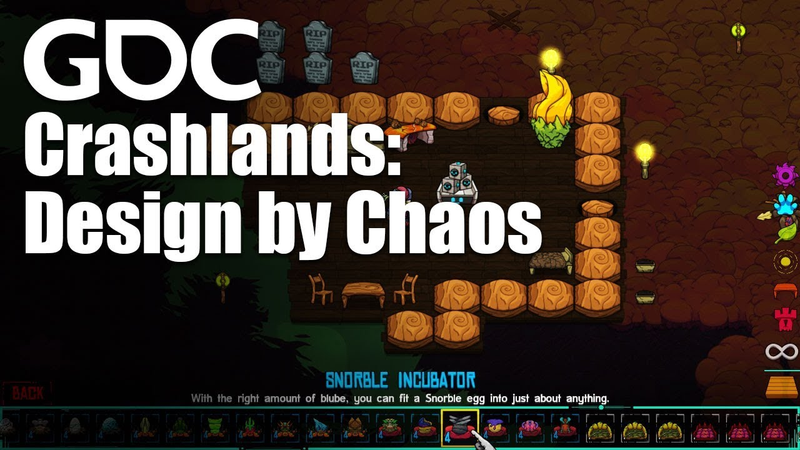
Crashlands: Design by Chaos
The development philosophy behind the action-crafting RPG Crashlands centers on a bottom-up, iterative approach that eschews traditional planning, game design documents, and long-term forecasting.
- Butterscotch Shenanigans achieved a 93 Metacritic score and over 500,000 units sold in the first year of Crashlands by prioritizing rapid, bottom-up iteration over rigid planning.
- The development process rejects traditional game design documents and long-term forecasting in favor of a brief, high-level directional anchor.
- The 'Goodenough' principle prioritizes immediate progress and player experience over perfection, which the studio credits with preventing crunch and burnout.
How to Sustain Organic Growth for Games in MENA
Organic growth serves as a critical indicator of a game’s long-term viability and market success, representing the ability to acquire users without paid marketing.
- Sustaining organic growth requires a multifaceted strategy integrating App Store Optimization (ASO), data-driven analytics, and proactive community engagement to reduce reliance on paid marketing.
- Developers should optimize technical assets, including icon naming conventions and screenshots, while utilizing keyword planners to align game visibility with current search trends.
- To maintain high store ratings, developers should provide dissatisfied users with private feedback channels to resolve issues before they manifest as negative public reviews.
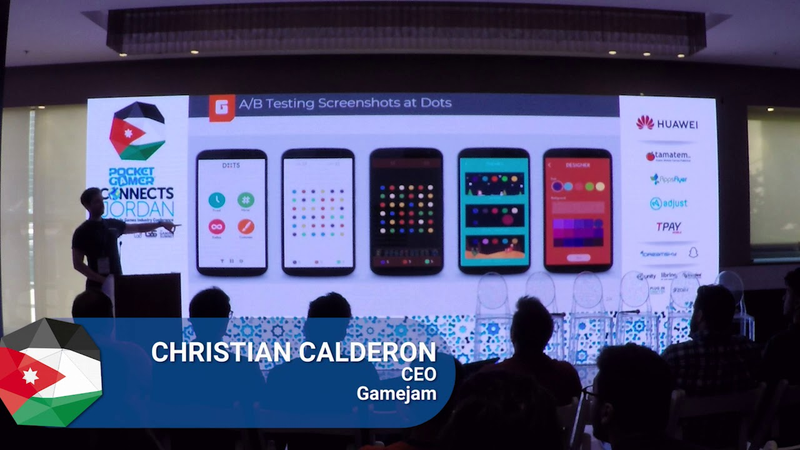
Growth in Hypercasual and Ad Monetisation
The hypercasual gaming sector has undergone a significant evolution, transitioning from premium pricing models (2007–2010) and freemium in-app purchase strategies (2012–2017) to an ad-driven monetization model.
- Manual waterfall setups for ad mediation consistently outperform automated or header-bidding configurations by fostering greater competition among ad networks.
- Maximizing ARPDAU requires setting specific price floors for ad impressions, as header bidding often results in lower CPMs when left to automated algorithms.
- Hypercasual growth is driven by balancing CPI and LTV, where CPI is optimized by improving CTR through creative testing and CVR through storefront asset refinement.
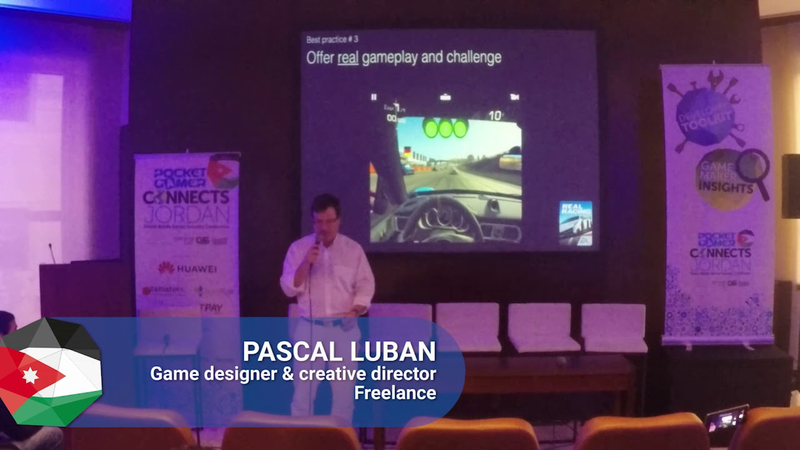
Onboarding: How to Keep Your Players After the First Minutes of Gameplay
Effective onboarding is critical for game success, as a significant portion of the player base abandons titles after only one or two sessions.
- Onboarding must prioritize immediate immersion in gameplay within seconds to combat high player abandonment rates occurring after only one or two sessions.
- Designers should treat onboarding as a promise of the game's value, using it to mitigate the low commitment levels typical of free-to-play titles.
- Retention is driven by open loops, which pair clear objectives with rewarding outcomes to encourage player persistence rather than relying solely on skill.
Soft Launch Planning and Risk Management
Soft launching serves as a vital risk mitigation strategy, allowing developers to refine technical stability, content depth, and user experience before committing to a global release.
- Soft launching acts as a primary risk mitigation strategy to validate core gameplay loops and technical stability before scaling to global markets.
- Development teams should prioritize core mechanics and technical performance over secondary features like monetization or social systems during the initial testing phase.
- Data analysis should be managed through a focused metrics framework, such as a single key performance indicator or a structured metrics pyramid, to prevent information overload.
”Casually Hardcore” - How Hardcore and Casual are Outdated Terms
The industry-standard terms casual and hardcore are increasingly obsolete, as they fail to capture the nuance of modern player behavior and demographic diversity.
- The industry-standard labels of 'casual' and 'hardcore' are obsolete because they fail to reflect modern player demographics and the nuance of actual gaming behavior.
- Historical marketing shifts in the 1980s, following the video game market crash, intentionally targeted young men and created lasting, exclusionary gender stereotypes.
- A significant portion of the mobile gaming audience, particularly women, engages in substantial play time but rejects the 'gamer' identity, often viewing their hobby as a private or guilty pleasure.
Growtopia : Inspiring and Adapting from the Indie Mindset
The transition of the sandbox MMO Growtopia from its original indie founders to the infrastructure of Ubisoft Abu Dhabi serves as a case study in balancing agile, indie-style development with the operational requirements of a major publisher.
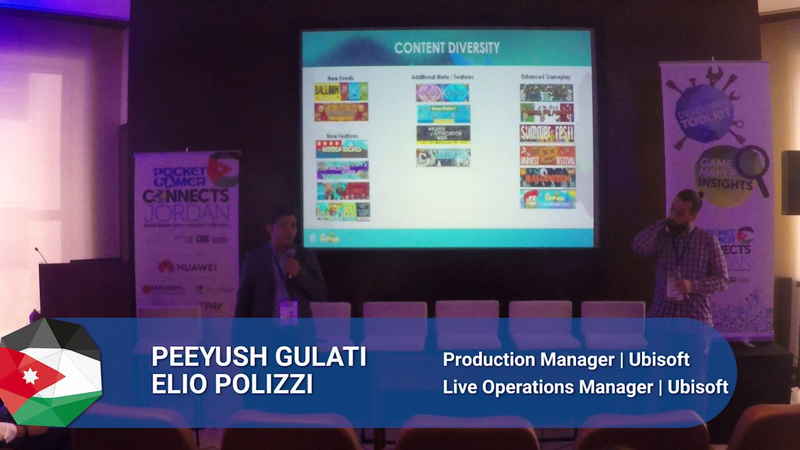
- Ubisoft Abu Dhabi successfully transitioned Growtopia from an indie-founded title to a scaled live-service environment by adopting an 'indie-within-a-corporation' operational model.
- The studio maintains a rigorous four-week production cycle consisting of two-week development sprints, one week of testing, and one week for store submission to support a consistent monthly update cadence.
- Growtopia currently supports 400,000 daily active users and 2 million monthly active users, with the player base generating approximately 40,000 new worlds every day.
Uplifting Ad Monetisation via Brand and Programmatic Campaigns in MENA
The Middle East and North Africa (MENA) region represents a significant growth opportunity for mobile game developers looking to optimize ad monetization.
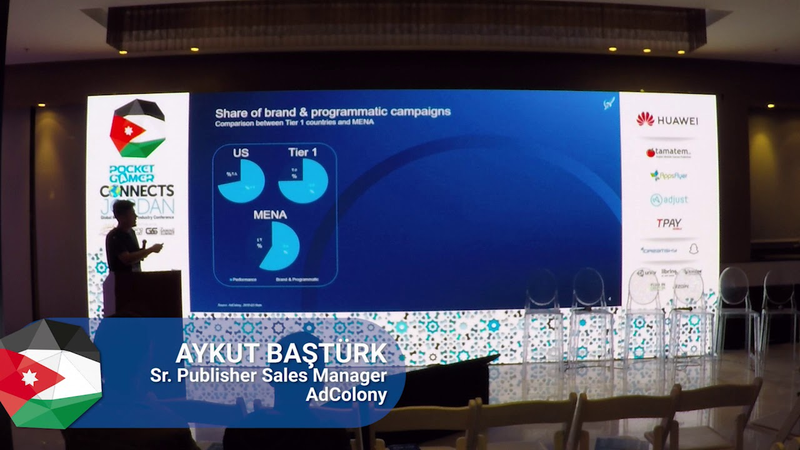
- Brand-focused programmatic advertising in the MENA region yields eCPM rates of $10 to $15, significantly outperforming the $5 to $10 range typical of performance-based campaigns.
- Brand campaigns prioritize user engagement and video completion rates over immediate install metrics, making them a more lucrative revenue source despite lower total impression volumes.
- Developers should implement advanced monetization tools such as header bidding and dynamic floor pricing to facilitate real-time, automated competition for ad inventory.
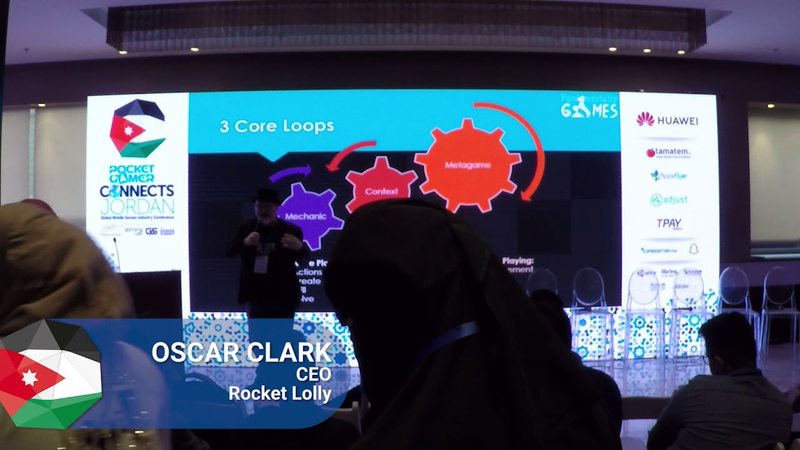
Monetisation Design - A Story of Love and Retention
Monetization design functions most effectively when it prioritizes long-term player relationships over short-term transactional gains.
- Monetization design should prioritize long-term player retention by aligning mechanics with the psychological drivers of competence, autonomy, and social capital.
- Developers should categorize offerings into distinct tiers—such as subsistence items, shortcuts, and social or strategic goods—to tailor strategies to specific stages of the player lifecycle.
- Monetization must be treated as a testable hypothesis driven by data and community building, rather than a series of transactional hurdles.
Monetisation Beyond Ads - Tips and Tricks on How to use Unity Monetisation Products
Mobile user acquisition serves as a critical engine for growth, functioning best when treated as a strategic complement to organic discovery rather than a standalone tactic.
- Utilizing machine learning for dynamic bidding and audience targeting has demonstrated a 40 percent increase in both gross revenue and user quality.
- Mobile user acquisition should be treated as a strategic complement to organic discovery, shifting focus from cost-per-install metrics to lifetime value and return on ad spend.
- Monetization strategies must prioritize the integrity of the core gameplay loop by integrating advertising as a seamless, non-intrusive element rather than relying on aggressive placements.
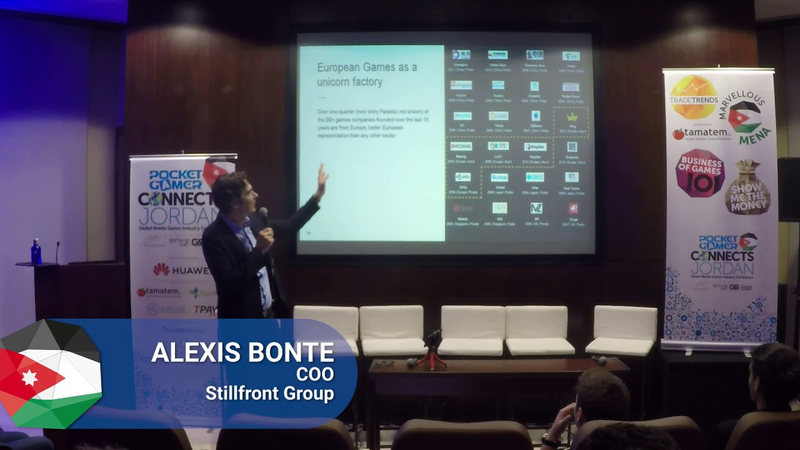
Hunting for the Next Supercell
The gaming industry represents a massive, high-growth global market, currently valued at approximately $140 billion.
- The global gaming industry is a $140 billion market driven by 2.2 billion active gamers accessing content through major distribution platforms like the iOS App Store and Google Play.
- Game studios often achieve profitability within their first few years of operation, offering higher cash efficiency and lower capital dilution compared to typical tech startups.
- Investment strategies prioritize the development of 'evergreen' titles capable of generating stable, long-term revenue, with successful breakout hits frequently yielding returns exceeding 10x.
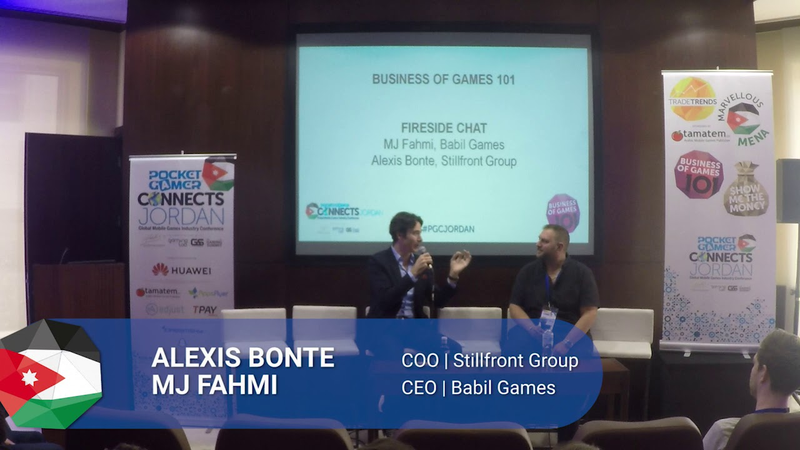
How Babil Scaled Nida Harb 3 to the Top Slots of the Grossing Charts in MENA
Babil Games, a Jordan-based publisher specializing in the Middle East and North Africa (MENA) region, achieved significant growth and international success for its title Nida Harb 3 by leveraging the resources and collaborative structure of the Stillfront Group.
- Babil Games scaled its operations from a 12–15 person team to 40 employees following its 2016 acquisition by the Stillfront Group.
- The partnership with Good Game Studios provided Babil Games with the advanced marketing intelligence and analytical tools necessary to scale user acquisition for Nida Harb 3.
- Access to Stillfront’s financial backing and data-informed advertising infrastructure enabled Nida Harb 3 to reach top-grossing status and expand into North American and European markets.