1 free read left. Create a free account for unlimited reading + AI research.
Create free account
Onboarding: How to Keep Your Players After the First Minutes of Gameplay
Key insights
6 takeaways- 01Onboarding must prioritize immediate immersion in gameplay within seconds to combat high player abandonment rates occurring after only one or two sessions.
- 02Long-term retention is bolstered by showcasing progression trees and unlockable content early, giving players a clear reason to commit to the experience.
- 03Designers should treat onboarding as a promise of the game's value, using it to mitigate the low commitment levels typical of free-to-play titles.
- 04Complex systems should be introduced through simple storytelling and meaningful challenges to maintain engagement and prevent boredom.
- 05Retention is driven by open loops, which pair clear objectives with rewarding outcomes to encourage player persistence rather than relying solely on skill.
- 06Monetization through advertisements must be balanced by delaying initial exposure while still introducing them early enough to capture value from the initial user base.
Ask AI about this video
Transcript
Good afternoon and welcome to my talk on early game retention. Now, um talking about early game retention, we all know the hard fact. The hard fact the wrong button. Not this. Should be the other way. No. Huh? All right, okay. The hard fact is that most of the people most of the player that discover again for the first time, they just never come back. They play one session, two sessions maybe, and they just never come back. And for the industry, that's a big problem. It's a big issue because the competition is very hard as you all know it, but also because getting new players, you know, acquiring new player cost a lot of money. So,
game designers, you know, are facing this issue, but are not necessarily aware of its importance. It is true that the main responsibilities for the game designers, obviously, it's to create, you know, a company game experience, uh to plan the level design, to think about the monetization strategy, and so on. And of course, to build long-term retention, but sometimes designers overlook the importance of short-term retention, which is called onboarding. And that's, you know, one of the point which I want to stress out today is that for a game designer, it is as important to think about short-term retention than to plan, you know, the whole game mechanics. And what I'm going to do today today in my 20 minutes, I'm just going to share with you what I believe are the best practices to keep your players engaged after the first game sessions. I'll briefly introduce myself. I'm a game designer, I'm freelance. I've been doing that for 24 years, so that means that when I started to work, I was essentially working on on console, so
kind of, you know, action games, console, AAA titles, and so on. You have a few examples here. That was, you know, like about 20 years ago, and then for the past 12 years, I worked essentially on mobile title because this is what the market was looking for. So, here are some of the titles I've been working on. Now, I'm kind of back on console because the market is changing. But, basically, it gives you an idea I know what I've been going through. So, let's get now into the the the thick of the topic. So, first of all, before I want before I will describe those key learnings, we need to think about the player. It's always important to put the player at the center of everything you do when you plan a game design. So, we need to be to go into the heads of players. What do they think when they're about to start a game for the first time? Well, wrong slide again. I'm having some trouble with this thing. All right. Well, first of all, players are looking for a certain experience.
Think about it. What will attract you to a new game? Well, maybe it's the title, the theme, maybe it's just a a screenshot, whatever, you know. No matter what, if you decide to play one specific game or at least to try it, it's because something in that game attracted you. Maybe you are a big fan of medieval Japan. So, any game which deals which talks about medieval Japan, you'll try it because this is something that is interest of you, okay? So, that means that when somebody decide to try your game, it's because you made a promise to this player. Look, you're interested in that topic, this is what I'm going to deliver in my game. Another thing also that people know they have choices. I mean, we know that. I mean, especially now for mobile games and premium games, there are just so many games out there and so many good games. So, players know that well, if I don't like this game, who cares? I can get I can play another one, you know.
They also might feel some anxiety. This interesting to take into consideration. Think about it. When you discover a game for the first time, some players will feel anxiety because they might say, "Okay, well, will I like the game? Will it be Will it be too difficult for me? Will I get bored?" And so on, you know. So, somehow, you know, you have this anxiety level, which can be very high when we talk to casual casual players, you know. Hardcore gamers that are used to games, so you know, they they they know they will learn, they know they are used to difficulty and so on. But, casual gamers, you know, they might be a bit scared by a game they don't know. So, this is very important to keep in mind in the player's psychology. Some players will feel some anxiety when they start a new game. Okay. Okay. And last point, which is probably the most important one and it's a bit difficult to to understand. When you pay for for a game, all right, even if you decide to spend one
dinar, one euro, one dollar, okay? It's a small amount. Nevertheless, it means you made a choice. You decided this game, I believe it's worth enough for me to spend money, okay? That means that if after you bought the game, you play the game and the game is disappointing, well, you'll continue playing a bit because nobody wants to admit he made a wrong choice, all right? But, when the game was free, there there is no this monetary involvement, which means that player, you know, will leave right away. This is something which is a real problem. Free-to-play games, you know, offering something which is free is great. It's getting people, you know, to try your game because there's no barrier to entry. But, the problem is that you can get people easily in the game, but you will lose them as easily. So, this is why, you know, it's very important to understand that offering your game for free will decrease drastically the level of engagement of the player.
So, this is what, you know, this is the mind of the player before he's going to start a new game. Now, let's try to see the best practices to keep them in the game. Gee, I'm very unlucky with this thing. Okay. Best practice number one, get the player into the game as fast as possible. And I'm going to show an example. Uh I'll take this example. It's called Criminal Case. It's a hidden object game uh developed and published by a Pretty Simple, a French studio. The game initially was published on Facebook, then went to uh mobile. Very, very successful game. And I'm going to show you how the game starts. So, first image, first screen, this is a splash screen. So, those pictures are taken from the Facebook blue pleasure. Splash screen. So, you already know what you're going to be dealing with. You know, it's a game about criminal investigation. Okay? First slide, no explanation. I apologize, the slides are in French because I couldn't get could not get access to the English version, but it's kind of simple to understand. The very
first slide you see in the game, that's it. You got this guy coming up. He's your somebody of your assistant. He say, "Hey, a crime has taken place. Let's go on investigate." And of course, you see some uh some uh some pictures, you know, from the crime scene. You know, this is this uh blonde girl with the mini skirt and her throat has been has been cut, you know. So, obviously, this is just designed, you know, to make it a bit more spicy. You notice that at this level, the player doesn't know the game, doesn't know the kind of game play, knows nothing about the game. All he knows is that he's taken into an exciting uh criminal investigation. Third picture, we discover, you know, the actual game uh game image. Uh it's a hidden object game, so it's very simple. You've got names and you have to find the object on the pictures. You've got some explanations, okay, how it works. Another explanation is that there's a help mechanism. They don't even explain you how it works. They just tell you, "Look, it's there, okay?"
And fifth screen, that's it. You win the game. So, within 15 seconds, that's it. You're actually, you know, playing the game and you're actually doing, you know, the first step in a criminal investigation. So, you see, they did not waste the the player by showing things which are not interesting. They took the player straight into the actual game play. So, Okay. So, why is it the best practice? Well, basically because it delivers the promise you made to the player in the first place. The promise here, you like crime investigation, this is the game about it. And you delivered this promise very, very quickly. And also, which is very important, you start the game play very quickly. Let's not forget, why do people play games? Not because of story. They play game because of the game play. So, you have to deliver it as quickly as possible.
And remember, real game play is not about challenge. And this is what is really making, you know, a game a game standing out. It's it's actual game play. Okay, best practice number two. Add simple story telling. I'm very unlucky with this thing. I think I'm not the only one. All right. Okay. Again, I'll take an example from Boom Beach from Supercell. Now, this example might be surprising because Boom Beach is the third game published by Supercell. Supercell, like great experts in mobile games, obviously, free-to-play mobile games. And what's interesting is that this game is kind of it's a bit more hardcore-ish than Clash of Clans. It looked like Clash of Clans, but actually, you know, the gameplay is a bit more technical and it's more for hardcore gamers. Uh why do they have some storytelling? So,
first of all, let's see how it looks like. When you start the game, immediately, that's what you discover. You know, this guy tells you, "Hey, look, our island is going to be attacked. We need to defend it, all right?" And you discover, you know, the enemy, you know, the evil Lieutenant Hammerman. So, you defend the village, you know, I skip some slides, you know, to be a bit faster. After that, you you learn that, okay, now we've been we we fought back. Now, we need to attack, you know, whoever has attacked us. So, we built like a landing craft. We select the island which is our target. This is where the the bad guys are coming from. We attack the island. And then, you know, then we've got this nice character and they are thank you for saving us. Okay. This is pure storytelling. Now, for those of you who know the game, you know, you know what the game is all about. It's about combat, it's about strategy, you know, it's really into multiplayer challenge. And why the hell did they put, you know, this kind of storytelling? Well, actually, there's a
reason for that. Is that storytelling, you know, it's an easy way, you know, to get people's attention, especially if the game system is a bit complex. That's a big benefit of doing that. This is a fact. All of us, we are attracted by story. Okay, all of us. So, of course, after a while, you know, we might be interested by other things, but a simple story it's a good way to get to catch people's attention at least for a few minutes. Another good thing also about storytelling is that if your gameplay is a bit complex to explain, okay? By having some simple storytelling you kind of cover it up. In other words, it makes it you make it less boring, you know. And finally also it gives purpose to the player action. You know, you save the nice lady, you know, blonde again. So, it's looks like it's trivial, you know, but when the game starts, well, those are little gimmicks, you know, that help people stay in the game for, you know, a few extra minutes.
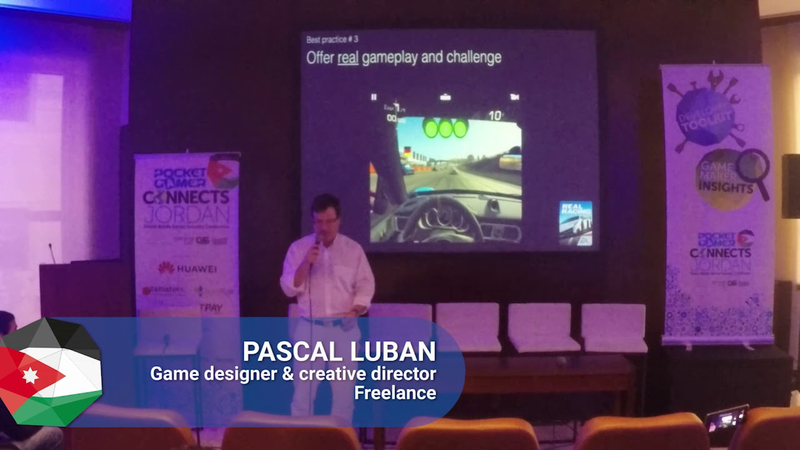
Okay. Third best practice, offer real gameplay and challenge. Now, here I have underlined real gameplay, okay? I should have done it for challenge as well. Let me explain to you what I mean by that. This time I'll take another example. This is a bit more hardcore-ish game. It's called Real Racing 3. It's a racing game on mobile published by Electronic Arts. And let's see how the things the game starts. Well, first of all, you know, you the game starts with a video, you know. You see some high-power expensive fancy car, you know, just rushing on a on a on a on a racetrack, you know. You can already tell, you know, those are the high-detail models and so on. After a few seconds, you go into one of those cars cockpit, okay? So, actually this is a moving image, okay? So, you are the car is just moving forward. Um The game explain to you the control. They are very simple. Basically, you know, it's a game where you can control the speed. You just turn you steer left and right. There's another tutorial screen that tells you how, you know, to
change the camera, all right? And right after that, the race start. This is called a rolling start. In other words, all the cars start at the same time. And then when the light goes green, everybody just start to speed up and so on. So, within a few seconds, that's it. You're in the real race. And what is making it more exciting is that you're actually racing against other players. You can see you see, you know, their flag and their name. Wow, multiplayer racing against other players it's always more exciting. Now you complete the race, okay? Now what you don't know here is that you're actually racing against ghosts of other players, all right? So those are real players, but you know, they played in the past. And obviously they selected players which did not do another specially good. So chances are that you're going to win this race, it's not very difficult. Nevertheless, during your first game, you know, you had the thrill of beating other players. At least this is what you think. And this
is super exciting because this is what is making multiplayer so powerful as a as a gaming mechanics, you know? It's a thrill of victory and the bitterness of defeat. We all know that. And this is what they bring. So even if it's simple, you know, there is some challenge because you can fail, you know, if you just don't do stupid things on the track you're going to lose. But if you drive properly, you know, you're going to win and you'll beat real players. At least that's what you think. So that's the best practice because obviously, and they think, okay, well, challenge create excitement, you know? Obviously it is tempting to start a game with no challenge, you know, to make it easy to make sure that people will not fail. The problem is that if there's no challenge, you know, there's no fun. So depending on what on who your audience is, but if you are targeting an audience better for gamers, put some challenge in. Make your game stand out. Best practice number four. Okay. I'll show you an example from Smash Hit, a game designed by Swedish studio Mediocre. This is the worst studio name I've ever found, okay?
So this game, just look at the splash screen. Just by looking at it you say, wow, this is the game I've never seen. Everything is unique in this game. I mean, the color, the graphics, you know? Just by looking at it you see, oh, this game is something I've never seen. I want to try it out. And as As as you start the game you all get confirmation the game really looks different from what you've seen. video Okay. Where did it go? Yes, no. Magic help? Yes. Is it sound again? Everything sound is different. The sound is different, the graphics, the gameplay, you know. So, this game has many things that stand out. True, but you know, they had the idea of making it stand out right away, you know. That's all. You can Okay.
I'll just forget. All right. So, why is it the best practice? Well, very simple, because we know that players are attracted by new experiences. It can be anything. It can be a gameplay, a graphic style, a soundtrack. It can be, you know, a storytelling, anything. But this is something which really I I insist, you know, especially for you guys if you are in the game design, you know, try to be creative regarding the game system. Try to make it different, you know. I know it's difficult, but you know, uh making a copycat of existing game, you know, sometimes, you know, it it's a recipe of failure. Now, those guys, they understood it. They made it in such a way that clearly, you know, from the very start the game looks completely different from everything else that has been seen before. So, what's the best Okay. Oh. Okay. Best practice number five, show players the scope of the game. In other words, show players how big your game is. Again, I'll take the example of um Boom Beach, you know. In this game, it's
a construction and fighting game, so you have buildings you can add to your base, you know, uh towers, gun, machine guns, and so on. So, obviously, you know that you cannot build like everything at the beginning, okay? But at least, you can see everything. And this is a way of telling the player, "Look, if you play with me, you know, eventually you'll be able to unlock all those exciting feature." That's what I mean by showing the scope of the game. This is a mobile games. It's pretty simple, obviously, because you've got maybe like a 12 different kind of buildings you can have, okay? But another example is World of Tanks, which is much bigger, you know? In that game, you can hear, okay? The game starts by offering you you know there are different nations in this game, French, German, English, and so on. So, for each nation they offer you a free tank, which is usually just little thing ridiculous, okay? But then you discover the progression tree, and this is what you see. Okay? I mean, you see there are hundreds
of tank to unlock. And especially you've got exciting tanks, the German Tiger, the German Tiger, and the American Sherman, and so on, you know? So, you see that if you play the game, you'll be able, you know, to unlock all those exciting tanks. So, this is another way to tell you, "Look, if you decide to engage in my game, you're going to be with us, you know, for years and years and years." So, again, Okay, it's a best practice. Well, basically, because it tells player, if you you should decide to play the game, you know, you know, there's lots for you, okay? The game is going to be very, very generous. Best practice number six six, give players good reason to return. Now, here we talk about open loops, something that some of you already know. An open loop, basically, it's a very simple mechanism. An open loop is made up of a game objective and a reward. For instance, if you built three corn fields, then you'll be able, you know, to unlock, I don't know, like
like like the windmill, okay? So, you see you've got an objective, built three fields, and the reward, built the win the windmill, okay? As soon as you have completed this open loop, then usually you've got another loop coming coming in. Okay, now you've got your your your windmill. Now, if you build two windmills, then you can build a bakery. Okay. So, and so on. And we know that in many many games open loops, you know, they they are they pile after each other. They get longer and longer, and we've got more and more of them to do. Okay? And it can go on like that forever. This is like a typical mechanism that we see in many many games, especially, you know, mobile premium games. Open loops are great. They are used obviously for early retention, but also, you know, they work very well for long-term retention. So, why are they so effective? Well, essentially because they rest on human psychology. When we start a task, we
like to complete it. You know, it's somewhere in the back of our mind. And obviously, when you maybe you've noticed it, but when you start when you get one of those open loops, usually it's half halfly done. In other words, you already partially completed it. And then also their completion does not rest on skill. The completion rest on persistence. In other words, whether you are a good player or a not so good players, then you have your chances of completing the game loop. Of course, if you are a skilled player, it will go faster. Yes. But in any case, you know, you know that you can succeed in doing it. This is very important. This is very different from traditional games where usually, you know, that to finish a level, you know, you need to beat the boss or whatever, you know. So, it rests on skill. This is hugely different. And finally, last thing which is very important, completing an open loop unlock useful rewards. Okay? Like in that case, uh the case I mentioned, you're going to unlock like the bakery, which is
something important, you know, to grow the city and so on. So, they don't reward you by giving you gold or whatever, you know, this is nearly useless. They reward you by unlocking for you new features that will make the game better and and so on. So, Sorry. So, these are the best practices, you know, I recommend when you have to work on onboarding. However, you know, there's one last one which I did not mention because I think most of you know it. It's just simple, you know, to be creative in your game. Thank you very much. And I'm so unlucky with this thing. Okay, that's it. You got my details. Okay. Maybe you have We have time for a question, maybe, you know? Yeah, just quick some quick ones. Yeah, yeah. Thank you very much, Mr. I I think this is an area we don't spend enough time focusing on. So, please, if you have questions, ask away. Got a question right here. Well, I wanted Uh hi. About mobile mobile games, yeah. Uh when is the good time to introduce ads or whatever you use to monetize the
game? Uh That's a very good question. The question is, okay, in the free-to-play games, when can we start, you know, to push ads? Okay? Uh well, actually, uh obviously not from the very start, you know, let the player discover the game. However, it should not happen too late. The reason is that uh you're going to lose many players. I mean, even well-designed games will lose many players early on. So, you still want, you know, to get some cash out of the first players. So, I would say that the question is not when to start pushing the ads. The real question is that how often do you want them to submit them to the ad? Let's Let's Let's assume that, you know, you have an ad every time that the player fails, you know, you have a game like a like a Temple Run, it's a runner. So, that means that players, you know, will fail pretty often. So, you can decide, okay, we'll have an ad after every failure, okay? The problem is that if it repeats too often, this is bad. So, what I would recommend in that situation is that first, you show an ad after the first
failure, Then you show another ad after the third failure, the fifth one, and so on, you know? So, over the time, people, you know, will still see ads, but they're not going to be to be completely, you know, crushed by them. Thank you very much. And on that note, I'm afraid we have to move on, but thank you so much for that, Pascal. Thank you, and thank you thank you for the person who's doing the translation. I know this is difficult. Thank you very much, also.
Summary
Effective onboarding is critical for game success, as a significant portion of the player base abandons titles after only one or two sessions. Because acquiring new users is costly and the market is highly competitive, game designers must prioritize short-term retention alongside long-term mechanics. The primary thesis is that onboarding should be viewed as a promise to the player, which must be delivered immediately to mitigate the anxiety and lack of commitment often associated with free-to-play titles.
Key strategies for successful onboarding include immersing players in actual gameplay within seconds, rather than relying on lengthy tutorials or exposition. Simple storytelling can be used to provide context and purpose, particularly for complex systems, while maintaining a focus on the core gameplay loop. Designers should also incorporate meaningful challenges to create excitement, as a lack of difficulty can lead to boredom. Furthermore, establishing a unique visual or mechanical identity helps a game stand out, while showcasing the long-term scope of the game—such as progression trees or unlockable content—encourages players to commit to the experience.
The use of open loops—mechanics that pair a clear objective with a rewarding outcome—is identified as a powerful tool for retention. These loops rely on player persistence rather than pure skill, making them accessible and satisfying. When implementing monetization, such as advertisements, the approach should be balanced; ads should not appear immediately, but should be introduced early enough to capture value from the initial user base, with frequency managed to avoid overwhelming the player. These insights draw on the speaker’s extensive experience in both AAA console development and the mobile gaming sector.












Comments