1 free read left. Create a free account for unlimited reading + AI research.
Create free account
Growtopia : Inspiring and Adapting from the Indie Mindset
Key insights
6 takeaways- 01Ubisoft Abu Dhabi successfully transitioned Growtopia from an indie-founded title to a scaled live-service environment by adopting an 'indie-within-a-corporation' operational model.
- 02Growtopia currently supports 400,000 daily active users and 2 million monthly active users, with the player base generating approximately 40,000 new worlds every day.
- 03The transition highlights that while indie development provides speed and community passion, integration into a major publisher provides the financial stability and professional infrastructure required for long-term service sustainability.
- 04The studio maintains a rigorous four-week production cycle consisting of two-week development sprints, one week of testing, and one week for store submission to support a consistent monthly update cadence.
- 05The platform has achieved cross-play and cross-sync functionality across seven different devices, including mobile, PC, and console hardware.
- 06Scaling a legacy title requires robust infrastructure to manage live-service threats, specifically mitigating DDoS attacks, preventing hacking, and overseeing complex in-game economies.
Ask AI about this video
Transcript
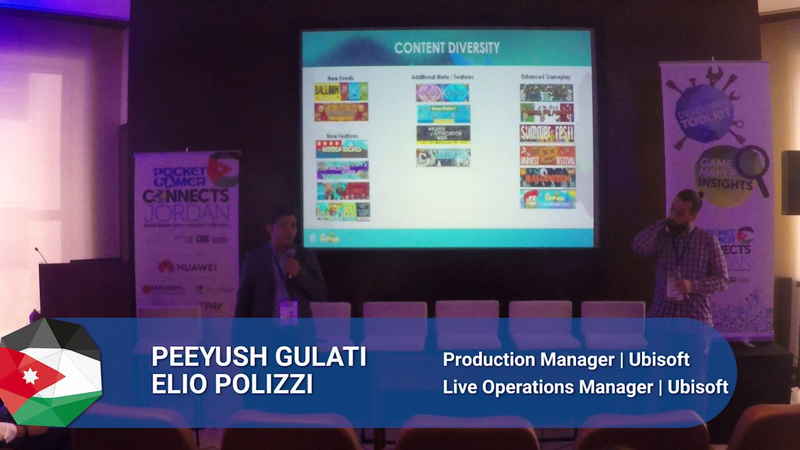
you good afternoon everyone it's been great so far meeting all of Indies seeing lot of talks advices given how to proceed further how to develop your business we come from Ubisoft and we have a story a few learnings that we thought it would be interesting to share with a lot of Indies on how we adapted and inspired from the indie mindset being still in an organization like Ubisoft I'm huge Gulati working in Ubisoft for more than a decade the production manager taking care of the games we create in Abu Dhabi along with me I have a Leo politi his live operations manager we've been working for almost eight years now trying to take care of things that we do from the Emirates for the rest of the world so a quick introduction about
where we come from before we dive into the subject that we are here to share more about so some fantastic work done in Abu Dhabi we love our spend in production done various games from the region 100% developed operated tested games like CSI hidden crimes NCIS hidden crimes growtopia one of the great games that we had to talk about and some games that we still are in development a very multicultural studio we have 60 a team of 60 people representing 28 nationalities so it's great how culture brings in great depth different perspective we experienced that from day to day a bit experienced you deal with an average experience of five to ten years on an individual developer level but we still higher lot of freshers every year from the region from all across the world because we used truly believe it's important for us to invest in the future by having young talent be a part of our teams so we do spend an incredible amount of hours in training and coaching our teams building
a culture building a value likes I mentioned in the last talk we have a very strong culture within the studio that is creating and building us up and on top of that the games that we create are played all across with thousands of hours invested into gaming hours given by some awesome players so a quick introduction about growtopia before we dive into our experiences and how we are didn't what this is all about and why we're here to share this information hey guys I don't know is it yeah perfect hey so I'll talk to you a bit about route OPI itself and what's the project and what's the game actually so it's a game that's been developed started like 2012 and sexy like when we got it was five years old roughly so Ubisoft purchase it in March 2017 and we've been actually the studio in charge of developing and publishing the game worldwide since that so it's a truly multiplayer game so it's a creative sandbox MMO let's say so if you try to picture it quite easily like
it's like a road block so a Minecraft entry you create world so you discover like ways to have fun with friends so one of the main ways to customize your character and do parkour excite rap your friends but also to create amazing worlds because you don't have actually any constraint about what you can create in the game so much it's really social so trading is a huge part of the game there's only one currency so it's something really important in free-to-play usually you always like make it safer with having several currency in our game there's only one currency and people can trade any items that they want almost that's very important and we have a lot of once you update you're going to go a bit into detail to that but you see that we have achieved fast pace of producing content for the game and we have annual events and constant support almost 24/7 on the game so just to explain the basic actions that you can take in the game so first is punch so basically like you're going to start in your world and you don't have much things to do but you can actually punch and destroy actually all of the the blocks that are in your world and you're gonna get items out of it so with these items you're gonna build and grow so build you can actually like
create like you're gonna plant the seeds and creates different items and grow it means that you can actually be able to grow the seeds but also splice them to create new items so what that mean that means that actually you have one starting point that leads you to all the content of the game so you can explai all the seeds but like everything grows on share on both of you so you'll be able to have like lava blocks shirts and hats growing on trees so all the contents gonna be available to you as a player from these reactions about the world that they created you can see a couple of words created by our players okay this one we have a little bit as you can see the others that did create a crazy world the Dipper a lot of information and depending on what's the purpose you have Niagara fall for example that's gonna explain actually what happen in the world and why it's there and what we need to protect them so bears are really committed about providing experience to other players how about the committee itself so it's mostly late Gen Z so it's actually like quite young players overall even if our golden courts are
getting a bit older obviously our daily active user amount is roughly 400 K site days maybe now and about almost 2 million monthly active users we said that the create world with a create a lot of world you can see almost 40k worlds are created every day by players so that's quite a big amount and they really enjoy like having licensed content so you can see angry sharks for example from Ubisoft Mobile on the left and you can see you can recognize maybe a sanskrit on the right so we have that in the game and the players love it we also have like youtubers creating a lot of content so we let's say our top 10 youtubers will get roughly 50k 40 50 gives you within a couple of weeks and if we take like our titanium shivers ruff in the last year whereas cheers we have more than 200 million views accumulated for this so quite a bit of activities there especially for us at least so let's see if the video works or not sorry if not it's okay we can send the link later
okay if it doesn't work cougar centric later it was just a video to actually introduce what our community can do and the impact that's moderators for example in our game have won our players so it finishes actually like a kid screaming when I see one of the Meritor finally comes in his world you can imagine like thirty six thirty eight thousand world created every day and when you have like one of the team of like twenty moderators that go in one of this world players build crazy like a common sign my board like they feel like so famous so it's really a big thing for us I let be you should talk with more bad content yeah so a bit of context about what the game was and like ill you mentioned ubisoft purchased this game from two indie developers and we when we talk about this game we were lucky enough to work in an environment like Ubisoft where we didn't have to worry about investment to start with but we wanted to work with an indie mindset and with
that it was a great opportunity for for the studio for the team in Abu Dhabi but it was a great challenge what all it meant by indie mindset that means we were ready to take a handover of this game from the original developers in six months there we wanted to prepare ourselves to do constant updates about the game because the game has will go a bit further on how the game has constant updates and how much work it has it needs to be done when you know you have a game that is loved by a mass audience and today we have a two point even a half years of legacy with behind us where we have been taking care of this game so what are the usual growtopia update looks like so this is something that you know when you started in indie you don't think about the commitments that you're gonna make to your consumers or your customers or your players you have a product you have a promise but later on if it picks up your into a commitment that if you don't fulfill then they're gonna go away because there are big players out there and they will fulfill that commitment because they have the muscle and the means to provide
that so growtopia hadn't commitment made unintentionally by the indie developers that it is going to have one update every month perfect so suddenly we when when you work in our organization like Ubisoft you know it's still lost struggle but having an update to do every month where 80% of your update needs a lot of development support can be challenging on top of that there were some pre commitments unintentionally again done to the community that in an update it's going to have one item in the game which is called as IO TM it's item of the month which is going to be only available in the game for one month and after that month that item is going to be remove so it's kind like a precious item introduced to the game every month which has to be released on 1st of every month so when you know as indie you have to be prepared to handle all these cases because it can be a public holiday or a bank holiday or weekend but when you're working as in you don't think about it because it's what you live and what you do every day then then the game has one
event every month which resembles to the live holiday in the calendar year for example right now the game is having a Halloween event going on for a week next month is going to be Thanksgiving and then after that's gonna be Christmas so there's a resemblance to the real-life holiday happening at point of a time and on top of that the game needs a monthly update in terms of content which has to be a new gameplay new meta new features new items all that had to be done with an indie mindset with a very very small team and everything to be done in-house this is where we started in spying or self from how in these would work and how would they take care of their business in and out so when we say everything to be done in-house that means from we were working with the mindset that we don't have to talk to anyone in you which often we don't have to answer to anyone we have to make sure what is our plan what is your business model how are you going to expand this game how are you going to grow it further how are you going to make sure that we
have a small team are we having the tested release attach it updated maintain it art design programming chewie marketing business live operations so on and so forth everything to be done in the in-house so with that lot of challenges and learning that we want we thought it would be a point for every developer to think about because you you get an opportunity one in a million to have a hit and you don't want to miss it and when you were on the range to have a hit you want to be prepared to scale it up because what are the odds that you're going to be again able to replicate it and take care of it or have everyone motivated to do the same thing again and again and again so some of the key challenges we faced was to depths versus too many deaths the reality when you're walking as Indy when you're two people it's a different strategy it's a different way to work but when you have more than two people even 5/10 it's it's different it's a lot of communication a lot of time you have to ensure everyone
is on the same page the two people you don't have to Express even at times you have to distribute responsibilities okay you take care of this I take care of this you know what you're doing I know what I'm doing but when you grow all these challenges start coming in so when you have a hit and you want to scale it up you have to understand that is going to have a lot of overhead cost as you can to grow your team then again for us we were learning systems that were developed in four or five years when we took over the game in six months because we're doing a handover but as in these you have to do the same when you are making a game and you're trying to out beat someone in the market you have to learn things that have been there for decades there are people who have been creating games trying different strategies trying different features that you might think would be very interesting but they're already existing out so you have to learn from those mistakes and not do the same things again again knowing what to prioritize your appetite for risk are the most common challenges every indie faces and that's exactly what we were also facing within Ubisoft because we had the complete autonomy on the game and we we had the rights to decide what we want to do and how we want to do some of the
greatest learnings we had we shared the pain being in these stuff and that's I guess we've been trying to learn that but you have to be able to do everything and we were absolutely ready to do everything on top of that we had an MMO that was that was growing with a very small and agile team and then working within the constraints in terms of ensuring our cost of our spendings ever returns our teams are all optimized we had substantial earnings on how to adapt all these things within organization like Ubisoft the plus factor we always had was the financial stability and we didn't had to go out and look for investors so with that we managed to develop a lot of content over the last few years a lot of new events in the game lot of new chairs are of extension to existing features new gameplays new metas in the last three and a half years we've done more than 30 updates on App Store about the game so it's been a quite tough journey we do be on a very rapid development cycle where we spend two and a half weeks to develop something another week to test it and then three and a half weeks be ready to do a submission to the stores about because
by the end of the fourth week we have to release a game update and this keeps going on and on with that something we want wanted to experiment you could solve being a variational console company we thought it would be interesting to bring the game on console so this June we bought the game on console all the HD platforms switch Xbox and PlayStation with it being the first free-to-play cross play crossing game from Ubisoft on HD where you could play with your progress and players on switch and Xbox together having said that the journey so far we had thanks bution and pitching for a couple of points so on the publishing side it was like quite a big thing to take a game that had so much legacy and she okay how we're gonna communicate to these players they've been there they are there their own habits they didn't know what to do better than us they've been there for five years they know the game inside out so we are at it back tree from Ubisoft windy so it changed our mindset we released two games and we had one way to do things like we put our guidelines with whatever stuff etc but we couldn't arrive on a new game and just like tell them what to do and how it should be
done when I see these players new everything better than us so we are added to what we call Ubisoft in Z which was actually the bit in between an indie developer and actually a larger corporation and what's quite interesting is that now actually we're getting back a bit so Ubisoft because the players needs and the players petition actually change over time so at the beginning actually didn't want us to change too much but then they're like like why are you not at the level of Ubisoft now because you Ubisoft so it's actually like the the flow on the wave that actually suits them a bit but like now for example we're on the last stage to actually get back a bit more to Ubisoft but to two years and a half Rafi to get there so in order to do that we had to adapt our tone the way we talked to the players the way we engage with the players again like Ubisoft guidelines and Ubisoft Abu Dhabi growtopia was quite different we didn't relate to actually people in aired quarters for that were a bit more autonomous and we adapting out on again so in that case actually now we're going a bit in between with actually having autonomy on our side but still having slightly higher standard for the
expectation of the players so that led us at the beginning to not live up to the high expectations of the pair's because these two guys okay like you're thinking like there were two you should mention like two versus too many like what's the point if you're more you can do better it's not always the case like you have two people who can give the full DNA to a project and when you have a bigger team that actually arrive it's a bit harder to give like our own DNA to the project and it's not the same anyway as the two founders were amazing so we didn't live up maybe at the beginning with all our stuff like we did then we didn't but now like we managed to most of the time live up to the high standard like we put like high standard twelve stars it's a bit harder than it when it's a new game because when it's a new game you define your standard and then the community is gonna raise them but you know but it's your standard here actually like we had to adapt and now actually we're managing to to live up to them most of the time something interesting as well so I talked about the identity show something that at the beginning were not really there etc we had to actually live with the way things
were and how I treat to treat the players how to Enzo anyway Petra which when you're in it you don't react to form anything so what was important for us seven trees to create actually our own guidelines but to do it with the players so they feel actually like we're engaging with them and it's not something that we're just putting on the face just to finish to give you another idea we started with just one community manager on our side and freelancer which was quite challenging and now we have a team of 10 plus that comes four people in-house and outsourced but the work of like a couple of Indies like if you put it in actually a corporation etc you need to actually multiply that by quite a bit because it's not the same way of dealing things it's not the same quick actions as pitch mentioned so I need it to be used for those points so a bit bit of experience just to wrap up on the mindset change that we had to do within Ubisoft and again it's been fantastic because it's a dream come true where you can work indeed within a company like Ubisoft lot
of problems that we had to prepare ourself for for a game like this we are you dealing with the half a million D you and a lot of MMO tactics and problematics with both scams hacks IP fraud trading black markets running out not working all that as an indie developer that means you you not only you're thinking about making a game or a service or a community you're also thinking about like okay how to protect yourself because even as being part of Ubisoft we we took up the commitments to do it ourselves and be ready to handle things one by one outside and then a lot of challenges like doing DDoS attacks on a regular basis where it's pretty cheap these days with $10 you can DDoS anyone and when we have a generation which is Gen Z which is bit younger generation they don't worry about the consequences of what it could land them into but they're happy to have $10 paid out of their parent's credit card and launch a DDoS attack on some game because the game didn't do what they wanted to for
example but finally today we have a multi-platform game which is available on 7 platforms iOS Android Mac Windows switch ps4 and Xbox with a single codebase and we still struggle and strive every day like everyone does in India to to sustain and to strive for 24/7 because we're not making a game we're providing experience that we to our players our commitment the promise they live a life with the product we do and we will be realized that it's a journey at the end of the day for everyone in Indy you start with thinking about what game you're going to make with then having to strive about funds and after that if you happen to have things in the right order you get a success then you strive about maintaining and sustaining that success the problems just get different and different and different they're always going to be there the forms are going to change but you always have to prepare yourself and be ready if you really want to be true indie and not to give up or to reevaluate if that's what you want to
do at the end of the day and not make games even having said that thank you so much we'll be really happy to answer any questions that you might have if that's right then yeah thank you very much guys thank you morning lot still good I think for me it's important because I think what we show what you guys are showing for me is that there's a lot that the the triple-a industry can learn from the indie community and hopefully a lot the indie community can learn from the triple-a satellite and what I've learned from big kind of being on both sides to a certain extent has just been that it's about the level of professionalism delivery quality that a triple-a teams can can you empower and that mindset is fantastic for the point of view of an audience but actually the speed to market the experimentation that kind of passion that I think you kind of hinted at in the earlier stages is something I think that the we as indie developers should be able to sort of take forward anyway it does you know I have a quick question there's a question
here for you get a microphone to you and maybe one over there afterwards hello maybe this is a personal question now that you're living the dream working at Ubisoft but you are still indeed do you entertain the idea to hand over this project and work on your next project because you know in this love to make a lot of projects and you more dreams come true I mean we do have multiple projects in the studio and both of us do work on different projects at point of time in our roles but I don't think we'll have a group of core topia because it's it's it's a living is living the dream and yes we are happy that we can do something else also but other than that it's we still learning more from growtopia that then that we would imagine we could learn from any of the product that we would do at least at this point of time and just work on the top of that it's also like you took us so long as well to make it now it's our game you know it's like okay like dick
created its self and Mike but now it's our game so to actually in Brindisi innate to ourselves it's not something we want to let go as well he took us like so long to actually be able to start knowing actually what they want what the player like really wants it draw what they expect from a cetera that now that you managed to do that which is don't want to let go like we'll work on other projects like but like we have teams that are dedicated you and I we work on transversal project but we don't want to let go and I think that was the mindset maybe before I don't think we have this mindset anymore on our side we want to create games and to still keep operating them forever I think like world of warcraft like 15 years for example of the etc it's something like that that we feel now we don't feel like if you want to create a project and then just let it go at the moment it's getting harder and harder and when you do I think you need to be aware that for example like the rapper first took us some time so you're gonna damage your community when you do that so at the moment not something I think like first we can do and we don't want to do it to
quote Tim Schafer he was asked when is the game done he said when it leaves my cold dead hands at least we came to the service we never have to give it up unfortunate can't go for the next question that I'm gonna have to move on to that speakers thank how much guys thank you thank you
Summary
The transition of the sandbox MMO Growtopia from its original indie founders to the infrastructure of Ubisoft Abu Dhabi serves as a case study in balancing agile, indie-style development with the operational requirements of a major publisher. The primary objective of this transition was to maintain the game’s rapid content cadence and community-driven spirit while scaling operations to support a global, multi-platform audience. The project highlights the challenges of inheriting a legacy title with established player expectations and the necessity of evolving internal processes to manage a live-service environment effectively.
Key operational findings emphasize the intensity of maintaining a monthly update cycle, which includes new gameplay features, seasonal events, and unique "Item of the Month" releases. To support this, the studio scaled its team and implemented a rigorous production pipeline consisting of two-week development sprints, one week of testing, and a final week for store submission. The game currently serves approximately 400,000 daily active users and 2 million monthly active users, with players generating nearly 40,000 new worlds daily. The platform has expanded to include seven devices—spanning mobile, PC, and consoles—achieving cross-play and cross-sync functionality.
The methodology involved a multi-year integration process where the team adopted an "indie-within-a-corporation" mindset. This required navigating the complexities of live operations, such as mitigating DDoS attacks, managing in-game economies, and addressing security threats like fraud and hacking. The team concluded that while indie development offers speed and passion, the transition to a larger organization provides the financial stability and professional infrastructure necessary to sustain a long-term, high-quality service. Ultimately, the project demonstrates that successful live-service management requires constant engagement with the community to align development standards with evolving player expectations.












Comments