1 free read left. Create a free account for unlimited reading + AI research.
Create free account
Monetisation Design - A Story of Love and Retention
Key insights
6 takeaways- 01Monetization design should prioritize long-term player retention by aligning mechanics with the psychological drivers of competence, autonomy, and social capital.
- 02Monetization must be treated as a testable hypothesis driven by data and community building, rather than a series of transactional hurdles.
- 03Developers should categorize offerings into distinct tiers—such as subsistence items, shortcuts, and social or strategic goods—to tailor strategies to specific stages of the player lifecycle.
- 04Offers should be presented during periods of peak player engagement to ensure they feel like a natural, rewarding extension of the gaming experience.
- 05Scarcity and time-limited events must be grounded in narrative context to maintain player trust and avoid the negative sentiment associated with aggressive monetization tactics.
- 06Transparency in pricing and the psychological satisfaction of the unboxing experience are essential for fostering sustainable, long-term player relationships.
Ask AI about this video
Transcript
you I can't say too much about the next speaker without being a bit weird because it's me yeah so I'm going to talk about monetization design hopefully some useful stuff my slides should hopefully appear shoot soon there we go now in the original spec the lineup I was talking about monetization a story of love and retention unfortunately ran out of time to do those slides so it's not gonna be quite so romantic but hopefully I can still take with you the desire to create a relationship the key thing I want to try and talk about is the difference between hyper casual and long-term games as a service and how we can build long-term meaningful
relationships with our players whatever kind of business model we're going to build because I think is important to have a meaningful relationship with your player I think it's a vital thing that means we have to understand each other we have to romance each other have to worry chowder get there you know to appeal or are chosen or person to come and spend time with us and we need to make that time for your meaningful so that's what we're going to try and talk about but it'll be a little bit more clinical than I originally planned why do we play games anyone why do you play games cuz it's fun what makes it fun though and it just fun thereafter front is a very ambiguous word different I think it's a fun and sense of achievement a sense of achievement so a sense of shall we say competence I want to feel good at something I wouldn't feel competent at something when I play a game it is a you know it's not every
game is gonna have the same sense of competence same sense of skills that you're using but we want one of the things that games does that's unique to the media unlike a film we don't feel competent when we watch a film do we well maybe if we watch I know yeah there's a few get few films out there which is so hard to watch that it's an ax sense of achievement just to get through them but you know feeling competences good thing but completion that sense that I you've done the jigsaw puzzle you put the last piece in yes I've done it I've completed something you know everyday lives we don't get to feel like that not normally and games that give us that space to feel good because we finished something most of my career is unfinished work and I like the fact that every once in a while when I play again I know I've done it I've cheap something I've got to the next level but I wanted to be another level to go for as well so
I can feel complete again control is actually important part of the experience I want to feel like I'm in control I have choices so it's a difficult one because I love Monument Valley but in my head I can't get over the fact that I actually don't have any choice I only have to find where the designer told me I had to be and do the action of the designer told me to do it is one of the most beautiful puzzle games ever constructed and I thoroughly recommend everyone to check it out if you've never played it I'm really glad for the team who won a BAFTA for it back there is a British film television Association award one of the best games of that year it is a beautiful experience but it doesn't give me a sense of autonomy I think autonomy is actually something that gamers can do that no other medium can do as well and finally social capital what does that mean why do you
think flossing dancing has become famous because a fortnight wise fortnight become the thing where people do that because it's a social experience where we can interact with each other and you can see my avatar and you can see the outfit that I've unlocked in that particular season I must have been good or spent the right money it's a way of saying look at me people like saying look at me and when you can do it in all sorts of subtle ways it doesn't have to be overt in fact actually some cultures it's it's actually about being look I'm part of the group if you go play World of Warcraft you want people to know that you understand it if you play League of Legends you need to understand the rules in the law to build unser what's going on I don't understand League of Legends because I haven't spent months planning it so I don't watch League of Legends eSports but I know it's one of the most popular eSports out there because you have to
have the social capital the engagement to belong to the tribes that play that game so why we play games is really interesting how much time do you spend when you look at your game design thinking about why people play I spend a lot of time thinking about it as you can probably tell it's not the same reasons why we spend money what and why do you spend money in a game turns out it's the same reasons we spend money in anything so think about this right so would you buy a movie if you weren't excited about that movie and what it might be would you pay for a cinema ticket if you weren't looking forward to the film and the film had a great reviews if somebody said the film was gonna be rubbish garbage whatever you want to say would you go and spend the money on the city or probably not unless you have an anticipation of the value of the
experience most people won't do it but also if you don't have a fear of missing out if I don't see it this week I'm gonna miss it cuz it going to leave the cinema house why would I go to that film the same thing applies to games if there's not things inside the game that I worry about missing out on then I'm not gonna do it classic one was something like puzzles & Dragons had a season where they had the Hello Kitty characters the Sanrio characters in it so as a month and only a month where you could get the Sanrio characters and some of them you would have to pay to get and some of them you'd have to play a lot or spend money to speed up your play in order to get all the characters and people would literally spend a huge amount of time and effort just because they want to get all those characters it includes a friend of mine Toit who is a hardcore gamer and he got them because he's gone to the show his kids these characters in the game it's a great talk
online where he talks about this but the idea of fear of missing out or opportunity cost as I sometimes call it it's an important factor if we don't say there's a reason to do it now why would somebody go and buy your thing in your game right now or buy your game now abnegation is a bit of a hard one abnegation is about putting aside the other things I should do and mostly this applies to me when I should be doing the washing-up but I've just got bald as gay on my switch and I just want to play that a bit or so I put aside I AB negate my other responsibilities in order to play that game so we have to be able to put aside the things we should do and because essentially we can't generally make people buy things what we can do is create the conditions where they give
themselves permission I can't make you set aside things you should be doing I can simply create enough anticipation enough fear of missing out enough social value inherent to the game that you give yourself permission to buy it but I'm not talking manipulation here I don't think manipulation is a good thing in any way yes you could trick somebody into doing something but that's not we're talking about we're talking about creating conditions for people to choose willingly to pay and feel good about it that's what we want we want people to do it again don't we we want people to pay not just once but multiple times we want people to watch ads not just once multiple times and feel that was a good thing this isn't games research that juror that delivered this this is actually research from the 1960s about consumer behavior as risk this is about analyzing why any human being buys
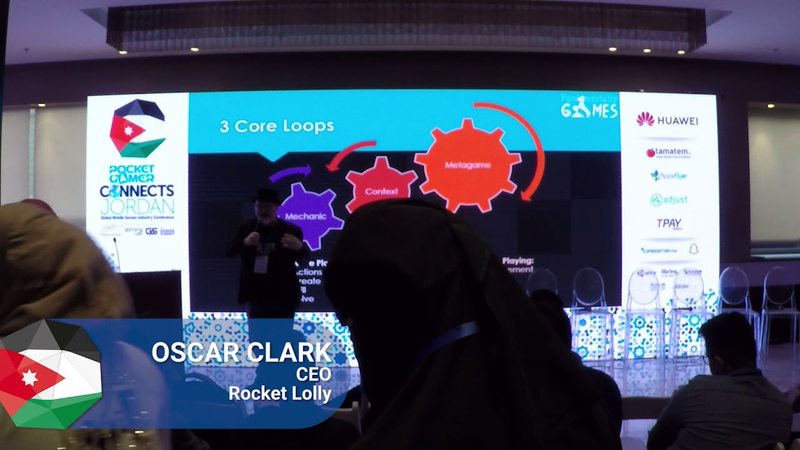
anything so I've just not just made this up as sexual science in there so in order to do that in order to work out how we're going to build the game which people will anticipate your desire satisfaction reward and that will scale I look at games for breaking and down this way what's the mechanic mechanic is what we do it's the start condition it's the challenge it's the reward it's you know this is the process that we do it can be actions it could be creation it could be skill it can be solving problems if whatever it might be but the things that we do in play I then look at context context is why why we play so that's the purpose of progression in the game so why we do it you know we do it because we want to feel a sense of purpose we also want to have ability to see that we have progressed this also the economy is part of this process the game economy cocooning an intrinsic part of why people play because of that completion I
was talking about earlier this balancing optimization but equally narrative story can be an incredibly important part of this one way I'd sum it up is that's the expectation of why I would play again so think about that when you play a game what is it that when you finish playing that makes you go back to it whether it's a day later or week later or a month later what keeps you going back you can't just hope your game is going to have enough expectation that people go back to play you have to design it you have to think about it you have to test it so planning the way your game works in the context loop is about building up that reason to return and keep playing and then I have my third loop for the phrase where I look at the reasons we keep playing beyond just now
and that's where the social engagement comes in so that means collaboration so if we've played together and we collaborate in the game or if we compete so leaderboards can be one thing but actually doubles are very sticky so what happens I really detailee compete with somebody lifestyle what is the day-to-day routine of the player and how does our game fit into their routine do you think about that when you look at you're getting designed you think what are the people going to be doing when they're playing my game and why would they keep playing what's gonna stop them playing why would they come back motive use is about the physicality of the device so for example when I play on a phone versus when I play on a tablet versus when I pay on a PC or a laptop or in my in my office at home or my console I've got one profoundly affected by the devices and
the context in which we use those devices the last bit is culture what does that mean well for me this is about why would anyone record themselves playing your game and share it on YouTube why would they go on to twitch with your game and share that how can you create a culture experience where it's not just about your players playing the game it's about your players audience sharing your game do you think about that I do I don't know you think I've got a good answer every time but I want to think about it so the reason I'm talking about all of this stuff I'm trying to get you ready to think about what games mean I'm telling it think about where your game fits into the cycle and how you can then think about monetization because I want a relationship with a player I hate to understand what the player once I need to understand what my game delivers I need to understand where the value is
how we satisfy players wants and different games have different flavors and characteristics and this is a simplified way of looking at it so at this end we've got you know hyper casual all the way down to EVE Online it's about as hardcore as you get one thing that's common about them is from this end to this end it gets more complicated it doesn't know but scale gets smaller so you have to think about that when you want to build a relationship with your player because you've got to think about who is going to be playing what do they want and think about the complexity profile of your game and what that means to the scale of the audience you can target it's not necessarily one-to-one by the way but in general this is kind of the point so that's kind of interesting but then there's also how we
charge people for things another parameter I think it's worth considering so whether it's something like an in world ad so that's actually a dad inside this fashion game or it's where they're using soft currency or even just time to be honest but something gameplay that they don't have to pay cash for they ever earned through play and that could be the wave you exchanged for things in the in your game or rewarded ad so we know about rewarded out we had the unity guys up earlier we've got interstitial star ads so these are the ads that appear in them between the menus but between your play and the next play and then you've got payment one-off payments non recurring payments so actual money real money being spent and then final at the end we've got reoccurring prints this is a bit odd because a reoccurring promise we make once I have a massive barrier to get to but what happens there is once you've
got there they continue paying ongoing so there's lots of value in all these different business models and quite a lot of games can have more than one of them hybrid monetization is a term it's increasingly being talked about it's about this but what's happening here is the amount of impact we have on the player the nagging that we're doing the the pressure we're putting on players increases from here to there the level of commitment we're asking to make the barriers have to be considered so thinking about the barrier that you're going to present when you create monetizable items inside a game or even buying upfront and I actually say a paid game a buyout from game is just a non reoccurring payment till the matter of you're making a paid gap we can I'm not a big fan of paid games personally because I can only charge the people basically once and then the DLC that I
offer I generally aren't releasing DLC on a regular basis so it's not necessarily gonna get all of the audience but you can do it subscription as well you know I'm a big fan of subscription but don't make it all you can eat because if you if you have a recurring payment that gives you players everything guess what they can't buy anything new because well it can but it's free so you can't build anything new that they would have otherwise bought because you're not getting any more money so you can't justify the spend because you're not gonna get any increase in revenue you might get more retention possibly more conversion but it's unlikely Amazon audibles quite interesting model because actually it pre defines I'm gonna get one or two books a month I know when I get one or two books every month I can look forward to them when they arrive and they come and I actually consume them more books I add to my subscription I kind of make sense battle pass for
tonight's battle bus is a great subscription like experience but it's currently charged on a one-off basis and Add to buy each month but it's interesting because it gives me something to look forward to each month so again think about what happens with the kind of monetization you're trying to use how does it affect the way players feel about you these are things you want them to spend money on but they won't do it unless they care about them and they won't respect you in the morning if you've taken advantage of them so there's lots of ways to exchange there's also where we got to start getting into the children it's gritty when you look at the kinds of things you want to sell we've talked about the ways that we charge but haven't really talked about the kinds of things that you sell
there's really four kinds we can have subsistence you need to buy this thing or you can't play you've got shortcuts you need to well by getting this thing your play is easier in some way it could be a better gun it could be armor it could be you have a restart so you might play a game and you fail you get to restart where you were rather had to go back to the beginning there's a kind of classic shortcuts so it might just be here's the great skin i want that skin my favorite skin deals was pink fury which was in overwatch and it was a charity skin for breast cancer charity in the states and they raised twelve million dollars with a skin 12 million dollars for charity by having a particular quite nice skin for like for
that game but skin say something about you and then social goods don't have to just be skins they can be really interesting variations they can be a whole bunch of different things the important thing is that they are socially valuable and think about what the social connection and value of that is then finally strategy goods now what I mean by strategy goods is something which means that I have a different way to play the game it could be a subtle difference but it introduces a slightly new way of playing that benefits not just the person paying for it but also the person who is playing that person so what that means is you don't want to create strategy goods that just annoy everybody else there might be some get that's where that's okay don't get me wrong but in general you want everyone's experience to be better because there's another way to play the game there's another choice in play making the game more interesting stone is one of the better examples
those kind of collectible card games because every new card introduces a new strategy and everybody has to respond to that strategy so it's interesting on our way to figure this so these are kind of trying to when you look at your game you try to break down where the value is where the fun is and you try to say okay what part of that fun is things I have to have what part of that fun are shortcuts power-ups boosts what part of that fun is socially interesting you know social value and what part that fun adds new strategy can I can monetize that can I create an asset a way of playing a way of charging for that but then we have think about the form that takes he says with my Wharton slide I seem to be missing my forum slide there we go for he does doing accessory in the morning and so my forum slide those shortcuts those subsistence goods those
strategies they can have come in different forms so at this end we have a consumable we have keys we need keys to unlock things we can't progress we're gonna unlock things therefore let's have a consumable kichul is a one-off I use it it's gone they're fantastic for events because I can give away consumables and they can only hold capacity a certain number of them at any time so if I've given away too many it's okay because I'm safe because they can only hold so many and actually having the limit of only hope they're gonna hold so many means that you they need to use them or lose them effectively which is quite a powerful incentive to keep playing interestingly so think about that kind of consumer model is really fascinating I could sell them more capacity that could be a health potion gives me more health but I could have a home that increases my endurance which
means I have more health that can be fooled therefore I need more health potions to fill me up with more health it could be a fuel tank I have a racing game I have a certain amount of fuel I use when I race I bigger by a bigger fuel tank I can do more races but have to refill and I can then refill it generator is when we start looking at the rate in which I get new things so what if I get I'd know three fuel a day and I paid to buy a petrol station which gives me six fuel a day so I'm getting new consumables faster through a purchase choice what's fascinating about the thinking of this is one of things we can give away as part of an incentive to make people feel rewarded which is good capacity which is a decision which you've made early is really valuable for keeping people playing generators which make it easier
in the similar way to capacity for people to keep playing and play more in a more engaged way and then finally our aspiration goods these are things we look forward to we want the Hat of one because everybody wants a hat of wonder and that has certain abilities the problem with the Hat of wonder is once you've got it it's expected once you've got to have one all the powers that have wonder has becomes your normal becomes your default so you want to think about these these permanent Goods as a tool to have people look forward to getting them because once they've got them that's it their value in terms of engagement is kind of gone this particular vehicle here I was a couple years ago it was a Bugatti that was available at CSR - and you'll notice it's got this red product red thing so it's charity so I did is actually me
buying this I did actually buy this car in CSR - it has great stats but I aspired to getting it because it was a charity thing it was a good car it was red it was socially had social capital lots of value propositions to do with it I didn't really race it that much I just had to have it so thinking about that that the value was having it and another example I use is the vorpal blade so the Robo blade didn't ask them one lad is a sword that allows you to kill Jabbawockeez always Oh nonsense monsters if I have the warble blade actually killed jabberwockies that means I'd now have a new monster I can fight but once I've got this order it's just another monster once I've done it a few times it's just another thing to do so thinking about how these types and forms work together is a powerful tool to think about where the value is for your player if I have a shortcut that's
consumable that's called a power boost I use it it's gone if I have a shortcut that's an aspiration good it's a better car but if I have fuel bigger fuel tank petrol station giving me more fuel per day bigger car that needs more fuel now it got an interesting cycle a loop within a loop within a loop so I hope that gives you a taste of the kind of thinking there I'm gonna go back to a couple of other things so play a life cycle matters to me there's a I think I've got pruner not sure once in that curve before do you see that curve that orange line so that curve it's the Gartner hype curve if anyone heard of that there's a if you've heard if you've
done VR you've probably seen this curve because everyone got really super excited about VR and then it basically crashed and no one cared about it and we're kind of at the stage here where quest oculus questions about to be released and people starting to get excited again so the pattern of how people adopt technology so why people get overexcited and then the reality of the things that they want is a little bit less exciting than it they thought it was gonna be and then they get over it or they leave and if they do get over it then they start to build up their engagement again I saw this come out when I did the data for the mobile operator 3 in the UK when I looked at the number of days of then the level of activity over the number of days since they first got their account so how many times they bought games basically and this is the curve that came out I did the same thing when I was a PlayStation Home I looked at their activity in the virtual world that was on the PlayStation 3 the level of activity they had and guess what same
curve so what it worked out is that actually this curve is actually mapped to player engagement and play a lifecycle so you've got to get people excited interest enough to get them over the pay wall or the the install wall the install means do I have enough space on my phone for you but I don't have a lot of space left on my phone I have to basically delete stuff all the time now and that means that I don't want I don't install everything I have to make a choice do I install it do or not if I do I then have the worst time ever playing that game why I don't know the controls I don't know how it fits into my daily routine I've got to learn how the game plays often tutorials suck and I've got to still feel excited enough to want to carry on playing afterwards they've got to learn how that game works for them and that's our job as game developers to help them learn that only once they've learned that and they've started to
really engage that's when they really truly become viable for to offer them this wonderful stuff that we've got four of these great community bubbles and and durables and so and so forth if we start seeing people engaging and we start looking at the data about why they engage and if we truly love them and they truly love our game we will find the things that they want and we will satisfy those things we will offer them more value and that's when they super engage and that's where they get more revenue going into those into that game because you've got people who loves that game so much though willing to spend tens of thousands of dollars I say that you know not with the big art I will never spend tens of thousand dollars if you get me spending you know more than ten dollars that's me super engaging everyone has their own level of super engaging but some people have lots of disposable income some people don't
understanding what the right value proposition is for the right audience comes out of looking at what they do paying attention to what they want and the data the back set up we often forget to re-engage but it's an important part of the life cycle if you don't reengage your users guess what they do leave exactly so reengagement part but realizing that a lot of players do leave they just leave typically day 1 retention we're talking about 40 well 35 to 40 percent depending on the game genre a day one left so you've lost 60 percentage of your users on day one already that's ok it's like them looking at the back of a physical box and deciding they don't like to look at the screen grabs it's the same thing lots of people don't buy physical good games we don't count them it's just that we can count them with free-to-play but down here we're talking about one or two maybe three percent of
people that's okay how long can we retain them how long could we give them value if we have enough people coming in we have a funnel like this we can see the discovery phase leads to fewer people engagement phase conversion very super engaging phase and our job is to activate the discovering people so they become engaged our job is to convert be engaging people so they become revenue and eventually we might find some of them becoming super engaged notice I'm not using the phrase whale although there is one there because I don't think they're whales that's another subject for another talk everyone talks about whales because it's a term that's easy and it relates to gambling gambling behavior is not the same as gains behavior if you want to hear my thesis on that that's a different talk my point is that this interesting thing is then its bottom area if we have the
right goods if we thought about what people want if we presented things that are valuable if we've got things that people care about when you're Tigers with your your guys who are engaging see the unicorns the guys who are super engaging have awesome stuff I wanted I aspire to get it make me want it and that desire that sense of tribal connection is how we help people build up strong communities so you get this loop building the community around that process but equally we shouldn't discount that engaging users are the ones that give word-of-mouth which remains the most powerful marketing tool on the planet let's get our engaging users something that they can share and talk about so they tell their friends about how great the game is and wonderful things they've bought and why that's great so we can build that
activation loop just to kind of give you a sense this is random numbers I've made up but to give you a sense oh I wouldn't expect more than 50% of people to spend anything do anything give you any value in a free-to-play context now every game is different but just to give you a sense of what I think about 30% gonna do ads only maybe 3% will do ads in a one-time offer maybe half a percent will do ads and a recurring payment and that's probably being a bit generous depending on the game and then if you're lucky point one percent will be a larger upsell I don't necessarily mean their proper unicorns the people who spend hundreds of thousands of dollars that number of users is probably a handful in some of the biggest games but my point is really to think about who are your audience is and how do you get them to go from not spending to using ads how do you get from ads to using you know a one-time purchase and so on and so forth
we want to basically encourage people to increase their engagement with us and that only happens if we show them attention we show them affection we share the things they want and care about and it's about joined up thinking essentially I could talk about house I'm not going to if we had enough to talk rads ads are a really important factor by the way I'm not trying to dismiss ads I see ads as a way of feeding people an opportunity to get something they would after otherwise pay for so they can try it but also where they can unblock unjam their flow through the game but what I'm gonna try and get you to think about is if you think about your gamers love as affection about retention we need to think about how we acquire users how we engage them how we deliver them content and updates and make them excited event emotions are engaged them community and throughout that process goods which reinforce that and again it come back to watch an ad to continue what to unlock
there's all different games but you'll have it a looper that suits your game think about how you do that process to drive those users to walk something that you know they want because you paid attention to them and get them to think consistently about what the value is to play and where they fit what the cohorts are what the messages are and target those messages to those audiences cleanly by looking at the data by thinking about what they want and actually caring what they care about because if we're making games games have to be fun there have to be appealing but that's not enough for a game to become someone's hobby so again it comes almost hobby it has to be something where they feel that they're part of the tribe that after so should identify that game as part of their life cycle know their
lifestyle their habits their their normal behavior and that doesn't happen for cheap that happens because you pay attention to them and you deliver them what they want to see I could bore you with things like impulse and progression so forth but with time running out I'll skip that I could talk to you about you know the use of but more advanced techniques like time-limited special offers scarcity and also the importance of transparency telling people what they're going to get but again the message really is just act like a retailer that cares and think about the experience that they're getting whether it's unboxing visibility foreshadowing but it comes down to this everything I said to you is very theoretical but the part of it is but keeping your the spirit true to what is the player needing what do they want what they desire and test it don't take
my word for it test it so put things together see what small groups do and do they do what you think understand what their feedback is look at what they actually do design is a hypothesis it's not a solution in itself you have to have an idea and test it adjust the idea based on the results and until you continuously improve and that's it it's okay that makes there's a lot of information but you know hopefully that's that's not too bad okay does anyone have any questions for me Ifrit I'm just wondering if you can share this slides so I can look at them later it's all happy to share this stuff if anyone wants to grab a card for me I'm happy to do that and like I say a lot of the work we do is help with game design and production and mentoring so we do a lot with services around public people understand how their games work
and really trying to inform them how to use the data they already have so that's why we do talks like this also you talked about player fatigue and the field good to the player and why don't we just say that for example 20% of our revenue goes to charity and that's it okay always be good the charge thing is two reasons one is Apple don't want you giving the money worth to charity without being very careful about how you word it that's I mean you don't do it just means you have to be careful because there are rules but also charity is not necessarily an intrinsic motivator it's an extrinsic motivator and actually gameplay requires intrinsic motivation to play without that that that internal desire an internal reward for the satisfaction of play just slacking on charity sucking on points doesn't help but it's a good thing for the brand it's a charity I'm actually talk to a lot of
charity at the moment I did a talk for a charity event recently where at about 250 or the biggest charity in the UK wanting to understand how to use games to communicate their message in to fundraise so it's a really important thing to work with but it's not the same thing as making a great gift that they love and understand it there are fatigue and balancing against that particular I'm actually I'd like to hear you talk more about special offers and starts with packs maybe and also do you think making or having paying players can maintain or actually getting more people to be addicted to our games yeah I'm trying what the word addictive only because there's currently a process going on with the World Health Organization where they're trying to classify I think all game games disorder
which isn't really scientifically backed arguably través a different word because we use addictive all the time in games because it's a good thing to be are so exciting but unfortunately they're started to use that word badly yeah hive is good word so the habit hype the excitement of play are really powerful things in order to build that often repetitions part of that reinforcement is part of that building I'm trying to think of the best way to answer the question it stronger bond yeah stronger bond is exactly right and that's where social identity theory is a really powerful tool so Sajid identity theory means that I'm at one I'm involved in this process and we are together in its shared endeavor and people who don't play are the others that sense of bonding is a really powerful thing that's why things like League of Legends is so successful that happens through a number of factors it's
through exposure repetition social behavior social connection it's really about this love process we trying to sort of talk about if you really show awareness and interest in the other person playing your audience and you give them value that's how you build true connection it's a romance yeah and I'm over time which is unsurprising and as a result I am tourneys looking at me so it's toady's up next so a tiny piece is going to come up and talk now about a game called reality crack clash and a new way of monetizing which is really exciting I'm lucky enough that I was one of the designers on the game so telling you I think if it's okay I'll get you to come up now I think that's right isn't it oh yeah sorry I mean to say I've got further I've got more time I thought I was over running so thanks daddy so I can shut up if you want me to you by the way or I can carry on
anyone got any more questions for me or I should try and answer did I answer thee yes okay good come on - give me some abuse oh stop Spencer okay we got two minutes so let's go to the starter packs let me go back on that [Music] warder I was doing the 3:00 in the morning so let's talk about this first so having a reason to act now we talked a little bit about here are some tools that you can do to do that impulse have you heard of the marshmallow test love the marshmallow test you give kids under a certain age marshmallows you tell them if they don't have the marshmallow and then they come back later they'll get two marshmallows and then even in a room and all of them eat them under a certain age it's a it turns out it's not quite true unfortunately there's I mean they've redone the test of different conditions but it's a really nice story
people have impulses I have impulses when I see however though breakfasts when I came to Jordan I have to have it because I don't get however at home very easily and it's lovely and I have to have it and I end up having too much of it because I want I have no impulse control input is a good thing in the sense of we want to get something get a satisfaction from it get a desire you know gonna gonna feel good feeling from it but you should be careful how you use it if you do too much impulse led promotions it's a bit like having a chocolate stand in a supermarket and you've got kids going up to it wanting to grab the chocolate and the mother or the father going no can't have it it's point of frustration so really thinking about moderation but smart use of impulse can be really powerful progression can be important I can't see
how far I have got looking at how far I've done how well I've done that can be really important areason to act now I am about to hit the threshold of level 20 I'll have one more player what's one more adulterer that's a fantastic optimization is a cream it really important thing I will play a game and I will go back and play it because I want to do it better I want to use what I learned there's certain games where I play them I go I wish I knew how to do it when I started because I would have done much more interesting things so thinking about how you leave space for the player to optimize their experience and then how they solve that by using your goods your monetization and so on so forth because the satisfaction of having optimized something it's beautiful it's genuinely emotionally you know valuable and then obviously narrative is an important part
the hero passes through the threshold the monster is ahead of us what happens next to come back next week you know the Flash Gordon cliffhanger in fact one of the narrative tricks I love using I see Dave there so it reminded me of it my favorite narrative trick is the one about Columbo the TV show Finn or knows the seven nineteen seventies TV show best TV show ever made because it was a whodunit where you saw who did it and you still watched it as crazy isn't it whodunit you see who did it you still watch it why because you're not watching the murder you're watching the detective you're watching what that detective is going to do and try to predict how he solves the murder and you know you've got a time limit because the time limit is five minutes before the end of the show he's gonna say just one more thing and you know that's when it's gonna reveal not only who did it
but how why and how he solved it so that you're playing a game watching that TV show to beat him and if you get your prediction right of how he solved it you win so narrative is incredibly powerful particularly around that Colombo moment where you know there's a time limit and ambiguous unpredictable time limit and you got to fill it so this is kind of a good repose to act and then after that you really want to talk about but I kind of had to do that first bit to get the context of these with all those in mind actually thinking about time limiting this offer is only available to disappear time special of a buy one get one free how do you bundle it for example if I had a life point health point or whatever is there a point in selling a one-time play for a dollar or do you sell a bundle of ten for a dollar if you sell a bundle of ten for a dollar what happens
is they use it they've got nine more to use they've got nine more reasons to come back and play and keep playing so you've just sold them something which is a retention tool but equal again don't take my word for it test it it may not apply for your game but if you've done that also if they fail the second time playing that game and they have to you the second life they'd have to go and pay another dollar and be already annoyed because they've spent a dollar to get a life they didn't get to finish so you don't end up grinding them down and making them feel unwanted you're showing them some love by giving them enough power-ups so they can be sure of finishing that level and still have some left over that's the difference that's where bundling can become emotionally powerful and then moving on from that scarcity I mean digital means not scarce although Tony is going to show you a way to do scarcity later real scarcity as in
this is the one item it's only one digital item scarcity we use all the time in heart farming games in harvesting games in adventure games how much gold you have available how much weapons the right weapons the right things the right power up there expell are you scarcity all the time but scarcity has to be in the context of the game if it doesn't have an inherent narrative it doesn't have an inherent sense in the game guess what you annoy your player because it doesn't feel real if he doesn't feel if it feels false there you leave just why you're not being trustworthy you're not being authentic love authenticity trust a key to relationships and transparency is part of that one thing we learn back in the
long days of Mir when before they thought no not before the Internet he had the internet at least but we learned very in the very early days of Java games that if we told you the price of the game at the front people bought it if you waited until they got to the description page we lost them telling people is not something we should be afraid of because you set expectations immediately and you show you're trustworthy so communication transparency authenticity again it sounds more like a relationship and then we get to what happens once I bought it I'm gonna unbox it it's gonna feel amazing I work visibility of what I bought I want to foreshadow give me a chance to watch an ad in order to do use something which I wouldn't have otherwise had and then I think about their work they work together and on that note I better stop
because I know Tony is now ready so thank you very much [Applause] [Music] you
Summary
Monetization design functions most effectively when it prioritizes long-term player relationships over short-term transactional gains. By aligning game mechanics with core psychological drivers—specifically competence, autonomy, and social capital—developers can foster genuine engagement that encourages voluntary investment. This approach shifts the focus from manipulative tactics to the creation of cohesive loops that integrate seamlessly into a player’s lifestyle, ensuring that spending feels like a natural extension of the gaming experience rather than an exploitative hurdle.
Success in this field requires a sophisticated categorization of offerings, ranging from subsistence items and shortcuts to social and strategic goods. By balancing these elements through various revenue models like subscriptions and hybrid systems, developers can tailor their strategies to different stages of the player lifecycle. Timing is critical; offers must be presented during periods of peak engagement to ensure they feel rewarding. Furthermore, the implementation of scarcity and time-limited events should be grounded in narrative context, which maintains player trust and prevents the frustration often associated with aggressive monetization.
Ultimately, the industry must view monetization as a testable hypothesis driven by data and community building. By treating players as a collective rather than mere revenue sources, developers can guide users through a funnel that emphasizes discovery and consistent value. Transparency in pricing and the psychological satisfaction of the unboxing experience are essential components in building these lasting bonds. When monetization is treated as a design challenge that respects player agency and fosters tribal connections, it creates a sustainable ecosystem where retention and revenue growth reinforce one another.














Comments