Mobile reports and market data
Documents
How to Bring a Game Company Still Owned by its Founders to the Next Level
Fingersoft, a Finnish mobile game studio, faces the challenge of scaling its operations while maintaining the agility that defined its early success.
- Fingersoft is transitioning from a founder-led startup to a structured organization to sustain its long-term viability in a market dominated by free-to-play models and consolidation.
- The company’s flagship title, Hill Climb Racing, has achieved over 1.4 billion downloads, serving as the financial foundation for its current operational evolution.
- Fingersoft’s core strategy prioritizes organizational adaptability and responsiveness to change over simple scaling, aiming to avoid the stagnation common in maturing studios.
Superstar Session: From Impossibility to Relatability: How we Define What an Ustwo Games Game is
Ustwo Games defines its studio identity and development philosophy by prioritizing meaningful, human-centric experiences over data-driven trends.
- Ustwo Games maintains a studio identity by prioritizing premium, human-centric experiences over data-driven trends like hyper-casual or free-to-play models.
- The studio limits project team sizes to between 8 and 12 members to ensure high individual investment and creative accountability.
- Development methodology relies on a 'Trojan horse' strategy, using visually striking mechanics to engage players before introducing deeper emotional narratives.

Stop Believing Benchmark Metrics for Your Game
Standard industry benchmarks for mobile game performance—such as the widely cited 40/20/10 retention model for days 1, 7, and 28—are often misleading and should not be used as universal indicators of success.
- Generic industry benchmarks, such as the 40/20/10 retention model for days 1, 7, and 28, are misleading and should not be used as universal indicators of project viability.
- Developers should replace external averages with custom models that integrate daily installs, retention duration, and net ARPDAU to determine actual product sustainability.
- A game with lower retention can remain highly profitable if it maintains high organic install volumes or superior monetization efficiency compared to titles that meet standard benchmarks.
Trailers - Sell Your Game
High-end cinematic trailers serve as a critical marketing tool for mobile games, helping titles distinguish themselves in an increasingly saturated marketplace.
- High-end cinematic trailers are now essential for mobile games to compete in a saturated market, closing the production quality gap previously held by PC and console titles.
- Production costs are primarily driven by the complexity of assets, specifically the number of characters, environmental variety, and the requirement for advanced simulations like fluid dynamics, destruction, or hair physics.
- Client-provided assets are often low-poly proxies, requiring studios to perform extensive look development, including re-topology, 8K texturing, and advanced rigging to meet professional standards.
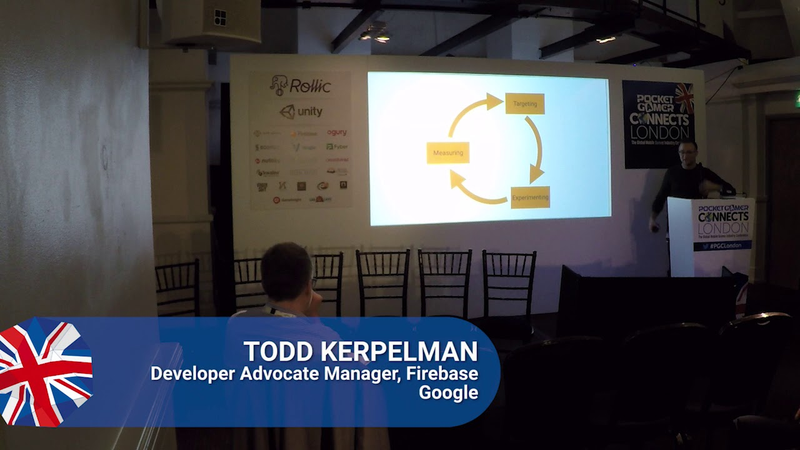
Firebase, Analytics, Google, and Understanding How They Work Together
Firebase provides a comprehensive suite of backend-as-a-service tools designed to assist game developers in building, managing, and optimizing mobile games.
- Firebase integrates backend infrastructure, quality assurance, and user engagement tools into a centralized console to support the full lifecycle of mobile game development.
- The platform utilizes an event-driven Google Analytics model instead of legacy session-based tracking to identify specific user segments, such as high-value players or those at risk of churning.
- Developers can use Remote Config to adjust game variables in real-time without requiring new app store updates, facilitating immediate optimization of the user experience.
Superstar Session: How to Spot Performance Problems that Gamers Hate & Even Major Studios Often Miss
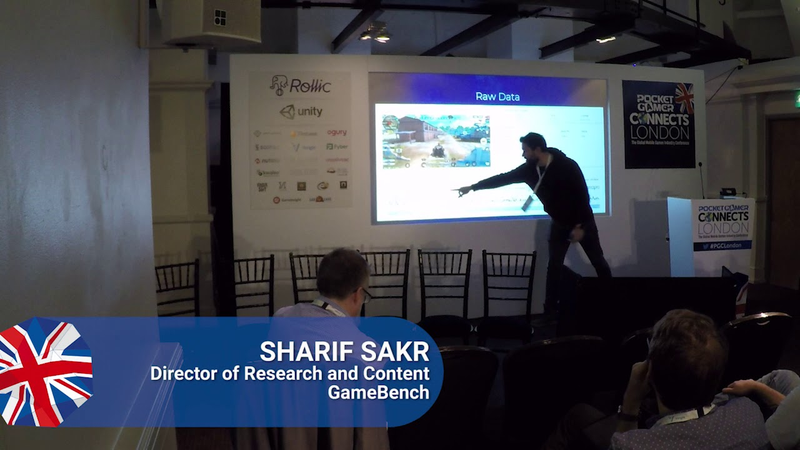
Mobile game development faces significant challenges regarding hardware fragmentation, which often leads to performance issues such as poor frame rates, excessive battery consumption, and long load times.
- Mobile developers must shift from reactive testing to ecosystem-wide intelligence by collecting raw performance data—including power draw in milliamps, frame rate stability, and load times—throughout the entire development lifecycle.
- Hardware fragmentation in the mobile market requires studios to move beyond limited testing environments and utilize a combination of manual testing, automated device farms, and embedded SDKs to identify bottlenecks before public release.
- Studios should implement genre-specific performance thresholds and color-coded rating systems to convert complex technical metrics into actionable insights for non-technical staff.
How Hyper Hippo's Live Ops Operations Maintain its Success in Different Cultures and Locales
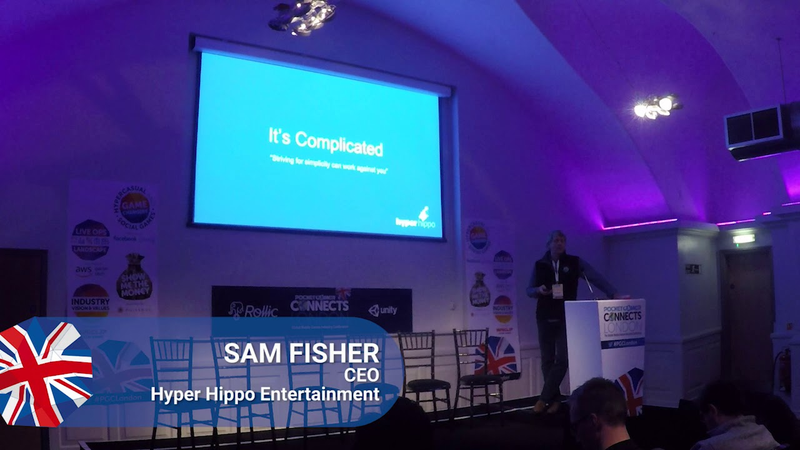
Hyper Hippo Entertainment emphasizes the necessity of a robust global strategy for mobile game developers, particularly as growth in traditional North American, UK, and Australian markets slows compared to emerging regions.
- Developers must prioritize expansion into emerging markets like India, China, and Latin America, as growth in traditional regions like North America, the UK, and Australia continues to slow.
- India represents a significant growth opportunity for mobile developers, with 20 million new users entering the Google Play ecosystem every month.
- Successful global scaling requires a unified, scalable backend infrastructure that supports diverse front-end experiences while avoiding the operational overhead of reinventing core systems.
Bringing a Desktop Subscription Model to Mobile
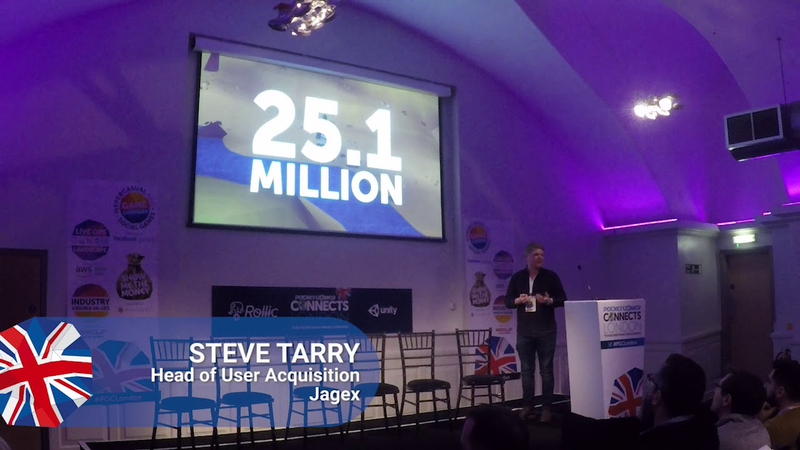
Jagex successfully expanded its desktop MMORPG, Old School RuneScape, to mobile platforms by prioritizing a seamless, cross-platform experience that allows players to maintain progress across PC and mobile devices.
- Jagex generated 25 million in gross revenue and 8.6 million installs by expanding Old School RuneScape to mobile, proving the viability of a cross-platform subscription model.
- To maintain a unified view of user value across PC and mobile, the company integrated internal data with mobile measurement partners, enabling more effective scaling of advertising spend.
- The mobile launch strategy utilized pre-order campaigns on the Apple App Store and Google Play, which drove the game to the top of free-to-play charts in the US and UK within 24 to 72 hours.
Panel: The PG.Biz Panel: What’s Next for Hypercasual & Social Games?
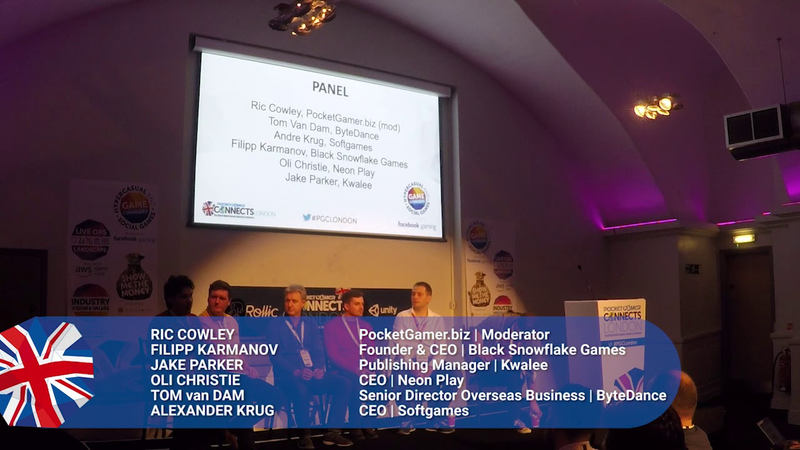
The hypercasual and social gaming sectors are undergoing a fundamental transformation, shifting away from purely ad-driven, simplistic mechanics toward hybrid models that prioritize long-term player retention.
- Hypercasual gaming is shifting toward a 'casual-plus' hybrid model that integrates meta-game progression, subscriptions, and in-app purchases to combat rising user acquisition costs.
- The traditional hypercasual strategy of rapid prototyping and low-barrier entry is no longer sufficient for profitability, necessitating a focus on long-term player retention.
- Success in the maturing market now depends on rigorous, data-driven testing and the strategic use of automation tools rather than traditional media exposure.
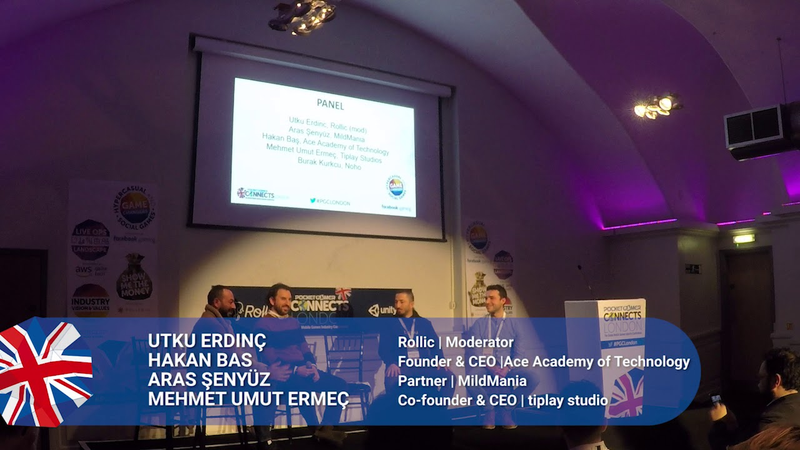
Panel: Hypercasual: Different Backgrounds at One Common Place
The hypercasual gaming sector represents a strategic pivot from traditional core gaming, prioritizing agility, rapid prototyping, and cost-efficiency over the multi-million dollar budgets and lengthy development cycles typical of legacy titles.
- The hypercasual sector prioritizes rapid prototyping and cost-efficiency, shifting away from the multi-million dollar budgets and long development cycles characteristic of traditional core gaming.
- Success in the hypercasual model is driven by a high-velocity development environment that relies on data-driven testing and the scalability of in-game advertising to reach global audiences.
- The industry is currently transitioning toward hybrid-casual models that combine in-app purchases with advertising revenue to increase long-term player value beyond simple download volume.
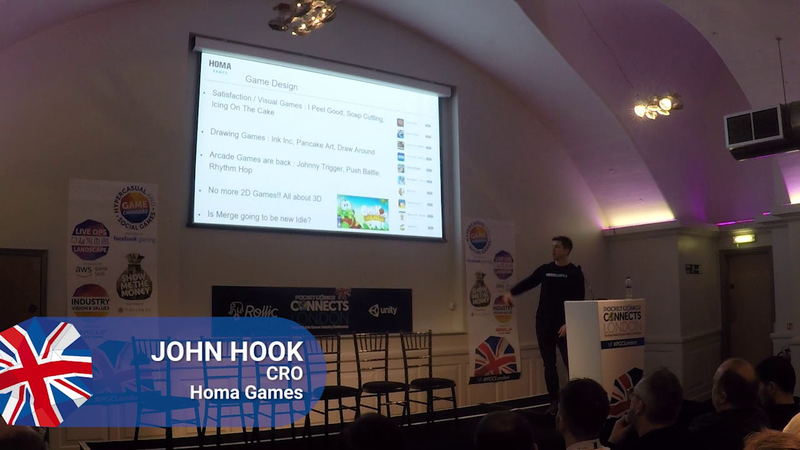
What we Have Learnt from 100 Million Hypercasual Downloads
The hypercasual gaming sector is currently undergoing a significant evolution, transitioning from simple, high-volume mechanics toward more complex, hybrid models that prioritize long-term value over raw download counts.
- The hypercasual market is shifting toward hybrid-casual and idle models to improve lifetime value (LTV) and session duration, moving away from the traditional focus on raw download volume.
- Retention benchmarks for arcade-style titles show a significant gap, with top-tier games achieving 15% day-seven retention compared to just 8% for average titles.
- Publishers are utilizing impression-level data to implement personalized bidding and ad strategies, allowing for the segmentation of players based on their preference for in-app purchases versus ad-supported experiences.
What Makes a Game Hypercasual?
Hypercasual gaming success relies on a repeatable framework centered on three core principles: mass appeal, bite-sized gameplay, and short-term stickiness.
- Hypercasual success is defined by a 40 percent Day 1 retention benchmark, achieved through a satisfying core loop and clear progression systems.
- Mass appeal is measured by a target Cost Per Install (CPI) of approximately 50 cents in the US market.
- Effective hypercasual ads must communicate the core gameplay mechanic within the first three seconds to drive high-volume downloads.
Writers
Games and companies
Games