1 free read left. Create a free account for unlimited reading + AI research.
Create free account
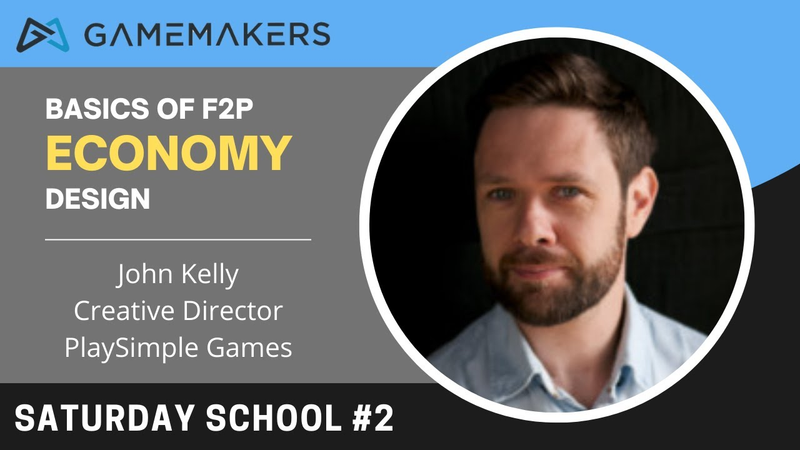
Basics of F2P Game Economy Design | Saturday School #2
Key insights
6 takeaways- 01When economies face instability, studios should manage excess currency through controlled inflation or high-value, non-monetized events rather than relying solely on transactional adjustments.
- 02Complexity should be minimized by limiting the number of active currencies and using Monte Carlo simulations to proactively identify and resolve progression bottlenecks.
- 03Effective economy design requires mapping player activities to time investment to establish fair value and price elasticity, facilitating a smooth transition from linear PvE to complex social and competitive systems.
- 04To prevent infinite power creep and maintain game integrity, developers should utilize intransitive balancing and additive utility rather than relying on linear power scaling.
- 05Longitudinal playtesting is required to validate mathematical models, ensuring that pacing remains rewarding for both casual users and high-intensity players.
- 06Designers must ensure monetization enhances player skill and strategy rather than replacing it, as transactional barriers that bypass gameplay loops are primary drivers of user churn.
Ask AI about this video
Transcript
Okay, so we're live. Hey everybody, we're live. Are we live? Are we good? Okay. All right, everybody, welcome to our second Saturday school. We have I'm so excited because we have a really great guest, John Kelly, creative director at PlaySimple, but you've got a very storied background in game design and working at various companies like Zynga, Wargaming. Maybe maybe you can even give a little pitch about your your background as well, but without further ado, welcome to the you folks here. I'll hand it over to John. Thanks, John. Much appreciated. Thanks for having me over this morning. And thank all of you for actually turning up on your Saturday morning to listen to some random Irishman talk about economies. Um little bit of background on me, started out 12 13 years ago in the games industry in PC and console dev. Moved into free-to-play with Zynga about eight or nine years ago. From there,
I've worked with Rovio, PlayGround Games, Wargaming, done a startup, and now I'm creative director at PlaySimple here in Bangalore, which is with a couple of my friends that founded the company when we were all together in Zynga. So, they went on to do some really cool stuff. Um it's really nice to be back in Bangalore. I think this is probably one of the most exciting cities to be developing games in. So, I I feel really lucky to be here and I'm talking with you all this morning. So, what are we going to talk about this morning? Um economy design. Uh there's going to be a bunch of stuff in here that is kind of referencing economic theory from the real world. Um I've put it in mostly so that people can Google stuff later on or look up concepts and do their own research. It'll sound a little wordy and over the top and overly complex. I'll dial it down to how it's practical for game design, um but there's good reading to do in there. So, I've left in sort of the the economics jargon to a certain extent. No?
It's okay. I I I can just use this. It's fine. You sure? Yeah, I'll just use the laptop. It'll be It'll be okay. Okay. So, quick overview of today's talk. Um the plan is I'm going to try and get through this deck uh as quickly as we can and sort of like get it done in about 30 40 minutes. Um and then we can probably have a discussion. Any questions from the crowd, we can dig into stuff that um maybe I just don't want to like lecture people ad nauseam on some concepts that people already get. So, we'll start with the goals of economy design. What are you trying to do when you're setting out and you're looking to build a new economy? How do you get your thinking sort of lined up so that you're giving yourself the best chance to success? The challenges, things that make it hard, um the things that like you want to be planning out ahead of time how you deal with. Um theory, there'll be a couple of slides of theory. I promise we'll try to get through it without boring people senseless, and then we'll get to the memes, and then we'll start talking about uh practical approaches and how you can use some of this to actually go
about structuring your approach to economy. What we're not going to end up talking about is very specific modeling techniques or simulation techniques. That would be an entire talk in and of itself and will probably take a couple of hours to go through, but if people are interested, we could always schedule one of those for a later stage. All right, so uh what is an economy? Um so, economists uh tend to term it as a set of interrelated production, consumption, and exchange activities that determine how resources get attributed, whether it's in a country, across the world, within a company, it doesn't matter. But the key word here is activities. Um you're really thinking about what are your players going to be doing when you start to plan an economy. Now, a lot of the language that we have around this as game designers and product managers doesn't really reflect that. We tend to think in taps, sinks, converters. These are all inanimate. These are not things that people do. These are our functions that happen within a system. Um that's
probably the first place that I think people start to go a little awry in their thinking about how they start to plan an economy. Whoops, wrong direction, John. So, economy design goals. Um When you're sit setting out to build it, what you're first off looking to do is facilitate what your players are doing. You've started in the game. Resources are what players are constantly consuming and trying to gain to move through at the the geography of your game. Um how you structure the economy incentivizes them to move in certain directions or disincentivizes them to move in other directions if you've gotten things wrong. There's whole sections of games that are very popular that players never engage with because the economy has been set up and configured in such a way that there's no real incentive for the player to be engaging in that part of the game. You're there to provide the player with long-term aspirations. Um they have to be able to sort of understand while playing the economy that the it is going somewhere. There's a progression. There's something to be reached at the other end. And if you
can't clearly communicate that through how the economy is working, you've got a real uphill challenge. And you can still be successful without that, um but it's much more difficult and the rest of the game has to carry an awful lot more weight for you. Hey John. Yep. Take one step to the left, please. Oh, I'm blocking things. Sorry about that. Um Cool. Um Pacing. Uh your development team does not have an infinite output of content across your game. Uh you can only produce so much. You can only make so many releases. You can only ship so many things. Your economy is largely there for putting a brake and a pace on that progression through your content. Um a lot of games that are really good and really fun have launched, and then their players have banged through their entire backlog of content in 2 weeks, and they thought it was going to take 3 months. Now you're in a big problem because all those players you acquired either organically or through a very expensive
UA have hit end of content. No updates, nothing to do for 2 weeks, they're gone. Massive waste uh to your team, your company. Um monetization potential. That's probably the biggest one that everyone thinks of. It is there to provide spend depth and a reason to spend. Um and the reason is probably even more important than your spend depth because most economies are relatively extensible as long as you get some of the fundamentals right. You can always build on them. They have to be change tolerant and extensible. You go live, suddenly you find out your players really enjoy one kind of activity instead of another. You built your game thinking that it was going to be a narrative-driven social game, and it turns out what your players really like is crafting. Uh all of your plans have gone out the window. Now you need to start building out that crafting economy far more than you had originally planned. Finally, most importantly, keeping it fun. Your economy is part of the game. It has to be playable. It has to be something that you can find paths to optimize in and exploit, but not break.
No, no. My transition's broke. Okay, challenges. First and foremost, optimization. As I was just kind of saying there, one of the big things is your players have to be able to optimize their path through your economy. What do I mean by that is I need to be able to find some exploits. I need to be able to find places where I'm smart. Oh, if I play these levels first, I'll accrue these resources, which allows me to use it in this other part of the game, so I'll beat the weekly challenge, and I will get the chase prize. The player has to be able to find some amount of optimization within the system and an ability to be smart and use it. If your economy is entirely locked and entirely deterministic, as soon as the player understands what the end goal of that economy is, it becomes a grind, right? I just complete action after after action after action after action. There's no possibility of success, there's no possibility of failure. I just need to jump through the hoops, and then it happens. Um that loses fun and efficacy really
fast for a lot of players. Some people do love their grind, but for the majority of the population, if there isn't some amount of gameplay within the economy, they tend to drift off pretty quickly. Content. Aligning your economy with your content. We touched on this. You need to make sure that you don't burn through all of your content, or that you don't conversely have your dev team go spending um hundreds of thousands of dollars building out vast systems and lots of content at end game, uh and none of your players are making it past day 90 and seeing any of that content. Um making sure that your content is in an appropriate place in your game funnel so that your player base actually gets to engage with it. Complexity. Uh as you start building out your economy, you're going to end up with giant spreadsheets or giant machinations diagrams or scrollings all over a giant whiteboard. It's going to start to become overwhelming. The longer you work in the document, the more you're going to lose trace of where it started, what
the goals were, and you're going to become overwhelmed. Figuring out a way to deal with that increased complexity as you're working through your your your modeling is really important. I'm going to talk a little bit about how you can sort of break that down and shift away from these. Spend depth. Uh you should be able to at the like by the time you're finished building out what your economy is, you should be able to look at your sheet and go, "Hey, when we've got players in this game, they can, if they so choose, be able to spend $10,000 buying out all of our content or getting all the way to the end of this game in the first month of play." If that's what they choose to do. Um or 50,000 or 100,000, depending if you're a hero collector RPG or 4X strategy game. You need to understand where is that spend depth? How big is it? Um how much revenue is there potentially within your economy? Now, you're going to be giving the vast majority of that value away to players for free, um which means you're not going to be able to say, "Hey, we've got a spend depth of $10,000 in our game.
Um, a player that plays to the end of the game is going to give us 10 grand." That's not how it works. Um, the other thing about it is where is that spend depth in your game? There's no real point in having the vast majority of that spend potential for players who are post day 365. Cuz it means your payback window and your ROAS on your marketing campaigns is just going to be such an extremely long time that liquidity is a challenge for the company even if you're a pretty big company. Fairness, um, really important one for most games. Some games revel in the fact that they're really hard and brutal and and one-sided and, you know, like it's kind of a dog-eat-dog world, but that tends to be their market positioning, their theming. Uh, I think a great example of this is EVE Online likes to position itself as an unfair game and that's that's cool. People love it for that. Um, but for most players, and particularly in free-to-play, there needs to be a perception that I can compete, I can do well without having an awful lot of money or any money. This is also important for players that do decide to
spend money. They need to have a population, if you've got a PvP component to this game, that they can compete with. They need to have opponents, they need to be able to have people that they can actually, uh, still feel challenged by, not just completely walk all over. It's kind of like playing Doom with god mode on. It's fun for the 15 minutes and then you're like, "Mm, yeah, no, there's no challenge left, there's no point to continue." And then, the last and probably the single biggest challenge is maintaining a sense of feel for your game. Uh, when you're designing an economy and you're sitting in Machinations or you're sitting in Excel, it's really easy for that to become your entire world. It is perfectly balanced, the math all makes sense, but it's not connected to the reality of the game. It's kind of like Thanos and the snap, right? Perfectly balanced, completely insane, doesn't work. Um, it's it's a it's crazy way to implement things. And it's happened to me, it's happened to a lot of designers I know where you built this wonderful model, it's great, it's incredibly complex, you've got this wonderful Monte Carlo
simulation, you see everything graphed out, it's beautiful, and then you play it in the game and it's just not fun. The pacing is completely off. Stepping away from, uh, your spreadsheets and your tools, pen and paper prototyping, rolling some dice, getting an early build, making sure that you maintain a sense for the pacing and the fun of the game is the single biggest thing that will lead to a fun economy versus an unfun economy. Um, some of the best examples I've seen have been by designers who've never touched economy design before, but they just kept going back and playing it. Finding, "Hey, does it feel good? Do I feel like I'm getting rewards at the right point in time? Do I feel like I'm grinding?" It's an inefficient way to work, but it is more likely to give you good results than anything else. Jumping on, useful theory. Uh, business cycle. Um, so when we look at the larger economy in the world, um, what economists tend to look at is that we do have these cycles of booms and busts. We're currently going through a bit of a bust. Um, this also happens in games. Um, one of
the mistakes you'll see when you're starting to plan out your economy is that, uh, we assume linear spend or we assume consistent spend of players, but they don't do that. They hoard and they hoard and they hoard and they hoard and then they splurge. So you will have these booms and these busts in your cycle and you'll see it start to happen in your wallets. So you'll see people start, uh, PMs, revenue PMs in particular, start to get really nervous, "Oh my god, wallet balances are getting inflated. Oh, they've got too much money. Um, what are we going to do? We need to we need to drain it out." But your players were saving, they were banking that cash for something big coming up. Uh, either they've anticipated your release cycle, they figured out when you're going to be dropping, in World of Tanks case, a new line of tanks is coming, you'll see that wallet balance start to skyrocket, you'll see spend on other things start to decline for 6 weeks, 2 months before that beforehand, because they know what's coming and they're waiting for it. And then they're going to go crazy. So you need to be planning ahead of that how does your content and your release cycle plug into your economy, because something that would look like a warning sign and something you should be doing
something to mitigate isn't necessarily a bad thing. It is part of the rhythm and experience of your game. Planning for it is really important. Really important part to plan for is your your dip. You don't want your players getting into a situation where after a splurge, they end up illiquid, where they can no longer engage with certain components of the game, they can't compete because you've left them with a scarcity of resources, the taps aren't kicking in fast enough for them to pick up, pick up, uh, engagement again after they, uh, bought everything that you had on offer. Inflation and deflation. Um, so this is really different for games as opposed to the real world. Simple reason being, uh, we're the Federal Reserve, we get to print the cash. We're also the producers, we get to run the factories, and we own the storefront. So in the real world when you put too much money into the economy, um, you get inflation in prices, right? The the value of
currency goes down, so the cost on goods goes up and that kind of normalizes each other out. It's painful, it sucks for a lot of people, um, we all end up seeing um, our money go less far, uh, which is not a great experience. But the system does equalize over time. Um, in a game that doesn't happen because we control the storefront, we control the supply of product going into it, and we typically don't dynamically link the cost of objects in our stores or in our economies to the amount of supply of currency going into it. So, uh, this is where your inflated balance causes devaluation of the assets in your game. There's no point in buying those heroes anymore. There's no point in buying those evolution materials. They're like the trivially easy for me to get at any point in time. Um, you do need to sink at those wallet balances when they get out of control, but you need to do an analysis on why that's spun out of control and address that root cause because you don't have any other counterbalancing factors in your economy, unlike something that's
more dynamic or reactive. EVE Online, because it's an entirely player-driven economy, will start to normalize things like that, ish, kind of. It's a very complicated game, we can talk about that one all day. Bouncing ahead. Granularity and fungibility. Uh, fancy economic words that I would just kind of recommend you guys spend a little bit of time, uh, talking about. But what this essentially means is you can exchange, uh, a $10 note for, uh, 10 $1, uh, notes. You're able to break down your economy or your currency within an economy so that it's easy to pass around and exchange for little bits of things. Um, where this is important for games is if you have an high engagement activity currency. So it is your level start cost in a social casino game, right? Where you you need to have coins to start a level, it's 1,000, uh, coins for every level you start. Great, that works. They start at a base thousand. And you'll see that a lot of them start at base thousand or higher for this kind of thing. If you started
at at base 10 or five, five coins to start a game, now it means the amount of rewards you can hand out to a player is really small because you can only hand out one coin or one token at a time. Can't hand out half of it, it only gets really weird. Um, so you don't have the ability to incentivize or reward players for actions consistently. You can't do micro rewards consistently across your game. So you kind of have to save it and hold it. And it means that you're always going to be fighting against the urge to reward players for engaging in this activity. We want to give them 100 coins, you can't do that, but it will, you know, blow out your economy. Can't do it. You're always going to have this like difficulty of, "We're putting new events and activities into the game, but the rewards for it aren't worth it." So if it's a high engagement activity, big numbers, thousands, 10,000s, millions if you like, but avoid those small numbers and you'll save yourself an absolute world of pain. The other side, if this is a really rare late-game activity or currency or economy that you're trying to talk, uh,
get players to engage with, having that be really small gives it a high degree of value. That's okay, just know where you're using this and where you're using those scales of numbers. Uh, deterministic and non-deterministic outputs. Again, fancy fancy words. Um, what this basically means is for some of the activities I'm engaging in the game, maybe it's my daily dungeons, I really want to have a high degree of confidence of exactly what I'm going to get out of that. I start playing it, uh, I want to be able to know I'm going to get probably in the region of 50,000 coins out of this and 20 level-up materials for the hero I'm currently working on, and they'll be the right kind of level-up materials for the hero I'm working on. It has to be somewhat deterministic. Um, you want to counter-balance that with unexpected rewards, non-deterministic rewards. Um, so that's your your gacha results or, uh, raid bosses that drop unexpected loot or low-probability loot. Being able to combine those two things
together gives you a lot of ability to structure, um, your progression through your game. So you can put a high level of engagement in activity in your deterministic, uh, economies. So I know I need to come in, I need to play my dailies, I need to do my my daily quests, I need to do the daily dungeons, I need to uh, progress a little bit through the story. There's my 45 minutes worth of gameplay. But the thing that I was really coming for and that I was hoarding all that resource for was the special event dungeon, which is going to give me a chance of getting a limited edition hero. Um, this means you can basically have predictability on what content players are going to consume every day, what activities they're going to engage in, um, and then keep them excited and, uh, interested with the unknown, with the mystery, with, uh, "Ooh, if I get lucky, I'll get something really awesome by engaging with this." It also lets them feel like, "Hey, I've put in all this hard work. I've planned. I'm taking control of the situation around that mystery element. I'm putting together as much resources I can to give myself the best shot of getting the best
outcome out of that lucky dip." Additive of utility. Um Oh, it's in order. Um So, additive utility, if you Google this in terms of economics, it gets really wild and really complex really fast. But the simple summation of this is um people tend to have more utility when they got more things and they got more variety of them. Um a really great example is collectible card games. Really well set up for a good additive utility uh economy. I want to have lots of cards and I want to have lots of variety of cards cuz they allow me to combine and build lots of different strategies. The more cards I have, the more strategies open up to me. The the better my game play experience, more likely I am to be able to create a strategy that'll defeat my opponent. Um this gives you a lot of scope. If you can construct your game in such a way that you can allow this kind of system to exist, um you end up with a lot of potential for extreme spend
depth, but also really long-term engagement in your economy because the more content you add to it, the more the game space expands. The more possibilities for your player, the more evergreen your content will be. Additive utility and the and non-deterministic um mechanics combined together create gacha. Uh gacha is probably the best performing monetization feature in in free-to-play um and it's a really fun feature. If you can combine these things together cleverly and in interesting ways, you tend to be well rewarded by your players. Scarcity. Uh So, a lot an awful lot of free-to-play games are built around this. You know, like spend minus earn, create a deficit in your economy, and that pinch will in like get your players to actually spend cash. Um It works. Like there's enough games out there that we can all look at that have made huge amounts of money and have been very successful to be able to say that it does does work. Um it can give you very specific uh control over where in
your economy your players are going to run into that lack of resource um and be able to say, "Hey, uh they're probably going to be running out of coins right about here. Let's pop them a daily login bonus and uh an upsell on a special gem pack that'll get them past that." Um the problem is it tends to be very transparent. If your players are engaging in levels that are ROI negative or activities that are ROI negative, they'll notice really fast and they'll start to get grumpy. They'll start to look around the rest of the game and see, "Well, how do I balance out that? This is this particular activity is sinking out all of my resources. Where's the other tap?" And if they don't see that place where they're going to be able to get resources to balance out and be feeling like they're on a growth trajectory, they will quit. They will get unhappy. They'll say the game sucks. Um and they'll detect it very quickly. People have relatively well-refined uh senses for for knowing when they're they're not getting a great deal. It also runs you the risk of getting yourself progression blockers. Uh if you
don't construct that economy um in in such a way that there's always a way out of the dead end, it is very easy for players to just end up, "Well, I lost the last three levels and it consumed the rest of my coins that I was using to start levels, so I guess I come back in for the daily login bonus for the next 5 days till I have enough coins so I saved up to restart a meaningful session." It's not a great place to be. And culturally within your team, it tends to lead to a very conservative outlook in terms of where you give resources, how you reward players for engaging activities. And I think one of the coolest games for how they flipped this is Royal Match. Um in terms of that kind of puzzle game, they flipped that economy entirely on its head. It's very generous. They're giving you a lot of resource. They're encouraging you to engage in those economies in terms of power-ups and consumables really really aggressively. Um and they have been very specific in
the places in the game where uh you run out of resource and you're like, "Oh, I don't I don't have enough. I've burned through my entire stockpile, but and like an extra $1.99 will get me the stuff to get me over this hump, and I know right after this the game is going to give me a whole bunch of rewards and more stuff, and my play experience will pick up again." The value incentive for a player to spend a little bit of cash in that game is really really high. Really really nice sort of inversion of standard design practice when it comes to a game like that. Sorry, give me 2 seconds. All right. So, we've talked a bunch about the theory. Uh it's over. Uh I hope I didn't bore you all too much. We'll jump into practical applications. So, getting started. First things first, uh you need to go build an economy. Find out what the emotional core of your game is. Uh you need to understand uh how do you want your players to feel? Um That will help you determine what's got scale, size, uh the pace, the speed, the
complexity of your economy. Much like a systems designer trying to figure out, "What's my combat system going to look like?" They need to understand what is the emotional tone of the game before you can design a combat system that's appropriate for the theme, the target audience. Secondly, know your audience. Who's it for? Is your game for a bunch of middle American moms? They're a great audience. Love making games for them. Uh you probably don't want to build a player-driven nihilistic economy like Eve Online. They're probably not really going to be on board with that. Uh and again, um if you're positioning your game as something that is for core gamers or mid-core gamers and it is as light as uh Candy Crush's economy, they're probably not going to feel that it is giving them the depth of game play that they really want out of a system like that. Utility of your economy. When you're sitting down and you're looking at the systems for your game, like what you actually do in it. Is it a racing game? Is it a city-building game? Is it a farming game? Is it a hero
collector? You want to start looking at what are the things the players are going to be doing across your economy and where is the the functionality in that? Where is the utility? What does each one of those silos of those game of the game what does each one of those actions contribute to the player experience? How often will they be doing it and how much value should it have for the player? Ultimately, at the end of the day, uh we're here to not make a perfectly balanced econ- economy. We're not looking to make sure that there's perfectly fair distribution of resources. We're not trying to build a perfect world government. We're building a game world and it needs to be fun. And sometimes unfairness is fun. Sometimes challenge is fun. Sometimes ridiculous surpluses of cash and rewards are also fun. Keep it simple. Uh Uh the amount of times I've ended up sat in front of a spreadsheet with, you know, like eight tabs all rest all referencing each other, all leading into one Monte Carlo simulation, and I just
don't know what's happening in there anymore. Or if any of you guys are familiar with Machinations, I've started out in a drawing, I realized I time cycle of something wasn't right, so I built a separate logic block off to the side to parse information in the way that I want, and then I start zooming out and zooming out and zooming out and realize I've done this 10 times, and my my drawing isn't delivering the results I expect, and I have no idea where in that noise I'm going wrong. Um Taking detailed notes of what you're actually working on and what your thought process is as you're building out those models really helps. Finding somebody to rubber ducky with on a daily basis. "Hey, I'm building out this portion." Walk them through your sheet, walk them through your drawing, and say, "This does this. Does this logic make sense?" Just like even just speaking out loud helps you sort of realize, "Oh, hang on. I'm overcomplicating the situ- at the situation here." Any opportunity you have to say, "You know what? I've got uh a relatively simple proxy for this. Maybe it's not as granular or
complete as the complex math I'm doing here, but it's 95% or 90% um as good, take it and move forward." Uh you can always come back and build out detail and complexity later on, but any opportunity you have to simplify how you're approaching that will just pay huge dividends to you later on, and it'll mean you get to a thing that you can test and play much much quicker. So, developing your economy. Let's walk through the kind of steps. Give me these. What's the player doing? How often are they doing it? How long are they going to be doing for? If it's uh high activity, like I'm just going to drop in and let's say to hero collector RPG, like Summoners War or something, battles. Like primary story battles. I'm going to be doing this a lot and all the time, and it's going to be, you know, like a a significant amount of my time, particularly in the early game. Um cool. That's a high um engagement activity. You want to have make make sure resources for that are super
surplus. They're flowing out of the game like absolutely nobody's business. Players able to get into it at all times. There's never a block on them being able to do it. If it's an end game raid or it's a final boss, uh then you want to make sure that you're limiting the amount of tickets. The rewards for it are huge. The challenge on it is is pretty hard to be able to get myself set up so that I can even compete in it. Making sure that you've mapped out what those activities are and how much weight of your economy needs to go around it and where it functions with everything else. Wait, I've jumped ahead of myself. I've already talked about this, so I'm going to keep going. Um Currencies. What currencies have to support that um activity? Um Are there multiple? Are there single? What currencies are required to be able to jump in and start engaging in that activity. You know, typically find your economies are nested over time even in simple games like uh match threes, um you've got your core progression, you've got your levels, bang, you you jump through those. It's just a simple energy mechanic. But then to add um challenge,
um you'll have your live events which will have their own self-contained economies. They will typically have a limited number of plays that are allowed in them. Um or if it's a tournament system, you're probably limiting the amount of tickets the players have if it's a directly PvP. Progression. How long does it take for a player to exhaust this economy? Like how long is it going to take them to like run through it and say, "There's no more value to be extracted out of this economy. Um either I've progressed so far in the game that the resources I get out of it are no longer material to the activities I'm engaged in or I have accrued such a giant surplus of it I'm basically never going to need it again or I've optimized my means of of engaging with that economy and producing stuff out of it that I can basically turn it on whenever I want, get a giant amount of resources and then walk away from it." How much investment is required for the player to engage in that? Does it scale linearly, exponentially, is it flat, is
it free? Um what does the player have to invest themselves besides just their time to be able to make this work? What other activities does it unlock along the way? And payout. Every economy needs to have a payout. At the end of the day your players are on this uh narrative journey in their head where they are working towards a goal. Where I'm going towards the thing. At the end of this, what happens? Um and homeostasis like sitcoms are really good for this, you know, you start watching a sitcom at the beginning of the episode they're in their default state, drama happens and then at the end of the episode everything's back to normal again. And that's perfectly fine to do in games as well. That's great, people like it. It's a sense of comfort and predictability. But there has to have been a payout within your episode. Knowing what that is and why players are engaging with it is really really important. So, your phases of your economy. Uh genero economy arc. Um typically any progression of power or value increase
or whatever will look something along this line. Um across a couple of until a certain point. I'm going to get to that. Um so first off, your early player journey. Players come in linear content. Whether that's your saga map in a match three, whether that's um the initial story missions in uh Contest of Champions, um you're very much engaged in just learning the basics of the game, plowing through a very linear experience. You're not terribly interested in any of the other fancy things. You're probably doing a couple of daily dungeons. You've started to learn that those are important or daily activities. You're starting to structure uh the player's perception of like I should be coming back every day to play in this. What do I get out of this? How much time do I need to put into it? And uh they've probably started to engage in events. By mid-life cycle, they've started to understand the core of your economy. Uh they've started to develop a certain amount of power and ability um or resources that allow them to affect the game systems. Um and they're starting to broaden out their perspective of what
they want to engage in. This is where you start to have your PvE currencies start to come in. I've joined a guild, I've joined a clan. What do we do together? What are those activities? Oh, we're going to do boss raids, you know, titan raids and Empires and Puzzles. Cool. How many tickets does a player have? How do they get more tickets to engage that? What are the rewards for a player at the midpoint in the life cycle that are meaningful for them um in in terms of taking down a titan? What scale of titan is it? How what amount of rewards do they get for how much damage they did to it? How does that align with where they currently are in their in their power journey across the game? Is something that takes time to really sort of get a good sense of and this is where I was saying it's important to step away from your spreadsheet, go play the game and get a sense of where those rewards are and make sure that it's feeling good. Deli feel is really important. And then your end game. Your progression curve has flatlined, right? It has gone up and it tends to
flatline out here. Um you've got ups and downs, but you can't just continue to add exponential power consistently all the way up in most games. There are exceptions, of course. Um but at this point in time it's where you start to swap players into PvP content um and keeping that on a sort of a sawtooth model. Like you've got your seasonality, your changes to rules, new characters getting introduced, but you're not really adding an awful lot more power into your economy at this point in time. You're probably adding an awful lot more utility into your economy if you're a hero collector game. Um for uh something like a puzzle game, you're probably in uh leaderboards, tournaments, challenges, trying to make sure that you're kind of engaged in that competitive activity at the end of the game or cooperative in some games. Player engagement. So I've talked a bunch about time. Time is fundamentally the the place you start when you're designing any economy, right? Um you can map
any economy's value all the way back and it'll always come back to how much time does the player spend in this game to be able to earn this thing. Um and that'll let you calculate the dollar value and decide whether it's a fair dollar value for that economy or for that thing for your entire game. Um this is probably the easiest way to actually it's the only way that I've been able to figure out that really works for me that gives me consistent results is to start with that perception of 15 minutes of time in my game is worth 20 cents, 10 cents, 5 cents, a cent. Doesn't matter what that number is, but knowing what it is will really help you calculate what your spend depth of your game is and what is a fair thing to charge your player for, "Hey, you know what? I really just don't want to grind or play all the way through the game to get that super legendary seven-star hero at the end. I'm just going to go buy it in the shop when they do a sale. Cool, how much is that? Is it uh $50 like a tier eight tank in uh World of Tanks? Is it $20 like a a hero
in um um Counterside? Uh those are are all sort of things that'll help you determine what is um a fair price in terms of price elasticity and value perception of your players. Um once you've got time then you start, "Okay, well we want them to spend an hour a day in our game." Uh how many sessions per day is that? Um how many sessions per week? Phases of cycle, levels played, power-ups consumed. You want to drill down and get really granular in this. What you also need to be able to do with your economy is facilitate a player who can only spend uh 30 minutes a day in your game and still make meaningful progress, right? They need to be able to drop in or 15 minutes or 5 minutes, drop in and in a relatively short period of time accomplish something worthwhile. And they go, "Hey, I only had 5 minutes today, but at least I got my daily done or I got my logins done or I got something done." Conversely at the other end of the spectrum, you also need to be able to
facilitate your player who's like, "I love this game. I want to play it for 8 hours a day straight. I just want to like mainline it." How does your economy cope with that vast divergence of levels of activity? Is something that you need to be thinking about right from the very beginning. So, start out with time, start with your PvE content. Okay. It's the place every game largely starts unless you're like a a sole unless you're specifically just a PvP game. Um you will probably start with PvE content. What's my linear progression? What's my story? What's my narrative? What's the thing that I just trained people to do across the course of the FTUE and they're probably going to be doing for the first week, two weeks, three weeks in game. Um what are the currencies that are required for that? What are the currencies that come out of that? How do they map together? Uh daily missions, what are the level-up materials, what are the power-ups I'm getting out of it? What's the speed of that? How does it feed back into their uh linear progression? And how do those start to form a virtuous cycle with each
other? You want to keep them siloed from each other as much as possible and be very specific in where you connect one economy to another. It means that when you get something wrong and you will get something wrong, uh it's a recoverable situation and you can do something about it without having to completely retool and rework your economy. Once you've kind of figured this segment out, then it's probably best to start looking at what is your social systems. How do we get people into a clan, talking together, starting to form a bit of a community, and doing some sort of community goals? Those have to be higher incentivized than your standard PvE content. So now you're looking at throttling access to some of your economies. What does a player have to have achieved through your PvE content to be eligible? It might just be uh beat level 25 on the saga map. That's entirely that's okay. But know where you're doing it, what the barrier to entry is, and how that aligns with the core goals, uh the core emotional goals of your game, what kind of experience you're trying to actually provide. And then your PvP content typically
comes after players have gotten engaged in something that's social. Um then they'll start to look at, "Hey, I'm pretty good at this game. Like I've got a good team, I've got a good squad or I know how to play this. I think I'm ready to start taking on other players." How do you get players into that? One, with a low barrier of entry so they can dip their toe in, they can start to practice and with a a huge amount of risk. And then two, how do you up the ante on that and limit access to it with significant rewards for engaging in PvP. All of these may or may not dial back into player power. It depends on what kind of game you're building. If you're playing something like uh Angry Birds, um you're not necessarily getting to a point where it's building towards a significant amount of player power. There's no progression. The red bird doesn't become like nastier and do more damage, um, although that would be cool. Um, so it doesn't always, but for a lot of this it'll feed back into an overall player power profile. How do you then
start planning stuff long-term um control or or planning of that power economy? Because particularly for end-game players, that whole challenge in and of itself. How do you make sure that dominant strategies appear, but they don't stick around too long? Like it's always fun for players to find, "Ooh, there's optimal strategy here. The power distribution in this economy or this power economy is really good over here. These are the heroes of the hour." How does that get disrupted and refreshed? What frequency do you do it? It's something that you'll end up collaborating an awful lot with on the combat systems designers and making sure that resources are um allowing players to engage with that and stay on meta. There's nothing worse than being really engaged in a long-term player of a of a competitive game, something like Empires and Puzzles I think is a great example. But as the power curve continues to advance, the paying players start to out accelerate the rest of the player base over time and your games become, "Oh, I can't take
down that team." Like that is just such a monster team. I know I can't and without me spending a vast amount of money I'm not going to be able to continue to play there. Means the players start looking for alternatives. They really like the game, but the more you push them out of that competitive sphere, uh, the the more likely they are to churn, which is really bad for your players as well because the amount of people I get to play against to prove what a badass I am starts to drop, which means, um, particularly if it's a real-time PvP game, your concurrency of players at high levels of competition drops. Your matchmaking time starts to spike. Your ability to get a game in your session in that was good and meaningful drops significantly. So it'll also start to eat into your players. Spend depth. Always be thinking about spend depth. Uh, you want lots of it and you want it early. Um, particularly with the way UA is at the moment, uh, has been for the last few years, um, you are looking at what your ROAS window is and what your
payback window is and, um, you're always going to be having conversations with your growth team around, "Well, hey, uh, what players can you get me? What's the budget we can spend? When is it ROI positive?" And you probably want to be pushing, um, as much value early in that game for your players as you can without breaking your game and making sure that you're giving them reasons to, "Hey, you know, this game is worth 20 bucks to me or 10 bucks to me or whatever it is." To get your payback windows down. You want to be trying to avoid stuff like 720-day payback windows. If you know that the CPIs for your game are $15 and it's taking you, uh, nearly 2 years to recuperate that out of your players, you're in a very difficult situation to justify that game as a as a business case. And that's kind of where economy designers are, um, really critical to how we approach pretty much any free-to-play game. You do need to be thinking not just fun game experience. It's the really important place to to start, but then you need to zoom back out and go, "Does this game
make financial sense? If I'm to assume a $10 CPI, can I get to a point where, uh, sufficient number of my players are going to spend enough money, uh, over this amount of time in the game for this to be a business that makes sense?" Um, and that's really, uh, insightful and useful for management to be able to say, "Hey, look, we need to go back and spend more time figuring out what the content treadmill is for this game or what our, uh, spend motivation is or, hey, we're good to go. Like let's crack open the the funds and start spending on on users." Chase prizes. Um, know what it is that your player is aspiring to in the game. Like ultimately you can probably talk to most players in most games and go, "Yeah, my my goal is to collect all of the Marvel superheroes in Contest of Champions and make them as strong as they can possibly be and then beat people up in PvP." Means their chase prize is Spider-Man maxed out as
much gear as they can get on them, as good as they can get them. Um, that's what their chase prize is. Know what those are for players in your game and know where to strategically drop them in so that the player is always feeling like, "Ooh, yeah, I made made great progress this month. I got this new hero. They let me do this thing. This is great. My new team is awesome because of this. I'm doing really well in PvP." Okay, we're almost towards the end here. Uh, economy modeling. Um, so there's probably, uh, three, uh, ways of doing this. Um, there's Excel. Everyone's familiar with Excel. Um, it's great. It's probably a designer's best friend when you're coming to, uh, modeling an economy. Uh, it can be intimidating and the learning curve on it can be steep, um, but it's a pretty consistent learning curve. Like once you get in and you start to make progress, it it builds on itself nice and nice and consistently and you don't have to be an absolute, um, Excel ninja to be an economy designer. Um, it'll make your workflow a little bit more efficient. It'll mean
you're faster. It'll mean you're able to, uh, to get to the end answer quicker, um, but I've seen people do relatively basic, uh, formulas and still get to the end, get good answers. The quality of your game economy does not equate to the quality of your Excel spreadsheet. You can be a relatively basic designer who can just do a couple of simple formulas, pivot table, you'll probably be fine. Uh, you might want to find somebody in the in the studio that can help you set up a Monte Carlo simulation, which we'll talk about in a little bit, um, but that's probably it. Um, you don't need to be a badass in Excel. It helps, really helps, but you don't have to be. Um, Machinations. Really cool tool, um, came out in, uh, 2011, 2012. Uh, there's a book, uh, that's an accompaniment to this called Advanced Game Design by Joris Dormans and Ernest Adams. Really recommend it. It is probably the best book I have ever read on game design. It is fantastic. Um,
but the tool that they built, uh, a lot of the theory off was Machinations. Uh, how many people here are familiar with it? Okay, we got a couple of folks who aren't. Basically it's, um, an abstraction of, uh, game a game economy. So basically, um, the idea is that it's built off positive and negative feedback loops, taps, sinks and converters. Um, so you can basically sketch out the logic of your economy, uh, very quickly and get a proxy for generally what players are supposed to do, um, in your game and figure out where resources are going or how much power a player will build up or what the coin balance will look like by the end of some rough proxies for what they're going to step through. Um, it's a really cool tool, but the learning curve on it after that initial very easy sketch out stuff, if you're looking to simulate an entire economy in it, it gets really complex really fast and you really need to understand the internal logic of how each one of its nodes actually work to be able to debug your drawing at the end because once you've gotten something with a really big drawing with hundreds
of nodes in there, with lots of, uh, data flying around in it, something's not going right, tracing it back to where it's going wrong can be really really hard. So it's one of those where it feels like you're making a lot of progress very early on when you pick it up as a tool, but you need to be worried about that sort of like middle trough where it gets really really hard. Um, it also ends up being really time-consuming. Uh, I've actually found that for me personally I'm faster in Excel, um, over the entire economy than I am trying to build an entire economy in Machinations. So my personal workflow is I'll start in Machinations. I'll try to, uh, mock it out really quickly, get a rough structure of what my economy looks like and then I'll jump over into Excel and I'll drive down into into detail, uh, and into like something that's more robust than a production-level document. Um, then typically, uh, you want to simulate your economy. Both Machinations and Excel can do this. Now, a Monte Carlo simulation is basically,
uh, you can look up the the sort of like theoretical side of this yourselves, but basically take all of the steps of your economy, run a hypothetical player through it and at each one of the random steps in it, like randomly simulate they get the worst roll possible on their first gacha pull and the second and the third and the fourth. And basically you run through that simulation 100,000 times and you end up with a big messy graph like this. And basically what it'll show you is the divergence of your best players and your worst players. Uh, where do your players end up over time? What percentage of your players end up? And you'll start to see things like, uh, you really kind of screwed up your mid-game economy. So you end up with a bunch of players up here and a bunch of players down here and very few in the middle. You'll also start to see stuff like, uh, flat lines in terms of progression where everyone's going up into the right and then flat where you've basically screwed up something in your economy and players are no longer feeling like or seeing material progress throughout the game.
Really useful tool, uh, really really helpful to get into. Um, Machinations has built-in functionality for doing this. Uh, you can do this in Excel. It can get really complicated to set up. So with some games, if they're more complex, what I'll typically do is sit down with a coder. We'll figure out what our actual simulation needs to look like in C# and then we'll graph it out in something like sheets or Excel or something else. Um, so you end up building sort of custom tools and custom workflows. Um, and it can be really worth taking a step back from that, um, and not just trying to like make a thing work in Excel or make a thing work in Machinations um, and go, "Hey, is this actually really simple to like actually code up in a bit of C# in an afternoon with an engineer if we figured out our logic first?" First, don't sit down with your engineer like, "I'm not sure what I wanted to." He will kill you. But, once you've got it figured out and you kind of know what you're looking to test and what the simulation needs to be doing, then you can probably sim this pretty quickly and it's a very cost-effective and speedy and efficient
speedy and efficient way to to kind of get your answers on this. All right, final thoughts. Always simplify where possible. Um you will build an economy document, walk away from it for a week, go on holidays, go kayaking, come back, open up the document, look at it and go, "Oh man, uh yeah, what was I doing here? I'm making my life way more difficult than I need to. Let's just simplify all of this." Find ways to give yourself that break so you can step away, refresh your perspective on it, come back with a fresh set of eyes. Share it with other people. Ask them if they understand it. Um if your economy document is so complex nobody else in the studio can understand it, you're doing it wrong. You want to make it transparent. You want to make it to be an easily readable document. You need to share it with your product team. You need to share it with your design team. Um it it feels good where I go, "Oh man, I'm super smart. I've done like look at the crazy complex things I've done." But, that's that's not actually the goal here. You need to keep it as simple as you can.
Focus on activities and time. What's your player doing? How long are they doing it? This will help keep your economy on track. It'll help you keep your investment in time of how much effort is going to go into that economy on track. You're building an experience. The game has to be fun. The end of the day, keep it in mind, your economy is also part of the game. It has to be fun. It has to feel like a rewarding experience for your players. You always pull it back to that. We're an entertainment industry. We need to entertain people. Um Knowing where the value is in your game, knowing what those chase prices are. Uh it doesn't always have to be the super big end game Zhongli from Genshin Impact really desirable collectible character. It can just be really fun activities that you get to engage in. I think a great example is Royal Match's bonus levels where the king is in trouble and the spiky wall is going to squish him. They're really fun breaks. Knowing where that value is for a player and what they perceive as value isn't just this unit
is more powerful. It can be this unit is super cool and they look awesome and they're kind of a they're a meme um unit like the the TOG II in World of Tanks, right? Terrible tank. Loads of people love playing it because it's a meme tank and it's fun so people aspire to have it. Knowing where that value is within your game contextually, culturally is also really important. Finally, when you go live with your game, uh you're going to be wrong about a bunch of your assumptions. It's going to players are going to engage with things that you didn't think they would engage in, hate things that you thought they were going to love. Make sure that you have at least had a thought of what happens next when we start having to build on top of this and extend out this economy. Um it seems obvious, but I think lots of us have made the mistake of like, "Oh, I've made a perfectly balanced economy. This is great. Oh, we need to do stuff to it now. Uh-oh. I'm not sure if we can really account for that." All right, I've waffled enough. Thank you very much. Um
happy to answer any questions if anyone's got any. Uh Rahul, does this mic work? Just want to quick check on the mic. Check check, does the mic work? Okay, questions. Thanks, yeah. Thanks, John. Pratik Jain, I'm a PM here at Lila. Um so, my question is on the complexity. So, uh like you spoke briefly about like what starts to make a game really complex, but is there any uh specific kind of metrics that you have in mind that you think about when you're evaluating something that you've done when you start to feel that, "Okay, this is getting too complex." So, one of the things that you mentioned was if other people cannot understand it that, but a more metric-driven approach Like too many currencies, for example. How many currencies is too many currencies? Something like Um pretty much it's the amount of variables that are engaged in any activity that a
player is trying to do. Um most players can handle a single task really well, right? As soon as there's three things that they need to keep in mind and balance, they start to feel like this is fun, it's an engaging uh experience, there's enough depth in this experience for me to to feel like I'm I'm properly engaged. When you get to five, it's hard. Tracking five things simultaneously is a thing that humans struggle with. Uh when you get to seven things simultaneously, you're only looking at your top fifth 10th percentile of the population that is capable of tracking that many variables, particularly if it's in real time. Um when you get to nine, you're in genius territory. Like there's not many of us that can really cope with that. So, if your economy requires or let's say your um specifically leveling up the gear on your hero requires 14 different currencies and components, you're you know you've got something that is ridiculously overbuilt and players are just going to take a look at it and go, "I don't know what's going on here. I'm just going to back away from
it." Yeah. Okay, sure. That to the end. Can I ask one more? Yeah, go for it. Uh so, uh have you thought have you run into this problem before about, you know, infinite power in the power creep? So, as you get to the late stages of a game, uh there's really not you cannot give infinite progress on the characters, right? So, there has to be a logical limit. So, then you also briefly mentioned in the talk that towards the late stage of the game you start to give value in different ways. Uh can talk a little bit more about this about the power creep? Sure. So, this is where I I believe that additive utility in your design process is is really valuable because it means what you're doing is um you're doing intransitive balancing against, which is basically rock paper scissors intransitive balancing, right? Uh rock beats scissors, scissors beats paper, paper beats rock. Being able to introduce new content that counters
existing content, but doesn't necessarily drive numbers up um is really valuable for a negating that infinite number just needs to be better system. Now, that has to have a sort of breadth of system in there um that allows you to add multiple units um because World of Tanks is I think a really good example. There's in Tanks Blitz there's well over 400 tanks in it, right? But, I can only use one tank at a time. And my my value and utility as a player on new tanks coming into the game becomes a harder and harder design space for a player to operate in. Um and it becomes harder and harder to like really incentivize incentivize a player that you really need this new one tank because it does something that other tanks can't do. Whereas something like Genshin Impact, because I have four characters in a team at any point in time and I can swap between them, I now have a really big reason for wanting a large roster of characters because I can start to combine them and generate strategies out of it. The more I have
and the more variety I have of hero units, the more that play space opens up without having to just be number get bigger therefore this unit always wins. Um and it gives you a lot of opportunity as a designer or as a game team to keep your players engaged long-term. So, having that breadth of quality of unit and making sure the design accommodates you having multiple of them at the base layer of that economy or activity is really important. Okay. Thank you very much. Any other questions? Please let us know who you are and then Hello, my name is Sanjay. I'm a software engineer at JP Morgan. I'm developing a mobile game. So, my question is how to find a good conversion rate from real world currency to virtual currency? How to find a good conversion rate that player from buying the currency or doesn't encourage player to buy too much actually. Time. Um so, this is why you always pull it back to time. What is an hour's worth of game play in your game worth your players? Um what you can do is go ahead and
benchmark against other games. How much is another game charging for this kind of tank or this kind of player or this kind of fighter ship or whatever it happens to be. Benchmark against what your your direct competitors or what the best games in this genre have done in the past will help you get an approximation of what good looks like, but at the end of the day your economy is going to be completely unique. There will be choices you make in your game play, in how you communicate your systems, how you surface them within game that'll change this variable consistently. You can't just go copy Clash of Clans economy and get Clash of Clans like results, right? Your game will be different. Um To validate that, you come back to time and hey, if the conversion rate on your currency is $100 for 5 minutes worth of time, it's really easy for you to go, "That's that's not going to be popular with players." Or hey, this this thing is like 0.1 cent for 10 hours worth of game play, you know you've significantly devalued your currency there.
So, what another other question. What's your thought on pay-to-win versus free-to-play games in mobile market actually? Play-to-earn versus free-to-play? Pay-to-win and Oh, pay-to-win. Uh uh pay-to-win um There are segments of games where largely it is pay-to-win, right? I I think um Even in in 4X strategy games though where you like your ability to spend has a significant impact on your ability to compete and play against other players and win. Um, there's still enough strategy and depth in how the units are composed, how you align with the rest of your alliance and then attack, what the composition of your army is, that even if you throw your credit card at it and you're oligarch billionaire oil baron and you can just be like, "Million dollars, done. I have all of the things." You can still lose. Is really important in there because if there isn't a risk of losing, there's no point in engaging. So, even
in those like what we would typically as small spenders or or relatively moderate spenders in the game, we would look at a mechanical, "Man, that's totally pay to win." Um, when you're thinking about those really engaged players who are spending a lot of money, there still needs to be a risk element in them. I can't think of many big successful games that are truly purely pay to win. I think a really great example at the moment is Counterside, which is just gone global from uh from Korea. Um, you can go crazy in that game and spend a lot of money and get cool roster of uh units. You can max them all out. You can spend money to get to the end of that progression pretty easily. But, your strategy and gameplay, if you suck at it, you will still lose. Doesn't matter how great your heroes are. A small spender or a free-to-play player will still kick your ass. And that's that's really important in terms of making me want to stay in the game as a spender uh and also keeping me in the game as a as a non-spender. I don't think pay to win has anything other than a very short-term uh future for a game. Like, you can
launch a game, you can go pay to win, you might make some good money in the short term, but you're not going to have a game that's still around in 10 years. Okay. And one last question. So, there are some games where experience is extremely important, right? Player experience. If you take, let's say, in mobile game, say, medieval game. Mhm. In a medieval game, the experience is extremely important. You need to have shields and everything. How to design economy for game of that style, actually? I cannot have t-shirts and jeans. I cannot sell t-shirts and jeans in the store, right? For that kind of game. It will just destroy the experience. They need to be shields and they need to be swords of specific flags. Sure. I I mean, I think that that comes down to aligning with your creative team and your art team. Um, if you look if you go back through history and you look at knights, if you look at uh the the French knights, um, huge amount of pageantry. Everyone had a unique crest. The color schemes, the style, the filigreeing on the armor. There's a huge amount of depth within anything like that. Um, I honestly believe you can take any theme and any
setting and with a creative art team uh with a bit of vision, make it look really cool, badass, and aspirational for players. Um, there's not many places you can't like shift the focus and change the perception of something and make it look really cool. Um, I think a great example is the Fast and the Furious movies, right? That was about taking really kind of unassuming, boring, hated imported cars that nobody really saw value in and converting them into something beautiful and amazing and ostentatious and over the top. You can subvert expectations on anything. I don't think you being in a medieval game really constrains you all that much. You can have fun with it. Okay, we got like a ton of questions from online, but do we have maybe one more question from here? Okay. I uh my name's Andrew. I'm designer at Lila. So, my question is, uh when you launch a game, how do you validate like this much currency you should give to the player? Like, how much soft currency, how much
uh hard currency, how how much do we start with? Um, so, you can build your uh you can build your economy models to begin with and you have your assumptions. But, a lot of that comes down to have you play-tested like at the end of the day, the only real check that ends uh that that decides whether things work well or not is your butt check. As a studio, sit down, have a game session at the end of the day, make sure that you're playing through your game the way your players will, which is an hour on your first day, two hours on your second day, 30 minutes on your third day. There's no real shortcut for that kind of longitudinal experiential uh and qualitative testing to decide whether you've gotten it right or not. Now, we can talk about mathematical approaches to it and making sure that you've got a consistently inflating curve, that you've mapped and modeled that out using a Monte Carlo simulation, you know you haven't put your players into a downward spiral, they haven't ended up zeroed out in any of the currencies that they need to actually engage with your game. So,
you know you've got your baseline level of starting currencies right, so that even though the player is going to spend some, they're not generating progression blockers or they're not slowing down their progress. But, at the end of the day, you just got to butt check it. Okay, I have one more question. All right. Okay. So, if I have if I have to uh pricing price some item like free item or like uh VIP items on a battle pass, how do I validate that these items should go in the free, these items should go in the daily bonus? It's a very small So, I know this it depends on the costing, how much we put on each item, but I I want to know from your perspective. Uh come back to activity and time. Does uh typically when you're looking to give this reward, is it a uh expensive to enter mid-game uh activity that is, say, a challenge level or a boss level that I can't play a huge amount of times? And that the drop rate of this reward in that um particular event is relatively low, then it's a valuable thing. Yeah, you should probably think about putting it as one of the incentive
prizes early in your battle pass. Um, is it a reward that I can get in literally any part of the game for doing any action? Like, if I click a button, am I going to get 100 coins and you're trying to give me 100 coins as part of the battle pass rewards? Then it doesn't work. Look at how much time does it take me to get it? Where does it exist within your game's progression journey? The the more time I have to spend and the further down the funnel it is, the more valuable it is. And then you can start to like set um So, anchor theory is basically you can set out value expectations, right? Um, by setting the value of one thing really high and one thing really low, everything else exists in a quantum in between that. And you can start to make an approximation of where it exists between these two concepts. And that'll help you sort of decide whether this is a good mid-tier reward, where should this go in relation to everything else. Yeah. Thank you. So, for anybody online, uh I apologize, we're probably not going to be able to get through all of the questions here. John, how many more questions do you want to take? Uh let let's say uh
five or 10? Uh okay. All right, we'll we'll call it How about five questions? So, first question from Harshit Arora, in free-to-play games, especially shooters, gachas generally have better conversion rates than direct purchases. Games like Apex Legends use gachas to sell all of their items, but there are games like Valorant, which doesn't use gachas and only have direct purchase, yet have a good conversion. How would you think about it? Um, so, it very much depends where your game exists in in sort of the shooter shooter ecosystem. Um, if you have a highly motivated, highly engaged player base and you have a fan base. If you are if you are Blizzard or you're Supercell or you're somebody like that, you can get away with um direct purchase heroes, direct purchase guns. Um, people are invested in your your brand, your company, the worlds you build. And that that typically um
works for them. They're also really great at character design. They're really good at building cool stuff that people go, "Oh, wow, that looks awesome. I I want that." Or, "That looks really fun. I want to actually get that." Um, for something like Apex Legends or or PUBG, um, the mystery box is really fun. Like, it is a fun mechanic. Like, I'm going to open the box. We've made entire TV shows around it. Like, Deal or No Deal, right? Like, that that simple concept is something that just appeals to us as players and uh that it is fun. Um, so that's an easy way if you're not necessarily a well-known game, if you're not necessarily uh creatively a powerhouse like Blizzard, uh where that mystery component will help players go, "Uh, I might get something really cool." It's also we really enjoy the the sense of feeling like we got lucky. Like, I played a bunch of games, earned a bunch of keys, I managed to open a bunch of chests. Uh let's hope I get something really cool in here that makes me look like a bit of a badass that other players aren't really going to um going to have. So, it comes down to sort
of understanding what your how your game is perceived by your audience and how they perceive value within your game to help you differentiate between which one of those two strategies or what mix of those two strategies you would probably do. My personal um opinion on this is I would probably do a mixture of both. Um, lots of players like to have, "I just want to buy the cool thing." And allowing them a way to do that is probably a good idea. Uh but, the the fun of a gacha system is also something that appeals to a lot of players. So, supporting both is probably worth it. Okay. Next question. We'll do let's say four more questions from Joel Johnson. When you're releasing a bare-bones game in soft launch, how do we start designing the sinks and sources? Should we give higher sources early on and tweak lower or low sources that we tweak higher? And he uh go ahead. Uh sorry, once more if you could. So, when when you're releasing a bare-bones game in soft launch, how do you design the sinks and sources? And I think he's asking, should you be more generous or less generous and become
more generous or start off very generous and then I tune down. I I typically like to start off generous within realms of of sanity and reason. Like, obviously, don't just flood your economies for the sake of it. The reason for that is um you're not just looking to validate your economy when you're doing your first soft launch in your first run. You're also looking to validate your retention metrics, your uh level tuning, your level balancing. A whole bunch of other systems are also really important to calibrate at the same time. Um if you screw up your economy and you're overly mean in terms of uh your sources and overly aggressive in your taps, you'll generate progression blockers. You'll bleed out all those players and now all of the other teams that were waiting for data on how does the level tuning look like on level 50, don't get the data and you've wasted a bunch of UA dollars. So, I calibrate towards that. Okay, two more. Um next question by Yadi Rajiv. Hey, welcome Yadi. For anyone not part of gamedev.in, you should basically uh make sure to join that as well. But, his
question is, "When or how early do you start thinking about the economy as a designer for a new game you are starting? Is it while you are already working out your core loops and game mechanics or later?" Uh right at the beginning with the core loops. Um like that's that is sort of fundamental to how the architecture of your game is built. Um if you're trying to figure out awesome core gameplay and then we'll just attach a meta to it later, uh you probably won't be very successful. Um I've seen a lot of teams lose an awful lot of speed and velocity that were really quick in the beginning. They made some really great core gameplay. It was really fun. And then you're like, "Cool, how do you keep a player in this till day 30?" And they're like, "Intrinsically motivating core gameplay." And that doesn't really work in free-to-play all that much. Next question, when is a good time to introduce a user to free-to-play mechanics? Is it an hour in the game, a few minutes, or is determined by how long each core loop
lasts? Maybe Um I I think you're saying like when we when we introduce them to a conversion point and when do we start say, "Hey, look, would you like to spend some money?" Um and I think it's very much determined on what type of game you have. I think core on where your core loop is um and where the player will see value within it. Um that's again, it's such a broad question. Um like getting me familiar with the second builder in Clash of Clans really early is is a really good opportunity. I would do it in first session, maybe in the first 15 minutes. I'd find a way to communicate to the player like, "Hey, look, you've gotten through your third building. You now need to build three buildings. If you had a second guy to do this, this would go much faster." Really great opportunity to to show a free-to-play mechanic early in the game experience. For for other stuff, like for a shooter, I probably wouldn't be looking at trying to surface um a conversion point till they've played through their first five, six battles.
They've gotten a sense for the feel. They've gotten to play the mechanics, the speed, the pacing of the rest of the game because it is very much a an experience like uh haptic feedback qualitative game experience that if you try to say like, "Hey, buy this cool gun." uh in their second fight, they're probably going to say no. They don't understand the value of it yet in the game to begin with. Okay, two more questions. Next, Govind TC. Following up on your question on time as a measure and figuring out revenue based on that, is it worth He's talking specifically about puzzle-based games. Is it worth looking at revenue per level? Yes, absolutely. Um so, typically where working on something like a puzzle game, match three, bubble shooter, anything like that, you can you'll probably need to be able to drill down in levels of granularity for level of starts, revenue per player per level, revenue on level a total, what your churn rate per level is, completion rate is. You want to be able to see what your
churn is, level start, level midway through, how many moves do they make, and level end. Uh your level designers really want to be able to drill right down and be able to diagnose problems in that level funnel and understand exactly how much money is that level making us, how many players are dropping out on that level on that level, and how do we normalize those against each other. Okay. I'll just take this one last question, but uh don't worry, guys. We'll we'll try and bring John back in the future, but uh this is from Banu Prakash. "Are there any standardized ways to fix broken economies in free-to-play games?" Uh yes. There there there's one that I consistently find people like trotting out like, "We've broken the economy. Uh it's all spinning out of control." And probably the easiest way to do it is massive inflation. Um so, you inflate your taps, you inflate your sinks, you add an extra zero onto the end, and then uh in that sort of like glut of both
liquidity you're giving to your players, um you change what the tap the broken taps within your game so that they're calibrated better against the uh the rest of the economy. So, while everything moved up by one zero at the end of it, you find the broken sources in your game that were were killing you, and you only increase them by 50% instead of 100% or 75% whatever you need to to bring your economy back under control. Then you probably roll out um a ROI negative event for the company. So, what you do is you build something cool, you build something awesome, you throw it out there, you don't look to monetize it. You know that the players are going to just sink all of their excess wallet balance into this, get a bunch of cool stuff, and get your economy back under control. Players are happy because the game experience has improved. It's tighter, it's fairer, it's better balanced. They got some cool stuff out of it, and you're now hopefully back on a on a steady course. Um it's expensive to recover from it. Uh like that's the you're going to be looking at a bad quarter in terms of
revenues, but if your game is in a spiral anyway, you know, it's better to chop off a hand and save the rest of the arm. All right, everybody. Thank you so much for attending. Thank you so much, John. For all the online folks, thanks for all your questions and for attending. Uh we'll see you next time. Bye, everybody. Thanks for having me.
Summary
Successful free-to-play economy design hinges on the delicate equilibrium between player progression, content pacing, and monetization. Rather than relying on static models, designers must prioritize the emotional core of the experience, ensuring that spending enhances rather than replaces skill and strategy. By mapping player activities to time investment, developers can establish fair value and price elasticity, creating a sustainable journey that transitions players from linear PvE content into complex social and competitive systems. This structural approach ensures that monetization remains a natural extension of the gameplay loop rather than a transactional barrier that triggers churn.
Simplicity and transparency serve as the foundation for long-term engagement. Designers should limit the number of active currencies to avoid overwhelming users and utilize tools like Monte Carlo simulations to identify progression bottlenecks. To prevent the pitfalls of infinite power creep, successful models employ intransitive balancing and additive utility, allowing for content expansion without compromising the game's integrity. While mathematical modeling is essential for managing spend depth and payback windows, these systems must be validated through longitudinal playtesting to ensure that the pacing feels rewarding for both casual and high-intensity players.
When economies face instability, studios must be prepared to intervene through controlled inflation or the introduction of high-value, non-monetized events designed to drain excess currency. If an economy enters a terminal decline, the priority must shift toward preserving the core experience, even if it requires making drastic, painful cuts to failing features. Ultimately, the goal is to maintain a balanced, extensible system that supports long-term retention by prioritizing the player experience over purely transactional metrics, ensuring that the game remains both financially viable and fundamentally fun.