1 free read left. Create a free account for unlimited reading + AI research.
Create free account
A New Theory for Game Design Psychology - The Metacast by Naavik
Key insights
7 takeaways- 01Successful game development requires a rigorous iterative culture where teams prioritize bold, structural changes over incremental adjustments to ensure core mechanics remain compelling.
- 02A project’s potential is best validated by a three-gate framework: internal team enthusiasm, target audience engagement, and long-term commercial scalability.
- 03Developers should use their own off-hours engagement with a project as a primary indicator of its potential for success.
- 04Player retention is driven by the theory of predictive processing, where engagement is sustained by the player's ability to exceed their own expectations and master uncertainty.
- 05To prevent stagnation, designers should utilize bumpy progression curves, new mechanics, or live events to force players to continuously recalibrate their expectations.
- 06In meditative experiences, any introduction of uncertainty or new mechanics must be tightly integrated with the core loop to ensure challenges feel purposeful rather than arbitrary.
- 07Meditative, low-stakes games provide value by offering a sense of order and mindfulness, functioning similarly to manual crafts by reducing the anxiety of complex decision-making.
Ask AI about this video
Transcript
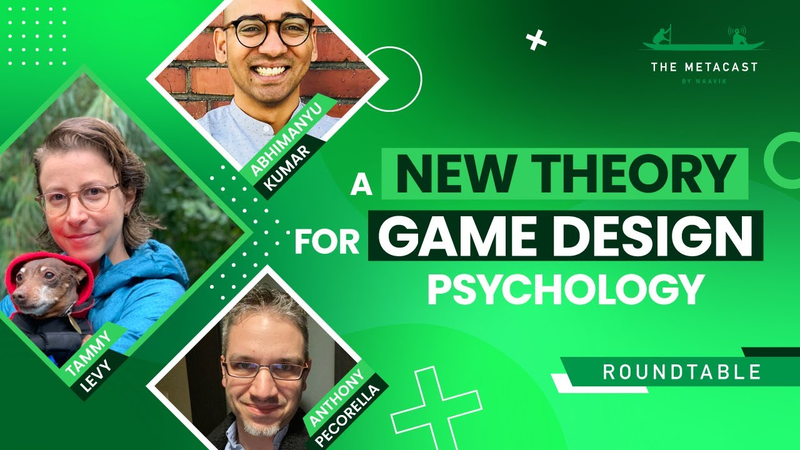
[Music] that that said i am i am implementing at work a way of tracking how fun a game is surveys and qualitative but measurable [Music] all right uh so welcome everybody to the metacast uh you will hear uh no maria today because she's enjoying her vacation in argentina so uh shout out to maria i hope you're having fun over there uh today i will be hosting the podcast uh you might recognize my voice as manu i'm one of the co-founders of navic and today i have with me anthony and tammy
long long time colleagues and and friends in the industry uh do you guys want to say say something um yeah sorry so yeah tammy and i met at congregate and uh worked together for a number of years and then um we were just saying it's been about three years since we last talked but um yeah i'm definitely looking forward to uh having a yet another intellectual conversation with tammy who's always has really great insights on on the industry so yeah it's it's a good way to to catch up it's uh grab grab a morning coffee it's not it's not a beer it's a morning coffee with with friends yeah so yeah so interesting anecdote uh for the listeners um while i was back at zynga one of the gdc talks that i watched was um the talk that tammy gave about ltvs while she was still working back at uh congregate and that talk you know
yeah very quickly like leveled me up and it was just so much of gold and inside packed into one hour and and yeah you know like getting the opportunity to talk to tammy was something that i was always looking forward to and it finally happened and then um once i went to flare games in germany then the other article i read was the one called the math behind idol games because i was working on an idol game at that point and that article was written by anthony which also like leveled me up again a one hour experience packed with insight and uh and yeah it was really cool to also like get in touch with anthony somehow now we've been working with each other for i don't know more than six months nine months i think uh and and then anthony knew tammy and then he connected me to her and now and now we're all here on this podcast which is great [Laughter]
we're we are all friends in the in the industry and i will also shout out to anthony and a few other folks at congregate that were encouragement on sharing learnings and giving talks and really set out you know the yes go go go do that and like it's it's something you know if we if we share our learnings with the industry and with you know game developers more broadly like we all grow as as a as an industry so it's it was for me also very cool to see like that that culture of like hey we don't need to like shield our or what we're learning we can actually like talk about it openly and and share it and that's that's been like since since then it's been a very uh kind of key tenet of of how i like to connect with people and operate just like emma greer anthony just folks
that like encouraged me to to do this it's like yes let's keep doing this let's keep sharing and learning together it's it's actually uh something that i think the finnish games industry is also really good at uh and just that that industry it's i mean it's most i guess mostly concentrated in helsinki and everyone is kind of like working close to each other and stuff like multiple game companies in the same building uh and you know the the amount of sharing that happens over there also i've heard is like really high and the other company which is also like then connected to tami's topic is uh space ape i remember like an article they put out almost like four five years back i think by now where um they were talking about uh the success of that um that top-down shooter game that they had that did really well and uh and they released this like massive article about you know um what kind of performance that game saw like what kind of marketing strategies
they did the product insights and things like that and they kind of ended it ended it with you know this broader takeaway that the industry like should be open about sharing learnings and you know um and just getting like the knowledge out there because then you're kind of just standing on everyone else's shoulders and you know reaching your height so uh but yeah talking about space safe we can probably jump into tammy's topic first so um it looks like that might have been fastlane is that something ah fastlane that's the one that's the one yeah quick google yeah it was it was one of the earlier ones i want to say yeah yeah it was yeah this top down bullet hell experience right um the damn yeah and i can i can get us started um so i was i was digging through some old and i'm gonna say old because it was from maine in june uh articles and interviews in punkit gamer and a few other um news outlets and one that really jumped out at me is you know the the title i was like uh
it's it's terrible like the headline is like very flashy of like click medium like uh how did beatstar survive 24 kill prototypes and still succeeded um but it was it was once i read through the interview i think it was like some very interesting points of something that i just think it's like it's a it's an ongoing question and very different teams approach it very differently but it's you know how do you prototype games in a way that you can answer the question of when when do i know a game is fun when do i know that this is an idea that i i should pursue um and i think that we're actually going to talk about it in from different angles throughout the whole uh podcast today and with what was interesting too as i was reading this today supercell on the other hand announced that they're ending development for
clash quest which in all intents and purposes like if you've played it or read about it or seen any videos it's a fun game so the gameplay in itself is fun but sometimes it's not the only and you know we're running businesses in a lot of the instances in the gaming industry so it's not only is it a fun game but is it a game that can create a sustainable business yeah um but but also i had like supercell standards so that that's like a on a completely different supercell yeah successful business is just like on on the supercell side supercell successful business there you go yeah there you go it's like quality quality and success level in terms of business standards but yeah in in for um space ape beats star has has been able to find that that footing and you know i was one of the people that when it first launched i went super into it i got super addicted
and also was very skeptical about it being you know able to sustain that level um of engagement and monetize well so it's been interesting to see it kind of continue to do well and be able to find an audience um but yeah i think take a step back just things that jumped out at me from the interview uh were you know first of all they were having you know a bunch of different teams prototype so we they kind of had specialize in this type of you know more strategy games and they had this choice of like do we continue to get better and better at these types of games and liveops or go and explore a bunch of different genres they decide to go and explore a bunch of different genres so that's where the like a bunch of kill prototypes came from it's like they were just protapping a ton um and eventually realized that that was stretching them too thin
so they created better you know more fully fledged resource teams prototype you know have less prototypes running in parallel but being able to learn uh and kind of carry learnings from one prototype to the other as they were going through that process and originally beatstar started as a much more mid-court game it was like a music rpg type yeah kind of um and i think like there's in in japan china there's a little bit more market for that so we're trying to kind of go go after that in a more kind of western approach uh and what they found is that people love the rhythm gameplay and everything else just felt like a distraction um so they eventually decided okay let's just focus on the rhythm [Music]
themes that i wanted gamepl explore is you know there's there's one question in the interview that that asks the team is like what what was the point in development when you felt you had something incredible in your hands and i think it goes back to like what do you know part of the funny magic idea yeah it's like it's fun right it's like when do you know you found the magic um i think it's hard to describe it i think that when you fight it you know it's like this moment you know you know it yeah um and the other one is about reducing complexity uh which we can go into a little bit uh if that's interesting but i'm just curious to hear from your guys's experiences um maybe just like sharing some of those moments when you've felt that magic because i think it's hard to like describe it uh as in like an abstract but when you when you're going through the process you find kind of that that moment you're
like it just clicks um so i don't know if you have any anecdotes or experiences where that comes to mind or where you just like keep trying and like the opposite writes like you're just not fighting it yeah maybe anthony has some thoughts because uh from defenders yeah um and undefenders quest was a decade ago so i'm a little fuzzy on the specific moments um i do remember we went through a number of variants of um like i remember the archer character we were trying to figure out how to handle the ranges and we had a minimum range and a maximum range and um we ended up like the first few variants of it it ended up not being fun because it was just like super overpowered and didn't make sense and so we ended up playing around with how to try to um get the the um ranges to overlap parts of the uh of the maze in a way that was really effective uh and it worked out but that was that was sort of a smaller uh game mechanic um
you know the the game was largely sort of a mix of two existing genres and unfortunately just sort of blended well um but i i have been on sort of the under other side of that um with a uh game i was working on and it's i think part of the success there for um space ape and uh and i think supercell has kind of talked about this culture of um you know scrapping things and and celebrating success and i think they were the ones that uh whenever they cancel a project they would have like a champagne toast to it and really kind of celebrate you know what they learned from it and try to make it so that it's acceptable um and it occurred to me it's sort of like this um marie condo approach to game design like you only keep what sparks joy and you have to be willing to get rid of everything else and um if you haven't built that kind of a culture it's it's hard to do that like you you get too attached or you kind of flounder around a bit and um
there was a a game i was working on and we kept making small changes like we feel like it's close but we kept tweaking and tweaking and you never really get there and so one of the things that we had to start embracing was that um you know if it doesn't feel right you need a big change um you know if not going to a fully different genre at least like some major difference uh when you're doing your prototyping because when you do just small changes like you end up these looks maxima and um when you're trying to find that fun and it's not working um and not working can be that it's not fun internally or it might be that the metrics aren't there or something but um you know if you're if you're not if it's just really not working you have to make a big change and that was something that we didn't embrace early enough and ended up wasting a lot of time i think um on that project um one one trend that i've uh seen constantly happen across teams that have you know built successful or not successful but like fun core gameplays is um just the uh just the appetite and
processes for rapid iteration like really really rapid iteration on every prototype and um i think in one of the previous uh round tables i had told the story of um of acero and like how artero found the magic in its um in its control systems um uh i do you guys know the story or i can give like a short version of it um but yeah in that rapid iteration process um it was actually an accidental innovation that they had where um you remember right you have you just have to like play with one thumb and when you remove the thumb it's like shooting otherwise it's moving before that i think they had like a dual button system for moving and shooting and uh and that just created like for the accessibility point of view just create a lot of friction but also just for like you know um to kind of like let the flow state continue in a way also it kind of like created a lot of friction so then they
convert somehow it ended up getting converted into a one button system with like you know uh you remove your finger and it shoots automatically and that was the that was the moment you know when the magic was found uh in that core and um but yeah again it was like through rapid iteration that they were able to do it the other team that um i used to work with back at flare games uh the non-stop knight team uh from um again from finland um these guys uh they have so of course like they were a startup so a small team but they also had in that small team of i think it was six to eight people they had like two different teams also i believe where uh both were working on like two different prototypes and you know uh and then rapid iteration in that and all of them and like one team in one room the product design guy says ah we should try this they had like this you know super coder uh will poo was the name i think and uh and he would like instantly implement
it they would test it and you know and no none of like you know none of the whole um oh it should look good and they would just like test it with like boxes and things like that but um but they instantly got the feedback okay are we getting close to the magic or are we moving farther away from it and you know and uh yeah basically tripping and picking themselves up and then continuously like moving forward and upward so that's yeah that's one trend i've seen constantly across you know uh game teams that have been able to find the fun uh essentially but um i'll i kind of also um this is a slightly different point but to your question tell me about like how do you know when you kind of found it and uh i think about it in like three um like three gates that need to get past so the first gate is um like through the rapid iteration and
everything you kind of do all that your process is set up for all that but the first gate is your own team should be like super excited about it because if they're not excited about it then you can forget about like you know the future of the game once they are excited then you get to the second gate which is kind of like the okay it's like the broader public or at least like a target audience kind of you know um excited about it and you can do like you know some small marketing tests and whatnot and kind of uh validate that but then the third gate is okay like the real you know scale the scale gate like okay let's let's go outside of the target audience a little bit you know uh would this be like a sustainable business you know uh is it that fun yeah except because you you can end up with um [Music] with a game that's it's it for all intents and verses super fun you really like but it's super niche too right and you know yeah yeah depending on the team that's okay it really depends on your on your goals and do you want to reach like a broader
audience or do you want to keep a niche if you want to keep a niche that's that's also okay that's totally okay exactly so so yeah again yeah aligning you know with the goals and stuff but um but i guess that um i guess my gate thinking is more maybe for like the massive free-to-play ones then you know for uh for the more niche indie games it probably doesn't apply like that um but um but i guess that's how that's how i kind of think about it i think i mean you're definitely right about the the team gate of like the team needs to be interested in and excited about it um i remember at congregate at one point emily who was the ceo said she looked around the office and saw about half of the employees had adventure capitalist like running on the in a window on the side um which we hadn't we weren't developing but we later started um decided to publish but it was just a really good indicator that people who weren't you know what if you have if your team is playing it when they're not working
on it that's a really good indicator um because it's it's very easy to get bored of a game that you're working on so if it's uh if like after hours they're playing against each other or something that's uh a great indicator yeah and that was that was one of the moments that kind of it's always for me it's like it just tells you it's like oh this is this was like there was something fun about it because yeah you would see people playing it uh you would hear people like all of a sudden resetting and you just hear like somewhere in the office going like getting everything like back up uh and you you you also people see like you see people compete even though it was like you know not a social game but it became a social game within the offices like how many angels do you have oh i'm in the billions oh i'm in the trillions and just like kind of like this this type competition just
yeah none of it was work it was just you know you learn about the game from work but people were just enjoying it and i think yeah that's like probably like one of the best indicators uh for me as well as just the team is excited about the game i've been in situations where the team is not excited about the game and it becomes much more of like a task list of like well tell me what to build and we will build it um and for me that that starts becoming just just a red flag um if the team like it doesn't matter what role you have in a team if you don't you don't really care about what you're building if you don't have kind of these moments of like oh i really want to play the game or oh you know i really want to make this work really well for the game you know maybe you're worrying about server loads but you're
excited about like it's like oh my like the game that we're building could have like all these players and gotta make sure that you know we can have all of these concurrent players like you're excited about your game right because you're thinking about it in in those terms um so for me like after being in like a couple of situations where you know on paper a game that should have done well game team was not excited about it um it became more of a checklist the game did not do well because it becomes that that checklist and there's like not you can't find that magic if if you're not excited about the game i think i think like that is and that's one of like those uh not not tangible things about game development especially like being in a product analytics type role like it's hard to advocate for like let's just find like the magic let's just find
like the the spark how do we measure that it's like well we we don't always measure everything that is the first time i've ever heard tammy say that [Music] yes well you heard it here first that said i am i am implementing i work a way of tracking how fun a game is surveys and qualitative but measurable measurable so [Laughter] let's put it out there that that i am trying to measure it that's the time [Laughter] do you guys have uh any interesting anecdotes like from some of the early games that you worked on you know moments where you like realized that you like found the fun so back at zynga uh we were working on
one of the versions of farmville three mobile you know that that didn't get launched uh but there was so was was it was a country escape or after that uh after that um okay well it would have launched after country escape it started developing before country escape um but one of one of the cool moments with that game was the and back to like kind of like almost these moments where it's like you're not expecting like innovation to come in something as simple as controls uh you know it was back in 2013 we're still discovering a lot of like how do you play on on mobile how do you control things on mobile right like we were exploring a lot of of those questions just as an industry um and one idea that um
one of the the designers who i think was like the creative director had was test um you know instead of um was it it's uh landscape to portrait mode for a game that you know originally you'd expect it to be landscape um so that you could play it with one hand on the go and i was like oh but now that you must have like flipped their tables right now [Laughter] but the the really cool thing about it is like once you get to that um like trying to play like that it was like oh but now we need to think about like how how do you interact with the game it's not only about like how you hold the phone but it's also how you interact with the game and the the piece that i just loved so much um was how we ended up doing
uh planting harvesting watering and kind of those controls it was just like a single tap but it just the way it felt which is like so tactile so interactive and it feels so good the way that we were kind of exploring it that was like it's one of those things i'm like man i'm just so so sad and never saw the uh uh an audience and and people got to feel it because it was it just felt so good and you know it's part of like what makes those games very fulfilling for for people is just being able to you know i i planted i see this thing grow and then it's like my reward and like making that very tactile was it was one of those moments where it's like yeah the progression metagame it's all very like clear and understandable but it was just like something in how you interact with you know your farm that just made it feel really
good yeah yeah i do remember a moment that um it's i guess kind of the opposite or uh so you talked about the multiple gates and um we were working on a prototype of a game and uh um had to get a version out for gdc i think and so we sort of we only had one character in the game um everyone came one character modeled but it was supposed to be a multiple character game and so we decided to make a whole bunch of clones of this character in different like wearing different colored shirts and the writer that we had um wrote this script for this like clone interaction that uh we thought was hilarious like everyone in the team loved it it was all of these like kind of clever jokes and puns and everything and uh and then we started doing play tests on it using like uh play test cloud so we could watch the reactions of people as they were playing it and every person was just deadpan like we'd have like one person crack a smile most people didn't even realize they were jokes they were confused like it just
totally in game is like games are like really hard human yeah yeah it so it was one of these where we we passed the first gate but the second gate did not work um and i think it ended up that like a lot of jokes were really for like if you're a game designer or if you're really like into the games like you get a lot of these jokes but there were two inside and so once we put them in front of an audience it became clear that this was just not the i'm sure it would have had a great niche following that would have really enjoyed it but um was not gonna work for a widespread game yeah yeah i have a similar example uh again back at flag games um we were there was there's this one game which i think right now is uh published by jam city called world war though and when play games are still like a publishing unit you know this one was in the pipeline and i remember we were having like i think it was like a christmas party or something like that and um basically the whole office you know everyone's having drinks enjoying the music
and then suddenly like you know someone says hey do you guys want to play a round of world war two and he collected like two three people and they started sitting on the i mean they sat at the table and they started playing and then instantly you could hear like you know all these ah man it's kind of like um it was um it's kind of like a little bit of a clash royale experience but um with with a pinch of uh moba in it uh but uh but basically you know you have like your set of characters you need to like place them on on uh on the terrain and they go and attack the enemies and as soon as you like kill the base of the enemy you cannot win right so it was evoking all these emotions between those like three people and then it started attracting like a bigger and bigger crowd and at one point pretty much like half the party had moved to the balcony with like it was raining outside they moved to the balcony they they took like their you know extension cords and everything kept it under the umbrella so that it doesn't get wet and everybody's playing world war over there
that was uh i mean basically it passed the first gate i mean it just didn't pass it like smashed through it the gate was like you know just not there but uh but then yeah the second gate that was kind of the point where you know where more questions started to rise because um in a pvp game when you actually have the person sitting next to you and you're playing it's a completely different experience versus you know someone sitting in i don't know india and playing against me so you know uh and that that was the magic but it wasn't there in an online setting and you know uh so that that was like a very very interesting learning uh but yeah i think now that it got published by jam city and stuff i guess they found a different magic but um but yeah anyway uh shall we move on to the next topic which is uh slightly connected to this one um
so yeah so that would be uh i can introduce it um there is um there's one new research paper that's kind of been uh doing the round twitches on game a new theory in game design psychology um as we all know like okay like some of the famous theories are probably the most well known is std or uh self-determination theory um but um this person i'm gonna i'm gonna try to say his name just a sec his name is sebastian ding um and he put out a tweet about you know this new paper that he did uh and it's on the name of theory is called predictive processing which is an up-and-coming theory in the psychology field and um he wanted to apply the theory to games because he felt that the current
the current game design psychology theories that exist out there is giving a slightly incomplete view of things and some edge cases are not kind of captured in the current setup of things so i'll probably um just to kind of introduce what all of this is um i'll i'll just kind of read through you know um the abstract of this paper and we'll put the link to the paper in the show notes um so he starts with why why do we seek out and enjoy uncertain success in playing games game designers and researchers suggest that games whose challenges match player skills afford engaging experiences of achievement competence and or effectance of doing well yet current models struggle to explain why such balance challenges best afford these experiences and do not straightforwardly account for the high appeal of high and low challenge game genres like idol and souls like games so
in in so the paper is like pretty it's pretty technical language i think but in more like simple you know simple terms basically what he's trying to say is like zoom out like in life um you know generally people don't like a lot of uncertainty but in games they do and and existing existing uh game design uh psychology theories like self-determination theory would say that to achieve like the best retention you need to have a balanced game experience that is reducing the uncertainty in a game at fixed amount of at fixed points um but also like uh also introduces new uncertainty into the game at fixed points so that you can basically maximize the tension that kind of is in a pvp setting that would result in a 50
win rate right but you also have idle games on one end of the spectrum which is basically like a 100 win rate and on the other end of the spectrum you have like the souls like games like eldon ring which is like a 10 win rate and those are like not fitting this you know uh the general understanding of how you're supposed to like balance a game and you know it would like result in uh maximizing retention so how do you kind of explain that and he basically said if these two cases exist then you know existing game design psychology is incomplete and that's why he wanted to kind of introduce this idea of uh predictive uh processing so the overall um again this is just for context you know for everybody but the overall takeaway of this theory is that games
the reason people play games is so that they can reduce uncertainty in that gaming experience the reduction of that uncertainty can happen at different rates for different games but as long as that reduction of uncertainty is happening and players feel like they have control of reducing that uncertainty and they will see success at some point then you know they will stay so um the faster they're kind of able to reduce the uncertainty the happier they are the slower they're able to reduce the uncertainty um the more unhappy they are and um and that kind of gets them onto this hedonic treadmill and kind of keeps them retained um in in the game so so so yeah so how does all of this kind of like connect back to you know explaining explaining the three cases so basically
on one end of the spectrum you have idle games then you have well-balanced games and then you have these souls like games right and um so for well-balanced games um again the paper is like pretty technical so like correct me you guys can correct me if my interpretation of it is wrong but for well balanced games the the overall takeaway is that it basically gets like a puzzle game like a match three game you know it'll it'll start off with introducing you introducing to you the basic puzzle there's a lot of uncertainty at that point about how to solve that puzzle but since it's basic you kind of uh solve it quickly the uncertain uncertainty is gone and then you move to the next level you kind of feel that success but in the next level a new mechanic gets introduced which creates more uncertainty and then you want to kind of reduce that uncertainty and then you go to the next level then maybe the level design changes maybe some other variable
changes and you know it's this constant loop between okay i remove some uncertainty uncertainty but now now the game designer introduced some uh some back into it and then you kind of layer all of that on with like progression mechanics and such and it kind of creates um a solid retention curve for puzzle games and as we know like you know the key thing about puzzle games across candy crusher i don't know garden scapes or whatever whatever like level design level completion rates that's all super key but what's the psychology driving all of that the gamer psychology and um this would this would basically kind of explain that gamer psychology that's driving it so case two is idle games and um interesting anecdote uh when um when i was reading the paper uh anthony's article on the math of idle games was actually referenced in this paper to explain
explain the theory which is super awesome so idol games the case over there is you know um um so for like in the previous example puzzle games would have like this i don't know 40 50 60 win rate idle games have close to 100 win rate so where is really the uncertainty over there how does this theory like fit for idle games and the key over there at least my takeaway from the paper was the key over there is there is reliable progress so people kind of get used to progressing but then the uncertainty really more lies in how high is the ceiling of optimization over here and um yeah yeah um i think part of it also is um so there's there's the reduction of uncertainty and then um i think predictive processing kind of goes a little farther even in saying that it's the we're going to start doing like integrals now it's the um
doing better so it's doing better than expected so you're expecting to reduce uncertainty and if you reduce uncertainty at a faster rate than you were expecting to reduce then that generates like a a positive effect where it um you know it's and so like in an idle game you're expecting a certain amount of growth and then you'll get some big um uh upgrade or you'll do a reset and all of a sudden your growth expectation it goes higher than that and so and that's where like it really starts to feel good because you were expecting a certain rate and it's it's suddenly higher um and so uh it's that was kind of like the extra thing i'm still trying to wrap my head around the um the you know acceleration of or accelerating the deceleration of um uh uncertainty i guess um yeah but uh yeah yeah it's um so it's like yeah it was specifically that i think was the the extra bit that that they were putting in there um that still kind of but still works in idle games where um as you were saying the
uh the other model didn't work as well yeah yeah and i think that they call it um kind of the good feeling of doing better than expected that that really caught my attention because i think that really just thinking about kind of that framing of it feels good to do better than expected you can just categorize like so many games like pretty much that's what we're trying to do right like every game will have every every game that does well will have some level of of that experience for a player of you know you're you're having some progress and then you do something where you do better than expected um or you know you see accelerated growth like there's like just like this this acceleration on what you're doing and that in itself feels good
and then you kind of repeat repeat that cycle yeah yeah exactly so but yeah i think anthony the way you explain the idol game thing that yeah that basically like covers that case um and then the final case is the souls like games right which is on the more 10 win rate side of the spectrum now naturally like one would expect i mean i'm losing i'm losing like 10 times in a row you know why the hell should i keep playing this game but um i think uh so so the point he makes is there's obviously like a big factor of um the kind of pre-marketing and the expectation setting of the game that happens before players actually get into it players already know the kind of environment they're getting into but let's let's take a person who has not been exposed to any of that marketing and you know download the souls like game for the first time and he's there i think i think what happens over there in those
cases um and in support of this theory is elden ring also like just throws you into the game without really telling you anything right and and then when you like you kind of figure it all out by yourself there might be clues and all here and there which they have you know uh programmed into the game but there isn't like a full-fledged you know handheld on the rails tutorial experience or anything that and then okay players are like okay you know cool let me let me go into the open world and that basically happened with me and then i got like hammered by this the first npc that i saw uh but what happened at that point was like my my expectations got like set very low therefore when i dis therefore the chance of me discovering something and the game is designed in such a way that you that you are enabled to discover things the chance of me discovering something increased my uh increased my chance of seeing a success so even though i kept losing my
belief in that i will be successful eventually kind of kept pushing me to you know retain and continue to play and kind of continue to remove that uncertainty because i kept discovering new mechanics new styles of fighting um i don't know hiding behind a tree or whatever you know basically using the environment to my uh advantage and things and um so that's basically what he calls as like temporary failure but there could be a point where temporary failure reaches perpetual failure and that's when you lose your you lose hope essentially if you have lost hope that you can like win the game then then you will basically turn you know so and that that's uh that's kind of his point um but yeah super interesting um paper and um i guess you have like you know question first question do you guys like what what are your kind of reflections on this uh and maybe maybe there could
be uh some other questions after that all right i have to have to poke a little bit of fun here in that um so as we'll see from my topic it was this is a cool genre of games let's talk about it and tammy sends this short interview and munyu sends a 42-page 12 000 word [Laughter] complex psychological paper [Laughter] um [Laughter] um yeah actually let me let tammy talk i um so i uh i have some thoughts about like souls like but i think it's a little bit parallel to um maybe the course so like yeah tammy did you have some thoughts on the um kind of the theory behind here or kind of its applications yeah i thought it was it was a very interesting approach and i i i really appreciate i was like oh i need to think about this even further and
just like reflect a little bit more on this and just absorb a lot of it but what i what i really appreciate about it is that you know from from my reflections it really has two key components um the prediction part of it and the uncertainty part of it uh for the uncertainty part of it it was it was very refreshing and kind of like just thinking about games and you know how we interact with with the world in games from a different point of view usually when we when we think about kind of finding that fun finding that satisfaction we're you know the the psychology theories that kind of are most uh popular around mastery of skill which is all about flow right it's like finding flow mastery of skill and that really doesn't speak to you know what what they're trying to
explain right it's like these two extremes where there's no skill to master on the idol side if if you just think about it as like pure skill um and there's no like in souls like games it's like there's no mastery part of the scale where it's like you're just or it's incredibly it's like very very slow right it's like so hard it just in in the flow theory one would fall on the boredom side and the other one would fall in like that i forget what it is but it's like frustration right it's like total frustration so it's like in in the two quadrants that in theory should never fall um so thinking about you know this part of uncertainty i think it really it focuses on mastering it does talk about mastery but uncertainty not mastery of skill which was a very interesting vector to introduce and how we think about games for me it's
you know we are trying to master something because it it does talk about kind of like those same ebbs and flows of you know i'm trying to master something um in this case i'm trying to you know reduce uncertainty and in that way i'm trying to master the game by reducing whatever uncertainty the game is providing so this idea of you know i want to do well uh then i i suddenly do better than expected that gives me like this this jolt of joy and now it kind of normalizes in in kind of like that cycle right and it can go in in both ways of like you know um that growth idea similar to what anthony was describing on on idle games or you can go on more of like hey we're still doing well but no longer than expected and i think they talk
about this a little bit um now i'm willing to go into like a harder level by my on my own because now i want to challenge myself to to you know increase my uncertainty like i'm seeking like the answering can come from like me seeking it it's like okay cool you know in the in the harder games that's what ends up happening right like you're like no no i'm gonna like just keep going at this uh level at this bus uh until you know i'm like cool now now i'm like at this consistent level now let me like i throw myself at like the extra uncertainty and that gives that uh you know excitement and joy out of uh you know seeking it and trying to find that mastery but i really i really like what it was you know think about mastering in a very different way in in this case mastery of uncertainty and the second piece of of prediction
it's in in that regard you're just like constantly doing that inner calculation of um you know how how well can i do and then just making those choices and it can be big choices or small choices it could be moment-to-moment gameplay uh yeah but yeah the expectation setting i think it's it's crucial and it also puts it into like the prediction um because usually i'm like we talk about it a lot as like aspiration setting it's like what are what are you building towards uh but i think we don't always talk as much about you know the expectation setting of like what is the road gonna look like to get to that that place right um so i really i really appreciated you know kind of just adding a little bit different angles to to how we usually talk about how do we set these player motivations and how do we you know
provide the game game playing game mechanics that speak to these different motivations yeah i really like the way you put it with um yeah mastering skill and mastering uncertainty that's i didn't think about it like that but i think that's like a really nice way to put it yeah yeah um yeah i think it's the for me the the acceleration component was was particularly interesting because it was definitely not something i've thought about like i've uh so i years ago worked in sort of like standardized testing and we worked with item response theory and uh there's so the idea is like if you if you have a number of questions and you're kind of graphing out the uh where the y-axis is the um the chances of getting the question right and the x-axis is the skill of the person you'll end up with this like kind of logistic um i wish i could draw it but um curve and uh you know the the
inflection point right in the middle is the the 50 50 chance um if you take the derivative of that that ends up being the top of your upside down u and so as a when you're doing like standardized testing that basically the derivative is represents the information you get so when there's a 50 50 chance that's when you find the most out about whether this person knows what they're doing if you only ask easy questions then everyone gets it right you've learned nothing same for the opposite side um but if you that that kind of sweet spot is in the middle um but that's that's about collecting information it's not about fun um and so like you know if i think about to like maybe sports or something um you know if you're really good at winning a lot like i mean that's great but it's also not like a surprise but the thing everyone talks about are the the underdogs like the the 15 seed and the ncaa tournament that beats a 2c like that's unexpected and it's that doing much better than expectation than expected i think that really like gets us excited um and so uh i this this
theory ends up i think explaining some of that really well um and works the other way if you're expected to win and you lose it's all the more painful whereas if you're expecting to lose and you lose like it's like oh well that sucks but you know it doesn't hurt nearly as much um yeah so i think it actually works in both directions but it's that um kind of that second level of looking at the comparison to what's expected as opposed to just the the challenge and the mastery over time um that uh was was particularly interesting um and that i uh yeah like you tammy i need to think over it some more and i started kind of like going down this rabbit hole of reading you know uh articles that were linked and so it's a very well uh researched paper that has a ton of uh interesting articles in it yeah including anthony's article what one uh one one question i had for you guys especially you know given your time at congregate and venture capitalist like
one problem that um a lot of idle games face i mean maybe not all of them but a lot of them faces just a poor you know longer term retention curve and um do you think like you know the whole upskilling part and like you know earning more money or earning more x is all super exciting early on 60 d1 retention awesome but then you have like a you know five percent d30 or even lower do you think um do you think this do you think that you know there's not enough uncertainty that has been introduced uh into those like long-term idle game experiences um which is kind of you know a key driver for um the more poor retention curve um because the mechanic that idle games then you know um dependent on was the prestige mechanic or the reset one and then you're kind of doing the same thing again right and i mean and
then you have then you're basically in a situation where you know it's 100 win rate game and you know exactly what you need to do to kind of get back to you know uh where you used to be um so yeah question is like for that long-term retention curve in idle games and you know if people want to be like improving that um is there can they use this theory in some way to kind of you know um to kind of improve it um i i think in some ways yes uh one of the lessons like talking to the adventure capitalist designer when he first designed it he designed it with a pretty much just steady progression curve and so you were always accelerating at the same rate and he found that people were really really bored and so one of the things that he started doing was reducing some of the growth and accelerating some of the growth in different spots so you had a more of a bumpy kind of um progression curve and
with that sort of contrast where some parts would be slower than expected and you know you'd be kind of like oh this is being a little slow but then you'd suddenly hit this bump um it kind of it makes sure that your expectations are not uh constant i think and so you're kind of constantly resetting and then you get you know occasional disappointments then occasional highs as well um which is kind of like you know a boss fight in the game where you know you do this big hard battle and then you get through it and then often the beginning of the next level is relatively easy and you get this a little bit to kind of breeze through it and then eventually it starts to ramp up again um so that's one component uh some idle games that have really good long-term retention have this sort of unfolding idea of introducing new mechanics over time prestige being like a first one but often times like kind of new ways for the different currencies to interact or you know and it gets a little crazy and uh you know that's good but it's also very very uh content heavy um and you end up developing content
that a very very small percentage of people play and you know that percentage people have been playing for years but uh it can be a little hard from a kind of a content treadmill perspective the other one i think is uh very generalized um and not specific title games which is events um in you know modern mobile games and software systems you know games as a service uh real estate like live events um limited time events are really where a lot of the um kind of the surprise comes in and a lot of the uh the short term so i mean even idle games like everything that almost every successful game has some sort of uh event system that changes up the rules that provides you with a new challenge that lets you you know your expectations for that limited time event are no longer set and so you have to kind of like reset them and uh and so i think that's a way that you know even once the core game has started to stale a little bit um
by introducing regular events you can kind of keep the players having a lot of fun with those and then eventually it sort of feeds back in and they kind of continue slowly going up the core rank right yeah and i think just just to expand a little bit on what you were saying anthony of um [Music] the the bumps and the curves in terms of progression um i think what would it really applies to almost any game dip in in just varies on how you how you present it and how you unfold it and like you know is it towards growth or towards just like mastery or wherever you're focusing but it's the the idea of kind of like that that ebb and flow in terms of highs and lows on how you're progressing through the game um i mean you see it in match three games like that's how level design is done right it's like you're getting harder and harder and harder you know it might take you
days if not weeks if if you really don't want to spend on a level to pass a level in like a match three game uh but then once you beat that level like you're gonna blast through like a bunch of other levels right it's like kind of like this reward for blasting through it so it's kind of like those ebbs and flows um and the other piece is the the new puzzles to solve i think that you know and it goes back to also like the the the uncertainty and like trying to to solve and predict something and just kind of what we're really you know presenting to players in a lot of different games in a lot of the games that we're talking about is new puzzles to solve they might be you know easy hard whatever it may be and that's where like new mechanics work really well liveops could work as well uh but only as far as we're presenting a new puzzle and i think that that's where
a lot of teams also fail on the live upside because they live ups are a lot of work and it's very content heavy and if you don't introduce like a new puzzle you're just like reskinning the same puzzle over and over again players are gonna catch on to that and they're not you know they're gonna get bored with that too so it really i think it's those ebbs and flows plus as you're going through those ebbs and flows presenting new puzzles to solve if you have new puzzles to solve that that all of a sudden like engages you and you know new puzzles yourself can look in many different ways depending on the type of game that you're you're building and that you're operating and you know some some teams take it to the extreme like afk arena and um even the township was doing this where their limited time events are like it's a whole game mechanic on its own rides like and now we're introducing metry in this game that has nothing to do with mastery but here you go
um so i think i think it is it's about that that solving something new yeah yeah that um that was actually going to be my next question on this because i was also trying to think about like how this theory can be um misinterpreted by uh game designers and like this example is perfect you know it's a it's a team rpg or idle team rpg game but then you have like a random like match three you know it could be a mini game also um but you have like this random match three experience in between is that really the right way to be introducing uncertainty you know into a game experience or not and like one um something that i've learned as kind of like you know the big cardinal rule in mobile free to play is like you know you don't touch the core game after it's kind of set you know once it's set that's the core game forget about it
think about the meta game after that think about events try to find your uncertainty over there you know and um i don't know like do you think this theory questions that at all um or or um or yeah a more broader question is you know um like how how how can what do you kind of imagine as ways that game designers can misinterpret theory and kind of implement it in the wrong way while i'm thinking on that i have a quick aside which is that um the i think there are some like non-game applications of this as well um so uh my business partner lawrence you say um likes to say that a lot of times this sucks actually means this is not what i expected um and uh you know even in like you know if your job or something like if something's going wrong in a project like you want to let people know and readjust so you can almost work from the opposite
direction of if you can get people down to that 50 50 um you're going to avoid a strong positive or negative response and so like setting expectations uh in general can help um kind of reduce that or you know in other cases like you know uh the common wisdom is you know set the expectations low and and deliver beyond um because that's always going to give a better response and you know even this is all kind of intuitive it it does match with this model well where there's certain things that are expected um you know success rates and then if you uh if you're off of that that's when people notice the signal whereas every time it happens normally like no one really notices so it's that however far you are off of the expectation is kind of how strong that signal tends to uh resonate with people i guess they have um sorry that mean do you want to say something uh no no go go for it i'm still i'm still trying to think i'm like because any theory can be misinterpreted and
taken into the wrong direction i'm trying to think of like specific examples where um i could see that happen but it's like maybe i maybe i can throw out like one idea there um i guess like one way or something that's important to keep in mind um based on my reading from this is that when you are introducing uncertainty into whatever point of the player's life cycle in the game that resolving that uncertainty should still be contributing towards the um towards the key success variable of that game you know of or of that game experience um which would translate into staying close to you know the core game um confines or the meta game design or you know the live ops events and such so i guess
yeah that that's how like just to kind of you know put like okay where do you draw the line with the theory like kind of like to think about it like that i guess that's how i'm kind of thinking about it um and you know this afk arena doing a match three thing sure like you know someone can then say well it gives you rewards that you can reinvest into the core game anyway right but um but i guess yeah that that uncertain the the scale of uncertainty removal in that is not really that much you know versus probably like you know something actually happening on the on the campaign map itself like in that chord progression line um but yeah i guess that that's how i'm thinking about it but we can move on also we still have one more topic unless tamiya is like the last comment yeah i'll just close it with um i think that it all it does tie back to to agency and understanding how much agency i have
on you know how i can solve the uncertainty the game is is throwing in me um and i think that that's how it can potentially be beam search interpreted it's like let's just like throw stuff at players uh in like some some type of cadence zips and flows but if the player still does not understand how to solve for like understand like what are you throwing at them and how to solve for it then you know you're gonna land in this place where it's not even just frustrating because you know it's hard but because you don't you don't know why it's hard so i think like it's it's important to just emphasize like the expectation standing and understand like does the player understand what they need to do to overcome this new challenge these this new set of rules or whatever i'm throwing at them
right makes sense cool all right so um last topic we have about i think we have about like 10 minutes uh even if this is a longer episode i don't care it's a great discussion uh of course also you i hope you guys have the time for 10 minutes more uh but yeah anthony's topic is next which can which yeah beautifully kind of weaves into this whole discussion about you know the one end of the spectrum with idle games having a 100 win rate and stuff and why those game why those special kinds of games are fun why they're actually a successful business but yeah i'll hand it over to you sounds good um and some other time we'll go back and talk about how much i hate elgineering um [Laughter] yeah so um i this topic came out of a uh sorry i have some notes down here so i keep looking down um this topic came out of my kind of recent obsession with a game called power wash simulator
and it is a uh a game where you literally are just playing as a character with a power water um cleaning gun and they drop you into like a skate park or in front of a really dirty house and the entire point of it is just to clean the whole thing off uh and it ends up being this very like slow methodical um you know you've got a whole wall it's just a square wall with dirt all over and you're just very slowly kind of going back and forth blasting all the dirt off and sometimes a couple of things will remain you have to turn up your pressure and shoot those a little bit and then come back down and it's i mean it doesn't sound fun um you know it lacks i guess in terms of that success idea there's uh you don't really have a sense of of failure um there are you know a couple of frustration points that i can i can talk about but um for the most part it's it kind of creates this sort of like zen it's almost like a meditation kind of thing where
you know it's it's just it's a very satisfying psychologically to clean things to put them in order um i think this is part of where like tetris is so popular it's it's all about kind of creating order from chaos um and so you know i'll just sit down for like an hour straight just i i wish i was this diligent about doing like real life cheers um but uh it just like helps me really calm and focus and uh and so it made me think like you know is this i can imagine you know like my wife like if i'm playing this game you know my wife likes standing behind me and saying why didn't you i clean little real walls at all what are you doing clean [Laughter] i definitely feel that myself but yeah but it made me think uh there's as like kind of crazy as the world's been over the last couple of years um
you know while this kind of idea of like us the slow games um which is a term i'm borrowing from uh slow tv in in norway i think particularly tends to use it a lot where they'll broadcast like eight hours of a fireplace burning and i think they did that literally once and twenty percent of the population of the country watched it um so there's something very appealing about just sort of you know it also kind of fits in with like mindfulness and just slowing down and experiencing the world and uh while slow games are not necessarily new um you know i feel like we have seen quite a few of them be successful recently um games like unpacking and pc building simulator and house flipper uh and then like kind of longer um sets like farming simulator and truck simulator train sim world flight simulator uh and then kind of like the huge successes of stardew valley and animal
crossing like these are all games that are not really centered around challenge they're not um you know there's not a lot of mastery going on i i don't you know from the what we were just talking about i'm not accelerating like i'm not doing better than expected i'm just going through it and you know there's a couple of upgrades but it doesn't really change things too much um but i still like it really really i i love it um and so i when i posted this topic in our our slack channel i think everyone piped in with some sort of a slow tv or slow game that they um were really into and uh i've watched one of those movies i watched this one uh where it was essentially a ship in norway just going from one city to the other city eight hours long and it went past one island in the movie and i could see the cow moving but that was like the exciting part
maybe it's not that one but i think there's there was one of the one of the ship ones from like norway tv that got like 50 percent of the population watching yeah at some point like simultaneously yeah and then i watched like this you know meta analysis of the slow movie because i was like why the hell am i addicted to this and the interesting point that was made is when you're watching this you kind of like create your own stories in your own head and then you kind of wait to see those stories play out because when the cow is moving you're like hmm is the car gonna move right or left or is he gonna like you know eat some more grass right now or is he like you know go into a corner and you know do do his thing over there and then come back you know uh so you kind of like create these own stories and that like creates the anticipation to like continue watching it and i wonder if that similar mindset
um i mean of course in in a more like zen-like game you have like more agency and stuff to probably you know control the story to some extent but i wonder if there's a pinch of that thinking over here that kind of dries drives engagement yeah and i think uh manny you mentioned um coloring games too as as one of those types of of quote-unquote games that have reasons in terms of popularity and you know not not only games like the coloring books for for adult adults and mandalas and all that has very like recent risen very much in uh popularity and i think that a lot of the reasons why that has been successful and gravitated for like people have gravitated towards that uh i i think it just applies very directly to games as well um were is you know just reading a little bit of like the research that has been done on you know
why mandalas specifically or that type of like coloring is very relaxing to people um there's like an article in an art therapy journal that um they kind of put and it was like very light experiment where they uh gave divided groups into three groups one group was they gave a mandala another group they gave them like a kind of like a just geometric figure like squares but it's like you know just a geometric figure like nothing too fancy and then just like free form draw and they all had kind of like the same task of like and they did like survey of like anxiety before or after um and what they found was like freeform was not did not reduce anxiety the other two did and kind of going a little bit into that is that you know it provides enough
structure to get into like kind of like this repetitive motion type mindset it's complex enough that you need to focus your attention because you're not you know you're strategizing right when you're thinking about like coloring these things and like you know with the power watcher like your strategizing is like how am i going to you know go in this direction or this direction right like you're making some light decisions that require your attention but it's not too complex like free-form drawing that now you have to be like super creative and like make a lot of decisions right so it's like enough decision making that in a good structured way that you know you feel creative but you're not like overly stressing on the creative side and then the the that's kind of like on the creative side of the of the brain and then on the uh
kind of other side of brain like motor skills right just like doing some repetitive motion and you know even if it's in games like you're just like if you get into like one of these games it might be like that tapping like coloring or just like tapping or just clicking and like swiping like you get into like these these motions um and kind of like those two things together like you end up with like that meditative effect which in like such a stressful world that we live in it it feels like it's just like it's it just taps into a lot of you know key relaxate relaxation um needs that we have it's like humans i just like sounds silly for these to be gays but it's just like it feels it makes you feel good because you're yeah getting into that state yeah it it feels almost like the video game equivalent of knitting
like just yeah you know very repetitive like kind of pay attention but you know a lot of people use knitting as just a way of sort of relaxing and focusing and um yeah and even like yeah they might be doing something else and they're like knitting and it's like very relaxing because it's like very repetitive and like requires enough engagement uh funny funny story about knitting or just interesting story um one of the things at campton tv we are very you know focused on on twitch right now and the twitch ecosystem and you know it's probably over there and one of the things that uh when i first found that there was like a big community of what they call makers but within makers like knitters that they stream their knitting uh oh okay and you know they could you know they might be streaming for like five six hours of just like knitting
and you know talking to to their audience is kind of just like going through you know maybe i did like this whole thing during my stream and that was for me it's like so interesting like it's both like very interesting to see someone do it as much as it is to do it um which goes back to like the slow tv idea right it's just like sometimes you don't even need to do like the the movement to get into like that send mode for like that that activity of like almost like you can project yourself in into it or engage in some way yeah the uh the other option um of uh hyper casual games this is also like one example i shared on our slack chat but um ultra casual games also i feel um so that's that's like one subgenre of hyper casual that has also gained a pretty pretty big audience and the games are uh the game design is pretty
parallel to you know what we're talking about over here where it's basically it's basically like the hyper casual business model but the core game does not have a loss state so it results in a lot of like these zen like game experiences where you have to like paint a house or you have to you know sort some things or i i know maybe there's a knitting game also that i haven't come across but um but yeah it's yeah i just wanted to like bring up the example uh just to kind of showcase that you know we're also not like talking about a niche over here uh there is a pretty big audience that is actually on mobile at least that is like playing these games but also the examples that you brought up anthony you know like you know like farming um uh a truck simulator and stuff you know like those uh those are also like pretty pretty big games with you know sizeable audiences um for themselves but yeah yeah i also don't know if there's really like uh i'm pretty sure like there's a secret
sauce to it right there's some balance that needs to achieve and that needs to be achieved between how meditative it is and how um how much of uncertainty there is in it uh because i mean one one example is of course um um happy one of happy's games uh called penguin aisle i think which was in which was another idol game but uh a key motivation for theming and you know game mechanics across it and progression was the whole zen-like feeling of taking care of your penguins that are on this iceberg and um but yeah that that that wasn't really enough to kind of um you know push the game to success um i think at the end of the day it's still the the idle game part of it overtook the zen part of it and the focus on the zen was lost for the player and it was more
on idle and and therefore you know maybe like balancing etc was not really great over there but um all they almost like it feels like one was like super certain about what you're gonna get but the other one is like super uncertain and then it was just clashing you know in that game but uh yeah it doesn't work in all cases but i guess there's like you know there's a balance to be achieved in these kinds of games all right um so yeah i think i think we're at time um any last comments uh on anything otherwise we can wrap up nope all right cool well uh yeah it was uh great to have you guys and you know chat with both of you together after you know uh after knowing about you guys for such a long time but um but yeah i guess that's the end of the show um if uh if you listener would like to continue the conversation uh you can
catch us on our discord check out our free newsletter novik digest the invite to the discord is in the newsletter so check it out and yeah if you want some more uh premium research on topics like this and more across blockchain and free to play games uh check out novik pro on the website and and yeah next week is gamescom so i think we're going to be recording a live episode at gamescom so there will be a roundtable episode going live next week hopefully uh but other than that maria should be back in the next two weeks and uh and yeah i guess we'll see you next week [Music] you
Summary
Successful game development hinges on a rigorous culture of iterative prototyping, where teams must be willing to abandon failing projects to uncover the core magic of a title. This process relies on a three-gate validation framework: internal team enthusiasm, target audience engagement, and long-term commercial scalability. When developers find themselves playing their own creations outside of work hours, it serves as a primary indicator of a project’s potential. Rather than relying on incremental adjustments, teams should prioritize bold, structural changes to ensure that the core mechanics remain frictionless and compelling.
A central psychological framework for understanding player retention is the theory of predictive processing, which posits that players are fundamentally motivated by the desire to reduce uncertainty. Engagement is sustained not necessarily by balanced win rates, but by the player’s ability to exceed their own expectations. By mastering uncertainty, designers create moments of surprise and joy that keep players invested. To prevent stagnation in repetitive loops, developers can implement bumpy progression curves, introduce new mechanics, or utilize live events to force players to continuously recalibrate their expectations and solve fresh challenges.
Beyond high-stakes mastery, there is a significant market for meditative, low-stakes experiences that prioritize order and mindfulness. Games such as simulators provide a sense of relaxation akin to manual crafts, allowing players to focus their attention without the anxiety of complex decision-making. However, developers must carefully balance these zen-like elements with clear progression systems. Any introduction of uncertainty or new mechanics must remain tightly integrated with the core loop and player agency, ensuring that challenges are understood rather than perceived as arbitrary obstacles. This holistic approach to design balances the psychological need for both predictable comfort and the rewarding resolution of uncertainty.


















Comments