Mobile reports and market data
Documents
The Design of a Gamified App for Supporting Undergraduates' Resilience
This document outlines the design and preliminary evaluation of a gamified, theory-based mobile application aimed at enhancing psychological resilience among undergraduate students, particularly in the context of the COVID-19 pandemic.
- COVID-19 disrupted education for over 60% of students and was associated with elevated anxiety, motivating a prevention-oriented resilience app for general, non-clinical undergraduates in the post-pandemic period.
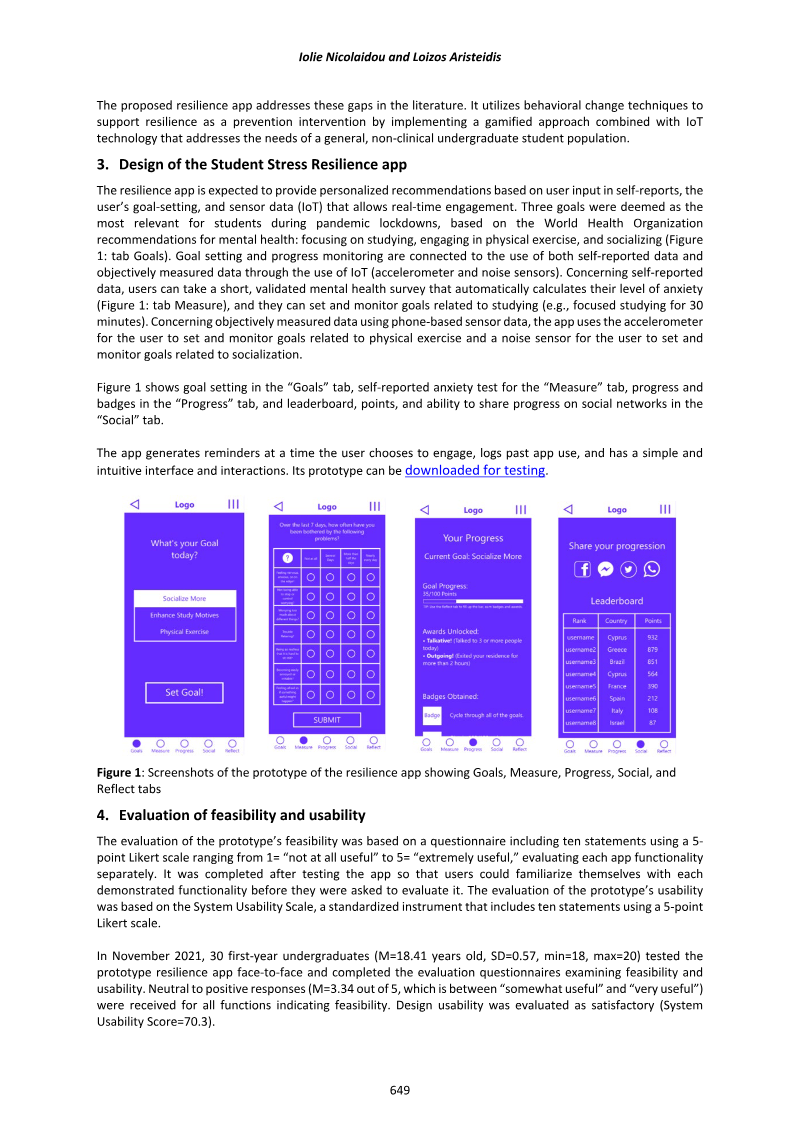
- The proposed prototype is a gamified, theory-based mobile app built around three daily goals derived from WHO mental health recommendations: studying, physical exercise, and socializing.
- Progress is tracked through a combination of automatically scored validated anxiety self-report and phone sensor data, using the accelerometer for exercise goals and a noise sensor for socializing goals, with points, badges, leaderboards, and social sharing as gamification elements.
Comparing the Student Engagement with Two Versions of a Game-based Learning Tool
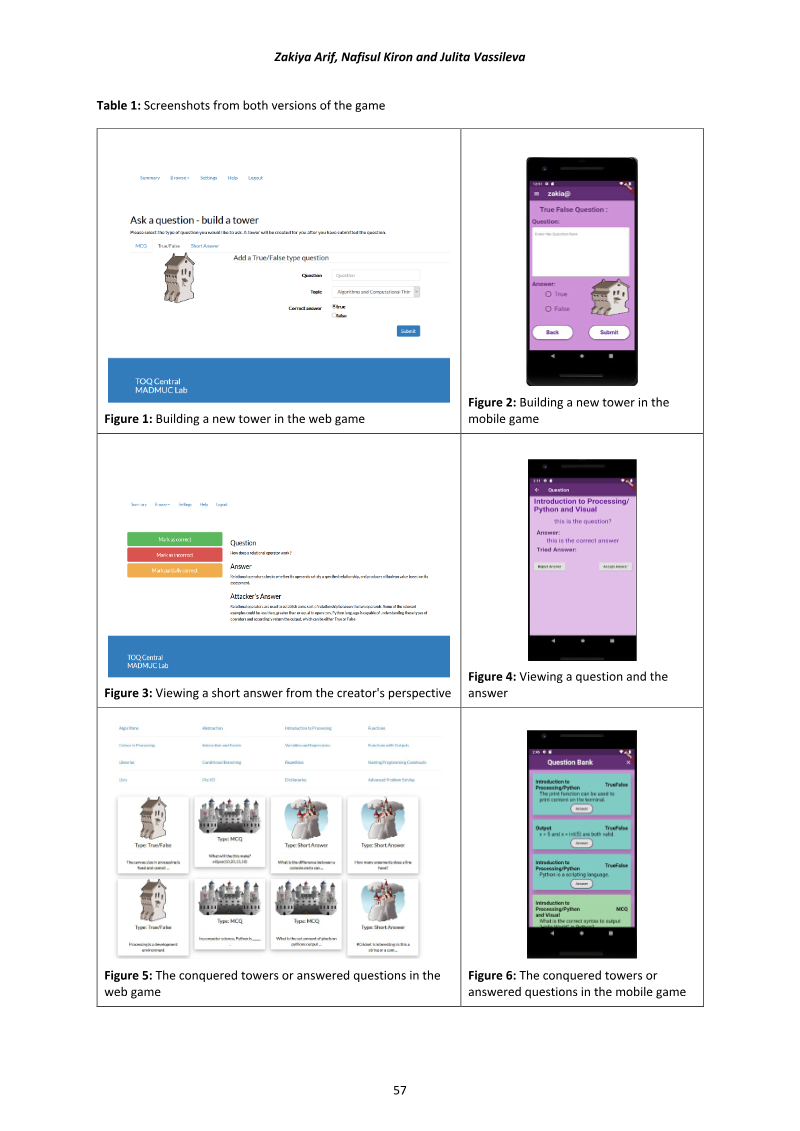
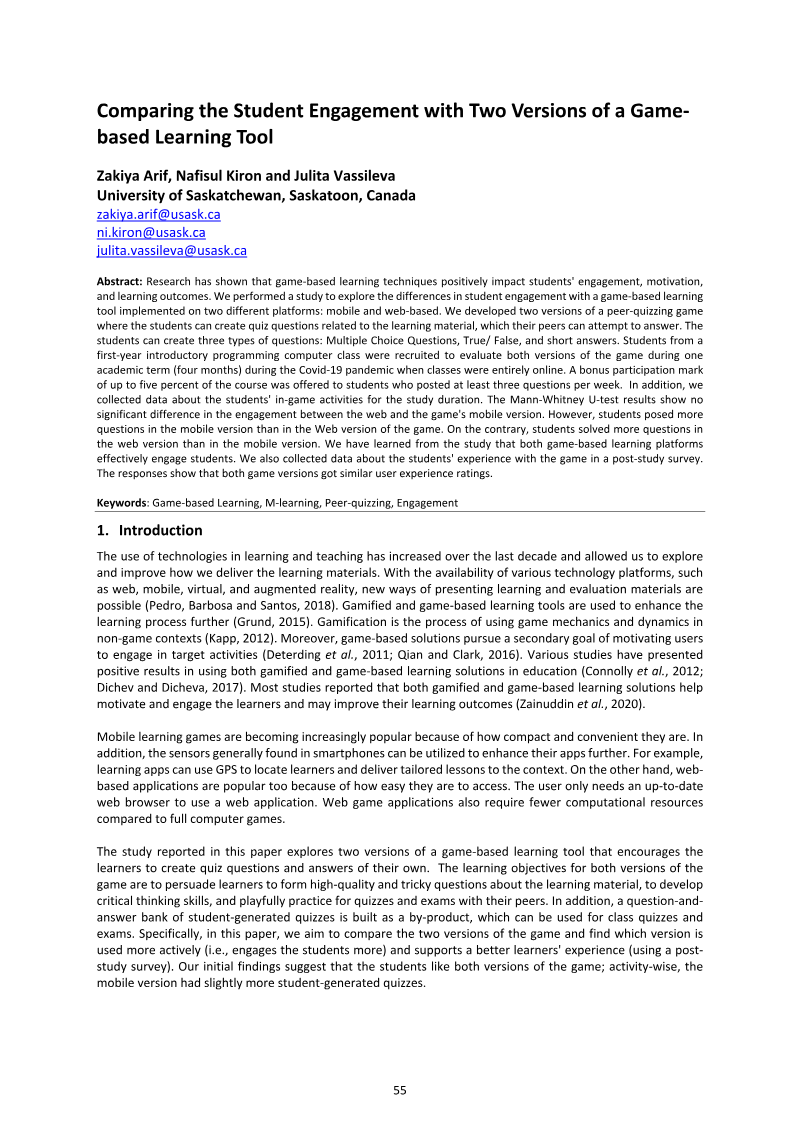
This study compares student engagement with two versions of Tower of Questions (ToQ), a peer-quizzing game-based learning tool, one implemented as a web application and the other as an Android mobile app.
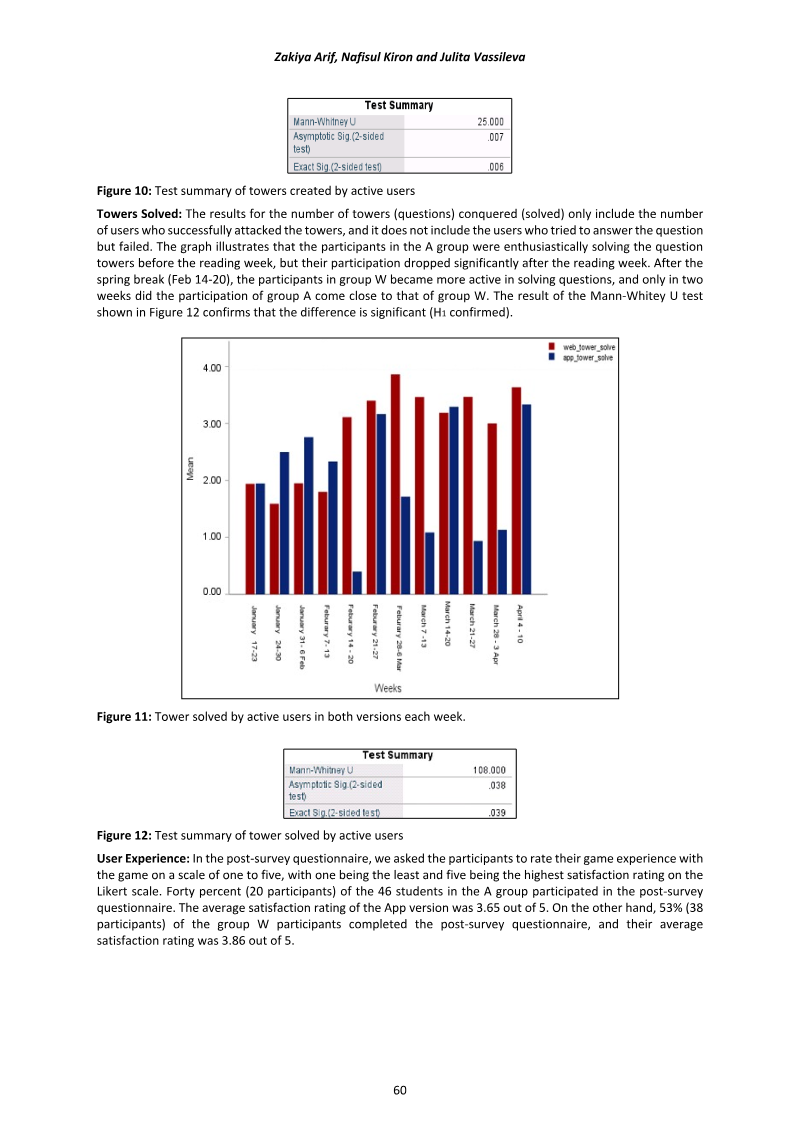
- No significant difference in weekly active users was found between the web (75 students) and mobile (46 students) versions of the Tower of Questions tool, indicating comparable overall reach during the online-only Covid-19 phase in 2021.
- Students created significantly more questions on the mobile app, with a median of 431 towers versus 385 on the web, a large effect size (Cohen's d = 1.39).
- Students on the web version solved significantly more questions than mobile users, with a median of 314 towers solved versus 214, a large effect size (Cohen's d = 1.53).
Marie's ChemLab: A Mobile Augmented Reality Game to Teach Basic Chemistry to Children
This paper introduces "Marie's ChemLab," a marker-less handheld augmented reality (AR) game designed to teach basic chemistry concepts to K-12 students.
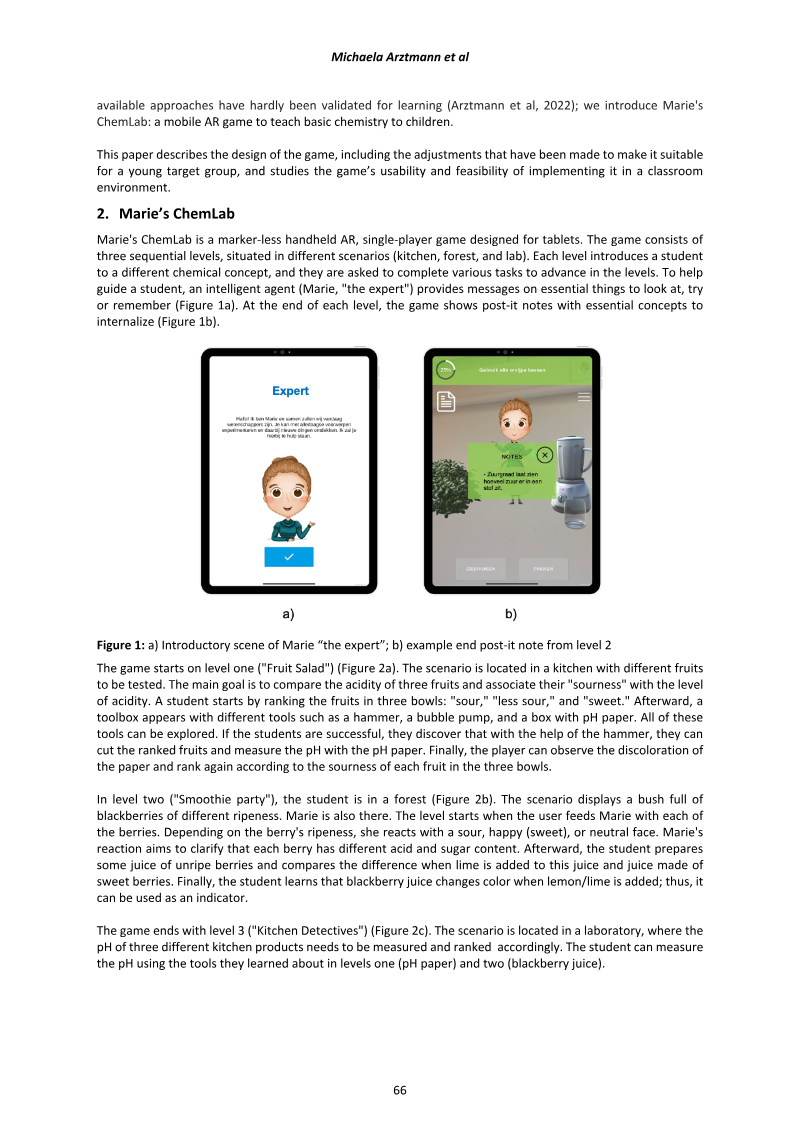
- Marie's ChemLab is a marker-less handheld AR game teaching basic acidity and pH to early secondary students, built as three sequential levels set in a kitchen, a forest, and a laboratory, with each level based on an existing classroom lesson plan to ease curricular integration.
- In a feasibility study, 239 Dutch students aged roughly 11 to 15 played the game on iPads during a single 30-minute science lesson; most finished within 20 minutes, no hardware comfort problems were reported, and all could play simultaneously with only occasional researcher help for technical issues.
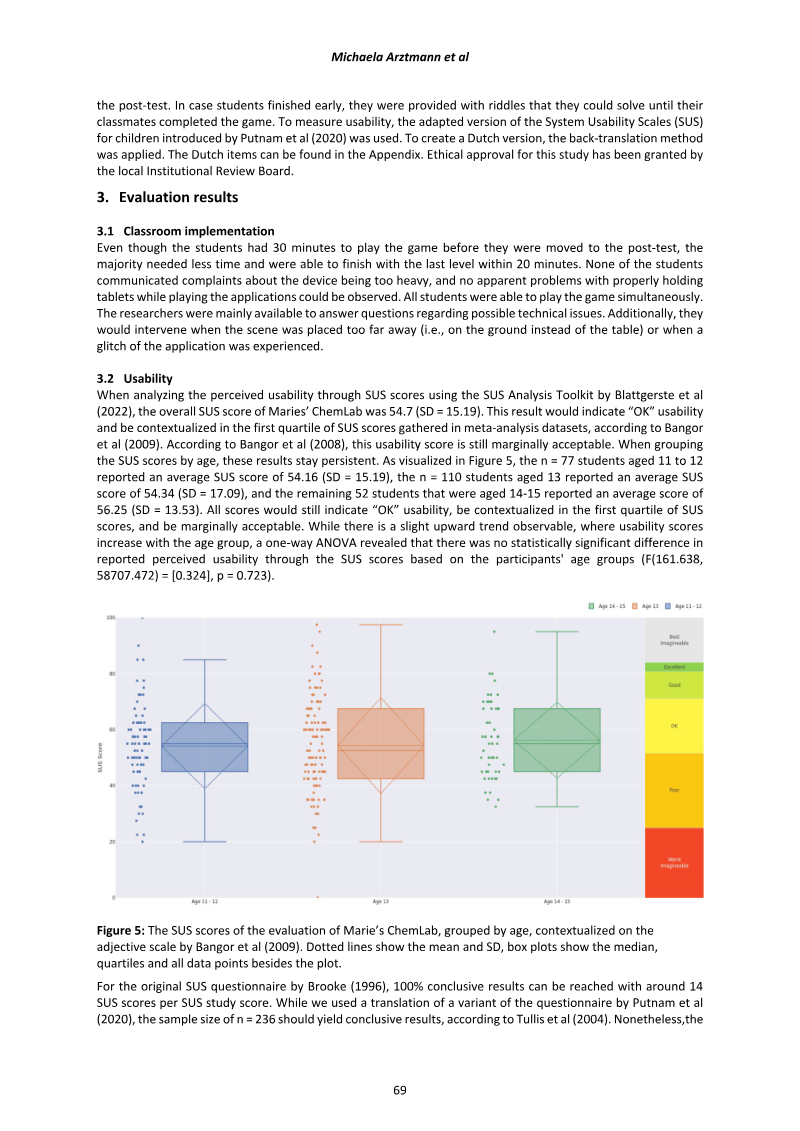
- Usability on an adapted children's System Usability Scale averaged 54.7 (SD = 15.19), a marginally acceptable "OK" rating, with no significant differences across age groups.
Designing a Mobile Game for Introducing Learners to a Soap Making Process
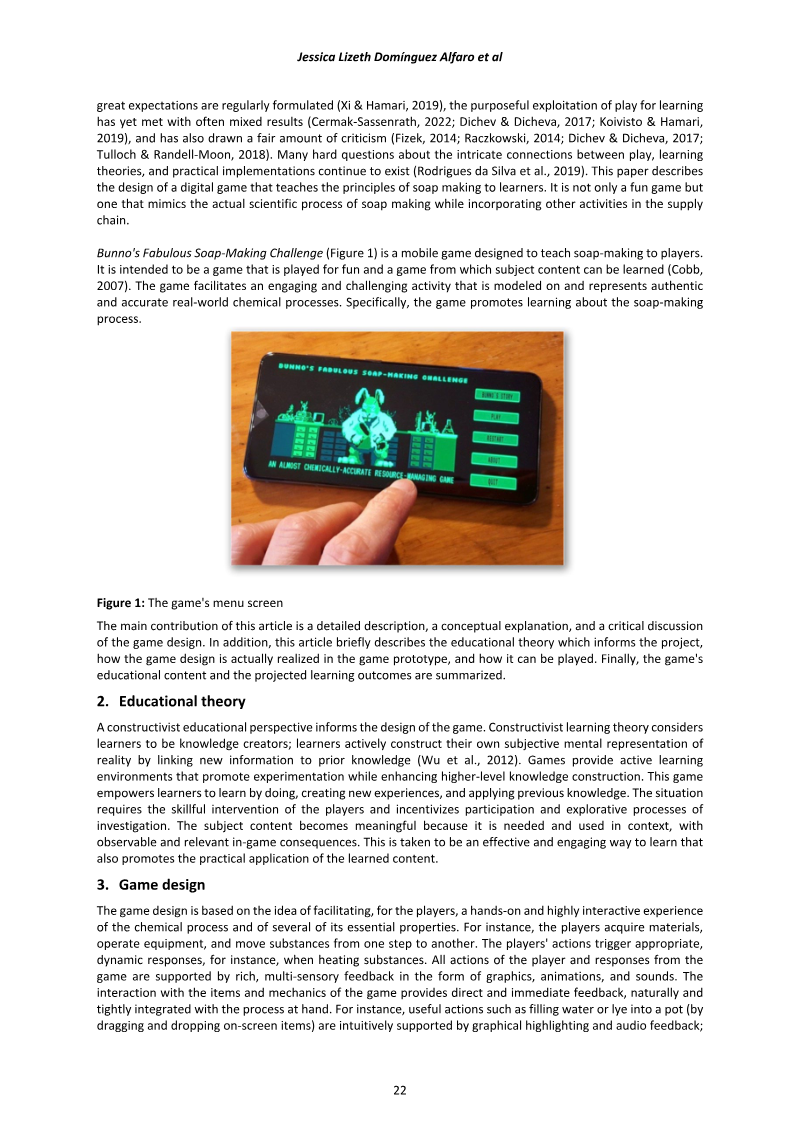
The document details the design and conceptualization of "Bunno's Fabulous Soap-Making Challenge," a mobile game aimed at teaching learners about the chemical process of soap making.
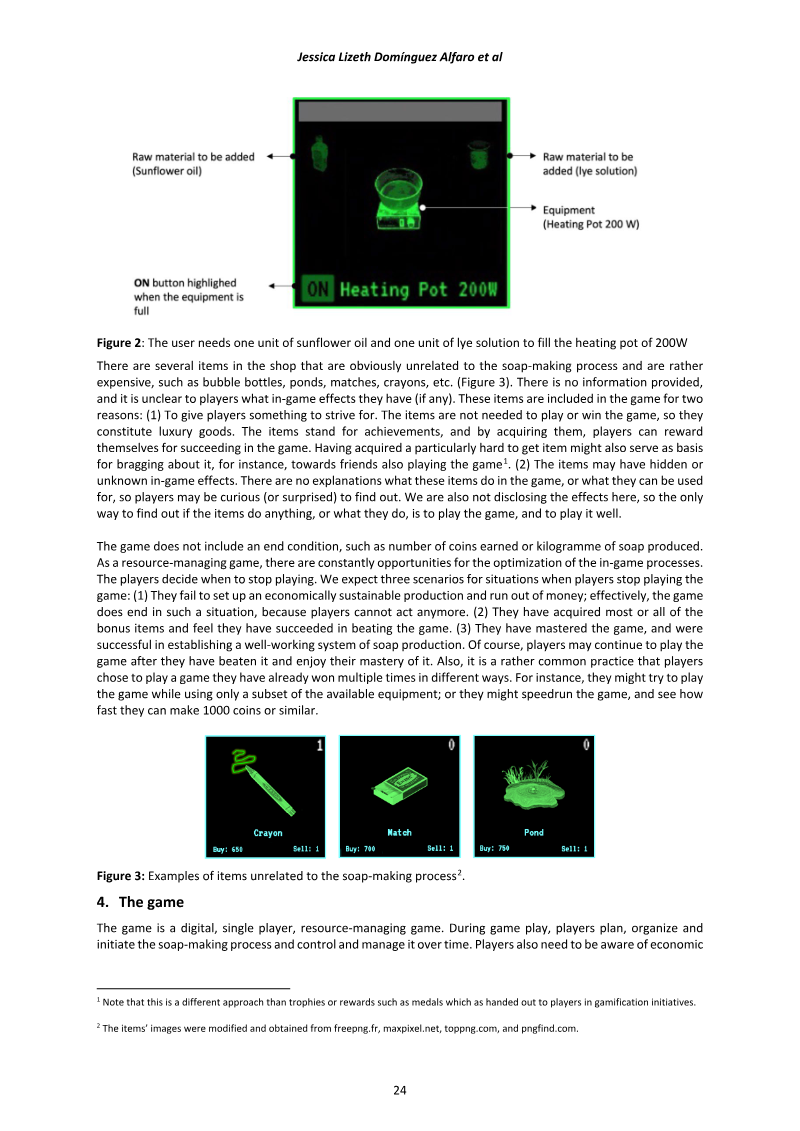
- The paper presents the design of Bunno's Fabulous Soap-Making Challenge, a single-player mobile resource-management game that serves both entertainment and teaching of the kettle soap-making process, grounded in constructivist learning theory.
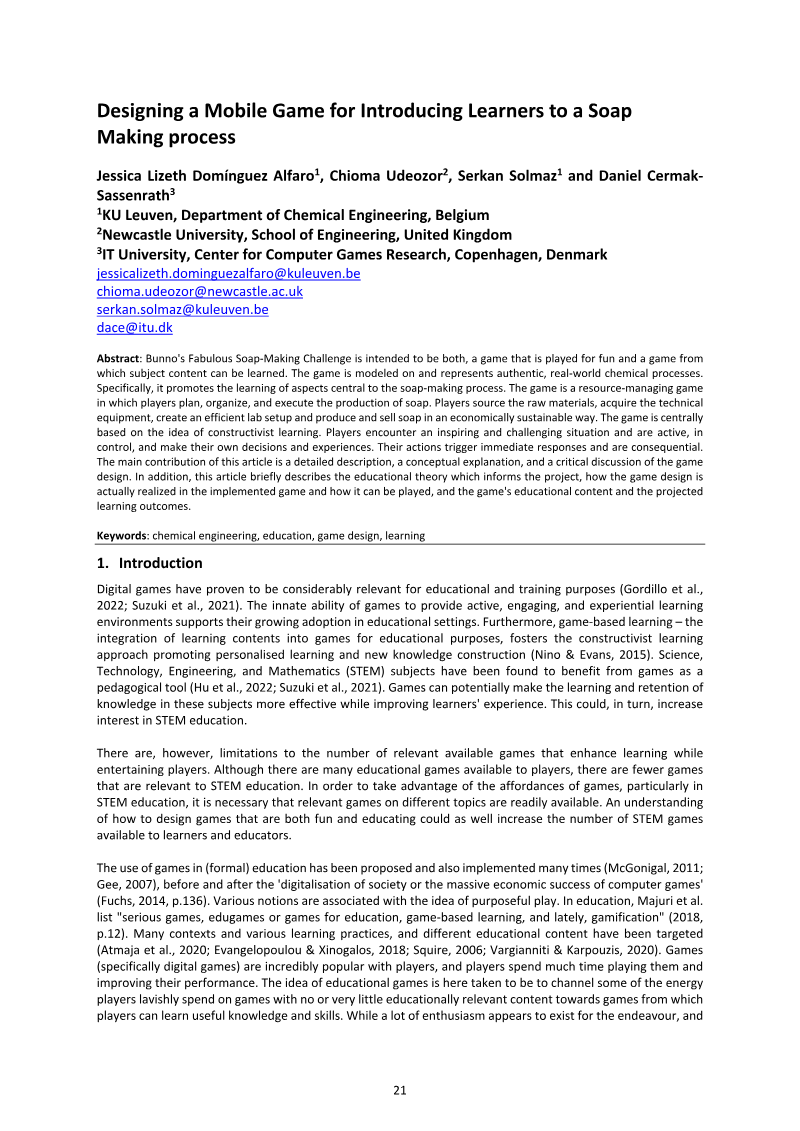
- The game deliberately trades chemical accuracy for playability by modeling only one soap-making method, limiting equipment and materials, and abstracting item properties such as removing fuel requirements and speeding up reactions.
- Known inconsistencies, such as the intermediate product 'trace' being unavailable for purchase, are acknowledged by the authors and accepted as tolerable for the sake of design.
Tenjin Dashboard vs DataVault
The Tenjin platform offers two primary analytical tools, the Dashboard and DataVault, which serve distinct purposes based on the level of data granularity required by mobile advertisers.
- Tenjin’s Dashboard provides an aggregated visualization interface for high-level performance tracking, supporting over 100 metrics including cohorted LTV and ROI.
- DataVault offers granular, user-level data access via a Redshift-hosted warehouse, enabling custom analysis and integration with external BI tools like Tableau.
- The Dashboard is organized into three specialized tabs dedicated to user acquisition, ad monetization, and SKAdNetwork performance tracking.
Cohorted vs Non-Cohorted Revenue Metrics in Tenjin
Non-cohorted and cohorted revenue metrics serve distinct analytical purposes in mobile app performance measurement, primarily differentiating between aggregate cash flow and user-level profitability.
- Cohorted metrics track revenue based on specific install dates to calculate user lifetime value (LTV) and determine the profitability of acquisition efforts.
- Non-cohorted metrics aggregate total daily revenue from all users, regardless of install date, making them the standard for accounting and cash flow planning.
- Comparing cohorted revenue per user against cost per install (CPI) allows developers to identify the exact timeframe required to recoup acquisition costs.

Strategy Case Studies: Mobile Clones, IP Ecosystem, UGC - The Metacast by Naavik
The mobile gaming landscape is currently defined by a strategic tension between agile, independent development and the massive scaling capabilities of established publishers.
- Small, agile teams can capture significant market share by adapting successful concepts for mobile-first audiences, as demonstrated by the nine-person team behind Stumble Guys.
- Successful mobile titles often follow a lifecycle of rapid development and scaling by independent teams, followed by acquisition by larger publishers to leverage infrastructure for long-term live operations.
- Major publishers like Ubisoft are pivoting toward expansive IP ecosystems, using cross-media partnerships like those with Netflix to transform franchises into centralized, multi-platform hubs.

Learnings From Downsized Social Media Games - The Metacast by Naavik
Major social media platforms are currently retreating from ambitious gaming initiatives, signaling a strategic pivot away from standalone gaming experiences toward core business priorities like community growth and augmented reality.
- Western social media platforms are pivoting away from standalone gaming initiatives to refocus on core business priorities like community growth and augmented reality.
- Attempts to integrate high-fidelity gaming into Western social networks have largely failed because traditional game experiences clash with existing user intent and platform-specific engagement patterns.
- Successful platform gaming integration requires a native approach, such as TikTok’s use of bite-sized mini-games to enhance engagement flywheels, rather than bolting on traditional game mechanics.

Secrets of the F2P Game Designer
The modern free-to-play gaming landscape has transitioned from a focus on rapid scaling to the development of high-fidelity, cross-platform experiences.
- Modern free-to-play design requires integrating meta-systems directly into core gameplay rather than treating them as secondary features to ensure high-fidelity, cross-platform success.
- Designers must balance creative innovation with the analytical ability to deconstruct existing mechanics, as there is no universal methodology for success in the current market.
- Career advancement in game design requires a transition from generalist roles to specialized expertise, eventually shifting focus toward soft skills like empathy and team management for leadership positions.
Micro Postmortems: 'Sky', 'Blaseball', and 'Space Warlord Organ Trading Simulator'
Modern game development increasingly relies on community-driven narratives and collaborative, sustainable production models to achieve both critical success and long-term player engagement.
- Game development is shifting from auteur-driven models to a 'constellation approach,' which prioritizes team health, fair compensation, and flexible collaboration to produce projects reflecting collective rather than singular visions.
- Titles like 'Blaseball' demonstrate that treating simulation outputs as definitive narrative truths allows developers to foster a living, evolving world driven by player influence.
- In collaborative production environments, selecting partners based on empathy and shared creative perspectives is more critical to long-term success than prioritizing raw technical skill.

AI Art: DALL-Eks or High-value Disruptive Innovation? - The Metacast by Naavik
Generative AI tools such as DALL-E and Midjourney are fundamentally altering game art production by democratizing content creation and accelerating concepting, pitch deck development, and marketability testing.
- Generative AI tools like DALL-E and Midjourney are currently augmenting artistic workflows by accelerating concepting and pitch development rather than replacing core creative roles.
- The industry is shifting toward proprietary, brand-specific AI models, creating a demand for hybrid 'data scientist artist' roles to manage these specialized tools.
- Sony is aggressively expanding its mobile and multi-platform footprint, evidenced by the acquisition of Savage Game Studios and the creation of a dedicated mobile division to extend flagship IP reach.

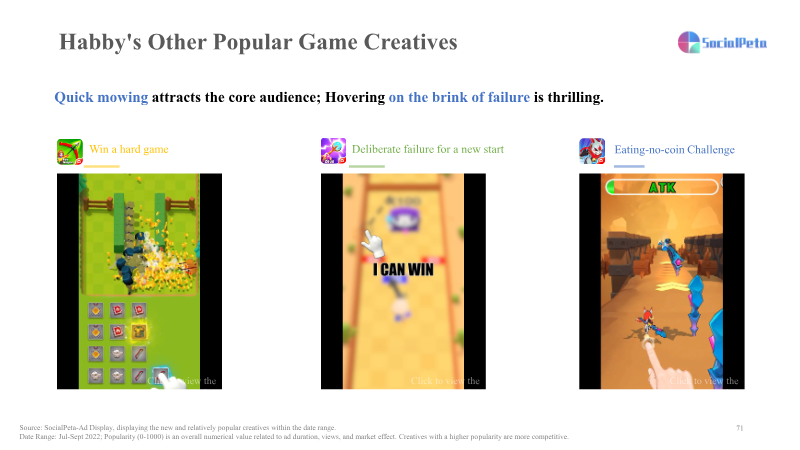
Mobile Game Marketing: Insights & Trends of Popular Game Genres Q3 2022
SocialPeta, an ad-intelligence platform covering nearly 70 countries and regions and over 70 ad platforms, publishes this Q3 2022 analysis of global mobile game marketing.
- Q3 2022 saw over 36,000 mobile game advertisers, up 16.6% year over year, while active creatives fell by over 20% in August after peaking above 8 million in July.
- The document states that RPGs were the highest-grossing genre in Q3, with over $1.7 billion in IAP, more than 25% of all IAP and more than twice that of strategy games.
- Mobile game downloads grew by quarter in 2022, with Q3 downloads over 100 million higher and a 6% YoY growth.
Writers
Games and companies
Games