Mobile reports and market data
Documents

Grit Talk with Brett Nowak, CEO of Liquid & Grit
The mobile gaming industry is currently undergoing a period of significant structural transformation, characterized by a shift toward remote-first operational models and the necessity for extreme adaptability in the face of market volatility.
- The mobile gaming industry is shifting toward remote-first and asynchronous operational models to access global talent pools and improve long-term retention.
- Industry growth through 2026 will be driven by the next console generation and strategic expansion into emerging regions, specifically the MENA market.
- Artificial intelligence is projected to be a critical tool for reducing development costs, though firms must actively manage associated copyright and public sentiment risks.
Deadly Sins of Trailer Making: how to avoid some of the most costly mistakes in videogames marketing
Video game trailers serve as critical drivers for store page traffic and conversion, yet their efficacy is frequently undermined by internal compromises and vanity-driven production choices.
- The primary purpose of a trailer is to drive a purchase decision, not to summarize the game; the goal is to get the viewer to stop watching and click the 'purchase' button as quickly as possible.
- The first 10 seconds of a trailer are critical, as viewer attention drops off rapidly; developers should test multiple versions of this opening segment, including versions without sound, to ensure it captures interest immediately.
- Effective creative briefs should include platform-specific requirements like square and vertical aspect ratios, and utilize text plates to explain game mechanics that cannot be clearly conveyed through visuals alone.

Kwalee’s Ryan Davies On Shifting Marketing Tactics To Match The Shift In Hypercasual Games
The evolution of the gaming industry from hypercasual models toward hybrid and casual frameworks necessitates a fundamental shift in user acquisition strategies.
- The shift from hypercasual to hybrid and casual gaming models requires moving away from short-term metrics like Day 1 retention toward tracking specific in-game events and granular audience segmentation.
- Expansion into PC and console markets necessitates a transition from purely performance-driven marketing to traditional brand and probabilistic marketing strategies.
- Longer game lifecycles on PC and console platforms require developers to adopt a higher tolerance for risk and move away from the immediate feedback loops typical of mobile gaming.

Here's What Mobile Developers Should Keep in Mind When Using AI tools
The integration of generative AI into mobile game development requires a balanced approach that prioritizes professional expertise over the uncritical adoption of new tools.
- Generative AI should be used to automate repetitive tasks, allowing developers to focus their expertise on the 20 percent of creative work that defines a game's unique quality.
- Developers must maintain foundational knowledge of core systems like game economy balancing and code architecture, as AI models can produce inconsistent or mathematically incorrect results.
- Generative AI does not replace traditional machine learning, which remains the industry standard for predictive analytics, A/B testing, and LTV modeling.

Baldur's Gate 3 Launch / Playtika Earnings / Dota 2 Arcade Shutdown
The gaming industry is currently defined by a stark contrast between the resurgence of high-fidelity, complex RPG experiences and the stagnation of established mobile sectors.
- Baldur’s Gate 3 has demonstrated significant commercial success for high-fidelity, complex RPGs, signaling a strong market appetite for deep, faithful adaptations of established mechanics like Dungeons & Dragons.
- The social casino sector, including firms like Playtika and PlayStudios, is experiencing structural decline characterized by stagnant user growth and rising customer acquisition costs in a privacy-focused market.
- Social casino companies are being forced to pivot toward consolidation and direct-to-consumer platforms as traditional monetization models reliant on high-spending users fail to sustain valuations.
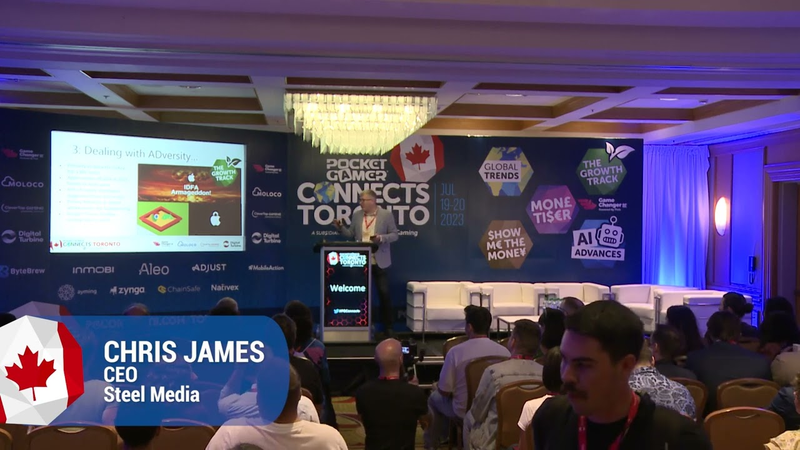
Intro to event - Chris James, Steel Media Ltd.
The Pocket Gamer Connects Toronto 2023 event, hosted by Steel Media Ltd, serves as a strategic forum for the global games industry, focusing on market trends, investment landscapes, and technological evolution.
- The gaming industry experienced a 4% market contraction in 2022, ending a 25-year streak of consistent growth, though the long-term outlook remains bullish.
- Industry development is shifting toward cross-platform integration, bridging the gap between mobile-first companies and traditional AAA studios.
- Artificial intelligence is currently transforming the sector by optimizing development workflows, enhancing NPC behavior, and facilitating creative ideation.

How to write a good prompt to generate assets for a mobile game?
Effective asset generation for mobile games relies on a structured approach to prompting that prioritizes the subject, followed by context, environmental details, artistic style, and lighting.
- Effective asset generation requires a structured prompt hierarchy: prioritize the subject first, followed by context, environmental details, artistic style, and lighting.
- Developers can maintain stylistic consistency across game assets by utilizing image-to-image generation, which allows existing assets to serve as reference points.
- PicFinder has generated over 190 million images in its first six months, functioning as a high-speed search engine for rapid prototyping and brainstorming.

Global Games Market Report: August 2023
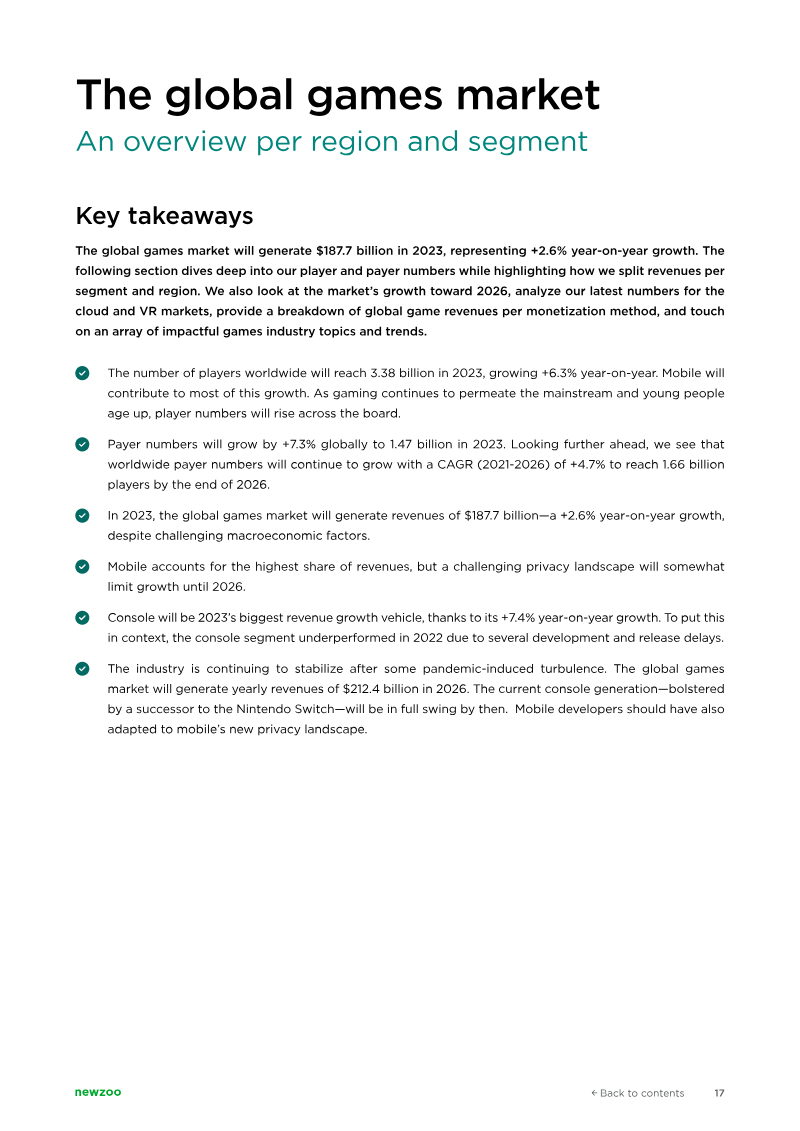
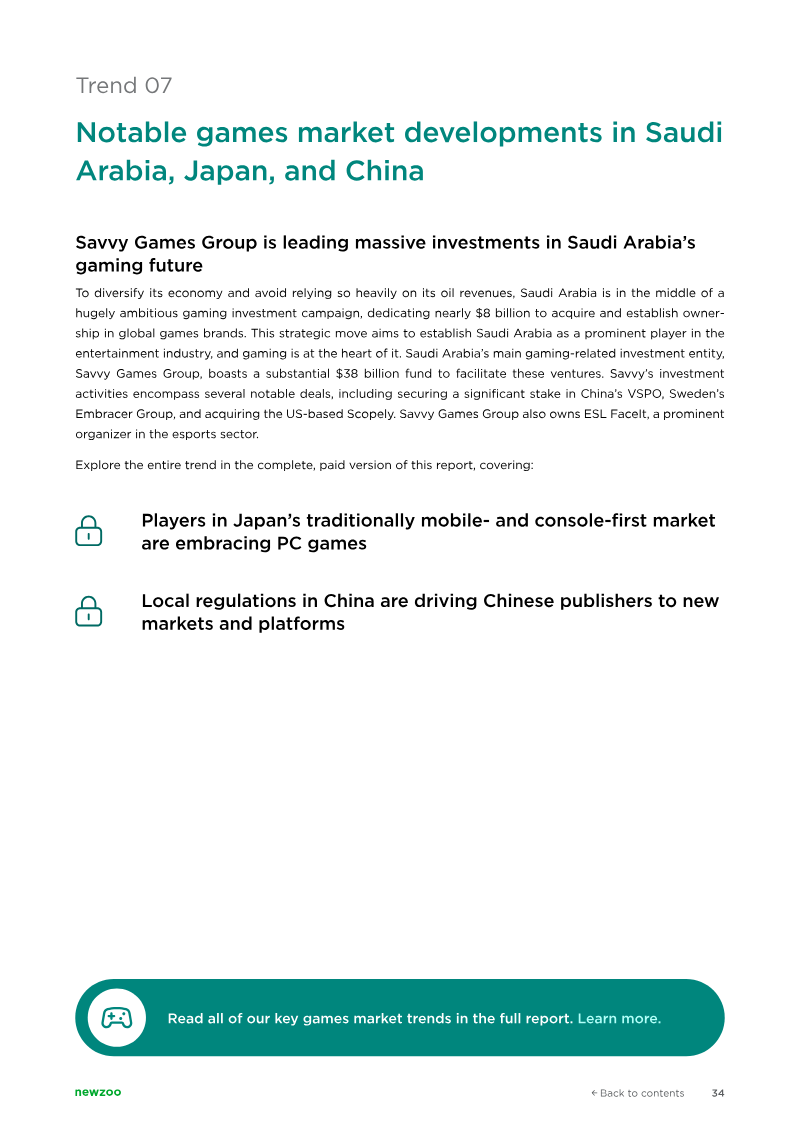
Newzoo's free preview edition of its Global Games Market Report sizes the worldwide games market for 2023 and forecasts it to 2026.
- Newzoo forecasts the global games market to generate $187.7 billion in 2023, a 2.6% year-on-year increase, and to reach $212.4 billion in 2026.
- Console is forecast to be 2023's biggest revenue growth vehicle, with revenues of $56.1 billion and 7.4% year-on-year growth.
- Mobile is forecast to grow only 0.8% in 2023, with privacy-related monetization and user-acquisition challenges cited as causes.


Monthly Games Industry Report: July 2023
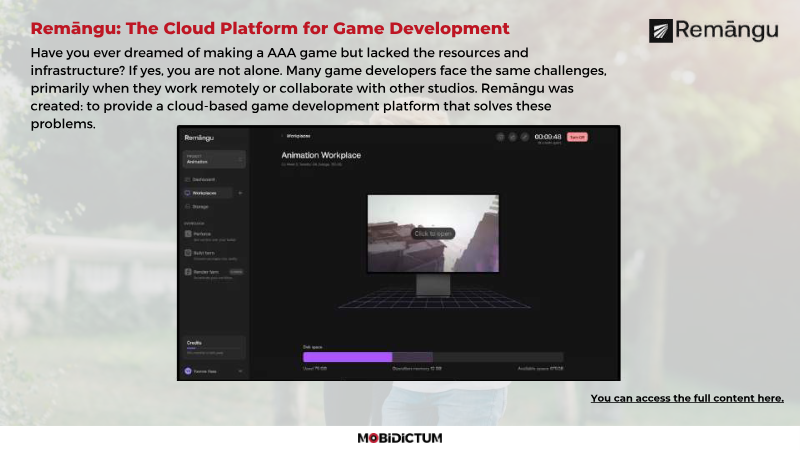
The document is the July 2023 edition of a monthly games industry report, compiled by Mobidictum and covering game and app launches, investments, market research, and articles and interviews across the games sector.
- Technavio projects the gaming GPU market to reach USD 30.59 billion from 2022 to 2027, driven by demand for PC games and gaming consoles.
- Verified Market Research projects the Global Metaverse Market to grow at a CAGR of 39.1% from 2022 to 2030, reaching 824.53 billion by the end of the forecast period.
- Newzoo and Carry1st data show mobile gaming generated $778.6 million in revenue in 2022.

Maximizing Your Player Reach by Building for Different Platforms - Lucie Lalumière, & Michael Stolls
The transition toward cross-platform development represents a strategic evolution for studios traditionally rooted in mobile gaming.
- Transitioning from mobile to cross-platform development requires a fundamental shift in design philosophy, moving from short, frequent mobile sessions to the longer, immersive experiences expected by PC and console players.
- Successful multi-platform expansion depends on early-stage research and focus group testing to ensure that monetization models—whether free-to-play or premium—align with the specific expectations of each platform's audience.
- Developers must optimize user interfaces and experiences to balance the technical constraints of mobile hardware against the higher performance capabilities of consoles and PCs.
PANEL: Creating Engagement: Marketing Tricks to Attract the Right Audience.
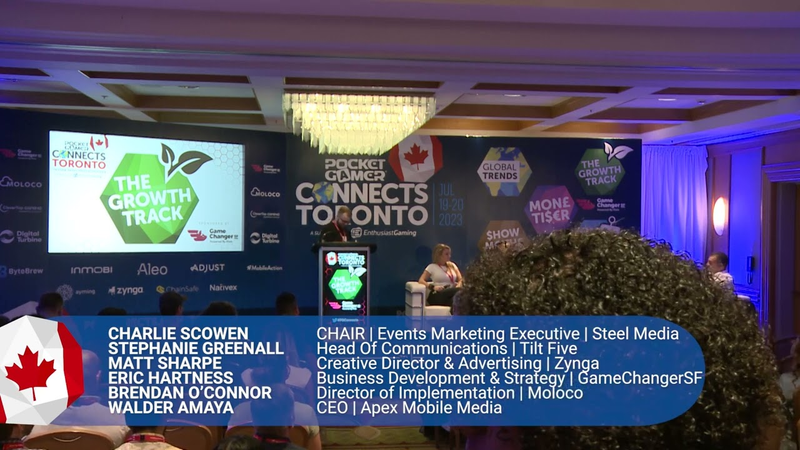
Modern gaming audiences have evolved significantly beyond traditional stereotypes, with gaming now surpassing television in total viewership across all age demographics, including seniors.
- Rewarded video advertisements achieve completion rates as high as 95% by providing players with tangible in-game benefits instead of interrupting the user experience.
- Gaming viewership has surpassed television across all age demographics, including seniors, necessitating a move away from outdated player stereotypes toward data-driven targeting.
- Privacy regulations like Apple’s IDFA are forcing a shift away from traditional tracking toward contextual targeting and high-quality creative assets.
East Meets West: How to Grow Your Game in APAC - Jamie Zhang, Nativex
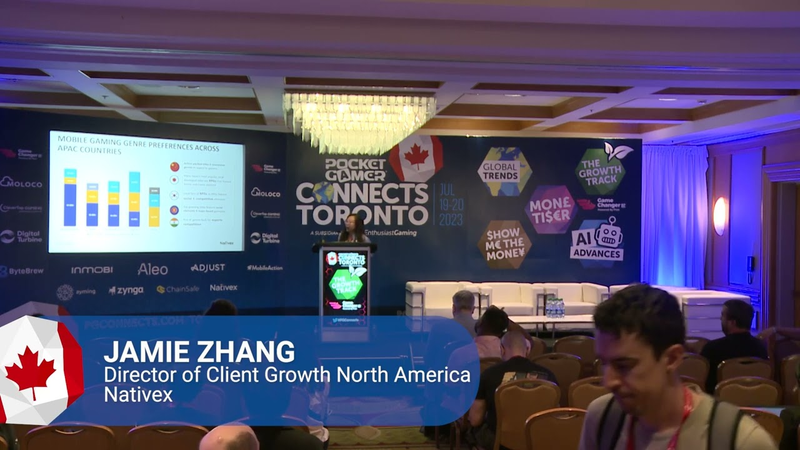
The Asia-Pacific (APAC) region represents the world’s largest gaming market, home to 1.5 billion gamers and generating approximately $88 billion in annual revenue, which accounts for nearly half of the global total.
- The APAC region is the world's largest gaming market, housing 1.5 billion gamers and generating $88 billion in annual revenue, which accounts for nearly 50% of the global total.
- Market entry is highly complex due to regional fragmentation, requiring developers to navigate distinct regulatory environments, such as China’s ISBN approval and real-name verification requirements.
- Genre preferences are culturally specific: Chinese players favor immersive RPGs and strategy games, Japanese audiences prefer anime-inspired RPGs, and South Korean and Southeast Asian markets prioritize competitive, social, and esports titles.
Writers
Games and companies
Games