1 free read left. Create a free account for unlimited reading + AI research.
Create free account
Kwalee’s Ryan Davies On Shifting Marketing Tactics To Match The Shift In Hypercasual Games
Key insights
6 takeaways- 01The shift from hypercasual to hybrid and casual gaming models requires moving away from short-term metrics like Day 1 retention toward tracking specific in-game events and granular audience segmentation.
- 02Expansion into PC and console markets necessitates a transition from purely performance-driven marketing to traditional brand and probabilistic marketing strategies.
- 03Successful studios are increasingly utilizing collaborative decision-making processes to leverage internal expertise as a sanity check for strategic risk-taking.
- 04Longer game lifecycles on PC and console platforms require developers to adopt a higher tolerance for risk and move away from the immediate feedback loops typical of mobile gaming.
- 05Despite technological advancements, the core driver of success remains high-quality design and engaging mechanics, as demonstrated by the performance of titles like Tens!.
- 06Artificial intelligence is becoming a critical tool for streamlining creative production and accelerating development cycles across the industry.
Ask AI about this video
Transcript
[Music] thank you hello world welcome back to the pg.biz podcast with your hosts myself the ever wonderful Brown baglow and joining me as always the mesmerizing piggy insults hello Peggy how are you today I am well Brian it's the beginning of a week and it's a dive into a great topic today so I am raring to go if you have Scottish games week right around the corner how's it going in your world it is a lot of fun I am not running around with my hair on fire screaming um no that is not what is happening it's uh all this caramel is plastic but um we are kind of busy yeah it's there's a whole lot happening and we've got five events happening in three cities over the course of a whole week with industry with film with education with policy makers and politicians and all the fun
of the fares so if you thought the organizing game developers was hard work try the politicians I dare you I don't know the concept of herding cats popped into my mind for a moment but I thought I wouldn't do it I wouldn't go there there's an equivalent Scottish saying which is it's like pushing treacle up a hill to indicate that things may not be as fast as one would wish so it's a bit like pushing trickle up a hill but I'm here we have a fabulous guest we're recording a podcast so I have no complaints for the next 45 minutes absolutely not and far from being um slow or difficult this is going to be a breeze because I love these types of shows when we can talk to someone who is a doer a maker we have a guest who has just received the 30 under 30 award by Performance Marketing World it recognizes outstanding achievements and contributions to mobile game user acquisition our winner our star our rock
star maybe even Ryan Davies quali's head of digital marketing Ryan great to have you and great to get the party started with you thank you very much that almost that was a winning introduction we're going to keep that one in the bank forever we are pumped we are psyched we have high energy uh casting in on Brian's also high energy as well from what he's doing so yeah we are all together the band is here Brian it's true it's true and it's it's very much a super group I think for The Mobile Generation so Ryan thank you so much for joining us and I and I have to ask what was your reaction on hearing that you are one of the all-time Hall of Fame Legendary Heroes of old no it's not something that I was too involved in I had much awareness of so it was definitely a cool surprise to kind of get that information through and it's definitely an amazing thing I think in a way I was actually pleasantly surprised partially because having seen the content the Performance Marketing world have put out over the years and also actually about 30 under 30 of us over
the years it actually is surprisingly to me hadn't had so many mobile marketers maybe or or maybe gaming marketers um which you know considering it's such a huge area of Performance Marketing in our industry generally kind of always a bit of a surprise so you know it's good to kind of fly the flag for mobile for gaming definitely as well because you know there's so many amazing people that are working in our very specific industry so yeah this isn't this neat to kind of represent that in a way thank you for for agreeing to be on our small podcast after your you know massive win so we we totally appreciate it well you know it didn't feel like a big deal to me too much until you've just gone into that heaps of Praise so I want to stay with the award for a moment because you got it for outstanding results in UA and revenue growth some interesting numbers are not just the fact that it's 30 under 30 right
you've had six years of quality and the other numbers that stood out a portfolio of over 45 games AT Quality and and we'll get to it in a moment as well you know a massive over 1 billion installs so I have to ask myself and ask you of course Ryan what talent or skill have you drawn on to execute on so many campaigns so successfully I think definitely when you're relatively Junior as I had been at the start of working at quality there's maybe maybe the most valuable skill in a way you can have this is an element of diligence I think you know there's so many elements of being ineffective UA manager Performance Marketing team member but I think that just a willingness to keep an eye on activity to understand your day-to-day activity to see what's happening in order in order for you to have a better sense of initiative around the data and
the activity you're seeing so I think like a willingness to really jump into our activity to understand what was happening all the time that's something that I leaned on a lot during my earlier experiences in the company just that eagerness and that diligence to kind of pay attention to the data to see what was happening with all our activity and all our campaigns that I think got me through that initial period let's say of Learning and Development um you know open opened me up I guess to to more skills that I would then pick up on and learn as I went so yeah that was definitely a big part and I think maybe there's a there's a little element as well of of when you are a bit more Junior you have almost like a accidental ability to take a bit more risk right like you haven't you haven't seen loads of things fail and loads of things succeed so you're basically willing to just uh take those opportunities take those chances which I think was hyper
casual at that time so this was maybe 2018 2019 really when the genre started to flourish that was a useful skill to you know and and fair to say quality as a company is is risk friendly right so the whole the whole company merged well then with some of my more Junior Antics and experience to be able to take some risks and I want to pick up on Peggy's point because you know quality does say is you know we've had over a billion downloads in the studio well let me have started in hyper casual now is extending out into into you know hybrid casual casual you know it's quite a broad range so how do you kind of accommodate those different approaches to development to user acquisition you know how do you maintain focus with an increasingly Broad and diverse portfolio from probably the initial part of the equation is always to identify let's say the commonalities and the differences right so you know those genres
obviously have plenty of commonalities there's things that we can learn from all of our hyper casual experience and bring those into the hybrid and Casual world you know whether it's the way we're handling data um information how we're making predictions about what we're doing there's things that we can pull from all of our experiences there but at the same time you have to then take stock of okay what is going to be different within this environment in talking to other people and learning and testing some games what what information have we are we missing what do we need to pick up on the develop I think identifying those processes and then trying to learn on those I don't know to maybe give an example would be hyper casual super famous for you know a key part of the process is how are we discover in games we're using marketability tests to kind of find low cpis you know that's the kind of classic uh hyper casual method you know that's very different within a casual or maybe even hybrid casual space you know that
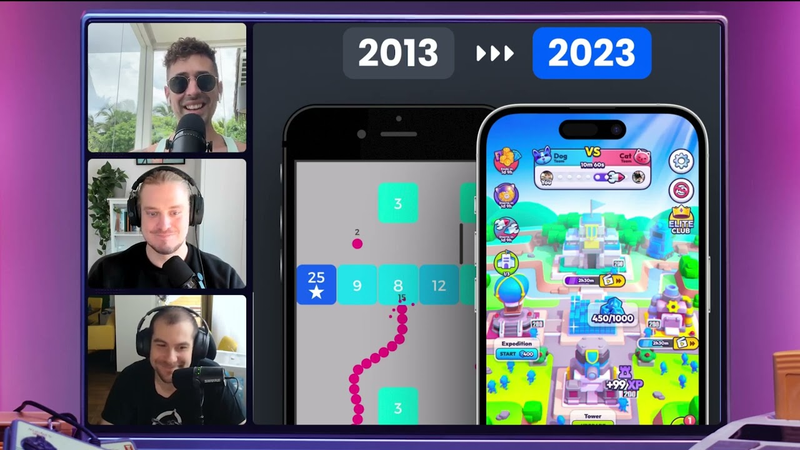
maybe that's slightly less important or certainly the process for finding multiple games or affected games would be very different so okay that's a that's a new area where we need to develop the new skills develop some new ideas potentially bring in some new people to fuel those ideas where do you see the the future of hyper hybrid and Casual you know going or do you think it's converging are we seeing more of a Divergence it's a messy thing right yeah yeah I'm really interested to get your team yeah I'm just just naming it that's like Step One is figure out what we actually mean when we when it's when we're thinking of these kind of games and what what will you believe behind them um but I think in a way that then determines a bit of what we think is the future for these genres and I think the truth is that basically they are conglomerating to some extent right so um you know it's indisputable right now that hyper casual as it existed two years ago three years ago is definitely not the same but I think you know rumors of its demise have been
greatly exaggerated um you know basically there's definitely and this appeal right now to say that hyper casual is dead but I think in reality it's just going through that same Evolution now I think we're hitting this phase where the games are more elaborate and that's the key element of of what's being added into the into the like potion I guess um so now when people talk hybrid a lot of time they're talking about essentially slightly slightly more dramatically more evolved hyper casual games right um so I think understanding that is important you look at something like Arch Heroes what everyone always says it's like the classic archetypal hybrid game but I I look at that game now and I play that and I think this is just as if not much more complex than what most people would regard as like a casual title or like a Candy Crush
um so you know I think our definitions have become pretty hazy and I think the key now is just making making longer tail games that are more effective for a broad user base that's definitely our big Focus let's just stay with the idea that it's just evolving we won't say is hyper casual there not there it's just it's just moving everything's moving everything always moves in games but complexity that also means a challenge for your UA as well because you can't go for the quick wins you have to have a different approach how have you matched sort of the innovation in the games with the innovation in your marketing to find those players to keep those players maybe a couple examples would be that through hyper casual over the years you wouldn't you know maybe the type of campaign you would be running would be Beth um it wouldn't be so heavily based around tracking events or running event based campaigns
um so like identifying uh key events within your games that are basically going to attract the right kind of users like we would dabble with this in hyper casual but in reality optimizing towards return on ad spend ad revenue and things like that would generally be working better working now in a space with say more in our purchase Revenue potentially we have to look at running campaigns that are basically yeah looking looking less for direct Revenue within a game and more towards you know what does a good user look like what kind of events are they tracking are they logging what are they doing in the game so that's an example right of them okay now we need to start figuring out what events really work in our games what are we trying to track what we're trying to find and so you know in a way this is quite simple quite basic user acquisition it's things that people in the casual and and mid-core and hardcore space it's been doing for a long time but us as a company we need to evolve in that direction it's just we know we know we have a comfort level we're being able to run and revenue campaigns but now okay
we need to evolve a slightly different wing and slightly different arm but I think same to say we had some confidence doing that because we we know we're good at the running UA if it had driven games so we had some confidence being able to direct ourselves in this slightly different direction One Quick follow-up you said you know it's about finding those players that's always also changing I've asked this number of times to different marketers over the years you said you want to net an Engaged user engaged player what does that look like truth is I think most successful either hybrid or other games out there really are bringing in a variety of different user types right and the key is to be running campaigns that work for those that are segmented user types so I think probably that I strength and again is to be able to but probably the best games are ones where you can run and appeal to a large variety of different audiences really rather than hammering massively into one very specific Niche but I think
if you're going to have a successful hybrid in particular where you're maybe trying to keep UA costs like a cpis maybe let's say or things in that regard those costs like down a bit I think trying to keep a slightly broader audience and find these different audiences is quite important quality comes from a mobile background you know it's like your entire portfolio was at one point mobile um and while we've talked about expanding out into other genres you're also of course expanding out into different platforms and so you know you you're now looking at browser gaming through a partnership with crazy games and so how is that changing the studio and what demand is that making on you with regard to UE and your approach browser games is definitely an interesting one for us and as you said we're partnering with crazy games on we actually have a PC console division as well so that's another significant area of growth for us at the moment to your question of like how does that how does that kind of Jive over the UA or Performance Marketing approach maybe and
the question the answer to that really is like not as easily as with uh direct mobile right so it was a really fascinating world to try and learn and pick up and understand a bit more because you know truth is mobile is very well set up and organized for a performance marketer right like all the okay like iOS 14 and everything like that to the side it's really been set up and placed now and it's well built for people like me to kind of really get our teeth stuck in and work very effectively when it comes to let's say browser games or PC console especially that setup and that environment is not as conducive to a performance marketer there's a lot less tracking there's a lot less information um so it's much more difficult to be running effective campaigns and to prove that you're running effective campaigns you know it starts to Verge much more towards the you know more traditional brand marketing or like um you know probabilistic marketing
basically so that has been an interesting element like like my you UA team does handle some elements of what we do with PC and console but again it's much more about kind of getting your name out there getting the brand getting the visuals of the games out there than it is about driving if you're engaged performance in the way that we would for a mobile game so it has been really interesting to kind of understand some of these limitations but the fun now is you know trying to figure out okay because there is a bit of fun there right it's like compared to the mobile where it's kind of laid out to us on a platter it's like okay you've got to be a bit more hacky you've got to try and figure some some different ways to get get the game out there and make some noise about it basically so yeah so those are interesting you know it's like not UA in a traditional sense of how I have learned but it's fun I love the fact that traditional UE extends all the way back to 2017 or you know possibly even earlier um but yeah old school oh yes but so to
kind of flips out on its head right now are you finding any commonalities are you finding any ways to bring that learning back into Mobile or you know do you do you have a sort of a point where both sides are feeding into some new ideas yeah well I mean maybe one very direct example is that we do actually use our mobile games to advertise our PC console so like we do run ads for our PCC games within our mobile games um and I think because I think maybe there's a bit of a perception that those audiences are wildly different but that's definitely not true I mean you know you can't really think like that in 2020 I think just to see these like segmented mobile and PC console audiences just not true like there's plenty of overlap and I think there is room to to take advantage of it so yeah there's some room for overlap there but I think really the the technology behind whether it's browser-based gaming or PC and console Steam and and the other platforms yeah this doesn't Tech work to
be done there on that part to get that in line with the mobile space really so really it's about understanding that players are on the platforms they choose basically and as you said yourself there are these opportunities on different platforms different surfaces all the time what have you explored or have you explored for example uh you talked about steams how are you is there a variation on the steam store there may be outside of the app on Smart surfaces with uh Nostra for example I'm hearing a lot more about that what what are some ways that you are reaching these audiences across all the platforms all the surfaces definitely most of our work so far is centered around the ones we've discussed so definitely steam being a good example like PlayStation and Xbox Nintendo switch um but then also the browser-based ones we talked about we've tried plenty of app stores in China you know like I think like so many people have to varying degrees of success it's always a
Hot Topic and definitely a key thing to talk about where others are maybe Distributing their games and what platforms are available and what's happening and so when we've got such a variety of games and so and such a huge back catalog of games as well that we very actively sustain we do have to kind of keep quite well focused on those IOS and Android platforms where we are making all of our money so um so yeah you know these other platforms are important to us and definitely with a PC console so Ryan you are I mean you're not working on this alone you lead a team of more than 50 people I believe and you're handling hundreds of thousands of dollars or pounds in Daily spend so my Spanish is tingling here and telling me that Tim uh with great power comes get great responsibility a lot of challenges potentially some nightmares and I'm I'm imagining some teachable moments and life lessons so can you can you share any stories from the front line with us in terms of the user acquisition day-to-day uh good or bad it's worth
clarifying that basically my my role basically oversees but we can say like like Performance Marketing and digital marketing which includes our growth so UA team creative as well as like product marketing ad monetization which all kind of you know these these things all kind of fit together my biggest lesson I suppose that I've um faced is is really something obvious but finding finding very good people to lean on is like such a critical and important part of the day-to-day like I like to give an example of this is that like because because I started equality six and a half years ago or so and um was the one individual person running marketing I definitely leaned towards and had a tendency to like over focus on doing things myself it's a classic uh like young manager problem right that you kind of um try to take on too much responsibility for yourself maybe don't put enough on the people within your
team even if you trust them um and so finding those good people that you do trust and really starting to lean on them and feeling like it's comfortable and okay to lean on them has become something that I really had to pick up and learn and adapt to um I think that has helped dramatically just my team was growing gradually over the last six years and you don't really take a stop and take stock of the fact that you are now in charge of you know 50 people that there's 50 plus people in your team and I didn't really until recently take stock the fact that okay I am like a leader within this organization um I'm a leader for these individual people so I have to ask Ryan to go back to one of your earlier points how has that impacted on that somewhat gung-ho attitude to risk that you maybe had earlier on in your career um that's a really good question
I think basically I still have it but I have a better sounding board for evaluating whether that risk-taking desire is sensible or not right so um I think just through accidental training and working a hyper casual I definitely still have that like let's go for it kind of Desire or mentality that I think is not hugely common in a mobile industry partially because we do usually have so much information and data and we want to run tests and we want to understand things in a very clear way which don't get me wrong I do fundamentally want to do that but I think sometimes that's a little at odds with a desire to to press on and learn quickly and understand things rapidly but now I kind of you know I'm in a position where luckily I can have that thought process but speak to people more openly not have to rely on myself and my own thoughts so much and just instead have those
discussions and have those people that will give me a very realistic and and logical uh discussion process so that helps long live the sanity check exactly and I'm going to ask about um the sort of the the fundamental balancing act when it comes to UE which is balancing your data-driven methodologies with with creative and creative thinking and it's a reality for that you and pretty much everyone working in UE deals with is that you have to make investments without definitive data so how did you get your your head around that and how have you approached it so successfully with uh quality yeah so part of that I think is and it's all kind of ties together with the willingness to take risk element right as I think it's trained a bit from being heavily involved in hyper casual is that you do learn very quickly and I mean
that from essentially two different like directions but for one thing when you're running hyper casual games you get data back very quickly you learn very quickly about what's happening with the games right like within day on day zero day one you're already starting to see if you're making your money back in an effective way and so historically for us as a company we've been able to react and really rely on the data and not having to make too many snap decisions because we can look at how things are reacting quickly so that's that's been good but then also that process means you you learn quickly as individuals too you pick up skills very quickly because you're launching games all the time you're failing Lots because that's kind of what a lot of hyper casual is um and then you're picking up skills and so I think that is again going to help us well into this like new world that we're kind of working in with hybrid and and Hyper I think we we want to understand things and learn things very
quickly about our games now will we be able to do that to the degree we have with Hyper casual absolutely not there's no way like we can't you know when we're looking at much longer lifetime player periods we can't be looking at day one and making all of our decisions about that right like that's just not going to be feasible and possible anymore so you know when we talked earlier about uh developing new ways of doing things and trying to understand what's the differences that's another key aspect right we need to be looking Way Beyond day 30 that we might have prioritized for hyper casual so so basically we you know to answer a question we we haven't had to take so many risks because we've had such immediate data but now we're coming into a world where we do need to be taking a bit more risks so do you have any lessons any kind of takeaways for anyone listening who is not as comfortable with working on hunches or you know instinct
um from your own background one one thing I would say maybe that does answer that is that it can be really easy to ignore or not fully grasp very clear positive signals if you see some data as information it's clear positive you know mo like there's an instinctive reaction to be like yes okay this is the right direction but I think sometimes people do that and do it then with a degree of hesitancy almost it's like I almost don't believe how good this is or that this is definitely the right direction you know but I think there's there's some value and again it's kind of trained a bit from hyper casual is that if you do see something good like you really really really should put as much as you can behind like chasing that good direction because usually you've done the work to know and understand when a good thing looks good and like you can definitely question yourself endlessly of like okay should I follow that signal could I have gone down that direction you know I was that
great day one retention number really the most important thing I should have been thinking about as an example but I think there's so much to be learned and gained from going down that path and from like pushing on that like good sign that it's it's worth it I was looking around at what quality has been doing other than you know over a billion installs and all the great milestones and I saw something and it was interesting for me because it's not just a program it has an incentive because usually you throw something out there and say oh yeah we're going to do this and everyone's going to do it and then no one does it but you have a different approach at quality artificial intelligence is what's called quality artificial intelligence which is about hey anyone who has great ideas about how they can work with AI or enhance AI or bring it to Innovation I imagine also in UA as well um you know share those ideas innovate and even get incentives for it so I'm wondering have you already come up with an idea what do you think of that
program so actually just democratizing that to some extent and just opening up to the whole company in different aspects and different areas to basically say like what have you been thinking about what weird ideas if you come up with that we could implement this certainly within my creative team you know it's probably like the most obvious and easy place to be using various tools like mid-journey to to Really build out our assets or understand how we could like enhance um certain elements of our marketing materials our marketing tools and making those look more interesting with a slightly more minimal work um one of our casual games actually that we're building out at the moment basically uses um like our AI tools to flesh out and develop some of the with the characters scenes and elements within the game so certainly on the art side it's something that we've leaned into but yeah like there were quite a few weird um interesting ideas that kind of came up in the course of it but yeah it's a neat idea and definitely I think helps help feel how we could be using it
but I think like everyone with AI at the moment finding exactly the right tools for the right time and it is not always super easy but before we wrap up Ryan we've got a couple equations that we ask to all of our guests so the first one is what game are you playing right now so I've been playing like a lot at the moment of chrome Valley Customs by space ape I do think they've really I I feel a bit like I think I read about them basically going for like the mail Market within like a match 3 context and I do it makes me feel like a bit of a um cliche that they have totally gripped me in through like a car based game with matchery and if there's nothing wrong with being part of a demographic so we're going to open it out next the other question is is favorite game of all time basically The Witcher 3 is my
favorite game of all time but but uh but tens but tens which is a quality game is probably my favorite mobile game of all time and that is not one of base well-named game known games and it was kind of pre-hyper casual but it's definitely like our smartest game actually I wasn't aware of tens ion if it's that I think drop a good puzzle okay sold so there you go Ryan that's another two downloads so that's 10 billion and two so you can take that back if anyone asks you to justify the podcast job done we really appreciate having you on the on the podcast and as I say you know please do come back or or send the ryan007 chat book whichever whichever works for you definitely will thanks for having me I have to do a plus one here great to have you on the show and also thanks for sharing the real view into what it is to uh to build a leadership style and to lead a team of 50 plus
um it is you know quite a task yeah thanks guys yeah this show is all about how to do your job better how to make an amazing game how to Market it and you have a say so if you have a story or know someone we need to shine a light on then we would love to hear from you we want to hear from you we want to reflect the reality of the mobile games Market in all its wonderful complexity and strangeness so if you have any suggestions for us if you have any feedback for us you can always get in touch you can email us at podcast pocketgamer.biz you can find us on Twitter at PG Biz and you can reach out to us through thepocketgamer.biz website if you're interested in listening to all of our podcasts you can find them at pocketgamer.biz forward slash podcast and we would love to hear your thoughts on future shows and we've got you covered on all the major platforms so subscribe to the audio podcast as Brian
said look for us on YouTube if you want to read it hey you can do that too because we have a companion post for you as well on thepocketgamer.biz website tune in again for the next edition of the perfectgamer.biz podcast and we look forward to speaking to you in the near future until then I'm Brian baglo I'm Peggy Ann saltz and not throughout until next week foreign
Summary
The evolution of the gaming industry from hypercasual models toward hybrid and casual frameworks necessitates a fundamental shift in user acquisition strategies. While hypercasual success historically relied on immediate, granular data and short-term metrics like Day 1 retention, the current landscape demands a more nuanced approach. Modern marketing must now prioritize tracking specific in-game events and segmenting diverse audiences to maintain profitable growth as game genres converge toward greater complexity.
Expanding into PC and console markets further complicates this transition, requiring a move away from purely performance-driven tactics toward traditional brand and probabilistic marketing. Because these platforms feature longer game lifecycles, developers must cultivate a higher tolerance for risk and move beyond the immediate feedback loops common in mobile gaming. To navigate these challenges, successful studios are increasingly relying on collaborative decision-making processes that utilize internal expertise as a critical sanity check for strategic risk-taking.
Technological integration, particularly the use of artificial intelligence, is becoming essential for streamlining creative production and accelerating game development cycles. Despite these technical advancements, the core challenge remains the pursuit of high-quality design and engaging mechanics, as evidenced by the success of titles like Tens!. Ultimately, the industry’s future hinges on the ability of leadership to manage increasingly large development teams while balancing data-driven diligence with the creative intuition required to sustain long-term engagement across diverse platforms.














Comments