Mobile reports and market data
Documents

2 Mistakes you are Making With IAP & how to fix Them - Athena Peters, Mobile Game Doctor.
The primary objective of this analysis is to identify and rectify two critical errors commonly made by developers transitioning to or managing in-app purchase (IAP) models within the mobile gaming industry.
- Success in top-grossing mobile games relies on rapid, data-informed iteration cycles that continuously test and refine UI/UX elements.
- Developers must isolate variables by testing only one change at a time during A/B testing to ensure the validity of data regarding retention and conversion rates.
- Monetization should be optimized by segmenting the player base into detailed personas rather than relying on generic demographic data.
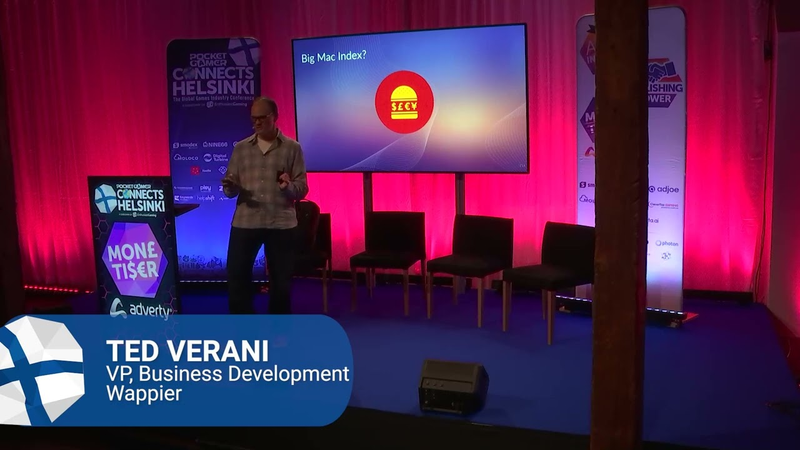
The App Store Evolution Making the Most of Apple’s Pricing Upgrade - Ted Verani, Wappier.
Apple’s recent App Store update represents a significant shift in mobile monetization, offering developers unprecedented control over global pricing strategies.
- Apple’s App Store update provides 900 price points ranging from $0.29 to $10,000, replacing static currency conversion with granular, country-specific pricing across 170 storefronts.
- Localized pricing strategies can drive a 10% to 45% increase in payer conversion and a 15% to 40% uplift in overall in-app purchase revenue.
- Optimized pricing models improve player engagement metrics, specifically increasing daily activity and accelerating the velocity of both initial and repeat purchases.
Bet on Psychology How to Leverage Player Behavior in Ads - Ekaterina Rudnichenko, AdChampagne.
Effective mobile game advertising requires shifting focus from traditional demographic targeting—such as age, gender, or geography—toward the psychological motivations and emotional drivers of the player base.
- Shift mobile advertising focus from traditional demographics to psychological motivations based on Richard Bartle’s player types: Killers, Achievers, Socializers, and Explorers.
- Tailor creative assets to specific psychotypes: use competitive showdowns for Killers, progression visuals for Achievers, community-focused content for Socializers, and narrative discovery for Explorers.
- Implement a disciplined testing methodology by launching approximately ten creative hypotheses simultaneously, as typically only three or four will yield successful performance results.
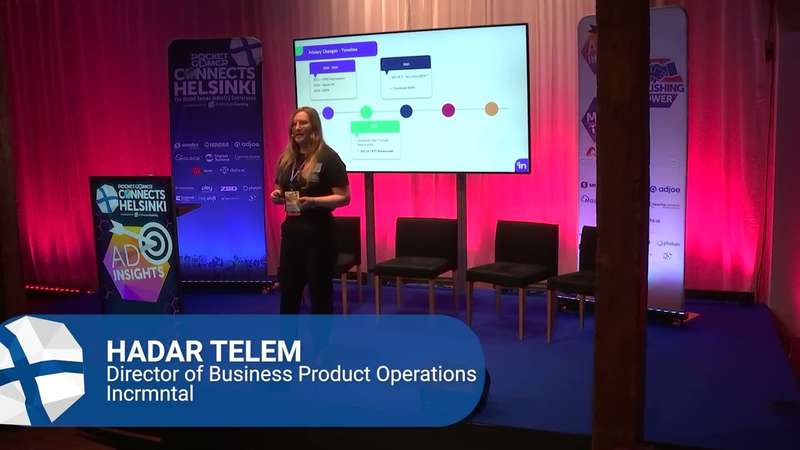
Measurement in a Post Privacy Era - Hadar Telem, INCRMNTAL
The mobile advertising industry is currently navigating a significant transition from user-level tracking to privacy-centric measurement.
- The mobile advertising industry has shifted from granular, device-level tracking to a privacy-centric model following the deprecation of the IDFA and the introduction of Apple’s iOS 14 ATT.
- Marketers must adopt a hybrid measurement framework that integrates last-touch attribution, incrementality testing, and media mix modeling (MMM) to compensate for the loss of user-level data.
- Last-touch attribution should be reserved for real-time tactical optimizations, such as refining creative assets and audience targeting.

Fireside Chat: Learnings & Best Strategies for Unlocking Revenue Potential via In-Play Ads.
In-play advertising represents a strategic evolution in mobile game monetization, shifting away from intrusive interruptions toward integrated brand placements that preserve user experience.
- In-play advertising serves as an incremental revenue stream that preserves user retention by replacing intrusive, disruptive ad formats with integrated, non-functional environmental assets like billboards.
- Successful implementation requires seamless aesthetic integration using shaders and creative placement logic, such as drones or balloons, to ensure ads feel like natural components of the game world.
- Technical integration is efficient, typically requiring only a few days of development time, though long-term profitability depends on rigorous, iterative A/B testing of placement strategies.

Special Offers & Personalization Strategies to Grow LTV in Games - Julia Iljuk, Balancy.
Special offers and personalized live operations serve as critical drivers for increasing lifetime value (LTV) in mobile games, particularly as user acquisition costs rise and market competition intensifies.
- Special offers are a primary revenue driver for top-grossing mobile games, accounting for 20% to 50% of total revenue.
- Data-driven, personalized promotional journeys can increase conversion rates by 37% and grow average revenue per paying user (ARPPU) by 50% over a two-month period.
- Effective monetization relies on placing offers at moments of player friction, such as resource depletion or level failure, to provide immediate solutions.
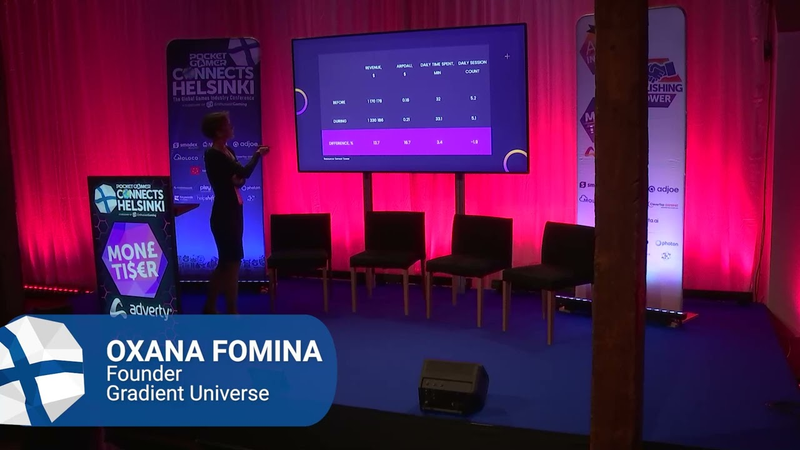
Top 5 Monetization Events in Casual Games: Maximizing Revenue Pot - Oxana Fomina, Gradient Universe
The analysis of monetization strategies in casual mobile gaming identifies five high-performing event models that significantly boost revenue and player retention.
- High-performing event models in casual mobile games drive revenue growth ranging from 10% to 43%.
- Successful monetization events leverage emotional engagement, social mechanics, and structured progression to increase both daily active user revenue (ARDAU) and session length.
- Effective event design incorporates multi-stage progression, intermediate rewards to maintain momentum, and specialized event shops that encourage habitual player return.
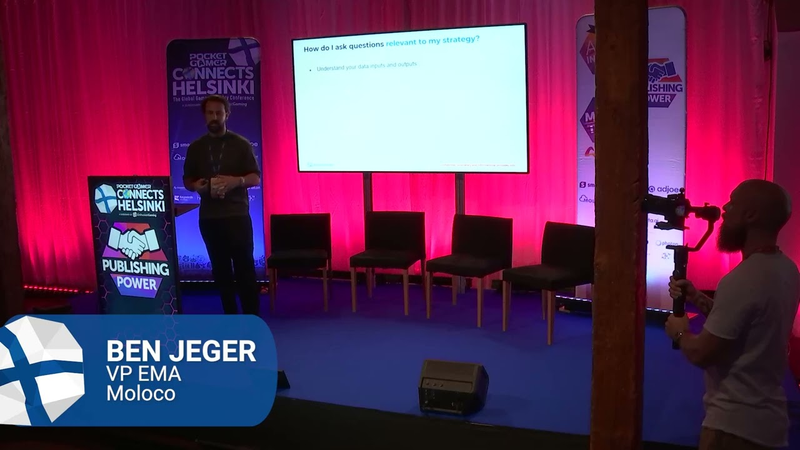
Questions you Should be Asking Your DSP - Ben Jeger, Moloco.
The primary objective of this analysis is to shift the perspective of mobile game and app developers regarding their interactions with Demand-Side Platforms (DSPs).
- Shift the focus of DSP partnerships from manual, granular control—such as managing specific publisher lists—to long-term ROAS and scalable investment strategies.
- Stop attempting to 'outsmart' machine learning algorithms by restricting placements, as modern DSPs optimize for high-value user behavior across all available exchanges.
- Prioritize business-critical KPIs like day-30 ROAS over superficial benchmarks or simple attribution metrics to better measure true growth.
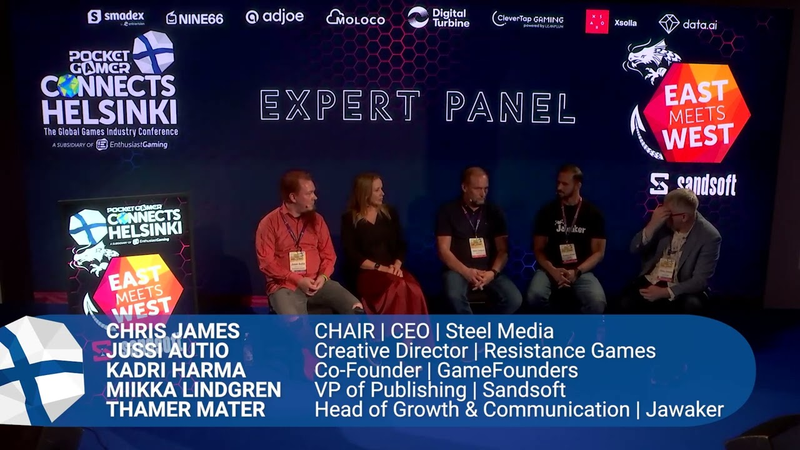
Panel: The New Gaming Frontier Navigating Emerging Markets for Global Growth
The Middle East and North Africa (MENA) region has emerged as the fastest-growing gaming market globally, with projections indicating a valuation of $7.2 billion supported by a player base of 574 million.
- The MENA gaming market is the fastest-growing globally, currently valued at $7.2 billion with a player base of 574 million.
- Success in the region requires moving beyond generic translations to sophisticated cultural localization that accounts for specific regional dialects and customs.
- Market entry necessitates integrating local financial ecosystems, specifically direct carrier billing and other regional payment infrastructures.
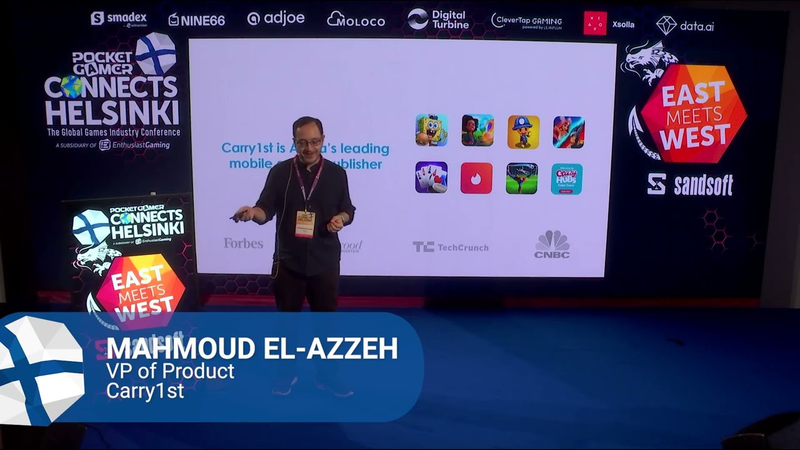
Africa: The Next Frontier in Mobile Gaming - Mahmoud El-Azzeh, Carry1st.
Africa represents a significant emerging frontier for the global mobile gaming industry, characterized by a massive, youthful demographic and rapid economic growth.
- Africa's mobile gaming market is experiencing rapid expansion, with revenue projected to increase 7.3x between 2015 and 2024.
- The continent presents a massive opportunity with over 1.1 billion people under the age of 40 and a current base of more than 300 million mobile gamers.
- The primary barrier to monetization is not a lack of consumer willingness to pay, but the absence of localized payment rails that align with the regional banking landscape.
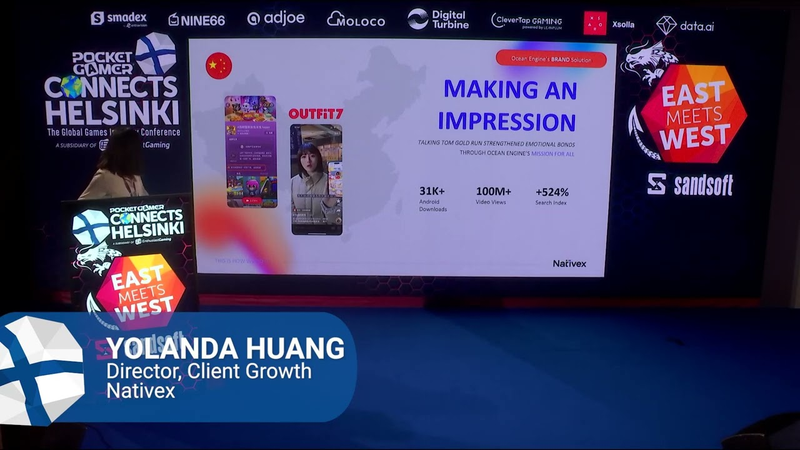
Exploring APAC: How to Market in a Flourishing Region - Yolanda Huang, Nativex
The Asia-Pacific (APAC) region represents 46 percent of global gaming revenue, yet it remains a complex landscape requiring highly localized marketing strategies.
- The APAC region accounts for 46 percent of global gaming revenue, necessitating highly localized strategies rather than standardized global approaches.
- Market entry in Japan is most effective when leveraging the country's anime and manga culture through offline-to-online marketing, such as physical events featuring influencers and cosplayers.
- Success in China requires utilizing the Ocean Engine ecosystem and implementing high-frequency creative testing, where thousands of assets are iterated to optimize performance.
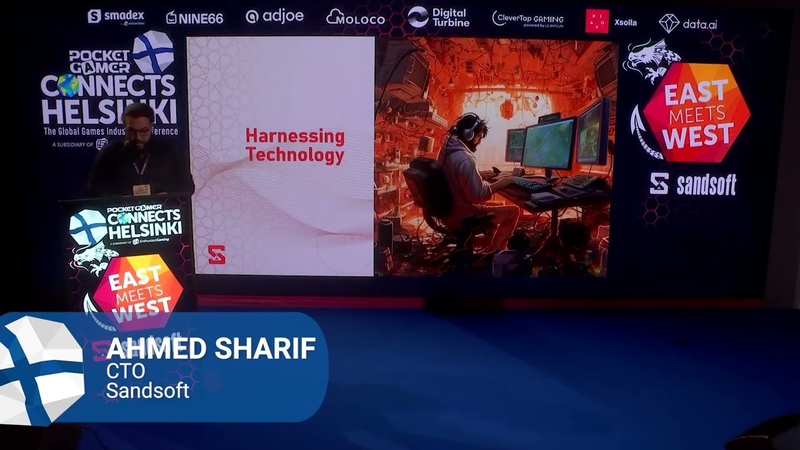
The Awakening of MENA Gaming: Empowering Talent, Harnessing Tech, and Making Markets - Ahmed Sharif
The Middle East and North Africa (MENA) region is currently undergoing a significant transformation into a global gaming powerhouse, driven by massive government investment, a youthful demographic, and rapid technological adoption.
- The MENA gaming sector is expanding at a rate three times faster than China's, with regional gaming revenue increasing sevenfold over the last decade to reach approximately $7 billion.
- Saudi Arabia has committed $38 billion to a national strategy focused on esports and gaming infrastructure, education, and financial incentives to foster a local creator economy.
- The region features a highly favorable demographic for gaming, with over 60% of the population under the age of 30 and 70% actively participating in mobile gaming.
Writers
Games and companies
Games