1 free read left. Create a free account for unlimited reading + AI research.
Create free account
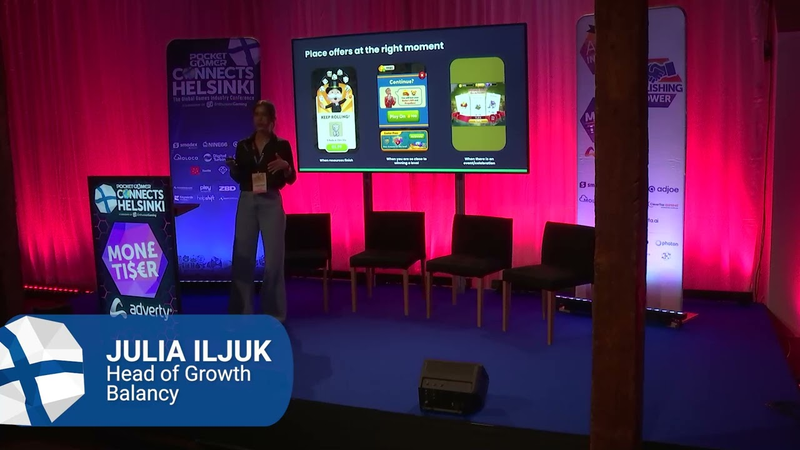
Special Offers & Personalization Strategies to Grow LTV in Games - Julia Iljuk, Balancy.
Key insights
6 takeaways- 01Special offers are a primary revenue driver for top-grossing mobile games, accounting for 20% to 50% of total revenue.
- 02Psychological triggers such as decoy pricing, social-proof team benefits, and 'piggy bank' mechanics are essential for maximizing the value of existing player segments.
- 03Effective monetization relies on placing offers at moments of player friction, such as resource depletion or level failure, to provide immediate solutions.
- 04Developers should implement 'comfort pack' logic to align pricing with individual spending habits, which helps prevent churn while facilitating upsells.
- 05Advanced conversion techniques include cascade pricing, where offers are progressively discounted if a player rejects the initial price point.
- 06Data-driven, personalized promotional journeys can increase conversion rates by 37% and grow average revenue per paying user (ARPPU) by 50% over a two-month period.
Ask AI about this video
Transcript
[Music] [Applause] [Music] thank you [Music] we've got uh Yulia from balancy with a talk about special offers and personalization strategies to grow lifetime value in games so uh Julia come to the stage thank you very much Round of Applause for you to submit and here's your Tucker hello everyone I'm actually very happy that my presentation is placed right after roxanna's presentation because we will continue the topic of monetization of live Ops events and in the next 20 minutes we will be talking about uh special offers and how they can help you to drive more Revenue into this competitive markets and you will learn some little secrets that will help your
strategy work so without further Ado let's get started so all right a few words about myself my name is Julia and for the last seven years I've been helping my mobile game developers build more engaging games with strong AP monetization right now I'm the head of growth at valency which is liveov's platform to scale your special offers live Ops events and growltv uh and I'm fascinated by the topic of liveops I share some insights in my LinkedIn so feel free to stay in touch with me on LinkedIn and add me there uh the agenda for today first of all we will be um discussing a little bit about the markets uh and what place special offers take in this market today uh we will then discuss General but fundamental principles of a successful special offering what makes them effective uh of course personalization is a very important element of your special offer
strategy so we'll devote some time to uh creating personalized shopping experiences for your players I call them promo Journeys and we will show how these principles work in real practice and back our concepts with some data with the help of case studies uh I want to thank some studios that I've been working with for sharing their data and some internal Frameworks these are to Desperados and their game Wireless Quest and hot Siberians and their game the idle Force Army Tycoon so why special offers matter today we all know that there are a lot of different Tendencies going on the market the market is not easy one we have a lot of competition we have a lot of similar titles competing with each other the user acquisition is not transparent and it's super expensive uh also Studios kind of Hit the LTV ceiling and in this context you just
face the question like how to grow uh in this market when classic user acquisition rules do not work and many developers find this answer in shifting their focus from user acquisition at all cost to better monetizing the players and increasing their revenue and of course live Ops and special offers in particular uh play an integral role in this strategy indeed special offers are one of the most establishmentization tactics out here in games and there are a couple of screenshots to illustrate you this in the first screenshot you can see that all games in the US top 100 top grossing include some sort of EP offers in the second screenshot you can see that 8 out of 10 top grossing titles have starter pack and all of them have liveops by the way with many developers we observe that the launch of new special offers in games correlates with spikes in Revenue while
when there are no special offers in the schedule the revenue drops of course your game has an in-game shop but big share of your Revenue will always be coming from special offers it can be from 20 to 50 percent of your total revenue according to developers I've been talking to so now let's move to the next part and talk about creating effective special offers there are a lot of psychological tricks and hacks you can use to encourage players to make this purchase in your game I've collected some of the most interesting and trendy ones here on this screen so remember that developers that players always want to feel that they kind of tricked you a little bit they always want to feel that they took advantage and cheated on you a little bit and decoy offer is all about that so in the first the first offer is the decoy offer and essentially it means that you're offering three kind of bundles the lower
pricing point the highest pricing point and you put something in between as well but with the only purpose to show that the highest pricing point is the most advantageous one just like here in this example uh by two Desperados it's clear that you will choose the last offer for 299 because it also offers you unlimited lives and by the way it also works for longer session so so it's kind of win-win situation also another type of mechanic our team offers and they employ another psychological trick which is social approval so when a user buys this pack team offer they also give unlimited lives to their team so their friends think like you're cool and players love this feeling and for developers it means more active players and longer sessions a very interesting special offer type are piggy banks which have been
mentioned previously essentially you make your players work to receive a chance to buy an offer so players have to complete levels or complete some tasks to be able to purchase an offer and once they've invested some time once they've invested the time and involvement they're much more likely to actually buy it and the last example you can see on the screen is a chain deal which has been added to so many games this year and essentially it means that you're offering some free rewards to your players they kind of get hooked they like this feeling of Premium experience and then you offer them a small pack and they're encouraged to buy it because after that they will receive more free Rewards a right placement of your offers also will help you to improve your conversions so we usually buy something when we need it right so it's logical to place your offer when uh for example resources of the player finish imagine you're playing Monopoly go your dice
rolls finish and you have two options either to wait one hour to get five rolls or buy 95 rows for 5.99 if you're really engaged in the game you're very likely to to buy it another example is very common for puzzle games with levels and here you can see that a a player was very close to winning the level but they failed and we're offering them to spend some in-game currency to buy more moves uh in dream dream games this is a Royal match and dream games here go a bit further they also put a banner of Easter pass which you can buy for real money and get five extra moves on this level of course it's a good idea to tie your sales to events it's always a good moment to launch a sale when there is some event like in this example by June's Journey It's A Mother's Day and they launch a sale uh events and special offers make a
perfect Synergy while events create these positive emotions the feeling of urgency some time limit sales are here to convert our players and in this quick screenshot you can see that in Marvel snap their spikes in Revenue are tightly connected to the events some general rules for launching special offers in events you should brand your offers with liveops events going on try to add relevant boosters that are also connected somehow to the event and it doesn't mean that you have to create completely new content for this event you can take your common templates your standard templates from your offers and just change the art around them so it's it's not that big job to be honest so we've mentioned some a like basic examples of how to make your offer work but it will not work without one element missing so it's
personalization in segmentation and there are many ways to work around segmentation you can segment your players based on their life cycle stage their activity uh their pain capacity so for example with with newbies you will be trying to achieve sustained engagement you will be showing them the value of the premium experience in the game and trying to convert them with some starter packs into their first purchase while for veterans you can be much more diverse with the content you can offer many more boosters many more unique content because they actually know the content of your game very well and they're here for entertainment and for some new experiences um also very common segmentation by paying capacity you probably heard about minnows dolphins whales all of this you can use to create personalized pricing in your games and I recently seen like many developers use maximum payment as the segmentation
point so I will show you a real example how it can work the segmentation the maximum Point uh pricing point so this is a decoy offer that you have seen already and this one that you can see here it was actually shown only to non-paint users right because uh to Desperados they segmented the audience in six segments segment zero was for non-pain users and then based on the size of Maximum payment they added five more segments uh and uh so the lower pricing Point varied from 199 for Segment zero to 39.99 for Segment five of whales uh the highest pricing point right from 299 for Segment zero to 49.99 for whales so each of the players so kind of different content different amount of boosters and different pricing okay now a couple of words about
crafting promo Journeys uh here um you need to be aware of such term as comfort pack it's a different companies calculated different way but it's the price that your players will be comfortable with it can be a maximum payment that they have paid or a period of time or the most common pack that they are buying uh it should be recalculating every measured after a while so it will be changing and the general rule of thumb here is show players the their comfortable pricing points with an occasional upsell and don't show them price for Less unless their comfort pack has decreased uh when new players are entering the game it's of course important to set expectations around the pricing uh of course you will be anchoring of course you'll be put in high pricing and to be able later to put some discount to show some value of the deal but don't go too much don't overblow with huge discounts
because like this counts of 500 or 1 000 they look suspicious and very often they are a pure lie uh probably you remember the recent case that was at fun plus the creators of kings of Avalon they actually ran into a class suit action for putting a wrong discount they put a discount of 2 400 percent uh so obviously this pricing has never existed and they got they got a lawsuit for this so my recommendation is don't don't fly two players uh and there is one more thing I want to mention very useful one and I will show you later in the case study how it works it's a Cascade pricing uh it's a technique when you lower the pricing uh if players don't buy your pack so basically for example you're offering a pack for five dollars if players don't buy it after a while you can offer the same offer uh for four dollars then reduce the price to three dollars and so
on and when players buy it you return to your comfort pack logic and try to show them either at a comfortable price uh and occasionally upsell and uh here's a little case study that we've done with hot Siberians in the game the idle forces Army Tycoon so about the game it's an uh I don't clicker City Builder game uh so there you are building your base hiring soldiers and officers provide them with allowance and they're completing submissions for you and protecting the base we've conducted a series of monetization experiments that help them to unlock their LTV growth I will share these cases with you so this is the first script that we created together we've noticed that they had a lot of AD Watchers users who were watching a lot of rewarded ads very loyal players but they have never made a purchase in the game and we wanted to
help them to do it so we have launched a no ads banner and we attached its appearance to the number of ads that the user has watched in the game so here we are waiting for 50 rewarded ads to be watched and we are offering uh these players the first package which has some discount pretty good discount 18 for 8.99 if they buy the script finishes uh our goal is achieved uh but if they don't buy it there we are waiting 100 rewarded ads to be watched and we are offering them uh the same offer or very similar offer with bigger discount and bigger value because we are also offering gold here and the logic repeats if a player doesn't buy the offer we wait 150 rewarded ads and again show them the pop-up Banner pretty simple this is how Cascade pricing can can work in practice this is the layout of this pop-up Banner so you can close or see it it's pretty
classical you can you have a big picture you have some text time limits uh you anchor to highest pricing then you give good discount you specify this discount the value of it so it's pretty classical layout uh in the second experiment in the second script we decided to offer players a starter pack which was coming quite late in the gaming experience uh after a pack of missions have been completed so we had some information about their pain activity and we in most games you will see that all players will receive the same offer but we decided to personalized players experience and add segmentation to it so we we use the classic segmentation by non-pain users Minos dolphins and whales and we created three starter packs starter pack improved starter pack and expert starter pack so each segment received a different pack this is the layout it's very similar to the previous one you have seen and this is how the script looked like
so we Define some segments based on paying capacity and we offered three sizes of offers so it was a small one medium one and big one and depending on which offer users buy they are directed into different entry point of this Mega script and mega script is a essentially a promo journey of a player I will show you how it looks like this is the Mega script and it's actually even bigger it just didn't fit into the screen but the basic logic the basic idea here is the following depending on behavior of players whether they buy offer whether they don't buy an offer they're directed to a different offer within this Matrix of offers so this way they are getting really personalized uh tailored shopping journey and it helps you to achieve better results of course I must mention that it
was not like created just once and forever we've made a lot of a b tests we've defined what composition of offer what pricing would work better and in the end we came up with this kind of big and elaborate scheme of offers and these are the results that we have achieved the iteration of experiments was two months and during that time we raised the conversion in the USA by 37 percent and surprisingly our arppu didn't fall down it actually grew by 50 so this was pretty good result taking into account that it was involving minimum resources so key takeaways from this session what you need to to remember and think about when you leave this Hall so of course it's a good idea to add live Ops and special offers to your games because this way you can generate like two three times more revenue and in
some genres according to statistics this can be even more than two three times but you should add the special offers wisely um remember to use psychological triggers right placement in the game and tie your offers to in-game events this will increase the effectiveness of your offers and of course always segment your audience and deliver them personalized value proposition it's very important our goal here is to create this player-centric shopping Journey because this way you will be able to increase your conversion and your average check as well so that's it I'm very thankful for your attention and again you can add me on LinkedIn and we'll be in touch [Applause] it looks like we've got maybe a couple of minutes for for questions perhaps does anyone in the audience have a
question we can get a mic to you you've got maybe a minute yeah thank you very much for the talk uh I have a question about players capacity uh and uh like uh offer segmentation uh related to payers capacity uh what is the early day early time uh when we can uh actually put this offer to action because you know you cannot you cannot know if the player is a whale minnow or non-pain uh initially when they just entered and you say that you you put it like uh late in the game so what's the earliest time we can put such an offer well there are to be honest many factors that will influence this decision of course we'll take into account the retention in your game right if it's uh you have long time retention in your game you can put it like really late in in the player experience and collect this data right uh if it's short-term retention maybe you will use some other factors that will kind of signal you
that this is probably gonna be a pain user for example a country from which a user comes from or even use prediction models if you have this uh this in your company uh if you're lucky enough you can use predictions as well but yeah in this case we were putting it quite late in the in the experience it was uh first pack of missions was completed so for sure it was several days in in the game that players spend there perfect thank you but we have to stop there unfortunately we're out of time uh thanks again Julia people do to follow uh follow your ear on LinkedIn or email her and thank you very much for your time that's right yeah thank you [Music]
Summary
Special offers and personalized live operations serve as critical drivers for increasing lifetime value (LTV) in mobile games, particularly as user acquisition costs rise and market competition intensifies. By shifting focus from aggressive acquisition to optimizing the monetization of existing players, developers can significantly boost revenue. Industry data indicates that top-grossing titles consistently utilize special offers, which can account for 20% to 50% of a game's total revenue. Revenue spikes frequently correlate with the deployment of these offers, whereas revenue often declines during periods without active promotional schedules.
Effective monetization strategies rely on psychological triggers and strategic placement. Common tactics include decoy pricing, which guides players toward higher-value bundles; social-proof offers that provide team-wide benefits; and "piggy bank" mechanics that reward player engagement with purchase opportunities. Furthermore, chain deals and event-linked promotions create urgency and positive emotional associations. Placement is equally vital; offers should appear when players experience friction, such as running out of resources or failing a level, to provide immediate solutions that enhance the gaming experience.
Personalization and segmentation are essential for scaling these strategies. Developers should categorize players based on lifecycle stage, activity levels, and historical spending capacity—ranging from non-payers to "whales." Implementing "comfort pack" logic, which aligns pricing with a player's established spending habits, prevents churn while allowing for occasional upsells. Advanced techniques like cascade pricing—where offers are progressively discounted if a player declines the initial price—can effectively convert non-paying users. Case studies demonstrate that applying these personalized, data-driven promo journeys can yield substantial results, such as a 37% increase in conversion rates and a 50% growth in average revenue per paying user (ARPPU) over a two-month period.












Comments