Mobile reports and market data
Documents
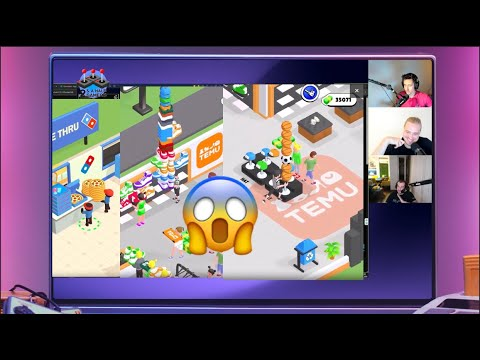
From Hypercasual to Hybridcasual - The Supercent story. Iterative nature & Admon w/ UA in grey zone
The mobile gaming landscape is undergoing a significant transition as studios shift from traditional hypercasual models toward hybridcasual frameworks.
- Supercent utilizes a high-frequency iterative model for hybridcasual games, repeatedly refining core mechanics from successful titles like 'My Perfect Hotel' to launch new revenue-generating products such as 'Pizza Ready', 'Outlet Rush', and 'Snake Clash'.
- Supercent's titles demonstrate a aggressive monetization strategy by integrating interstitials, rewarded videos, and banners from the first minute of gameplay, alongside specific rewarded placements for movement speed, carrying capacity, and equipment upgrades.
- The company has experimented with controversial monetization tactics, such as integrating 'Bright Data' software, which allows the app to use user IP addresses and bandwidth for data scraping, potentially generating significant monthly revenue from a fraction of their millions of users.

TWIG #280 Game Industry Reports Galore
The modern gaming landscape is defined by a strategic push toward transmedia expansion and the integration of complex monetization models.
- The anticipated launch of a Nintendo Switch successor, featuring hardware upgrades and backward compatibility, is expected to serve as a critical catalyst for the stagnant console market.
- Transmedia adaptations like the Fallout series effectively increase brand awareness, but the incremental revenue generated often fails to offset the high production costs and logistical complexities involved.
- Mobile developers are increasingly shifting toward midcore monetization strategies, such as external web stores and dynamic bundle offers triggered by player failure states, to maximize revenue.

Sandsoft's Miikka Lindgren On Massive Opportunities In The MENA Game Market
The Middle East and North Africa (MENA) gaming market represents a high-growth frontier characterized by intense competition and significant consumer spending power.
- Chinese gaming companies currently dominate the MENA market by investing heavily in deep localization, culturalization, and dedicated regional operations.
- Publishers must shift from intuition-based development to rigorous, data-driven frameworks that validate game design and marketability through real-world audience testing.
- Successful market entry requires a mobile-first strategy that blends casual and core mechanics to create expansive, accessible experiences with high long-term engagement.

Legend of Mushroom Deconstructed - How it became a fungal phenomenon
Legend of Mushroom represents a significant case study in the idle RPG genre, demonstrating how a complex, interconnected progression system can drive rapid global monetization.
- The core monetization engine relies on a central lamp-pull RNG mechanic that creates a persistent dopamine loop, driving high-value spending through tiered starter packs and battle passes.
- Legend of Mushroom achieved top-grossing status in Japanese and South Korean markets by leveraging an interconnected progression system designed for rapid monetization.
- The game is currently experiencing a decline in daily active users and average revenue per user due to a lack of catch-up mechanics and a competitive environment that favors established spenders.

GungHo Business Report Vol. 41
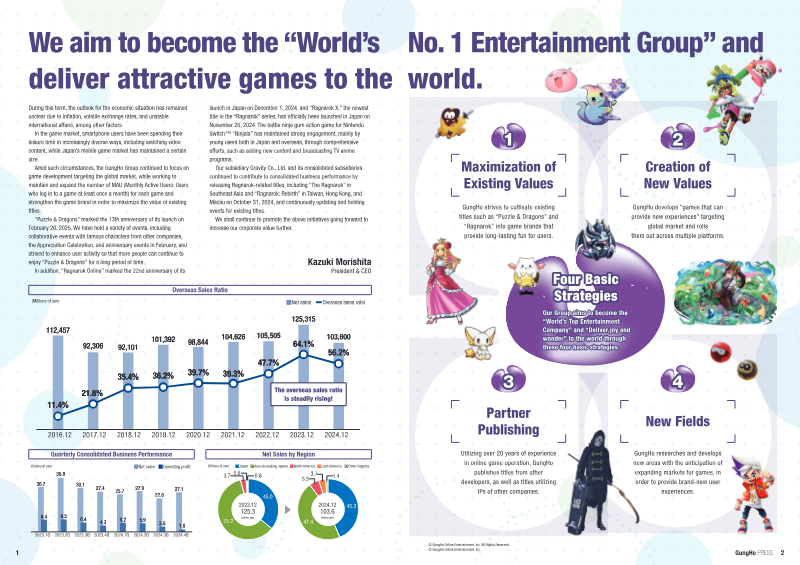
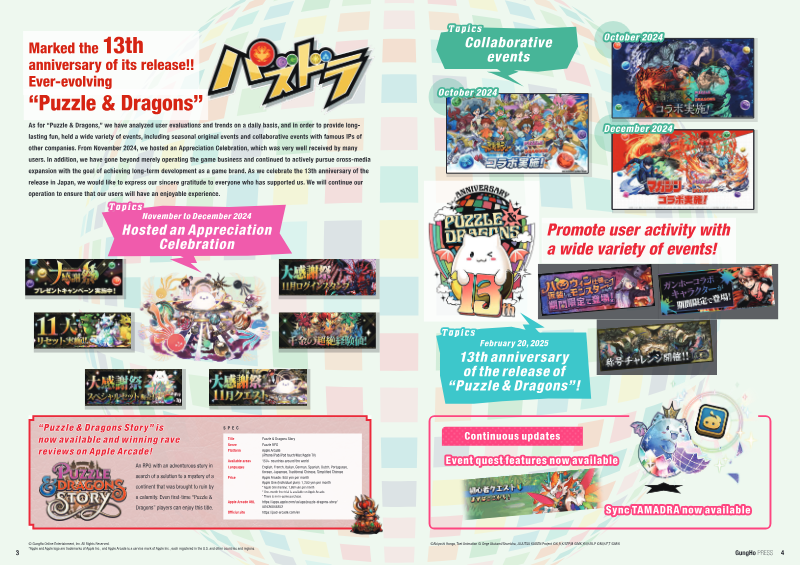
This GungHo Business Report Vol. 41 outlines the company's strategic direction, financial performance, and key game titles, with a focus on maximizing existing intellectual property and expanding into global markets.
- GungHo reported 103.6 billion yen in net sales and 17.49 billion yen in operating profit for the 2024 fiscal year.
- International expansion is a primary growth driver, with overseas sales now accounting for 47.7% of total revenue.
- The 13-year-old title Puzzle & Dragons remains the company's core financial pillar, supported by new releases like Disney Pixel RPG and the Japanese launch of Ragnarok X.
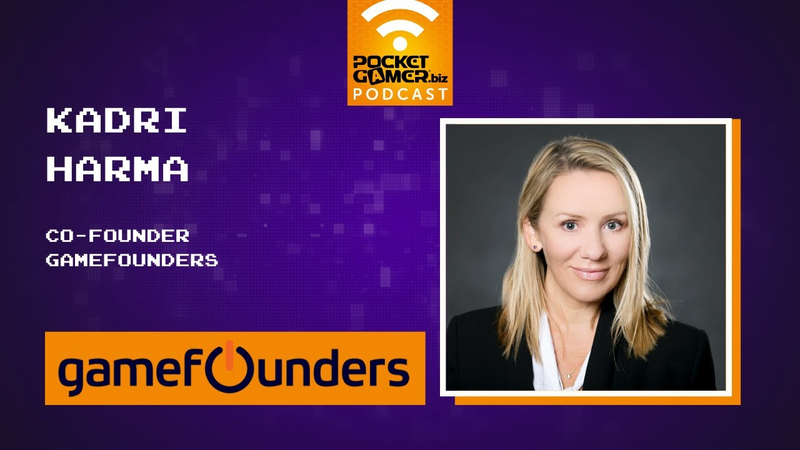
GameFounders' Kadri Harma On Unlocking The MENA Game Market
The Middle East and North Africa (MENA) region represents a rapidly evolving frontier for the global games industry, characterized by strong government-led initiatives and high player monetization potential.
- The MENA region exhibits exceptionally high average revenue per user (ARPU), frequently surpassing the performance metrics of North American and European markets.
- Market success in the MENA region is driven by an underserved player base that shows significantly higher engagement and spending when provided with localized cultural and linguistic content.
- The regional industry is currently defined by a top-down, state-supported development model, with Saudi Arabia leading efforts to build an ecosystem through government-led infrastructure and funding.
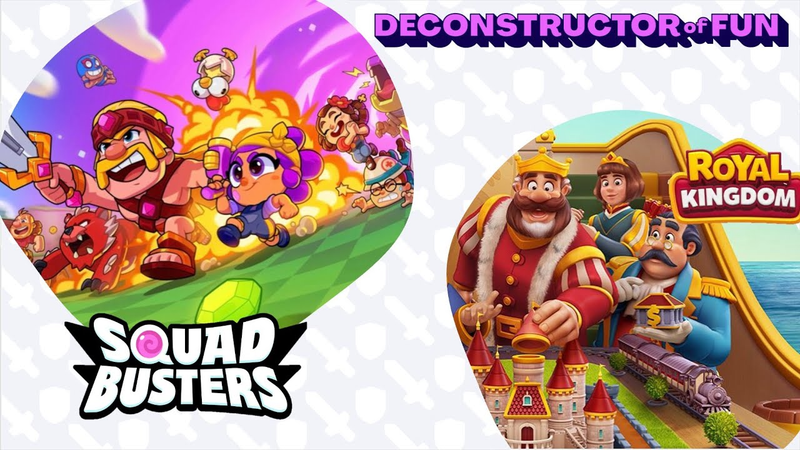
TWIG #279 Supercell's Squad Busters vs. Dream's Royal Kingdom
The gaming industry is currently navigating a period of significant structural and strategic recalibration, characterized by the failure of aggressive debt-fueled consolidation and a shift in how intellectual property is monetized.
- The gaming industry is shifting away from aggressive, debt-fueled consolidation, exemplified by the collapse of Embracer Group’s buy-and-build strategy and its subsequent split into three entities to manage debt.
- The era of standalone celebrity-branded mobile games has ended due to audience fragmentation, with the industry pivoting toward lower-risk, limited-time in-game collaborations and events.
- Mobile market performance is currently mixed, with Monopoly Go seeing a decline in active users despite sustained revenue, while Helldivers 2 maintains steady player retention.

2.5 gamers x Live AM(F)A #2 - Ask Me Anything @ April 23 5 pm CET
The mobile gaming industry is undergoing a structural shift toward long-term sustainability, favoring evergreen genres such as solitaire and merge games over the fleeting trends of traditional hyper-casual titles.
- The mobile gaming market is shifting away from hyper-casual titles toward evergreen genres like solitaire and merge games to ensure long-term sustainability.
- Publishers are gaining market power by providing the essential financial stability, historical modeling tools, and UA infrastructure required to navigate complex, data-intensive user acquisition.
- Developers should adopt a rigorous development cycle where prototypes are abandoned if they fail to meet specific retention or Return on Ad Spend (ROAS) benchmarks within three iterations.
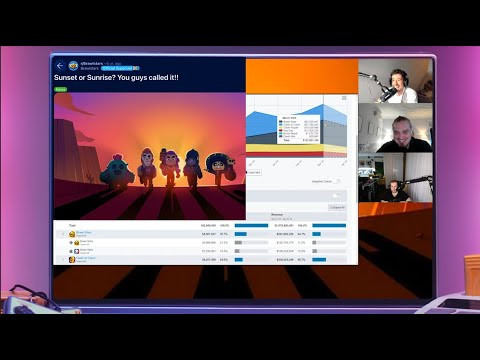
Brawl Stars' UA & Creative Strategies, Game Review Radar vol4, GAM not dead yet? (#106)
Brawl Stars has successfully revitalized its market position, doubling year-over-year monthly revenue seven years after its initial launch.
- Brawl Stars achieved significant growth following its global launch, with US daily downloads increasing from 7,000 to 40,000 and sustained revenue gains driven by a shift toward standardized UA creative strategies.
- Supercell has expanded its UA strategy beyond YouTube, increasingly utilizing 'altered gameplay' creatives—where scenes are constructed from game assets—which now account for approximately 60% of video creative output.
- The Google Ad Manager (GAM) partner ecosystem underwent a major shift around December 20, 2023, as Google restricted video inventory for third-party resellers, forcing companies to adapt their monetization models.

Mobile publishers: Boost retention & revenue while saving the planet
Integrating environmental sustainability initiatives into mobile games serves as a dual-purpose strategy for publishers, simultaneously fostering positive global impact and driving significant improvements in key performance indicators.
- Integrating environmental impact rewards into in-game offers can drive significant revenue growth, as demonstrated by Belka Games, which saw an 18% revenue uplift compared to standard offers.
- Gamified eco-initiatives generate high user engagement and social sharing, resulting in an average 20% share rate for impact certificates.
- Social sharing of eco-milestone certificates drives organic growth, translating into a 6% to 7% increase in new organic downloads.
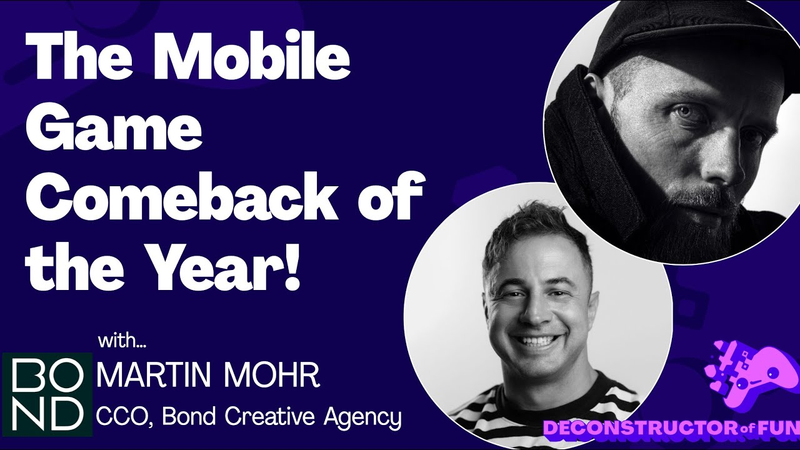
The Power of Gaming Branding: Real Insights from a Creative Agency
Strategic branding serves as a critical lever for reversing performance plateaus in the mobile gaming sector.
- Shifting from utilitarian gameplay to character-driven narratives can revitalize mature mobile titles without requiring changes to core mechanics, as demonstrated by the turnaround of Merge Gardens.
- Establishing a unique brand identity creates a competitive moat that prevents studios from inadvertently advertising the broader game category rather than their own specific product.
- Building a robust brand identity is an iterative, multi-month process that requires external partners to embed within a studio to resolve internal misalignments and develop a comprehensive story bible.
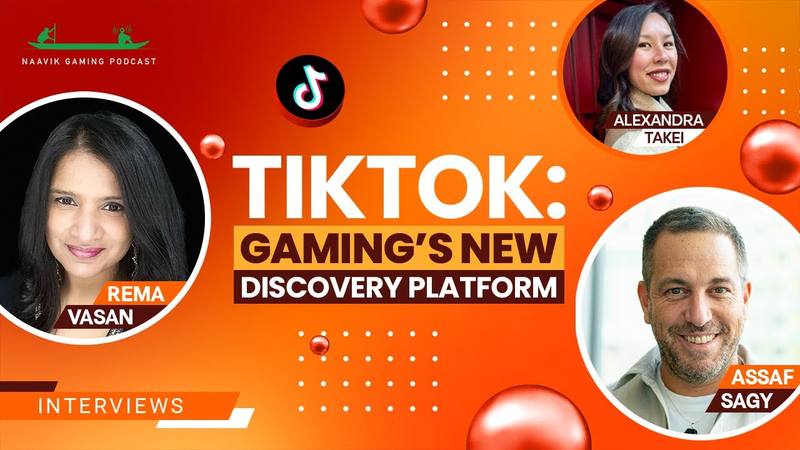
TikTok: Gaming’s New Discovery Platform
TikTok has transitioned from a social media application into a foundational entertainment and discovery engine for the global gaming industry.
- Exposure to pre-release gaming content on TikTok drives an 80 percent increase in spending among PC and console gamers.
- TikTok generates over three trillion annual organic gaming views, establishing it as a primary engine for content discovery in an oversaturated market.
- The platform utilizes specialized programs like the TikTok Creative Challenge to connect publishers with creators, effectively lowering user acquisition costs.
Writers
Games and companies
Games