VideoDeconstructor of Fun
The Power of Gaming Branding: Real Insights from a Creative Agency
22 Apr 202478 min video
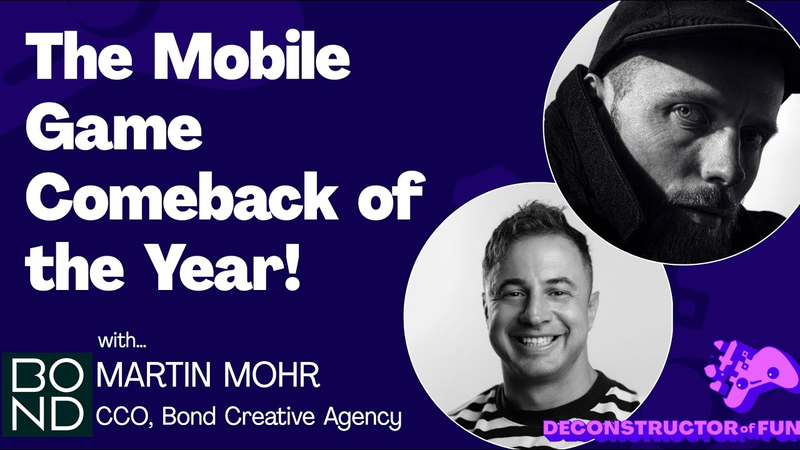
hey folks and welcome to the deconstructor of fun podcast I'm your host Mishi katov and in this episode we're going to talk about IP creation Now how this podcast came to be uh we had an article on deconstructor of fun blog discussing how to overcome a post launch slump it was a case study of merge Garden a game developed by Future play and published Well published by Future play in pum it's a play own Studio the story of the game is it launched looked nice scaled nicely in the beginning and then just like many other games started declining uh a year later after the initial decline phase the game started scaling up again and this time around it looked Unstoppable but it also looked very different uh there were many product side improvements but most importantly there were improvements on the visual and storytelling side of the game essentially the game had a whole new brand so in this podcast I'm joined by Martin Moore Who's chief creative officer of bond creative agency the agency that worked with future play to
come up with this new brand this new narrative and this new positioning in the market um I think this podcast episode is relevant IPS are important I think it's incredibly insightful at least for me I have not been in in IP creation that many times before and I hope you enjoy it so without further Ado Martin Moore from Bond creative agency this podcast is is brought to you by apps flyer in today's Digital World understanding your apps Journey from Discovery to download is more than just insightful it's essential enter apps flyer the leader in Mobile attribution and marketing analytics that allows you to measure the full potential of your marketing efforts making every ad dollar work smarter with apps flyer that's your new reality dive deep into Data driven insites that reveal exactly where your users come from and how they interact with your app app sler where your
potential meets performance welcome to the podcast Martin thank you m Martin where are we uh where we are yeah oh my goodness uh first of all I guess we are in Finland Ki correct uh and then in haki yes in a podcast Studio where we are not using any of the yes buildin podcast equipment and in in more particular we are at a creative agency's Helsinki okay yeah so um yeah that's maybe a quite essential piece of the question so um we are Bond we are a a you you could call us a a brand consultancy agency and I so so we met at slush and it was a very interesting story and this is the backstory for this podcast which makes it incredibly relevant uh we had a piece on deconstructor fun about merge Garden it's a game by a Finnish Studio future play games uh was acquired uh in I think
in 21 22 21 probably by plarium a huge Israeli gaming company anyway they launched a game in 2020 called merge garden and that was at the top of the the whole merge genre Trend the game was looking pretty good like you made 2 million pretty quickly like reached the 2 million a month so good for a small studio uh led to an acquisition and then it led to a slump of that game and and people kind of wrote it off wrote the whole studio off in a way that well they had something they weren't able to really um capitalize on it and they clearly can't work in in the setup of this new owner low woman beh hold two years later we got record revenues um continued growth um it it looks different it feels different and and when we analyze this game of like where did this growth came from it's like when I look at this like the characters they weren't a utilitarian anymore they were like they had a backstory that was something interesting about them they
look totally different there was a narrative and it's not more like Oh Come here and and clear this garden and decorate it but it was more about um the People You Meet the uh the the curse that you have to solve the uh the characters the enchantments the the story it was like it was so much more interesting the visuals Cris crisps bright so everything changed on that side the marketing of course evolved significantly after all these changes and really reflected the story and actually brought people to interact with the stories and then of course on the game side itself there were events but it wasn't like the game changed significantly it was more how it felt and looked changed significantly so we did this post we we uh we published it they got a lot of readers and know good reactions people learned some a lot maybe and then you came to me at a at a deconstructor fun event and then you came to me at a deconstructor fun event and you were like we are from the bond agency and everything that you described in that blog post about all these changes that made this game grow is are
doing I was like wait a minute what and then we started communicating and then um you talked to Future play they gave you okay to do this episode to really talk about it so so we here to talk about the story behind the story yeah uh because while future play is a great studio and they're executing perfectly the turnaround is I would argue a lot of your company's doing right together yeah will I I would first of all I I absolutely cannot take the full credit for this uh I think uh I think the whole collaboration to begin with has been really flavored by a very very strong collaboration and that that was actually one of my points here today is also that I think to to achieve something like this you really have to you really have to have a buy in from everyone who is involved in it and and there needs to be also you know hearts at fire yeah on both sides um and so I
think this uh we had a very natural way of collaborating I think our companies are quite similar in the way we are sort of No Nonsense way of working and very honestly working with people um and the same goes for future play so that kind of openness um and eagerness for collaboration was super important for the success of this story uh so I think U I would I would sayate like this that we we were approached um by Future play not not to uh you know begin with to really change anything in the game which you already mentioned um we were approached to help them make their their branding and their marketing better performing stronger and uh I think it was very clever from their side um to you know uh we we discussed earlier like you know why would they approach an external agency to do something like this but I I think when you're already in a situation where you're looking not
so much from what you're doing inside what you're doing with the game and the product itself but you're looking at how your marketing is performing out in the out in the world with the consumers U with your audience it's very smart actually to think about engaging an agency sort of outside in and applying what an agency like we do is you know we we are every day we're working with with Target audiences of All Sorts in all kinds of different Industries and so that's really how we work we look at the world we look at the culture of the target audience what uh what really makes them excited what they do in their lives besides gaming not just gaming but really understanding that audience and and future play had already also been doing a lot of research on their target audience um so we were not starting from scratch MH and so they approached us and said is you know we need a stronger story uh predominantly we need that story so we
can till more engaging stories in marketing and in branding and of course that that resonated a lot with us uh so then there was this caveat uh that you know it needs to sort of be fitted into the game we have don't change any major game mechanics uh um we we that's that's a very long pipeline uh let's not do that but we do have something simple like character portraits and some dialogue that are already in there there are ways that we can make the story influence sort of like uh the game itself as well and I think that is where this is a little bit like kind of groundbreaking it's not that you hire a branding agency to help you make better marketing or stronger kind of branding for your game but it's it was that that little detail that we are willing to sort of create a a like a strong Synergy between that and the game the assets inside the game as well as well um to
build that bridge step into the future of game monetization with exola exola empowers developers and Publishers to market sell connect and optimize their games globally from payment solution to a full suit of tools designed to grow your games Revenue while fostering a lawyer player base exola is your game's gateway to worldwide success with exola the world is your playground visit exa.com today and find all the solutions that will help you to power your games into success everywhere this podcast is brought to you by data AI now you're asking didn't they get acquired by sensor Tower they did and that's awesome here's why whether you loved using data. a or sensor Tower the combined company will offer customers even stronger and more detailed insights on the full Digital customer Journey exciting times lie ahead a sensor Tower and data Jo forces
go to data. or sensor to.com and get on board with undeniably the best data partner in the business now back to the episode yeah so it's not not only the uh the outside but also affected yeah what kind of what kind of materials so for for folks listening they you know at some point they will want to get in a very practical um suggestions so in this type of scenario you have a so the team has already a product and they have marketing but it's not performing as well as it is so what kind of a material should is is optimal for you guys to start like what's the best starting point when doing this type of a work um I think it variates a lot of course um we are we not uh gaming is one thing that we're doing now um we are we doing many many different Industries so the challenges are always quite quite different
but um our our beginning point will always be and I think people who don't know or haven't work with us will think that we are spending an enormous time time upfront yeah in understanding The Challenge and the problem that is at hand um or the opportunity that is there um so um like old anecdotes we have like our you know we we also do interior design so we are quite broad design agency in that sense um we had our interior design head of interior go and work in a shop for like a week to just understand what is going on there so the same here we ask a million questions about uh the product the the in this case of course the game The Mechanics why what why do you why can you merge stuff why can you do this what is the purpose of this functionality in the game and really really really trying to understand what we're working with so a beginning point for us is always always uh like diving into to the
business and understanding that opportunity and that can always vary of course that might be and and and um so so team comes in they say hey this is the product it gives you all kinds of materials whatever they have about the game their own design documentation their designers come in and present about the game and the product people come in and talk about the uh the sort of numbers that they're looking or the marketing people will come in you guys play the game a lot um what's the next step from there like or in this case like what was the next step and yeah yeah I think this was your first game project right this was the first game project uh we are now uh it's quite interesting because now we are also working with an indie out of London we're working with this massive multiplayer simulation out of Berlin so we have quite a Varity of types of games and that's also what I meant like all the challenges are different there's there's nothing that is always completely the same
um but I think um to what so so basically what we would always do is of course in this case we needed a story right and and to be very honest Frank here like when when we were approached by Future play the first time about writing a game Narrative of course we had a lot of questions for ourselves as well is this like you know you know we are a design and branding agency we we do experiences all the time we do marketing advertising um but then you know looking at the challenges that they were facing um realizing that this is actually what we do all the time for all our clients if when you when you build a brand a brand needs a strong story every brand needs a strong story like every brand that you know that you care about has some kind of story that you can tap into a resonate with um if a brand doesn't have a story that's a problem like if so it's also a way of you ifying everyone
working in that company under that same story so so first it was you know after trying to understand their audience we knew we we learned they had already done a bunch of research so we knew the the main target audience was uh women I think between the 30 and 50 age group um and of course that already kind of gives you some indications of I mean we always want to look a bit broader you know okay so that's the core audience but there might be bigger audiences sort of around that also uh but um so so of course we then look at as I said earlier what they care about so whatever story we would come up with would be something that again is from outside in it's something that works with the world that they live in um for example we uh um I I should give credit to yonas their marketing director as well he's a great guy and very smart he he had already started
this uh big research and they they knew that these uh this target audience of course they knew kind of what shows TV shows that they cared about the drama and the kind of like TV Thriller things and and a little bit of mystery and and serial kill serial killer shows yeah sort of like this a little bit that that and then of course we had some competitors who were doing a little bit more that and so we were St kind of steering clear Mansion yeah from that type of story um and so we knew of course we had to carve out our own space there and uh and it had to be a story that would resonate with the audience in a way so we we actually what we do then our next step is we set out directions mhm so we would never just come and say okay so here it is the thing that will work uh we work through many different directions that kind of build on different insights uh it could be something from the game is from the G or
it could be something really close to that target audience and their world and and then we like we kind of latch on to these different uh insights about what we're working on and then we form we we we sort of we we we tend to call them simple ideas MH mhm um so and simple doesn't mean easy yes or fast or quick simple is actually the hardest yeah that you can do distilled distilled uh uh Concepts um they they tend to have sort of like a title we write a little narrative for them um and then of course being a game we we we thought about the characters also what type of characters would this involve and we thought about how it actually related to the merge merging happening in that Garden like you know it's not very logical that you can merge two plants if you think about it from a storytelling perspective it's like there must be something going on there yeah so then that's kind of the h we we take and and then we build stories
on that and and then they actually took I think I think we had about six different big sort of territories to explore and we then created these um kind of concept Pages for that uh again very close collaboration with uh with the team at Future play and a lot of iteration and then those were actually tested then with uh with with with players got it and so when you come with different directions it's like you basically give like okay here's four five six ways we can go forward which one of these you like and which one you don't like and then the the team choos like who who on the team size chooses and like how does that work I think that uh variates a lot yeah um from company to company okay uh I think when it comes to Future play it was uh it was a very um kind of positive experience in the way how they involved a lot a lot of people in the process uh from as you
said product designers game designers uh uh and and a bunch of the founders and the marketing people um so everyone kind of have a say and and a chance to influence the decision but then they were also really good at having someone just then take the decision on which ones would would move forward got it but the final verdict was the end users and the concept that they like the most and uh I don't know you you know maybe sometimes we tend to think that uh people just like play something we put in front of them or that there there maybe maybe it's like not where you should ask like what's the right thing to do like you shouldn't ask the audience like is this the right or is this the right like but in in in this case it it really confirmed our favorite concept was the one that came back like far above um the others what kind of testing were you doing like qualitative
testing or quantitative testing like was was like it was IGN run it was uh quantitative mostly um it was a lot of players so there was I I don't know much about that I met with their with their team testing team there very very cool group of people there um and uh we got like reports back from that basically from them and and and honestly like very impressive uh reports on different metrics and what tracked uh titles characters visuality and that was really really interesting to see yeah plarium is definitely um you know a step ahead when it comes to game branding with the raid Shadow Legends is like yeah yeah it's a quite a masterpiece of marketing then of course game design and everything but okay interesting so they so they handled the uh the the the final analysis and and providing I I think that like at least that that part of of because they they gave I think at least
to my understanding uh future play had a a huge level of Freedom with this um which I think also again was a key to the success um but they helped with everywhere where they could kind of come in with some muscle and and do some heavy lifting I think that's uh that's where they they helped how how did Future play find you uh so as we just discussed before the podcast here it's like in hson it's it's very very it's it's impossible to not R run into game people uh I think and I've actually when when I think about it it's even incredible that I haven't had a project with with a G some game company over all these years like back in the days uh I I did have a little bit of work with with Robo and and Angry Birds and but it was it was much more like kind of big advertising agency kind of kind of work and and not this kind of in-depth level
of work but yes so um I I I know a couple um um Sam or Sam Actually an old neighbor of mine the art director uh yeah but he he at least knew me and and was asking you know to begin with if if I had any contacts for this sort of work uh so it wasn't even like hey come in and and uh let's work together it was more like can you help us out with figuring this this part out um because they they knew they needed a little uh maybe something a little bit from outside yeah to shake things up and and and then we then uh we we jumped on the chance and actually pitched very formally to them and I think there was even a couple of of agencies there yeah of course you have to you have to run with with few ones so so that's kind of how it worked it was uh it was uh a little bit almost a little bit random at
that point yeah so so let's say I'm I'm um I'm a game Studio head and I I need to spice up the uh the game that we have it's not performing as well and I feel like it's really on the marketing not feel I see from the numbers it's on the marketing side and I see my competitors are really like pushing on the uh on the on the brand as well yeah um walk me through the uh the timeline so I I connect with creative Studio Studios how do I what am I looking for am I looking for brand Studios like what is Bond yeah that's that's a good question um I think uh I think the maybe we justes we do we don't come from as much from like an advertising uh sort of field we are a design agency so we have people who design products and
experiences um digital um digital experiences uh physical experiences and so I think we have a quite strong understanding of what it means to actually own a product and sit on a product um and with a product and how to get that product to Market got it um so I think maybe there's a that feels like there's a quite natural fit there if you are not only caring about your advertising but that you're caring about maybe also giving your game like a like a facelift that that because not a makeup but a facelift a facelift yeah uh or you know pivoted a little bit uh cons like this is actually one of the points I think um it's really important in this conversation is um there is just no time to not look perfect no there's no room to not look perfect anymore it's the the the gaming Market is now really saturating very
mature it's very maturing right now and so there's there was a bunch of loopholes and they're sort of slowly filling up and and uh so there is this incredible competition for people's eyeballs now and and and one of my points here if I can make anyone today is that don't stop doing Performance Marketing of course like you have to do that that's part of the game but that's like an extremely it it's like a very short term it's it's like an immediate purchase wind window with the with the consumer that you're hitting there with Performance Marketing you are hitting them when they are there yes playing something and kind of open to maybe download this thing and then you end yeah and then you might hit them again at some point again in a very short moment of time uh when you are competing in a extremely saturated environment where everyone is doing the same you can be like completely drowned out
by a big player and so you complet you lose the opportunity to get you know even maybe even in front of them like very often so this is where like you need to combine it with brand building yeah because brand building is storytelling and this is also again we can talk about this but why would a casual game like merge Gardens mhm focus on storytelling right storytelling is like it's like the only thing that can keep us hooked in front of a flat screen like for hours well there's there's plenty of results like when we look at the the data from like let's say Google when they announce or not announce when they when they give data about different markets and what is important for players it's almost not dependent on the category whether it's casual or more midcore whatever story or narrative is always at the top of what players want exactly yeah and I think it's a complete misunderstanding that casual games can't have deep storytelling and it's well
well there's that but also there's a misconception of what story is yeah and a lot of the times we get narrative designers in games that are coming in from narrative driven console games and they are used to being that that your audience is going to sit on a chair and watch for a long time press through different dialogues that they came up with which are really great and and a true you know marvelous yeah well can be marvelous storytelling uh but nevertheless that is not the only way you tell a story no and um can you talk to me a little bit about like well first let's just go through like the whole flow and then let's talk a little bit about like what is a narrative and storytelling on mobile because that is a you don't have the same attention span as you have with a person who played paid $80 to buy a game that they've been waiting for a long time that's a completely different and are sitting in front of a TV making popcorn and watching all the Rings for
three hours right it's a different mindset but I I just want to finish like the the thought train about the Performance Marketing versus like brand building and or not versus but in combination because when you build a brand you build a brand Inside the Mind of your audience the story you tell sticks like a story sticks like Performance Marketing doesn't stick in people's minds but a story that you're telling like a great intriguing interesting story that you put in front of the audience is something we as human beings we keep it it intrigues us we think about it h that you know that that that was exciting like I want to know what's going to happen there exactly I might not download the game at that point but because you told the audience something interesting a story that they they will go and they will mul it over and they will keep it in the back of their mind and so you increase
the purchase window in a way if you want to talk really technical terms here so because I'm always trying to get like branding and marketing and things like that out of the you know magic yeah yeah yeah and because there is a reason to do this it's like you increase the window in which these people have you in the back of their mind and so there is a much higher chance for them to actually get the game downloaded if you then hit them again with the Performance Marketing so you're kind of like in instead of just doing Performance Marketing like this if you add the brand building I I think there is um some very fancy models for this but you you you kind of have to combine performance marketing with brand building of course and when you do that you create these brand building bumps in people's heads and every time you do that you lift and this is this is like a way to break out of this Plateau that you know you were even mentioning in the beginning how they had in a way flatlined a bit with their growth and J mentioned it in an article as well that they they just they
couldn't kind of buy their way out of that Plateau is Performance Marketing plateau and then as soon as we start adding story and brand building on top of that that is when we create this Synergy yeah between short and longterm efforts and I I believe really like I've never seen a model more accurate to to to what we did yes together there so there's there's many interesting Parts I just want to go through like the flow and then and then go through back to to some of the things you said so so when you go through the flow of of working with a design agency like Bond uh you come in um you basically try to find a studio that has that you know is not only marketing but perhaps for for the needs is more like product and experience focused as well somebody who can holistically understand your product and that is really the first phase of your work together is you give them the background materials and like what are what are the type of background materials that you wish to have as you as you start work on I guess variates
from game to game but uh as much as we can and the more we know um all the intricate details uh we are quite particular we go we go we go really in the Deep with this stuff um but I think it's everything that can help us get to the same level of understanding as you have yeah in your own company about your game if we can't do that um and that means we often interview the founders we interview marketing people we interview the design yeah I mean we we go deep so we we our strategists spend quite a lot of time um both me and and and strategists we spend a lot of time just uh really talking with people and and hearing also where the differences are and where there are dis alignments um you know something that can actually help you quite a lot getting a third party in from outside to look at your game or look at your venture or business or whatever it
is that you're doing is actually to get someone in and ask you what you're doing yeah so somebody will tell you like I don't know about this like we should really just focus on AB testing the product and not some stupid story and you're like interesting or even you know someone will tell me that uh yeah this game is all about this and this and then the next one we talk with is like yeah the game is about this and this and you know and then we we we end up with eight different stories right interesting and about what it is actually about and you work on product strategy as well in that sense because then you kind of help to align the team about what the game exactly yeah so we we we end up in I think this is where you know you get this kind of moment in the room is when people start like aligning yes on what it is that they are building and what their kind of passions and Visions for the thing is and and then it becomes our job and that's that's kind of where this aliance where well with all the other types of like design work and branding
work we do we then boil that down distill that down into that simple idea and that's that's often where we get from from people when we take their strategy and their sort of really their business strategy and we boil that down into like a very very simple narrative that's kind of when it clicks when people are like holy like I I'm how how did you formulate it like that like how did you output that I I know exactly what you're saying like we have we've done you know so that's that's kind of the magic of of course of what we do asand I'm telling you back what you told me and just forming it and they're like we've never seen this so clear and now we totally understand it's it's it's weird but I know how it works yeah yeah and it's it's fantastic for both sides this is monumentally like well this is what you said so I would say like there's no rules it's just that if you start working with a company like us it's a we we we should not work for for you but with you so get us in um
I'll take any chance to spend a few days out of hiling with this weather tell me about it but then it's about meeting up it's about getting to know each other and feel like we are one team rather than that's that's our name that's why we call Bond you've heard of heroic Labs by now and we keep talking about them because in today's mature Market you need every Edge to be successful rather than spending those precious company dollars on building game Tech focus on building your game and shipping it get into your players hands faster and grow your community heroic Labs is Battle tested partner and friend of the podcast their Tech enables you to be flexible creative and scale for Success heroic Labs has your Tech stack covered whether you're looking for a worldclass backend game server an amazing game development framework Fantastic live Ops tooling or reliable Mass scalability heroic Labs has solutions for all of these challeng es and it's not just us a deconstructor
of fun praising heroic Labs the company works with some of the world's biggest Publishers on many of the Beloved games focus on your game save a big chunk of cheese and avoid Tech risks with heroic Labs so okay first phase somebody comes in uh with with um to to design agency then understanding the product and misalignments as well how long does that phase take you normally um before you get to that pitch I would say we probably spent maybe two months three months on that with with future play but of course that variates again sometimes uh there is a big rush to get something done in this case there was just it was too important to not align and understand these things here in this case um so it it depends a lot sometimes so customers have an incredible amount of data that
we can just get and analyze from the beginning other times they have nothing and we need to interview and kind of drag out the information got it and and then so two to three months you're understanding the product talking to people really uh bonding with them yeah yes exactly um what's the next phase so then you do the pitch right yeah then it it kind of or the plan yeah then it's it's like you know we we are not the I I hate this type of operation where you get briefed on something and then you walk away for two weeks and then you come back and everyone is nervous and you have to present what you've been working on for two weeks and then people are like really oh you know where did that come from you know and so we we have open Slack channels we we work straight with our clients every day and if some idea you know some lightning hits uh we we we don't need to sit and and you know kind of hold on that before or the day where we present things so we are quite
we're quite in that sense iterative that's also why you know I was like oo when you said like we we came and did everything yeah yeah it it's that's kind of that's not how we operate we we do things with our clients of um so it's um um so it's a very open process all the time and of course you have meetings where you then want to put up a little presentation theater and and we care a lot about delivering the right insights before we move into the creative work so everyone around the table understand that this is not like pulled out of the ear yeah yeah or head uh it's it's it's something that we have actually founded on a true inside about the game or true insight about the audience H okay so so B all right got it we that's kind of directions we're setting out there two to three months working really with understanding and pushing it forward and it can be shorter as well I mean if you are in a rush can be in a rush but ideally ideally I think it's
important to set up set up sort of Ideal scenario that leads to the best possible results yeah and what I'm trying to do is like go through the flow so people understand how soon they need to connect with the studio how long does it take to work instead of like oh two weeks and then we got everything done yeah so and like what kind of materials they need to have and so forth so two to three months you're working with uh embedded with the with the studio really working on on understanding and actually what takes time is not so much our time usually it's getting interviews it's getting time to sit with the right people plan these things uh take more time than you would think uh but they are really important to us so it's kind of our work and then in between we are we trying to get in front of the right people and have the right so and and then after the two to three months like what's then if if if if you have like everything laid out yes it can be much quicker but but uh what people usually say they have yeah well we'll talk we're talking about
like a normal midsize Studio like uh like future play what is it about like 100 people maybe I think a bit less actually yeah actually no it's like it's like 50 to 70 yes 60 last time maybe so let's say it was a studio 50 which is which makes it relatively small to be honest so this type of a studio of course they have a mother company that that has helped them with a lot of different materials but let's say this is like a not an indie Studio but a smallish to play studio and you work with them now for 2 to 3 months you've aligned with everybody like what is is then the sort of like a presentation of a plan or like what is that after after the uh yeah but it that that's usually where it uh becomes more maybe a bit more interesting and fun because that that's when you start to see the the challenges or the opportunities kind of becoming ideas yeah and uh and so you might we we won't really start designing anything at that point um that's that's we we showing kind of
very early Concepts visually we drag we we take things from everywhere for inspiration we use mood boards to sort of set the tone of the different directions so we kind of try and give you this kind of a little snapshot of what this direction where it will take us okay so after the understanding and uh the product as well as the the team comes the the mood board and Direction phase and during this phase you're presenting the but also testing them right yeah so we wouldn't of course test something that everyone around the table is like okay this is wrong or this the they like yeah and and in this case we were actually there was maybe only a few where they were so crazy the concepts that people were like okay this is so fun but it's just too crazy and uh so maybe we don't test that one but I think most of them actually went into test which was quite interesting uh in this case the wishes around the table and the the test audience it was very aligned
which is so nice to see as well that there is really an idea here that catches on with everyone uh it is totally okay sometimes as an owner of a game or product to say no I want to go this way uh this might tested better with the audience but I can see that this route will take us to a place where we need to go yeah yeah yeah of course because so it's not always about testing um I think you really have to also I know this industry likes to have everything in control with you know depends depends there are people with uh with strong gut feeling and and you have to follow that and I personally like the game of elimination where you rather take away the ideas that are not performing and then say these are performing well some better than others but essentially just choose whatever you feel most loved with and continue with that yeah I think yeah yeah absolutely I think uh that's again it's a
conversation that you have to have and uh you have to also not just go always I mean God feeling is important but you have to then if you are in doubt you have to look at the data yes of course and how that how does this answer our challenge you know and then you go from there so and so after you've gone through that so you present test different ideas and uh find something that both the team likes uh or or the ones who are responsible for the product as well as what the market accepts the you know uh the best or among the best uh and then the next stage you start basically working on the assets or like what is the next stage from there yeah we we uh I guess we're still one step away from assets okay so uh we usually what we do then is uh that's when our design teams they really get into gear building out these uh we call them sketchbooks and this is where our designers actually get to work and they start like uh for example they
start like uh defining like the look and feel of uh of of this particular uh direction that we have taken uh usually we have maybe two concepts at that time sometimes only one concept sometimes two because there are two candidates there and we want to really test them and take them further and and this is maybe where you start seeing also in this case for example merch Gardens uh really wanted also to update the visual identity at the same time with the story yeah so of course we started then working on the the the visuality of the logo the colors and and the identity and how these things could potentially affect the sum of the game MH um as I said earlier the the fact that they were willing to take this story not only as a marketing device but bring it into the game of course it's music to our ears because it builds that bridge for the user or for the player a very consistent Bridge from
the from the marketing materials and into the game um so then that's where we start testing these things out and by the way this is also where we would start maybe considering uh what Partners would we need to work with um other than just us we we work with a lot of different um uh different companies to when we start thinking about how we actually execute um for example we we we scripted um and we still script uh the the the films that you you seeing online um but we are working now with a with a director who is like a he he has directed 3D animation earlier so it's kind of a collaboration between us and him in kind of scripting out and and very much with future play because they know where they're going with the game yeah uh they know the plans the coming events and things like that so so for example yon is their marketing director
he's very uh on top of all this what part of these stories will make sense to bring out now and then we we have a a really good friend a 3D animation studio that then brings to life these uh these films that you are seeing online so it's a very collaborative process where we are maybe just helping a little bit uh our customers orchestrate all these different things but this is something we start thinking about SKB pH how do we actually bring things to life got it interesting and you like when you're thinking about this you at this point you know the product so well already in the marketing so that you're able to really plan for different channels different types of uh different types of content essentially yeah yeah also that so of course uh I would say so that um we always when we work on Concepts we start from a very you could call it like a channel agnostic yeah point of view yeah
of course that the idea has to be more like an umbrella yes uh that can fit into all the different channels we have um which is why we call it a simple idea yes because it needs to be simple enough that it is flexible enough to fit in everywhere um but yeah we start then thinking about like uh does it need to be here how would this thing actually so yeah how do we tell the story tou points you know where do you need to be tell us what touch points are important for you as a game we don't know everything so this again is a is a is a time where where the company the game company will know their different channels um yeah maybe they have a Discord or maybe they have other things places they engage with the audience and then we sort of we try with our Sketchbook to give an impression of how the brand and the story can operate in those different environments got it and that's that's a Sketchbook and then then
you decide with the with the company of like what are the touch points with the yeah with the story with the narrative with the brand Essen yeah and this is the first time you also start seeing if this actually has real legs yes wow okay yeah this we can tell an amazing little sub story here in this media um I love seeing uh beautiful illustrations coming out of future play with our character that are done inous but that fits into the game World the universe that has been created it's like so it's it's really an a quite remarkable experience to start with like a small idea that then see it kind of grow into all these different and just become bigger and get its own life and and how does how does the work continue from there so your design team got into the gear created the look and field defined the look and field updated the visual identity really designed around the touch points in the game what is the next phase from there
and how long does this phase last I think now we are probably like half a year in maybe a bit more okay um but that is like it's it's quite typical for us I think that uh when we get to a point where we can start like executing we probably spend you know it depends it can be shorter it can be longer depending on the size of the project but I think here we are maybe about half a year in got it so I think in total maybe when we started like because because of course we also had to get wrap this phase up so we could actually start working with future play on creating the actual assets the films um the different uh touch points as we talked about in in reality um and this updates sites and and and and the storefronts and and like putting the narrative in there and so after the 6 months really the uh the creation of of the touch Point starts so
that is where you've decide you know designed everything decided on the touch points and then you start making the other and the story the story Simple Story you have a Chosen One everyone is on board the whole company and now you know where you want to communicate it and now you start making you know the the website yeah um the the shorts um yes updating updating the characters and then so forth and the socks and the T-shirt socks and the t-shirts exactly and and that's is very important so it's very interesting because it takes about 6 months to really align on that and then you start start that work and is that work some the type of work that just continues or like yeah it it it usually actually I we are I guess we are lucky that we are you know we work with customers who really like working with us uh I think uh we have something like maybe 90% retention rate on our c so we have it's it's really quite important to our
business that we create work that people are like we like this and come back and and need more um so so we have kind of shifted gear now um together with with future play that it's it's now less about really defining I I think maybe I mentioned at some point earlier but we uh we ended up with this 25 Pages story book uh for their game right that we have kind of co-created um we have like a huge timeline that goes like 100 years back in time and and so many different characters that haven't even been revealed yet DN so now they kind of have that it's like almost like a story Bible right that we created that has the brand it has the characters it even has tone of voice of individual characters that are I think maybe some of that is still a little bit work in in progress um so that is sort of like almost like a done chapter now now um but now what we are doing is we we have these quite frequent
check-ins we are more on in a in a way we are maybe working more like fee based now yeah yeah yeah and when there is needs arising when a new script needs to be ideated um so so we don't we don't know exactly what the exactly what the next films will how they will play out we have a kind of rough idea kind of uh a Direction set for it which is going to be amazing mindblowing story is going to continue and uh in in crazy ways and but uh but then we sort of go a couple of films ahead we we sit down together uh with future play with the director and with this uh with the 3D company and we then start kind of planning out the next the next episode and then we do kind of a little bit uh a different track we also helped them with doing different type of advertising that kind of adds to the mix that's that's fascinating okay it
makes sense so you basically work on a retainer and they bring you yeah it's it's it's not even a retainer it's more you know hey guys do you have time next week okay got it and then we we we plan it out and now we're doing some shoots coming up so we have a little more strict timeline again evolving another partner to shoot uh some some commercials with us and and so on so so all in all like the um in order to start seeing the results you probably have to invest about 6 months yeah I this this is quite typical and it but honestly it depends uh of course scope and what you're doing it depends on the scope but it also depends on how quick you can rally your army yeah yeah to sit around the table and uh I for us it's oh by the way you asked earlier what's the difference between approaching and advertising agency or like a design agency um we are not we are usually working with marketing
departments but we are working with marketing department and product owners Founders yeah CEOs yeah of the companies so um we go a step deeper than you typically like if you fine we can do just a marketing campaign a piece of advertisement I'm not going to say no to that yeah but um and this is also where I think um it becomes more meaningful to work with an agency like us because we uh we actually work with the decision makers of the company yes and we when we then finally start to fold things out as we're talking about now there is has already been a green light from from the founders uh from from everyone who actually needs to have a say have had a say and have been involved at some point in the process so we're not just making a campaign we are really going at the
foundation of your brand your company your your product and it's kind of on that level that we are operating and then after that it it's almost it gets so much easier for everyone including in we love when the company kind of plugs out and says this was amazing we know what to do now MH we have a Direction we can work with this on our own we are all 100% bought into this uh concept and then we that makes us extremely happy how uh I mean the next step to ask is like how how much does this type of work cost yeah so of course it's SC dependent and you can't but but just so that that companies like like of course when we're talking about live games we're talking about user acquisition we're talking about budgets of millions yeah and um yeah and this is something that optimizes your marketing spending as it is and improves the
product so it's coherent with the marketing with the brand that you're telling so I understand all these aspects but it is a six-month of investment both from your team uh uh the game team as well as the team from Bond like how like what is what is the ballpark numbers that we're looking at here working with a Nordic uh studio so not an American yeah it's it's a we we are a Nordic Studio but um I don't know if I even mentioned it earlier but we we have a London office we have a San Francisco office and a Dubai office which is growing uh like a lot at the moment um and then we have a talin office um so we have we actually have I think 25 different nationalities within 70 people yeah so it's oh okay so you're quite Global Studio yeah we are we are we are Nordic but we are we it we are still Global we usually say well like we we are we are small enough to be TR truly Global yeah because because we actually work together like we all work together yeah uh we we're not like a a
company with that actually is just consisting of five different companies we we all work really tightly knit together um but now like my finance department will be like looking in the back of my head now what am I going to say uh I think you're right on the money like when you think about these insane gains like like probably especially the mobile the C mobile game industry like the the crazy gains that you can actually create with this sort of work then our like our our fees they they s they sound almost like ridiculously small in a way it's like comparing development fees like you could say well you spent how much in making this game but if the game in the end makes 250 million and you spend five at making the game yeah then uh first time when we met you were like almost laughing at me when I said that we just operating like work for high you know we are we doing Project based fee based uh and of course
we have we we can we can also negotiate something that's more like a performance-based yeah um oh I wasn't laughing I was just saying that that is a that is not the best model if you can get a game to grow from uh x amount of making a month to tenfold yeah and you're not getting any of the upside that but I think it's it's it's very different we we we in a very different world we are a creative agency uh we work with many different types of customers and clients yes and our work is to just add more creativity to the mix and that's kind of what you pay us for to come in and and just boost your own creativity yeah um so but I I it's it's really hard to put a number specifically on we're talking six figures for sure definitely we are in a six figures uh number but we are maybe in the smallest one out of that uh when sort of starting out with us um so and
and then I think it's quite typical that maybe you know depending on the sometimes it it it stays there you kind of wrap up and finish up a project you have the keys and they can continue running maybe half of that uh six digigit figure there is like the beginning and then there is a little bit of like folding out and aiding in launching and getting things into the world and then we kind of wrap up that phase and then we go into maybe a more fee based thing and it's honestly it's not crazy I've seen a couple hundred thousand maybe over you know that's that's relatively small because I've seen launch videos cost hundreds of thousands if even not closer to a million if you think about the investment let's let's take an example like an animation merge Gardens here like those animations you I I can't of course uh I can't open up about what the investments in those are here um but you can just contact any uh liveaction TV
commercial Studio or 3D animation studio and you they will give you a ballpark on work like that yeah it's definitely the decision here was to do premium because it was seen as a way to also kind of punch your our fist through this like invisible ceiling yeah um just to do it also with quality as I said earlier people have no time for Stuff that doesn't look great yeah there's too much good stuff on the shelves exactly so we really wanted to aim for this kind of almost Pixar level stuff and of course that costs money and in in terms of comparing that to like you know our fees it's then we are just a small part of that bigger bigger puzzle um but as I always say with this stuff is that a big an awesome idea like a great idea is not defined by cost no it's not it's then you can decide later like how big are we
going to take that idea how how are we going to fold it out of course you see some of the most amazing spots where one person is looking at the camera yeah and saying a couple of fantastic words to you that resonates and that's the best spot you've ever seen and then you see some kind of you know luxury perfume commercial with just animation fight scene that is just boring oh a drag dwar a giant you know like I've seen this million times before yeah so can I can I of course can I can I add a point you can't I think um I think this industry has to really uh stop up a little bit for a moment now when competition is increasing on on on in the marketing space uh it's very clear when you start working in this industry that there is this uh high level of copycatting right
yeah or am I wrong yeah fast following as we say okay okay there's a cool word the cool word for it I've seen even companies putting that we are not copycatting on your website we're getting inspired it's getting yeah so I I there is absolutely nothing wrong in like copying amazing game mechanics or like money making systems or how you distribute your advertising through these advertising systems of course you need to look like you just had a now I don't remember his name but you just had a guy talking about all this a couple of podcasts ago and it was so fascinating to hear all this like uh all these ad placement systems and how oh oh yeah yeah yeah yeah ad mization all of that is super important copy when you see a Fant that's what product any product maker will do you know if it works it works so let's do more of that but what I'm seeing a lot is that that sort of mentality is like
leaking into your brand building and into your marketing efforts uhhuh and please don't please don't do that like if you copy what everyone else is doing in marketing as well and and I we see it it's like hey we just saw these guys run this outdoor billboard uh on this big square with these things and it looked amazing and this and should we you know should we do should we also do a billboard like uh and I'm screaming in my head I'm I'm thinking the 3D billboard that is like on the court like that that turns it's like does it resonate with your brand does it does it play any role in your story in your brand in your unique uh offering if fine it might be a great place to put stuff but the the the the motivation shouldn't be that hey look what these guys did now let's let us do the same right right and and in the worst case scenario you're just advertising your category so if you
do that you're just advertising the entire category yeah if you just put game play which let's be honest usually looks quite similar because you have I mean I wouldn't even notice the gameplay of you can change visuality of the games and say we go with a more flat shading this and that and we look this faster animation but to an audience it's quite the same right um if you just advertise like that and you just place the same things in front of the same people in the same audience uh uh head-to-head with the same competitors then you advertise the category and and I want to give you an anecdote because I I just talked with uh uh a game developer um about and they had this problem that they had done this uh really cool mobile game that was sort of an interpretation of a very uh successful indie game and they actually had great success with that small small Studio doing something really great like and and building this
this kind kind of small game very fast and and and and growing well and then enters this massive Chinese giant R like into the into the scene and they just absolutely flot the uh the environment with advertising and marketing and the games are absolutely okay they're visually quite different but the game mechanic and you know it's it's it's kind of inspired by the same type of game mechanics and what happened what he was saying is like it's so infuriating that now you look at the you look at the forums and the comments and people are saying about our game they're saying about our game yeah uh oh it's a copy of it's a it's a copy of that Chinese one right oh yeah it's totally like a copy of that so before we talk about being able to measure the work we do right is is there any clearer metric or measurement on something you're not doing if you get
that type of uh comments online and you get that and and you basically your entire marketing effort just stops flat yes because someone moved in there and and and this is where I'm saying like had they had had they would they focus a bit more on their own on their brand and on the story even though if the game doesn't necessarily have like a deep story on its own but building a brand building a story around what they have something unique with its own point of view they would absolutely not have these comments they would people would understand that here is a unique here is an independent story here is something different from the other one and I mean this is 101 branding and marketing of course of course like this disruption uh Theory right they could have actually gained from the Chinese competitor because if they had a a unique brand they would have lifted the whole category and they would have risen on yeah part of and uh
you know uh if they had had that it might have been someone else copying you know them you know we see now that we're getting copied quite a bit to an a you know crazy amount like in in wild ways that I've never seen in any other business area it's like one toone just copying our our our commercials uh which is so interesting and of course we were looking at that copying and thinking that actually for the first time now we're not worried about that at all because we have this incredible story that we have planned out this intricate coherent story yeah that we know and this is just the first step of many steps revealing and building out the story with our fan base so copy all they want like they will always be that copy so they're always a several step behind
yeah because you have actual and I know it's easy why of course it's easy like if you're just there to make quick money it's easy to just copy um but it's definitely not doing anything to your brand like you see it with even fake ads right yes if there's any way to destroy your your your brand it's just to do that you know it's it's like the old burger burger commercials where the burger was like you know 20 cm tall yes and juicy and then you you get this like it's pressed down flat pressed uh yeah um what other learnings can you share from from this process because like what you basically said is like you can copy the product but do not copy the brand exactly yeah exactly that that that is just not a place where that type of mentality will give you any gains at all and and what what what other learnings like from this cuz this was your first project with gaming and really really well um you know merge Garden is doing supremely well yeah
great I I mean it's been a fantastic yeah really fantastic to work with them and I'm so happy for for their success that um that they are me too and and kind of like now you're working with other projects and they're always different you're working as you said you're working with uh with MMO kind of like a multiplatform MMO you're working with Indie studio now um what are the sort of learnings that you're applying from merge Garden to this next project and like what what are the sort of learnings that you could share on your side as well as give learnings to companies that are looking to get to work with creative agencies or design agencies um I think maybe uh maybe first and foremost um this it it feels like a huge step right but um you don't have to do everything all at once I think one way of looking at this process or what we did um was that of course
um we started from needing as a you know a a better story and uh we started from needing maybe a little bit more catchy visuals like a better visual hook mhm um and uh and then kind of from there it's when we then landed on this quite unique quite interesting story uh it really got everyone fired up and excited so I think you should allow yourself to just jump in and get started like I think F first and foremost just try try out something try and get started try try and see if this can work um I think that's that's maybe the first thing and uh and then uh you know Let it Grow from there like uh grow pun intended with our yeah with our garden here but um so that's that's maybe one thing and then I've I hear a lot not a lot I hear a bit now when I'm talking with
different companies that there is this feeling that we're too small or we're not ready um you know we're just kind of now we're just carving out our space and uh we are we are you know we have good game play and that's what we're focusing on they're afraid to invest the time and money into yeah but then as you said very clearly like if you're already you know if you are a company that can already put like let's say 20 30k maybe a day or something like in your Performance Marketing it's it's really not that crazy of an investment to start thinking about this if there are ways that you can add a multiplier on top of your Performance Marketing by simply by doing that little hard step of thinking about what your brand is and what your story is yeah as a company um but I tell you like when you get get there the the this the type of like un unifying that that can create across
your owners your product owners your marketing department is just really amazing and uh and that's kind of then you know when you get everyone aligned under that one Banner that's that's when really great things can start to happen for sure so I think this is what we saw that we maybe didn't really grasp as we also hadn't worked with a game company before the the many many ways that this story could actually uh manifest itself throughout the whole company and uh and get get everyone inside the company excited as well about the game what they're doing and that's the big thing it's like it's not just a marketing campaign it's not just a launch video like this is pretty holistic approach because you've essentially created them a a um a design Bible uh um um a road map for their future live Ops because or
not even live Ops but future content updates and content uh growth by by introducing these characters in the whole story line so they don't have to figure out on the Fly and people change inside the companies but they have this road map to follow for years to come and that allows them to focus really on delivering against the product um executing and not maybe being a constant design of like hey what next or like how is coming like what we should do for Halloween but they have actually a a road map and then they can focus on driving the product yeah right on the money um what other learnings can you say that it takes longer than you anticipated or or like um yeah maybe um no I I wouldn't say it takes longer us we worked with company we work with very big but but gaming companies expect us to be faster I think everyone in gaming expects it to be next next week iume and and that's
maybe uh the biggest challenge we've met is uh to you know when people start seeing the process or progress that is being made the they stop questioning you know how much time it should take or shouldn't take in the beginning it's like you know when the CEO hears that we are yeah going to meet again you know at this time or that the interview will happen there and but and then they usually realize that it's because of their own schedule that things are you know happening in that at that speed um but when you can get past that then I think and you start seeing the actual gains being made by focusing enough on the beginning of the process then everyone is like excited and happy about it well Martin do you have uh I think there's there's a lot of insights that you've shared anything I I hope like I hope I shared some meaningful stuff here I like this I like this very much because and this is when I wanted to do the podcast because I feel like the the time of the sort of a Lean Startup
MVP approach is over like you can't just throw stuff on the market and see if it has tractions or not maybe in some edge cases that could work now but but that's about it you have to be very deliberate with the products that you're building you have to understand the audience you have to test it with the audience you have to constantly reiterate um your position and as you said you you have to sit you have to stand out in the crowded Market uh not with just you know how you optimize your user acquisition channels or whether you use Tik Tok this time or or some other channel to grow but you have to be deliberate in the sense as you said like T story build a brand just like we see with any other product and so games are not different anymore uh than than any other product like mobile games particularly like we see this happening already in in AAA for for years yeah and now the same has come from this Market because it has matured that's it I think that's exactly it um
we are we are now at a it's funny to have also this in a way this conversation because this uh for you know many marketing directors that we working with and established businesses of course know this you know if you go to I've worked with uh Nike and Adidas and H&M and and companies like that and of course it's just part of the business knowledge you know that you need to to do these things and so I think it's just kind of understanding now that it's just much broader now there is more to take in and the stakes are higher so you kind of have to step up the game with your brand and and there's ton of companies that are doing it it's not only you know supercell or or metacore with their merge mansion that have invested into into what we see on the top as like an investment into marketing but part of the investment into marketing is investment into brand and that is something that that hasn't been told enough and now a lot of companies are
just saying hey why don't you work with an IP basically saying we don't want to even build a brand let just lend us a brand and we're going to do it so that is this is the same discussion that we're we're having so broader industry is talking about work with an IP and what I wanted to bring up in this conversation is build an IP it's not as expensive as you think and if you have an IP as a studio it will make you so much more valuable than somebody who is working with another company's IP absolutely do do you know the He-man story uh back from the 80s no because He-Man was just a plastic figure it was just a very very popular toy yes and um they had to do advertising they had to do something some marketing for this He-Man Guy and um no one wanted to sell him none of the toy Studios were were interested now I'm speaking off my uh top of my head here paraphrasing
paraphrasing um and then in one meeting uh someone was was kind of saying that you know if if there would be some kind of they they didn't believe that the kids would like read any of descriptions of the heroes on the packagings even though they were Comics yeah they were like do you have something animated or like some video or something that we can show the kids that they kind of understand the characters and in that meeting that one guy who pits the human character he's like yeah yeah we're working on this like one hour feature with He-Man yeah and then he so out of this random conversation he had to go to all these like film studios and try and convince them to do He-Man movies right or He-Man and finally someone bent over and was like I think this is more like a 60 episode TV show like maybe cartoon yeah and then they started that and then he Man became the franchise that he is yeah because of the story not just because of the plastic figure or let's say the mobile game that you're playing but the story that they
created around exactly with with all the characters the story is stupid but you still it is a story so this this is not new this is has been going on forever and as you said the industry is getting to a place where it needs to it is in the place yeah all right Martin thank you so much and for everybody listening uh Bond there will be a link in the description below you can use them you can use somebody else uh but I think it's worthwhile having a conversation with a creative agency uh or design agency and see how they can help you to build your own IP that is incredibly important for a studio if you can get there by deliberate actions and not an accident that's much better for you yeah thanks MSA thank you Martin and thanks everybody for listening that's it all right thank you
Auto-generated captions from YouTube — names and numbers may be misheard.
Strategic branding serves as a critical lever for reversing performance plateaus in the mobile gaming sector. By shifting focus from purely utilitarian gameplay to character-driven narratives, developers can revitalize mature titles without altering core mechanics. This approach, exemplified by the successful turnaround of Merge Gardens, demonstrates that aligning marketing assets with a cohesive, emotionally resonant backstory significantly increases player engagement and revenue. In an industry saturated with copycat products, establishing a unique brand identity creates a competitive moat that prevents studios from inadvertently advertising the broader category rather than their own specific product.
The process of building a robust brand identity is an iterative, collaborative journey that typically spans several months. It begins with a discovery phase where external creative partners embed within a studio to resolve internal misalignments and distill the product’s core narrative into an actionable strategy. This foundational work results in a comprehensive story bible and visual identity, which serves as a roadmap for all future content. While these engagements often require a six-figure investment, the expenditure is justified by the long-term value generated through improved marketing efficiency and the creation of proprietary intellectual property.
Ultimately, the transition from short-term performance marketing to long-term brand building is essential for sustained growth. By integrating data-driven insights with compelling storytelling, studios can extend the consumer purchase window and enhance the effectiveness of their advertising spend. Prioritizing original IP over licensed brands further secures a studio’s market position, ensuring longevity and higher valuation. This strategic commitment to narrative development acts as a force multiplier, transforming marketing from a simple acquisition tool into a sustainable driver of brand equity and competitive advantage in an increasingly crowded global market.

Deconstructor of Fun · 2026

Deconstructor of Fun · 2026

Deconstructor of Fun · 2026

Deconstructor of Fun · 2026

Deconstructor of Fun · 2026

Deconstructor of Fun · 2026

Deconstructor of Fun · 2026

Deconstructor of Fun · 2026

Deconstructor of Fun · 2026

Deconstructor of Fun · 2026

Deconstructor of Fun · 2026

Deconstructor of Fun · 2026
Deconstructor of Fun · 2025

Naavik · 2026
Deconstructor of Fun · 2026

SocialPeta · 2026

Deconstructor of Fun · 2026

Deconstructor of Fun · 2026

Deconstructor of Fun · 2026

SocialPeta · 2026

SocialPeta · 2025
Deconstructor of Fun · 2025
Deconstructor of Fun · 2025

Deconstructor of Fun · 2025
Comments