Market Analysis reports and market data
Documents

How to engage with Asian mobile publishers (Tencent, Gamevil, Nexon)
Engaging with major Asian mobile publishers—such as Tencent, Gamevil, and Nexon—requires a strategic approach that prioritizes long-term relationship building, deep market research, and a sophisticated understanding of free-to-play mechanics.
- Asian publishers prioritize developers who demonstrate a deep understanding of free-to-play mechanics, as this is the primary monetization model in markets like China.
- Publishers look for unique, innovative concepts rather than clones of existing hits; for example, Tencent evaluated over 6,200 games in a year but only a small fraction met their criteria for publishing.
- When pitching, developers must provide concrete, honest data, such as retention rates (e.g., Day 1, Day 7) and payment rates, rather than relying on best-case scenarios or anecdotal success.
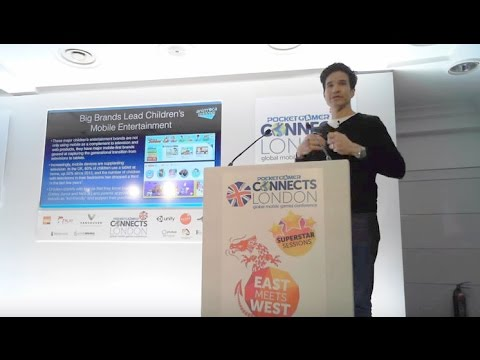
The challenges and potential of the expanding kids games market
The children’s mobile gaming market represents a rapidly expanding segment of the industry, driven by the increasing prevalence of tablets among younger demographics.
- Regulatory compliance with COPPA in the US and strict EU guidelines necessitates a fundamental shift in development, as these laws prohibit standard third-party advertising SDKs and retargeting for users under 16.
- Monetization in the kids' sector has moved away from freemium and consumable-based models toward premium, paid, and subscription-based services to address parental concerns regarding data privacy and unexpected in-app purchases.
- Brand identity acts as a primary discovery tool and trust signal, with major franchises like Disney and Nickelodeon and mobile-first brands like Toca Boca dominating the market.
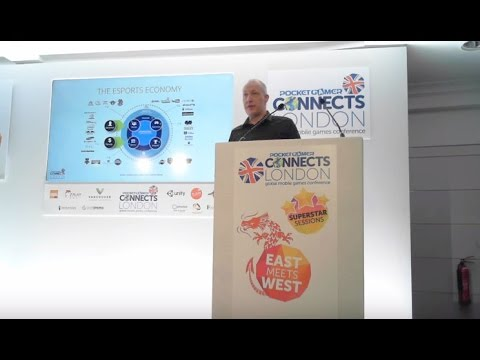
How big will eSports and mobile eSports be in 2016?
The global eSports market is experiencing rapid expansion, driven by a shift in consumer behavior where gaming has evolved from a solitary activity into a spectator-led entertainment ecosystem.
- The eSports market is projected to reach a billion-dollar valuation by 2019, growing from a current economic value of approximately $3.50 per fan.
- The industry is professionalizing through significant capital investment from traditional sports and media entities, including Turner and Madison Square Garden.
- Mobile eSports is a primary growth driver, as it facilitates seamless transitions between playing and spectating by integrating video content directly into game design.
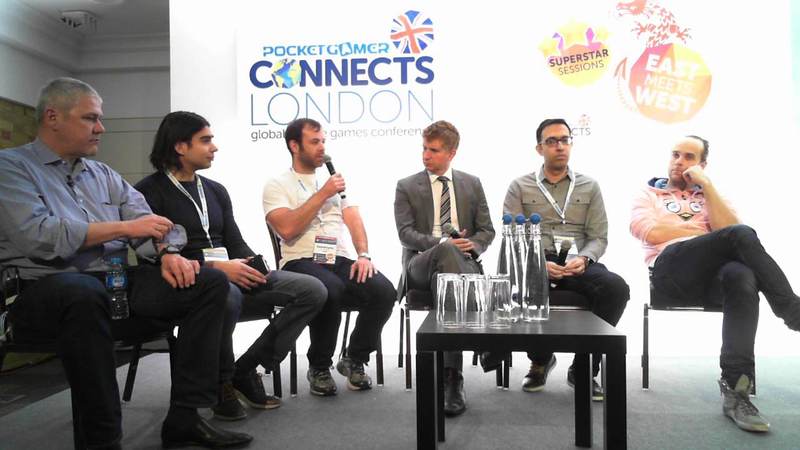
2016 trends panel at Pocket Gamer Connects London 2016
The mobile gaming industry is currently navigating a transition from simple, casual experiences toward more sophisticated, high-production titles that prioritize long-term player retention.
- The mobile gaming market is shifting from simple casual titles toward high-production, sophisticated games that prioritize long-term player retention.
- Industry growth is increasingly driven by the integration of social and messaging platforms to reach broader global audiences.
- Rising development costs are causing major publishers to become risk-averse and increasingly reliant on proven intellectual property.

LVP's Paul Heydon on investment, eSports, mobile MOBAs, and Europe's advantage
The mobile gaming investment landscape in 2016 is characterized by rapid growth, with mobile emerging as the fastest-expanding sector within the broader gaming industry.
- Europe is a net exporter of mobile gaming revenue, leveraging lower overhead costs and competitive salary structures compared to Silicon Valley to achieve superior capital efficiency and higher returns on investment.
- The mobile gaming sector is the fastest-expanding segment of the industry, driven by the successful monetization of mobile MOBAs like Clash Royale and the emergence of professional mobile eSports leagues for titles such as Vainglory.
- High-profile acquisitions, including the deals for Supercell and Activision-King, have validated the sector's profitability and are expected to fuel further reinvestment into game development.

Maarten Noyon's Pecha Kucha about 2016 trends
The year 2016 is defined by a spirit of mercy, a theme projected to influence global cultural and political discourse.
- The gaming industry is entering a pivotal phase in 2016 marked by the commercial launch of the Oculus Rift for virtual reality and Nintendo’s strategic expansion into the mobile gaming market.
- The gaming sector is experiencing a significant push for increased gender diversity and equitable representation as it continues to grow its global footprint.
- The United States faces a critical domestic challenge in mass incarceration, holding 25 percent of the global prison population despite representing only 5 percent of the world’s total inhabitants.
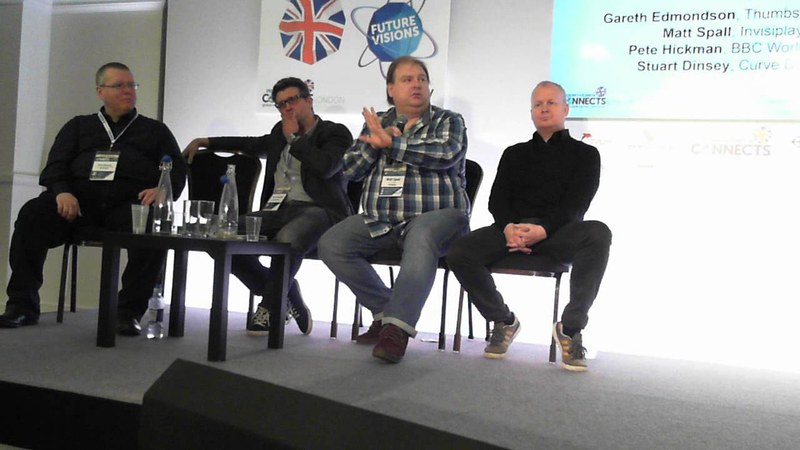
The Old Guard: British Legends panel
The panel discussion featuring industry veterans Stuart Dinsey, Gareth Edmondson, Peter Hickman, and Matt Spall explores the evolution of the British games industry from the 1980s to the mid-2010s.
- Discoverability is the primary challenge in the modern market due to an unprecedented volume of product, rendering high-quality production alone insufficient for commercial success.
- Success in the current digital-first landscape requires integrating robust marketing, active community engagement, and data analytics alongside game development.
- The most successful products prioritize accessibility by being easy to pick up and specifically designed for well-understood target audiences.

Machine Zone, Supercell and King spent $200M on US TV ads in 2015
The mobile gaming industry experienced a significant shift in marketing strategy during 2015, characterized by a rapid expansion into traditional television advertising.
- US television advertising spend for video games reached $630 million in 2015, marking a 47% year-over-year increase driven primarily by mobile-only studios.
- Machine Zone, Supercell, and King collectively spent nearly $200 million on US TV ads in 2015, with individual spends of $93 million, $60 million, and $41 million respectively.
- Top-tier mobile developers are utilizing a 'brute force' marketing strategy, leveraging calculated player lifetime value data to justify massive investments in broad-reach traditional media.

Did mobile gaming peak in 2015?
The mobile gaming industry reached a significant inflection point in 2015, as data indicates a one percent decline in total game session frequency compared to 2014.
- Mobile gaming experienced a 1% decline in session frequency in 2015, marking the first contraction for the category while the broader mobile app sector grew by 58%.
- The 2015 decline follows a multi-year deceleration, as mobile gaming growth slowed to 30% in 2014, consistently underperforming categories like productivity and news.
- Flurry data, derived from tracking 2.1 billion devices across North America, Europe, Japan, and Korea, indicates that the industry's early-stage explosive growth phase has concluded in mature markets.

Can Supercell make mobile MOBAs successful with Clash Royale?
Supercell’s entry into the mobile multiplayer online battle arena (MOBA) space with the soft launch of Clash Royale represents a strategic effort to adapt complex, hardcore genres for a broader, casual mobile audience.
- Supercell is attempting to adapt the complex MOBA genre for casual mobile audiences by blending it with tower defense and card-based deck-building mechanics.
- The game leverages the established Clash of Clans intellectual property to lower the barrier to entry and increase player familiarity.
- The soft launch phase is being used to rigorously test player retention and monetization metrics, consistent with Supercell’s practice of canceling projects that fail to meet internal quality standards.
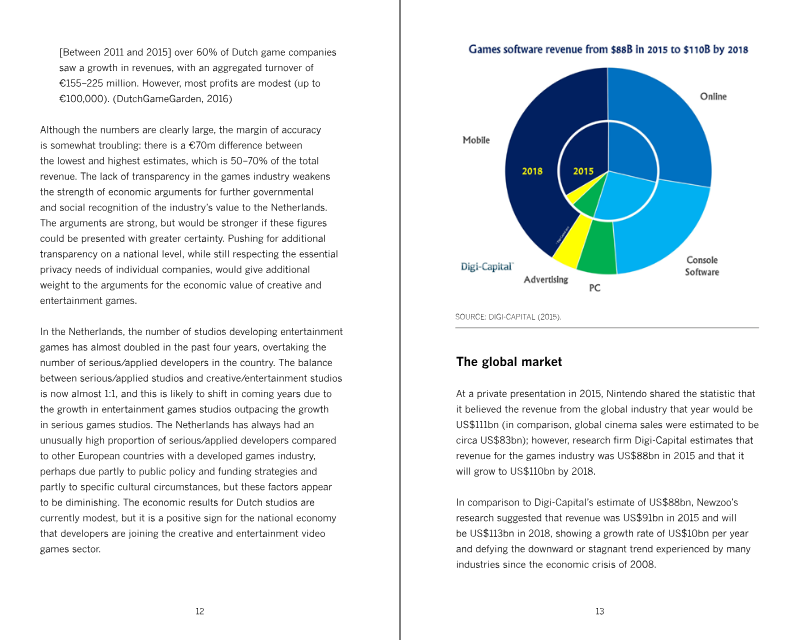


Video Games and the Value of Entertainment
Video games are presented as a young but rapidly maturing medium, comparable to early cinema, and this work focuses on creative and entertainment games rather than serious or applied games designed for education or behavior change.
- The global games market was valued at roughly US$88–91 billion in 2015 and projected to reach about US$110–113 billion by 2018, with the United States and China expected to account for around half of it.
- A 2016 Newzoo figure places the global games market at $99.6 billion that year, underscoring the scale of commercial activity.
- The author argues the UK games sector generates more value added than film, television, music, publishing, design, fashion, and architecture combined, and that Europe must actively pursue this market to stay competitive.
Global Influences on Regional Industries: Game Development in Nordic Countries, China, and India
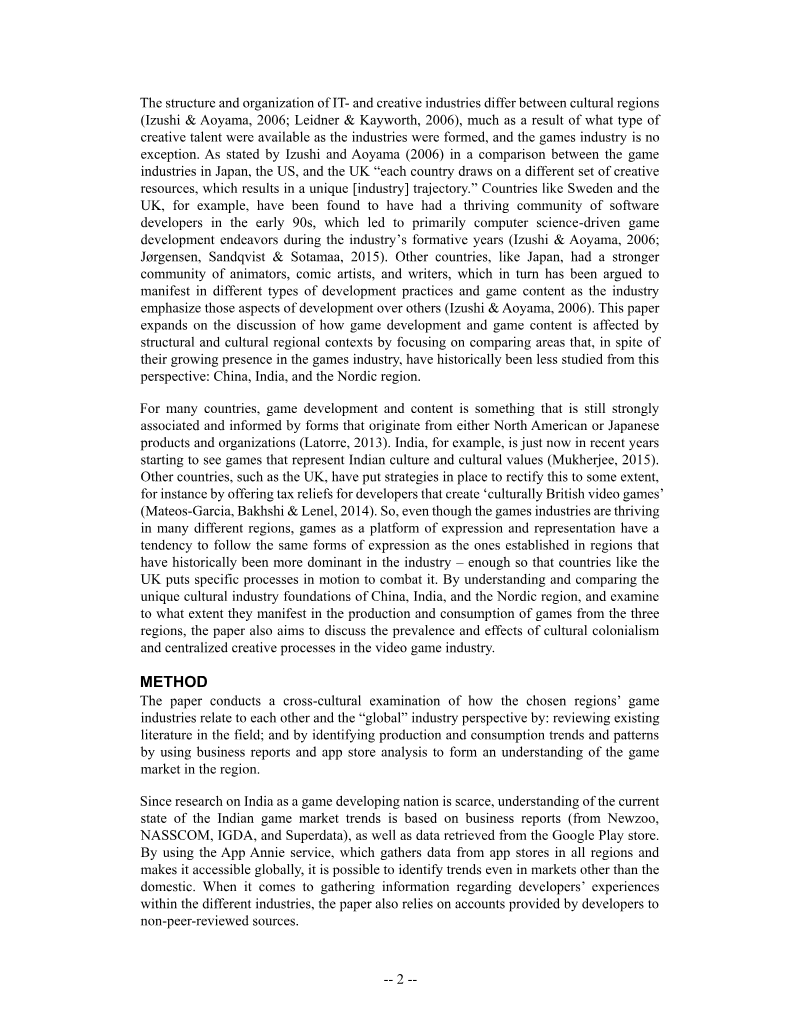
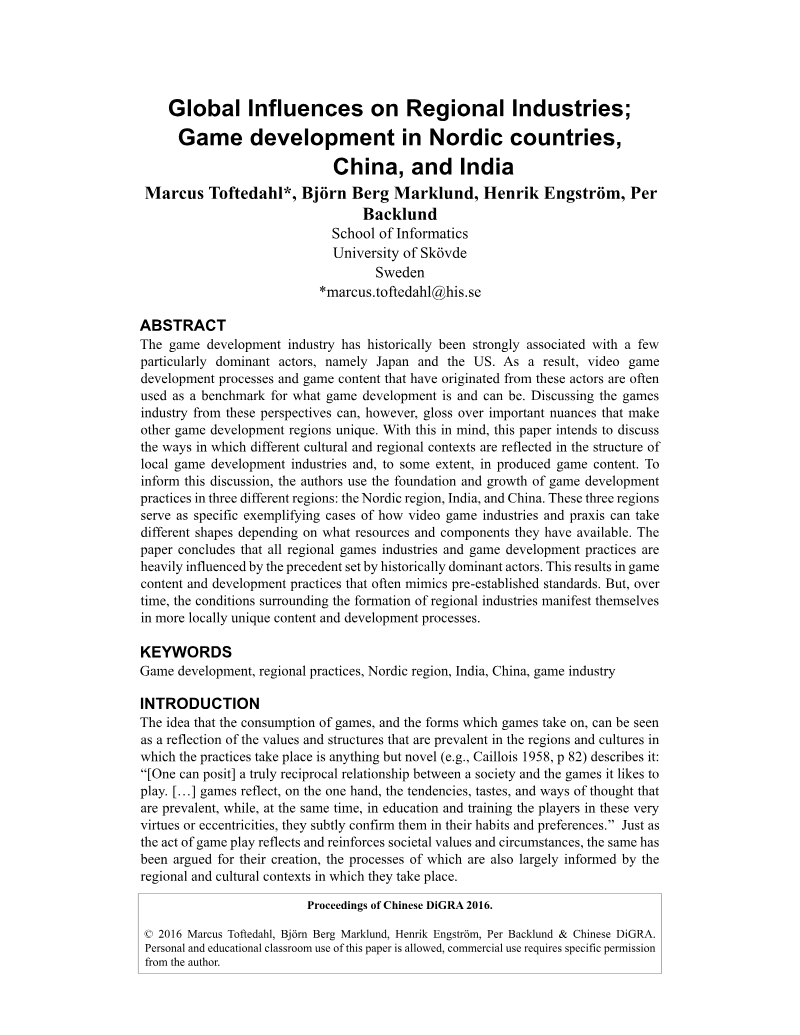
The document examines how cultural and regional contexts influence the structure of local game development industries and, to some extent, game content.
- The global games industry has been dominated by a few historically influential actors, principally Japan and the United States, whose practices serve as benchmarks that other regions tend to follow.
- The authors find that regional content still largely follows globally established standards, possibly because development tools and distribution platforms are concentrated among a small number of companies that pressure developers to adopt existing mechanics while varying aesthetics.
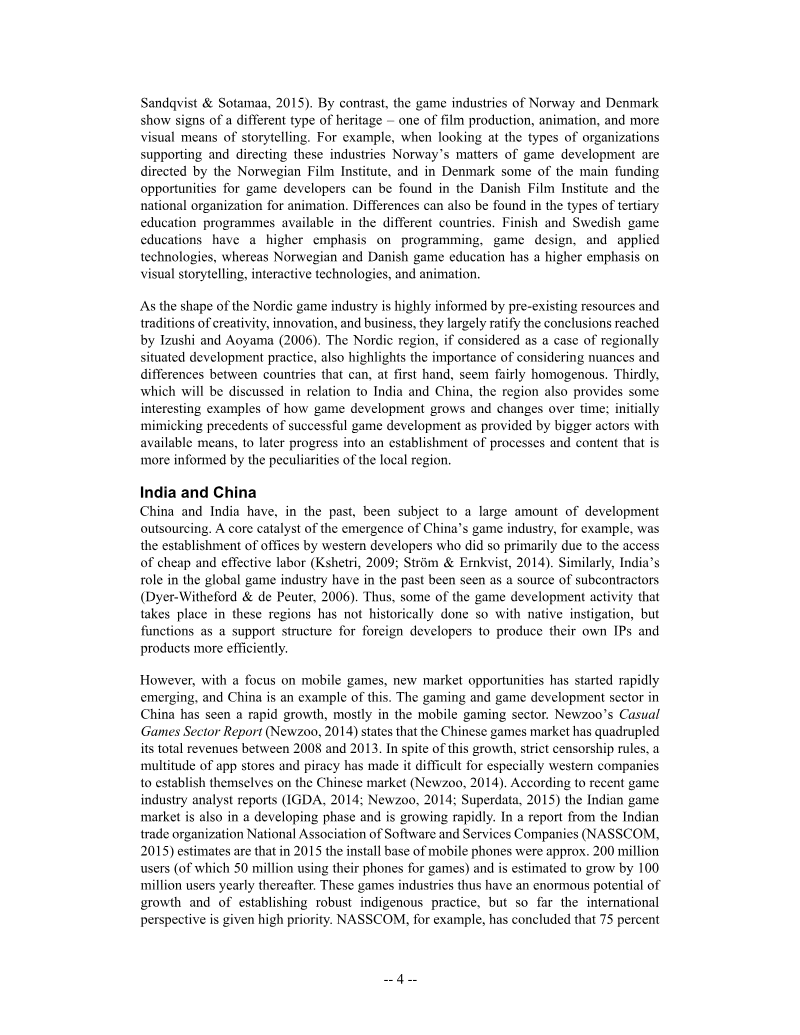
- Nordic game industries took different shapes according to their origins: Sweden and Finland grew out of software engineering and the demoscene with an emphasis on programming, while Norway and Denmark drew on film, animation, and visual storytelling traditions.