1 free read left. Create a free account for unlimited reading + AI research.
Create free account
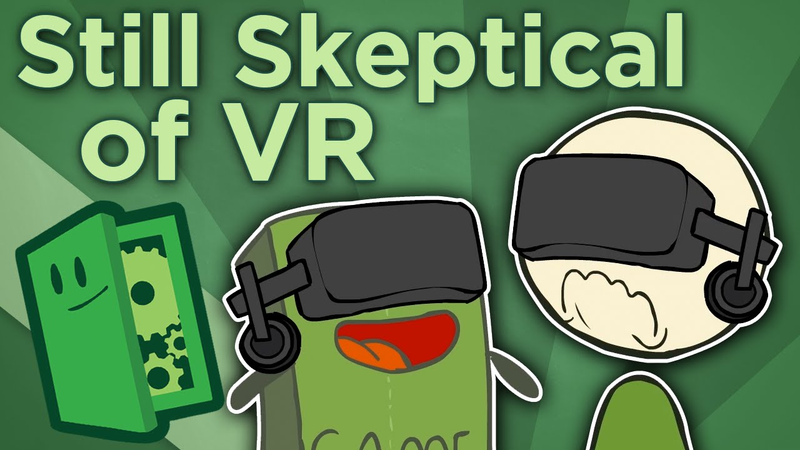
Still Skeptical of V.R. - Five Challenges for Virtual Reality - Extra Credits
Key insights
7 takeaways- 01Many smaller studios face financial instability due to the combination of delayed hardware releases and missed market windows, threatening the long-term sustainability of the VR sector.
- 02VR faces a 'death spiral' of market fragmentation because it remains an optional peripheral rather than a standard hardware requirement, forcing developers to split resources between niche VR users and the established console/PC base.
- 03VR is inherently limited for specific genres like competitive shooters and strategy games, where traditional control schemes like the mouse remain objectively superior.
- 04The industry risks a stalemate where consumers withhold purchases due to a lack of high-quality content, while developers delay investment until the user base reaches a critical mass.
- 05High costs of entry act as a significant barrier to global market penetration, limiting the potential user base needed to justify large-scale development investments.
- 06The lack of hardware standardization across competing manufacturers creates a development environment similar to the fragmented Android ecosystem, complicating production and distribution.
- 07Over-hyping VR by comparing it to 'holodeck' experiences creates unattainable consumer expectations that lead to widespread disappointment when the actual technology fails to deliver.
Ask AI about this video
Transcript
VR is an awesome technology no doubt but I'm still skeptical about it from a business [Music] perspective this episode is brought to you by linda.com extra now everything I'm going to say here I really do hope I'm wrong the game industry has bet pretty heavily on VR and many of my friends are going to be out of jobs if VR fails and Studios start to shut down because of it but I think we really need to look at VR not only for its awesome potential as an experience but also for its actual viability in the marketplace so why am I skeptical I'll just go Point by Point first problem let's start with the big one none of these VR headsets being developed are packaged in peripherals they have the same problem that the original connect had and now has again I guess because the device doesn't come in the package when you buy a PlayStation or an Xbox or a PC so not everyone's going to have one so as a developer you can never be sure if you should be devoting resources to developing specifically for those pereral because
doing so means splitting your Market think of it this way when VR really hits the market let's say optimistically that it'll sell 10 million units in the first year as a developer every dollar I spend improving the VR experience in my game is a dollar I could be spending on improving the experience for more than 30 times as many potential customers by just focusing on standard development for PCs Xboxes and PlayStations and VR is never going to reach 100% adoption so choosing to develop for it is always going to mean splitting your market so I'm worried that VR is going to experience the exact same thing that happened with the connect rather than really focusing on the VR platform cautious Studios will instead take half measures and say we'll throw in some VR features but we're going to wait and see what happens with it before we really commit to making games that make full use of the technology and we're already starting to see this some studios are rolling back from saying that they're making primarily VR games to saying that they're going to put in some VR support and it's my fear that this may cause the same death spiral we saw with the connect
or motion controls remember those on the one side we'll have consumers waiting until there are some killer games out there that really require VR to get the full experience before they pull the trigger and go buy themselves a headset meanwhile on the other side the industry will wait until there's enough consumer adoption to really incentivize committing development dollars to creating those experiences and it just ends in a stalemate consumers not buying VR headsets and developers not developing VR games and the only people really supporting the platform being the platform holders which is never enough on its own second problem VR isn't actually good for all games it's fantastic if you want to play a racing game or Pilot a spaceship but I'd never use it for Diablo or civilization or League of Legends this again limits the audience that will buy it which in turn limits how much the industry will commit to developing for it and while VR fortunately doesn't require quite the level of total design commitment that something like motion controls does if you play some VR demos that have been designed specifically for the platform and then try to go play some standard
games through the headset that haven't been designed for VR at all the difference is palpable enough so that I'm willing to say that many of the VR headsets coming to Market aren't going to be worth their price tag unless there are a lot of developers designing specifically for them and the price tag is a challenge in and of itself gaming is getting to be an expensive Hobby and spending another few hundred on a peripheral is something that many people are simply not willing to do moreover this issue is compounded in regions that have a lower average wage than markets like the us or the EU I would never try to produce a game that relied on a truly massive user base games like Dota or Hearthstone unless I knew that I could tap into a truly Global Market which means I'd never produce a game of that scale with a focus on VR now many of you are probably thinking well obviously not I wouldn't want to play Dota or Magic the Gathering online in VR anyway but that also means that I'd never produce games like CS goo or Warframe with a focus on VR either when your game requires a ton of players for people to find the game and for it to really work
you can't afford a split market and not being able to develop games targeting the league and Counter-Strike audiences which is an enormous audience of potential customers removes yet another huge chunk of the potential Market from this platform and after all if looking around with that headset on in a game like csgo isn't tuned to be just as efficient as looking around with your mouse most players are just going to keep looking around with their Mouse and if you lose turning your head to look around you lose a huge part of what makes VR so unique and immersive so there's not a lot of reason to to buy the expensive headset if you're just going to keep looking around with the mouse besides if the game is somehow tuned to actually control better with VR giving players with the expensive headsets of competitive Advantage everyone who can't afford one is going to complain third problem the variety there are a lot of companies bringing VR headsets to Market which may seem like a promising sign at first but because each of them are putting out Hardware with slightly different specs I fear that they're only going to further fragment an already narrow market like if you're a developer which VR heads set do you
design your game for is this going to become the nightmare that developing for Android devices currently is where you have to spend a huge amount of QA time just making sure your experience works well on every single version of the device like okay my favorite VR experience so far has been the Vive but building a game for that involves even more crazy specific design choices than many of its competitors and requires that the player have a room designed to play it in so as a developer do you invest the money required to support it how much what do you tell the users who give you negative reviews on Steam because your game happens to not work well with their specific headset then there's the fourth problem the delayed implementation of all this Hardware worries me a bit the Oculus Kickstarter happened back in August of 2012 over 3 years ago and if you read some of the buzz from that time period there was a lot of talk about 2014 or 2015 being the year that VR would take the World by storm and if you look at steam today you'll see dozens of VR enabled games made by small companies who thought that they'd be riding this 2015 VR wave
everyone predicted was coming many of those companies are now out of business and every day that this next big thing isn't yet the next big thing companies are becoming more and more reticent to go all in on this platform and if that continues I don't think we'll ever see the mass adoption necessary to make the VR hype a self-fulfilling prophecy and lastly the fifth problem it's just not the hollow de look I have been saying a lot of negative stuff here but believe me when I say that VR is awesome I really like it and for all of my worries I want it to succeed but I worry that we as an industry might have overhyped it I've talked to a lot of consumers who have these wild ideas about what their VR experience is going to be and if this magical technology that we've talked up so much and that we've sold as this new Incredible way to make gaming so much more engaging doesn't live up to that hype I think we're going to see a lot of disappointment and negative Word of Mouth from consumers not because it's bad but simply because it didn't live up to the vision people had in their heads a vision that we the industry have helped to create so overall I'm still
skeptical not about VR being a neat technology because it is but rather its place in the market and whether it'll really revolutionize gaming the way that many have talked about it but for everything that I've said here a lot of money has been poured into VR so maybe that will get us over the hump and this won't all go the way of Sony's 3D gaming or Microsoft's connect I really hope that's the case for the industry and for gaming in general see you next week [Music] he [Music]
Summary
The primary thesis regarding the viability of virtual reality (VR) in the gaming industry is that significant structural and economic challenges threaten its path to mass-market adoption. While acknowledging the impressive nature of the technology, the analysis argues that VR faces a potential death spiral similar to previous failed peripherals like the Kinect. The core issue is market fragmentation: because VR headsets are optional peripherals rather than standard hardware, developers are forced to split their resources between a niche VR audience and the much larger, established base of traditional console and PC players.
Key challenges identified include the inherent limitations of VR for specific genres, such as competitive shooters or strategy games, where traditional control schemes like the mouse remain superior. Furthermore, the high cost of entry creates a barrier for global markets, and the lack of hardware standardization across competing manufacturers threatens to create a development nightmare similar to the Android ecosystem. This fragmentation, combined with the industry’s tendency to offer half-measures rather than full-scale VR commitment, risks creating a stalemate where consumers wait for high-quality content while developers wait for a larger user base.
The analysis also highlights the risks of over-hyping the technology. By setting consumer expectations at an unattainable level—often compared to a "holodeck" experience—the industry risks widespread disappointment if the actual product fails to meet those inflated visions. With many smaller studios already facing financial hardship due to delayed hardware releases and missed market windows, the long-term sustainability of VR remains uncertain. Ultimately, the industry’s heavy financial investment may not be enough to overcome these fundamental market hurdles without a clear, unified path toward mass adoption.




















Comments