Japan gaming industry reports and market data
Documents
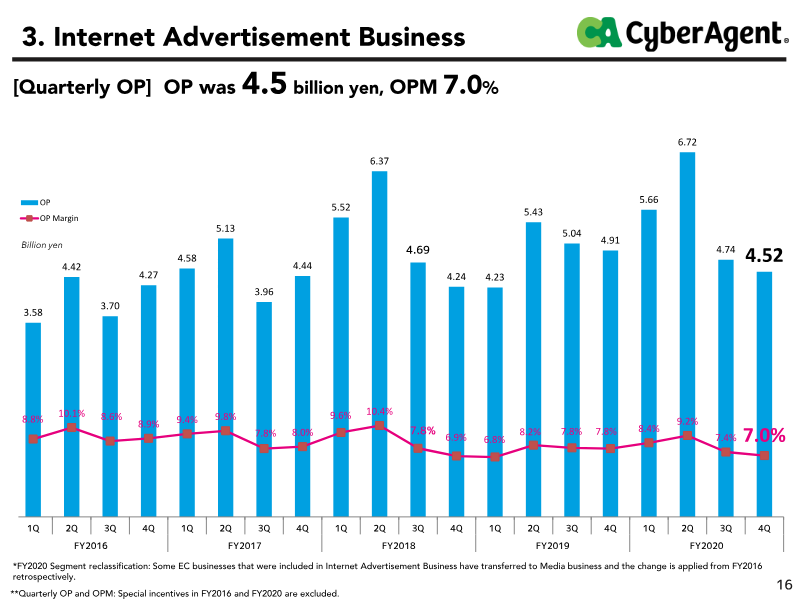
FY2020 Presentation Material
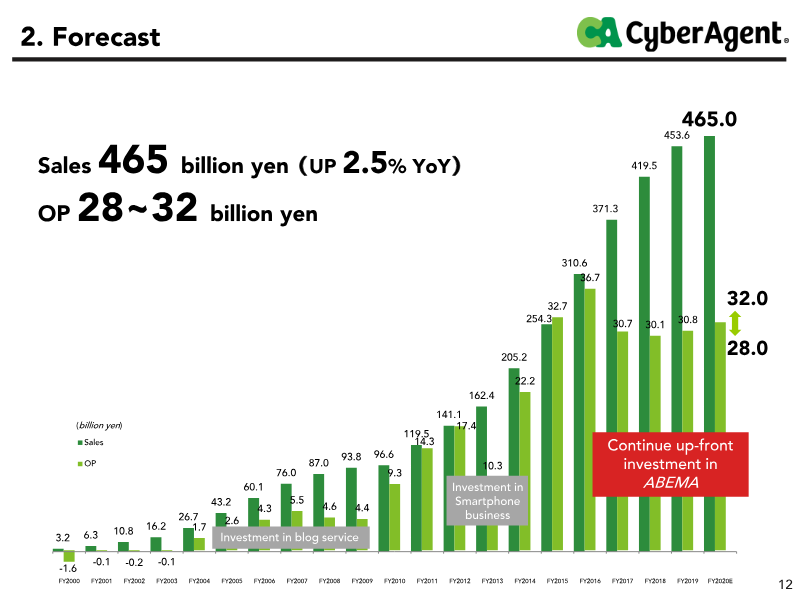
CyberAgent achieved record-high financial performance in fiscal year 2020, reporting consolidated sales of 478.5 billion yen and an operating profit of 33.8 billion yen.
- CyberAgent achieved record FY2020 performance with 478.5 billion yen in sales and 33.8 billion yen in operating profit, marking year-over-year growth of 5.5% and 9.9% respectively.
- The Game business served as the primary growth engine, generating 155.8 billion yen in sales driven by legacy titles and the successful launch of Project SEKAI, which reached two million users in three weeks.
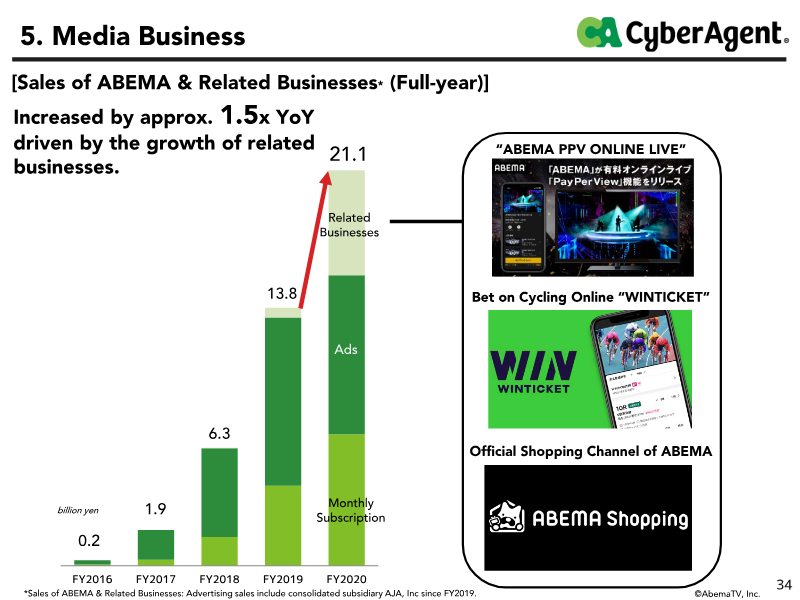
- The Media segment, anchored by ABEMA, grew annual sales by 22.6% to 57 billion yen, supported by a cumulative base of over 59 million downloads.

Survey on Elementary and Middle School Game Creators and Career Formation: 2019
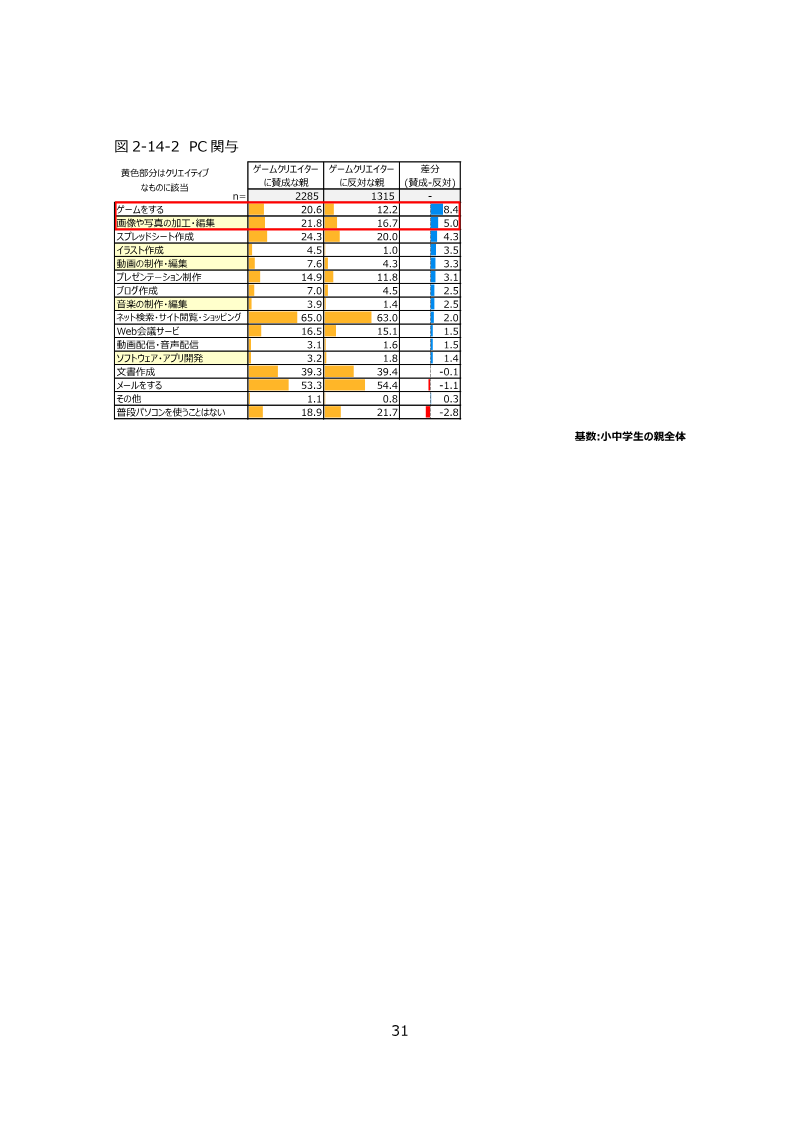
The 2019 survey on Japanese elementary and middle school students reveals a significant disconnect between the high professional aspirations of youth and the perceptions held by their parents regarding the game industry.
- Over 60 percent of parents support their children pursuing a career in the game industry, particularly those who value programming education and possess high computer literacy.
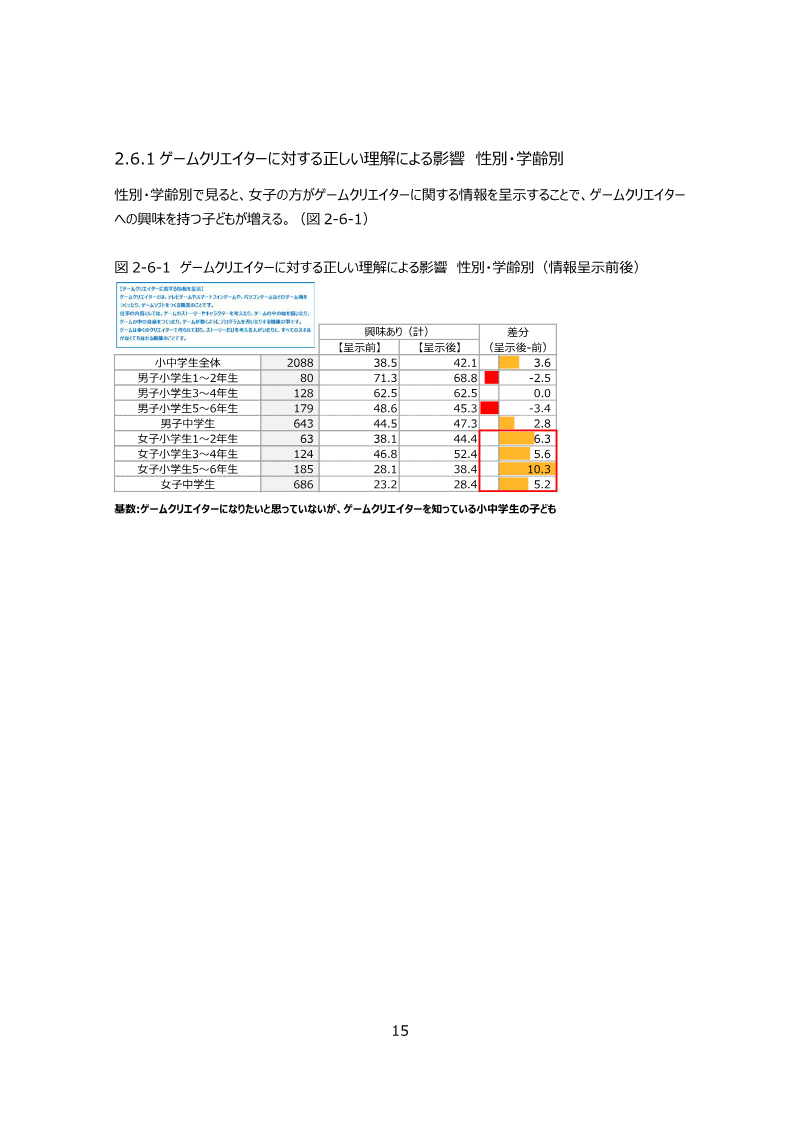
- Providing accurate industry information increases student interest in game creation careers by approximately four percentage points, with the highest growth observed among female students.
- Game creation is the primary career ambition for boys, while it ranks significantly lower for girls due to perceptions of high difficulty and a lack of accessible information.

Game Dev Archeology: Unearthing and Preserving Japanese Game History
Preserving the history of Japanese video games requires a rigorous, archaeological approach that transcends simple emulation.
- Preserving Japanese game history requires an archaeological approach that combines developer interviews, archival scans, and the recovery of lost source code rather than relying solely on emulation.
- Success in this field depends on persistent, on-site relationship-building within the Japanese industry to navigate corporate sensitivities and gain access to internal archives.
- Field research has yielded concrete results, such as the recovery of the unreleased title 'Samurai Shodown 5 Perfect' from a forgotten hard drive and the clarification of technical specifications for early SNK hardware.

3Q FY2020 Presentation Material
CyberAgent’s performance during the third quarter of fiscal year 2020 remained resilient despite the economic disruptions caused by the COVID-19 pandemic.
- CyberAgent reported 112.8 billion yen in consolidated sales for 3Q FY2020, achieving 89% to 102% of its full-year operating profit forecast despite a marginal 0.7% year-over-year revenue decline.
- The Game business generated 36.7 billion yen in quarterly revenue, bolstered by major title anniversaries and a strategy focused on both new IP development and lifecycle extension for existing games.
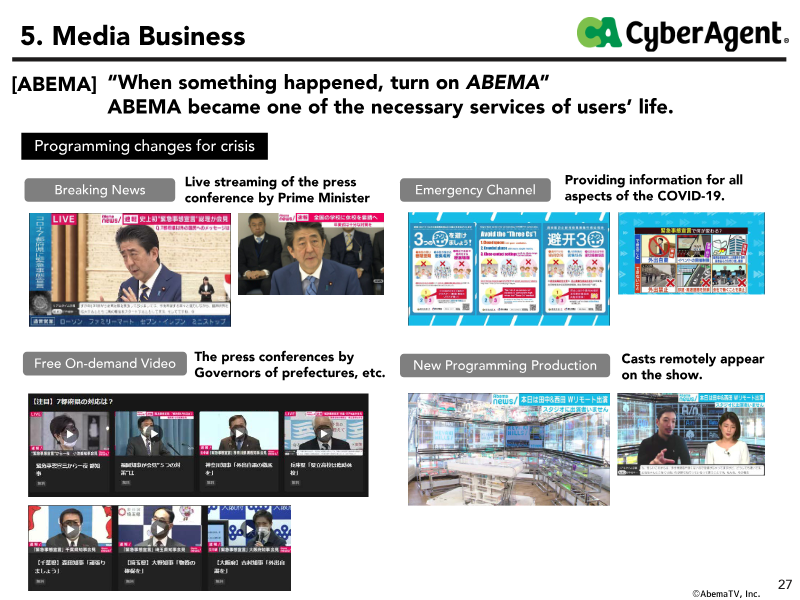
- The media segment, anchored by the ABEMA streaming platform, grew sales by 19.2% year-over-year to 13.3 billion yen, supported by 56 million total downloads.


2Q FY2020 Presentation Material: January to March 2020
CyberAgent achieved record-high financial performance during the second quarter of fiscal year 2020, with consolidated sales reaching 129.1 billion yen and operating profit surging 45.3% year-over-year to 12.4 billion yen.
- CyberAgent achieved record-high Q2 FY2020 consolidated sales of 129.1 billion yen and a 45.3% year-over-year increase in operating profit to 12.4 billion yen.
- The Game Business drove performance with 44.8 billion yen in revenue, bolstered by anniversary events for Granblue Fantasy and the successful launch of KonoSuba: Fantastic Days.
- By the end of the first half of FY2020, CyberAgent had already achieved 63% to 72% of its full-year profit targets.
Japan Gaming Market with Serkan Toto
The Japanese gaming market, valued at approximately $13 to $15 billion, remains a distinct and highly lucrative ecosystem dominated by mobile platforms, which account for roughly 70% of total revenue.
- The Japanese gaming market is valued at $13–$15 billion, with mobile platforms accounting for approximately 70% of total revenue.
- High barriers to entry exist due to a top-heavy market structure dominated by legacy titles like Monster Strike and Puzzle & Dragons, alongside AAA mobile production costs that frequently exceed $10 million.
- International competitors from China and Korea, such as NetEase, are successfully capturing domestic market share by introducing innovative genres like Battle Royale that challenge the traditional dominance of gacha-based RPGs.


1Q FY2020 Presentation Material: October to December 2019
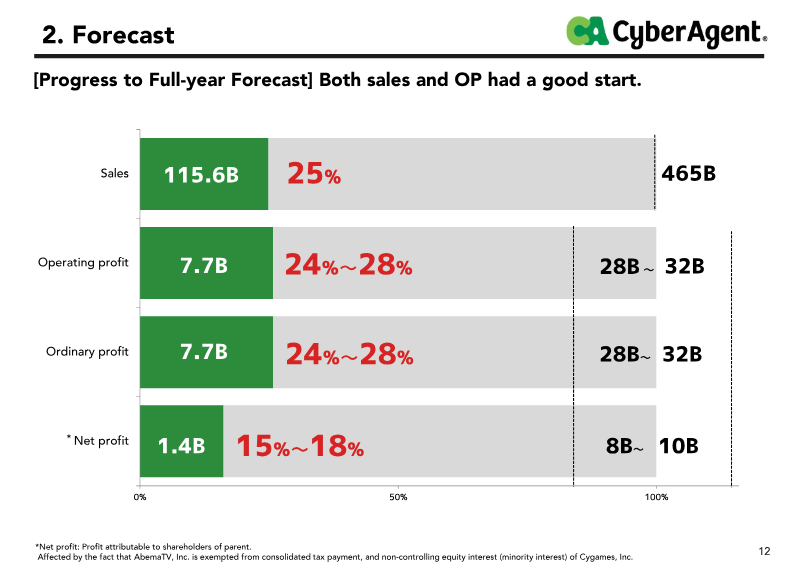
CyberAgent achieved a robust financial start to the 2020 fiscal year, recording consolidated sales of 115.6 billion yen, a 4.4 percent year-over-year increase, alongside a significant 44.6 percent surge in operating profit to 7.7 billion yen.
- The company generated 115.6 billion yen in net sales for 1Q FY2020, meeting approximately 25% of its 465 billion yen full-year revenue target.
- Operating and ordinary income both reached 7.7 billion yen, tracking toward the annual target range of 28 billion to 32 billion yen.
- Profit attributable to owners of the parent was 1.4 billion yen, representing 15% to 18% of the projected 8 billion to 10 billion yen annual goal.
The Sound of Horror Resident Evil 7: Biohazard
Resident Evil 7: Biohazard establishes a new benchmark for immersive horror through a sophisticated integration of high-fidelity Foley work, automated technical systems, and unconventional musical composition.
- The audio team created a library of 10,000 original organic textures and vocalizations, utilizing musique concrète instead of traditional melodic scores to build a hyper-realistic horror atmosphere.
- Development efficiency was achieved through the proprietary RE Engine and Wwise middleware, which utilized automated audio triggers tied to animation and environmental data to reduce manual implementation labor.
- The audio system employs dynamic sound propagation that reacts to game geometry and an asynchronous, non-blocking architecture to prevent CPU spikes during gameplay.
概要: ゲーム障害に関する調査・研究
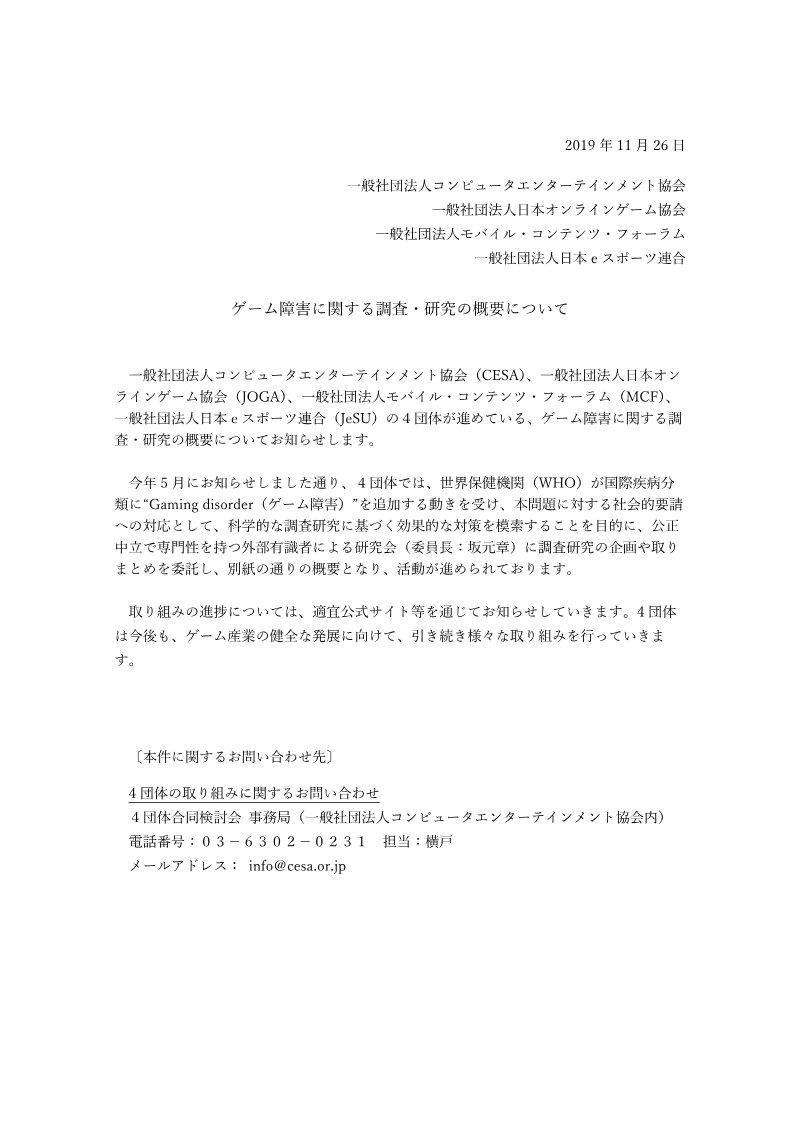
Four major Japanese gaming industry organizations, including CESA, JOGA, MCF, and JeSU, have initiated a comprehensive research project to address the classification of gaming disorder by the World Health Organization.
- Four major Japanese industry organizations (CESA, JOGA, MCF, and JeSU) have launched a formal research project to develop evidence-based countermeasures for gaming disorder following its classification by the WHO.
- The research is governed by an independent committee of external experts in psychology, medicine, and social research, chaired by Professor Akira Sakamoto of Ochanomizu University.
- The project is structured into two phases spanning 2019 and 2020, beginning with the development and validation of standardized measurement scales for both children and adults.
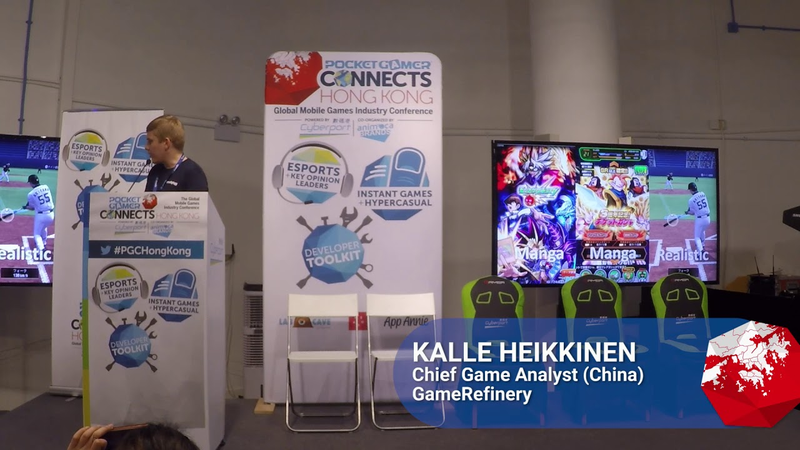
East vs. West: Mobile Game Art Styles and Genres Across Markets
This analysis examines the divergence in mobile game art styles and visual genres across the United States, Japan, and China, utilizing feature-level data from the top 200 grossing iOS titles during the first quarter of 2019.
- In the US mobile market, realistic and cartoon art styles dominate, with realistic visuals prevailing in mid-core games and cartoon styles capturing the majority of the casual segment.
- The Japanese market is heavily dominated by manga-style art across almost all game categories, with the notable exception of sports and racing titles.
- China's mobile market shows a strong preference for fantasy settings, frequently leveraging local folklore, historical literature like 'Journey to the West', and the 'Romance of the Three Kingdoms' era.
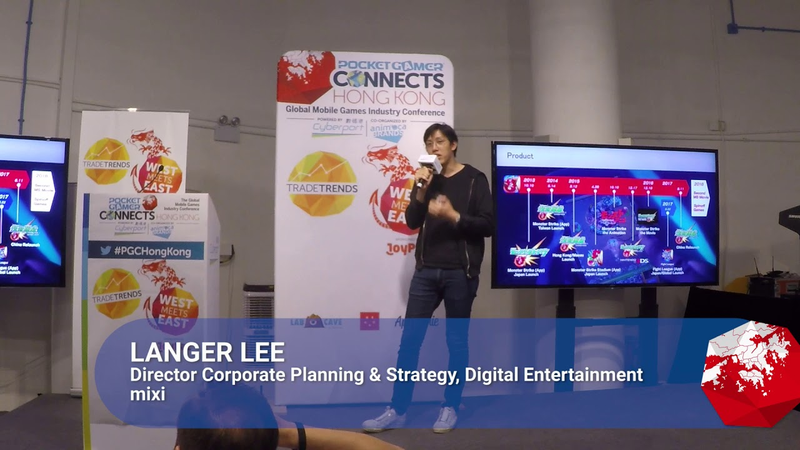
How Monster Strike Became the Biggest Mobile Game in the World
Mixi, a prominent Japanese social networking and entertainment company, has achieved significant global success with its flagship mobile title, Monster Strike.
- Monster Strike maintains high user retention through a core player base, with 30% of users having played for five to six years and 40% having played for at least one year.
- The company employs a 'barbecue concept' strategy, focusing on high-adrenaline, real-time, four-player co-op experiences designed to bring friends and family together.
- Mixi utilizes a vertical integration model for its intellectual property, synchronizing game development with movies, animation, eSports, merchandising, and physical retail spaces to capture users across multiple categories.

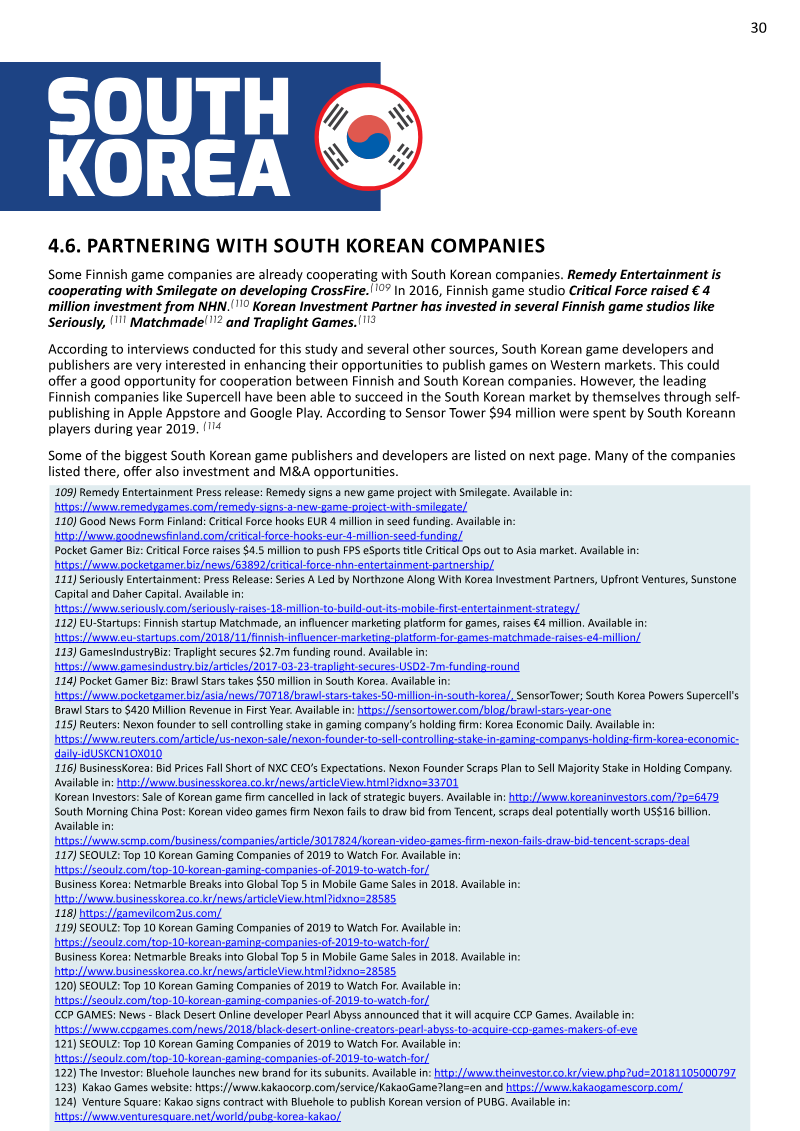

Market Study: China, Japan and South Korea
The Asia-Pacific region stands as the preeminent global gaming hub, with China, Japan, and South Korea serving as the primary engines for industry growth.
- China, Japan, and South Korea represent the primary engines of the Asia-Pacific gaming market, requiring tailored, long-term strategies rather than standardized global approaches.
- Market entry in China necessitates navigating a mandatory ISBN licensing system and strict content censorship, often requiring collaboration with local publishers to ensure compliance.
- Japan’s mobile market is highly saturated but features the world’s highest per-player spending, specifically within RPG and gacha-based genres.