1 free read left. Create a free account for unlimited reading + AI research.
Create free account
East vs. West: Mobile Game Art Styles and Genres Across Markets
Key insights
6 takeaways- 01In the US mobile market, realistic and cartoon art styles dominate, with realistic visuals prevailing in mid-core games and cartoon styles capturing the majority of the casual segment.
- 02The Japanese market is heavily dominated by manga-style art across almost all game categories, with the notable exception of sports and racing titles.
- 03Japan exhibits a significantly higher prevalence of 'hybrid' visual genres—games that mash up multiple settings or styles—compared to the US and Chinese markets.
- 04While the US market shows a higher reliance on abstract 'other' visual genres, all three regions (US, Japan, China) demonstrate a surprisingly low volume of pure sci-fi titles in the top 200 grossing iOS games.
- 05The US market's visual genre distribution is characterized by a strong presence of modern and fantasy settings, whereas modern settings dominate the casual segment in Japan.
- 06China's mobile market shows a strong preference for fantasy settings, frequently leveraging local folklore, historical literature like 'Journey to the West', and the 'Romance of the Three Kingdoms' era.
Ask AI about this video
Transcript
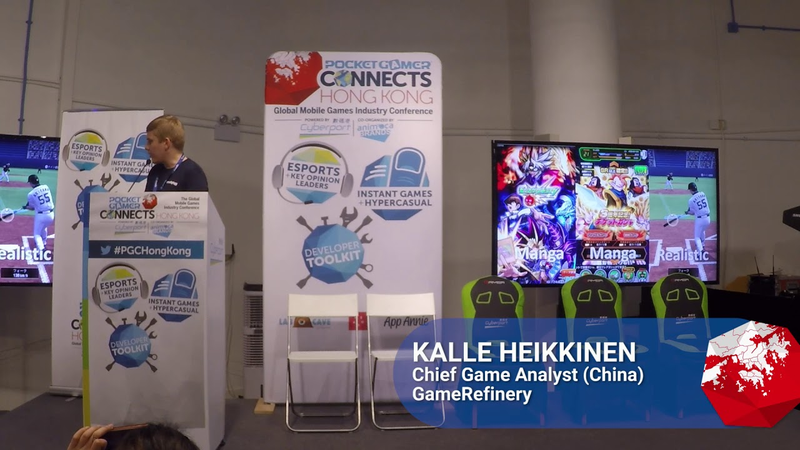
[Music] all right hey hello everyone and good afternoon and of course when I say that really appreciate everyone showing up to this presentation I know it's late in the day and it's the second day so so really really appreciate it so the topic of today is East versus West in terms of mobile game art styles and genres and in more specific terms what we're gonna be looking at these markets if US Japan and China so we're gonna be doing a little bit of comparison between these three different markets but before we get to the actual beef of the presentation let
me just do a couple of intros first so first about myself my name is Carla Hayden and I work at game refinery as a senior analyst mainly focusing on keeping our database of Chinese games as up-to-date and as comprehensive as possible they don't gave me foreigner II if there's still someone out there who is not aware of us we're all about features and feature level data so we have a database containing over 10,000 game analysis in this in our system and from that data database were then able to extract out data points such as differentiating features and future trends so in other words we're helping for example different kinds of industry strake holders to get a better idea of what's going on in a mobile game markets in terms of the feature side of things and speaking of features there's really
quite a lot of variety in the in the features that we're tracking for all the games that we have in our system so they range from things like monetization tree engagement from scope of the game to social elements from progression to mechanics but in this presentation we're going to be zooming in to the visual side of things and speaking of visuals there's a couple of terms that I just want to clarify before we get to look at the actual data itself so I'll be using terms visual style and visual genre and some of you might be thinking that okay what's the sort of the difference between these two and what I'll be talking about visual style but I'll be what I really mean is the style of graphics in the game so for that we have three different values manga cartoon and realistic then when it comes to the visual genre that's all
about the setting or sort of the era that the game is being based on and for that we have realistic modern realistic Eastridge fantasy sci-fi and in case it's sort of a mash-up between several different genres then it gets assigned the value of hybrid so in case it's for example a sci-fi fantasy mashups this is up like a final fantasy like game and then the last battle that we have is the other these games are usually sort of an abstract games like an example that comes to my mind is the candy crush candy crush game so if they don't really belong it to any of these other genre standing then those kinds of games get assigned the other value now I try to keep all the graphs at minimum in this presentation but as we were data company and this is the data presentation there's no way around it so certain slides that I will show you will include
graphs and those graphs will include category level data so what that means is that we're going to be looking at the category breakdowns where we're looking at how how popular different kinds of art stars or art genre are in these different categories and in our genre taxonomy we have four different categories for games they include casual mid core casino and sports and racing if you're interested to know what kind of genres and subgenres for under these different categories please feel free to take a look at the table on the right hand side the taxonomy that we use is something that we created together with the industry experts which is the excellent advice from the constructor of fun oh yeah without further ado let's get down to business so I've divided this presentation into two different parts first we're gonna be looking at visual styles across these three different
markets and then it's all about the visual genres and in case you're wondering all the day that I'll be displaying is from the top 200 crossing iOS games so first on the visual styles so meaning the sort of the graphical style of the games and let's start from the US market here we have a situation where realistic and cartoon are dominating and as we can see from the from the pie chart here among eyes definitely in the niche with the eight two same market share now taking a look at a category breakdown what we can see is that among casual games cartoon is performing very robustly whereas among mid core games it's really the realistic style that's dominating some examples of different art styles in the US market I have the Star Trek game representing realistic Angry Birds representing
cartoon style and I believe this was episode that representing cartoon then moving on to Japan perhaps a bit unsurprisingly manga is definitely the name of the game here and also if we look at the different categories we can also see that apart form perhaps ports and racing all the other categories are dominated basically by the manga visual stuff some examples again I have monster strike representing manga and this was the one that's representing realistic is from baseball spirits then the Chinese market let's look at that overall market is pretty even out between these three different art styles but we can see still see that the really realistic style is the most prevalent one and Part two it has the smallest
football and the category breakdown reveals that it's a bit similar situation to the US the sense that cartoon has quite significant chair inside casual where it's realistic is dominating midcourt obviously the number of games inside casual in u.s. was much higher and on the other hand in mid core it was much lower so that's that's definitely a clear difference but in terms of the art style ratios it's pretty similar situation some examples again I have crossfire representing realistic that's an FPS game then we have a knee pop match free game representing cartoon and then honk I third representing the manga style in the Chinese market then let's move on to visuals on Rah's just a super minder now we're talking about about the the setting or sort of the air outlet that
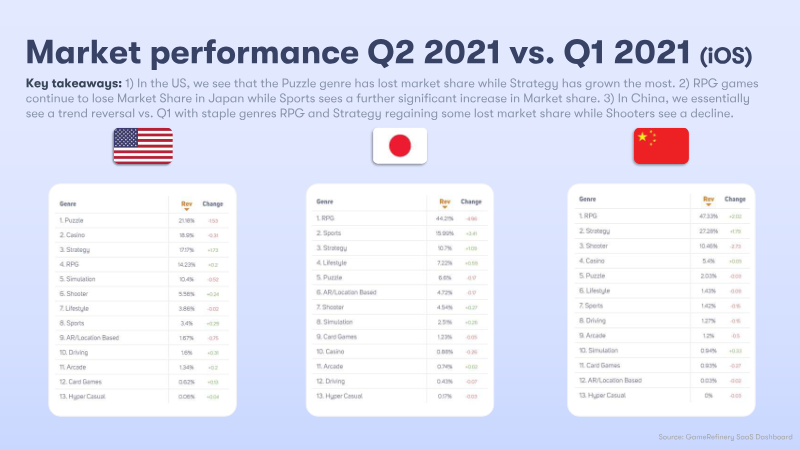
their games are being based on and let's first just compare all the three markets in general and some observations that we can do here is that in the US market it's really dominated by the realistic modern art genre that's be followed by fantasy and then the abstract other arts onra in China fantasy is definitely the name of the game and then if we look at the Japanese market then it's a more like a mix of these other two markets now let's zoom in to the individual markets and to the category level what we can see here first of all in the US market is that modern has a strong presence in all of these categories what I would also note is the abstract other others share inside
casual as well as fantasies strong performance inside Mitch Corp and I have a example screenshot from the BTS war game it's been doing really well actually in all of these three markets lately it's an interactive story of game an interesting case the Japanese market then I think the most interesting data point here is the high amount of hybrid games yes I admit course so hybrid games again we're the ones were several different kinds of art genre story are being mashed up together and other thing to notice that modern if dominating inside casual games which was not the case for example and we looked at the US market and as an example case I have Final Fantasy brave xv's representing this hybrid or genre then moving on to the Chinese market what we have here is
a strong performance of fantasy games especially inside mythical games as you can see that fact is definitely boosted by themes very popular in this market ranging from different kinds of pieces of literature such as Journey to the West Romance of the Three Kingdoms and and their Roman dies ations and also we share related themes and and so forth and that's an example screenshots I have one from MMO called screen share all right then concluding things up on US market what we saw is that games with modern or fantasy settings with both cartoonish or realistic styles were the most common combinations and if we compare the situation to China and Japan we saw that us the highest prevalence of games that
utilized this sort of the abstract other Chandran in China what we saw is that fantasy is very very strong in the market many games are based on different kinds of Chinese folklore elements for example and and historical era such as the Three Kingdoms era and stuff like that so that's really really popular there and in Japan it's really about the manga styled games that's definitely the most popular art style there and the high amount of hybrid games is also something that I would note here and then increase oome out of it and take a look at all the three markets together then I think some of the interesting things were we can we can see is that um this relatively low number of sci-fi
games out there I mean there are some obviously we have you know Star Wars galactic heroes we have arc of war for example doing quite well in the Chinese market but still if we compare that the other on genres this is actually something that's I think it's quite interesting that this it's not that popular as compared to the other or genres then not that many realistic history games outside the rich poor category that's also something that I'm sort of strikes the eye and then almost all sports and racing or realistic modern now I think it's gonna be interesting to see when the new Mario Kart game is gonna hit the market how that will affect this situation are we gonna see more copycats of that game and will will that art style then become more popular in this space and then just final words for me if you're wondering what's sort of the oho what's the point
of all this and what's the meaning of all this now understanding regional visual preferences or actually any kind of feature so we could be talking about monetization mechanics reengagement mechanics or anything of the of the sort is very very important when you are exporting games to overseas to foreign markets now when you in that process do utilize feature level data to make sense of the market that you want to understand and when you do that as we all know the market is very dynamic so make sure that you have access to data that's US relevant as us up-to-date as possible now if that's something that interests you please feel free to come find me or my colleagues on the show four will be more than happy to talk about feature level data and how that can be utilized to boost your games performance and also
if you're interested feel free to add me a widget I don't mind at all and yeah I think that's it from my side so just want to say thank you for this opportunity and please if you do have any questions feel free to shoot them at me so thank you so do we have any questions about the art style differences between East and West Mahalo where are all the sci-fi titles that we're wondering as well well Linda in the office I think one reason might be that because we also have the hybrid art style as well so some of the sort of sci-fi titles that then also incorporate let's say fantasy elements in them they of course then gets assigned the hybrid
value so they might be absorbing some of the sort of titles that do have sci-fi elements in them but even when that is taking in taken into account I was still dare to say that that that the lack of quite striking and perhaps you can remind us the data that you have what was the time frame that was taken from because I assume what you observe is that those trends change with you definitely definitely so this data was collected in the q1 period of this year yes but in our service for example it's updated all the time so if you were to log in there you would be able to access data as relevant data as possible right interesting does anyone have any other questions for Allah um just before we actually got a couple of minutes so do you want to just maybe use the opportunity to tell us a little bit about grain refineries tool perhaps a little bit more about that because there's some people here who might benefit from using your service actually
so yeah we're data analytics company based in Helsinki Finland and as I mentioned in them in the very beginning we are all about feature feature level data so we have clients that use use our service for things such as a competitor benchmarking to know what kind of features are trending how to implement those kind of features we have for example a database of implementation screenshots for all the features where you can easily browse check out how to implement those features we have a database of first-time user experience videos in our service where you can conveniently check for the for example for example for your competitor games how do they on board their new players how that how have they build up their tutorials and maybe learn something from them and bring something from their to your game and also you'll be able to input your own game concepts
to our system and test out how those concept feature sets would actually play out in the market so it's really a lot of things you can do it within the service and definitely do go to game AFRICOM and press the sign up button and you'll be able to access the free layer of the service where you can test test around up under service and and yeah as I said if you're interested in this you can find me or my colleague Brandon who is back there and then and will be happy to talk more about them about gaming front right thank you last chance for a question before we wrap up the session no we're all done thank you all right well look thank you very much that was great thank you [Music]
Summary
This analysis examines the divergence in mobile game art styles and visual genres across the United States, Japan, and China, utilizing feature-level data from the top 200 grossing iOS titles during the first quarter of 2019. The research categorizes visual styles into manga, cartoon, and realistic, while classifying visual genres by setting, including modern, fantasy, sci-fi, and hybrid themes. The primary objective is to provide developers and industry stakeholders with actionable insights to inform localization strategies and market entry.
Key findings reveal distinct regional preferences. The United States market is characterized by a dominance of realistic and cartoon styles, with modern and fantasy settings prevailing across casual and mid-core categories. In contrast, the Japanese market shows a strong preference for manga-style graphics and a high prevalence of hybrid genres, where multiple thematic elements are combined. The Chinese market exhibits a strong affinity for fantasy settings, frequently drawing from historical literature and folklore, such as the Three Kingdoms era, while maintaining a balance between realistic and cartoon art styles.
The data also highlights broader industry trends, such as the relatively low market share of sci-fi titles, which may be partially attributed to the categorization of sci-fi-fantasy mashups as hybrid. Additionally, the analysis notes that sports and racing games remain almost exclusively tied to realistic, modern aesthetics. The findings emphasize that understanding these regional visual nuances is critical for developers seeking to optimize game performance when expanding into foreign markets. By leveraging granular, up-to-date feature data, companies can better align their artistic direction with local player expectations and competitive landscapes.