Japan gaming industry reports and market data
Documents

Superstar Session: Critical Traffic Patterns & Insights to Monetise Your Game in Japan & SEA Markets
Maximizing monetization in Japan and Southeast Asia requires a departure from standardized global strategies in favor of deep culturalization and region-specific engagement tactics.
- Success in Japan and Southeast Asia requires moving beyond basic translation to deep cultural integration, as superficial localization fails to resonate with local audiences.
- Japanese gameplay must be optimized for short, one-handed sessions to align with structured daily commuting habits.
- Southeast Asian markets show consistent mobile usage throughout the day and a higher propensity for video-based ad interactions compared to other regions.

Uma Musume Pretty Derby - What is this game? ft. Junde Yu from App Annie
Uma Musume Pretty Derby represents a significant case study in the Japanese mobile gaming market, blending the traditionally male-dominated genre of horse racing simulation with the idol-training mechanics typically favored by female audiences.
- Japan accounts for over 70 percent of global downloads and more than 85 percent of global revenue for the idol-training subgenre, highlighting extreme regional concentration.
- Uma Musume Pretty Derby successfully hybridizes male-dominated horse racing simulation mechanics with female-oriented idol-training systems to broaden its demographic reach.
- The game utilizes high-production-value assets and established anime intellectual property to justify premium pricing within its gacha-based monetization model.

Ni No Kuni Cross Worlds to $100M in 11 Days | Talk with Junde Yu GM Gaming at App Annie
Ni No Kuni: Cross Worlds achieved significant commercial success upon its initial release in select Asian markets, generating $100 million in gross revenue within just 11 days.
- Ni No Kuni: Cross Worlds generated $100 million in gross revenue within 11 days of its initial launch in Japan, South Korea, Taiwan, and a few other Asian markets.
- The game combines kingdom-building mechanics with an action MMORPG structure, featuring a meta-narrative where the player character is a beta tester trapped inside a virtual reality game.
- High production values linked to the established Ni No Kuni IP allow for premium pricing on gacha items, as players are already familiar with the characters, voice acting, and storylines.
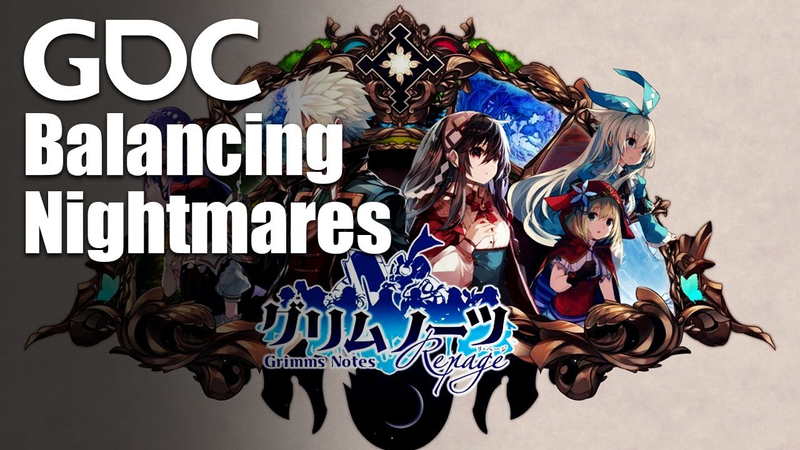
Balancing Nightmares: An AI Approach to Balance Games with Overwhelming Amounts of Data
Modern game development faces a significant challenge in maintaining balance within titles featuring billions of potential party combinations and frequent content updates.
- Square Enix utilized genetic algorithms (GA) to automate game balancing for 'Grimms Notes Repage,' a title featuring over 10^182 possible party combinations across 80 heroes, 60 weapons, and various costumes.
- The GA system evaluates party performance by mapping diverse metrics—such as battle time for victories and damage dealt for defeats—onto a single dimension to identify the top 80 parties for each subsequent generation.
- To manage the massive, evolving dataset, the team implemented Apache Spark for scalable, cloud-based processing and Apache Superset for low-cost, customizable data visualization.

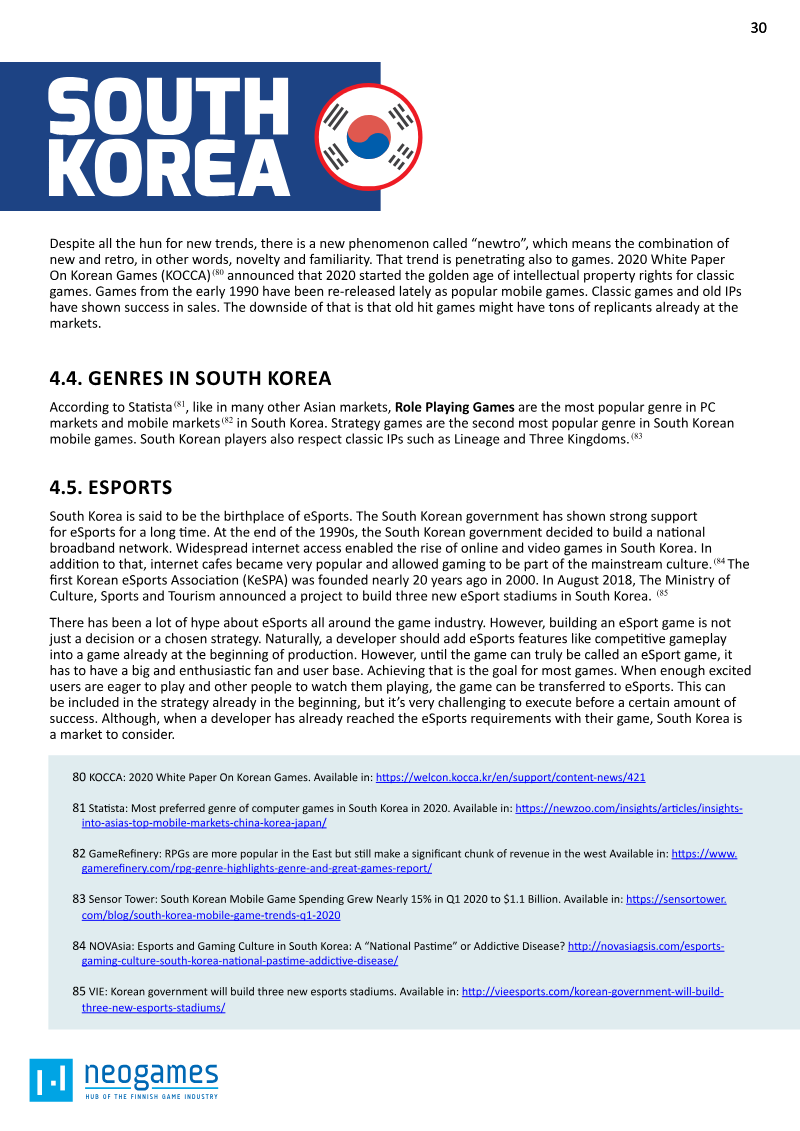
Market Study: China, Japan and South Korea
The Asia-Pacific region stands as the global leader in the gaming industry, generating 49 percent of total worldwide revenue.
- The Asia-Pacific region generates 49 percent of total worldwide gaming revenue, driven primarily by China, Japan, and South Korea.
- Entering the Chinese market requires collaboration with local publishers to navigate mandatory ISBN licensing, strict government censorship, and a fragmented Android ecosystem.
- Japan’s mature market is dominated by mobile revenue and console hardware, where success depends on high-quality RPGs, gacha mechanics, and established brand trust.
Market Snapshot: Q1 2021 US, China & Japan
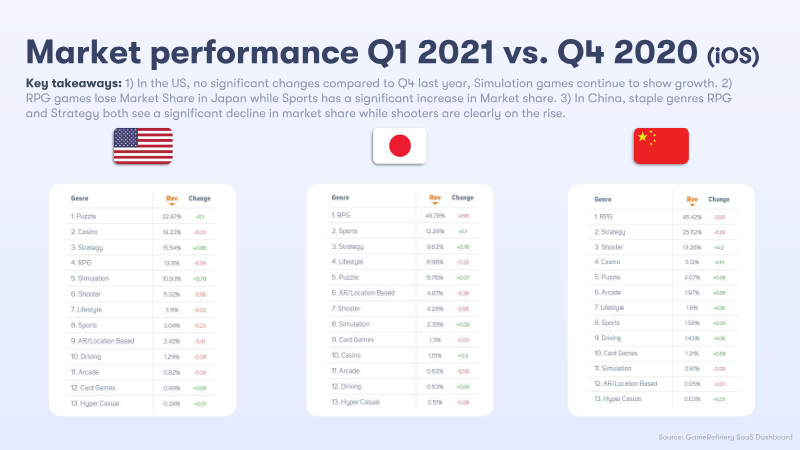
The mobile gaming market in the first quarter of 2021 demonstrated regional divergence in genre performance, with the United States remaining relatively stable while China and Japan experienced notable shifts in market share.
- In Q1 2021, mobile gaming genre preferences diverged globally: US markets favored simulation games, Japan saw a shift from RPGs to sports titles led by Cygames’ Uma Musume Pretty Derby, and China moved toward shooter games.
- Roblox Corporation established itself as the top-grossing publisher in the US market during Q1 2021.
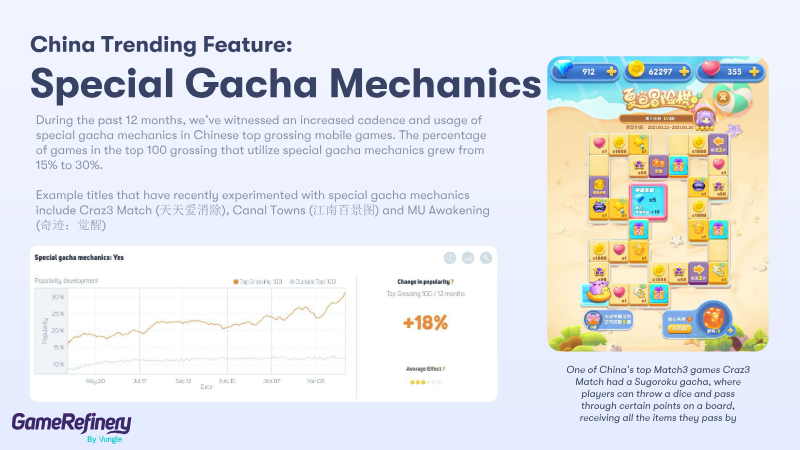
- Monetization strategies varied by region, with collectible albums appearing in over 70% of top-grossing US games, battle passes in over 25% of top-grossing Japanese titles, and special gacha mechanics in 30% of top-grossing Chinese games.


2Q FY2021 Presentation Material: January to March 2021
CyberAgent experienced exceptional financial growth during the second quarter of fiscal year 2021, characterized by a 26.6% year-over-year increase in consolidated sales to 163.4 billion yen and a doubling of operating profit to 25.8 billion yen.
- CyberAgent’s consolidated sales grew 26.6% year-over-year to 163.4 billion yen in 2Q FY2021, with operating profit doubling to 25.8 billion yen.
- The Game business reached record quarterly sales of 63.9 billion yen, driven primarily by the launch of 'Uma Musume Pretty Derby,' which surpassed five million downloads in 45 days.
- Due to strong gaming performance, CyberAgent raised its full-year sales forecast to 600 billion yen and nearly doubled its projected operating profit range.

Market Snapshot: Q2 2021 US, China & Japan
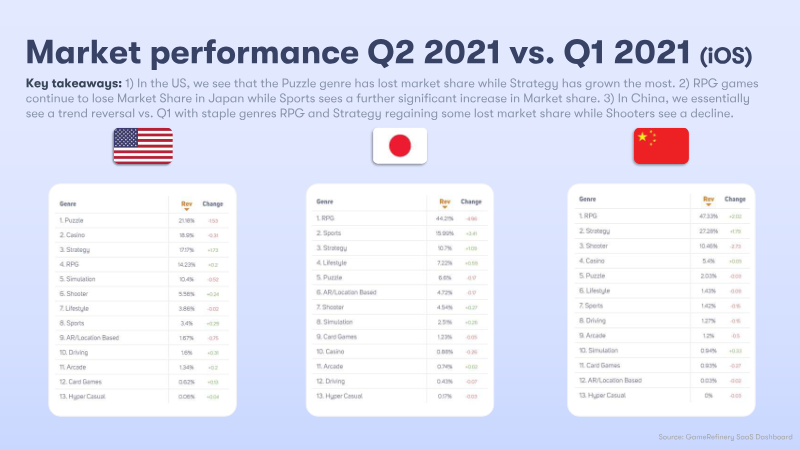
The mobile gaming market in the second quarter of 2021 experienced notable shifts in genre performance and publisher dominance across the United States, China, and Japan.
- Live-service feature updates increased by 37% year-over-year, with Strategy games leading the surge at 208% growth.
- Engagement tactics are shifting toward non-recurring live events and limited-time in-app purchase offers, which saw frequency increases of 143% and 122% respectively.
- In the US, the Strategy genre grew while the Puzzle genre declined, with Supercell emerging as a top-performing publisher.

Mobile Game Genre Report: Role-Playing Games 2021
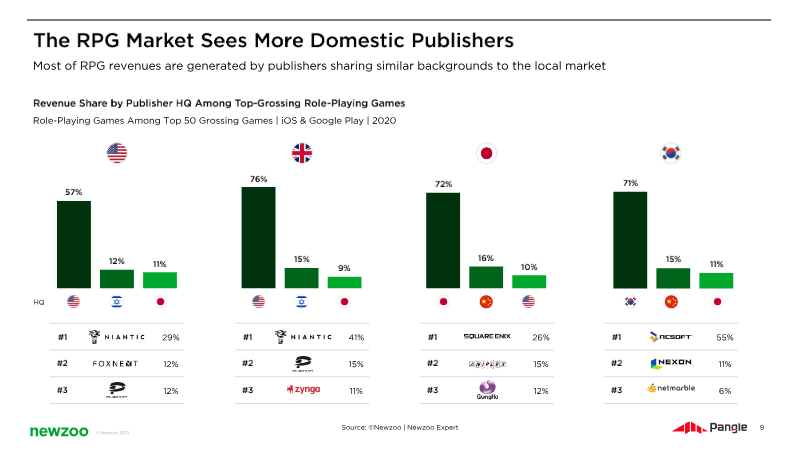
Role-playing games represent the most lucrative segment of the global mobile gaming market, generating $18.5 billion in 2020 and accounting for nearly a quarter of all mobile gaming revenue.
- Mobile RPGs generated $18.5 billion in 2020, representing nearly 25% of total mobile gaming revenue.
- The market is heavily concentrated in East Asia, with China, Japan, and South Korea accounting for over 70% of global RPG earnings.
- Approximately 50% of top-performing RPG titles rely on established intellectual properties, such as the Marvel franchise, to drive player acquisition and revenue.

1Q FY2021 Presentation Material: October to December 2020
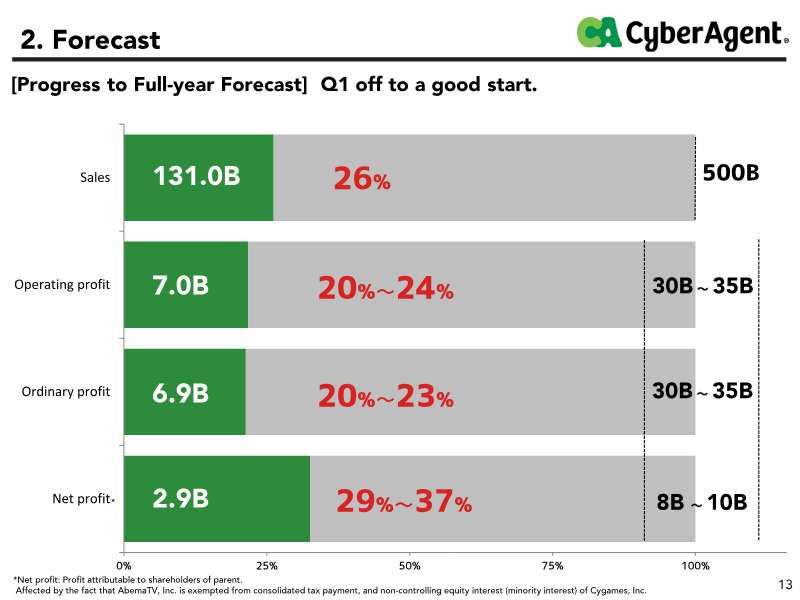
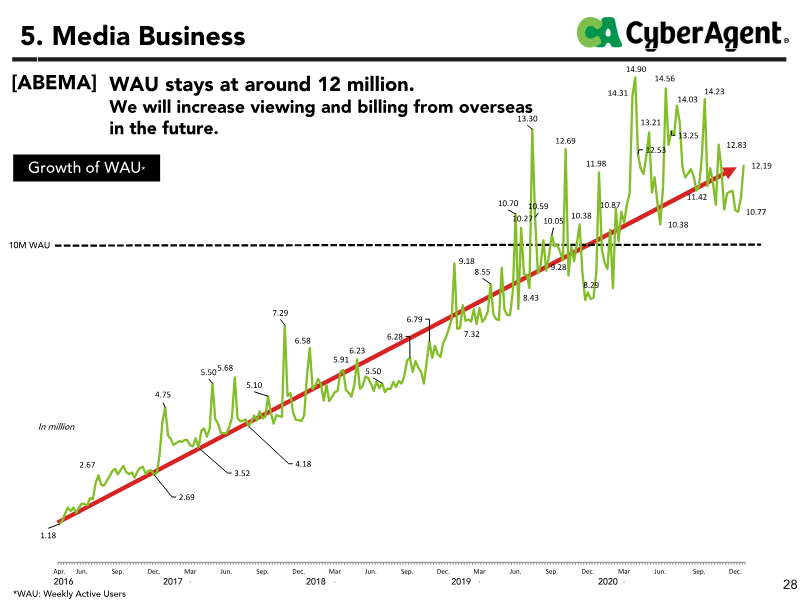
CyberAgent achieved record-high consolidated sales of 131 billion yen during the first quarter of fiscal year 2021, representing a 13.3% year-over-year increase.
- CyberAgent achieved record-high consolidated sales of 131 billion yen in 1Q FY2021, a 13.3% year-over-year increase driven by strong performance in the Media and Advertising segments.
- The Media segment grew revenue by 67% to 20.4 billion yen, bolstered by ABEMA’s premium subscriber base exceeding 921,000 users and an elevenfold increase in WINTICKET transaction volume.
- The Game business experienced a 15% revenue decline to 29.9 billion yen and a 77.8% drop in operating profit, attributed to seasonal factors and increased marketing spend.
Survey on Games and Daily Life: Japan
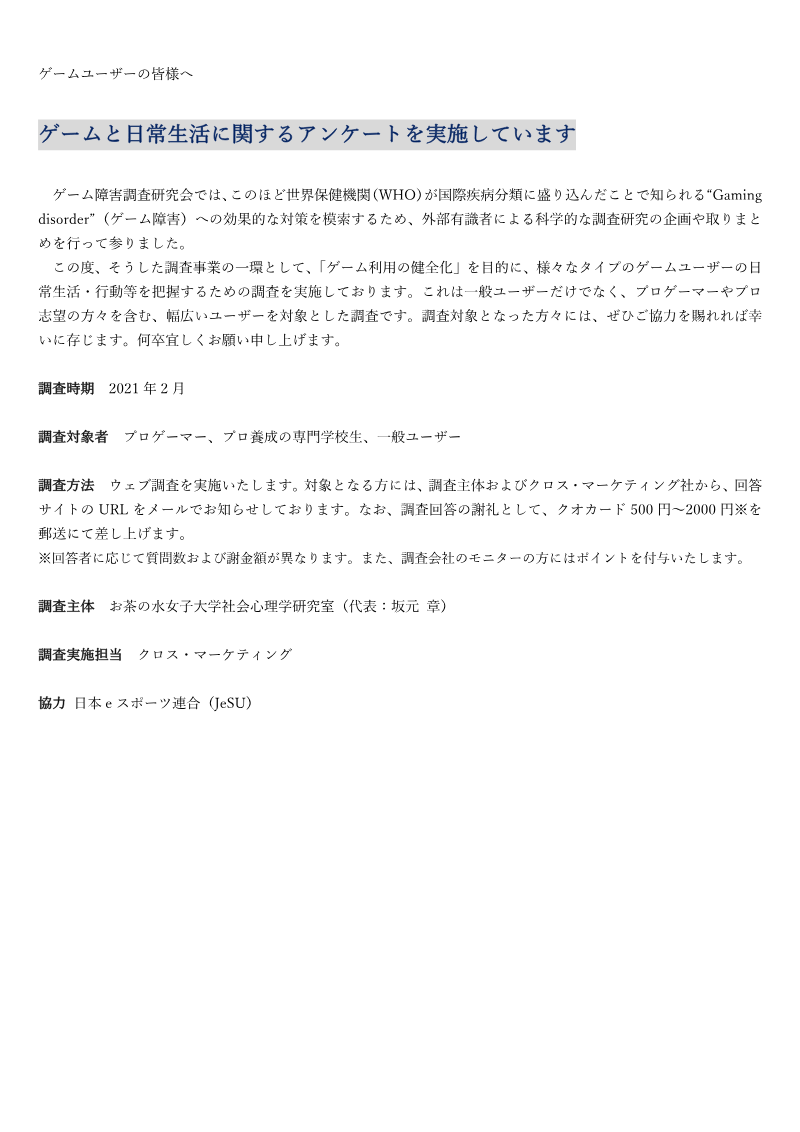
The survey was launched to deepen understanding of how gaming activities intersect with everyday life in Japan and to inform strategies for mitigating “gaming disorder,” a condition recently classified by the World Health Organization.
- The study, conducted in February 2021, aimed to analyze the intersection of gaming and daily life to inform strategies for mitigating gaming disorder.
- Research was led by Professor Akira Sakamoto of the Social Psychology Laboratory at Ochanomizu University with endorsement from the Japan eSports Union (JeSU).
- The survey targeted three distinct demographics: active professional gamers, students in specialized esports academies, and the general gaming public.
How Do Asian Game Pubs (JP + KR) Bring Games to the West? | Mike Lee (Crunchyroll, SEGA, Nexon, Glu)
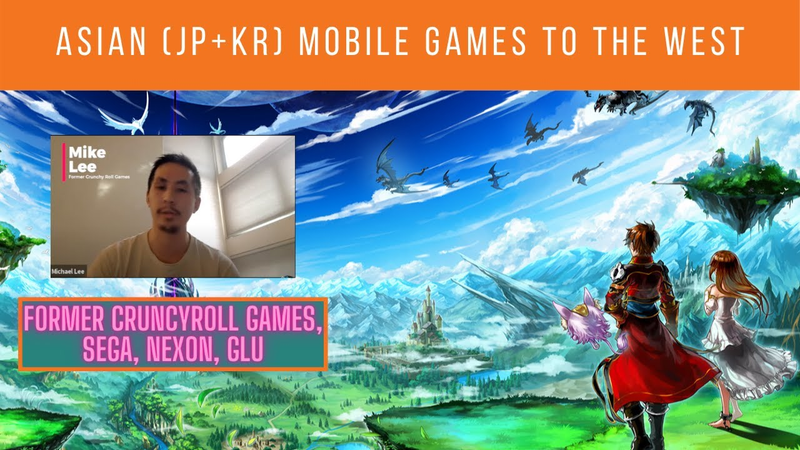
Japanese and Korean game publishers face distinct strategic hurdles when expanding into Western markets, often characterized by a tension between domestic design philosophies and global consumer expectations.
- Japanese and Korean publishers often treat the West as a secondary market for incremental revenue, leaving them vulnerable to Chinese developers who prioritize aggressive, global-first strategies.
- Successful Western market entry for Asian studios frequently relies on combining high-fidelity RPG mechanics with established anime or Western intellectual properties, as demonstrated by companies like Netmarble.
- Asian publishers face significant financial risk due to high licensing costs and the difficulty of adapting games designed for isolated domestic markets to Western consumer expectations.