Game Studies reports and market data
Documents
Mapping Gendered Play
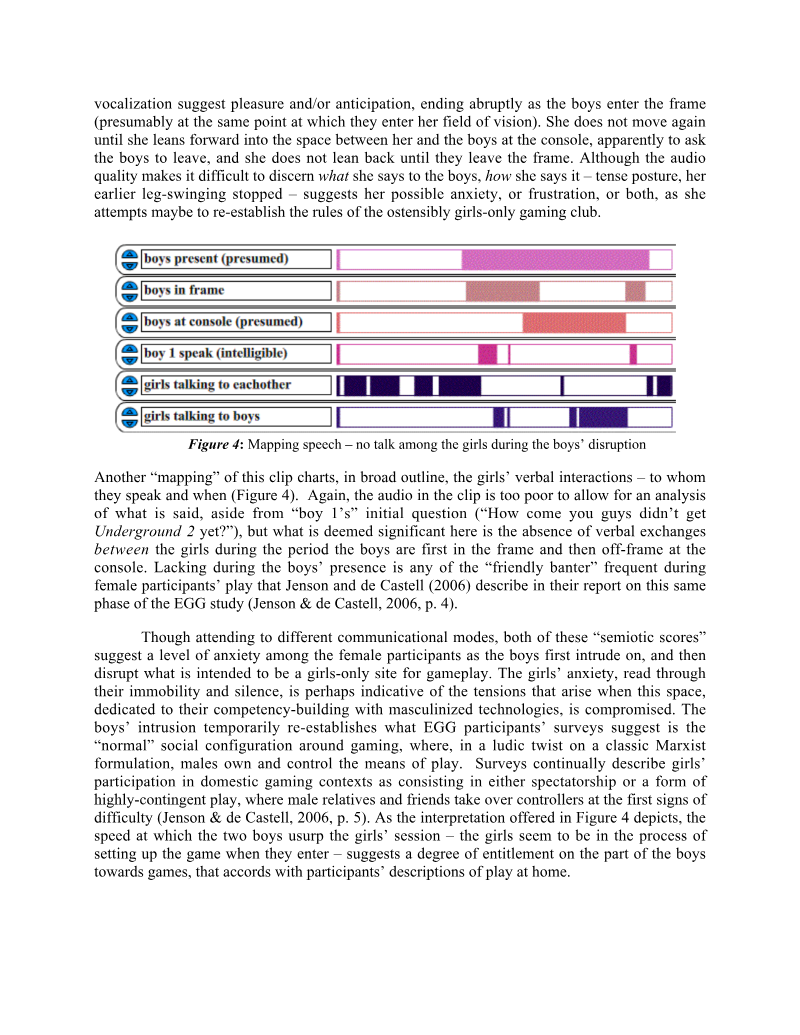
The Education, Gender and Gaming project investigates the social construction of video games as masculine domains, challenging the assumption that gendered disparities in play stem from innate differences in interest.
- Gendered disparities in gaming are driven by social performance and environmental conditioning rather than innate biological differences in interest.
- Gaming environments are actively constructed as masculine domains through material and discursive conditions that reinforce male ownership of technology.
- The physical and social intrusion of boys into gaming spaces frequently forces girls to shift from active engagement to passive spectatorship or increased anxiety.
Never Playing Alone: The Social Contextures of Digital Gaming
Digital gaming functions as an inherently social phenomenon, fundamentally challenging the persistent myth of the isolated player seeking solitary vicarious thrills.
- Digital gaming is an inherently social phenomenon that functions through complex social dependencies, debunking the myth of the isolated player.
- All digital play should be analyzed through a multiplayer lens, as even solo gaming experiences are embedded within broader material and interpersonal environments.
- The gaming experience is significantly influenced by the presence of others, including non-playing spectators, who impact a player's ability to maintain virtual immersion.

Continuity and Discontinuity: An Experiment in Comparing Narratives Across Media
Mythopoetic narratives, such as those found in The Lord of the Rings and Star Wars, undergo significant structural transformations when adapted from literature and film into digital games.
- Digital games transform mythic narratives by replacing the abstraction and mystery of traditional media with high-definition, rule-based systems.
- The transition from passive observation to active participation requires players to inhabit a simulated environment rather than simply viewing a story.
- Game engines function as 'Secondary Realities' that prioritize spatial storytelling and player agency over the narrative ambiguity found in literature or film.
I'm a Warrior, I'm a Monster: Shifting/Shaping Identity through Video Game Play
Video games function as dynamic, fluid environments where young adult males actively negotiate and construct their personal identities.
- Video games serve as active environments for identity construction where players negotiate the tension between their personal moral frameworks and the aggressive behaviors incentivized by gaming culture.
- Gaming spaces frequently function as platforms for projecting and reinforcing hegemonic masculine ideals, such as the pursuit of power, leadership, and professional dominance.
- Players experience internal conflict when their personal ideologies clash with the violent or exclusionary nature of the gaming environments they inhabit.
Machinima: Video Game as an Art Form?
Machinima, defined as the practice of creating animated films within real-time 3D game environments, represents a significant hybrid medium that bridges the gap between video games, digital cinema, and animation.
- Machinima transforms video games from interactive entertainment into digital art platforms by repurposing real-time 3D game engines for cinematic and narrative expression.
- The practice blurs the distinction between consumer and producer, enabling players to act as 'Machinimartists' who utilize commercial technology for creative rather than ludic purposes.
- Machinima has evolved from its origins in first-person shooter gameplay showcases into a sophisticated form of participatory culture centered on public performance and spectatorship.

A Reusable Scripting Engine for Automating Cinematics and Cut-Scenes in Video Games
The Reusable Scripting Engine addresses the disconnect between professional storytellers and game developers by providing a tool that automates the generation of cinematics and cut-scenes.
- The engine decouples narrative creation from technical programming by using a standardized XML-based format, allowing storytellers to define dialogue and stage directions without writing game code.
- The architecture consists of three core modules: a Director for production flow, a Script Reader for XML parsing and validation, and a Stage Manager for executing visual and audio performance.
- The system utilizes a customized implementation of Text Encoding Initiative (TEI) guidelines, incorporating specific hooks for game-ready assets like 3D models and audio files.
Gaming Stances and Strategies: Hybrids, Opportunists, and Cross-Fertilizations
Digital games function as hybrid texts that defy the traditional academic dichotomy between ludology and narratology.
- Players engage with games through a 'dual consciousness,' simultaneously suspending disbelief for narrative immersion while maintaining an analytical awareness of game mechanics and technical constraints.
- Meaning-making in games is a flexible, opportunistic process where players synthesize diverse repertoires, including intertextual knowledge from other titles, strategic planning, and technical assessment.
- The study, conducted between 1998 and 2006, tracked 36 participants aged 10 to 36 to observe how they navigate the hybrid nature of narrative-heavy titles like Myst, Starship Titanic, Black & White, and Shadow of the Colossus.
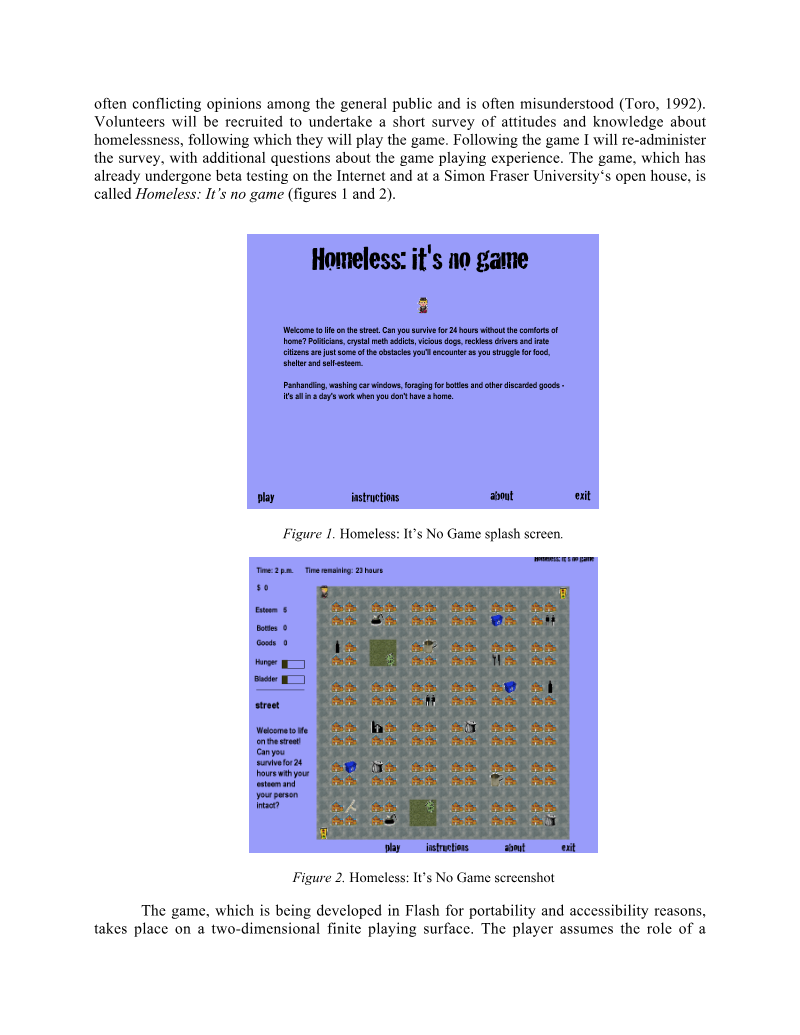
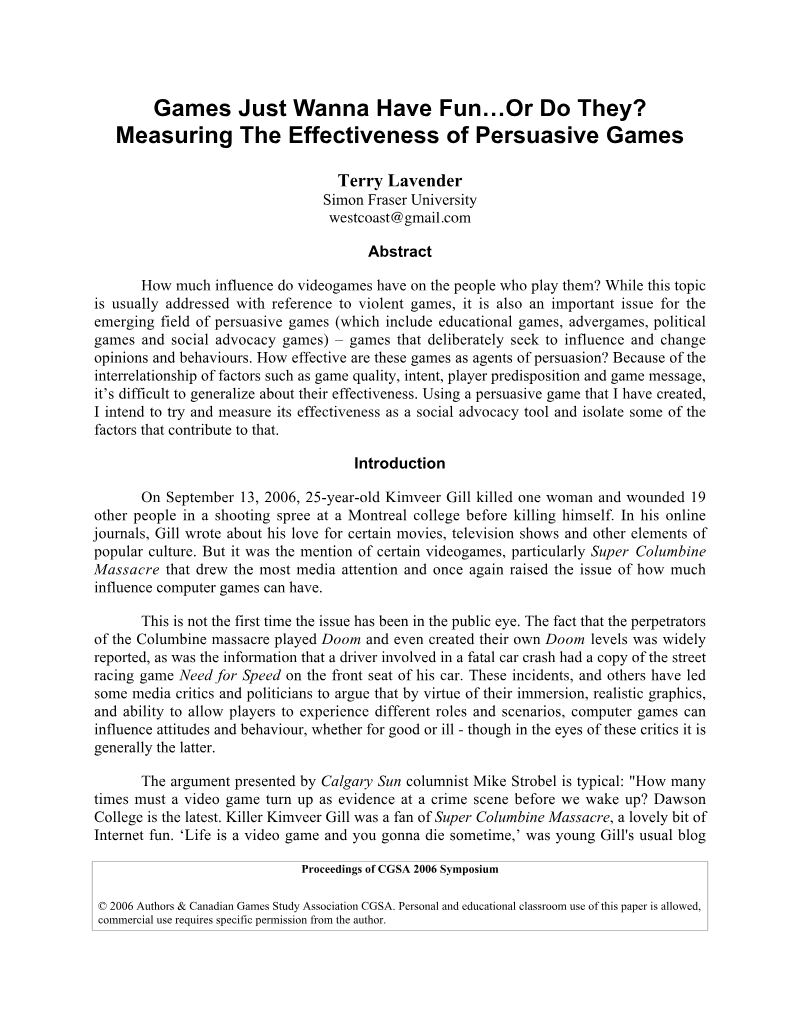
Games Just Wanna Have Fun…Or Do They? Measuring the Effectiveness of Persuasive Games
The effectiveness of persuasive games—digital titles designed to influence player attitudes, behaviors, or political beliefs—remains a complex and debated subject within the gaming industry.
- Persuasive games—designed to influence attitudes or behaviors—face a significant challenge in proving they cause genuine shifts in opinion rather than merely reinforcing the existing beliefs of sympathetic players.
- Quantitative metrics like download counts and website clicks are insufficient indicators of success, as they do not correlate with long-term behavioral change or meaningful shifts in public perception.
- High-profile titles such as America’s Army and Food Force have achieved millions of downloads and extensive engagement, yet their actual impact on social or political objectives remains difficult to quantify.

Chasing the Fugitive on Campus: Designing a Location-based Game for Collaborative Play
The Fugitive functions as a collaborative, location-based mobile game designed to explore how real-time tracking and spatial awareness influence team dynamics within a university campus environment.
- Location-based games thrive on collaborative strategy, but their success is heavily dependent on the reliability of underlying infrastructure like WiFi and GPS.
- Technical instability, specifically network drops and location inaccuracies, is the primary cause of user frustration in pervasive gaming environments.
- Players are willing to overlook minor technical friction if the game's social and strategic elements are sufficiently engaging.
You Mean It's Only a Game? Rule Structures, the Magic Circle, and Player Participation in Pervasive Mobile Gaming
Pervasive mobile gaming challenges traditional game theory by intentionally blurring the boundaries of the magic circle, the conceptual space that separates play from everyday life.
- Pervasive mobile games intentionally blur the 'magic circle' by integrating urban environments and public spaces into the gameplay experience.
- Designers increasingly treat non-players as game content or secondary performers to heighten dramatic tension and social engagement.
- The current design framework for pervasive games lacks ethical safeguards, as participation is often forced upon bystanders who have not consented to the game's rules.
Industry – Academia: How Can We Collaborate?
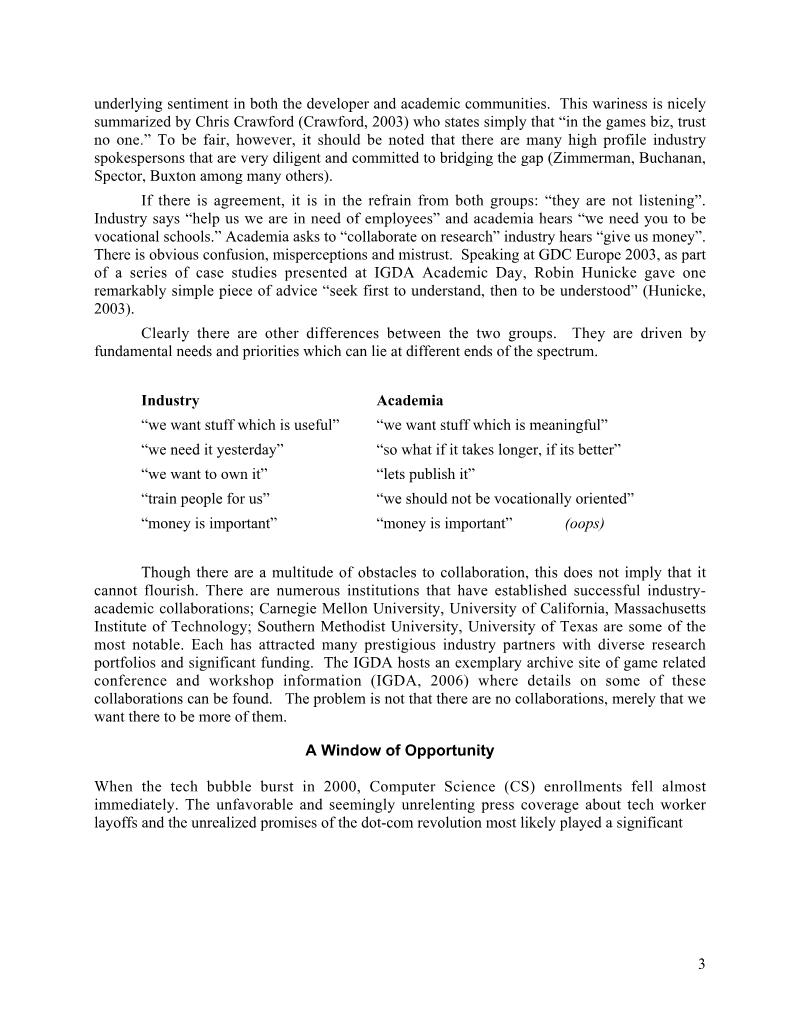
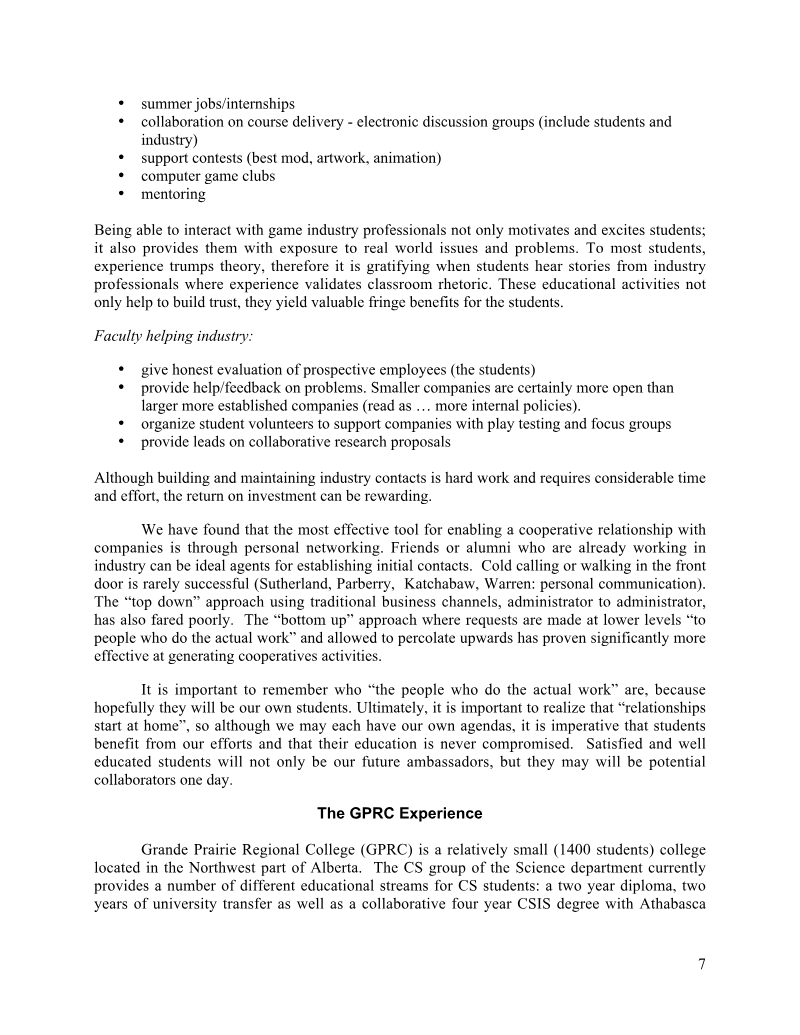
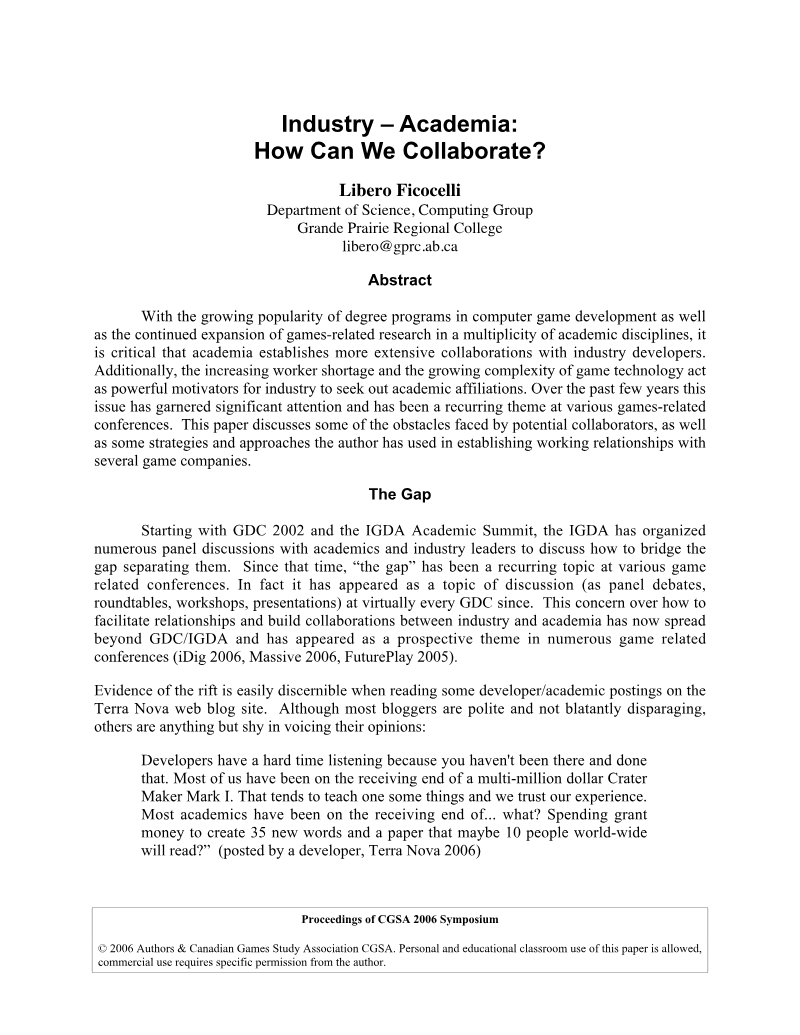
The relationship between the video game industry and academia is characterized by a significant divide, fueled by mutual misperceptions, conflicting priorities, and a lack of trust.
- The video game industry faces a critical labor shortage, while academic institutions are experiencing a decline in computer science enrollment, creating a strategic necessity for collaboration.
- Industry demand for specialized training is high, with 83% of respondents in a Texas-based technology survey explicitly calling for game-focused curricula.
- Major industry players including Ubisoft and Electronic Arts have already committed millions of dollars to university partnerships and educational initiatives to secure a talent pipeline.

Alert Hockey: An Endogenous Learning Game
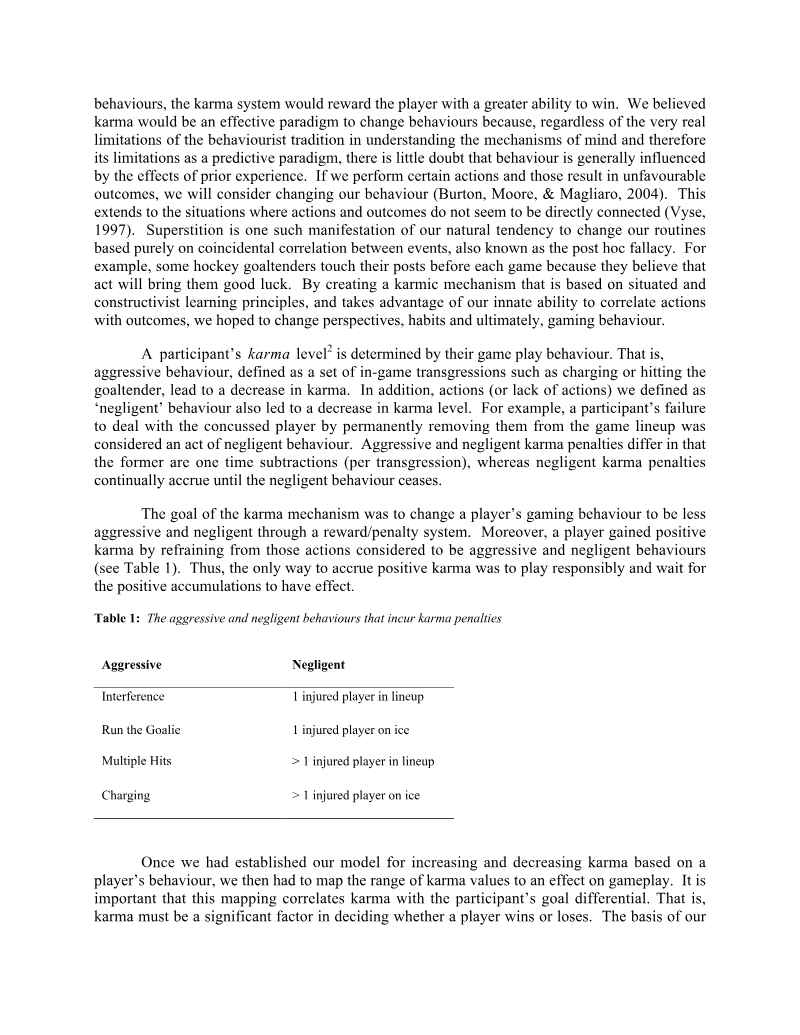
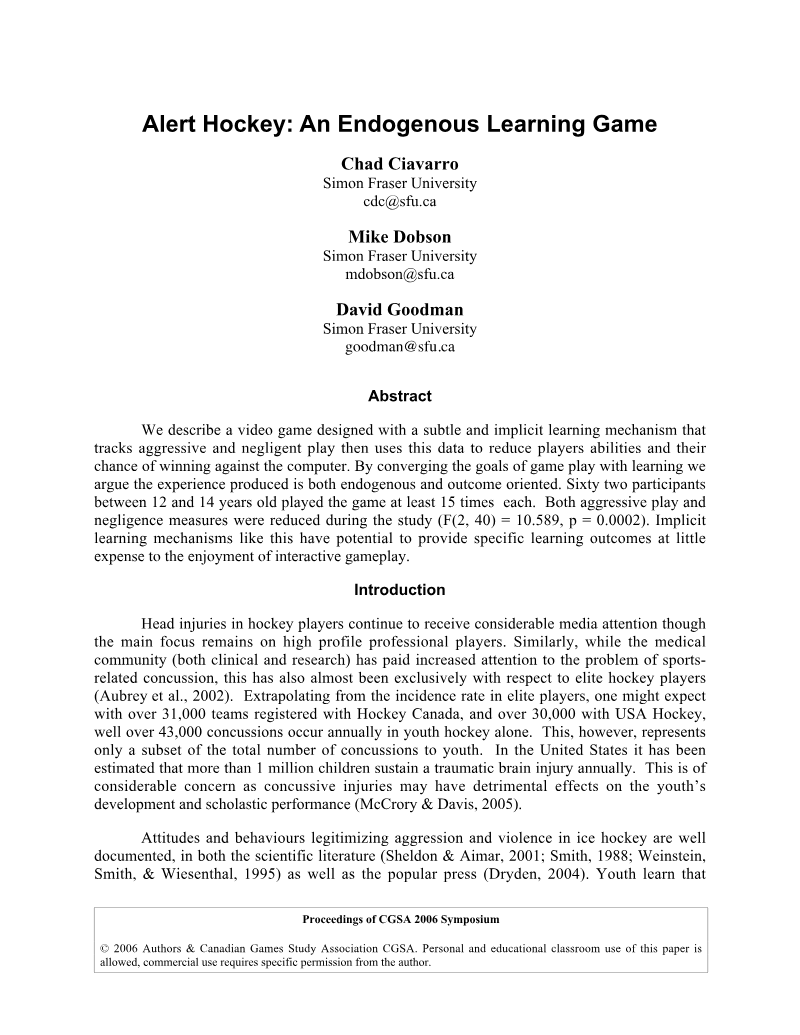
The research evaluates the effectiveness of an implicit learning mechanism in a sports-action video game titled Alert Hockey, which aims to reduce aggressive and negligent behaviors in youth hockey players.
- Integrating educational objectives directly into core gameplay mechanics—rather than treating them as external tasks—significantly improves behavioral outcomes while maintaining player engagement.
- In a study of 62 youth hockey players aged 12 to 14, an implicit learning mechanism successfully shifted player behavior toward safer playstyles through a karma-based reward system.
- The experimental group demonstrated a significant linear improvement in behavior scores over three sessions, with statistical significance confirmed at F(2, 40) = 10.589 and p = 0.0002.