1 free read left. Create a free account for unlimited reading + AI research.
Create free accountWhitepaper Loading... The Journal of the Canadian Game Studies Association
1 free read left. Create a free account for unlimited reading + AI research.
Create free accountWhitepaperLoading... The Journal of the Canadian Game Studies Association
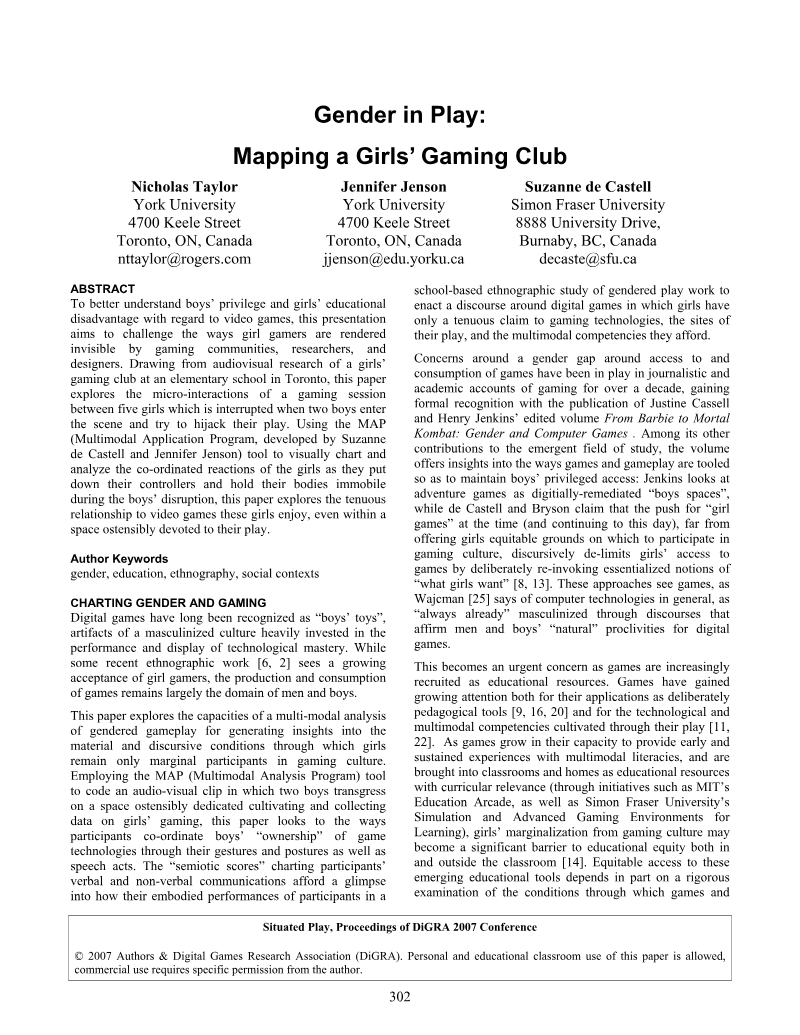
These disparities do not stem from innate biological differences in interest. Gaming environments are actively constructed as masculine domains.
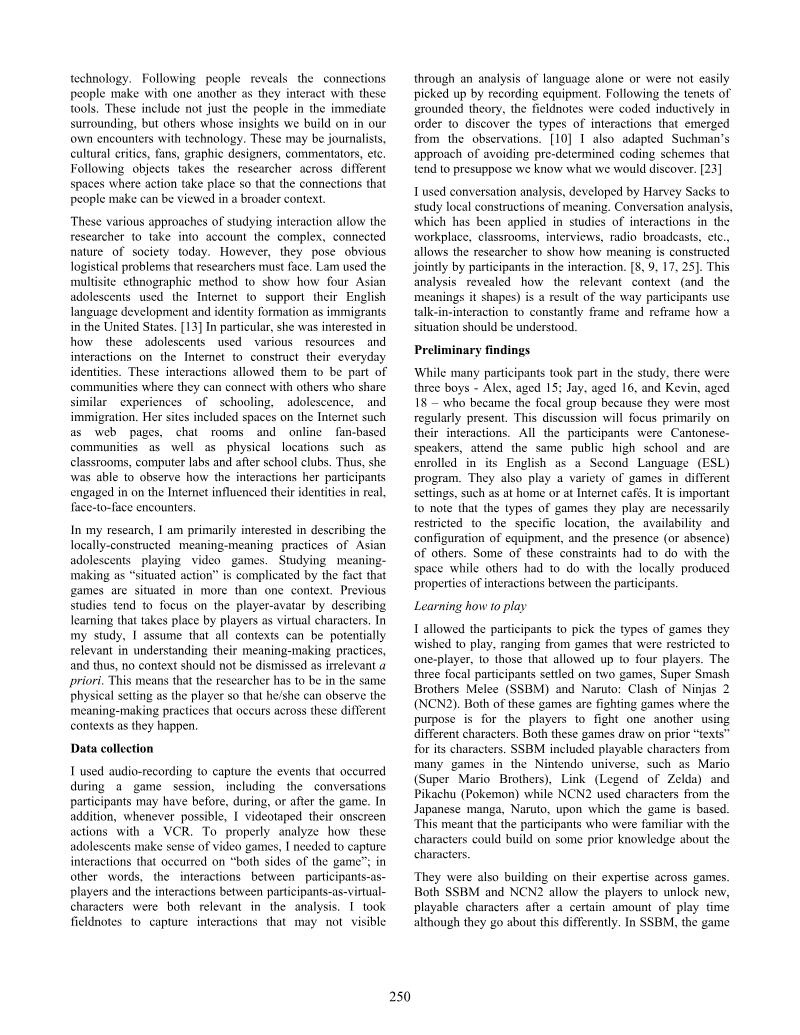
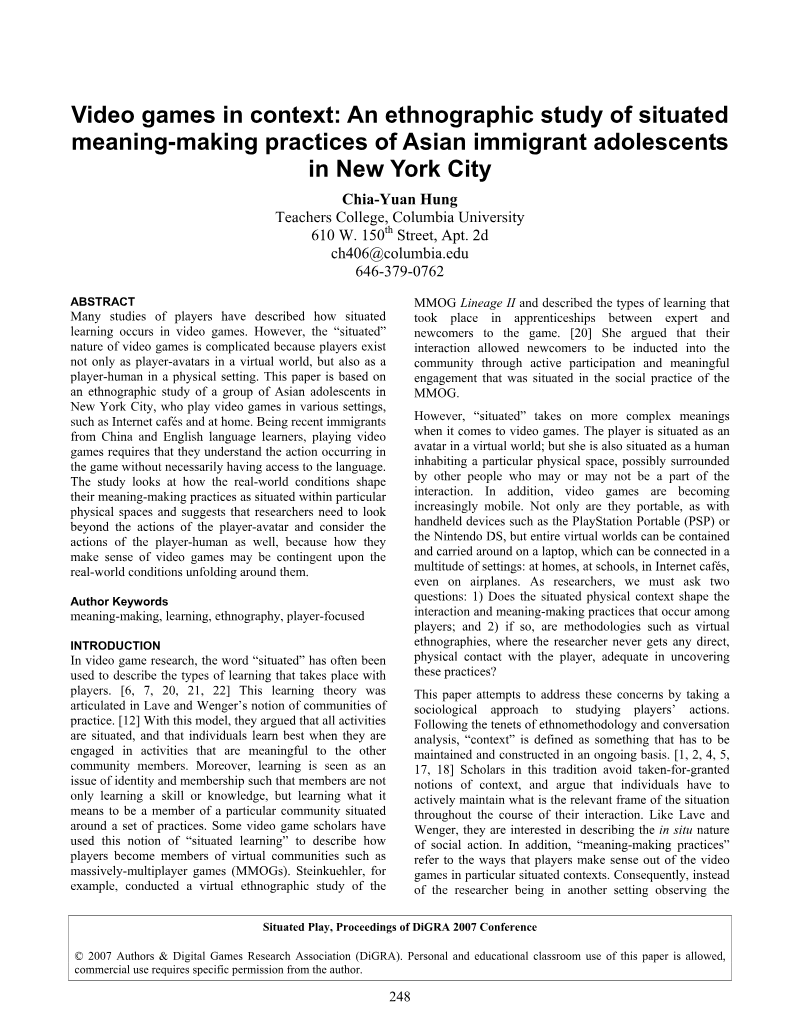
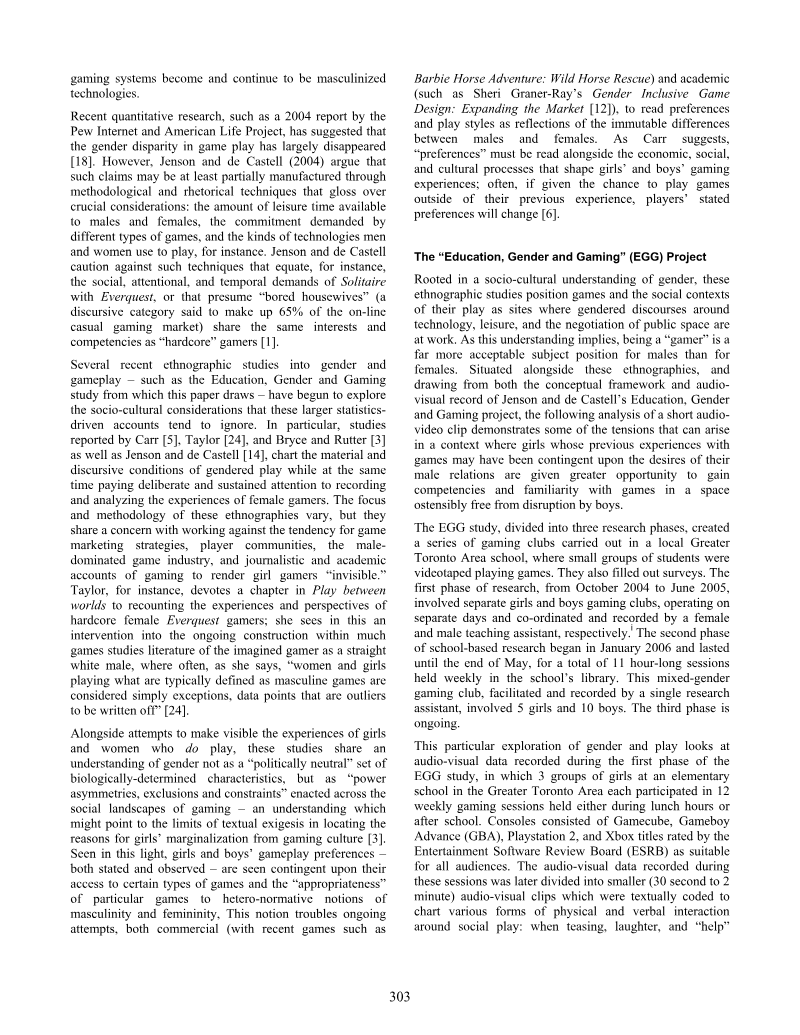
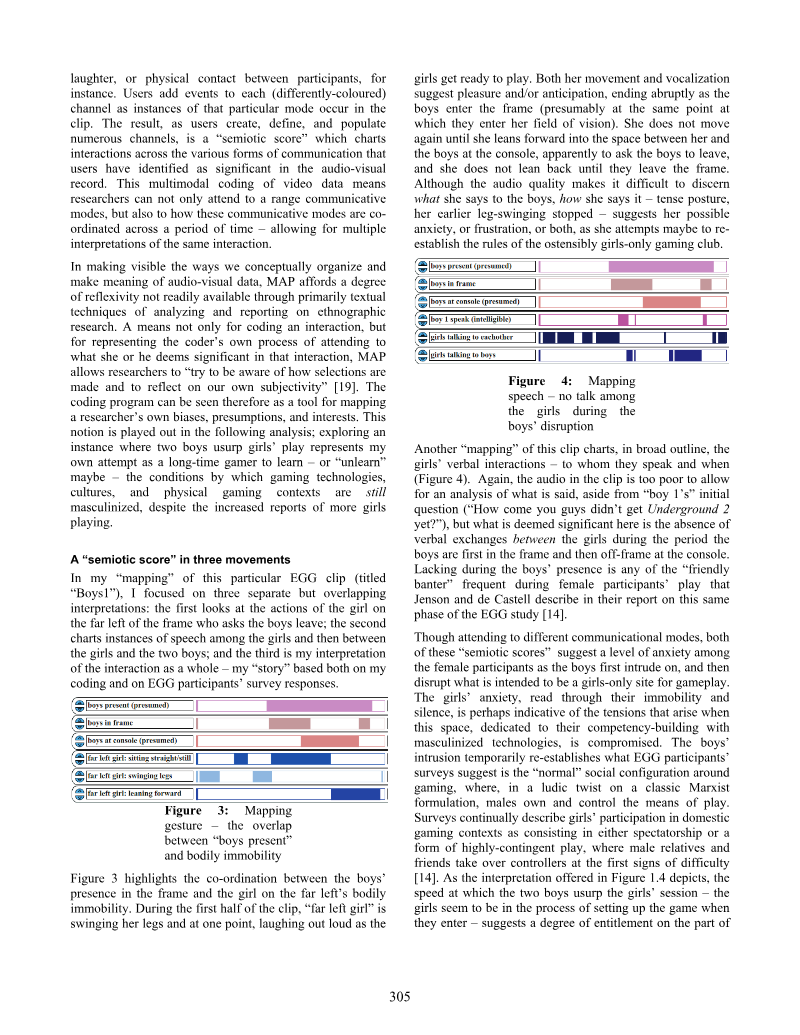
The Education, Gender and Gaming project investigates the social construction of video games as masculine domains, challenging the assumption that gendered disparities in play stem from innate differences in interest. By utilizing the Multimodal Analysis Program to examine audio-visual data, the research demonstrates that gaming environments are actively shaped by material and discursive conditions that reinforce male ownership of technology. These findings suggest that the perceived dominance of boys in gaming spaces is a result of ongoing social performance rather than biological predisposition.
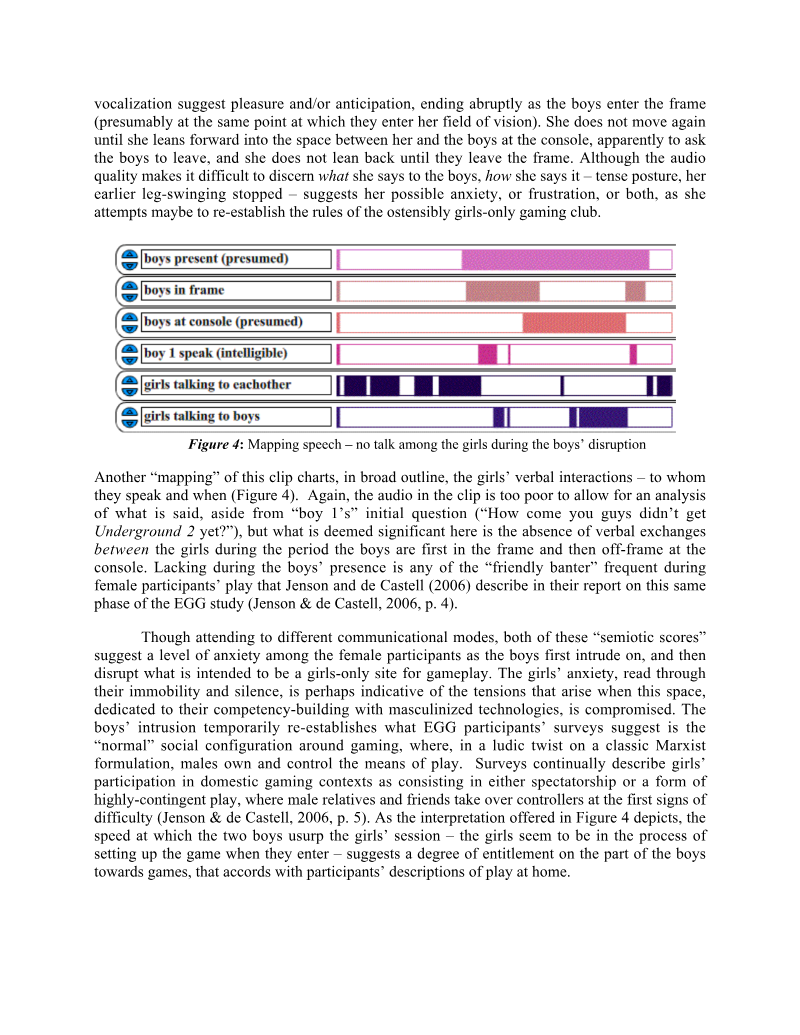
Detailed ethnographic observations reveal that even in settings designed to foster female gaming competency, the physical and social intrusion of boys frequently disrupts girls' engagement. When boys enter these spaces, girls often shift toward passive spectatorship or display increased anxiety, reflecting broader societal narratives that position males as the primary controllers of digital media. These interactions serve to marginalize female participants, effectively policing the boundaries of gaming culture through subtle social dynamics and physical interventions that maintain traditional gender hierarchies.
The scope of this research is primarily focused on a specific cohort of Southeast Asian participants, which limits the ability to generalize findings across broader cultural contexts or to analyze how gender intersects with race and ethnicity. Furthermore, the reliance on static text to represent complex, multimodal interactions presents methodological challenges, as print formats often fail to capture the nuanced social addressivity inherent in live gameplay. Despite these limitations, the study provides a critical framework for understanding how gaming disparities are manufactured through daily social interactions, highlighting the need for more inclusive environments that actively dismantle the performative barriers currently restricting female participation.

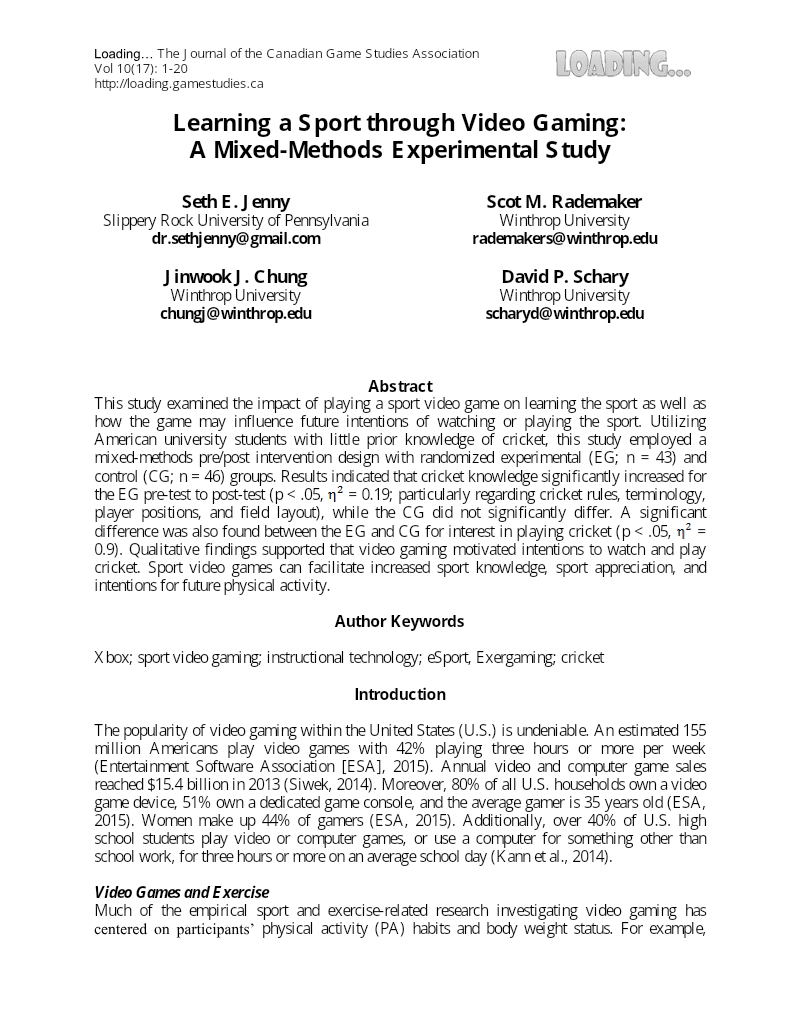
Loading... The Journal of the Canadian Game Studies Association · 2018
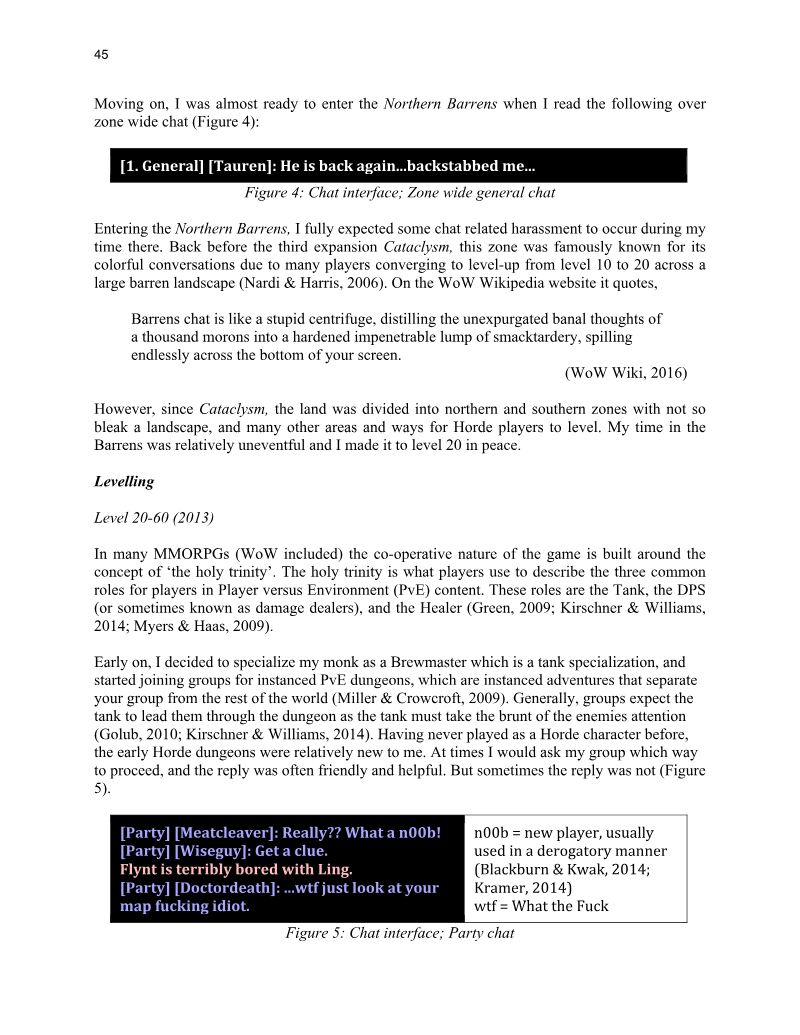
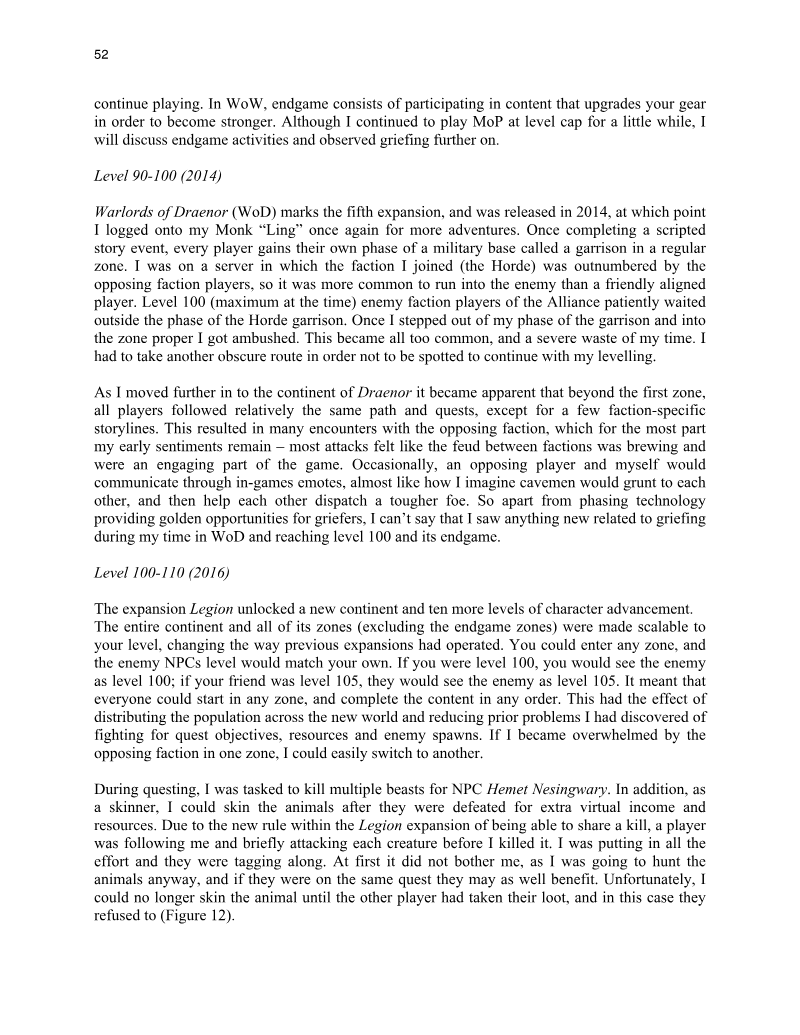
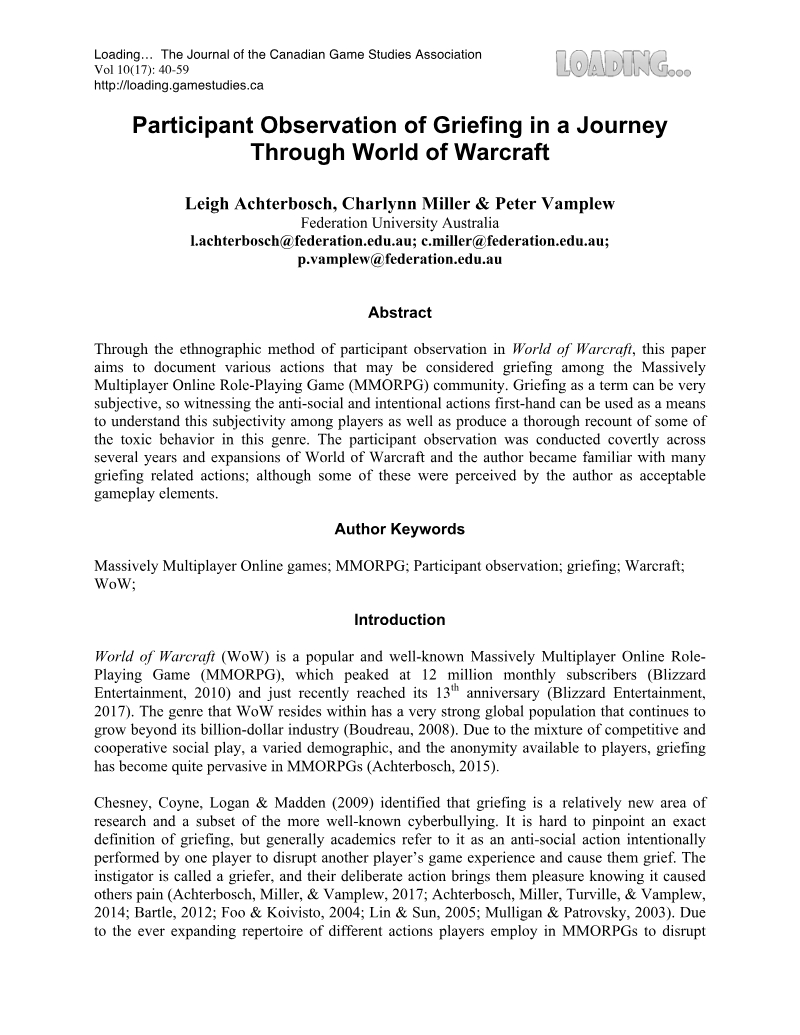
Loading... The Journal of the Canadian Game Studies Association · 2018

Loading... The Journal of the Canadian Game Studies Association · 2017
Loading... The Journal of the Canadian Game Studies Association · 2017
Loading... The Journal of the Canadian Game Studies Association · 2017
Loading... The Journal of the Canadian Game Studies Association · 2017
Loading... The Journal of the Canadian Game Studies Association · 2017
Loading... The Journal of the Canadian Game Studies Association · 2017
Loading... The Journal of the Canadian Game Studies Association · 2017
Loading... The Journal of the Canadian Game Studies Association · 2017
Loading... The Journal of the Canadian Game Studies Association · 2016
Loading... The Journal of the Canadian Game Studies Association · 2016
Loading... The Journal of the Canadian Game Studies Association · 2009