1 free read left. Create a free account for unlimited reading + AI research.
Create free accountWhitepaper Loading... The Journal of the Canadian Game Studies Association
1 free read left. Create a free account for unlimited reading + AI research.
Create free accountWhitepaperLoading... The Journal of the Canadian Game Studies Association
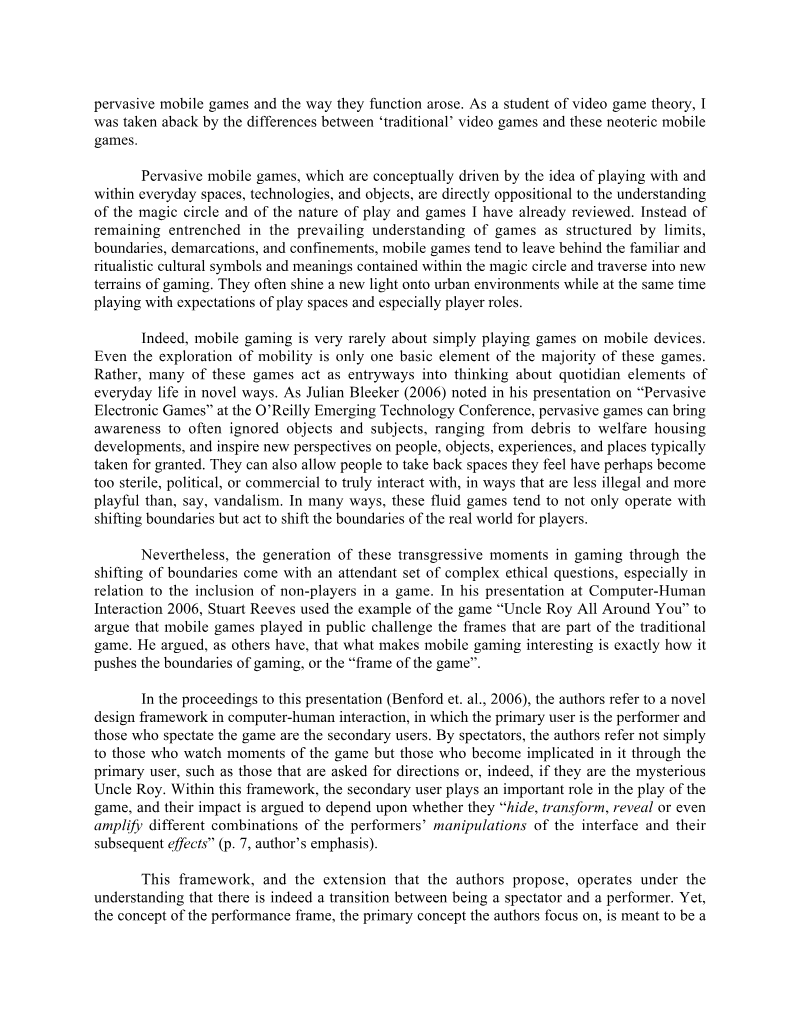
These games intentionally blur the 'magic circle', which traditionally separates play from everyday life.
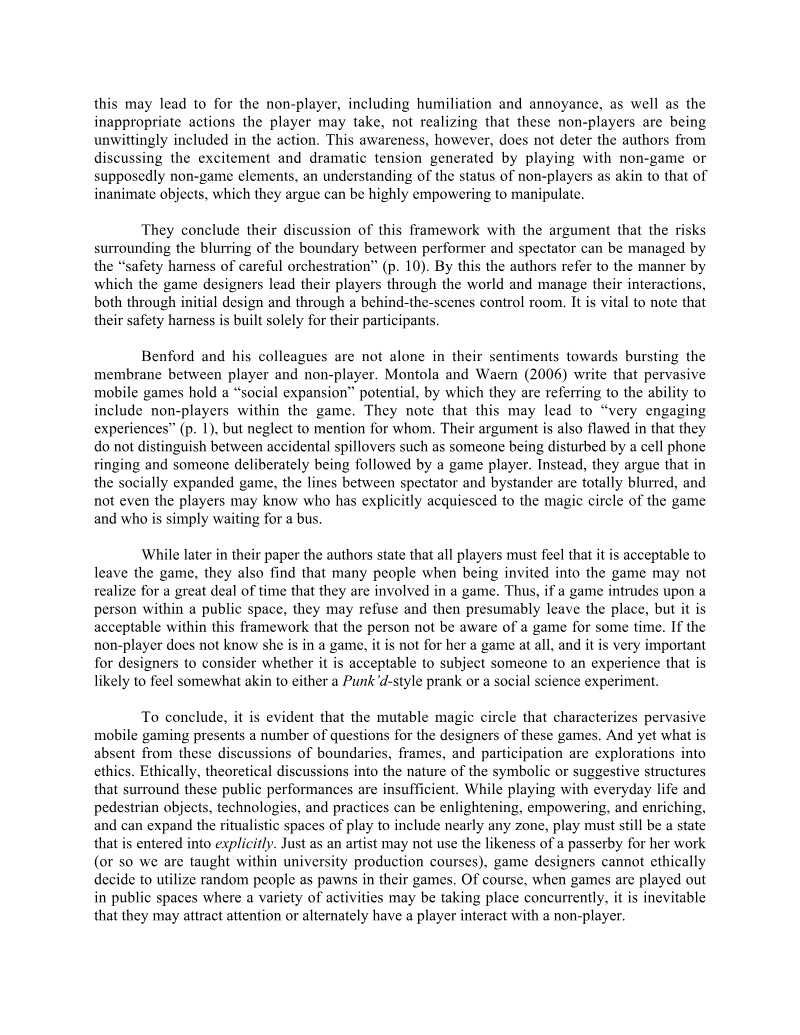
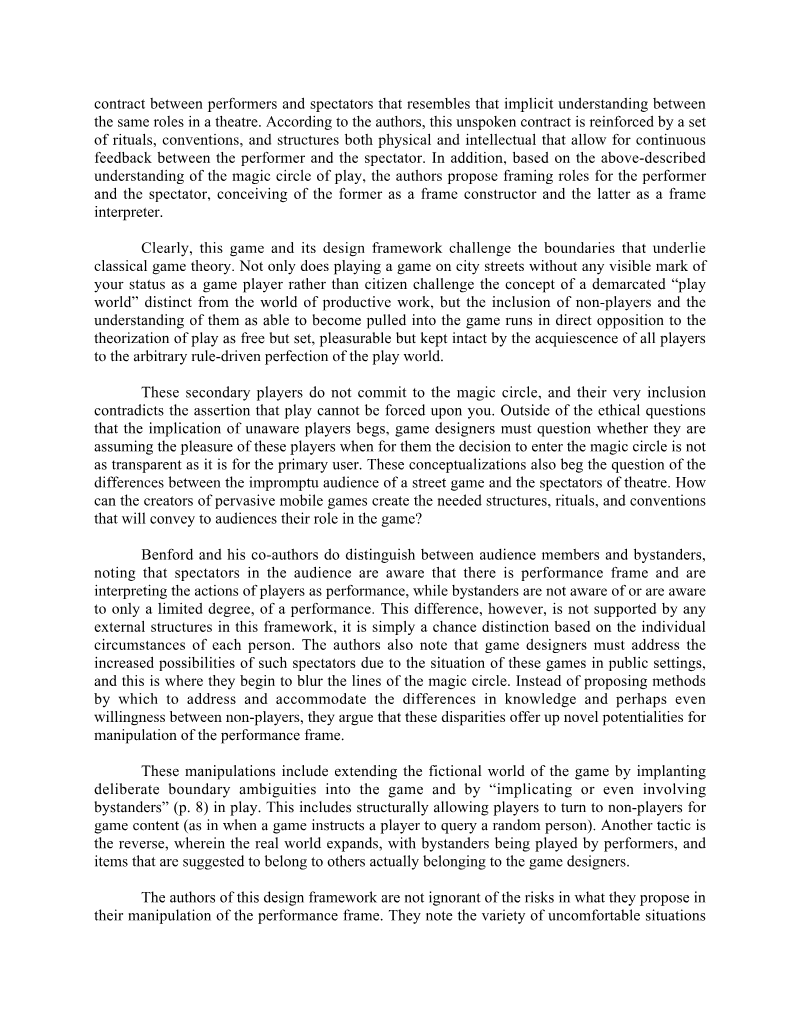
Pervasive mobile gaming challenges traditional game theory by intentionally blurring the boundaries of the magic circle, the conceptual space that separates play from everyday life. While classical ludology defines games through rigid rules and demarcated zones, pervasive mobile games integrate urban environments and public spaces into the play experience. This shift often involves manipulating the player/non-player divide, transforming public bystanders into unwitting participants in a game-like performance.
The analysis highlights a growing trend among designers to utilize non-players as game content, a practice justified by some as a means to increase dramatic tension and social engagement. By treating bystanders as secondary users or performers, designers attempt to extend the game’s fictional world into reality. However, this approach raises significant ethical concerns regarding consent and the lack of clear structures to inform bystanders of their involvement. Unlike traditional games where entry is predicated on the explicit acceptance of rules, pervasive mobile games often force participation upon individuals who are unaware they are being observed or manipulated.
The study concludes that while pervasive mobile games offer innovative ways to interact with urban environments, the current design frameworks lack necessary ethical safeguards. Designers often prioritize the enjoyment of primary players over the rights of non-players, failing to distinguish between accidental interactions and the intentional, scripted inclusion of bystanders. To maintain ethical integrity, the boundary between player and non-player must remain intact. Designers are encouraged to develop conventions that ensure participation is a voluntary, informed choice, rather than an unscripted intrusion into the lives of the public.

Loading... The Journal of the Canadian Game Studies Association · 2018
Loading... The Journal of the Canadian Game Studies Association · 2018
Loading... The Journal of the Canadian Game Studies Association · 2017
Loading... The Journal of the Canadian Game Studies Association · 2017
Loading... The Journal of the Canadian Game Studies Association · 2017
Loading... The Journal of the Canadian Game Studies Association · 2017
Loading... The Journal of the Canadian Game Studies Association · 2017
Loading... The Journal of the Canadian Game Studies Association · 2017
Loading... The Journal of the Canadian Game Studies Association · 2017
Loading... The Journal of the Canadian Game Studies Association · 2017
Loading... The Journal of the Canadian Game Studies Association · 2016
Loading... The Journal of the Canadian Game Studies Association · 2016
DiGRA · 2026