Game Studies reports and market data
Documents
Swipe Left to Detain: A Procedural Comparison Between Tinder and Papers, Please
Tinder and the border-control simulation Papers, Please function as persuasive machines that utilize identical procedural mechanics to shape user behavior and reinforce specific ideologies.
- Tinder and the game Papers, Please utilize identical procedural mechanics, such as lateral swiping and binary decision-making, to reduce complex human interactions into quantifiable, rule-based tasks.
- The design of modern dating applications mirrors the structures of oppressive bureaucracies by treating potential romantic partners as disposable, data-driven assets.
- High-speed, gamified decision-making in digital interfaces functions as a procedural rhetoric that obscures the moral consequences of social interactions.
Labour and Love: Play-Centrism and Procedurality in Spiritfarer
The tension between procedurality, which posits that meaning is embedded within a game’s formal rules, and play-centrism, which emphasizes the subjective role of the player, serves as a critical framework for understanding modern game design.
- Effective game design balances procedural rules, which provide necessary constraints, with play-centrism, which allows players to derive personal, emergent meaning from those structures.
- Procedurality and play-centrism should be treated as a symbiotic framework rather than contradictory forces, mirroring the human reconciliation of labor demands with selfhood.
- Spiritfarer demonstrates that repetitive, task-oriented labor can be reframed as acts of care when the game’s procedural framework is designed to facilitate emotional reflection.
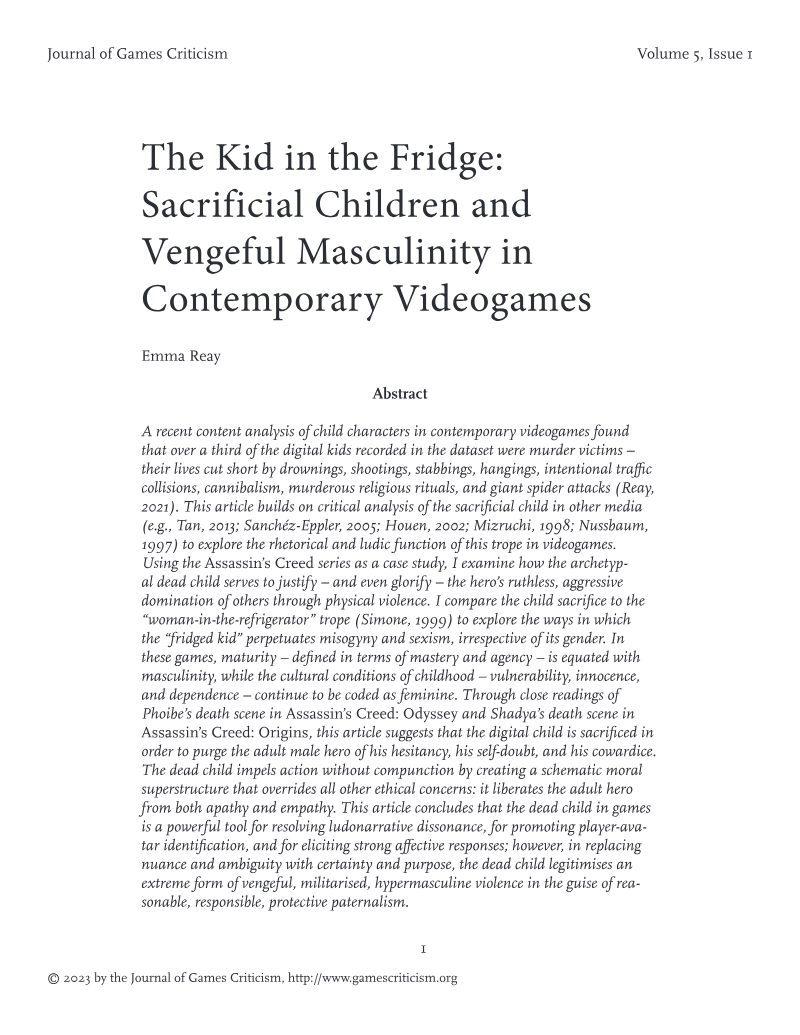
The Kid in the Fridge: Sacrificial Children and Vengeful Masculinity in Contemporary Videogames
The sacrificial child trope in contemporary gaming serves as a critical narrative mechanism designed to justify hypermasculine, militarized violence.
- The 'sacrificial child' trope functions as a narrative device to justify hypermasculine, militarized violence by framing lethal actions as righteous, protective paternalism.
- Games like Assassin’s Creed: Odyssey and Origins utilize scripted child deaths to strip players of agency, redirecting resulting frustration into sanctioned, aggressive combat.
- By positioning vulnerable children as symbols of innocence that must be avenged, these narratives eliminate moral ambiguity and validate retaliatory, patriarchal power structures.
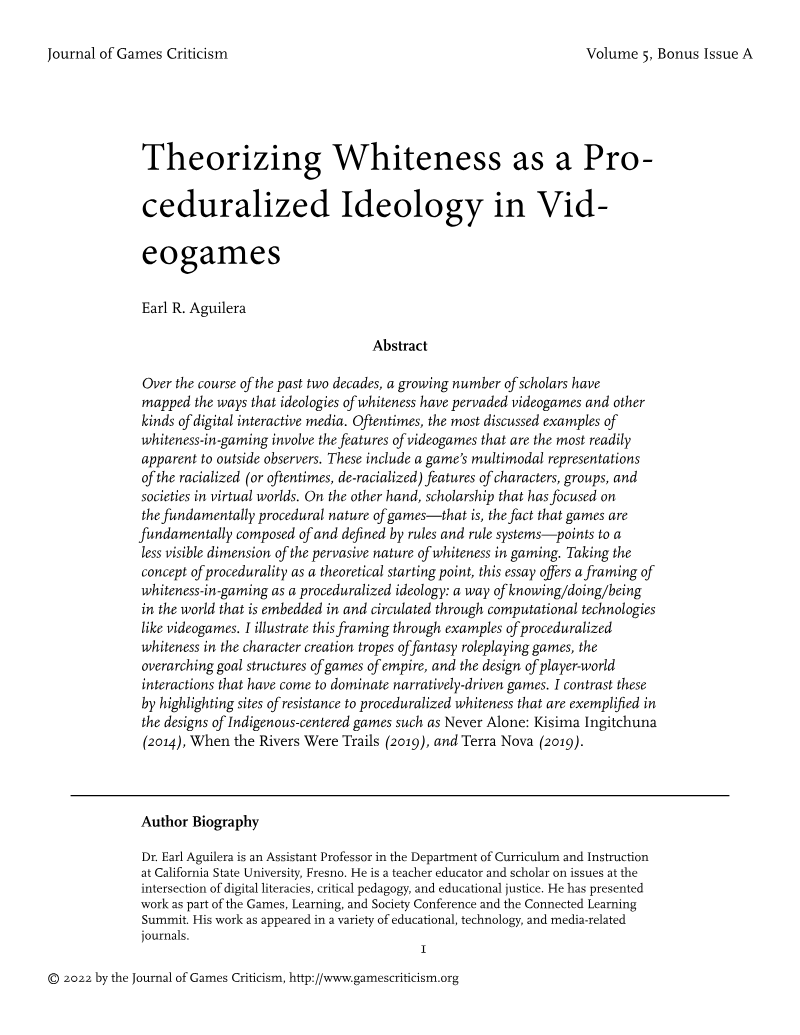
Theorizing Whiteness as a Proceduralized Ideology in Videogames
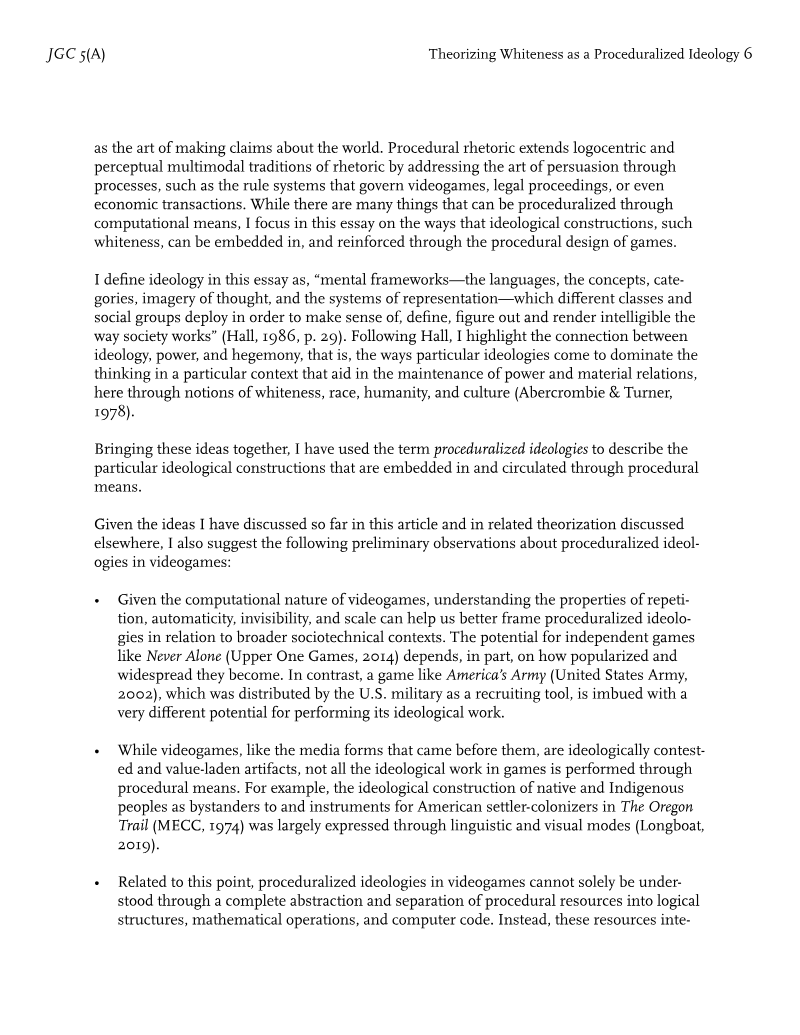
Proceduralized whiteness functions as a foundational ideology within video games, manifesting not merely through visual representation but through the core rules, mechanics, and goal structures that govern play.
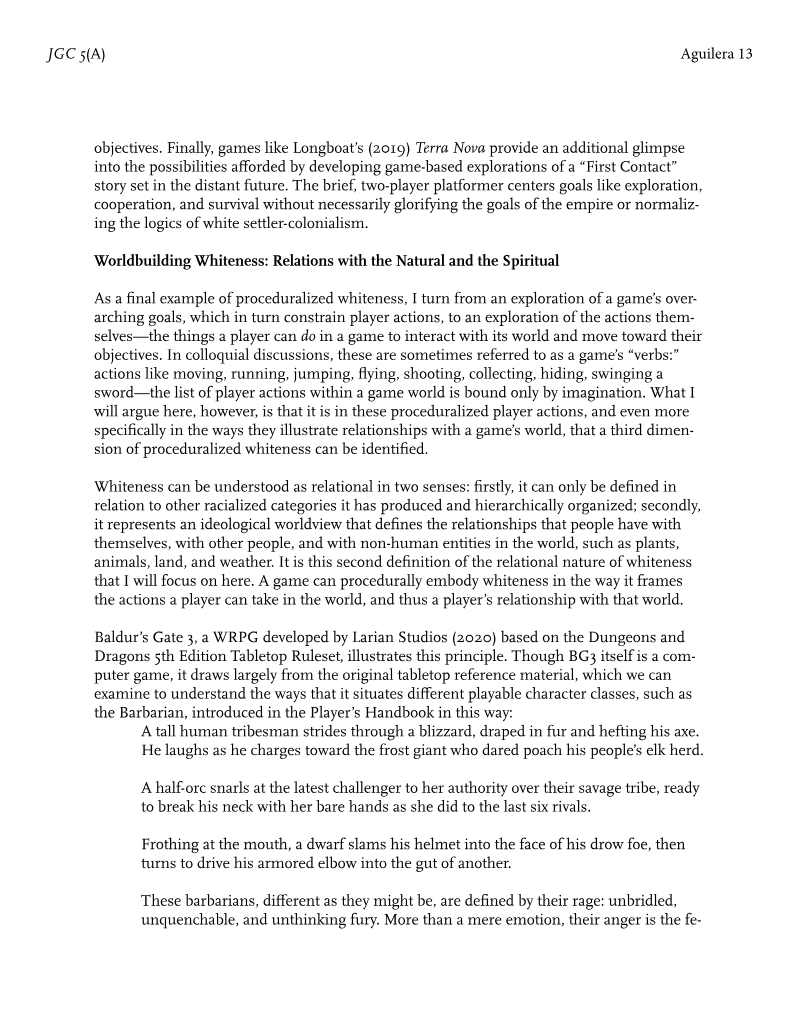
- Game design often embeds Eurocentric and settler-colonial ideologies into core mechanics, normalizing extractive and expansionist behaviors as the default logic of play.
- Proceduralized whiteness functions as an invisible, foundational ideology in digital spaces by reinforcing dominant social norms through repetitive, automatic gameplay systems.
- Western role-playing games and 4X strategy titles, such as Civilization, Mass Effect, and The Oregon Trail, frequently equate progress with territorial conquest and resource accumulation.
Black Deprivation in Naughty Dog's The Last of Us Remastered and The Last of Us Part II
Naughty Dog’s The Last of Us series functions through a framework of black deprivation, a narrative strategy that systematically relegates Black characters to disposable roles to ensure the existential longevity and emotional development of white protagonists.
- Naughty Dog’s The Last of Us series utilizes a narrative framework of 'black deprivation,' where Black characters are systematically relegated to disposable roles to facilitate the emotional development and survival of white protagonists.
- Characters such as Henry, Sam, Marlene, Nora, and Isaac are denied meaningful agency or long-term narrative arcs, functioning primarily as spectacles of death within the games' post-apocalyptic settings.
- The franchise’s reliance on tropes of nihilism and expendability for Black characters reinforces a racialized hierarchy that centers the white experience at the expense of autonomous Black representation.
Highway to the Golden Zone: PC Bangs and Techno-Orientalism in the StarCraft II Visual Novel
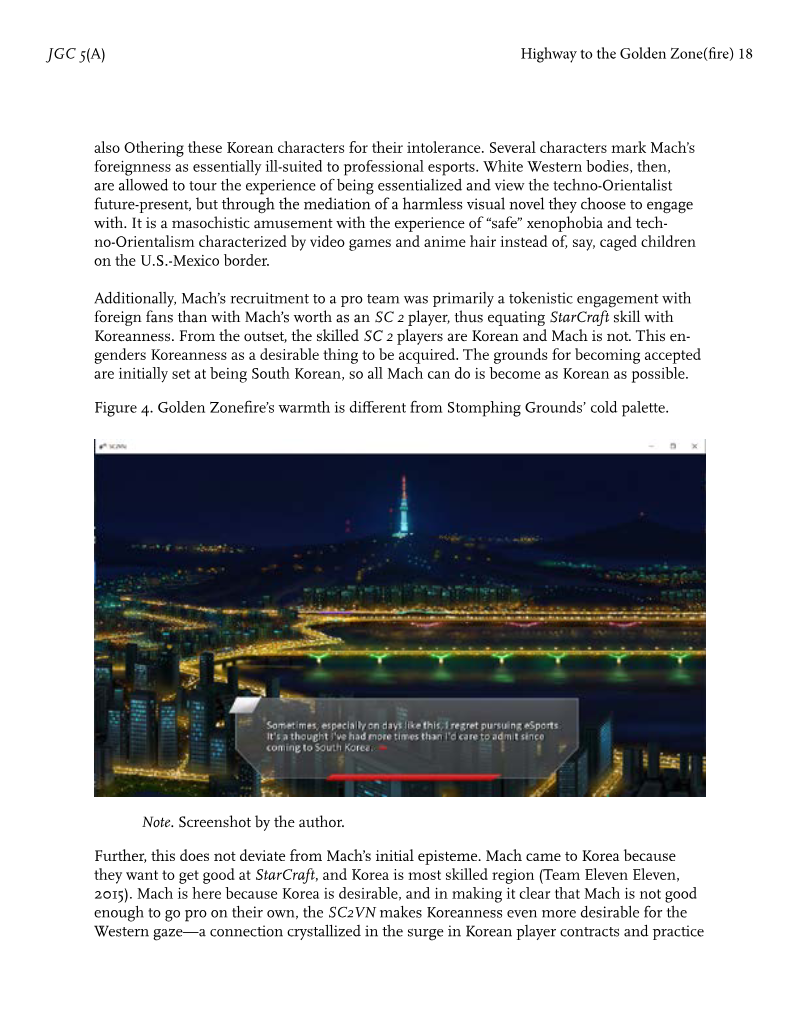
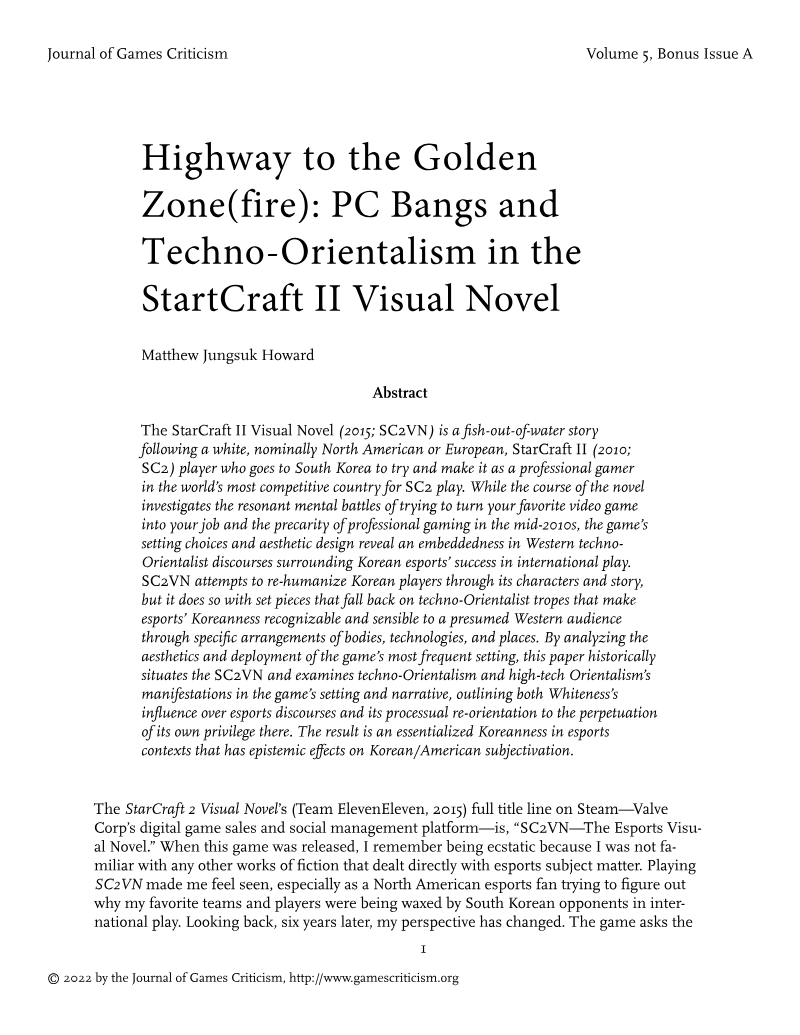
The visual novel SC2VN functions as a site of techno-Orientalist discourse, utilizing the South Korean pc bang as a central trope to navigate Western anxieties surrounding the nation’s dominance in mid-2010s esports.
- The visual novel SC2VN utilizes the South Korean pc bang as a trope to frame Korean esports culture as a resource for Western consumption rather than a lived reality.
- The narrative structure functions as a form of digital tourism, allowing the Western protagonist to appropriate Korean competitive practices to mitigate their own feelings of technological and economic obsolescence.
- By essentializing the pc bang as a 'racial-biopolitical womb,' the game reduces complex Korean esports success to a product of the environment, reinforcing racialized hierarchies in the global gaming industry.
The Man with the Gun is a Boy who Plays Games: Video Games, White Innocence, and Mass Shootings in the U.S.
The recurring tendency to blame video games for mass shootings in the United States functions as a strategic rhetorical device designed to preserve the concept of white innocence.
- Blaming video games for mass shootings functions as a rhetorical strategy to preserve white innocence by framing white male perpetrators as corrupted victims of media rather than agents of ideological violence.
- Empirical research consistently fails to establish a causal link between video game consumption and real-world violence, yet political and media figures repeatedly prioritize gaming as a culprit following mass casualty events.
- The focus on digital media serves as a distraction from the systemic issues of easy firearm access, misogyny, and the proliferation of political extremism in the United States.

Binaries on a Circle: Engaging Whiteness on the Playground
Traditional game studies often rely on rigid, binary frameworks such as colonizer versus colonized or white versus other, which fail to capture the fluid complexities of identity.
- Traditional game studies often rely on rigid, binary frameworks that fail to capture the fluid complexities of identity and power.
- Whiteness functions as a pervasive system of power, capital, and colonial influence that intersects with caste, class, and geography.
- Games such as hopscotch, cricket, and nursery rhymes are historically rooted in colonial structures that reinforce authoritative norms.
On Cooking a Sour Game
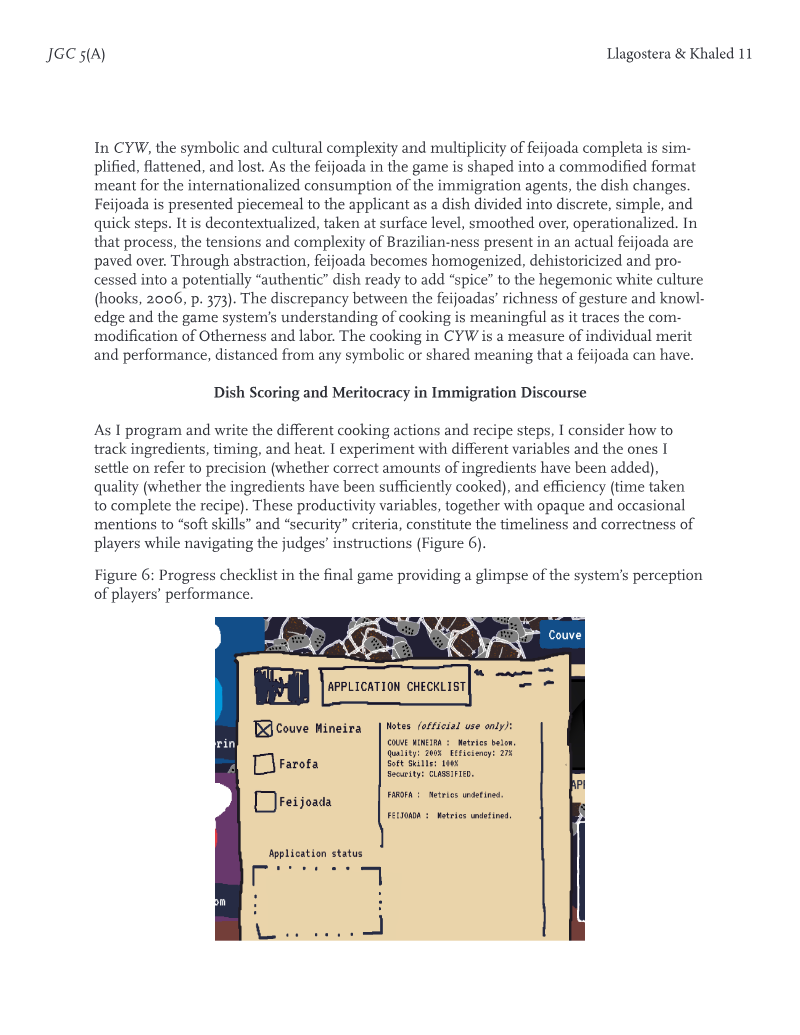
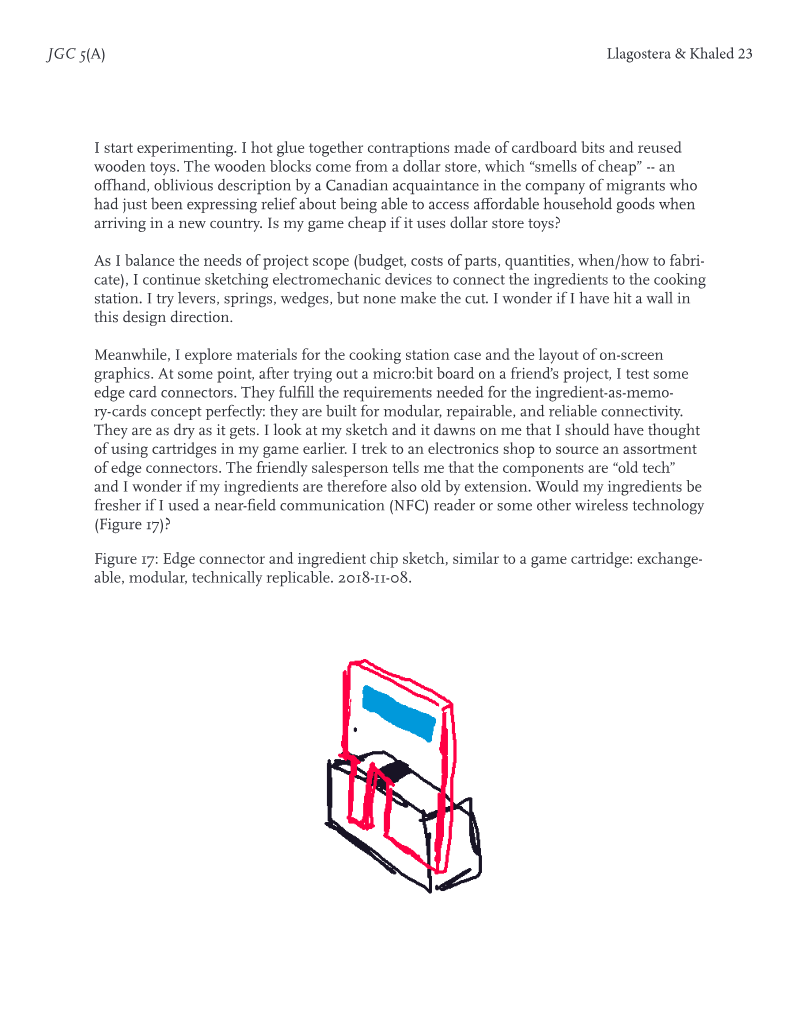
Cook Your Way functions as a critical intervention in game design, utilizing an alternative controller and the preparation of traditional Brazilian cuisine to interrogate the dehumanizing mechanics of global immigration systems.
- Cook Your Way uses a custom physical cooking interface to simulate the high-pressure, dehumanizing experience of navigating the Canadian immigration system.
- The game design rejects traditional empathy-driven narratives and player-empowerment mechanics in favor of structural instability and anticlimax to mirror bureaucratic inefficiency.
- By utilizing modular, transparent hardware, the project forces players to confront the friction and futility inherent in state-sanctioned border regimes.