Game Development reports and market data
Documents
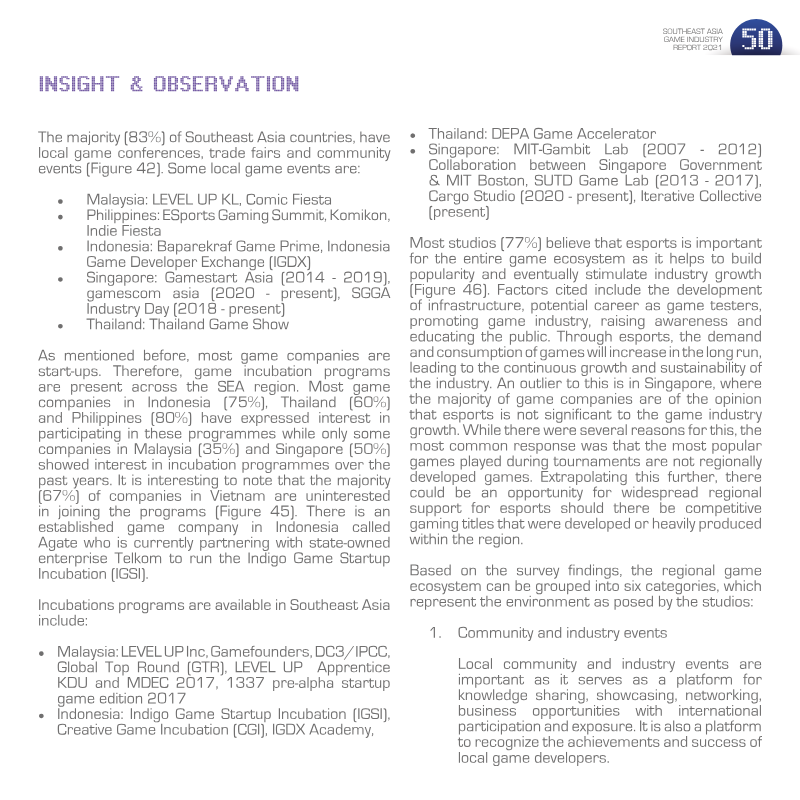
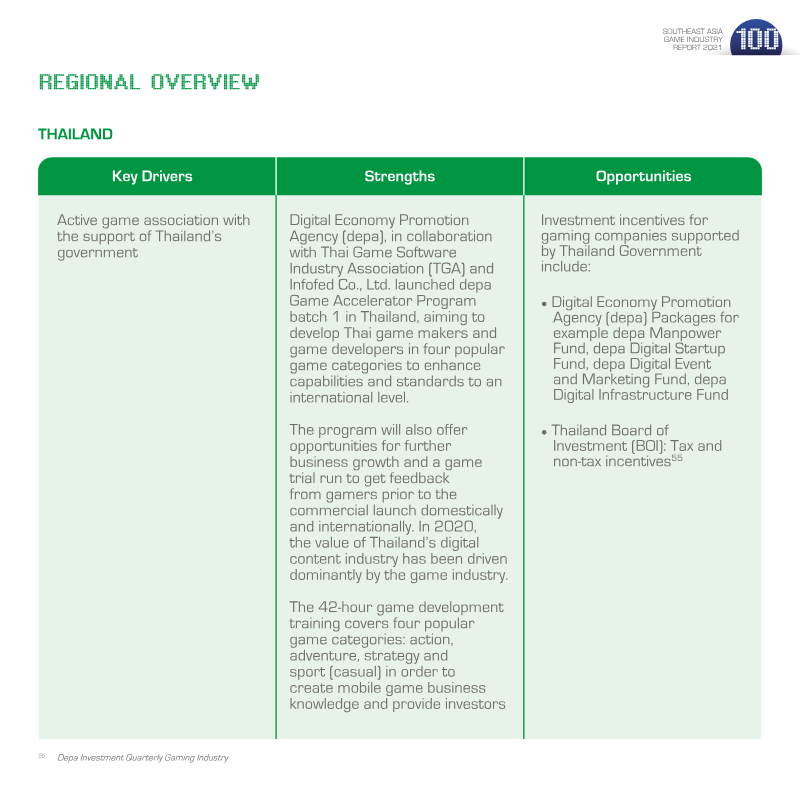
Southeast Asia Game Industry Report 2021
The Southeast Asia Game Industry Report 2021, published by Malaysia Digital Economy Corporation (MDEC), is the third regional study of the games sector following 2015 and 2016 reports.
- Southeast Asia's game industry was reported at US$4.4 billion, with 70% of that coming from mobile.
- Most surveyed companies are small and young, with 48% having less than three years in the market.
- The majority of companies (60%) employ fewer than 11 people, while only 10% have more than 100 employees.
Malaysia Game Development Industry Talent Economics Report 2024
This Malaysia Digital Economy Corporation (MDEC) and TalentCorp-supported report, produced with Asia Pacific University, examines talent economics in Southeast Asia's game development industry for 2024.
- Men in the regional sample earn about 16% more per month than women, with the gap widening as experience increases.
- Among the three major specialisations, game programmers have the highest average monthly salary, while game designers have the lowest.
- Singapore's average monthly game development salary is far above other surveyed countries, with Indonesia the lowest.
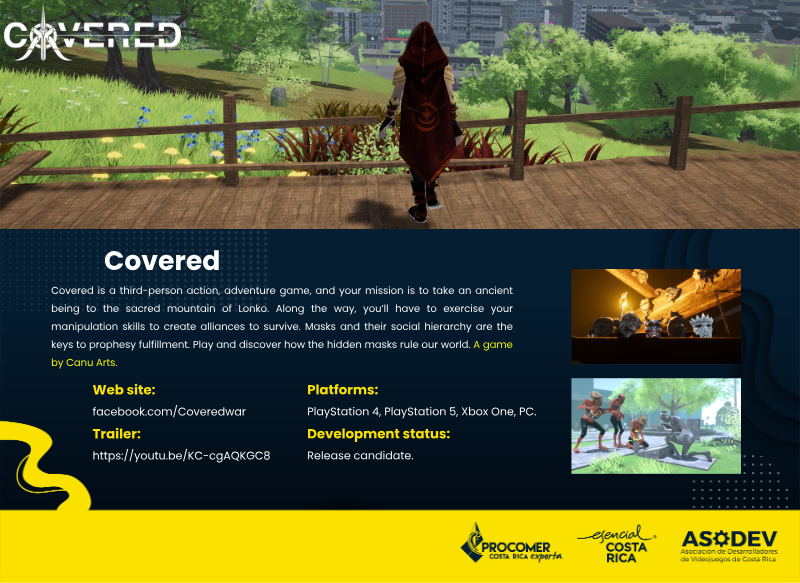


Costa Rica's Videogame Industry Catalog 2023
Costa Rica's Videogame Industry Catalog 2023 is a catalog produced by PROCOMER, the Export Promotion Agency of Costa Rica, together with ASODEV, the Videogame Developer's Association of Costa Rica.
- The catalog states that more than 20 studios are located in Costa Rica, with the main focus on exporting services and original IPs.
- The stated main export destinations are the United States, Europe and Asia.
- Green Lava Studios' My Name is Mayo trilogy is described as having become top sellers on PSN at launch.
Argentine Videogame Industry
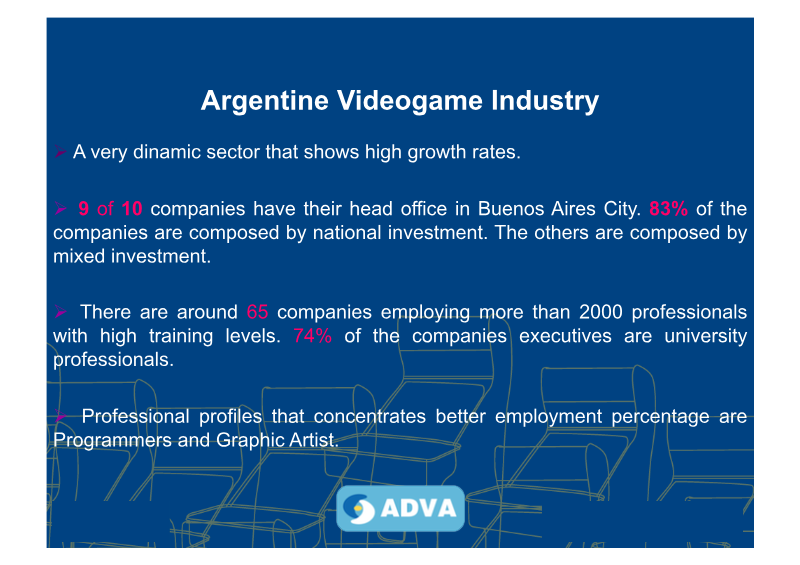
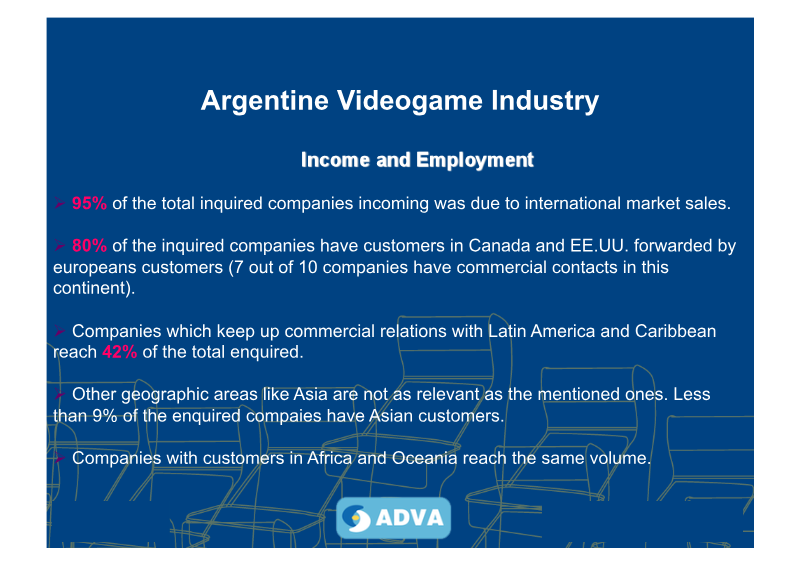
The Argentine Videogame Industry is a dynamic and rapidly growing sector, characterized by high growth rates in both revenue and employment.
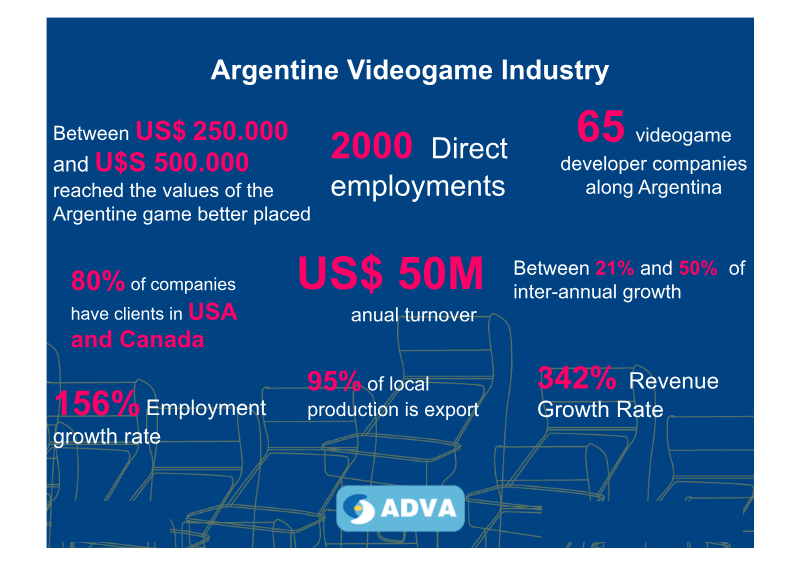
- Argentina's videogame industry comprises roughly 65 companies employing more than 2,000 professionals, with programmers and graphic artists making up the largest share of jobs.
- Between 2006 and 2011, sector revenues grew 156 percent and employment more than doubled, with 2012 projections anticipating nearly 50 percent revenue growth and a 34 percent rise in on-site workers.
- Exports account for 95 percent of sector sales, with 80 percent of surveyed companies serving clients in the United States and Canada, often through European intermediaries.
Observatorio de la Industria Argentina de Videojuegos: Informe 2025
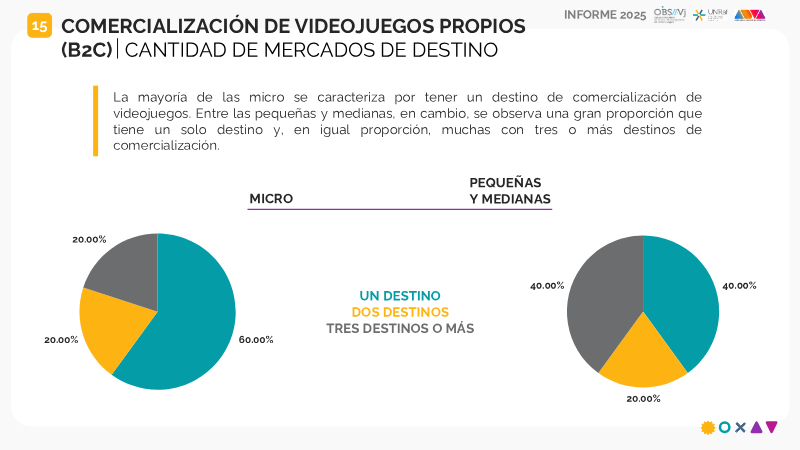
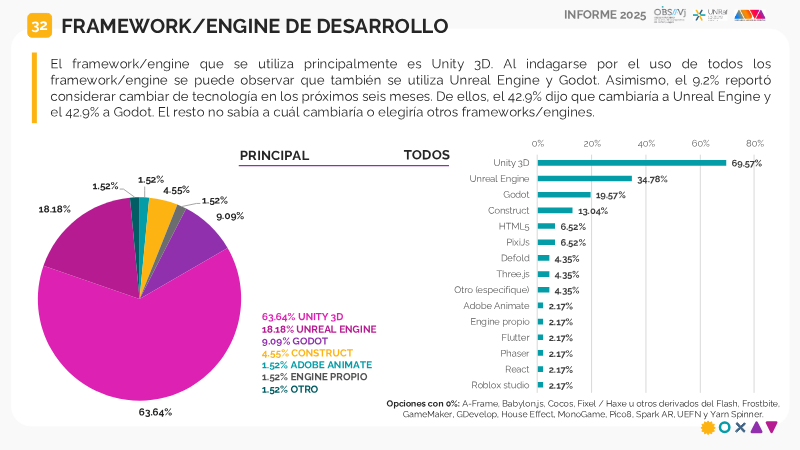
The Observatorio de la Industria Argentina de Videojuegos, a public-private project launched in 2017 from the Universidad Nacional de Rafaela (UNRaf) and backed by ADVA, presents its 2025 report on activities carried out in 2024.
- Access to financing is reported as the main perceived obstacle to developing the activity, followed by economic instability and high tax pressure relative to salaries.
- The report estimates the industry's economic value at U$S 87,344,640, based on 1,432 human resources in activity.
- In 2024, development started on 41 small games and 23 large games, and 17 small and 10 large games were published.
The Funding Landscape of the Swiss Game Industry 2026
This preliminary study by the Swiss Game Developers Association (SGDA) assesses the funding landscape of the Swiss game industry in 2026, focusing on the impact of public funding and regional disparities.
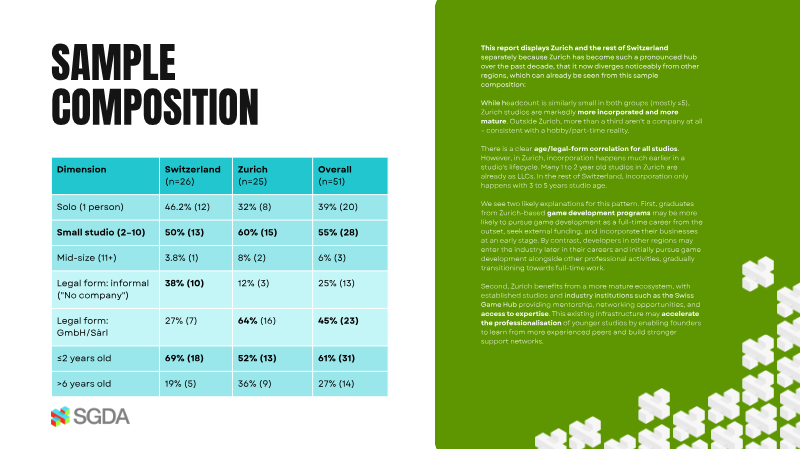
- The SGDA's 2026 study, based on a voluntary survey of 51 Swiss game studios (25 in Zurich, 26 elsewhere) conducted April–May 2026, concludes that the Swiss industry is internationally respected but small and under-capitalised, with sustained production-stage funding as the decisive missing element.
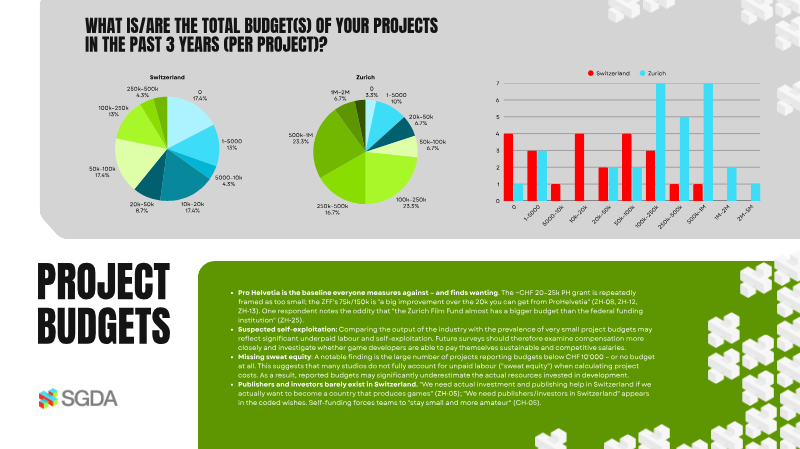
- Zurich studios are far better resourced than those elsewhere in Switzerland: 64% are incorporated as GmbH or Sàrl versus 27% outside the canton, and the median project budget is CHF 275k compared with CHF 30k.
- Zurich studios receive a median of 15% of their budgets from public support, while studios outside Zurich receive none, as most cantons offer no support for games at all.
eGames Lab Research Midterm Report 2023-2024
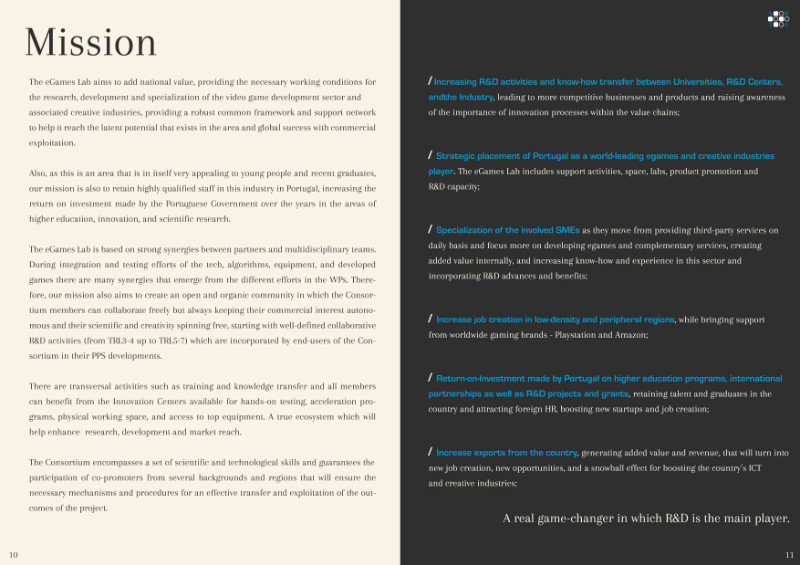
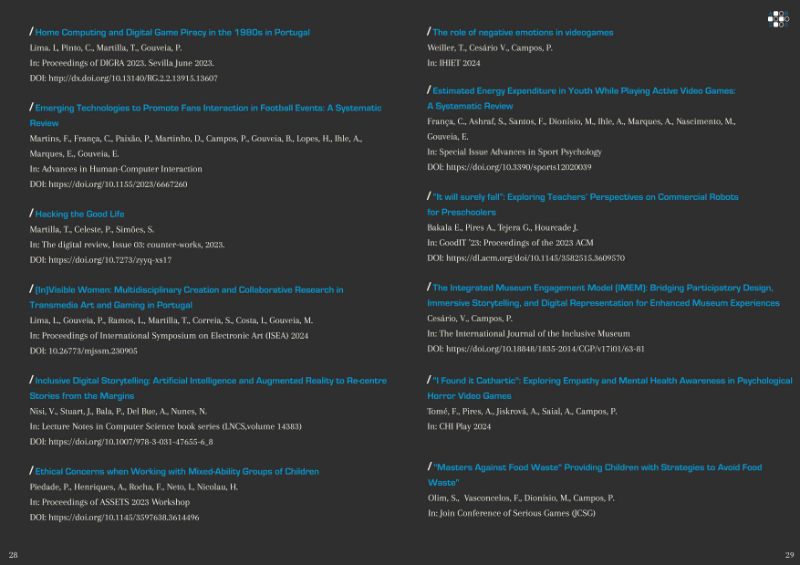
The eGames Lab Research Midterm Report covers the 2023-2024 midterm of a national Portuguese cluster for electronic games, funded under Portugal's Recovery and Resilience Plan (PRR) and based in Madeira, Lisbon, Évora and the Azores.
- The eGames Lab reports a total investment of 29,991,847.46€, of which 20,181,482.23€ is allocated to research and development.
- The consortium brings together 22 private and public entities organised across Madeira, Lisbon, Évora and the Azores.
- The lab's staff includes 18 PhD students, 14 MSc students, 12 post-docs and 4 BSc students, drawn from 9 nationalities.
Games Industry in Lithuania
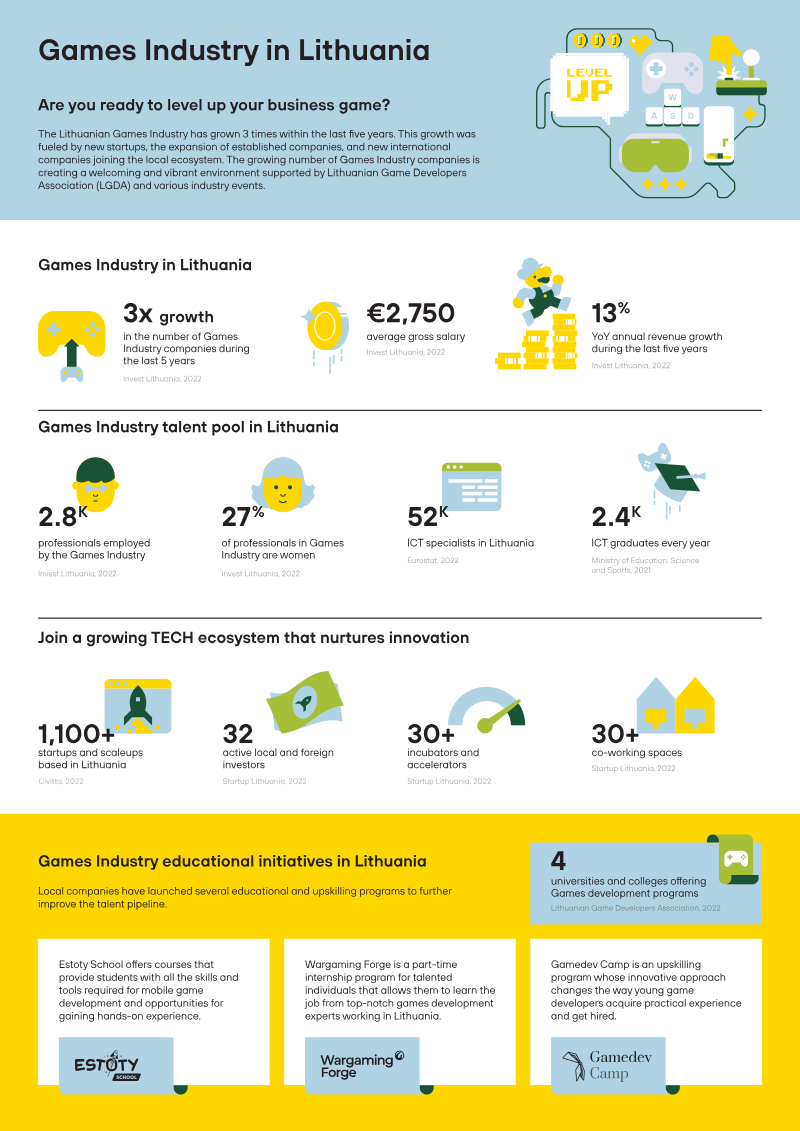
The Lithuanian games industry has experienced substantial growth, tripling in company count over the past five years, driven by new startups, existing company expansion, and international entrants.
- Lithuania's games industry has grown threefold over the past five years, driven by new startups, expansion of established studios, and international companies entering the local ecosystem.
- The games sector employs about 2,800 professionals, 27% of them women, with an average gross salary of €2,750, and annual revenue has grown 13% year over year.
- The broader ICT talent base includes roughly 52,000 specialists, with around 2,400 ICT graduates produced each year.
The Game Industry of Estonia 2021
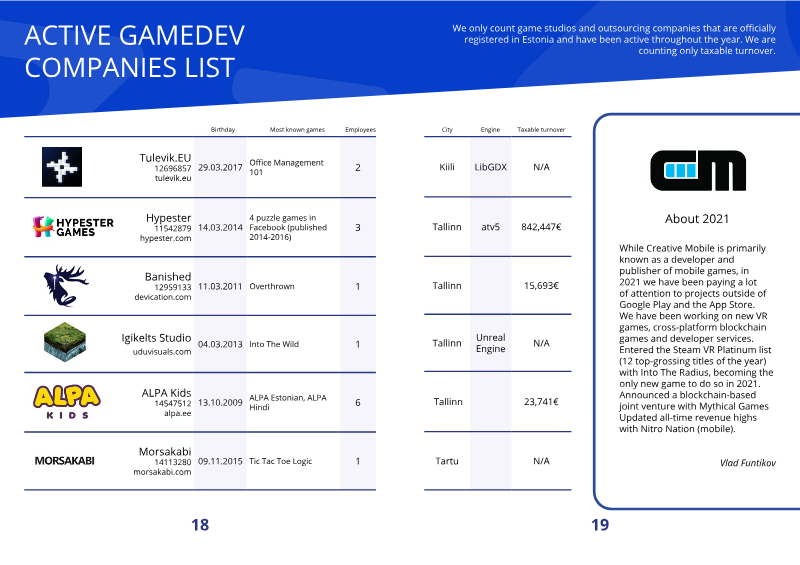
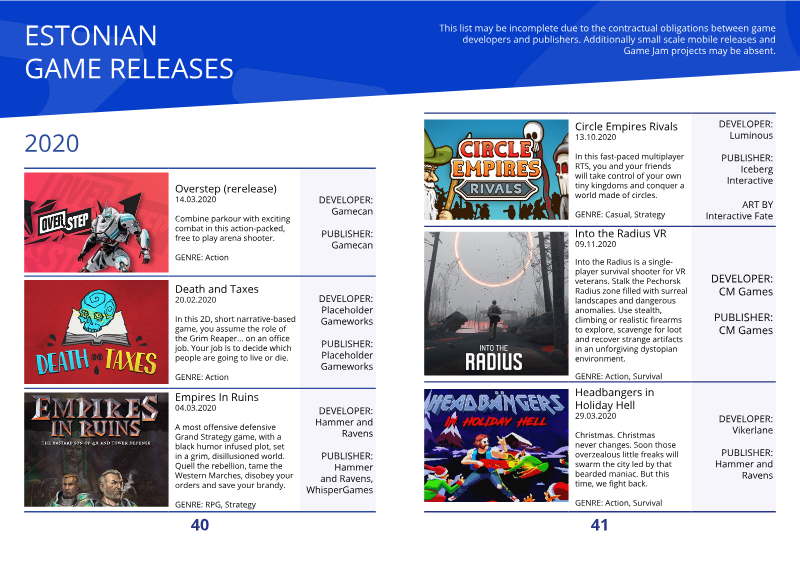
The paper, produced by GameDev Estonia, maps the Estonian game industry, covering game development studios, educational entities and support organisations that were active through 2021.
- Taxable turnover of the industry rose from 40,003,013€ in 2020 to 50,440,641€ in 2021, a growth of 20.69%.
- The document states that 38% of studios have two to five workers and another 38% have one working person, placing 76% of development companies in the tiny category.
- Of the engines counted, Unity accounted for 52.9% (18 of 34) and Unreal Engine for 29.4% (10 of 34).
Games Croatia Brochure 2025-2026
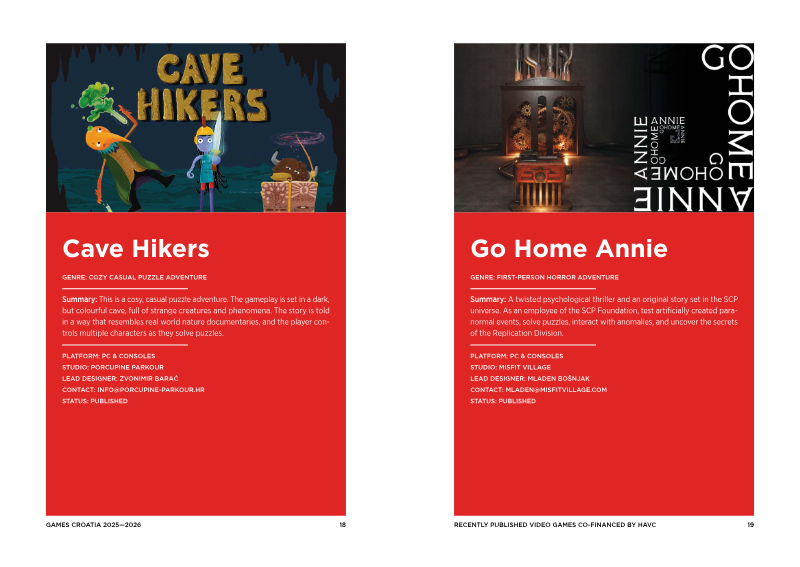
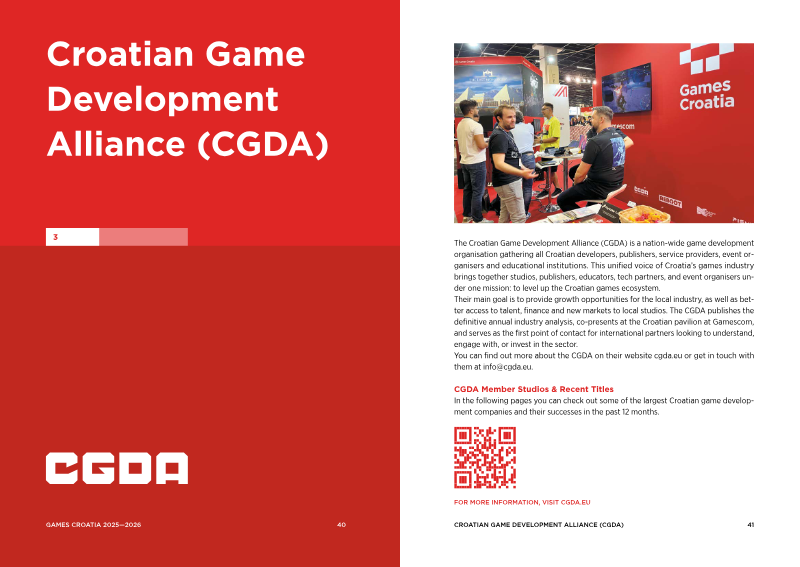
The Games Croatia Brochure 2025-2026, published by the Croatian Audiovisual Centre (HAVC) through its Games Croatia initiative, profiles Croatia's video game industry.
- Croatia's industry recorded €72.1M in revenue in 2024, double the 2019 figure.
- The brochure reports 271 active game development entities, including studios, sole traders and associations.
- 86% of studios work on their own intellectual property, according to the brochure.

Belgian Games Key Facts 2021
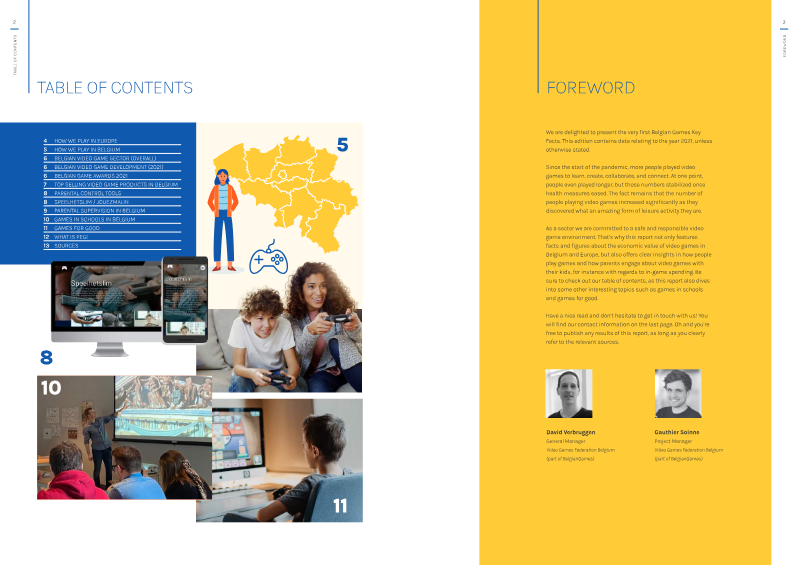
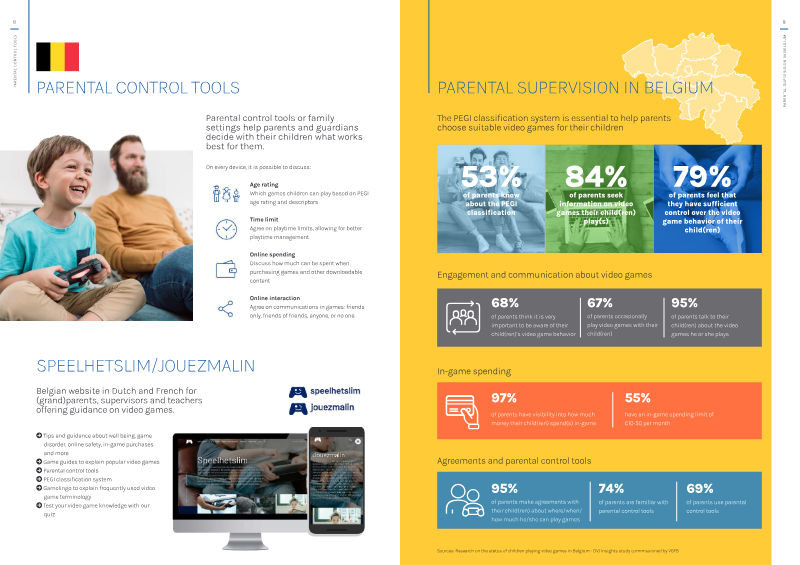
The "Belgian Games Key Facts 2021" report provides an overview of the video game sector in Belgium and Europe for the year 2021, focusing on economic value, player demographics, parental engagement, and the broader societal impact of games.
- Belgium's video game sector was valued at an estimated €600 million in 2021, growing about 4% over 2020.
- Belgian video game development generated €88 million in turnover in 2021 across 110 companies employing 935 full-time equivalents.
- About 52% of Belgians aged 6 to 64 play video games, with an average player age of 31 and women making up 48% of players.

Belgian Games Key Facts 2022
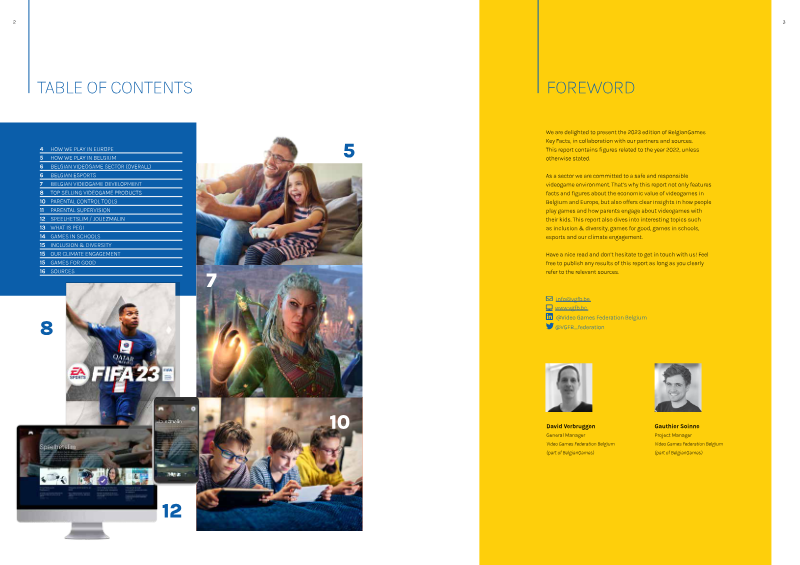
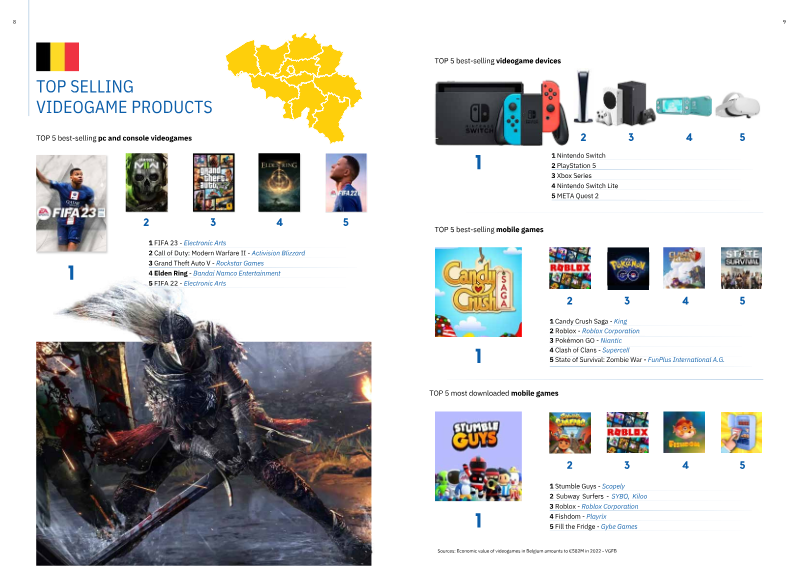
The "Belgian Games Key Facts 2022" report provides a comprehensive overview of the Belgian and European video game markets, focusing on demographic data, usage patterns, economic value, development, esports, and responsible gaming practices.
- The total value of videogames in Belgium reached €582 million in 2022, down 3 percent from 2021 but up 10 percent from the pre-pandemic year 2019.
- Belgian videogame development employed 1,085 full-time equivalents across 133 companies, and mobile game downloads reached roughly 148 million, about one million more than the previous year.
- 53 percent of Belgians aged 6 to 64 play videogames, averaging 8.8 hours per week, with female players making up 46.7 percent of the player base.
Writers
Games and companies
Games