Game Development reports and market data
Documents

Should You Get A Degree In Game Dev? (My Story)
The central thesis of this analysis is that formal university degrees in game design are often unnecessary and potentially financially detrimental for aspiring developers.
- The game industry is a meritocratic field that prioritizes tangible portfolios and demonstrated technical proficiency over formal academic credentials.
- Formal university degrees in game design are often unnecessary and can be financially detrimental, as evidenced by a $35,000 graphic design degree that provided little professional utility.
- Independent project creation and self-directed learning are more effective methods for professional growth than traditional classroom instruction.
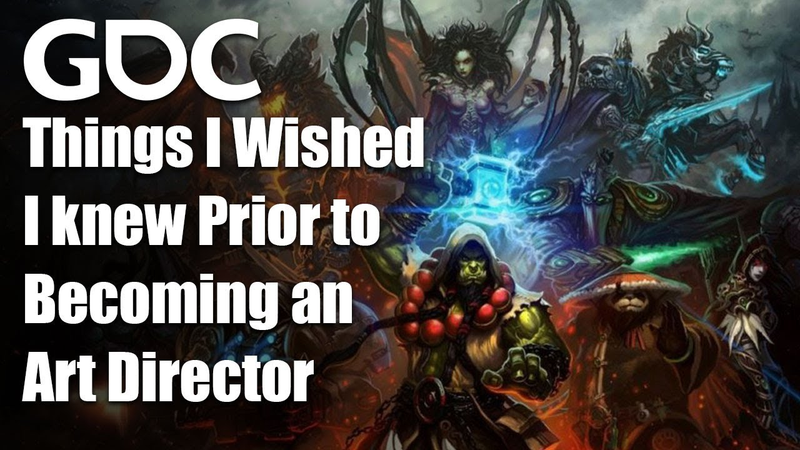
Art Direction Bootcamp: Pantalones! Things I Wished I knew Prior to Becoming an Art Director
This presentation outlines essential lessons for transitioning from an artist to an art director within the video game industry, drawing on the speaker’s experience scaling a studio from a small indie team to a 120-person AAA organization.
- Successful art direction requires shifting focus from maintaining absolute creative control to fostering team motivation, delegating authority, and managing interpersonal dynamics.
- Art directors must avoid micromanagement by hiring specialists and granting them genuine ownership over their work, which improves both output quality and employee engagement.
- To effectively lead, art directors should provide clear, goal-oriented direction rather than prescriptive solutions, allowing artists the creative freedom to solve problems within established parameters.
Game Dev: How To Be More Productive
Maintaining productivity during tedious game development tasks requires a structured approach that prioritizes goal-oriented workflows over time-based constraints.
- Prioritize goal-oriented workflows over time-based constraints to incentivize efficiency and overcome stagnation during repetitive development tasks.
- Implement a rigid work-rest cycle consisting of two-hour work blocks followed by one-hour breaks to maintain momentum and ensure adequate recovery.
- Deconstruct large, complex technical challenges into smaller, manageable components to facilitate frequent achievement and accurate progress tracking.
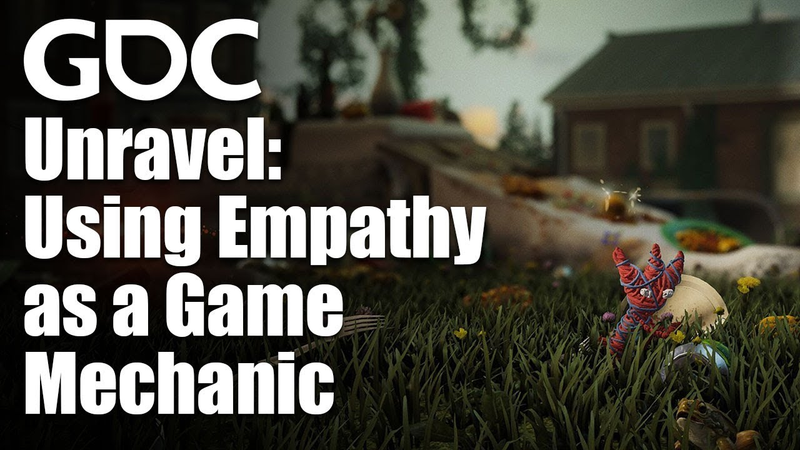
Unravel: Using Empathy as a Game Mechanic
The core objective of Unravel is to redefine the player experience by centering gameplay around empathy rather than traditional power fantasies.
- Unravel replaces traditional power fantasies with a design philosophy centered on empathy, positioning the player as a fragile protagonist to emphasize protection and connection over dominance.
- The game utilizes personal family history and authentic artifacts, such as real photo albums, to anchor its narrative themes in a tangible and relatable reality.
- Gameplay mechanics are driven by the themes of persistence and redemption, focusing on the act of mending broken bonds as both a narrative and mechanical objective.
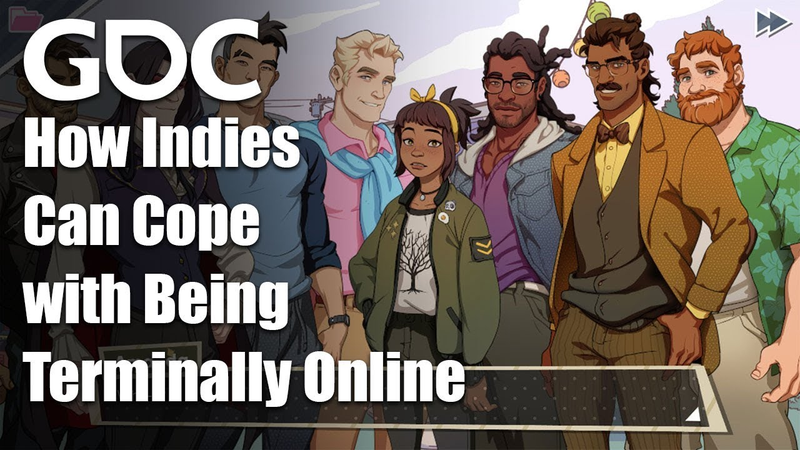
Dream Daddies and Fearful Fathers: How Indies Can Cope with Being Terminally Online
The modern independent game development landscape is increasingly defined by a toxic attention economy that prioritizes performative outrage over meaningful creative discourse.
- The current digital attention economy prioritizes performative outrage over creative discourse, leading to severe developer burnout, imposter syndrome, and physical exhaustion.
- Platform affordances cause 'context and temporal collapse,' which flattens complex human interactions into performative exchanges that reward cynicism and inflammatory behavior.
- The fear of dogpiling and harassment discourages developers from exploring nuanced or controversial themes, stifling creative expression in favor of social capital.
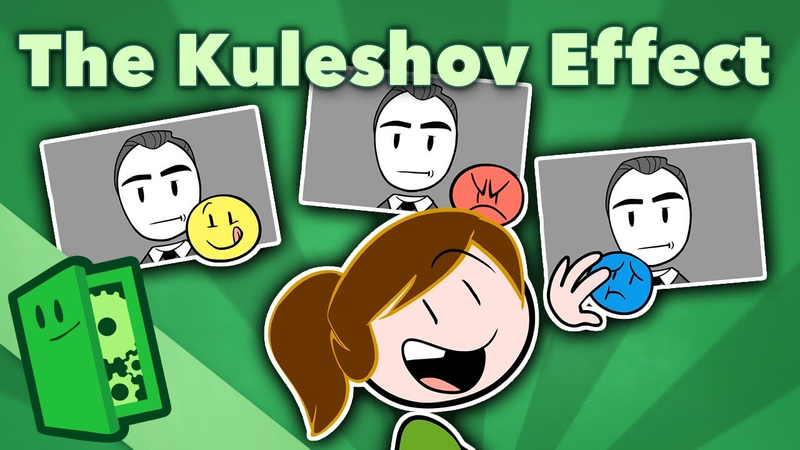
The Kuleshov Effect - Improving Character Interactions in Games - Extra Credits
The Kuleshov effect, a psychological phenomenon originating in early 20th-century cinema, demonstrates that audiences ascribe specific emotions to characters based on the juxtaposition of images rather than the performance itself.
- The Kuleshov effect demonstrates that audiences derive character emotion from the juxtaposition of images and context rather than relying solely on the character's facial performance.
- Developers can improve NPC emotional resonance by using environmental details, camera work, and sound design to frame neutral animations, rather than relying exclusively on expensive motion capture or high-fidelity graphics.
- Strategic editing and camera cuts to specific objects during dialogue can retroactively alter a player's interpretation of an NPC’s neutral expression, framing them as suspicious, fearful, or kind.
Game Discoverability Day: NOTICE ME: The Grind Behind the $272K Funding Success of Boyfriend Dungeon
The successful crowdfunding of the indie title Boyfriend Dungeon, which raised $272,000 against a $65,000 goal, serves as a case study for effective game discoverability and community-driven marketing.
- Boyfriend Dungeon achieved 418% of its funding goal, raising $272,000 against a $65,000 target by prioritizing community-driven engagement over paid advertising.
- Twitter served as a critical conversion engine, driving 17% of total pledges—a rate significantly higher than the industry average of less than 1%.
- A high-conversion hook must be immediately understandable, utilizing a clear 'one-sentence' pitch that combines distinct genres, such as the game's 'dating sim meets dungeon crawler' premise.

The Making Of Cuphead
The development of Cuphead serves as a case study in artistic integrity and the rejection of conventional industry practices.
- Studio MDHR achieved commercial success by prioritizing an uncompromising artistic vision over market data, proving that niche, high-quality projects can resonate with sophisticated consumers.
- The game’s visual identity was created using traditional, frame-by-frame hand-drawn techniques, deliberately rejecting modern digital rigging and tweening to replicate 1930s 'rubber-hose' animation.
- The soundtrack was produced through live studio recordings featuring a 13-piece big band and a 10-piece ragtime ensemble, eschewing software-based MIDI instruments for historical authenticity.

Entrepreneurship Vs. "Real Job" (Which One Wins?)
The primary purpose of this analysis is to evaluate the trade-offs between independent entrepreneurship and traditional employment within the game development industry.
- Entrepreneurship provides superior autonomy and lifestyle flexibility, allowing for personalized schedules and work environments that are often unattainable in traditional office settings.
- The primary trade-off for independent work is the assumption of total financial risk, as entrepreneurs bear the full burden of business insolvency unlike employees shielded by a corporate structure.
- Lack of external oversight in entrepreneurship frequently leads to self-imposed pressure that exceeds the demands of a traditional employer, making it difficult to disconnect from work.
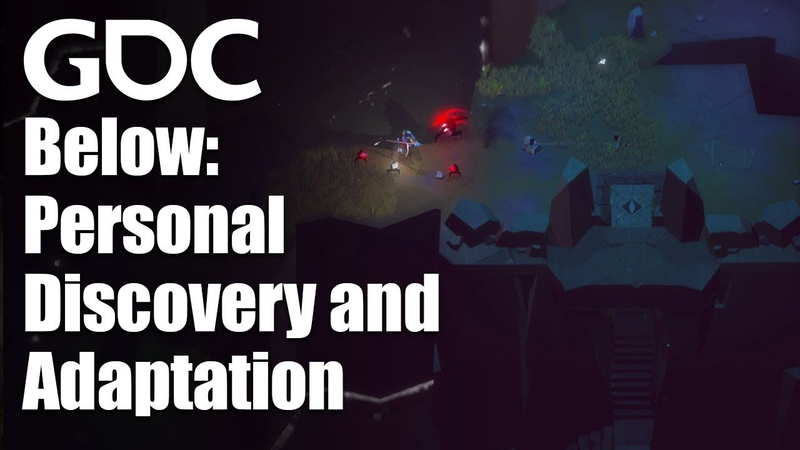
A New Dimension to Below: Personal Discovery and Adaptation
The development of the title Below serves as a case study in overcoming significant technical and creative hurdles through iterative adaptation and cross-disciplinary collaboration.
- The development team for Below achieved its distinct visual style by combining 3D geometry with hand-painted normals and flat cards, creating a complex 'Zelda-skew' perspective where objects point toward the camera to avoid clipping.
- Initial production workflows were highly inefficient, requiring artists to compile assets via batch files that took up to 30 minutes and script changes through text editors rather than using a real-time game editor.
- To improve productivity, the team developed in-game tools that allowed for real-time movement of assets, light editing, and post-process adjustments, significantly reducing the need for external scripting and level reloads.
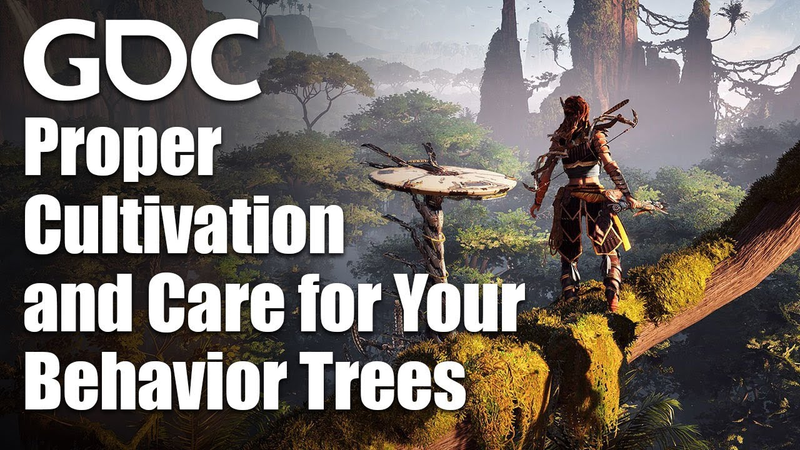
AI Arborist: Proper Cultivation and Care for Your Behavior Trees
Effective behavior tree implementation hinges on the use of a centralized, compact blackboard database that utilizes key-value pairs to store game world data.
- Use a centralized, compact blackboard database with key-value pairs to store game world data, which simplifies node access and debugging.
- Adopt a hybrid architecture by pairing behavior trees with finite state machines or planners to avoid the spaghetti code and implicit dependencies caused by using trees for complex decision-making.
- Decompose AI in high-complexity environments like real-time strategy games into specialized manager subsystems—such as income, construction, and tactics—that communicate via message passing.

ゲーム障害に関する調査・研究の取り組みについて
Four Japanese industry associations—the Computer Entertainment Supplier's Association (CESA), Japan Online Game Association (JOGA), Mobile Content Forum (MCF), and Japan eSports Union (JeSU)—have initiated a joint research project concerning "Gaming disorder."
- Four major Japanese gaming industry associations—CESA, JOGA, MCF, and JeSU—have launched a formal research project to address the WHO's classification of gaming disorder.
- The initiative is led by an independent research committee headed by Professor Akira Sakamoto to ensure academic rigor and impartiality in studying gaming behaviors.
- The project aims to replace speculation with scientific evidence to guide industry standards and public policy regarding excessive gaming.
Writers
Games and companies
Games