Game Development reports and market data
Documents
Feeding the Maw: Managing a Live Narrative Game in Fallen London
Fallen London, a decade-old free-to-play browser game, serves as a critical financial and creative anchor for the London-based indie studio Failbetter Games.
- Failbetter Games uses the decade-old browser game Fallen London as a financial anchor, providing stable revenue that de-risks the development of standalone premium titles like Sunless Sea and Sunless Skies.
- The studio’s monetization strategy relies on the 'Exceptional Friendship' monthly subscription model, supplemented by 'Fate,' a premium currency used for one-off narrative purchases.
- To maintain subscriber retention, the studio produces approximately 100,000 words of exclusive narrative content annually, which is later sold individually to ensure long-term revenue.

Let's Dev | Episode 002: Once Upon a Coma (Highlights)
This technical walkthrough details the digital art production process for Once Upon a Coma, an indie game developed in the Unity engine.
- Environmental storytelling relies on visual composition techniques like using silhouettes for scale reference and framing elements such as trees and mist to direct player focus.
- Atmospheric depth is achieved in Unity-based projects by applying Gaussian and motion blur techniques to background layers within Adobe Photoshop.
- Character design for antagonists like 'Doctor Smile' prioritizes unsettling, elongated features inspired by horror literature while avoiding excessive detail until the primary silhouette is finalized.
Making Games That Stand Out and Survive
In an increasingly saturated digital marketplace, the primary challenge for developers is securing consumer attention amidst intense competition for limited leisure time.
- Success in a saturated market requires communicating a game’s core value proposition and emotional experience through a visual representation that is digestible in five to six seconds.
- Long-term commercial viability is achieved by treating a game as a living ecosystem that requires consistent content updates and active community engagement to maintain momentum.
- Developers should design low-friction, non-punitive 'home-like' spaces to allow players to maintain progress and connection during periods of low time or energy, thereby mitigating burnout.
League of Legends Client Update: Art Directing a Consistent and Scalable Interactive Brand Identity
The League of Legends client update represents a strategic shift from fragmented, unstable architecture toward a unified, scalable design system.
- The League of Legends client update transitioned from a fragmented, unstable architecture to a unified, scalable design system to improve both developer efficiency and brand cohesion.
- The design team replaced generic aesthetics with a narrative-driven 'Hextech' theme, positioning the interface as a lore-integrated, magical partner within the game.
- To support decentralized feature teams, the studio deconstructed complex mechanical elements into a modular visual language based on geometric precision and metaphorical material rendering.

Let's Try: Godot Engine - Is it good?
The Godot engine serves as a viable, lightweight alternative to industry-standard tools like Unity and GameMaker Studio 2.
- Godot is a highly efficient, open-source alternative to Unity and GameMaker Studio 2, specifically optimized for 2D game development.
- The engine features a portable, lightweight design that requires no formal installation and offers rapid load times compared to resource-heavy industry standards.
- GDScript utilizes a Python-like syntax, significantly lowering the barrier to entry for developers transitioning from other platforms.
Video Games and the Global South
"Video Games and the Global South" offers a critical examination of video game engagement and development in regions often marginalized by mainstream industry analysis.
- The volume argues that game studies has long marginalized the Global South as a technological periphery, and it grounds games in local economic, political, and cultural conditions such as trade embargoes, copied hardware, piracy, state censorship, and state-led industrial policy.
- Rather than relying on center-periphery binaries, the editors propose "border thinking" and attention to heterogeneous local contexts, drawing on decolonial and postcolonial theory.
- Piracy, peer-to-peer sharing, public gaming venues, and mobile access recur as central mechanisms of game access in the Global South, which the authors view as a democratizing force.
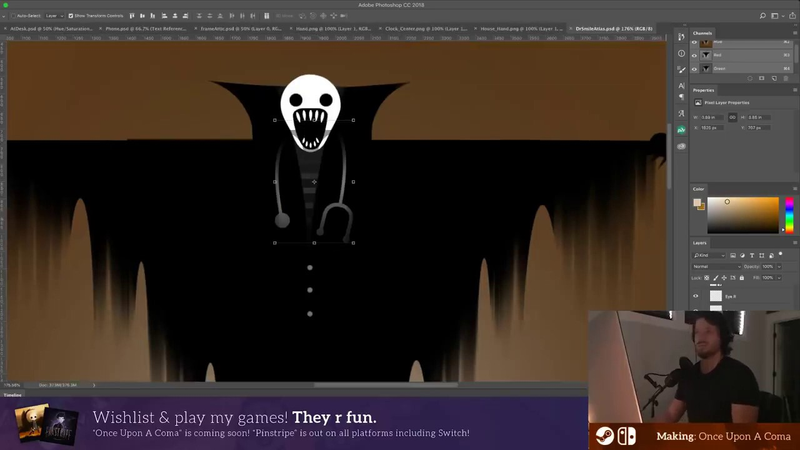
Let's Dev | Episode 001: Once Upon a Coma (Highlights)
This account details the final stages of production for the indie game Once Upon a Coma, developed in Unity.
- The development of Once Upon a Coma utilizes environmental storytelling and visual cues in Unity to convey narrative depth without relying on explicit dialogue.
- The production process employs iterative asset design, incorporating real-time community feedback to refine aesthetic quality and world-building.
- Transitioning from alpha testing to final launch is a high-stress phase that requires managing both the logistical burden of fixing thousands of bugs and the emotional toll of critical feedback.
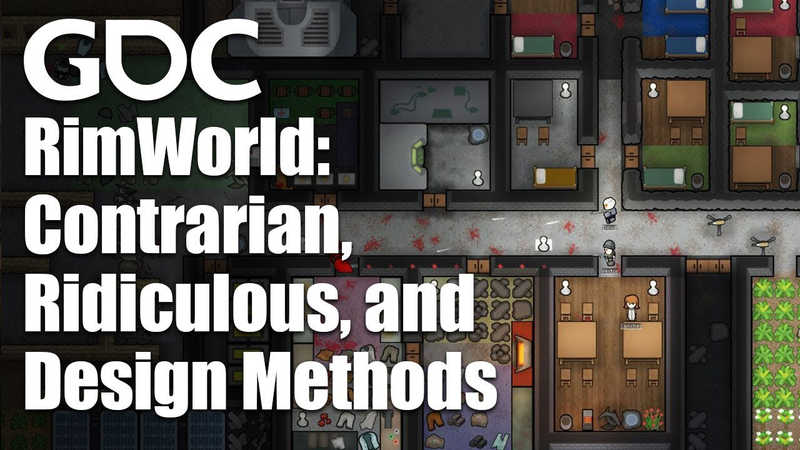
RimWorld: Contrarian, Ridiculous, and Impossible Game Design Methods
RimWorld succeeds by fundamentally rejecting the traditional game design framework that prioritizes skill-based progression and competitive balance.
- Shift the design focus from traditional 'game' mechanics—which prioritize competition and player victory—to a 'story generator' frame that allows for comical misfortune and emotional narrative development.
- Leverage the human tendency toward apophenia, where players naturally anthropomorphize and find deep social meaning in simple, abstracted symbols and events.
- Prioritize the 'coolness-to-cost' ratio when evaluating features rather than simply asking if an idea is cool, as many cool ideas are not worth the development effort.
Game Celebrities - The Role of Game Devs in Pop Culture - Extra Credits
The video game industry stands out among creative media for its lack of recognizable celebrity figures.
- The game industry prioritizes studio-centric branding over individual developer recognition to ensure that customer loyalty remains with the company rather than specific creative talent.
- Publishers intentionally suppress individual celebrity status to maintain control over intellectual property and prevent creators from gaining the leverage to prioritize artistic vision over market-driven goals.
- The highly collaborative and iterative nature of game development makes it structurally difficult to attribute a project's creative vision to a single individual, unlike the director-led model in film.
Why Make Games? Lessons from Frostpunk and This War Of Mine
Meaningful game design centers on the creation of interactive experiences that prioritize emotional depth, social values, and complex moral decision-making over traditional mechanics like leveling systems or conventional reward loops.
- 11 bit studios shifted its development philosophy from mechanics-focused design to 'meaningful games' after scrapping a project called Shelter, concluding that games must convey a message and evoke strong emotions to align with the studio's DNA.
- The studio prioritizes 'mood' as the primary binding agent between gameplay, art, and music, rather than focusing on any single element as the most important component of the experience.
- In This War of Mine, the team utilized a community-focused perspective rather than individual character tracking to force players to consider the survival of a group, using chaotic combat and moral dilemmas to reflect the reality of war.
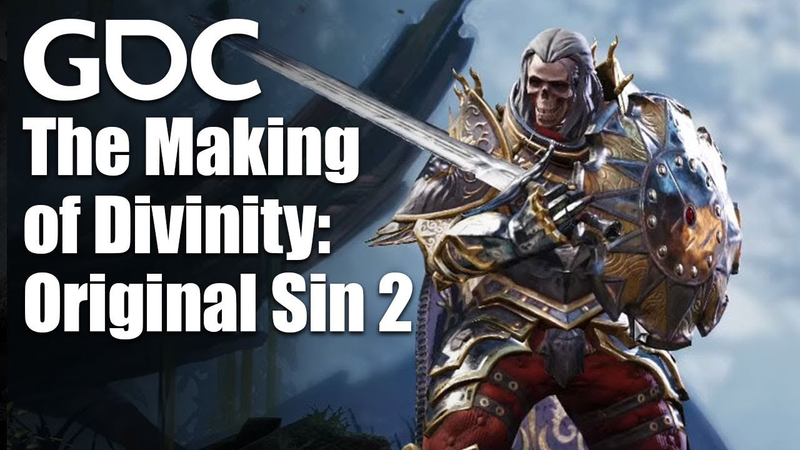
The Making of Divinity: Original Sin 2
The development of Divinity: Original Sin 2 represents a pivotal transition for Larian Studios, as the company scaled from a single 40-person team in Belgium to a 200-employee international operation.
- Larian Studios scaled from a single 40-person team to a 200-employee international operation, necessitating a 'follow-the-sun' workflow to maintain productivity and reduce crunch.
- The 'n+1' design philosophy, which required the game to account for every possible player action including the killing of essential NPCs, resulted in a script exceeding one million words.
- The studio transitioned from a decentralized, overly collaborative leadership model to a centralized review process to resolve conflicting documentation and scope creep.

When to call it quits... (Indie Game Dev Q&A)
This analysis addresses the challenges of transitioning to full-time indie game development, focusing on narrative design, business sustainability, and the psychological aspects of creative entrepreneurship.
- Long-term indie success requires balancing artistic vision with a rigorous business strategy, treating financial sustainability as the necessary infrastructure for creative longevity.
- Financial viability is not an accidental byproduct of game quality but the result of intentional marketing and strategic revenue planning.
- Developers should adopt a hybrid revenue model, combining irregular capital injections like game sales and publisher advances with stable, recurring income from platforms like Patreon and YouTube.
Writers
Games and companies
Games