Game Development reports and market data
Documents

Rockstar Pays QA Fulltime | Games ReCAP Episode 034
Rockstar Games has initiated a transition for its Lincoln-based quality assurance contractors to full-time employment, a strategic shift intended to address long-standing criticism regarding the studio’s intense crunch culture and high attrition rates.
- Rockstar Games is transitioning its Lincoln-based quality assurance contractors to full-time employment to address long-standing criticism regarding crunch culture and high attrition rates.
- Industry observers express skepticism that the shift to full-time status may be a PR strategy to circumvent overtime pay requirements rather than a genuine resolution to labor exploitation.
- In the absence of formal labor unions, public and social media scrutiny has become the primary mechanism for holding gaming companies accountable for unethical labor practices.
09 to '19: A Decade of Approachability in Fighting Games
The decade between 2009 and 2019 marked a transformative era for fighting games, characterized by a concerted industry-wide effort to broaden the genre's appeal through increased accessibility.
- Fighting game developers have spent the decade from 2009 to 2019 attempting to broaden audience appeal by reducing execution barriers, yet these efforts often fail to overcome the inherent intimidation factor of the genre.
- Developers frequently prioritize simplifying controls—such as implementing auto-combos, dedicated special move buttons, and simplified blocking—to help players reach the strategic decision-making phase of gameplay faster.
- Modern fighting games have increasingly incorporated comeback mechanics, such as Marvel vs. Capcom 3's 'X-Factor', Dragon Ball FighterZ's 'Sparking', and Tekken 7's 'Rage Art', to create tension and manage the game's momentum when a player is near defeat.
Kingdoms and Castles Postmortem
Kingdoms and Castles achieved commercial success by prioritizing iterative market validation and a disciplined approach to development scope.
- Validate game concepts early by setting measurable engagement goals, such as achieving 25 retweets on Twitter, to determine if a project is worth pursuing before committing significant development time.
- Use crowdfunding and early market testing to determine appropriate project scope, allowing developers to scale development effort based on actual audience interest rather than arbitrary timelines.
- Prioritize 'player fantasy' by ensuring the game's core loop and mechanics are intuitive and rely on existing cultural knowledge, which reduces the need for complex tutorials and extensive UI explanations.
Milestone Achieved! | Game Dev Unchained Episode 0200
The game development industry is currently undergoing a structural transformation characterized by a talent exodus from traditional AAA studios toward more stable, lucrative roles in sectors like aerospace, film, and consumer technology.
- A significant talent exodus is occurring as experienced game developers migrate to aerospace, film, and consumer technology sectors in search of greater stability and compensation.
- Systemic industry issues, specifically unsustainable crunch culture, high turnover rates, and aggressive microtransaction-based monetization, are driving the departure of veteran staff from AAA studios.
- The barrier to entry for independent developers is collapsing due to the widespread availability of affordable, powerful tools like Blender and accessible software licensing.
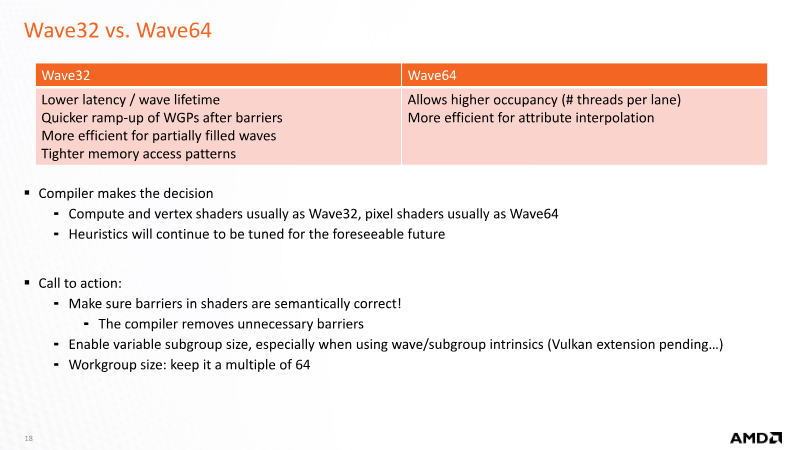
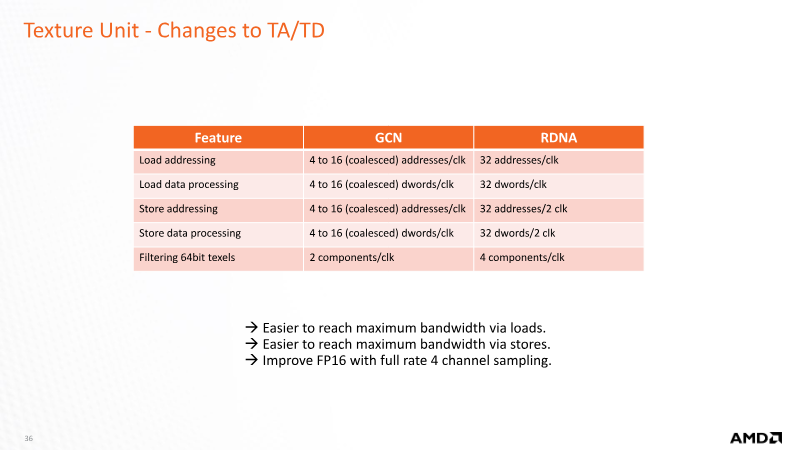

RDNA Architecture
This AMD presentation (its text references availability on July 7th) describes the RDNA GPU architecture and compares it with the earlier GCN architecture, using the RX 5700 XT (RDNA) and RX Vega 64 (GCN) as reference products.
- RDNA issues one instruction per cycle per SIMD32, whereas GCN issued one instruction every four cycles per SIMD16.
- The document states that 256 threads per WGP often reach over 90% ALU utilization in practice, based on observations in pixel shaders from one game trace.
- RDNA's Texture Units feature load addressing of 32 addresses per clock, compared with 4 to 16 coalesced addresses per clock on GCN.
Slay the Spire: Success through Marketability
Slay the Spire demonstrates that long-term commercial success in the independent gaming sector is best achieved through a mechanics-first design philosophy and a commitment to radical transparency.
- Slay the Spire's success was driven primarily by organic player enjoyment and visibility on Twitch, which allowed a game with modest visual appeal to gain massive traction through streamer engagement.
- Steam's 'Top Sellers' list acts as a critical discovery multiplier; once the game broke into this list, sales shifted from a declining trend to a significant, sustained spike.
- Weekly patching during Early Access kept the community engaged and allowed the developers to rapidly fix bugs and iterate on features, which was essential for a small team without a dedicated QA department.
Data-Driven Dynamic Gameplay Effects on For Honor
For Honor employs a modular, data-driven modifier system designed to decouple gameplay logic from core programming, thereby granting designers the autonomy to iterate on mechanics without constant engineering support.
- Ubisoft implemented a data-driven modifier system for For Honor that allows designers to dynamically create gameplay effects—such as stat buffs, AI decision-making, and attack properties—without requiring additional programming code.
- The system utilizes a modular architecture where modifiers can be applied to various entities, including players, NPCs, capture points, and interactive objects, enabling high reusability across different game features.
- To manage performance under a load of approximately 3,000 queries per frame, the team implemented entity-specific caps, limiting soldiers to 6 active modifiers while allowing players a higher threshold.

I PLAYED YOUR GAMES! | Let's Talk Game Design.
Effective game design hinges on the early refinement of core mechanics, intuitive user interfaces, and the strategic layering of environmental feedback.
- Long-term success in game development is primarily driven by the polish and intentionality of the moment-to-moment player experience rather than the initial hook of unique mechanics.
- Developers should prioritize early iteration on physics, camera behavior, and sensory feedback to ensure a smooth transition from prototype to a polished product.
- Fast-paced titles require dynamic difficulty adjustments, such as catch-up mechanics or variable spawn rates, to maintain momentum and mitigate frustrating difficulty spikes.
2019 Animation Tricks of the Trade
Effective animation relies on a disciplined approach to movement that prioritizes purposeful, sincere motion over superficial flair.
- Prioritize purposeful, sincere motion over superficial flair by establishing key poses early and using contrast to avoid monotonous character performances.
- Enhance technical efficiency by utilizing advanced strategies such as constraints, world-control baking, and simulation scripts for secondary motion.
- Integrate core game design principles into animation workflows to better understand how character movement interacts with broader interactive systems.

Guitar Hero Origin Story | Lessons Learned with Kai Huang former CEO and Co-Founder of Red Octane
RedOctane emerged as a pivotal force in the mid-2000s gaming landscape by transitioning from an online rental service to a specialized hardware and publishing powerhouse.
- RedOctane achieved financial stability by pivoting from an online rental service to a high-margin hardware business, specifically focusing on niche accessories like dance pads before partnering with Harmonix for Guitar Hero.
- Product pricing should be based on the perceived value delivered to the consumer rather than a cost-plus calculation to maximize profitability.
- To maximize the return on fixed marketing expenditures, companies must execute simultaneous product launches across all platforms and territories to ensure immediate market penetration.

Write Video Game Music In 30 Seconds With Ecrett!
The process of composing original music for video games is often time-consuming, frequently requiring days of effort for a single track that may ultimately fail to fit the intended gameplay experience.
- Automated music generation tools like Ecrett allow developers to create royalty-free game soundtracks in seconds, significantly reducing the traditional multi-day composition process.
- These platforms enable rapid prototyping and final audio implementation by allowing users to select specific parameters such as mood, genre, and scene type.
- Developers can create dynamic, evolving soundscapes by adjusting the intensity of individual musical components like melodies, bass lines, and percussion to match gameplay tension.

Selling Out: What a Year of F2P Taught an Art-House Indie
The transition from experimental, art-house independent development to the commercial free-to-play sector represents a shift from high-friction, survival-based financial models to a data-driven, iterative environment.
- Transitioning from indie development to commercial free-to-play (F2P) does not fundamentally change the core design process, as solving complex logic puzzles and iterating with engineers remains the primary daily activity.
- Commercial F2P environments require designers to reconcile creative decisions with daily financial metrics and analytics, where every design choice is evaluated for its specific impact on revenue and player retention.
- Working in a commercial studio allows for the incubation of cultural projects, such as the 'Contemporary Magic' tarot card collaboration, which leveraged the studio's scale to drive half a million visitors to the ACLU donation page.
Writers
Games and companies
Games