Game Development reports and market data
Documents

Start A Game Studio In 12 Months (Seriously!)
Establishing an independent game studio is a viable goal within a 12-month timeframe, provided the developer maintains strict discipline and focuses on creating a high-quality, polished prototype rather than a full-scale commercial release.
- The primary objective of a 12-month studio launch is to build a high-quality, polished prototype to secure external funding, rather than attempting a full-scale commercial release.
- The roadmap allocates the first four months to foundational skill acquisition in Unity, C#, and design software, followed by a single-level prototype in month five.
- Developers should reserve months six and seven for internal focus testing and iterative refinement to ensure the core gameplay loop is engaging.
Making of ASTRO BOT Rescue Mission: Reinventing Platformers for VR
Astro Bot Rescue Mission represents a fundamental shift in platformer design, moving away from traditional camera-controlled gameplay toward a philosophy centered on physical player presence within virtual reality.
- The development team utilized a 'gameplay-first' prototyping methodology where programmers built functional mechanics in isolation before involving artists, a process that prevented design complications and kept the project focused.
- To ensure a balanced player experience, the team used a design checklist to track the inclusion of key VR elements—such as physical play, gadget mechanics, and 3D audio—across levels to avoid overstimulation.
- The game features 220 collectible robots, which are integrated into the environment using 3D audio cues to help players locate them, requiring manual volume balancing to account for distance from the player.

Glassdoor Confessions on Epic Games | Game Dev Unchained Episode 0199
Epic Games serves as a primary case study for the tension between unprecedented commercial success and the sustainability of internal labor practices.
- Epic Games institutionalized a culture of extreme crunch following the success of Fortnite, with employees frequently reporting work weeks ranging from 70 to 100 hours.
- The company utilizes a high-turnover staffing model that treats both employees and contractors as disposable assets to maintain an aggressive, high-frequency update cadence.
- Internal benefits such as unlimited vacation policies are reported as ineffective due to relentless deadline pressure, while bonus structures are criticized as opaque retention tools designed to tether staff to the studio.

PUBG Corp Burying the Hatchet with Fortnite | Games ReCAP Episode 029
The legal friction between PUBG Corporation and Epic Games has officially concluded, marking the end of a contentious period defined by allegations that Epic leveraged its role as an Unreal Engine provider to replicate the battle royale mechanics of its partner.
- PUBG Corporation has officially ended its legal dispute with Epic Games, which was originally triggered by allegations that Epic misused its position as an Unreal Engine provider to replicate PUBG's battle royale mechanics.
- To combat the current stagnation of the battle royale genre, developers are being urged to move beyond the 'last-man-standing' formula and the reliance on shrinking play zones, which are viewed as design shortcuts that limit innovation.
- Future viability for battle royale titles depends on shifting away from transient, loot-focused gameplay toward persistent, snowball-style mechanics and emergent social systems that foster deeper player engagement.

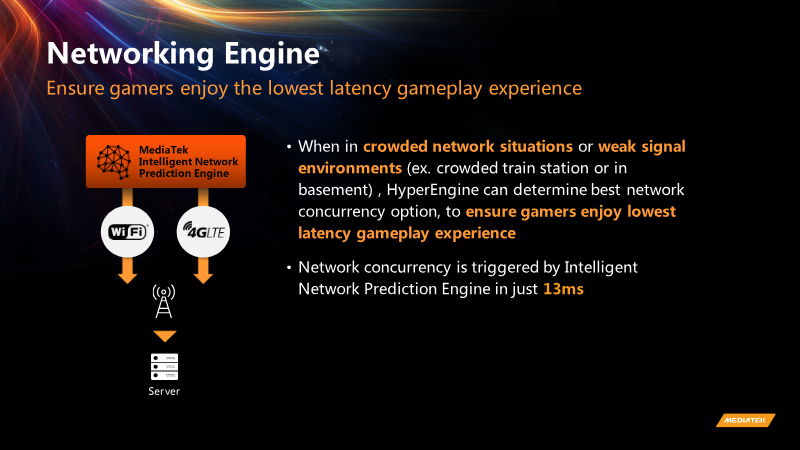

Global Product & Technology Launch: India
This is a MediaTek slide deck, presented by TL Lee, General Manager of the Wireless Communications BU, for a Global Product & Technology Launch dated July 30, 2019.
- MediaTek states that one-third of all mobile handsets in India are powered by MediaTek, and that it has over 700 employees in India after establishing its first Indian office in Noida in 2004.
- The document cites the 2018 Newzoo report that 64% of global mobile gaming revenue comes from Asia.
- In an AnTuTu benchmark, Helio G90T scored 222,282 against 215,071 for SD730, with the slide stating it outperforms SD730 by 3%.
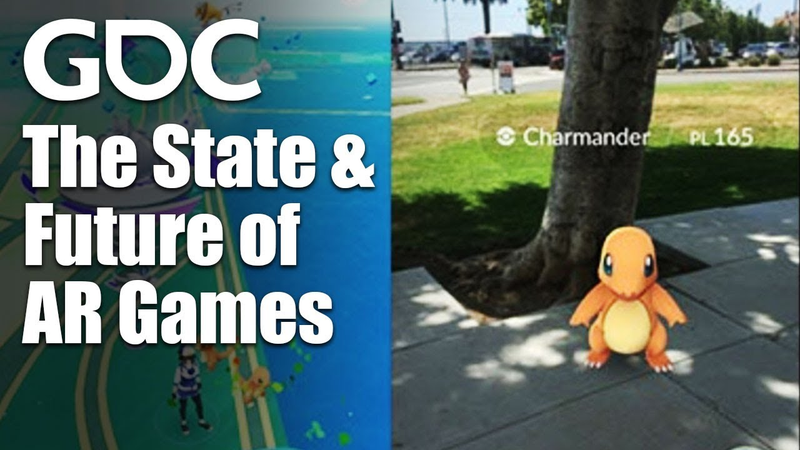
The State & Future of AR Games: Rose-Colored Glasses
Augmented reality gaming is evolving from simple, viewfinder-based holographic overlays into a sophisticated, persistent layer of digital information integrated directly into the physical world.
- The industry is shifting from simple holographic overlays to a persistent, synchronized digital layer where multiple users interact with the same virtual objects anchored to specific geographic locations.
- Technical viability relies on the development of centimeter-accurate, machine-readable maps created through crowd-sourced data and deep learning techniques like real-time scene segmentation.
- Advancements in depth estimation and occlusion are critical for enabling digital objects to interact realistically with physical environments.

Math for Game Programmers: Dark Secrets of the RNG
Random number generation in game development requires sophisticated management to align mathematical outcomes with player expectations.
- Human perception of probability often conflicts with true randomness, necessitating the use of bagging and pity timers to mitigate player frustration from bad luck streaks.
- Weighted lookup tables allow developers to dynamically adjust game economies and loot distribution without requiring core system overhauls.
- To prevent repetitive patterns known as deep echoes in procedural generation, developers should avoid passing seeds directly and instead use hashing functions to incorporate unique identifiers.

5 Reasons To Learn Coding | Interesting Coding Projects
Programming serves as a powerful catalyst for creativity, offering a digital sandbox that allows individuals to manifest complex ideas and automate tasks.
- Programming grants developers primary creative control over a project's architecture and feature set, allowing them to determine the final scope and technical feasibility of game development.
- Coding acts as a digital sandbox for building bespoke tools, such as custom software for generating 4K textures or complex animation sequences in engines like Unity and GameMaker.
- Mastering a foundational programming language significantly increases the efficiency of learning subsequent languages, making it a highly transferable professional skill in a digitized global economy.

Behavior is Brittle: Testing Game AI
Testing complex game artificial intelligence requires a fundamental shift in perspective, moving away from rigid verification toward a strategy that embraces the unpredictable nature of emergent gameplay.
- To effectively test game AI, developers must shift their mindset from verifying that code works to actively attempting to break it, as emergent behaviors often lead to unexpected interactions with the game state.
- Embed QA personnel directly into the development team rather than treating them as external testers, allowing for daily collaboration and a shared understanding of expected AI behaviors.
- Implement clear separation of concerns by decoupling sensor systems, data storage (such as blackboards), and decision logic to facilitate modular unit testing and prevent massive, unmanageable integration tests.
GDC plays Nowhere Prophet with Martin Nerurkar
Nowhere Prophet represents a strategic evolution in the deck-building genre, shifting the focus from competitive player-versus-player mechanics to a narrative-driven, single-player experience centered on convoy management.
- Developer Martin Nerurkar advises against solo development for large-scale projects, noting that the lack of internal checks and balances made the development of Nowhere Prophet an unsustainable and unhappy experience.
- The game's AI was optimized six to seven weeks prior to launch using a search algorithm that simulates multiple future move branches to evaluate and select the most effective strategic action.
- The visual aesthetic of Nowhere Prophet was heavily influenced by comic book art and graphic novels like Hellboy, specifically utilizing high-contrast black shadows and slim highlights rather than traditional 3D rendering.
Thriving in Steam Early Access: Turning 20XX's Slow Launch into Success
Steam Early Access serves as a critical development phase that, when managed with intentionality, can transform a modest initial launch into a sustainable, high-retention product.
- Community engagement must be treated as a core development pillar, requiring approximately 20% of total production time to ensure long-term product success.
- Maintaining a rigid, predictable update schedule is essential for building the player trust necessary to sustain momentum during the iterative Early Access process.
- Developers should leverage public platforms like Discord and forums to crowdsource high-quality bug reports, effectively using the community as an extension of the internal quality assurance team.

How much money will your FIRST INDIE GAME make?
The primary objective for aspiring independent game developers is to shift their focus from immediate financial gain to the acquisition of essential production skills.
- The primary objective for a first indie game should be skill acquisition and project completion rather than immediate financial profit.
- Initial projects rarely generate significant revenue, often yielding little to no direct sales or only negligible amounts from ad revenue.
- Successful developers, such as Edmund McMillen, typically release a high volume of smaller, lesser-known titles before achieving commercial success.
Writers
Games and companies
Games