1 free read left. Create a free account for unlimited reading + AI research.
Create free account
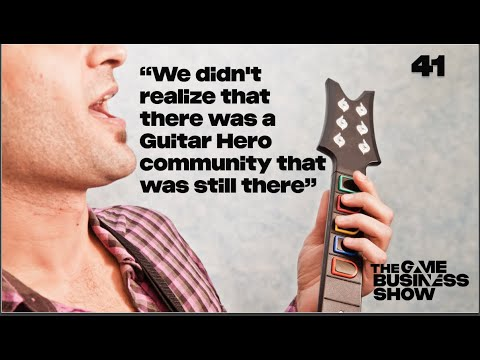
Guitar Hero Origin Story | Lessons Learned with Kai Huang former CEO and Co-Founder of Red Octane
Key insights
6 takeaways- 01RedOctane achieved financial stability by pivoting from an online rental service to a high-margin hardware business, specifically focusing on niche accessories like dance pads before partnering with Harmonix for Guitar Hero.
- 02Product pricing should be based on the perceived value delivered to the consumer rather than a cost-plus calculation to maximize profitability.
- 03To maximize the return on fixed marketing expenditures, companies must execute simultaneous product launches across all platforms and territories to ensure immediate market penetration.
- 04Founders should establish clear, analytical financial targets prior to acquisition negotiations to mitigate emotional bias and ensure disciplined valuation during corporate exits.
- 05The success of the Guitar Hero franchise demonstrates that party games can leverage real-world social virality to achieve widespread adoption.
- 06Tactile peripherals remain a viable product category for fostering immersive player connections, provided that high-quality hardware is aligned with favorable market conditions.
Ask AI about this video
Transcript
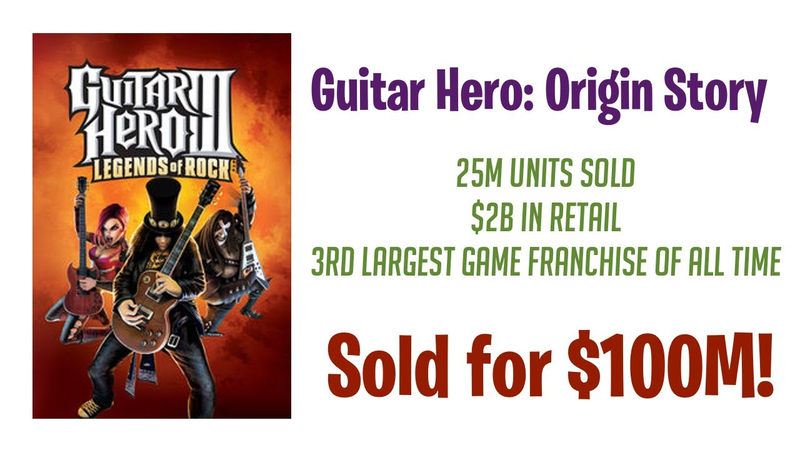
Hey everybody, Guitar Hero burst onto the scene in 2005 by then little-known publisher RedOctane. The company was started by brothers Charles and Kai Huang, and I have known Kai for over 10 years now. I first met Kai when he spoke at an event talking about his experience starting, building, and then selling RedOctane to Activision in 2007 for $100 million. In today's interview, I speak to Kai and he presents a more condensed a shorter version of his original story that I am sure you will find immense value from listening to. So, stay tuned. In total, the Guitar Hero franchise has sold over 25 million units worldwide and over $2 billion in retail. So, with that, let's take it over to Kai right now. Hey everybody, and welcome to Game Makers. Today, I'm here with Kai. Thanks for joining us, Kai. Glad to be here. Great. So, back in 1999, you started this company RedOctane. You guys first
started making game accessories, and then years later, somehow you guys made Guitar Hero. Now, I was wondering if you could like take us back. How did RedOctane come to be, and then later, what what was sort of the origin story behind Guitar Hero? Yeah, it's a really interesting story behind how we started, and I think like most startups, we went through all these twists and turns and pivots, right? Um and certainly we were no exception. So, when we started RedOctane, we actually started as an online game rental service. So, think GameFly, or think Netflix, but really back in the old days. Netflix. The original Netflix, right? Rental by mail. Right, right. That's how we started. Wow. And the opportunity was that rentals were a billion video game rentals were a billion-dollar-a-year market. Right. Um and the only people or the only companies that did it were Blockbuster and Hollywood, the two biggest. Right. And they didn't focus on it. They had two shelves in the back of the store, um and the rest of the store was movies. And the reason they had those two shelves was to get kids to come in who
would drive their parents and they hoped the parents would rent movies while they while they were there. Right. So, it was a market that was a billion dollars. Nobody was focused on it. And we thought, well, if we did just that, we focused just on the rentals. And we made it more convenient. Could we actually expand the market and have a good market opportunity? So, that's actually how we got started. Right. So, we started in '99. We bootstrapped it. My brother and I bootstrapped it. We raised um our first round of funding from friends and family um in March of 2000. And then, literally a month later in April of 2000, the market crashed. Wow. And so, from that point, you know, we had to figure out, well, you know, how were we going to build a business? We didn't really know how long the market, you know, would stay sort of down or depressed. But, we really wanted to figure out, okay, well, how are we going to survive? So, at the time, you were renting a game called Dance Dance Revolution. Are you familiar with that? Oh, yeah. DDR, right? Great game.
So, we were renting that game and customers were asking us, hey, you rent the game, but do you rent or sell the dance pads? Right. And for months, we told them, no, we don't do any hardware or dance pads. All we do is rent games online. Right. So, um after April and after about three or four months, we thought, oh boy, um the market's um you know, asking us for these dance pads. Right. Let's go figure out how to sell them. So, we literally decided, okay, we got to generate revenue. Let's go out and sell these dance pads. So, we sourced some local third-party dance pads. Um sold them online, did some grassroots marketing, got some success. And all of a sudden, we had this little small business doing dance pads. Right. So, we still had our game rental business. That was our primary business. Then, we had this um you know, accessories or small dance pad business. Right. And um that's how we got into accessories and hardware. So it started with distribution of games. We weren't a publisher, we didn't make games, we didn't make hardware, but we went from
distributing sort of on the edges of the game industry into now we're into accessories. From there we sold direct and everything um um that we sold because we were direct customers would give us feedback, right? Like oh this product sucks or breaks and you know can you fix it? And after about 6 months of selling other people selling other companies' products we decided let's go make our own. Make a better product. So 6 months later after that all of a sudden now we're actually into manufacturing accessories and our after peak dance pads were our first product. So this is a by now it's 2001. So we So we were very lucky early on with the dance pads. We had They were small business but we had some pretty good early success. So we grew that business, grew that business, started kind of going up the food chain meaning rather than innovating downwards what I call you know making products that are cheaper. Um we decided let's go upwards. Let's see
Yeah, more premium rather because we didn't feel like anybody was going after the premium market. We thought gamers had money. They just want good accessories to buy. So as an example back then our dance pads the original dance pad sold for $50. We decided let's go up and sell one at 100. So we made all these improvements, made kind of a different product. And that was kind of the second major product that we introduced in 2000 at the end of 2001. And that product started doing very well for us. So we had a small business now doing dance pads. We still had our game rental business which was still pitched as our primary business to investors. And then um by 2002 and 2003 we decided let's go try to get into retail. Uh took us about a year knocking on the door trying to get them to buy our product. Didn't work for a year until finally we got them to buy our product, our dance pads. Right. So, 2003, all of a sudden now we're into retail. And once we got into retail, that's when our accessories products started
expanding again. Right. So, fast forward another year, our dance pads become the best-selling dance pads in the US in 2003, 4, and 5. Um so, now we're making dance pads. Um we still got our online game rental business. And um you know, we found this small publisher that was doing a dance game. Um the company was called Roxor. They were a very small developer just for the uh they were doing a game called In the Groove just for the arcade. Okay. And they decided um they weren't doing consoles, so we reached out to them and we thought, well, let's pick up the console rights. Let's see if we can um publish the game on console. Right. And why would we do that? Well, because for every game that we could sell, Yeah. we could actually sell two of our dance pads. So, for every $40 game, we were selling $200 of two $100 dance pads. Right. And our margins were really high on the dance pads.
Right. So, in fact, our our dance pads that retail for $100 are costing us about $15. So, we really went for the high end. We really got high margins. Right. So, now that was our first game Yeah. we published. That was uh at the beginning of 2004 when we started on the project. So, now we're still renting games. Yeah. We've got this accessories business and now we're just kind of getting our feet wet into becoming, you know, a publisher. Right. And then are you in retail at that point or or not? We're in retail with our dance pads. Got it. Okay. Yeah. So, our dance pads were still selling well at retail. Okay. So, uh while that game was sort of being published, we came off of a good holiday 2004 and we thought, well, you know, we we we we have a little bit of money to invest. Right. You know, we're just kind of going down this path of being a publisher. And we thought, you know, let's see if maybe publishing a second game, second title, is a good option for us. And that's when I reached out to Harmonix, who was a company that I
actually talked to 4 years earlier to see if we can make accessories for some of the games that they were doing, Karaoke Revolution, Amplitude, Frequency. You know, some really early music games. And none of those deals worked out. But we decided, let's call them up and let's see you know, what they're up to and let's see if they'd be interested in working with us on maybe a second video game title. So we called them up in end of 2004. And said, hey, we're ready to maybe you know, we're ready now to be a publisher. You know, didn't do that after we're ready now to be a publisher. We want to work, you know, on a game with you. We had actually gone to the other video game publishers that did music games. And and most of them were in Japan. We said, hey, well, why don't you bring your games over to the US? And universally, those companies told us, we don't think there's a market for music games in the US outside of DDR.
And and so part of that was the reason why we decided, well, let's continue to reach out ourselves and to Harmonix and and do that. So So now, you know, took us a few months to convince Harmonix to work with us. But you know, we we convinced them to work with us. And through that collaboration, you know, became Guitar Hero. You know, it was really thinking about the music game category was something we believed in. The companies in Japan didn't think there was a market in the US, but we felt that there could be a real opportunity. You looked at the types of people that music games attract. It was totally different than all the other games, right? It was male, female, young, old, right? Everybody played the music games. Right. So, we thought it was a very different genre. Um, and um, you know, we thought if you're going to do a music game in the US, um, what kind of music would you choose,
right? All the other music games that were done in Japan were J-pop. If you're going to do one in the US, what kind of music would you use? Would you use rock and roll? Right. And we were all about accessories. That was part of our roots was accessories. So, of course we were going to make an accessory. Um, and if you're going to do a music game with an accessory on rock and roll, you know, guitar was the logical choice. Now, what was there like a specific moment in time or like who kind of came up with the idea? Like, if you can like take me back, was there like a specific like were you at a bar or were you just in the office just kind of brainstorming? How did the actual idea for the guitar and the specific implementation and the specific product idea? How how did that come I think one of the things for for us, um, and a lot of that came through in the collaboration with Harmonix in the discussions. But, for us, one of the things that we had seen was there's a actually music game, there's a lot of music games in Japan, but one of the music games that was really fun was a game called called um, excuse me, called Guitar Freaks. Okay. And Guitar Freaks was almost a
predecessor, if you will, right? It of Guitar Hero, where it was just a lot of fun, a lot of people played it, and we really enjoyed that game. Um, and so when we started thinking about, well, we're going to do a rock and roll game, you know, what instruments would you use? Again, that was kind of the natural choice. So, for us, we you know, it was sort of the internal idea that we really liked this game. We thought, you know, this could really work. Um, but then through that collaboration with Harmonix, then, you know, we sat down in a room and brainstormed, and you know, all these other ideas came out. Right. So, there was already kind of the inspiration in the market. You guys just kind of figured out how to make it work better and more relevant for the US market, for example. Exactly. You know, that was a big part of it. And you know, it was it was just primarily it was a belief that you know, music games in the US was was something people wanted, right? That there was a market there that nobody was really going after, so that was a big part of And um if you could go back, like as you're building up your business as you launch, you know, Guitar Hero, what what
were some of like the biggest entrepreneurial or or business lessons you learned during during that time? Um well, I learned a lot of lessons during that time, for sure. Both good and bad, right? Um but definitely um a few things that you know, stand out to me, for sure. Yeah. Um one of the things that I think really was important for us, for for any startup, but that was critical for us, was that um you know, in the early days I mentioned we we went into games, and then we went to making video game accessories. Well, first we started selling other companies, reselling. Then we eventually made our own. Okay. And we had really high margins. Right. So, um there's a long story to even how we got there, but um you know, we we were selling I mentioned one of our best-selling dance pads is the retail price is 100, and our cost of goods was 15. Yeah. So, we're talking margins are almost close to software at that point, right? Um and that, you know, really high margin is something that gave us
actually certainly revenue and profit, but more important than the profit was the ability to make a lot of mistakes. I always say that, right? Like, I don't know that we were smarter than anybody else or any other company. But the fact that we had very high margins meant that we could make some mistakes and stay in business. Right. And if you're always working on very thin margins, which kind of tends to happen when you're making a physical product, um then your margin for error is very, very low. Right. So, you know, we we might have made more mistakes than anybody else would have, right? But because our margins were so high and you know, it was a decent product, we were able to survive those mistakes. So, I always whenever I look at companies, um particularly the financials, I always look at the margin structure because I feel like if you have a good margin structure, you've got the ability to make a few mistakes and still stay alive, Right. right? Um and and then sort of along with that, um the other thing that I've learned,
you know, through that process was that um pricing. Right. You know, a lot of times you look at pricing as sort of what is my cost plus. Yeah. Um our dance pad cost was 15. We could have sold it for 30 Right. and made really good margin, you know, 50% gross margin. Um but the process taught us that it's really about the value that you provide, right? And so, when we priced it at 100, in fact, we launched it at 130. We thought we had a great product providing a tremendous amount of value compared to everything that else that was out there. And so, it really taught me to think about pricing from a value standpoint. Right. Don't think about it from the standpoint of, "Okay, let's make a little bit more. Let's charge this to make this amount of profit." It's really what value are you delivering to the customer? Right. And hopefully as entrepreneurs, we're creating products game makers creating products that have a tremendous amount of value. Right. And if you're delivering that value, then you can charge sort of a
corresponding price and make a good business out of it. Got it. The last thing I would say um that, you know, really big thing that stood out in my mind and um a lot of this was post acquisition. We were acquired by Activision in 2006, Right. um about a year after we launched Guitar Hero. One of the things that I would say that was a big lesson for me was um the ability for companies to maximize their um their sales. Yeah. Um Activision had a term they called simship, simultaneous ship. Okay. So when you have a product and you're ready to ship it or game and you're ready to ship it, Yeah. one of the things that you want to do is you want to ideally make it on every platform Right. and you want to get into as much marketing as you can. Right. Because when you make it on every platform that people can buy, then you're maximizing your marketing dollars. Right. If you only have one platform, then you're not maximizing all those marketing dollars, right? Because that's
fixed and you're going to spend that anyway. Right. Right. The more platforms you can get it on and the more territories you can get it into, the more you can maximize your marketing dollars. Right. So, you know, by Guitar Hero uh 3 as an example, um we were spending 275 million dollars in marketing Oh, okay. for that product. Right. And, you know, we were pretty much everywhere. And so when you want to maximize dollars and you're going to get out everywhere, you want to make sure that everybody who sees it can actually purchase it. Right. Every time somebody sees your ad and can't purchase it, it's kind of a lost opportunity and wasted marketing dollars. Right. So this whole concept of simship um just stuck with me. And of course if you take it to a smaller company, a small game company or startup, you you just don't have those big resources to get on every platform and and and market everywhere, right? But whatever you have, whatever resources you have, however platforms you can make it on that's feasible on
the games, and wherever you can get to on marketing, the idea is still the same. Right. Maximize the platforms you can ship on with the marketing dollars that you spend. Right. And then I know like everything turned out extremely well for you guys and you had an incredibly successful exit, but going back, are there one or two things you would have done differently or do you think everything just kind of lined up and you know, like Like uh if there was something, what what would you have done differently? I I don't know if I would have done anything differently. There are certainly things that that you know, if I were to start something new, of course I I would I would change. Okay. But you know, I I think part of the success is we made a lot of stupid mistakes and it was probably helped us succeed in the end, right? But one of the things I think that um that I would have done differently for sure was um how we raised money. Okay. And I think when we were young startup and young guys, my brother and I started the company when we were pretty young. Um we we didn't know much about the fund
raising process. So whether we were a game studio or a video game distributor, rental company or we were an accessories company or eventually when we became a publisher, my knowledge of how to raise money from investors wasn't that deep. Um now that we've sold the company and I've had a chance to actually sit on both sides where I've invested in companies and I've learned a lot more about the venture capital industry, I know a lot more about what investors are looking for, how they invest, why they invest, right? So when we were young and naive and our company was still early and we needed to raise money and we were making the dance pads and I was going out to try to raise money from investors, I didn't know that oh, well we're doing hardware and they don't invest in these kinds, right? Of companies or various things. So it was a very frustrating process and when you're raising money, you spend a lot of time. So if I if I would do one thing different, I would save myself a ton of time, right? I would have saved myself a year of time, you know, that I spent on
fund raising. And um I just you know, figure out how how to match things, right? And the easiest way to do that if you're a young studio or game company that's looking to raise money is honestly to go out and just sit in as many startup pitches as you can. That's what happens with investors, right? And for me, now I've sat through a lot of people pitching companies to me. Yeah. And when I see a hundred of them, I start to understand Right. which ones what I look for, which ones are interesting to me. As a startup entrepreneur, I sat through one myself. I didn't sit through all the other ones. Right. But now there's so many pitch days and investor days that, you know, if you can get yourself into those meetings, look at those companies. Think of yourself as an investor and think, "Would Would I invest in this company?" And if you're a game company and I'm standing up there and pitching, you know, would they invest? Would I invest in myself? Right. Um and for me, that's that's definitely one of the things I would have done differently. Saved myself a lot of time and frustration. Okay, so you mentioned um so you you
sold RedOctane to Activision in 2006. I believe it was like less than a year since the launch of Guitar Hero, right? Could you take us back and and just just uh tell us a little bit more about, you know, how did that happen? Like did they contact you? Did you reach out to them? And then how did it happen so quickly? Yeah, the the the acquisition by Activision wasn't something we planned at all. Okay. So, we launched Guitar Hero at the end of 2005. Right. And um within uh three months, by January, I was at CES, I remember. Um and I got a call. And I picked it up and I said, "Hello." This guy and he answered and said, "This is Ron Doornink from Activision Publishing." And I didn't recognize a lot of names, but I recognized Ron Doornink. He was the president of Activision, right? And I was like, "Wow, I just got a call from the president of Activision." Right. So, that was really how the contact started. So, they reached out to us. At that time, we weren't looking to get acquired. We were actually in the
process of trying to raise money. Right. So, like most startups, we almost went bankrupt, in our case three times. Literally, like a day from like we have to come in and turn off the lights tomorrow. So we tried to raise money from from a lot of sources and we could never raise money. But when we finally launched Guitar Hero, we decided let's go out and try to raise money again and that's when actually we got to finally got some interest, right? Right. So so we were trying to raise money and perhaps ultimately if we were lucky try to take the company public at some point as a video game publisher. Yeah. Um but here here I get a call from Ron Doornink and it turns out that um you know, in the video game world, right? We ship all of our games by Christmas or the console world and PC. We ship all of our games by Christmas time. Right. Which means all our QA is done before March, before Christmas, which means the QA department has nothing to do. Yeah. So apparently the senior execs at Activision were walking through the QA area in December and everybody was
playing Guitar Hero. No. Cuz they had nothing to do. So so they were like, "Well, what's this game?" And they told them, "Well, this is Guitar Hero." And that's why again that's why Ron actually reached out to us and Activision reached out. So we we kind of talked, continued the conversations. We said, "Hey, we're not interested in selling company. We're actually going to try to raise money." Um and that's when their conversations turned from, you know, "How can we help you distribute your product?" to "Well, you know, are you interested in getting acquired?" Got it. And as you said it was a very very fast conversation, right? Um they came originally with an offer and we said, you know, originally, you know, "Thanks, but no thanks." And every month I would just forward them sales data and of course every month our sales data was going up. And eventually they kind of came back and came back. Um and one of our advisors, he had a lot of experience starting companies, sold them, ran companies. Right. He said at some point, "You just got to pick a number." And it was one of the best piece of advice that I think my brother and I got. It sounds so simple, but in retrospect it was pretty powerful. So
you just got to pick a number, right? And um you know, there's a couple sort of powerful meanings behind that. Number one is like as as someone who starts a game company or any company, I don't think I never think about a number that I want to sell the company at, right? It's just one of those I'm going to start a company, we're going to build great games, we're going to build great products, and then it's going to be the next whatever, and it's going to be awesome, and it's going to be fun, right? So, you never really think about like what number do you want to sell a company at, right? It's not why we necessarily started the company at least to that level. So, so one it forces you to even think about that, which I think is pretty important. Um number two is that then also forces you to think about, well, how does that number impact me personally on a financial basis, right? Am I looking for financial independence? Am I looking to any sale is good? Am I waiting to be a trillionaire, right? Whatever you want. We we also don't necessarily think about that. But it forces you to think about,
okay, you know, I want if I were to sell this company and you know, what we have, um this is where I'd like to be on a personal level financially, right? And then the the last thing where I think it was so critical is that it starts to make you think about selling the company from an analytical basis rather than an emotional basis. Because in the heart of any negotiation and somebody puts a number down, it's always oh, it's too low, or it's too high. And you you start bargaining over things that maybe aren't important. We've all been there. Whatever we're buying, you're buying a car, you're buying anything, eBay, you're trying to buy an auction, right? There's this irrational exuberance at some point. So, like picking a number actually takes some of that irrational exuberance out of you, right? Um it it it it makes it a little bit more sort of um analytical. And you know, he said you got to pick a number, when you get to that number, sell the company. So, we waited, and what we did. We picked the number, said, "Okay, this is a pretty good number."
And Activision eventually came back, hit the number, said, "Okay." Looked at my brother, said, "It's time to sell the company." Okay, sell the company. Uh all right. And then so, you sold the company, and then you were at Activision for a while. Can you tell us a little bit more about like since Activision, like what have you been up to and what what what are you up to now? So, we sold um RedOctane to Activision in 2006, and I ended up staying until 2010. Okay. Um so, I was the CEO before we were acquired, and then I ran the business unit. Tremendous experience. I really enjoyed the experience and the people that that we worked with there. Um you know, after I left in 2010, um I I love games, you know, as a player, as a consumer growing up. Um making games is fun. Um but I actually haven't done anything in the game industry. Okay. Um part of it is because I haven't had a great idea. If I had had a great idea, I would I would be doing it right now, but I haven't had a great idea. Yeah. Um but I have done a few other things. Um so, one of the areas that was always interesting to us was um health.
Okay. And we really saw that with actually Dance Dance Revolution as a game really um covered a lot of areas that eventually was interesting for us. So, it was gaming, it was music, but it was also exercise. A lot of people used DDR for exercise. So, um the idea of music and gaming, of course, is what we continued with Guitar Hero and eventually all the other games that we made, DJ Hero, Band Hero, all of these things. Um but once we left Activision, one of the areas that we were really interested in pursuing was health. And and in our case, because we came from a games background, how do we apply what we learned in games to health space? Right. So, a company Blue Goji my brother and I and a third co-founder started was really around health um and using the ideas around gaming or gamification to to apply that to get people healthy. Got it. Um, so, you know, so that's one that's really interesting. Um, another one
that's um, totally off the sort of radar, um, is a company called FlashBike. Okay. And it's a smart electric bike. So, think of it as like the Tesla of electric bikes. Right. Um, so, it's totally different from what I've done in games. Right. Um, but it's consumer and it's a product and those are also things that I enjoy. So, um, so those are a couple companies that I've um, co-founded. Um, that I think are really interesting. And then then I've done some investments. So, I so I invest in companies as well. Game companies and non-game companies. So, I mean, almost everyone I know has played Guitar Hero or Rock Band or whatever. And at that time it seemed like you know, um, the game became a cultural phenomenon, you know, similar to like Fortnite today. Um, why do you think it was such a cultural phenomenon at the time? And do you think it has an opportunity to sort of come back at all? Yeah, I think Guitar Hero just became
bigger than anybody's imagination, all right? And the category, in fact, was was incredibly huge between us and and Rock Band primarily. Um, it was an amazing statistic, but in 2008, I believe it was, the two games generated 20% of the industry's profits. Wow. That's how big those two games became. I mean, Guitar Hero 3 was the single best single biggest selling video game in the US for like six or seven years until Call of Duty finally broke broke that record. Right. Um, so, it you know, and I say that only because it had become a cultural phenomenon and it had become so big. And for me it really reached that point when um, South Park made an episode on Guitar Hero. They called it Guitar Queero. It was hilarious. Um, but that was like it never not didn't register to me until it was on South Park. That's when I said, "Okay, this is a cultural phenomenon." Um, you know, I think it was one of those that I mentioned. It was just um, a really easy game to get into. It
was music, so everybody loves music. Um, it was young, old. It was a great party game, right? We called them party games. Eventually, the term became social games. And, um, you know, when Guitar Hero came out and then the Wii came out, social games became kind of the term for that and then morphed into something else but the term again. But, we called them party games at the time for lack of a better word because anytime there's a party and you were going to break out a game, it was going to be a game like Guitar Hero. You're not going to break out Call of Duty at a party, right? So, so I think those are some of the reasons why it became, you know, such a phenomenon, right? There was a social virality to it before sort of the online social virality, like real world social virality. You had a party, you you had a dinner, friends came over, family came over, that was the game that you brought out. Um, and everybody enjoyed playing it and it was easy to get into. Um, you know, the second part of that question, you know, could it can can this category get that big again? Um, I
absolutely think it can. It has the potential to. I think you, of course, need that perfect storm, right? Of the right products, um, and, you know, hitting on sort of the right notes and but the music, you know, the one thing that that we believed with the music games when we started was that until music goes away, which I don't think it ever will, but until music goes away, this category is always going to be around. In fact, nowadays things get bigger. Games are getting bigger so much faster. Yeah, so I think the potential is there. Okay. So, last question for me. We've kind of seen hardware-based games kind of go up and down, whether it's like steering wheels for driving, music games, kind of toys to life like Disney Infinity. Um, what do you think in terms of the future of more hardware-based games or opportunities that that integrate hardware? So, I think, you know, in in the future hardware games are there's always an opportunity for hardware games. I mean, what hardware games really bring to
people is this sort of super immersive tactile experience that you just don't get with a either a regular game controller or controllers in VR as an example, right? You just don't get immersed into the experience as much. So, um there's no question to me that if you want to get as immersed as you can into whatever experience, in our case with Guitar Hero, it literally literally was it makes you feel like a rock star. And when you pick up that guitar and you're holding it in your hand, that's what made you feel like a rock star, right? It wasn't like I'm holding a game controller. That doesn't make you feel like a rock star. So, whatever game gets created, whether it's music games or any other games that require a hardware peripheral, there's no question in my mind that to get the deepest, most visceral, you know, emotional experience, positive, fun experience out of it, hardware's going to help, you know, enable that. Okay, well,
Kai, thank you very much for your time. Um, there you have it, Kai Huang, founder of RedOctane and uh, you know, the uh, creator of Guitar Hero. Thank you very much for your time. Great. Thanks for having me on the show.
Summary
RedOctane emerged as a pivotal force in the mid-2000s gaming landscape by transitioning from an online rental service to a specialized hardware and publishing powerhouse. The company’s success was rooted in the strategic identification of underserved niches, specifically the demand for music-based gaming experiences that major publishers had previously overlooked. By prioritizing high-margin accessories, such as dance pads, the founders secured the financial stability required to weather early operational challenges and eventually partner with Harmonix to launch the iconic Guitar Hero franchise. This trajectory underscores the necessity of maintaining robust profit margins to sustain growth and innovation within the competitive video game industry.
Effective product strategy relies on pricing models that reflect the perceived value delivered to the consumer rather than simple cost-plus calculations. Maximizing returns on fixed marketing expenditures requires a commitment to simultaneous launches across all platforms and territories, ensuring that a product achieves immediate, widespread market penetration. Furthermore, successful corporate exits demand a disciplined, analytical approach to valuation, where founders establish clear financial targets to mitigate the influence of emotional bias during high-stakes acquisition negotiations.
The enduring appeal of the Guitar Hero franchise demonstrates the power of the party game genre to leverage real-world social virality. While the hardware-based gaming sector experiences cyclical fluctuations, tactile peripherals remain essential for fostering the immersive, physical connection required to bridge the gap between a player and a game’s core theme. This category continues to hold significant potential for future development, provided that developers align high-quality hardware experiences with the right market conditions to capture consumer interest.