Game Development reports and market data
Documents
In the Long Run
Professional longevity in the game industry depends less on rigid adherence to formal job descriptions and more on the cultivation of versatile, transferable skill sets.
- Sustain long-term career stability by prioritizing the development of versatile, transferable skill sets over rigid adherence to formal job descriptions.
- Navigate industry volatility and cyclical layoffs by viewing professional identity as a malleable collection of experiences rather than a fixed title.
- Prioritize personal well-being and the identification of supportive peer groups to build resilience against the industry's inherent instability.

Celebrating Introverts in the Workplace
This analysis explores the professional challenges and inherent strengths of introverts within the game development industry.
- Introversion is a biological trait driven by acetylcholine-based internal rewards, rather than a social deficiency or a preference for external dopamine-driven stimulation.
- Corporate environments often prioritize extroverted communication styles, which can lead to the marginalization of the deep, analytical, and thoroughly vetted solutions typically produced by introverts.
- To improve meeting inclusivity, leadership should distribute agendas in advance and implement silent brainstorming sessions to ensure contributions are not limited to the loudest voices.
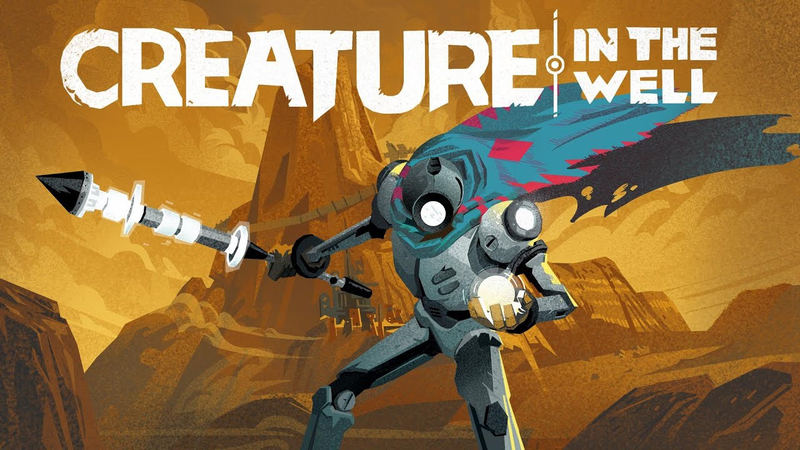
Creature in the Well with Bohdon Sayre | Game Dev Unchained Episode 205
The development of Creature in the Well demonstrates the efficacy of a lean, two-person core team operating within a disciplined 18-month production cycle.
- A lean, two-person core team successfully developed Creature in the Well by adhering to a disciplined 18-month production cycle.
- The developers utilized iterative prototyping and strict scoping to synthesize a unique pinball-inspired hack-and-slash mechanic.
- External partnerships for marketing and porting allowed the small team to maintain production focus while securing visibility on platforms like Nintendo’s Indie World.

Better Development Through Science: How Aliens, Odysseus, and Toyota Can Help Improve Production
Game development production can be significantly improved by applying operational science principles traditionally reserved for supply chain management and manufacturing.
- Game development should be treated as a measurable, repeatable process rather than an unpredictable creative endeavor to reduce systemic inefficiencies and crunch.
- Studios should apply Little’s Law—which relates inventory, throughput, and flow time—to mathematically identify and resolve critical production bottlenecks.
- Maintaining 100% staff utilization is counterproductive because it creates artificial bottlenecks and masks underlying process flaws; teams should instead focus on managing work-in-progress.

I PLAYED YOUR GAMES! | Feedback on Game Design. (Part 3)
Successful indie game development hinges on the delicate balance between mechanical depth, intuitive user experience, and effective communication of core gameplay loops.
- Prioritize organic onboarding by teaching mechanics through progressive difficulty curves rather than relying on intrusive, text-heavy tutorials.
- Refine the core gameplay loop by simplifying user interfaces to hide non-essential information and deepening existing mechanics instead of rapidly introducing new ones.
- Ensure immediate feedback loops and clear objective communication, as obscuring core information like enemy health status can directly increase player frustration and refund rates.
Math for Game Programmers: Harmonic Functions and Mean-Value
Harmonic functions and mean-value coordinates serve as essential mathematical frameworks for procedural geometry and mesh manipulation within modern game development.
- Harmonic functions satisfying the Laplace equation enable smooth, natural transitions across triangle meshes by defining scalar values based on controlled boundary points.
- Cotangent-weighted discrete Laplacians allow developers to model complex surface behaviors using sparse matrix systems, avoiding the high computational cost of topological calculations.
- Integrating Lagrange multipliers into least-squares solvers allows for the enforcement of specific boundary constraints, facilitating intuitive interpolation across arbitrary mesh geometries.
Producer Bootcamp: High Performance Producers
High-performance game production requires a fundamental shift from traditional command-and-control management toward a leadership model centered on trust, self-awareness, and proactive decision-making.
- High-performance producers must transition from command-and-control management to a force-multiplier model that prioritizes team momentum, trust, and self-sufficiency.
- The OODA loop (Observe, Orient, Decide, Act) provides the necessary framework for producers to filter operational noise, mitigate normalcy bias, and resolve team inaction.
- Producers should implement frequent, actionable mid-mortems and cross-training initiatives to improve situational awareness and deepen their understanding of technical and creative roles.
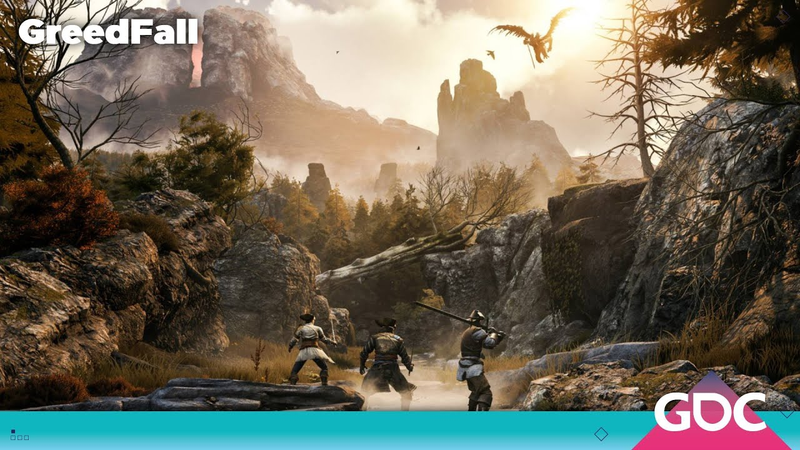
GDC plays GreedFall with Spiders
GreedFall represents a strategic evolution for the studio Spiders, which leveraged a three-year development cycle to refine its role-playing game formula.
- Spiders extended the development cycle of GreedFall by one year, moving from a planned two-year schedule to three years to focus on iterative improvements and level design refinement.
- The studio utilized a proprietary engine, the Silk Engine, which allowed for the development of a custom quest-branching system and provided greater control over project-specific updates compared to using third-party middleware.
- To improve player engagement during loading screens, the developers implemented an interactive menu system that allows players to manage inventory, companions, and side quests while the game assets load.

S***'s on Fire! A Cautionary Tale in Community Crisis Management
Effective community management during a product crisis requires a balance of professional transparency and rigorous personal self-care.
- Effective crisis management requires balancing professional transparency with rigorous personal self-care to prevent burnout and mental health decline.
- Community managers should systematically categorize player feedback to isolate specific friction points and provide honest, template-driven updates on development progress.
- Turning negative interactions into constructive dialogue by acknowledging valid frustrations is essential for fostering long-term player trust, even during severe technical failures like those seen in the 2015 launch of Wander.

Great game production tips with Grant Shonkwiler - GDC Podcast Ep. 1
Effective game production centers on a servant-leader philosophy that prioritizes team health, clear communication, and cross-disciplinary empathy.
- Effective game production relies on a servant-leader philosophy that prioritizes team health and cross-disciplinary empathy over rigid adherence to dogmatic frameworks like Scrum.
- Producers should act as a bridge between art, design, and programming to ensure that technical implementation remains aligned with the project's creative vision.
- To prevent systemic overwork and burnout, producers must focus on realistic project scoping and proactive skill development rather than enforcing overly strict rules.
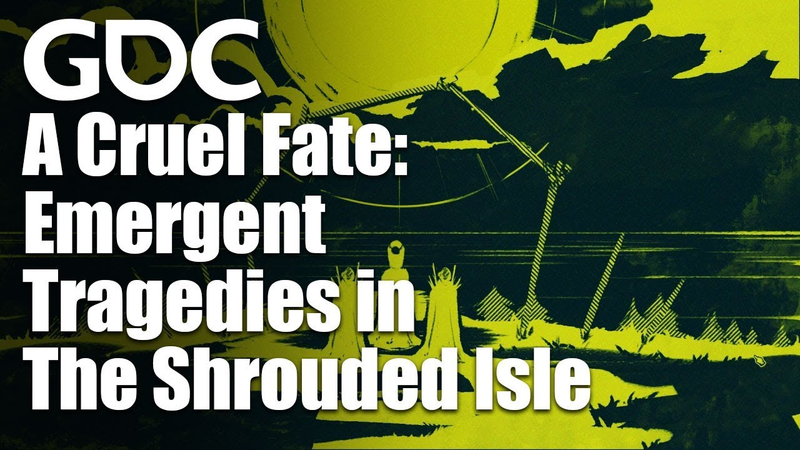
A Cruel Fate: Emergent Tragedies in The Shrouded Isle
The Shrouded Isle redefines dystopian game design by replacing conventional resource management with a focus on psychological variables and character-driven interactions.
- The Shrouded Isle shifts resource management from traditional technological progression to psychological variables, focusing on maintaining faith and political loyalty.
- The game forces players into a Machiavellian framework where regime survival requires the sacrifice of individual villagers, creating emergent tragedies through unpredictable human variables.
- Information progression is a core mechanic that limits player knowledge, forcing a transition from optimization-based gameplay to a survivalist strategy centered on calculated power maintenance.
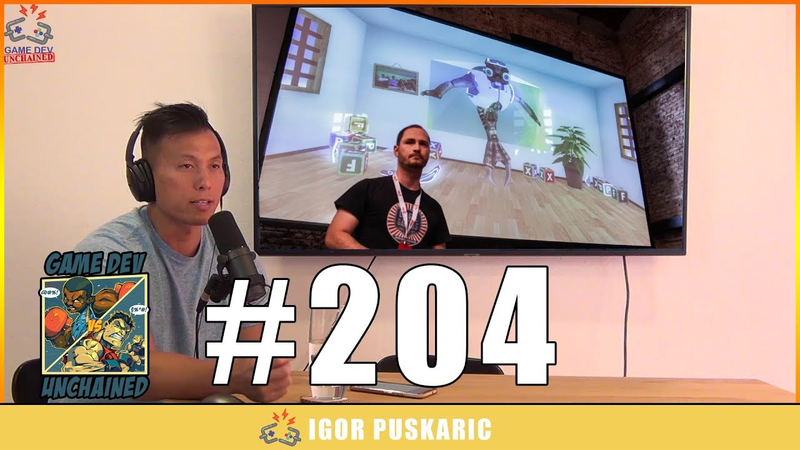
Winning with Few Resources featuring Igor Puskaric | Game Dev Unchained Episode 204
Success in the modern game industry is increasingly defined by individual resourcefulness and practical application rather than formal academic credentials.
- Individual resourcefulness and a portfolio-first approach are more effective for career success than formal academic credentials or geographic location.
- Developers should prioritize project-based learning, acquiring technical skills only as they are required to execute a specific creative vision.
- Cultivating a robust personal brand and proactive self-marketing allows independent developers to bypass traditional industry gatekeepers.
Writers
Games and companies
Games