Game Development reports and market data
Documents
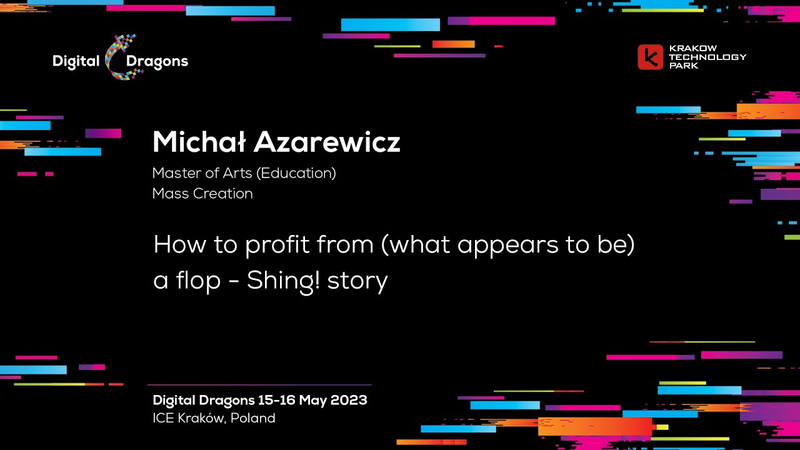
Michał Azarewicz - How to profit from (what appears to be) a flop - Shing! story
The commercial trajectory of the action game Shing! illustrates that a disappointing initial launch does not necessitate a project’s abandonment.
- Persistence in platform relations is critical; securing promotional slots on consoles like Sony, Nintendo, and Xbox requires consistent, weekly outreach to platform representatives for months until your title is included in their internal promotional spreadsheets.
- A failed initial launch does not necessitate abandoning a project if the studio has enough runway to support subsequent releases on other platforms, such as the Xbox and Nintendo Switch, which can significantly outperform initial PC and PlayStation 4 performance.
- Long-term product management, including releasing a definitive '2.0' version with bug fixes and quality-of-life improvements years after the initial launch, can extend a game's lifecycle and maintain its commercial viability.
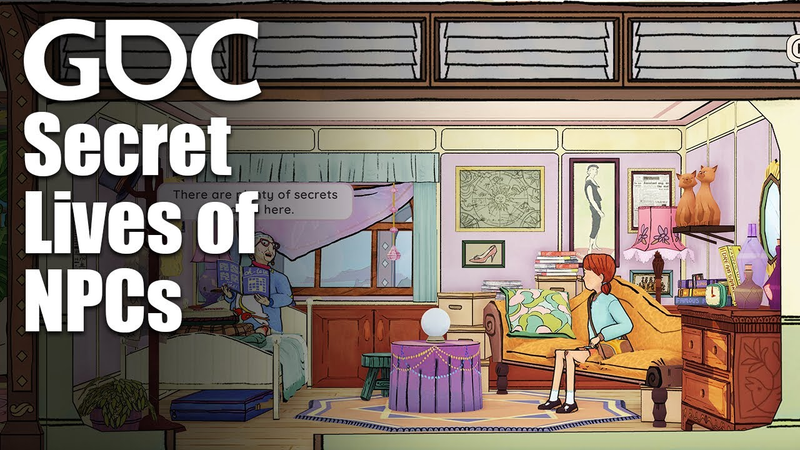
The Secret Lives of NPCs: 'Wayward Strand'
Wayward Strand redefines the narrative adventure genre by shifting the focus from traditional player-driven agency to a system of independent, simultaneous storytelling.
- Wayward Strand utilizes a real-time, autonomous NPC system where characters follow independent schedules, shifting player agency from direct control to observation and listening.
- The narrative structure is built on a 1,500-page script that maps character arcs and interactions across a fixed three-day timeline.
- Development relied on a 'braided' storytelling model where individual writers managed specific characters while a centralized editorial process ensured tonal and narrative coherence.
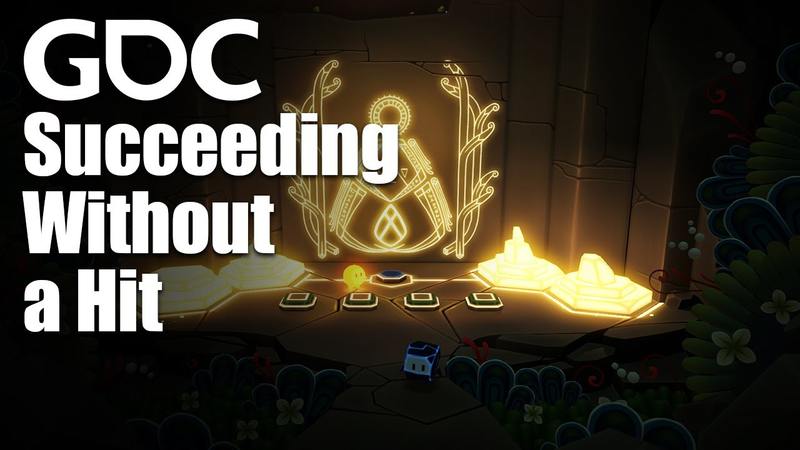
Flopping Successfully: Running a Studio Without a Huge Hit
Independent game studios can achieve long-term viability by prioritizing organizational sustainability and team well-being over the high-risk pursuit of a singular breakout hit.
- Studios can achieve long-term viability by prioritizing organizational sustainability and a 'life-oriented' business model over the high-risk pursuit of a single breakout hit.
- Financial stability is best maintained by balancing creative projects with steady contract work to mitigate the impact of market volatility and individual title underperformance.
- Post-launch success is achievable through community building and multi-platform expansion, as evidenced by a 26.5% increase in annual sales for a title that initially struggled.

Here's What Mobile Developers Should Keep in Mind When Using AI tools
The integration of generative AI into mobile game development requires a balanced approach that prioritizes professional expertise over the uncritical adoption of new tools.
- Generative AI should be used to automate repetitive tasks, allowing developers to focus their expertise on the 20 percent of creative work that defines a game's unique quality.
- Developers must maintain foundational knowledge of core systems like game economy balancing and code architecture, as AI models can produce inconsistent or mathematically incorrect results.
- Generative AI does not replace traditional machine learning, which remains the industry standard for predictive analytics, A/B testing, and LTV modeling.

Being a Unicorn: Multiclassing in an Industry That Wants Specialization
The game industry frequently prioritizes narrow specialization, yet professionals who cultivate multidisciplinary expertise—often termed unicorns—provide unique value by bridging communication gaps between design, programming, and art.
- Multidisciplinary professionals, or 'unicorns,' provide unique value by bridging communication gaps between design, programming, and art, which accelerates prototyping and identifies technical bottlenecks early in the development lifecycle.
- While large studios often enforce rigid role definitions, multidisciplinary expertise is essential for small, experimental, and research-and-development environments that require rapid pivoting and the synthesis of disparate requirements.
- To enter specialized firms, candidates should initially tailor resumes to specific roles to establish credibility before gradually expanding their influence and responsibilities within the organization.
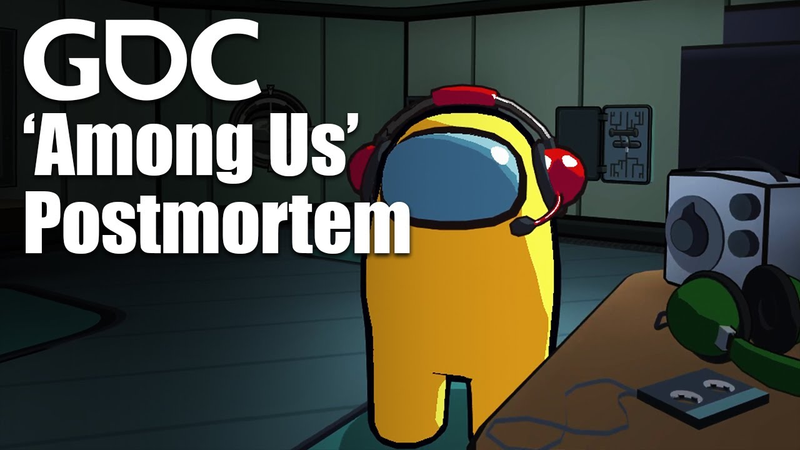
Emergency Meeting! It's the 'Among Us VR' Postmortem
The development of Among Us VR represents a strategic effort to translate a globally recognized 2D social deduction IP into an immersive first-person experience.
- The 15-month production cycle for Among Us VR was executed by a peak team of 28 developers, focusing on a Minimum Viable Product that prioritized core social deduction mechanics.
- Early development centered on a 'beautiful corner' prototype to establish visual and technical benchmarks, specifically addressing VR-specific challenges like locomotion and motion sickness mitigation.
- The team implemented a tiered playtesting strategy targeting VR newcomers, which directly informed the development of comprehensive comfort settings and an intuitive tutorial system.

The Gaming Industry’s Data Nightmare
The gaming industry currently faces a significant data management crisis, as the sheer volume and complexity of event-based telemetry generated by modern titles far surpass the requirements of traditional sectors like e-commerce.
- Modern gaming titles generate event-based telemetry at a volume and complexity that exceeds traditional e-commerce requirements, creating a significant data management and storage cost crisis.
- Studios must transition from aimless data mining to a hypothesis-driven methodology, where product managers define specific objectives before implementing new features.
- To remain competitive, developers must move beyond static designs toward personalized, segmented player experiences that utilize dynamic pricing and iterative content adjustments.
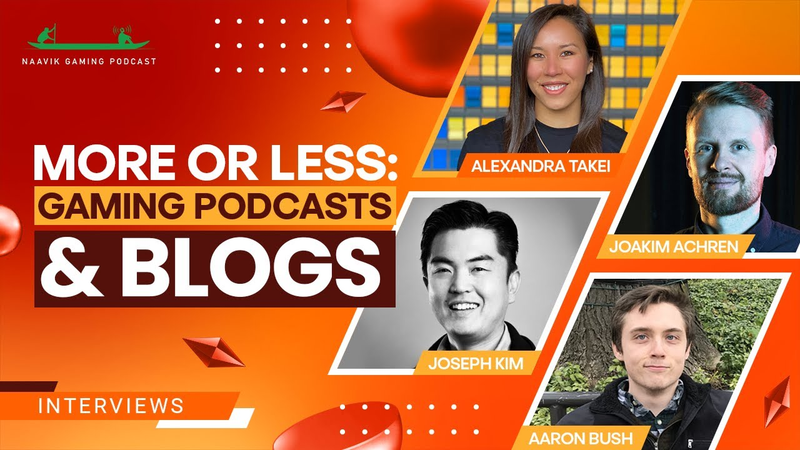
More or Less: Gaming Podcasts & Blogs
The gaming industry’s professional content landscape, encompassing approximately 300,000 to 500,000 individuals, operates primarily as a B2B ecosystem rather than a traditional media sector.
- Gaming industry media platforms like Naavik, GameMakers, and Elite Game Developers function as B2B marketing funnels rather than traditional media, using content to drive consulting, recruiting, and deal-sourcing revenue.
- The professional gaming content ecosystem targets a specialized audience of 300,000 to 500,000 individuals, prioritizing high-value industry authority over mass-market consumer reach.
- Maintaining a consistent publishing schedule is the most critical factor for long-term audience retention, as the recurring nature of newsletters and podcasts mitigates the impact of individual content failures.
Surviving 'Vampire Survivors': Agile Community Management
The rapid growth of the indie hit Vampire Survivors serves as a case study for agile community management within the gaming industry.
- Vampire Survivors grew its Discord community from 11,000 to 58,000 members and its Steam reviews from 14,500 to 178,000 between February 2022 and the time of the talk, achieving status as the second most-reviewed game on Steam.
- Community managers should prioritize agility by analyzing data to identify high-engagement content; for Vampire Survivors, specific character and item memes (e.g., garlic, floor chicken, and the character 'Poiracho') consistently outperformed other content types.
- Effective community management requires setting strict boundaries for mental health, such as ignoring toxic comments and repetitive requests for new platform ports, while utilizing community helpers and automated bots to maintain a safe environment.

Steel Media’s Dave Bradley On The Highlights Of PGC Toronto
Pocket Gamer Connects Toronto has solidified its position as a vital hub for the global games industry, drawing approximately 700 attendees and 110 speakers during its second annual iteration.
- Pocket Gamer Connects Toronto's second annual event attracted approximately 700 attendees and 110 speakers, reinforcing its role as a hub for mobile, web3, and virtual production.
- Industry strategy is shifting away from aggressive user acquisition toward player retention and live operations, necessitating specialized expertise in monetization and community management.
- The Top 50 Mobile Game Makers list is prioritizing cultural impact and long-term industry contribution as key metrics over traditional financial performance.

Creative Future with Artificial Intelligence
The game industry is currently undergoing a fundamental shift where the traditional reliance on technical tool proficiency is being challenged by the rise of generative artificial intelligence.
- The game industry is shifting from technical tool proficiency to high-level creative intent, as generative AI automates baseline production tasks.
- Developers should pivot toward storytelling, composition, and unique problem-solving to differentiate their work from commoditized AI-generated output.
- AI acts as a force multiplier by automating administrative burdens like code refactoring, meeting documentation, and asset indexing to accelerate iteration cycles.
Annual Report of the German Games Industry 2023
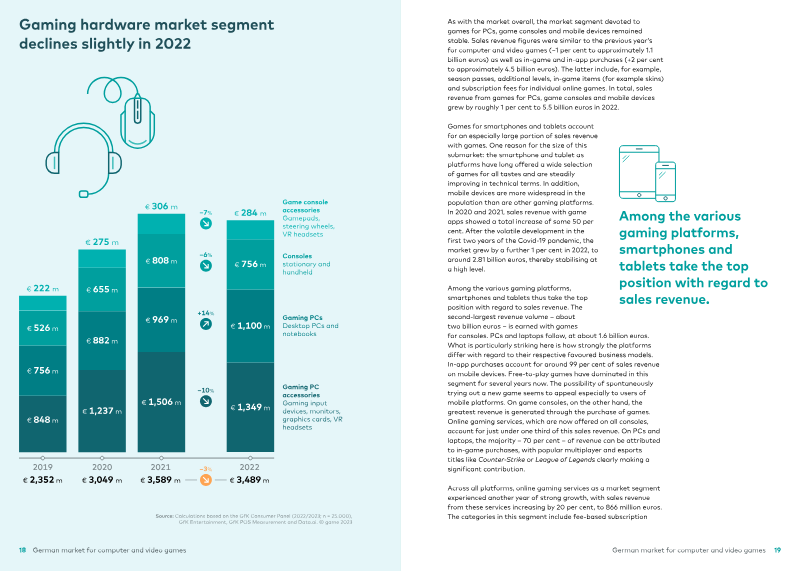
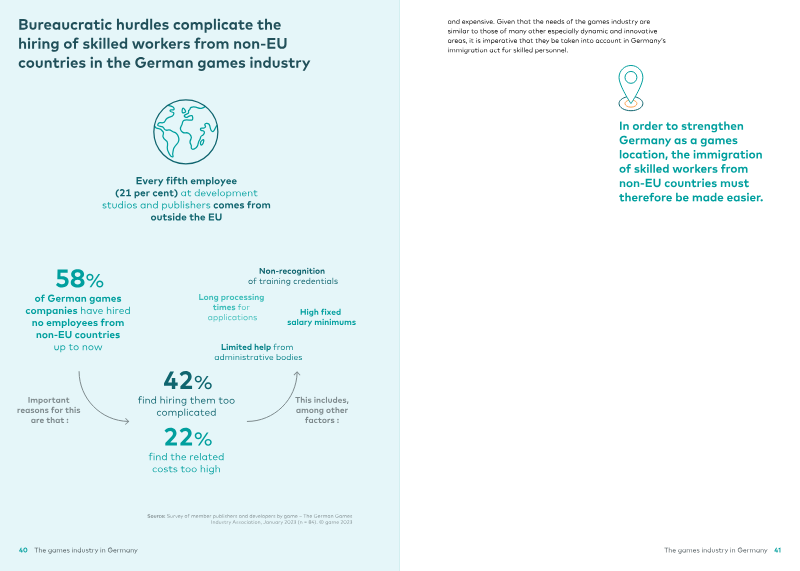
The document is the Annual Report of the German Games Industry 2023, published by game - The German Games Industry Association, covering the German games market, companies, employment, funding, skilled workers, and the gamescom and German Computer Game Awards events, primarily with 2022 data.
- German games market sales revenue reached 9.87 billion euros in 2022, an increase of 1 per cent, and the report states the market ranked fifth worldwide.
- The number of game companies in Germany grew to 908 in 2022, up 15.5 per cent over 2021.
- Employees at German game development studios and publishers reached 11,992, nearly 7 per cent higher than in 2022.
Writers
Games and companies
Games