Game Development reports and market data
Documents

Breathing Life Into 'The Last of Us': Part I and II
The development of The Last of Us Part I and II centers on the creation of a sophisticated, procedural breathing system designed to heighten player immersion through dynamic physiological feedback.
- Naughty Dog developed a proprietary audio middleware called 'Scream' to manage complex, procedural breathing systems in 'The Last of Us' that move beyond traditional, error-prone animation tagging.
- The breathing system uses a logic-based 'murmuration' loop that checks real-time game variables—such as player injury, heart rate, and AI awareness states (ambient, stealth, or combat)—to dynamically trigger appropriate audio assets.
- To ensure visual-audio synchronization, the team implemented a system that automatically stretches or compresses 30-frame facial animations in real-time to match the specific duration of the triggered breath sound file.
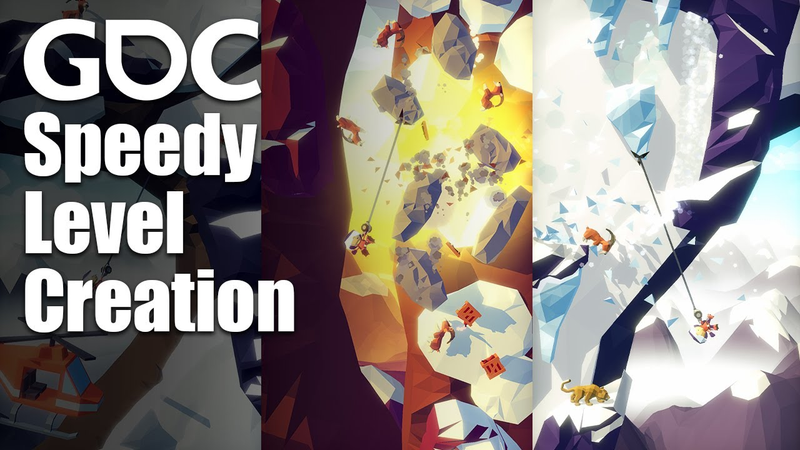
Moving Mountains: Speedy Level Creation as a Desperate Indie Dev
Solo independent development requires a strategic shift from the resource-heavy workflows of AAA studios toward extreme efficiency and persistent iteration.
- Solo developers should use procedural tools, such as noise generation libraries, to deform basic geometric primitives into complex, organic level shapes efficiently.
- Maintain a mechanic-tracking matrix to ensure an even distribution of gameplay features across all levels and to identify gaps where mechanics are underutilized.
- Design levels with a 'main path' for accessibility and 'optional paths' containing collectibles to provide challenge for advanced players without blocking progress for a wide audience.
Roundtable News | Gen Z Impact on the Workplace | 329
The gaming industry is currently undergoing a structural realignment characterized by a shift away from pandemic-era remote work toward mandatory return-to-office policies.
- The gaming industry is shifting from pandemic-era remote work to mandatory return-to-office policies as economic leverage returns to employers amid contracting venture capital funding.
- A significant mentorship gap has emerged for Gen Z employees, as remote work environments hinder the development of essential soft skills and communication abilities.
- Industry professionals are increasingly migrating from startups back to established studios in search of stability, driven by the operational difficulties of independent production in a high-interest-rate environment.

How To Create Breathtaking 2D Art For Dummies
The creation of professional 2D game art relies on a structured approach to color theory, atmospheric perspective, and layered composition.
- Establish visual cohesion by extracting a primary, secondary, and shadow color palette directly from high-quality reference sources like Elden Ring screenshots.
- Implement atmospheric perspective by ensuring foreground elements are highly saturated and dark, while distant objects gradually blend into the sky through atmospheric fog.
- Construct scenes using a layered approach that builds from the background forward to maintain depth and environmental scale.
The Wild Tale of Dark and Darker's Dev Battle - Extra Credits
The legal conflict between the indie developer Ironmace and the major publisher Nexon centers on allegations of intellectual property theft regarding the game Dark and Darker.
- Nexon has accused the indie studio Ironmace of intellectual property theft, alleging that the game Dark and Darker is a derivative of a cancelled Nexon project codenamed P3.
- The dispute centers on claims that a former Nexon employee misappropriated company assets, including thousands of shared file names, to build Ironmace's title.
- Ironmace maintains that the similarities between the games are due to the use of common asset store resources and that the core gameplay loop constitutes a generic genre trope.
How To Avoid Development Hell
Development hell is a pervasive issue in game design, often characterized by feature creep and the unnecessary complication of core mechanics.
- Development hell is primarily driven by feature creep and the unnecessary complication of core mechanics, often stemming from a developer's fear that their game is too simple to resonate with audiences.
- Unnecessary features significantly inflate production costs, as evidenced by one developer who wasted approximately $75,000—half of their $150,000 budget—on scrapped content that never made it into the final game.
- The 'trinity hook' framework acts as a rigid filter for decision-making by requiring all features to directly support a mechanical hook, a story hook, or a sensory hook.
Narrative Moments on a Budget: Stretching Storytelling "Dollars" Across the Moments That Matter
Effective narrative design requires a disciplined framework that aligns storytelling investments with a game’s core critical path.
- Establish a '3-2-1' framework to manage narrative budgets: define three tiers of investment (Gold, Silver, Bronze), two methods for selecting narrative devices, and one 'North Star' goal to guide all decision-making.
- Categorize narrative content into Gold (high-cost, high-visibility, core beats), Silver (medium-cost, supports the critical path), and Bronze (low-cost, high-reuse, peripheral content) to ensure resources are allocated where they matter most.
- Identify 'core narrative beats' (foundational story tenets) and the 'story critical path' during pre-production to create a control center that prevents scope creep and informs budget distribution.
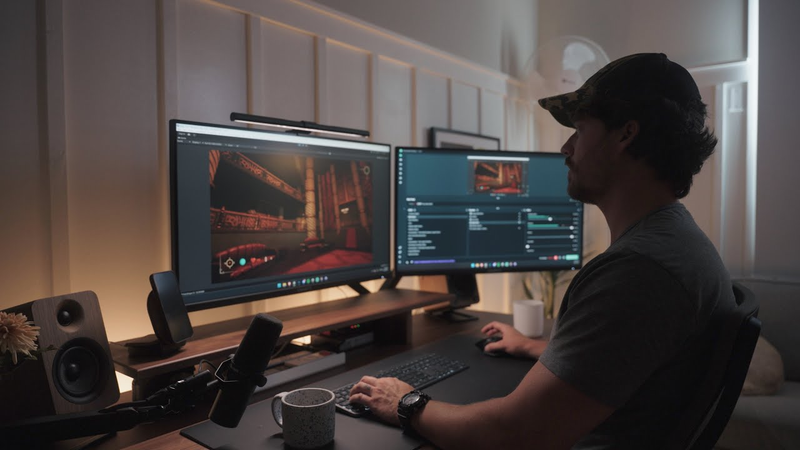
How To Create A 3D Level FAST In Unity
Efficient 3D level design in Unity relies on a structured, three-tiered workflow: establishing a structural blockout, applying custom textures, and finally populating the space with furniture and props.
- Implement a three-tiered workflow for 3D level design: structural blockout, texture application, and final prop population to ensure modularity and iterative flexibility.
- Utilize Unity’s ProBuilder for structural geometry, strictly adhering to a grid-based system to maintain precision and ease of future modifications.
- Use vertex snapping (triggered by the 'V' key in Unity) to ensure accurate alignment of prefabs during the structural phase.
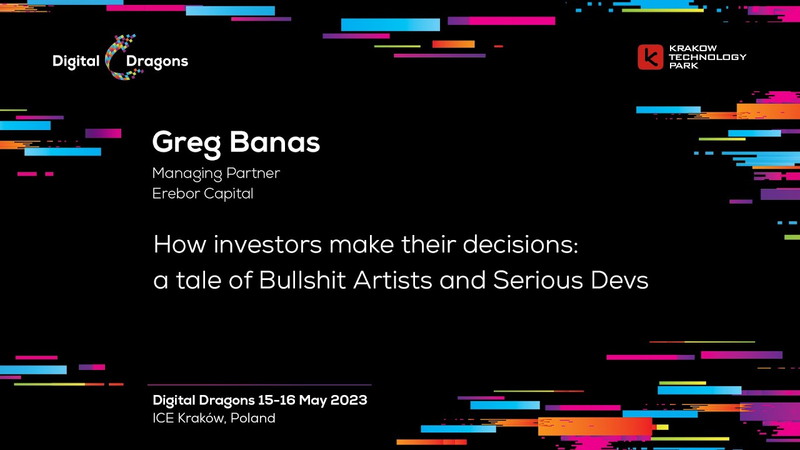
Greg Banas - How investors make their decisions: a tale of Bullshit Artists and Serious Devs
Investment decisions in the gaming industry are fundamentally driven by human judgment, prioritizing the character and reliability of development teams over mere market trends or speculative hype.
- Investors prioritize the character, reliability, and professional history of the development team over market trends or speculative hype.
- Securing funding in rounds tied to specific development milestones is preferred over upfront total-project funding to mitigate risk and increase studio leverage.
- A playable prototype or high-quality visual proof of concept is the most effective tool for validating early-stage investment proposals.
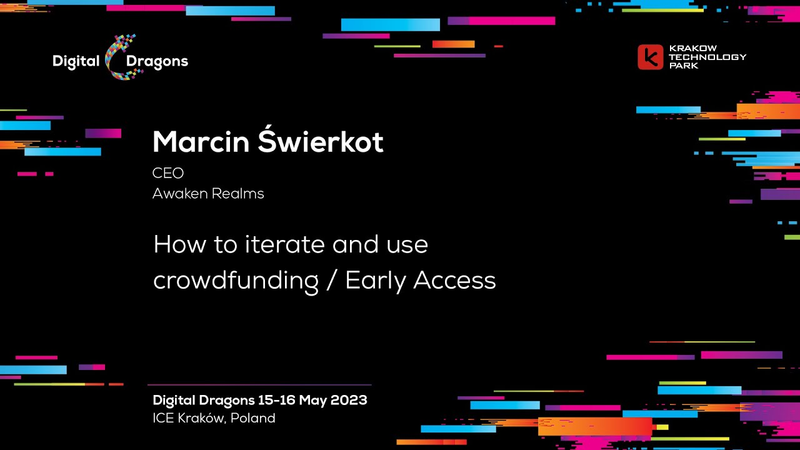
Marcin Świerkot - How to iterate and use crowdfunding / Early Access
Crowdfunding and Early Access serve as fundamental mechanisms for modern indie game development, shifting the focus from internal assumptions to data-driven design.
- Crowdfunding and Early Access are essential tools for indie studios to self-fund development, as demonstrated by Awaken Realms growing from a five-person basement startup to a 200-person company over 10 years without external investors.
- Steam visibility spikes are highly dependent on platform-driven traffic; reaching 'Popular Upcoming' or 'New and Trending' categories can generate thousands of wishlists that are otherwise prohibitively expensive to acquire through paid marketing.
- The most reliable validation of a game's 'fun factor' is financial commitment; players voting with their wallets provides more accurate data than focus groups, which are often skewed by cultural differences in feedback.
Jakub Pacura - Marketing Postmortem for House Flipper
House Flipper demonstrates that long-term commercial viability in the simulation genre is best achieved through a disciplined DLC release model and a commitment to organic community engagement.
- Frozen District achieved an average of 150,000 wishlists for House Flipper DLCs by announcing them 9 to 12 months in advance rather than the industry-standard two-week window.
- Influencer marketing was a primary driver of growth, with the largest House Flipper YouTube video reaching 21 million views and creators like jacksepticeye producing 10-video series that sustained long-term engagement.
- The developer utilized consistent naming conventions (e.g., 'House Flipper - [DLC Name]') to eliminate consumer confusion and maintained a detailed sales log to track discount performance across all DLCs.
Patryk Grzeszczuk - Reality-proof planning - how to prepare to survive on the market
Modern game marketing requires a fundamental shift from linear release schedules toward a dynamic, level-design approach that treats the promotional journey as an interactive space for player exploration.
- Adopt a dynamic, level-design approach to marketing that treats the promotional journey as an interactive space for player exploration rather than a linear release schedule.
- Establish quantifiable objectives—specifically wishlist targets, traffic metrics, and conversion ratios—well before product launch to serve as real-time benchmarks for performance.
- Utilize a reverse-engineered planning methodology that breaks high-level KPIs into modular, manageable tasks to ensure campaigns remain grounded in core value propositions.
Writers
Games and companies
Games