Annual Report of the German Games Industry 2023
33 pages~85 min full read
Key insights
6 slides
Key number
The German games market reached 9.87 billion euros in 2022.
The market maintained a stable valuation despite global economic headwinds, inflationary pressures, and hardware supply constraints. This performance represents a 1% growth rate, bucking international trends of market decline.
Structural expansion
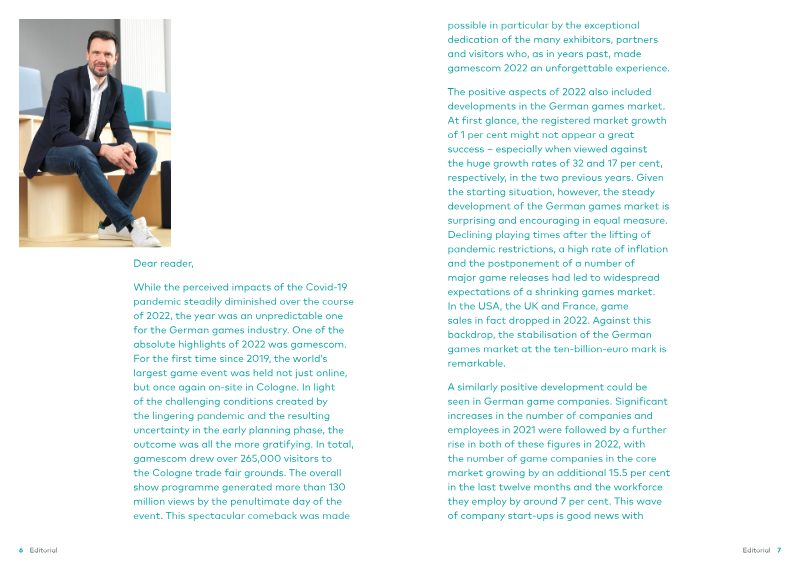
The industry added companies and workers in 2022.
The number of companies increased by 15.5% over the past year. The total workforce rose by 7% over the past year.
Growth metrics. The industry saw a 15.5% increase in companies and a 7% rise in workforce.
Revenue driver
Mobile gaming remains the primary revenue driver.
Digital distribution has become the standard purchasing method for PC users and younger demographics. Mobile gaming continues to dominate revenue streams.
Talent gap
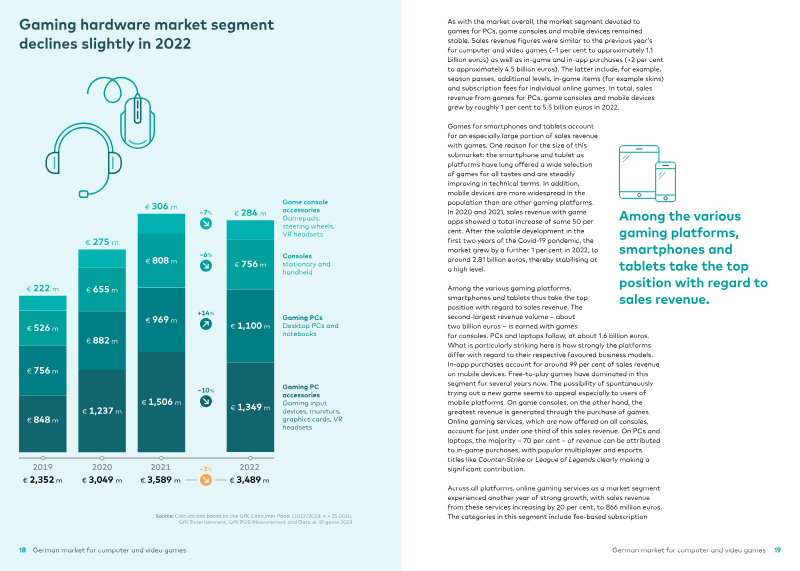
A skilled labor shortage threatens international competitiveness.
A persistent shortage of skilled labor in programming, technical art, and production persists. Bureaucratic hurdles impede the recruitment of international talent.
Funding stability
Intermittent federal funding hinders strategic planning.
The intermittent availability of federal funding has created an environment of instability. Industry advocates are pushing for a shift to tax-based incentives.
Industry hub
Germany leverages events to solidify its global hub status.
Events such as Gamescom and the devcom Developer Conference have reinforced Germany’s status as a central hub for digital innovation. These events attract significant international attention and political engagement.
Global hub. Germany is leveraging events like Gamescom and devcom to solidify its position as a global hub.
1 / 6
Ask AI about this report