1 free read left. Create a free account for unlimited reading + AI research.
Create free account
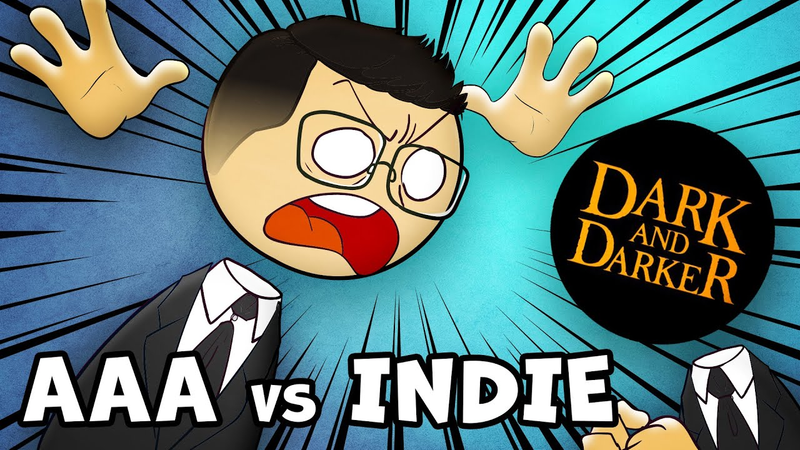
The Wild Tale of Dark and Darker's Dev Battle - Extra Credits
Key insights
6 takeaways- 01The case highlights the vulnerability of independent developers to litigation from large corporations and serves as a potential precedent for how intellectual property and genre-based design are protected in the gaming industry.
- 02Nexon has accused the indie studio Ironmace of intellectual property theft, alleging that the game Dark and Darker is a derivative of a cancelled Nexon project codenamed P3.
- 03The dispute centers on claims that a former Nexon employee misappropriated company assets, including thousands of shared file names, to build Ironmace's title.
- 04Legal and enforcement actions against Ironmace have included a DMCA takedown on Steam, a formal lawsuit, and a police raid on the studio's headquarters in Korea.
- 05Ironmace maintains that the similarities between the games are due to the use of common asset store resources and that the core gameplay loop constitutes a generic genre trope.
- 06Ironmace utilized unconventional defense tactics, including the use of ChatGPT to argue for the generic nature of their game concept and the distribution of the game via torrents to bypass platform removal.
Ask AI about this video
Transcript
Over the years, we've all seen a ton of wild lawsuits in the games industry. From the guy who sued EA saying he had a patent on sports video games to Epic's epic attack on the Apple App Store, but few actually have been wilder than what's going on with Dark and Darker right now. So, let's talk about the emotional roller coaster that game is going through and what it could mean for the entire industry. Thanks so much to Incogni for helping to keep people's personal data personal. Okay, let's start at the beginning. Dark and Darker is a, you guessed it, dark fantasy extraction looter made by a small Korean team called Iron Mace. And when everything started out, things seemed gangbusters for them. They were the scrappy indie going up against Korean giants like their former boss, Nexon. They launched their alpha to both acclaim and a huge user base. Players were hungry for this sort of game. Then they launched subsequent tests for the game and it just grew. Over a million players jumped in to try something very decidedly alpha, but storm clouds were
gathering on the horizon and legal action was hanging over the head of one of their employees, who we're going to refer to in this episode as leader A for the sake of anonymity. Before working on Dark and Darker at Iron Mace, leader A used to be the head of a project at Nexon code named Project P3. And during the height of the COVID pandemic, while they were working from home, leader A began using a personal server to house assets and code for P3. According to him, he got the okay to do this from the higher-ups at Nexon, though Nexon says not so much. As time went on, leader A began to clash with Nexon leadership. He got frustrated with the project, told people on the team that he was going to quit and start a P3 competitor, and that they should all come and join him, which almost half of the P3 team eventually would. Oddly though, he doesn't quit. Instead, he's fired when someone at Nexon realizes he's taken NDA'd company property and put it on a private server. Now, who knows, right? Maybe someone at Nexon said he could do this and then someone else later found out, completely disagreed, and got mad about it. Or
maybe he never had the okay in the first place. As a dev, James told me he can't really see why a large company like Nexon would okay something like that rather than just making sure the team had the relatively nominal resources required to have a server that met their needs. But on the other hand, both James and I have had enough experience with larger companies with horrible internal communications that we can totally see leader A shooting an email off to a middle manager saying something like "Hey, servers were being inefficient. I'm throwing everything on my private server for the team if that's okay." And then the middle manager, who probably isn't technical, saying, "Yeah, sure." Only for legal to find out a year later and have a conniption. So, who knows? All we have to go on is the fact that it looks like leader A was given some authorization to export very early files, though importantly not build files, according to Nexon, to a private server for testing. So, point to Iron Mace. But also that leader A signed a forensic agreement to turn the server over for examination, and he um and I'm quoting here from the Nexon legal brief, "instructed an acquaintance to
permanently delete the files on his personal servers instead." And the server was wiped multiple times so that the data could not be recovered. So, yeah, uh point to Nexon? But that was just the thunderhead. The true storm was coming. As Dark and Darker gained momentum on Steam, as it was blowing up across the world, Nexon decided its similarities to P3 were just too great. So, they had to go for the source. They filed a DMCA takedown notice with Steam. Now, as we all know, DMCA takedowns are notorious for being guilty until proven innocent claims. And according to US safe harbor laws, that meant that Steam had to take down the game if they think there's any chance that the claim has merit. So, down it went. Then things started to get unhinged. Korean police raided Iron Mace's headquarters because in Korea some of the complaints amount to criminal charges. Nexon filed a full-fledged lawsuit against Iron Mace in the US, showing in their brief that thousands of files with the same file names are used in Dark and Darker that were used in P3. Iron Mace doesn't deny
this, but fires back that these are largely asset store assets, which is true. But, as much as I do really hate to make Nexon's case here, it is very odd that you'd use exactly the same asset packs for a new game unless, you know, you and your team had learned how to work with them from your time at another company and maybe even had some ideas on how to put them together into engaging dungeon rooms from having done so before. But, Nexon also put together an almost comical description of the game type that it says Dark and Darker is infringing on, leading to one of the most glorious sentences I've ever read in a legal doc. I quote, "Because it's not possible to fully explain all the similarities of a three-dimensional and dynamic video games in a two-dimensional and static legal pleading, they'll provide some examples." And while they do bring up PvPvE, because you can't really copyright a genre, they go on to talk about the games having the same classes, the concept art looking similar, some of the abilities being identical, and then real winners like both P3 and Dark and Darker feature scary monster NPCs that attack
human-controlled characters. Though, to be fair, this was just a preamble for them saying that a lot of monsters in both are similar. Oh boy. To which, in a move I can't imagine any legal counsel approving of, the Iron Mace team responded by posting a Discord rant with their entire legal strategy. Remember that disputed server from earlier? Well, Iron Mace's Discord explosion included choice lines about it like, "Due to the harassment and lack of respect from the company, and after consulting with his lawyers, he concluded that his private information on his private servers was not subject to any records, so he deleted this information to ensure his privacy." Which, you know, is not the best look. Iron Mace continues, "The founder has on multiple occasions told members of his team that they must be extra diligent in ensuring that everything is done by by books in order to uphold the vision and branding of the company. To James, this was a super strange sentence because when does a CEO come to a dev team and say something like, "Be careful not to break the law, everyone." unless he was thinking that they might possibly be doing that. They basically go on to call Nexon scrubs.
Quote, "Just because it may be difficult for a large bureaucratic company such as Nexon to develop games in such a short time frame does not mean it's impossible for another studio, big, small, new, or old to develop games quickly." Unquote. Hey, that's fair. But then the coup de grace. Quote, "The premise for adventurers delving into dungeons full of monsters and treasures in their quest to seek riches is so generic and common that it can broadly be applied to numerous other fantasy games." Then they asked ChatGPT to, quote, "Come up with a description for a generic PvP dungeon crawling game that created an eerily similar game description below." Ah, the old our game idea is so bland a chatbot could have come up with it legal strategy. Works every time. That was shortly followed by a Discord admin posting a link to a GoFundMe to help pay Iron Mace's legal costs. Immediately followed by another mod jumping on and warning people that that GoFundMe was a scam. Immediately followed in short order by one of the devs jumping on and saying that it actually wasn't a scam, but they hadn't meant to go live with it
yet saying that the post had been made, quote, "Without approval due to a passionate member of the team taking matters into their own hands." Unquote. And then warning people against donating online in general. The chaos continued as since they'd been removed from Steam, they told users to torrent their game to get access to the next playtest. To which many users responded, "Y'all know how many malware torrents are going to be put up with the same names?" leading to them distributing the hash to allow users to make sure they were getting the real torrents. And sure, the playtest was rocky, but honestly, it's a huge feat that they were even able to pull it off given how much pressure they were under. So, congrats on that. And as of now, things hang in legal limbo until some settlement is reached or a court date is set. But look, we all know why this is happening, right? Because Dark and Darker was successful. Because a project Nexon mothballed turned out to be a great idea. In our opinion, Nexon seems to be crushing Iron Mace with an impossible legal fight while they develop a version of P3 and get it to market first. Now, does that make Nexon wrong or Iron Mace innocent? Neither,
necessarily. But what it does do is set up a terrifying precedent for indie devs in a world where more and more of the market is owned by a handful of giant companies. Well, as the great George Orwell once so eloquently put it, if you want a picture of the future, imagine a microtransaction-based NFT-skinned boot stamping on an indie dev's face forever. That was the quote, right? And you know, speaking of Orwellian nightmare scenarios, I don't know about all of you, but in the past few years, I've been getting way more spam emails fishing for my personal info and robo calls hawking services for stuff like extended warranties on a car that I do not have. Well, we have data brokers to thank for that. These supervillain-sounding groups that gather personal data on all of us as we go about our lives online and IRL, or that, you know, scrape all of those data breaches that seem to be happening just all the time now for some reason. They get stuff like your name, phone number, social security number, login credentials, location history, online activity, and just a bunch more info,
and then sell all of that personal data basically to anybody who wants it. And not to mention, because they make good money doing it, more and more data brokers are popping up every year. It is gross. Now, in the past, I've actually tried to fight these folks on my own, going to individual groups, the ones I could find anyway, and requesting that my data be removed, right? But that was honestly just a Sisyphian task, because even if I did get my data removed, there was no way I could keep up with all of the different groups to ensure that my data wouldn't just be right back there again later. But now with Incogni, which I am just so happy I found, I just don't have to worry about any of that. Because after signing up, which honestly took like 3 minutes, they start fighting immediately on your behalf by reaching out to data brokers for you to request the removal of your personal info. Then they deal with any follow-ups and objections citing laws and regulations local to where each data broker is located. Oh, they hate that. And then they just keep that pressure on ensuring your data doesn't end up right back to where it was removed from. And the cherry on top of all of this is that you get to sit back and are able to keep track of it all with their super simple
dashboard that shows you exactly how many data brokers no longer have your data. This is my favorite part, just watching those numbers change. It was very cool. So, if you would like to keep your personal data, you know, your personal data, you can get 60% off Incogni by visiting incogni.com/extracredits and then using our code extracredits. I'm really happy they're sponsoring our shows because it's something I truly believe in and this is a way cheaper option than just dealing with a sliver of identity theft, let me tell you. Again, that is code extracredits using that link in the description for 60% off Incogni and that warm fuzzy feeling when you get to ruin a data broker's day. That's a twofer. A million big old thanks to Skyler Homes, Kuya Koi, Joseph Blain, Dominic Valenciana, Casey Muessig, Arclight Games, Angela Valenciana, and Ahmad Zia Turk for being fantastic legendary patrons.
Summary
The legal conflict between the indie developer Ironmace and the major publisher Nexon centers on allegations of intellectual property theft regarding the game Dark and Darker. The dispute originated when a former Nexon employee, who led a project codenamed P3, allegedly utilized a private server to store company assets before leaving to form Ironmace. Nexon claims that Dark and Darker is a derivative of P3, citing similarities in game mechanics, class structures, and thousands of shared file names. Ironmace contends that these similarities are the result of using common asset store resources and that the core gameplay loop is a generic genre trope.
The situation escalated into a complex legal and public relations battle. Nexon initiated a DMCA takedown that removed Dark and Darker from Steam, followed by a formal lawsuit and a police raid on Ironmace’s headquarters in Korea. Ironmace’s defense has been characterized by unconventional tactics, including public Discord statements that admitted to the deletion of the disputed server data—citing privacy concerns—and the use of ChatGPT to argue that their game concept is too generic to warrant copyright protection. The studio also faced internal disarray regarding crowdfunding efforts and resorted to distributing the game via torrents to maintain access for players during the legal impasse.
This case highlights the precarious position of independent developers when facing litigation from large, resource-rich corporations. While neither party is portrayed as entirely blameless, the conflict serves as a cautionary tale regarding industry practices, internal data management, and the potential for legal strategies to be used as a tool to stifle competition. The matter remains in legal limbo, with the outcome likely to set a significant precedent for how intellectual property and genre-based game design are handled within the broader gaming industry.





















Comments