Game Culture reports and market data
Documents
Worker in Video Game Industry: The Gap Between Indie and Incorporated Video Game Developers in Indonesia
This study examines the human resource composition and operational differences between incorporated and independent (indie) video game developers in Indonesia.
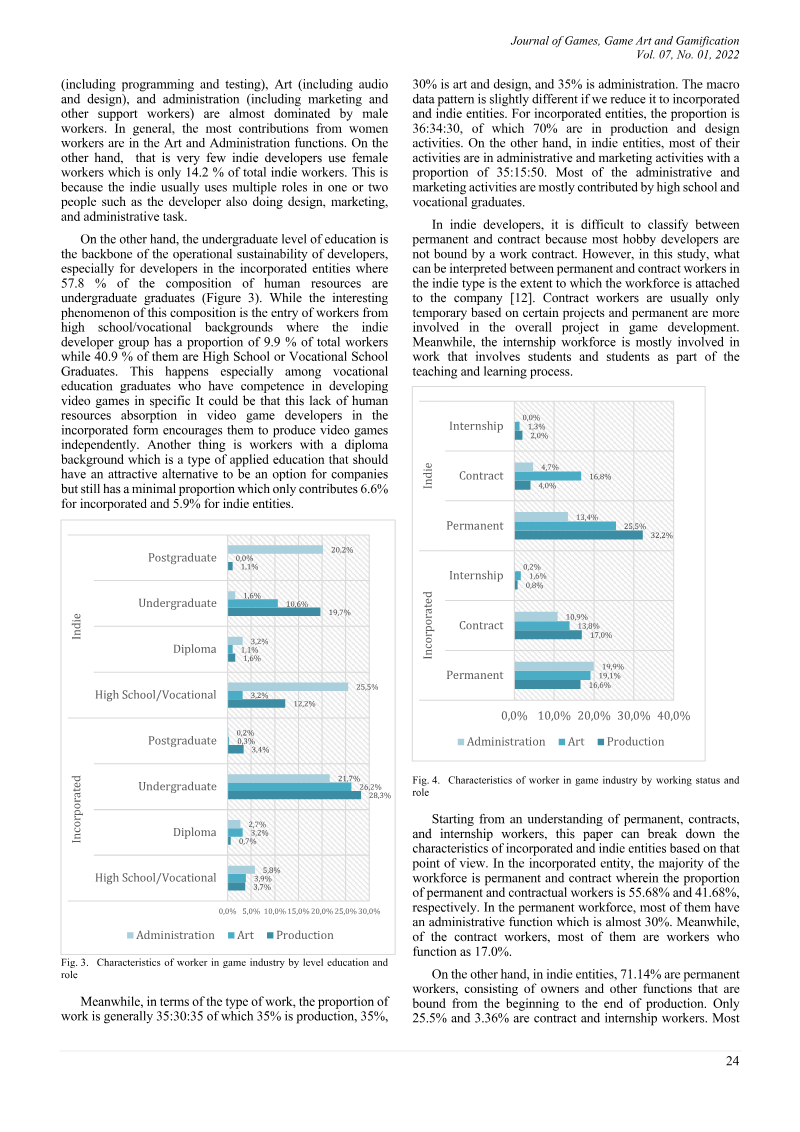
- The Indonesian game industry is heavily male-dominated, with men comprising 81% of the total workforce and women primarily restricted to administrative or art-related roles.
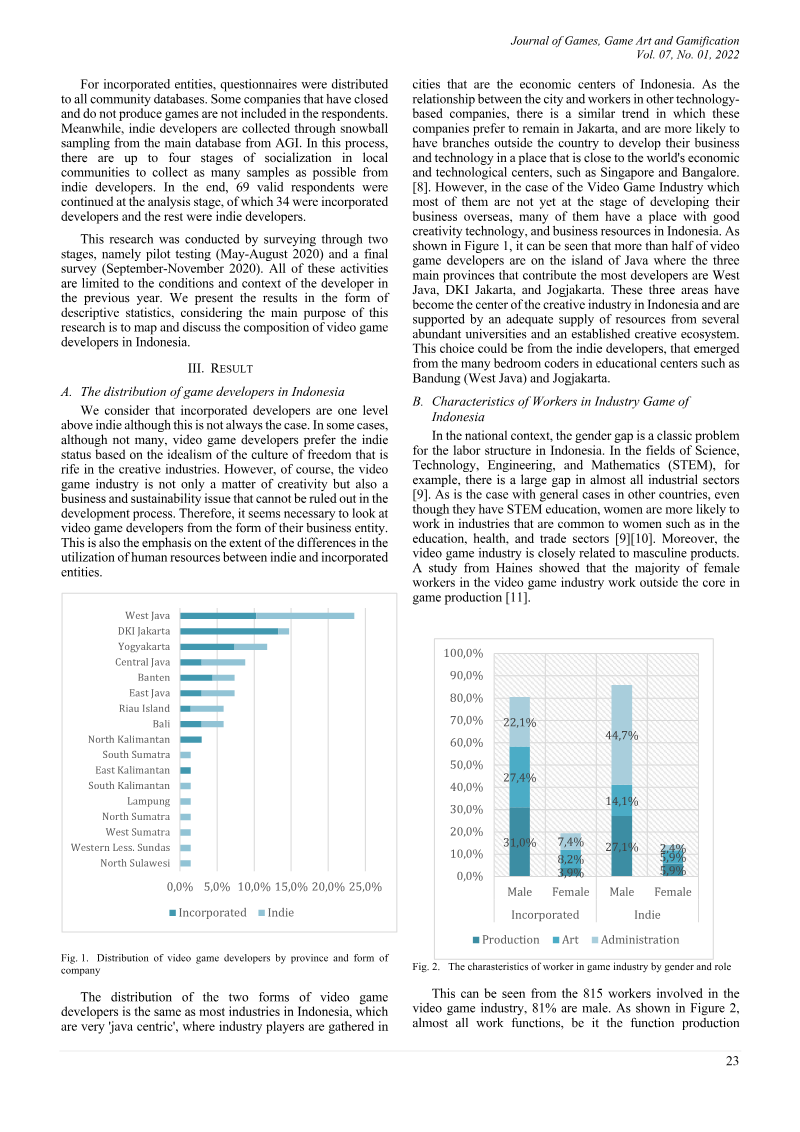
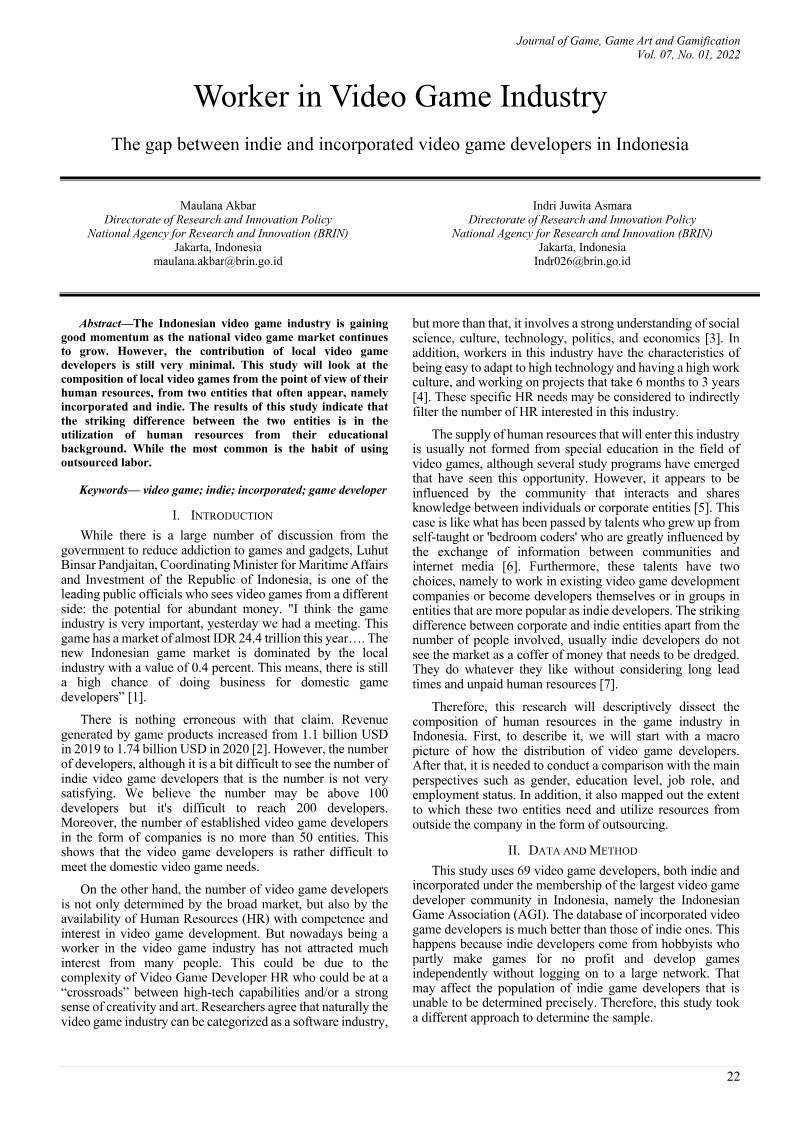
- A significant educational divide exists: 57.8% of incorporated firm employees hold undergraduate degrees, while 40.9% of indie developers are high school or vocational school graduates.
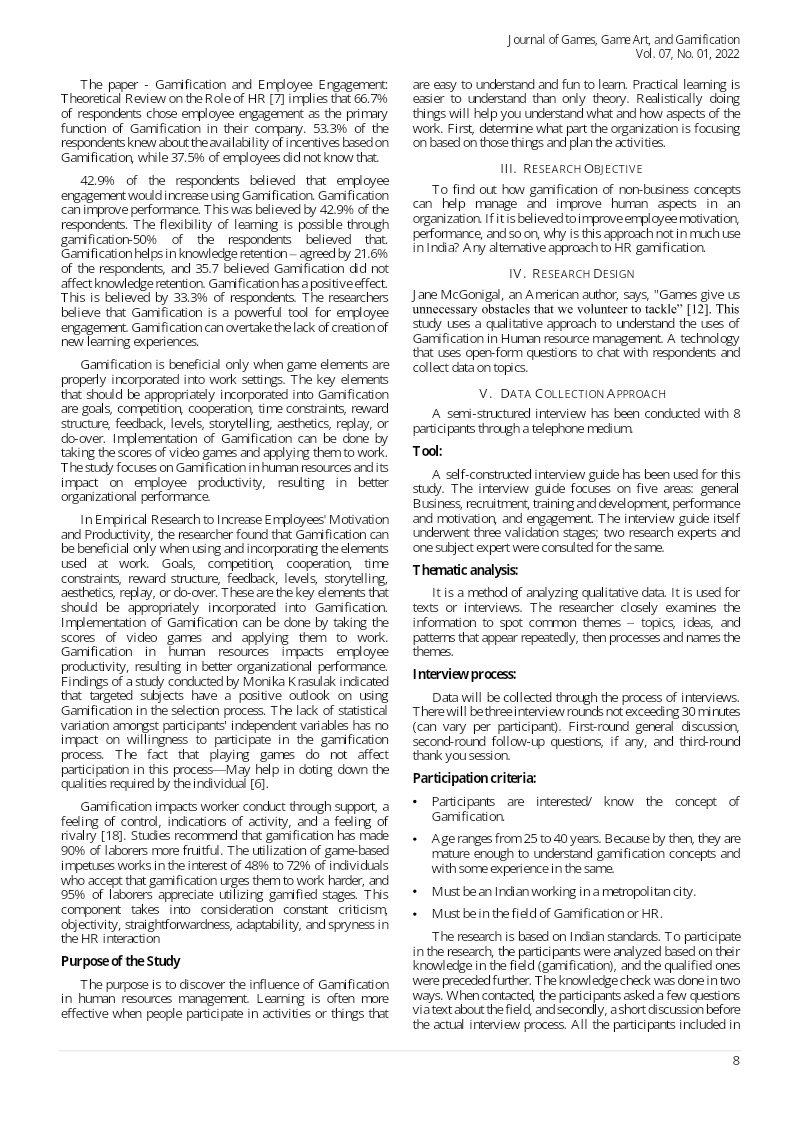
- Approximately 60% of both incorporated and indie developers utilize outsourced labor, primarily for art, design, and technical production roles.
Gamification Impact on Human Aspects of the Organization: India
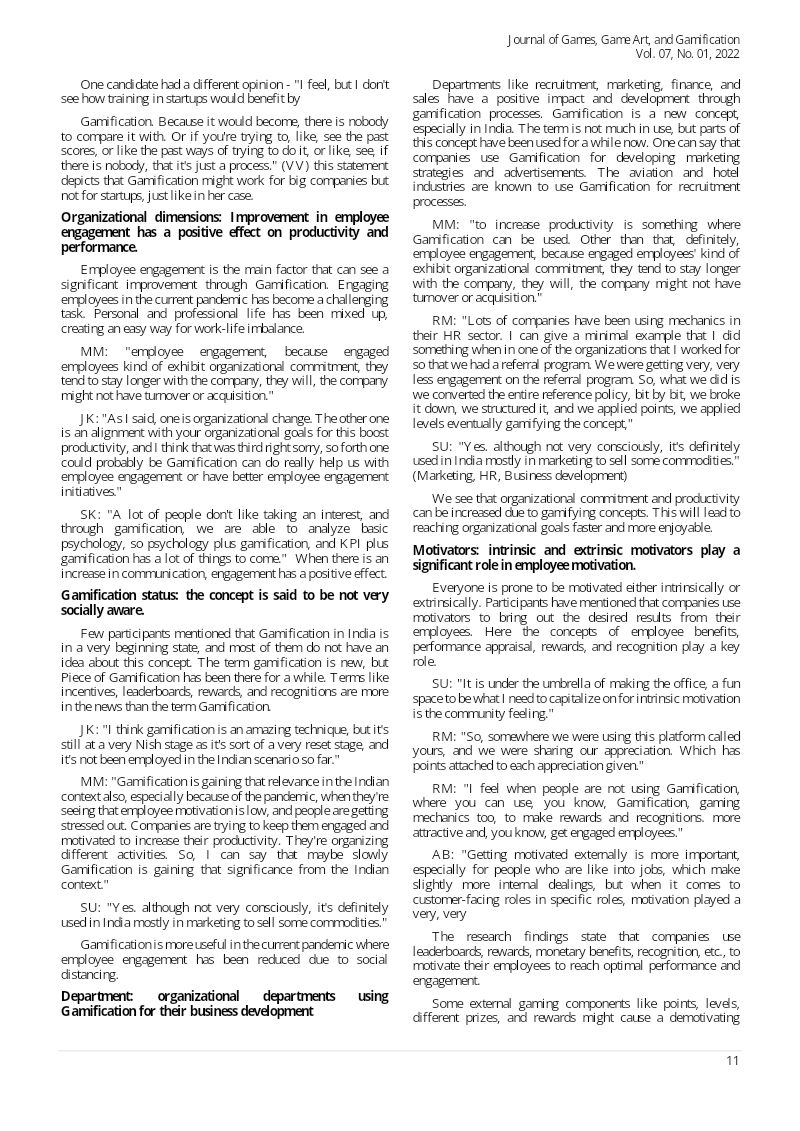
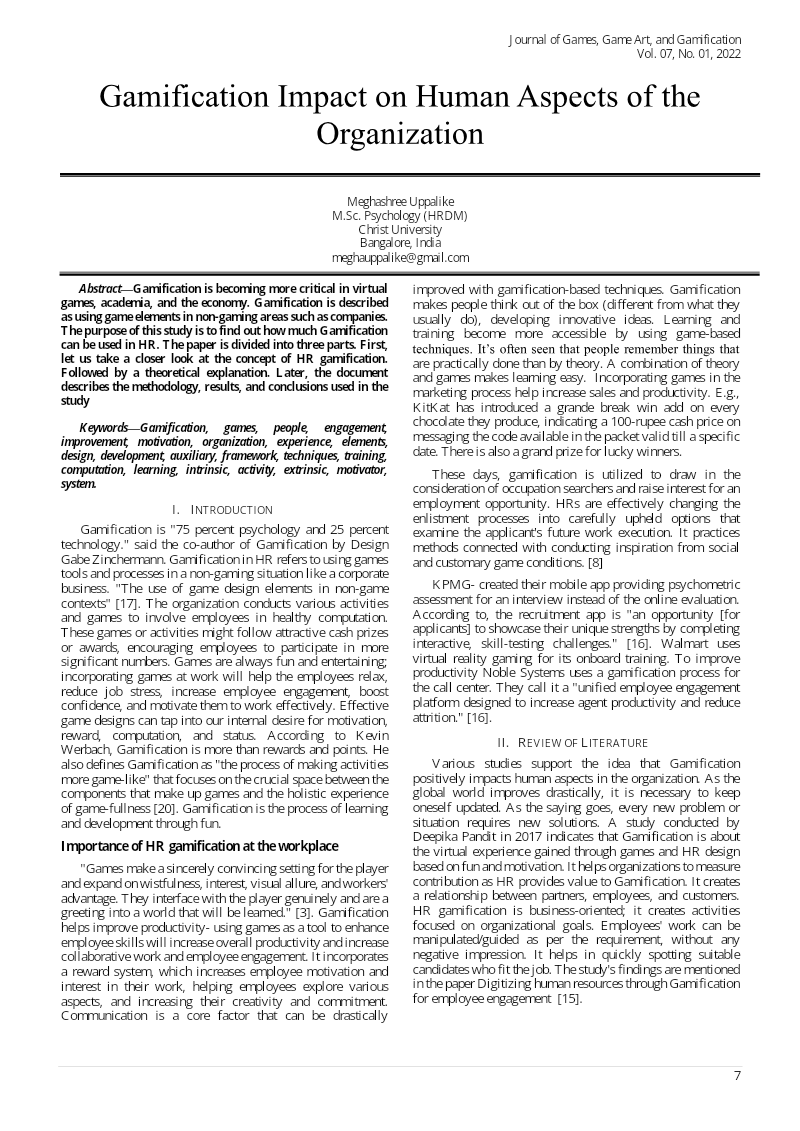
Gamification serves as a transformative tool within the Indian corporate landscape, functioning primarily as a strategic mechanism to enhance human resource management, recruitment, and marketing efforts.
- Gamification in India is a strategic tool used to enhance HR management, recruitment, and marketing by aligning individual employee behaviors with business objectives.
- Well-executed gamification significantly improves interpersonal communication, personal development, and overall workforce productivity.
- Implementation of gamification in India remains in a developmental phase, with adoption rates recorded at below 10 percent as of 2014.
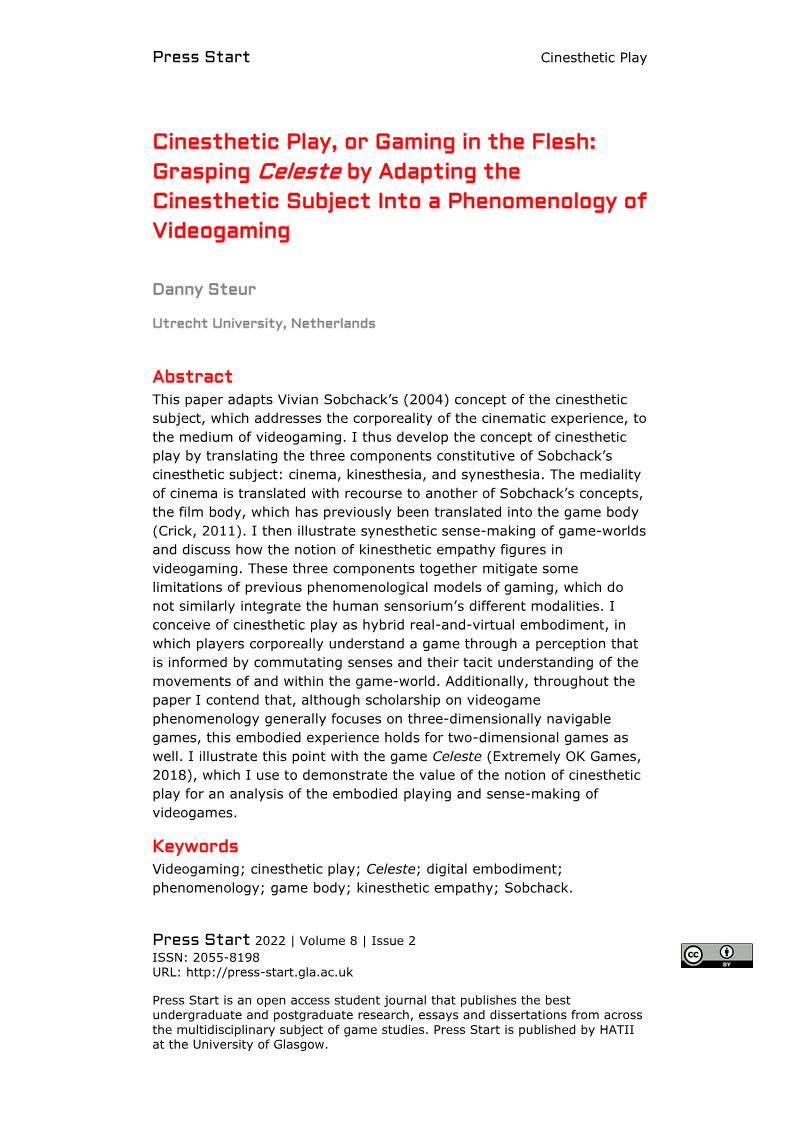
Cinesthetic Play, or Gaming in the Flesh: Grasping Celeste by Adapting the Cinesthetic Subject
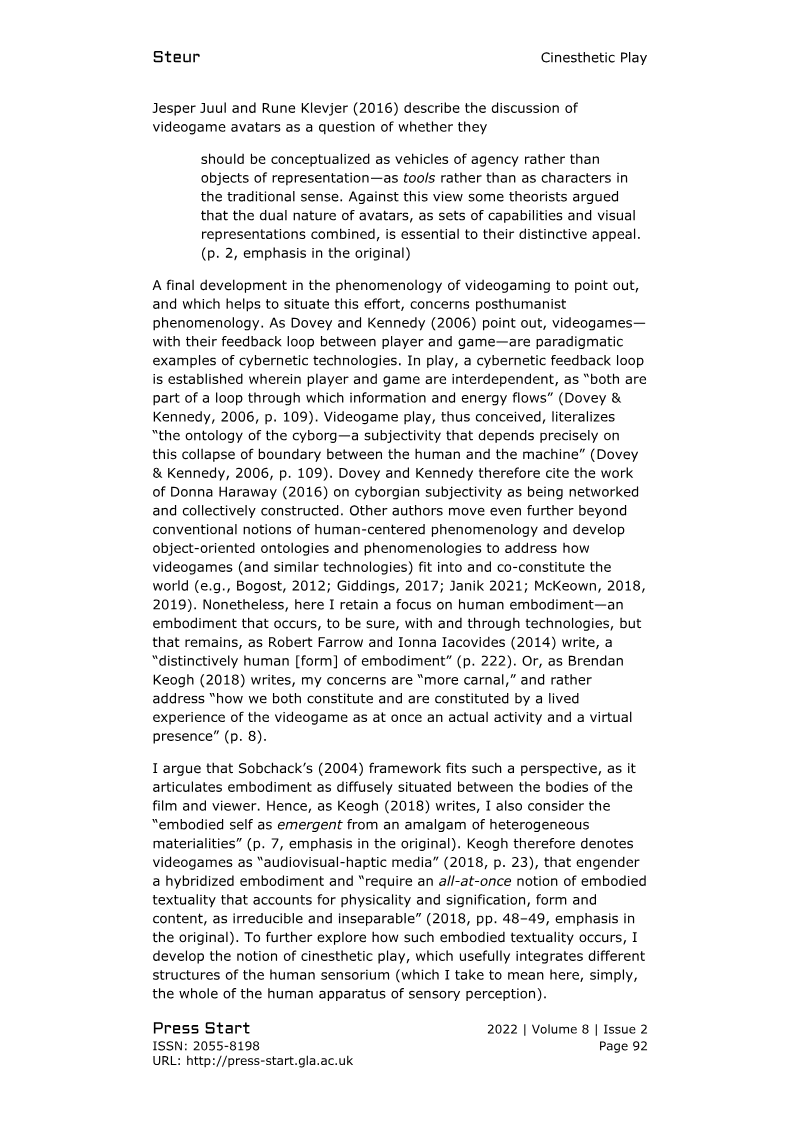
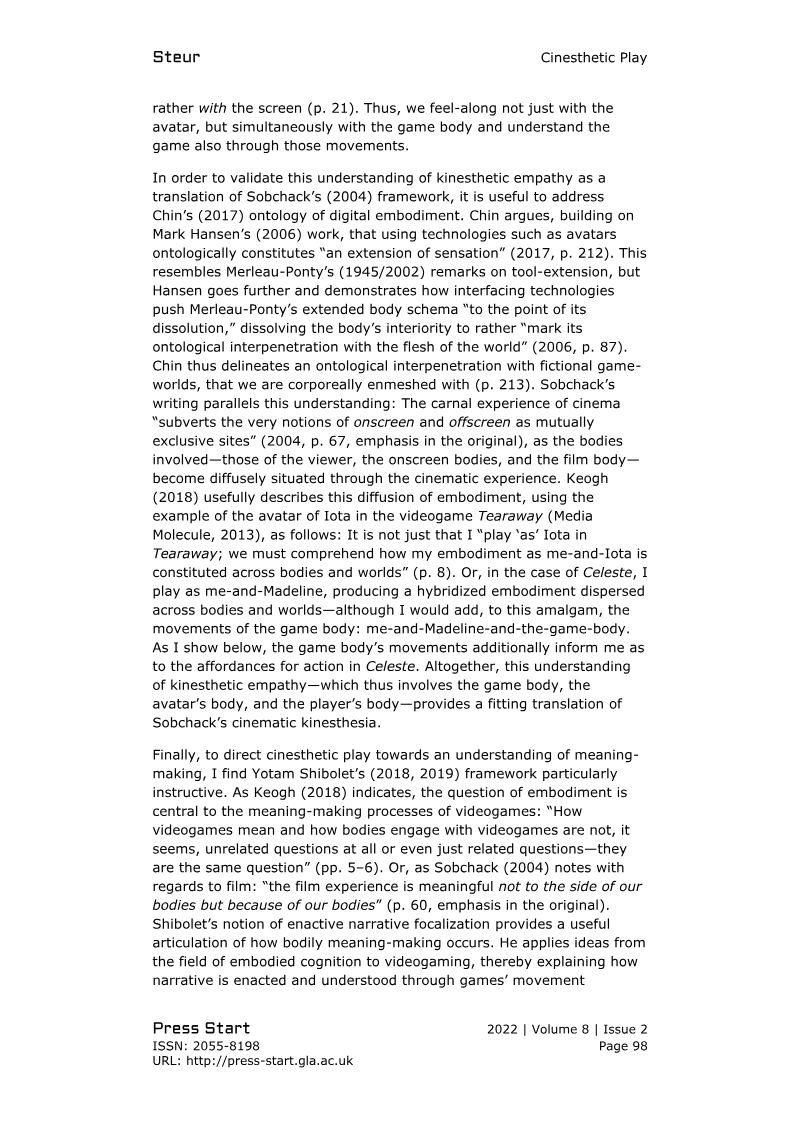
Cinesthetic play serves as a robust phenomenological framework for understanding how players engage with digital environments through a hybrid, multisensory embodiment.
- The concept of 'cinesthetic play' provides a new phenomenological framework for understanding videogaming by integrating three sensory modalities: cinema, kinesthesia, and synesthesia.
- Unlike previous models that focus primarily on three-dimensional environments, cinesthetic play demonstrates that embodied engagement and sense-making occur equally in two-dimensional, side-scrolling games like Celeste.
- Cinesthetic play functions as a hybrid real-and-virtual embodiment where players process game-worlds through a combination of visual input, auditory cues, and tacit knowledge of movement.
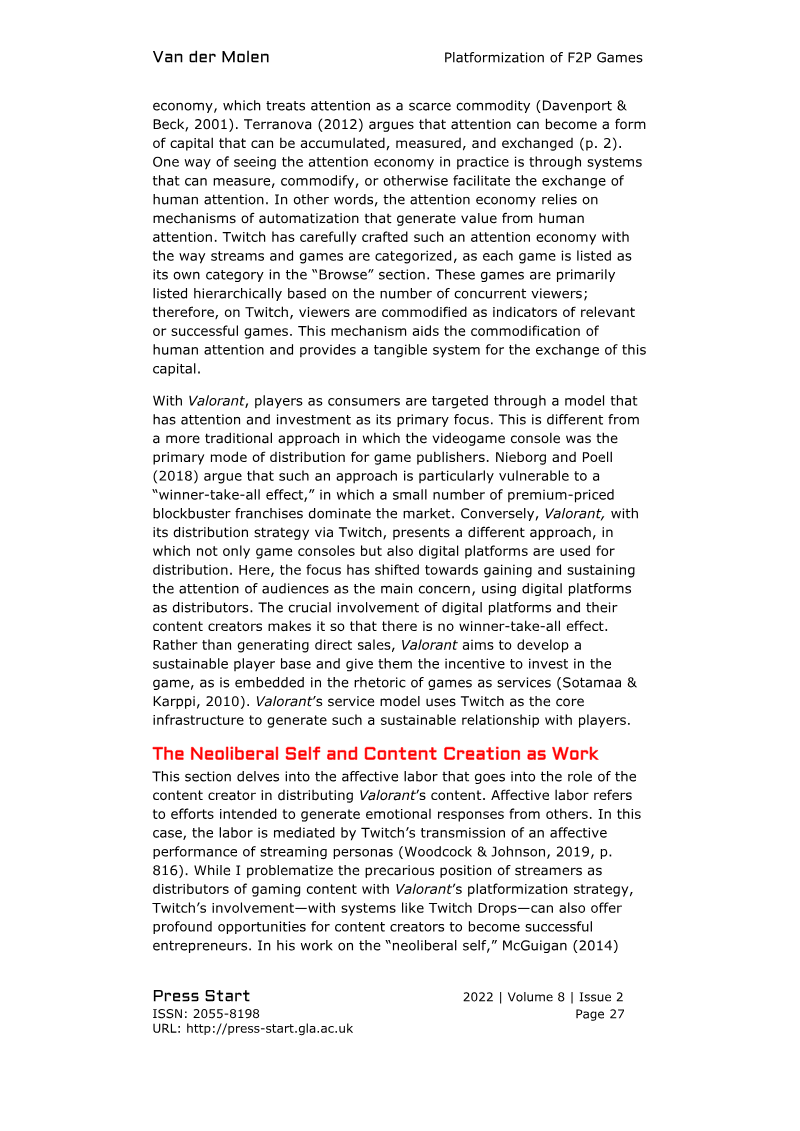
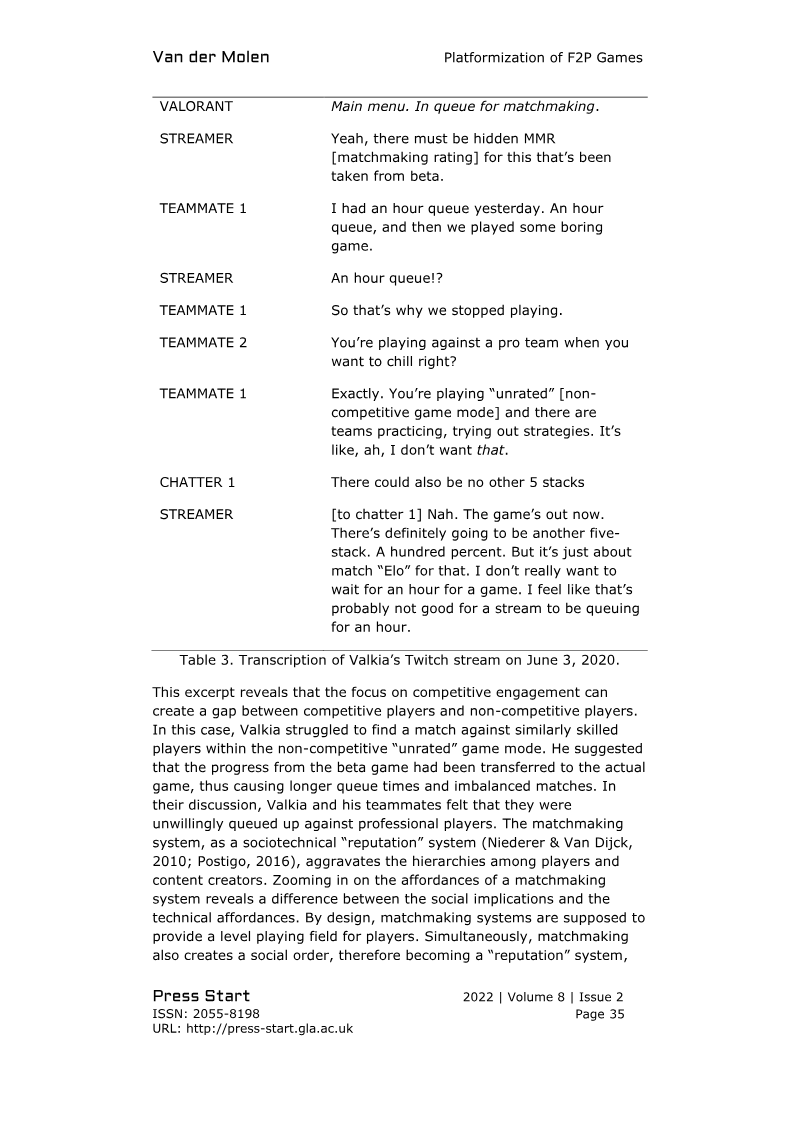
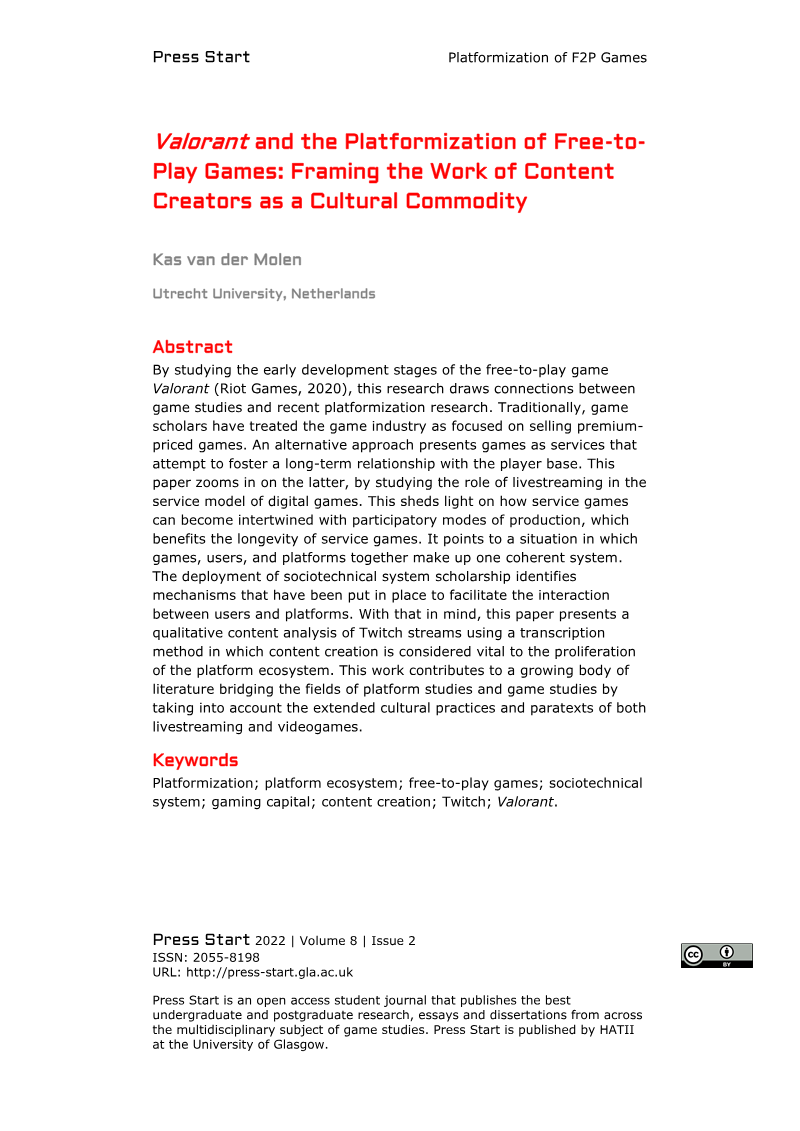
Valorant and the Platformization of Free-to-Play Games: Framing the Work of Content Creators as a Cultural Commodity
Valorant functions as a sophisticated sociotechnical system that integrates livestreaming infrastructure directly into its free-to-play business model.
- Valorant integrates livestreaming infrastructure directly into its business model, utilizing Twitch Drops and competitive events to turn content creators into essential, unpaid distributors of the game.
- The game’s distribution strategy has shifted from traditional retail sales to the perpetual management of audience attention, establishing viewership as a primary cultural commodity.
- Content creators operate within a codependent system where they must balance competitive gameplay with the demands of an attention-based economy to maintain engagement and platform standing.
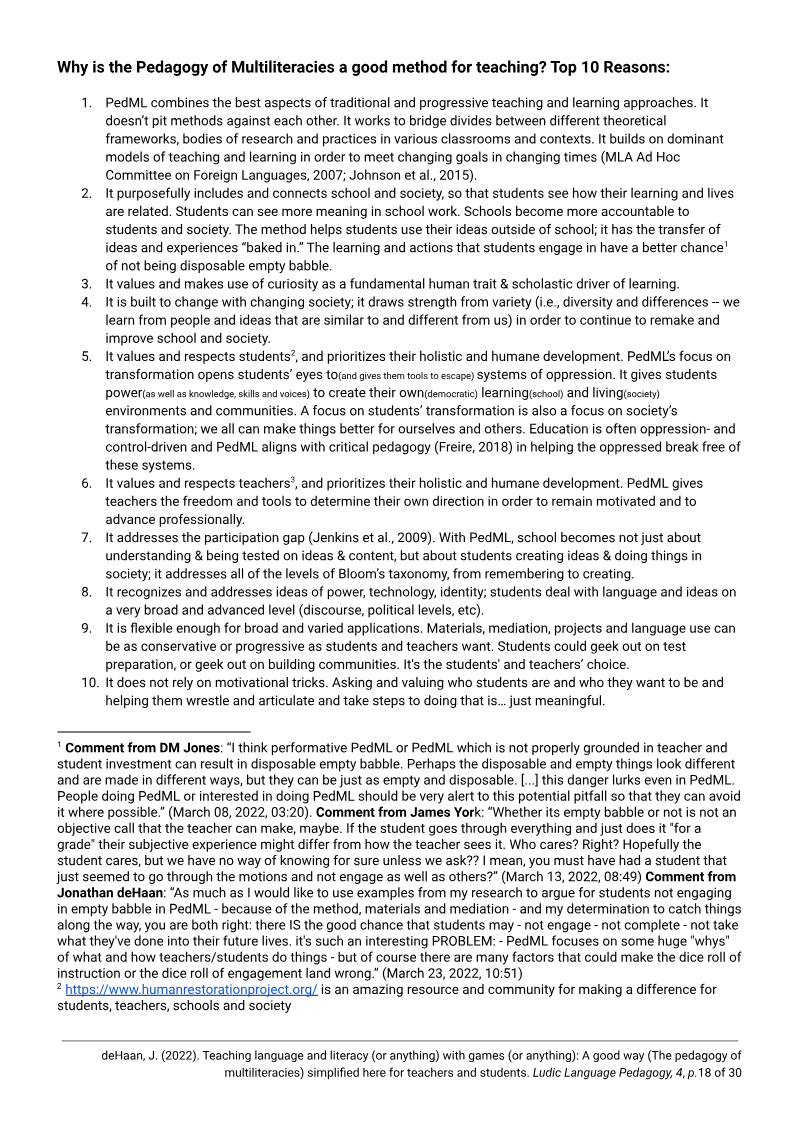

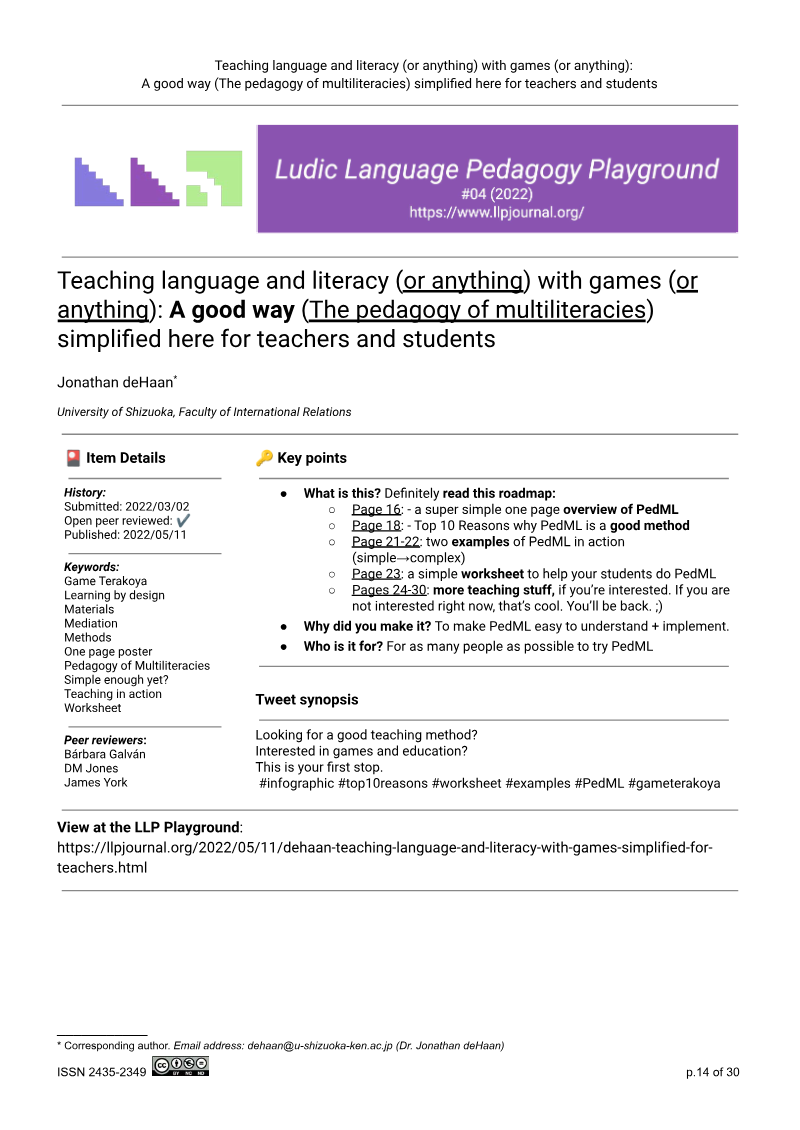
Teaching Language and Literacy with Games: The Pedagogy of Multiliteracies
The Pedagogy of Multiliteracies framework provides a transformative approach to language and literacy education by integrating digital games into the classroom to foster student agency and critical thinking.
- The Pedagogy of Multiliteracies framework replaces rote memorization with digital games to foster student agency and critical thinking.
- The instructional model follows a four-stage process: situated practice, overt instruction, critical framing, and transformed practice.
- Learning outcomes are achieved by connecting academic content to students' personal identities and broader societal contexts.
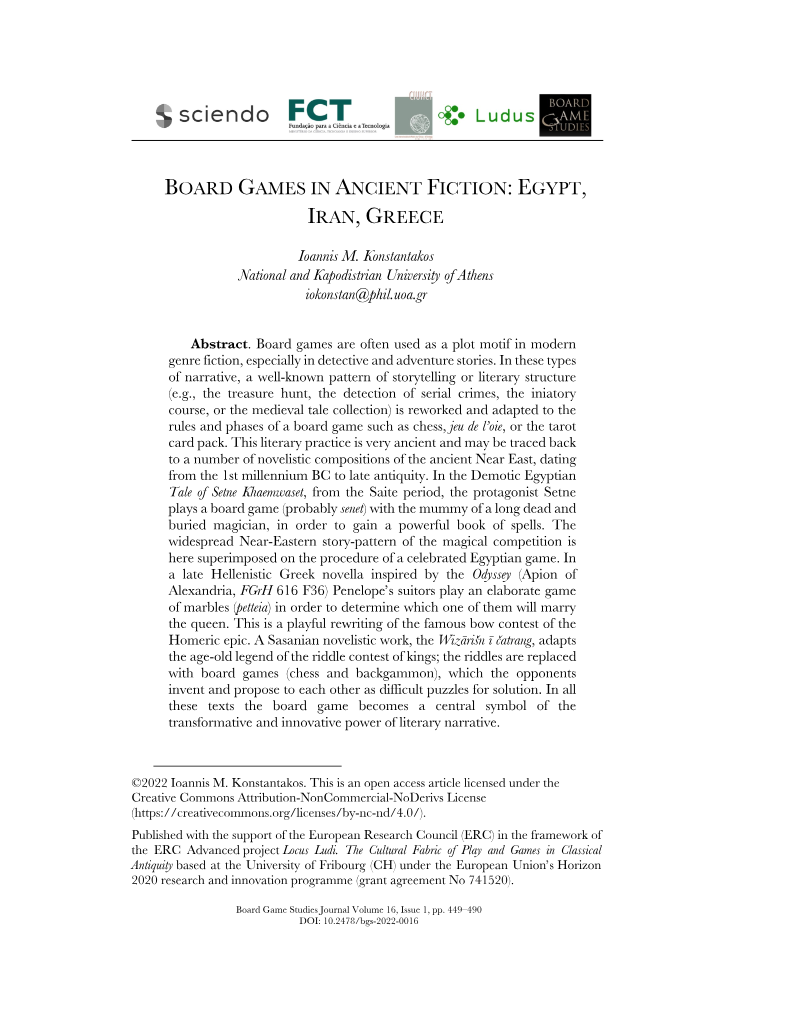
Board Games in Ancient Fiction: Egypt, Iran, Greece
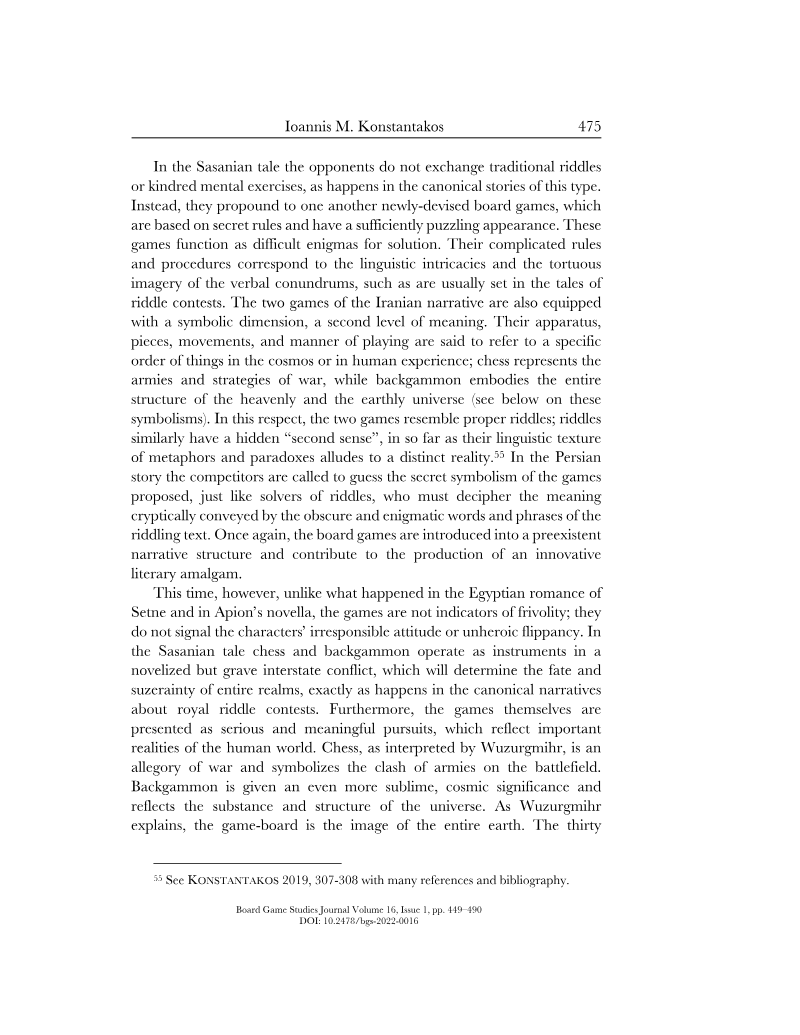
Konstantakos's study argues that board games have served as a structuring device in narrative since antiquity, and that this relationship between games and literature has long been mutually productive.
- The essay argues that board games have served as a structuring device in narrative since antiquity, a relationship between games and literature that has long been mutually productive, with the board game becoming a central symbol of narrative's transformative and innovative power.
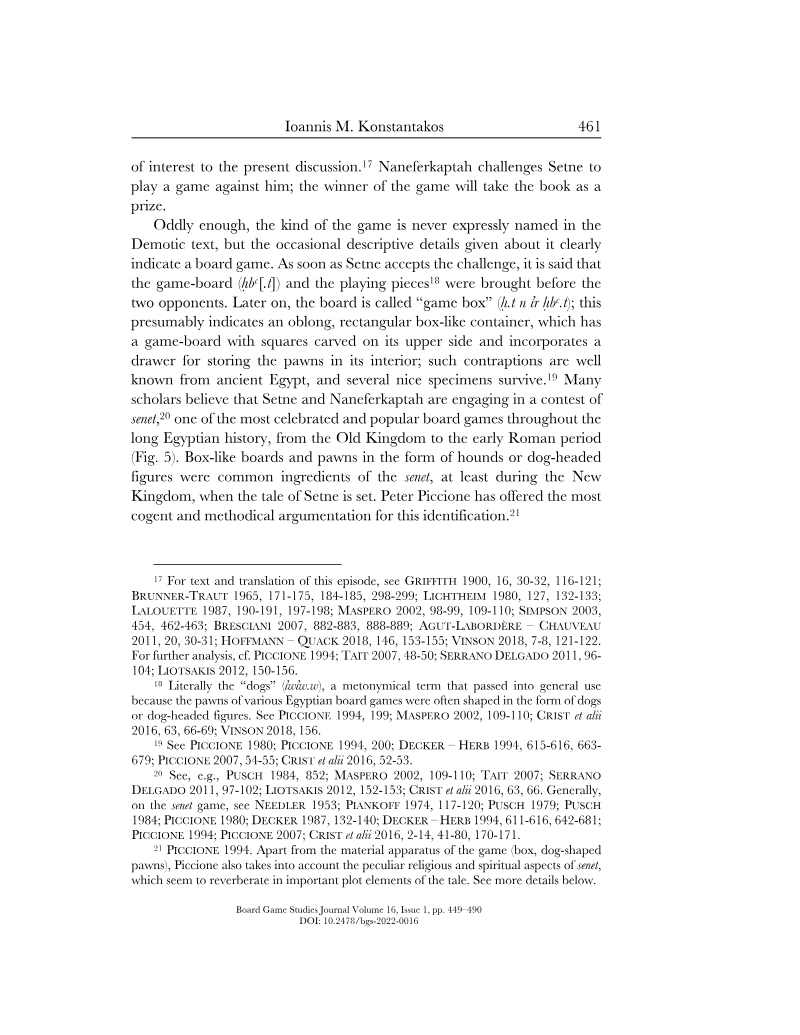
- The central case is the Egyptian Tale of Setne Khaemwaset, where a contest between two wizards is staged as a game of senet (likely, though not explicitly named), and winning a round enables a damaging spell so that the game's mechanics directly drive magical attack and mirror the protagonist's fate.
- The author reads the Setne tale as fusing the ancient Near Eastern contest-of-magicians folktale with a board game while stripping away political stakes, leaving self-interested rivals whose irresponsible magic brings personal ruin; the senet's funerary and netherworld symbolism reinforces this reading.
Current Issues of Sustainability in Esports
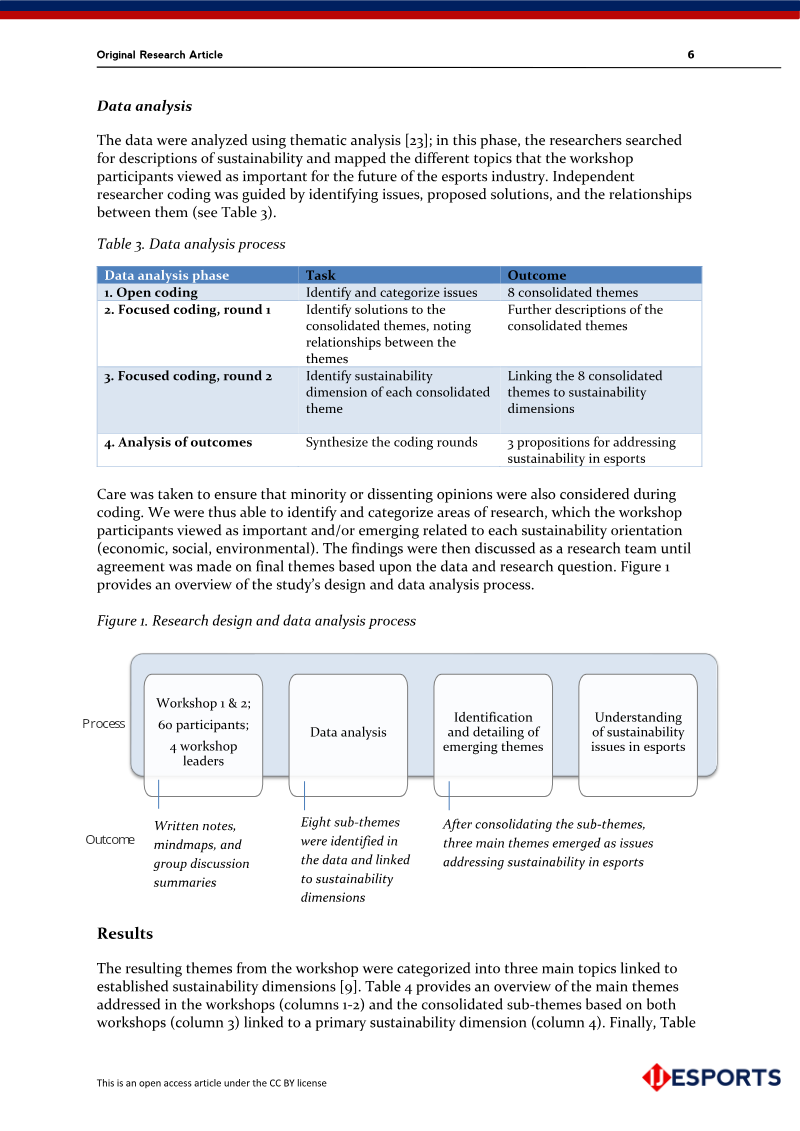
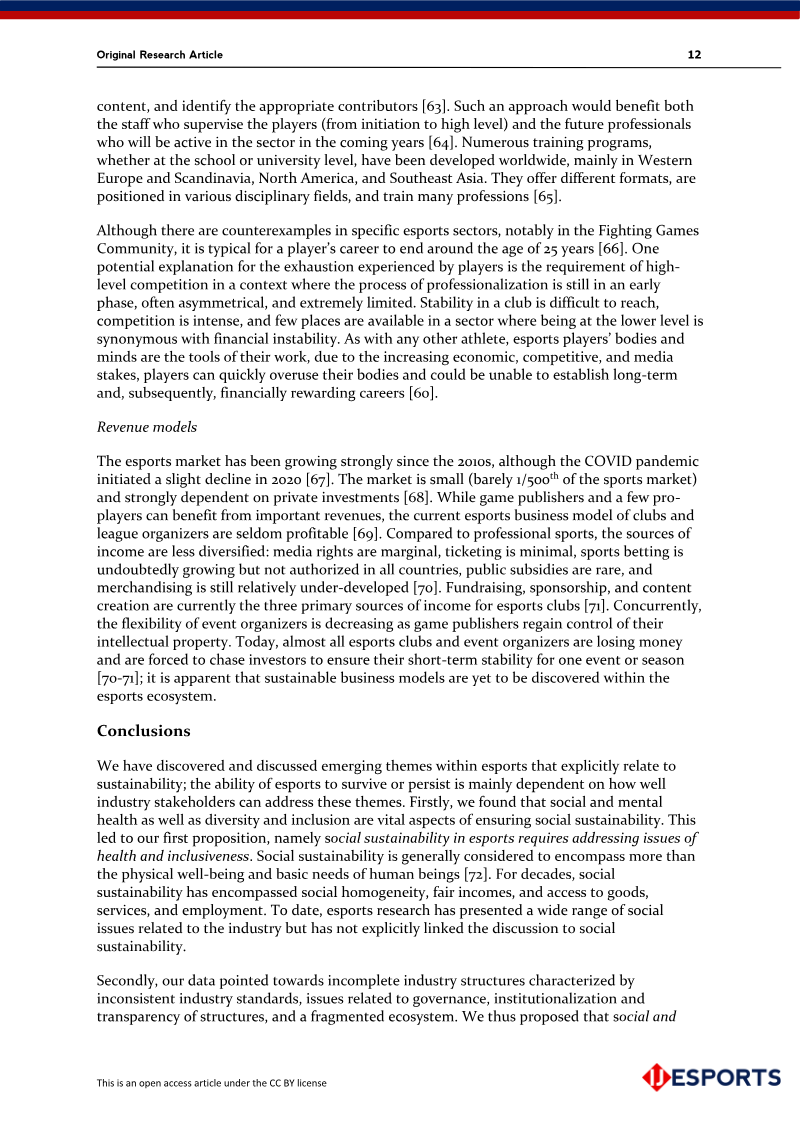
The study examines sustainability in esports across social, economic, and environmental dimensions, drawing on two workshops held in November 2019 (before COVID-19) with 64 participants from academia and industry.
- The report identifies social sustainability as the most pressing concern in esports, with three critical themes: health and inclusiveness, an incomplete industry structure, and an immature business logic.
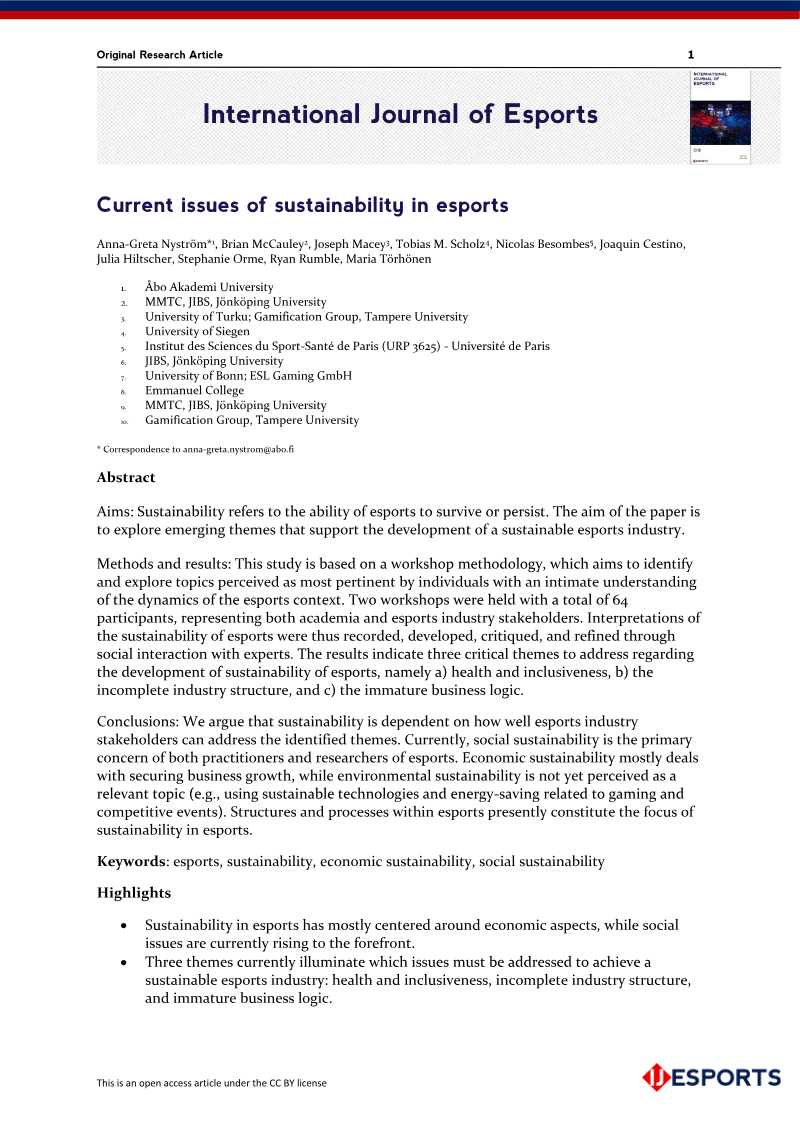
- Women make up only about 6% of competitive esports scenes, and BIPOC, older, disabled, and transgender or non-binary players are similarly underrepresented.
- Player careers typically end around age 25, reflecting intense competition, burnout, physical and mental strain, and unstable club employment.
Composing the Hero: Musical Gender Construction of Fantasy RPG Heroes
Musical scores in fantasy role-playing games serve as critical tools for constructing gendered heroic identities, functioning as a bridge between narrative intent and player experience.
- Video game scores utilize established semiotics from film and opera to reinforce gendered stereotypes, with composers intentionally or inadvertently aligning musical themes with traditional narrative tropes of heroism.
- In God of War (2018), Kratos' theme uses aggressive brass, low strings, and heavy percussion to reinforce 'militarized masculinity,' triggering during active combat to force players to internalize his heroic actions as masculine.
- Aloy’s theme in Horizon: Zero Dawn (2017) employs a cello and mezzo-soprano voice to evoke 'feminine' emotionality and suffering, contrasting with the hypermasculine, action-oriented musical cues of Kratos.
Game Loops, Game Design Loops, Game Terakoya Loops and Ludic Language Pedagogy Loops
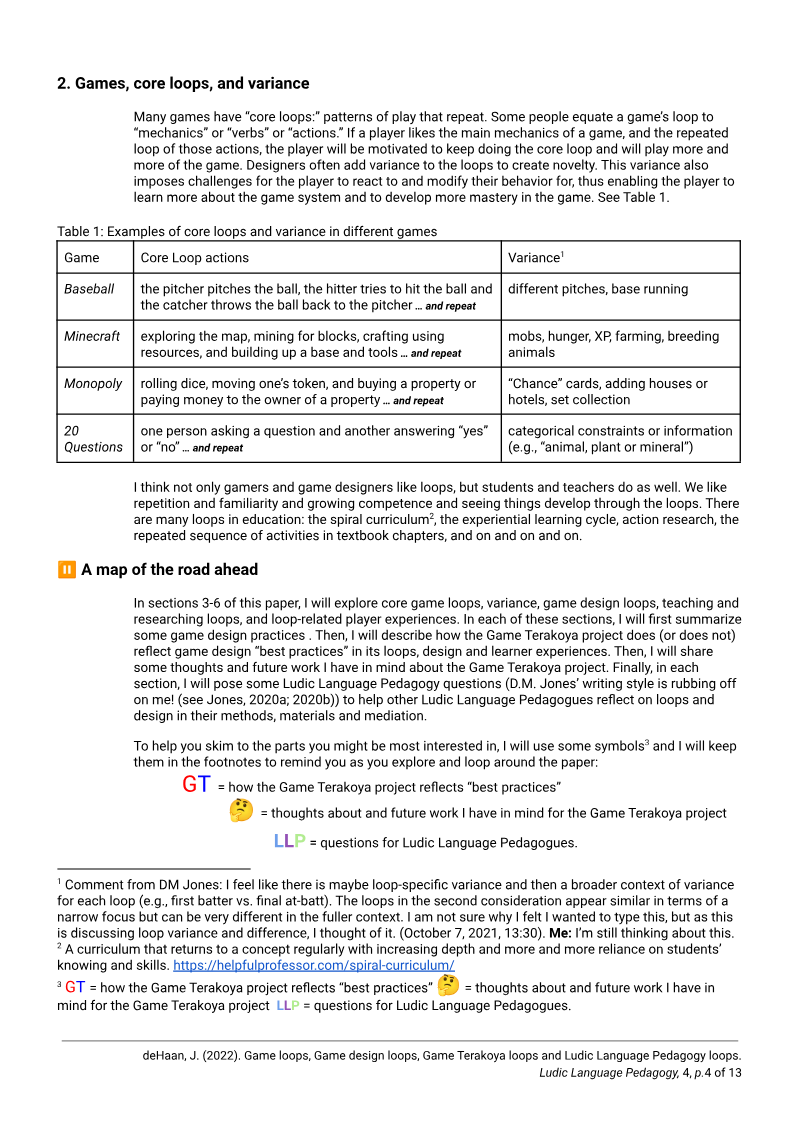
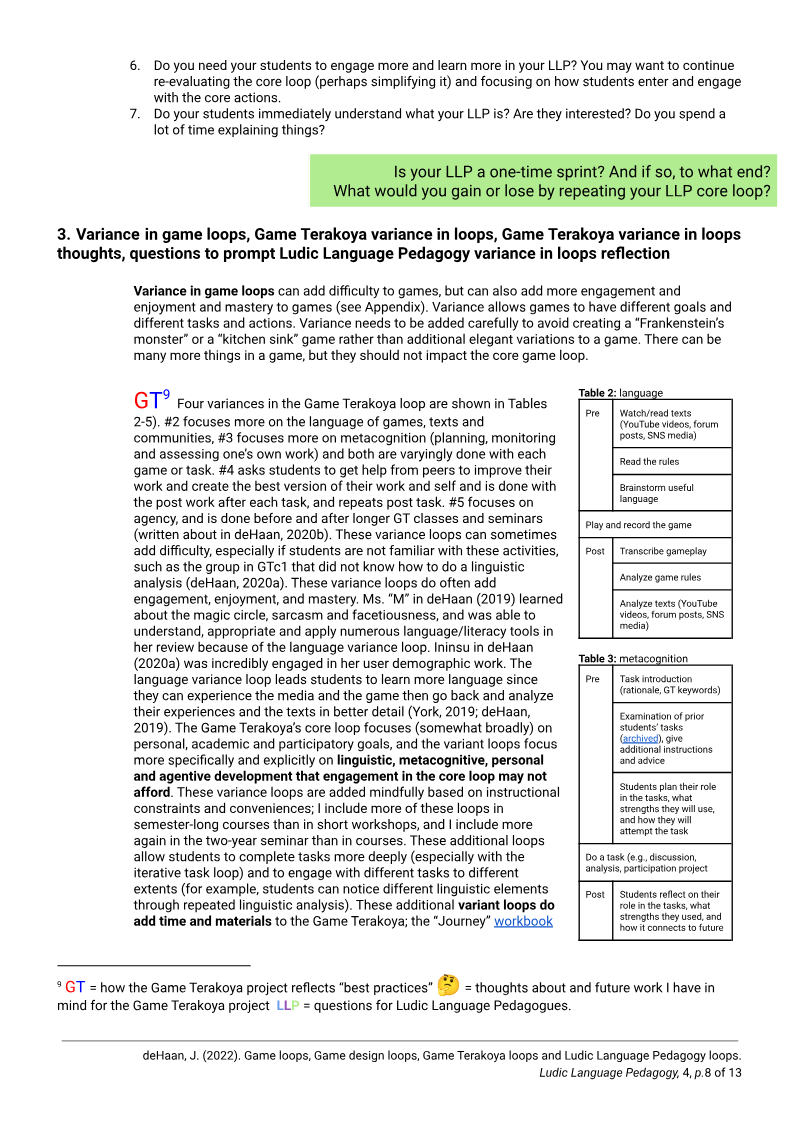
Game design principles centered on iterative loops offer a robust framework for enhancing language pedagogy and professional educational practice.
- Effective pedagogical design mirrors game development by utilizing iterative loops that prioritize consistent engagement, reflection, and continuous refinement to build student mastery.
- The Game Terakoya project implements a structured five-stage cycle consisting of choosing, playing, discussing, analyzing, and reflecting to facilitate learning.
- Educators should adopt a prototyping mindset by starting with simple core loops and using ongoing student feedback to iteratively refine educational materials over time.
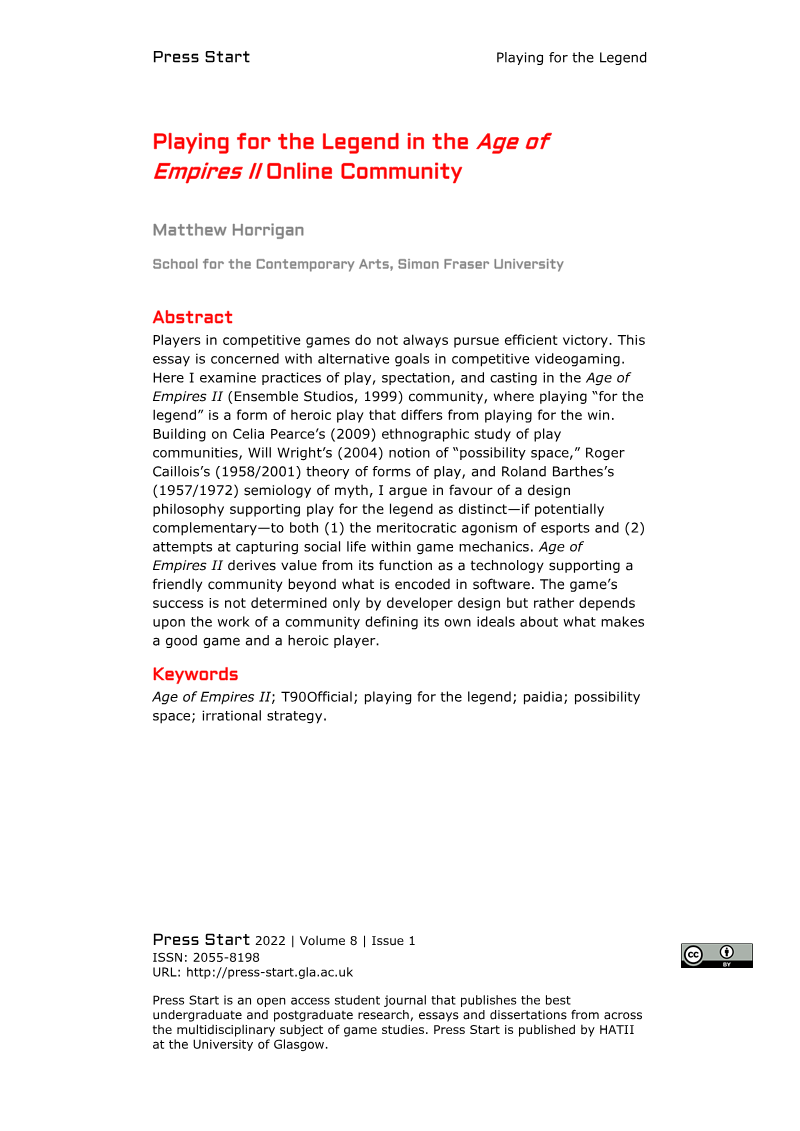
Playing for the Legend in the Age of Empires II Online Community
The Age of Empires II online community demonstrates a distinct departure from the rigid meritocracy typically associated with professional esports.
- The Age of Empires II (AoE2) community distinguishes between 'esports' meritocracy and 'playing for the legend,' a form of heroic play that prioritizes ostentatious, irrational strategies over efficient victory.
- Community-driven spectation and casting, notably through figures like T90Official, transform amateur matches into social events, allowing players to build reputations and lore independent of professional tournament circuits.
- The AoE2 community actively shapes the game's value through a 'social metagame' that includes custom mapmaking, meme-based humor, and house rules, demonstrating that player-defined ideals can supersede original developer design.
Journal of Games, Self, & Society: Vol. 3, No. 1
Game design serves as a transformative medium for fostering empathy, resilience, and social connection, particularly among adolescents navigating critical developmental stages.
- Intentional game design, characterized by ethical mechanics and pedagogical alignment, transforms interactive media into essential infrastructure for fostering empathy, resilience, and social connection.
- Games like 'Resilience' demonstrate that developers can address complex humanitarian issues by using science fiction settings to abstract real-world trauma, thereby avoiding exploitation while maintaining systemic accuracy.
- The concept of 'Digital Biedermeier' in titles like 'Animal Crossing: New Horizons' frames domestic, care-based gameplay as a vital sanctuary that provides players with agency and communal support.
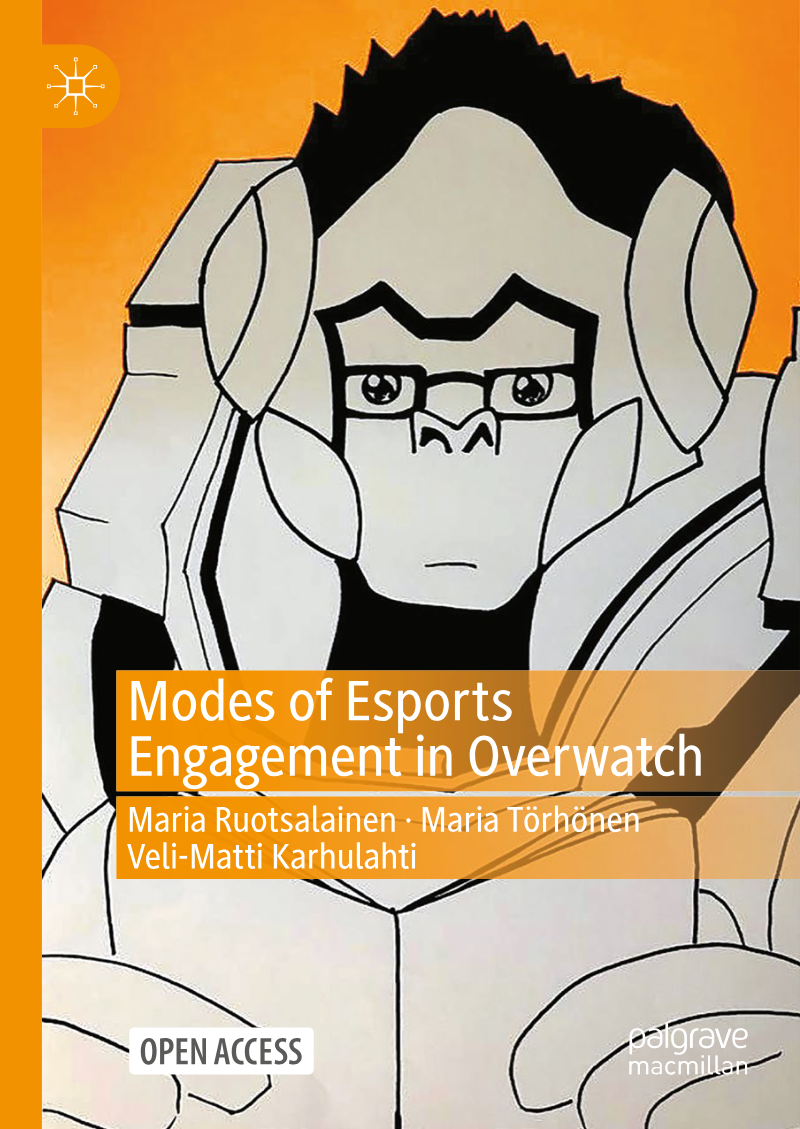
Modes of Esports Engagement in Overwatch
This analysis explores the multifaceted impact of Overwatch on contemporary gaming culture, positioning the title as a complex intersection of competitive esports, transmedia entertainment, and corporate-controlled digital space.
- Overwatch players who engage with esports spend significantly more money and time on gaming than non-esports players.
- Blizzard Entertainment frequently alters Overwatch's core mechanics and hero designs, which forces players to constantly adapt their interpretative agency and gameplay strategies.
- The Overwatch community exhibits a deep rift between casual and competitive players, often fueled by developer-led moderation tactics and conflicting expectations for the gameplay experience.
Writers
Games and companies
Games