Key insights
6 slides
Industry Landscape
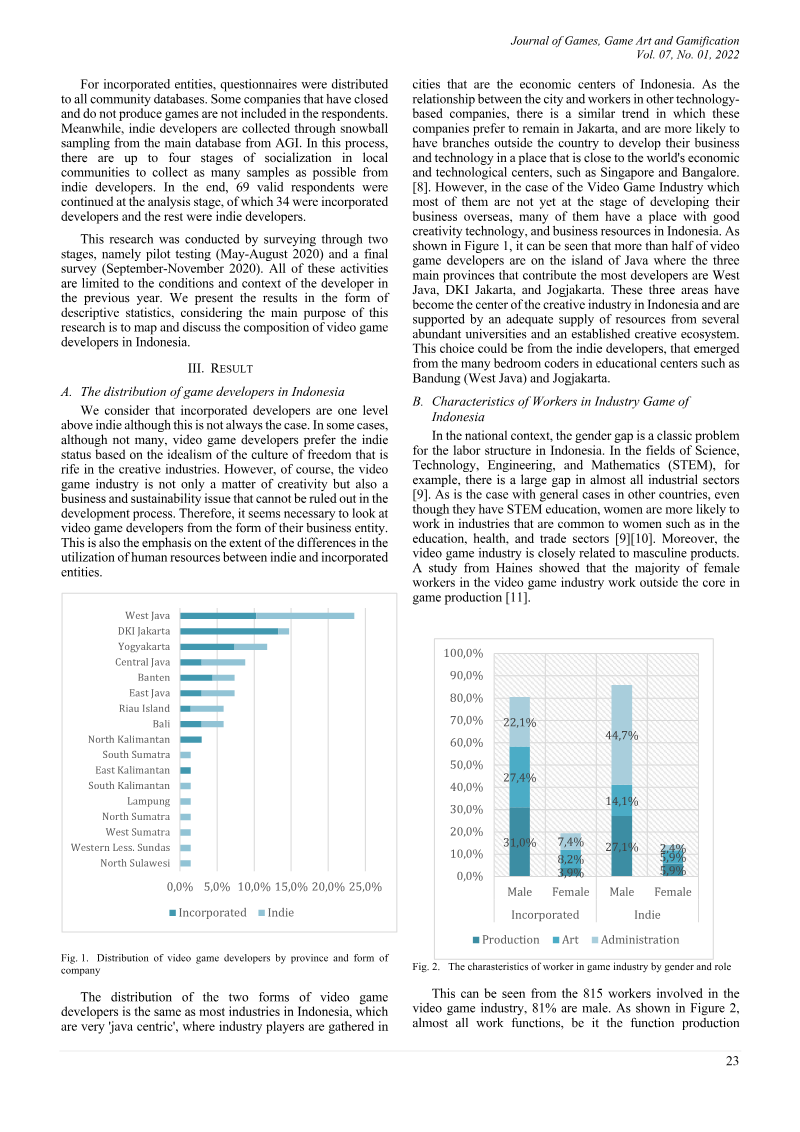
The Indonesian video game industry is concentrated on the island of Java.
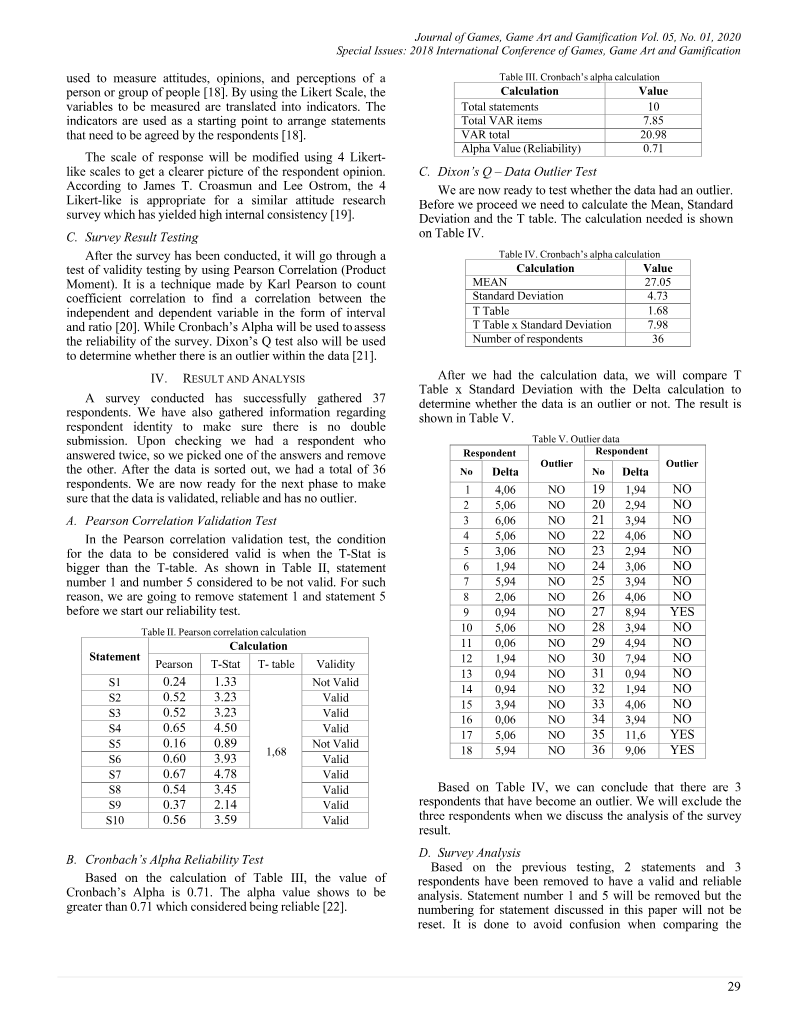
The study analyzed 69 developers, split between 34 incorporated and 35 indie entities.
1 / 6
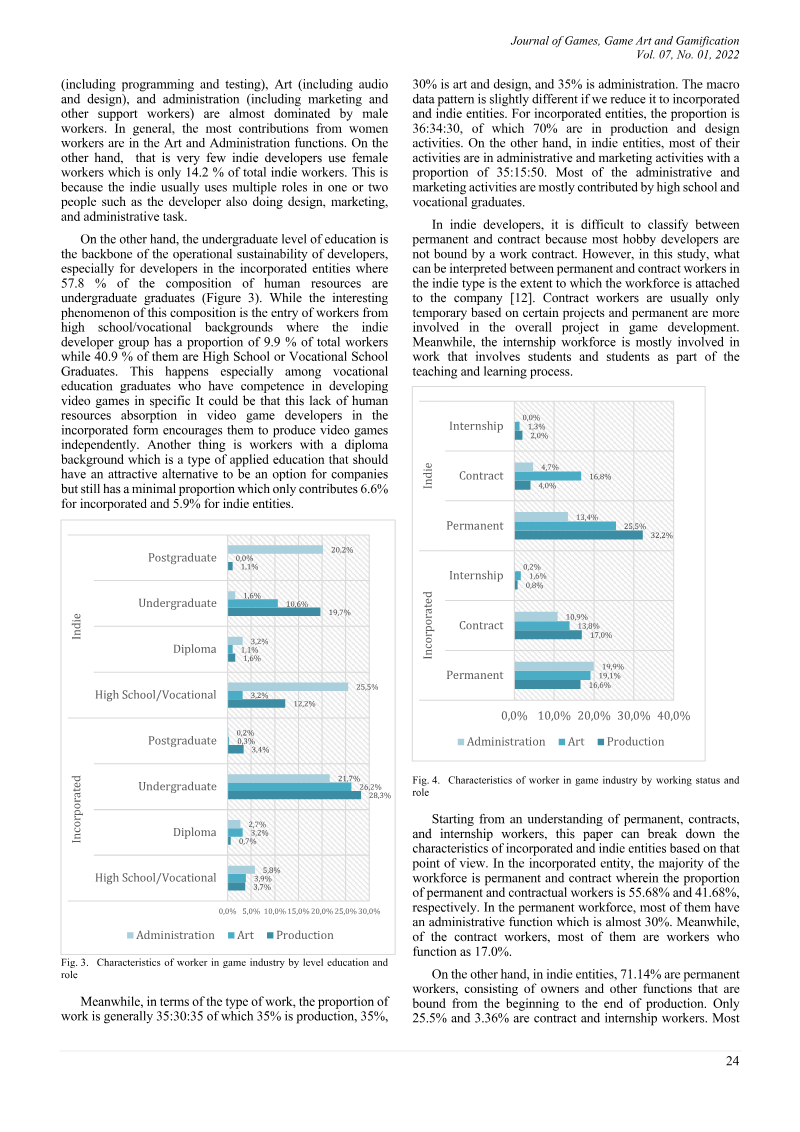
- 01The Indonesian game industry is heavily male-dominated, with men comprising 81% of the total workforce and women primarily restricted to administrative or art-related roles.See it on page 2
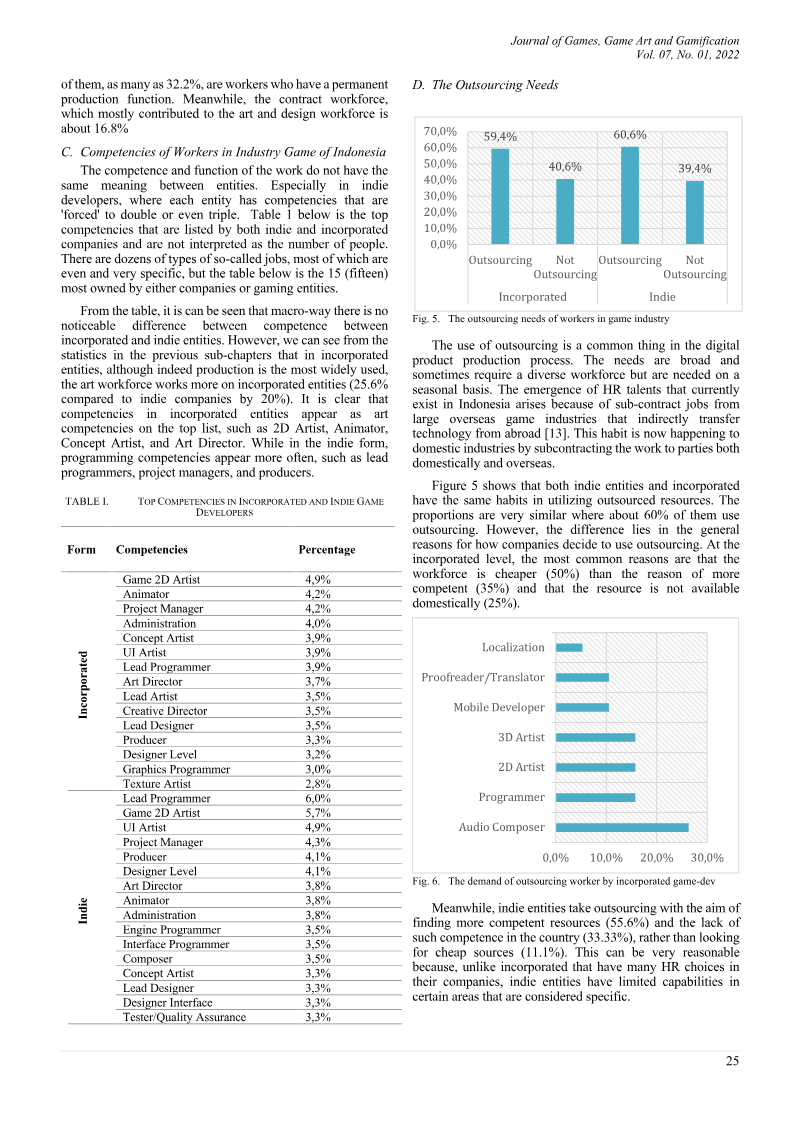
- 02A significant educational divide exists: 57.8% of incorporated firm employees hold undergraduate degrees, while 40.9% of indie developers are high school or vocational school graduates.See it on page 3
- 03Approximately 60% of both incorporated and indie developers utilize outsourced labor, primarily for art, design, and technical production roles.See it on page 4
- 04Incorporated firms outsource labor primarily to achieve cost-efficiency, whereas indie developers outsource to acquire specialized competencies missing from their internal teams.See it on page 4
- 05The indie sector serves as a critical labor outlet for vocational and high school graduates who are not being absorbed by larger, incorporated game companies.See it on page 3
- 06The Indonesian video game industry is geographically concentrated on the island of Java, with the study based on a sample of 69 developers split nearly evenly between incorporated and indie entities.See it on page 2
Ask AI about this report
Summary
This study examines the human resource composition and operational differences between incorporated and independent (indie) video game developers in Indonesia. By analyzing data from 69 developers—34 incorporated and 35 indie—the research maps the industry’s labor landscape, focusing on educational backgrounds, gender distribution, employment status, and the utilization of outsourced labor. The findings highlight a significant structural gap between the two entities, noting that while the industry is heavily concentrated on the island of Java, the two groups diverge in how they recruit and manage talent.
A key finding is the disparity in educational attainment. Incorporated entities rely primarily on undergraduate degree holders, who make up 57.8% of their workforce. Conversely, indie developers are more inclusive of high school and vocational school graduates, who represent 40.9% of their staff. This suggests that the limited absorption of vocational talent by larger, incorporated firms may be a primary driver for the growth of the indie sector, as these workers turn to independent development to apply their skills. Furthermore, the industry remains male-dominated, with 81% of the total workforce being male; women are largely relegated to administrative and art-related roles rather than core production or programming.
Both entity types exhibit a high reliance on outsourcing, with approximately 60% of developers in both categories utilizing external labor. However, their motivations differ: incorporated firms prioritize cost-efficiency, whereas indie developers outsource primarily to acquire specialized competencies that are otherwise unavailable in-house. In both cases, the demand for outsourced talent is concentrated in art, design, and specific technical production roles. The study concludes that the Indonesian video game industry requires a more nuanced government approach to education, one that supports both the high-level needs of incorporated corporations and the diverse, creative, and technical requirements of the indie developer community.