Game Culture reports and market data
Documents
Infrastructures of Play: Labor, Materiality, and Videogame Education
Videogame education must evolve beyond a focus on design and career preparation to include a critical examination of the industry’s broader material and ethical impacts.
- Videogame education must move beyond a focus on expressive artifacts to teach students about the industry's role as an extractivist system with significant environmental and human costs.
- The 'illusion of immateriality' surrounding digital devices masks the reality that hardware—such as iPads, consoles, and GPUs—relies on finite, non-renewable resources extracted over geological time.
- Downstream e-waste management is hazardous, as evidenced by the Agbogbloshie slum in Ghana, where toxic dioxins and PCBs from discarded electronics contaminate the local food chain, with eggs exceeding European food safety limits by 220 times.
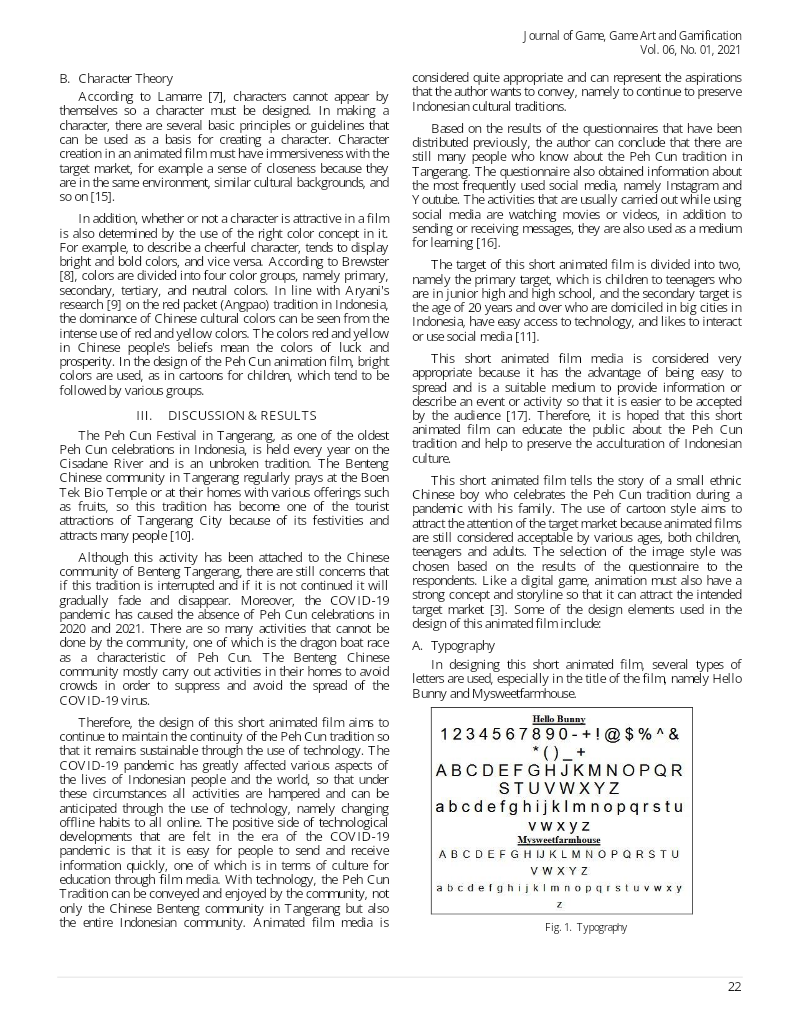
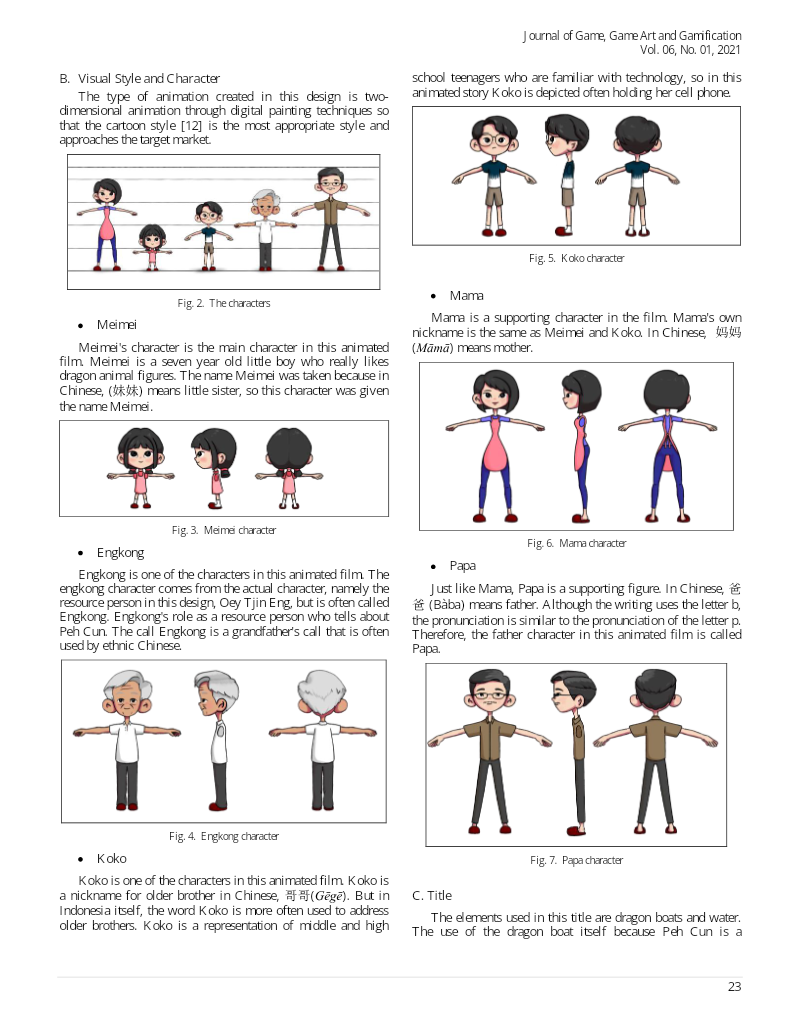
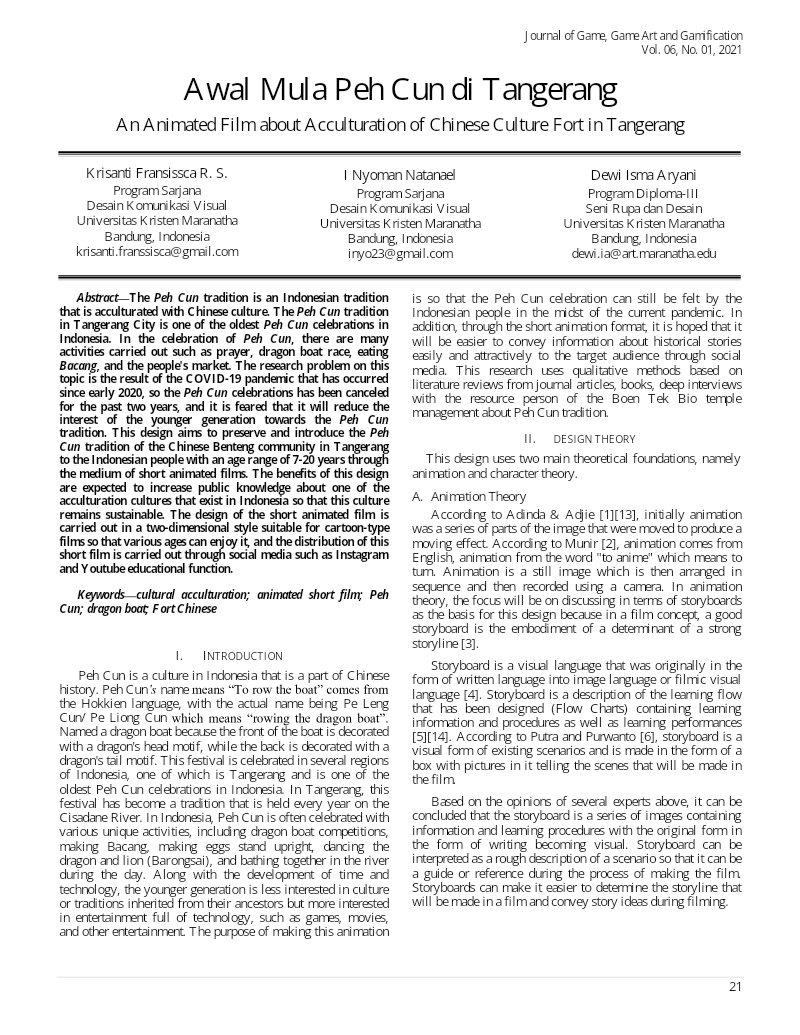
Awal Mula Peh Cun di Tangerang: An Animated Film about Acculturation of Chinese Culture
The Peh Cun festival, a long-standing tradition of the Chinese Benteng community in Tangerang, Indonesia, has faced significant disruption due to the COVID-19 pandemic.
- The Peh Cun festival project utilizes a 2D animated short film to preserve Chinese Benteng cultural traditions in Tangerang, Indonesia, following the cancellation of public celebrations in 2020 and 2021 due to COVID-19.
- The film is strategically designed to engage a target demographic of 7 to 20-year-olds by using a cartoon aesthetic and a narrative focused on a young boy and his family.
- Historical accuracy was maintained through qualitative research and interviews with management from the Boen Tek Bio temple.
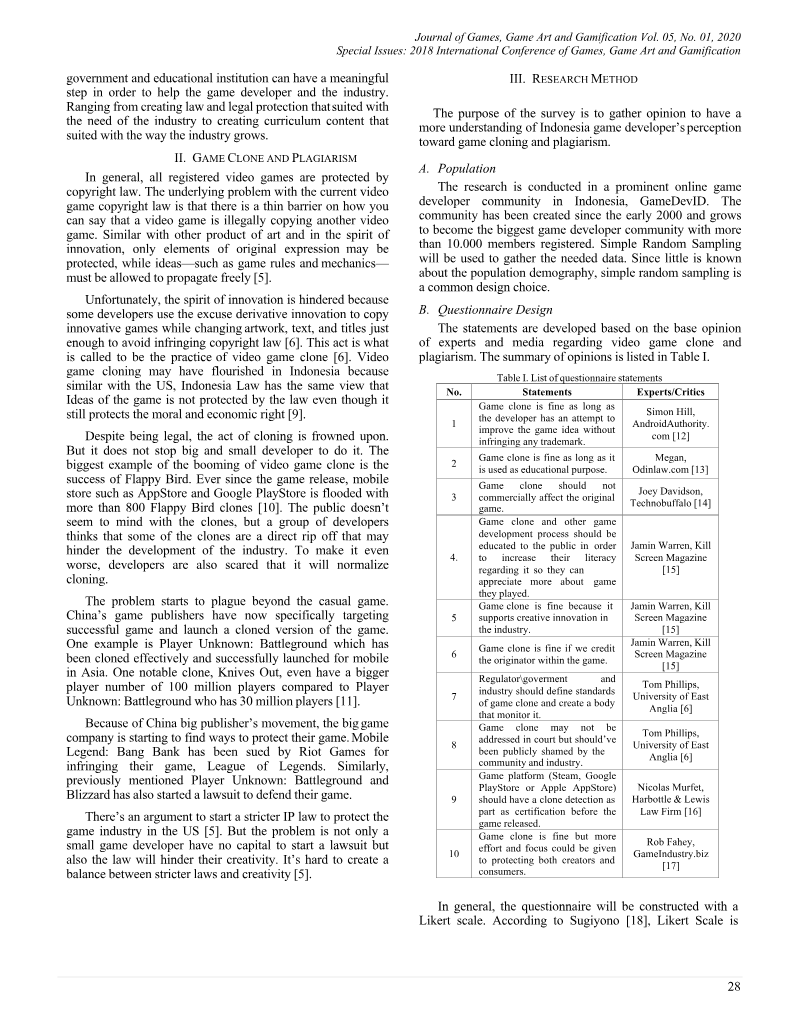
A Preliminary Survey of Game Developer's Perception on Game Clone: Indonesia
This study examines the perceptions of Indonesian game developers regarding the practice of game cloning—the act of replicating game mechanics or ideas without necessarily infringing on trademarked assets.
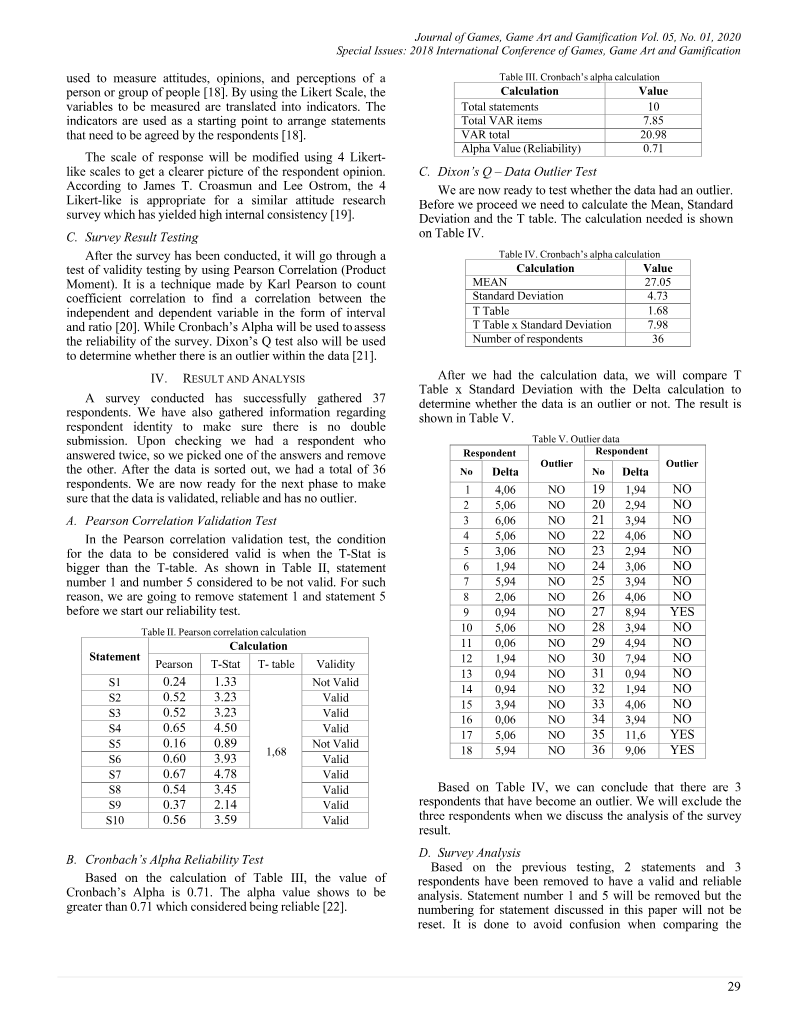
- Indonesian game developers generally accept game cloning if the practice is used for non-profit, educational purposes or does not harm the commercial viability of the original title.
- There is a strong industry consensus that current protections against the negative consequences of cloning are insufficient for both creators and consumers.
- Developers advocate for platform providers, such as app stores, to implement more rigorous detection and certification processes to curb unoriginal copying.
Reintroducing Indonesian Traditional Games through an Interactive Multiplayer Table Game: Gobak Sodor
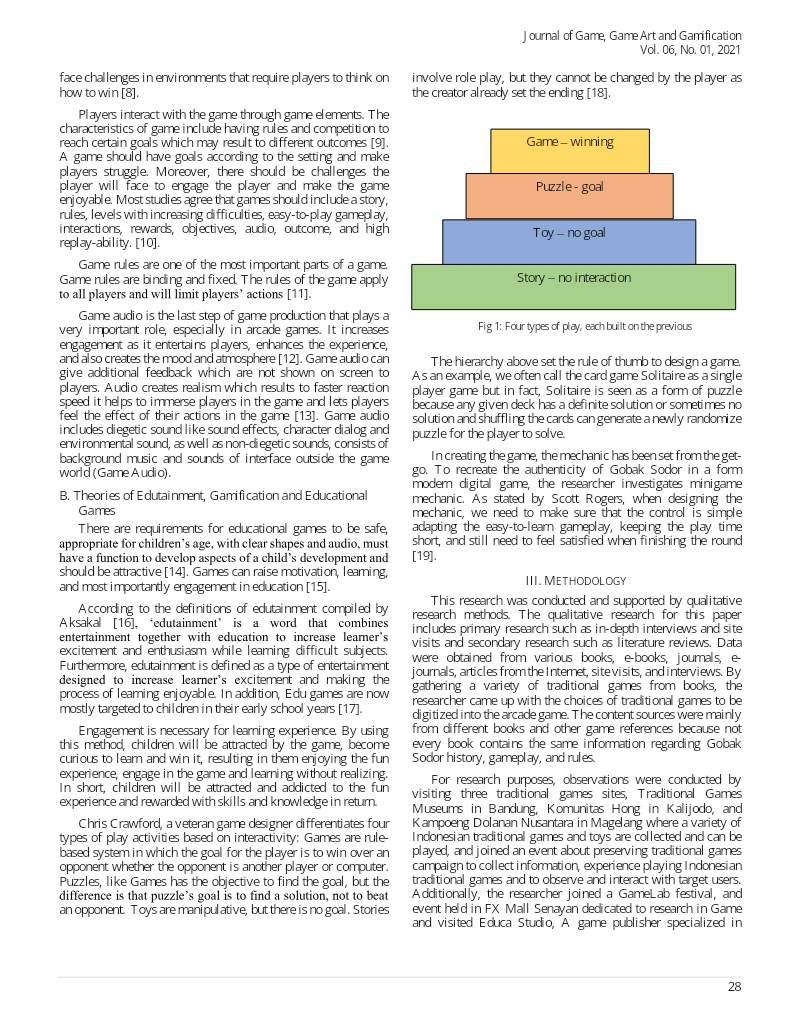
This project addresses the decline of traditional Indonesian games among Generation Z, specifically children aged 9–12, who are increasingly reliant on digital technology and sedentary entertainment.
- The project successfully revitalized the traditional Indonesian game Gobak Sodor for children aged 9–12 by integrating physical movement with digital multiplayer arcade hardware.
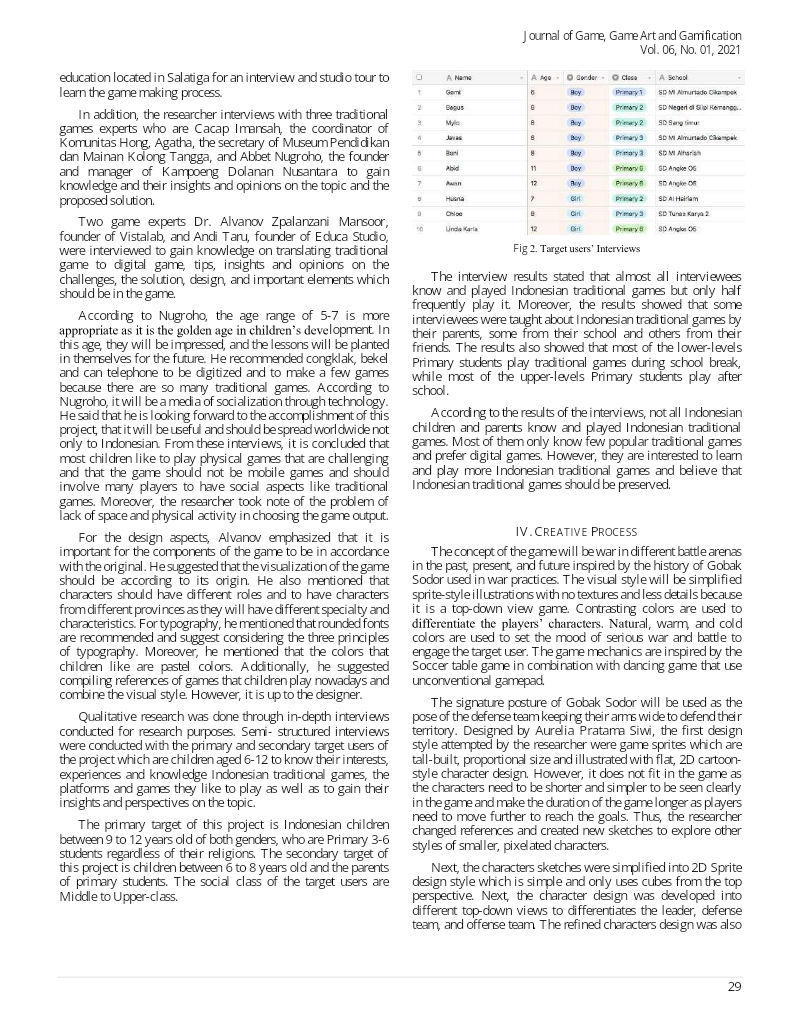
- User research identified that the decline in traditional game participation among Gen Z is primarily driven by a lack of accessible space and insufficient early exposure rather than a lack of awareness.
- Expert consultation established that traditional games remain relevant to digital natives only when they preserve original social and physical dynamics while adopting modern, simplified controls and high-contrast visual aesthetics.
Revitalizing Face-to-Face Local Gaming Experience through Mobile Mini Games
Excessive mobile device usage frequently contributes to the erosion of face-to-face social interaction, creating a need for digital tools that bridge the gap between entertainment and human connection.
- Testing of local multiplayer mini-games showed that 92% of participants felt the application successfully encouraged face-to-face communication during play.
- Market research indicates a strong demand for this category, with 52% of surveyed individuals expressing interest in mobile party games.
- Developing local multiplayer experiences using the Unity engine can effectively repurpose mobile devices as tools for social engagement rather than isolation.
Video Games as Tools for Education: Indonesia
Video games represent a significant, underutilized opportunity for educational advancement, offering powerful digital environments that facilitate learning through realistic simulations and interactive engagement.
- Video games offer untapped educational potential by using interactive simulations to teach critical thinking, problem-solving, and complex system modeling.
- The current lack of a unified research framework hinders progress, as existing studies focus on comparing games to traditional methods rather than analyzing effective design patterns.
- Successful educational game development requires the adoption of pedagogically informed design patterns that create a shared vocabulary between educators and game designers.
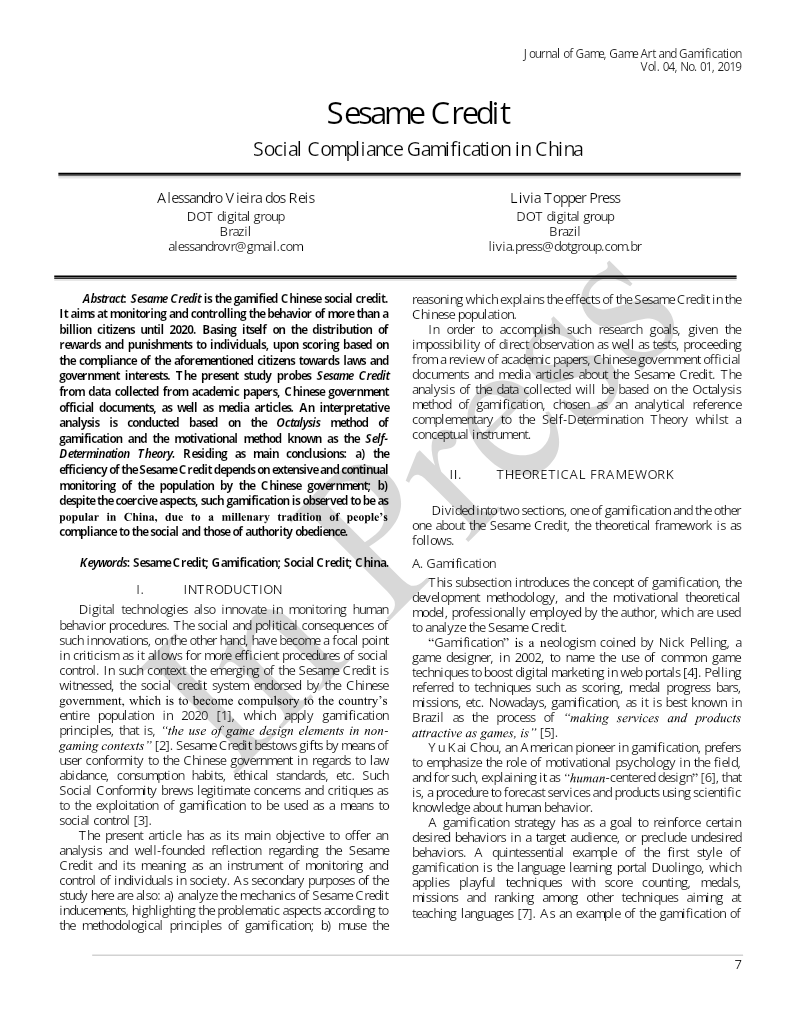
Sesame Credit: Social Compliance Gamification in China
Sesame Credit functions as a massive, gamified social control mechanism in China, designed to monitor and influence the behavior of over one billion citizens.
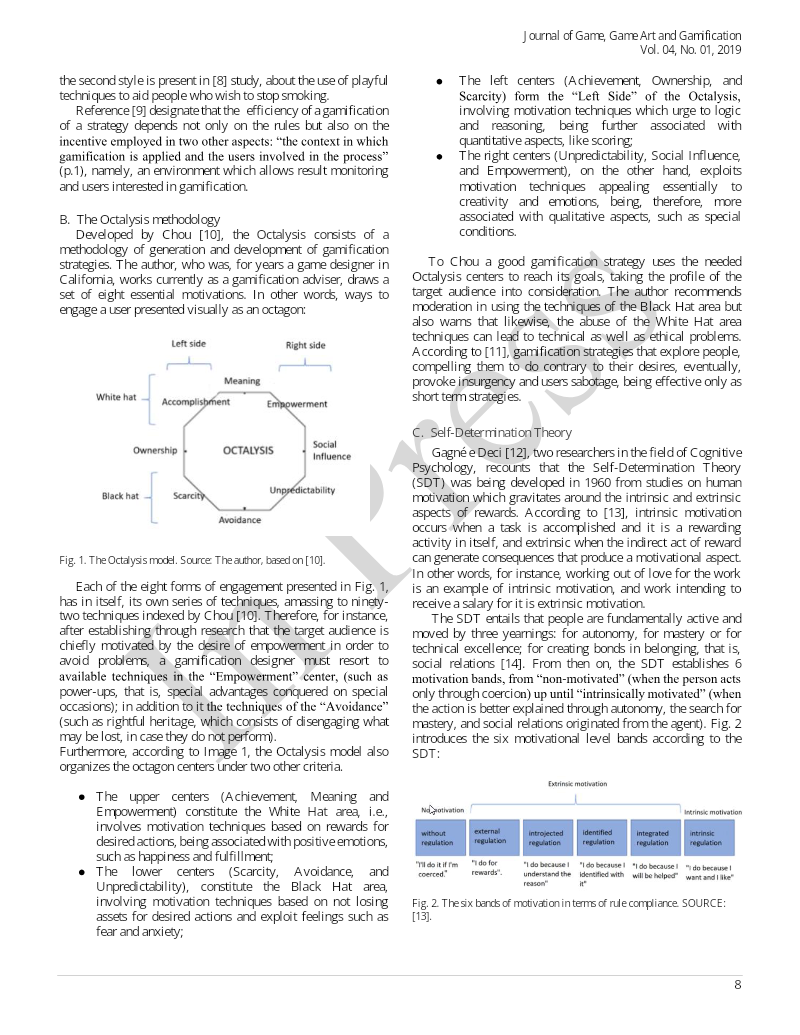
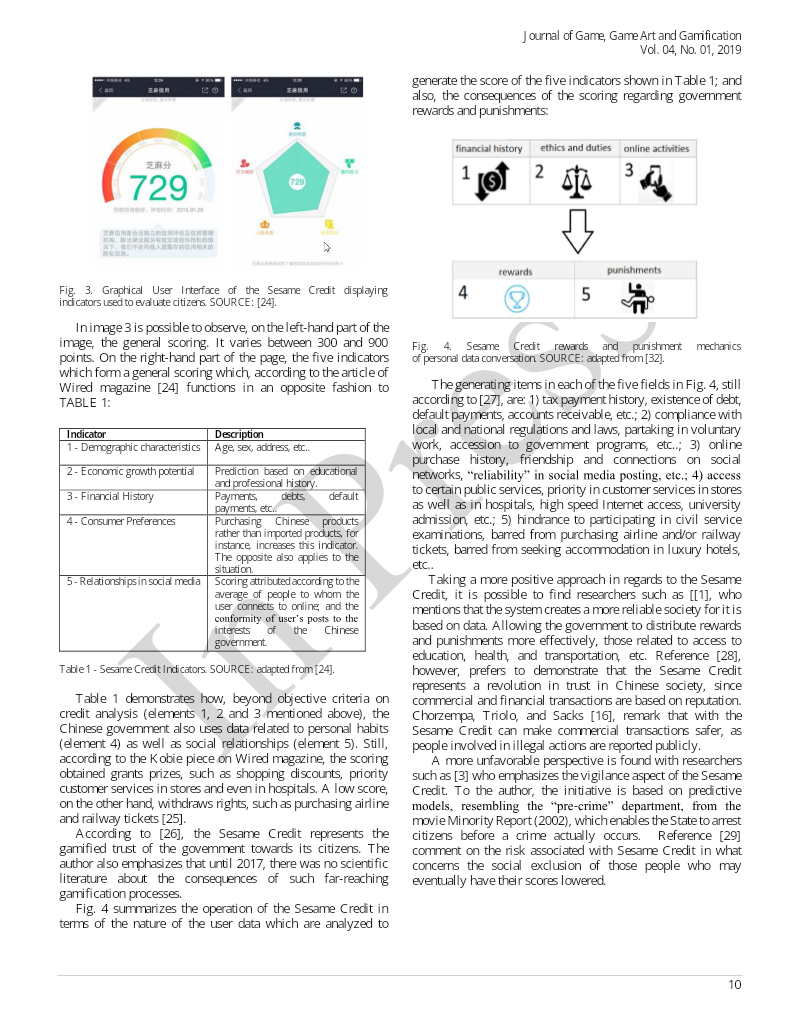
- Sesame Credit functions as a large-scale social control mechanism that monitors over one billion citizens by aggregating financial, legal, and social data into a score ranging from 300 to 900.
- The system utilizes gamification to drive behavioral modification, rewarding high scores with shopping discounts and priority services while punishing low scores with travel restrictions and social exclusion.
- Analysis using the Octalysis framework reveals the system relies on 'Black Hat' tactics, specifically scarcity and avoidance, to compel compliance through the fear of losing privileges.
Designing Wayang Kulit Purwa with Gatotkaca as the Character in Game
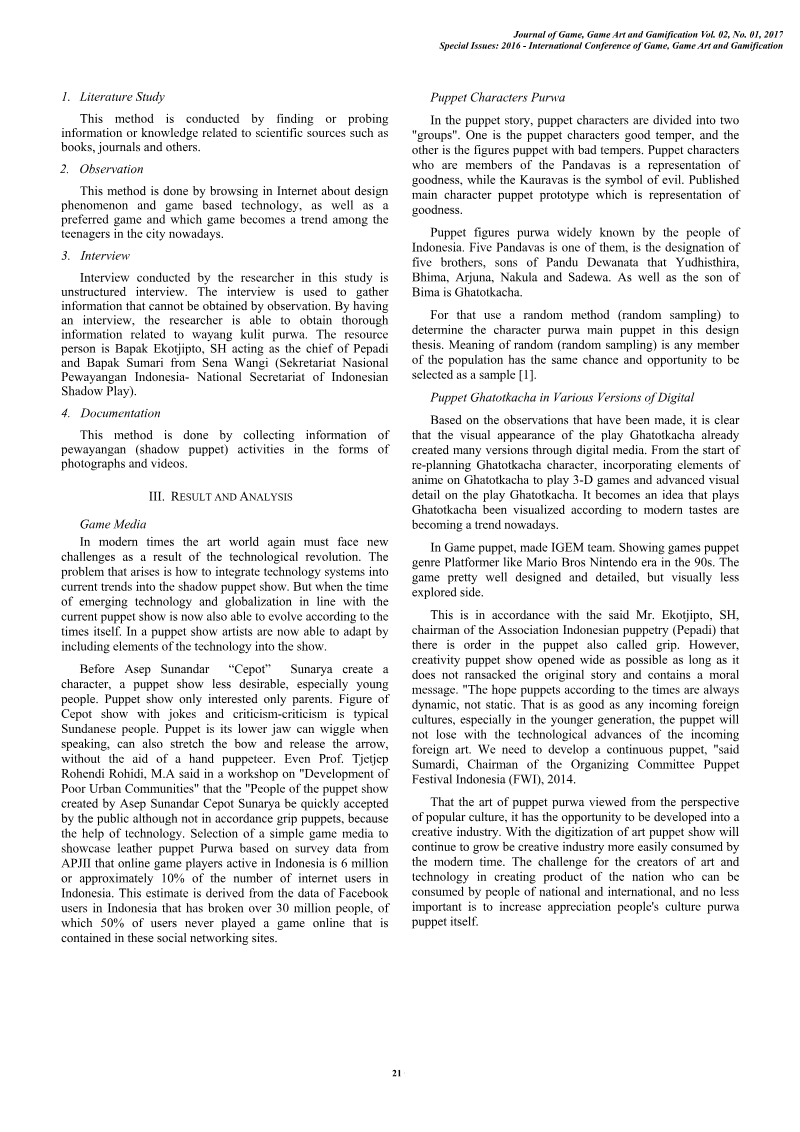
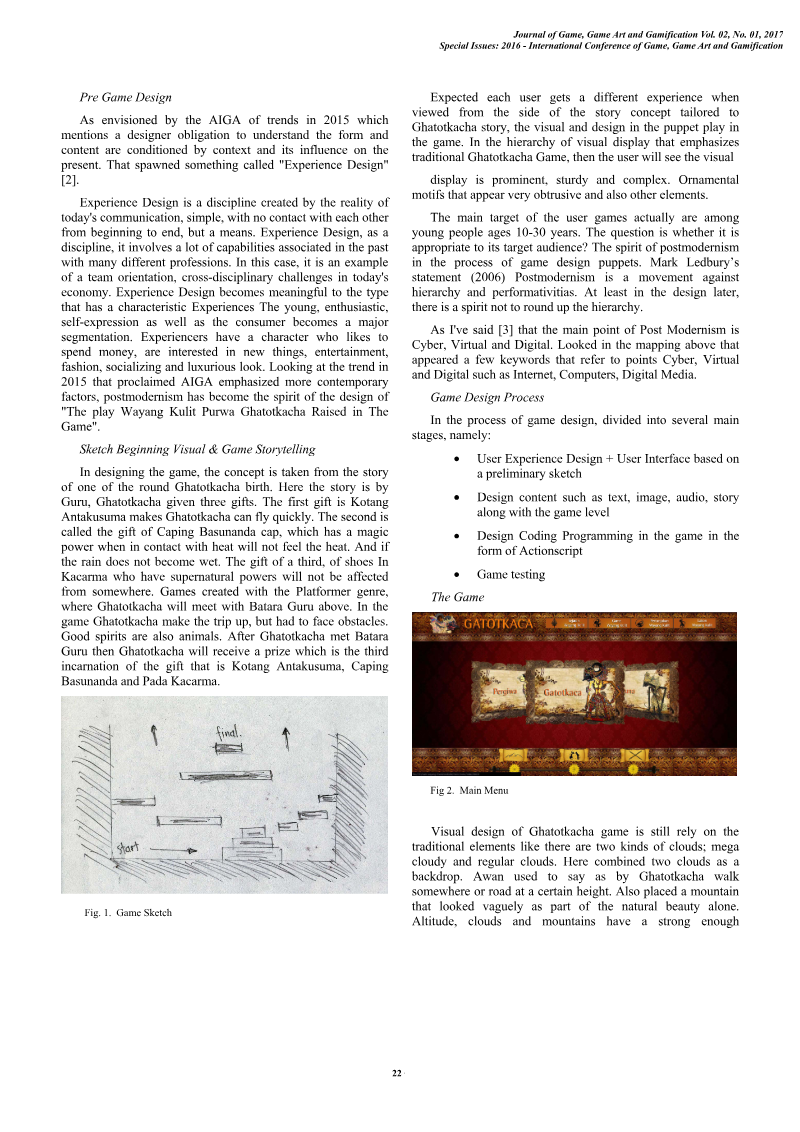
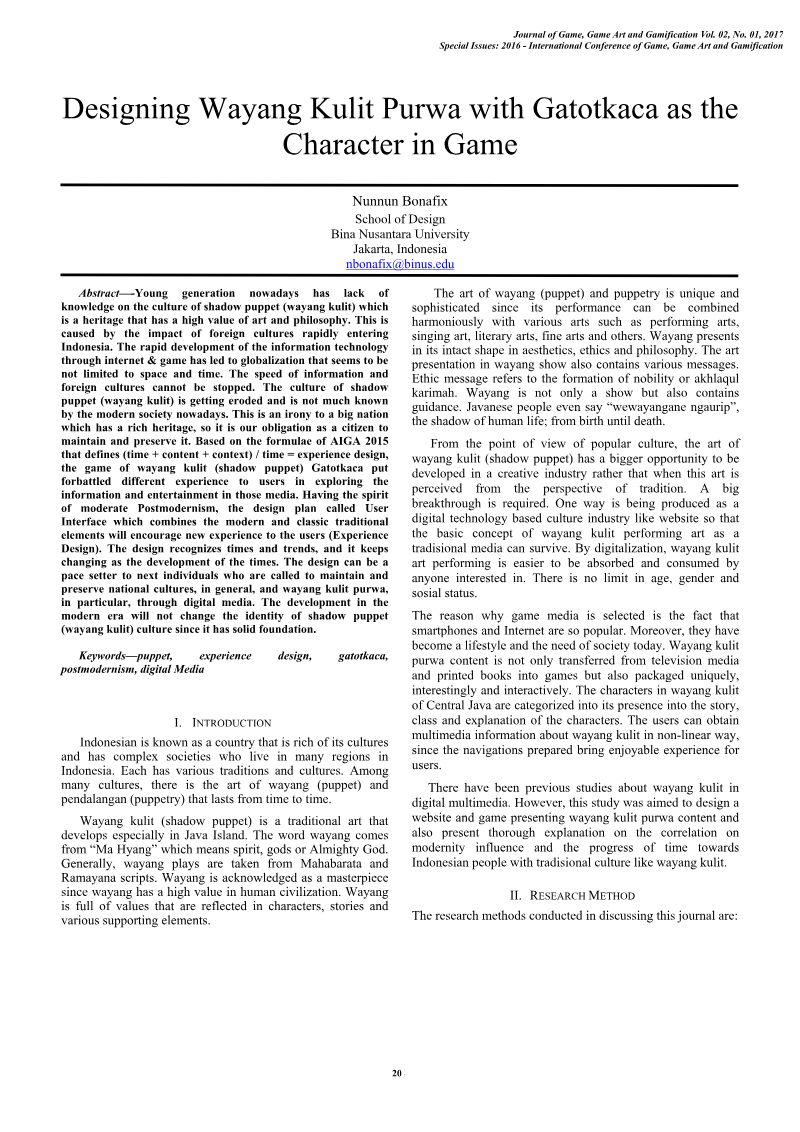
The primary objective of this study is to preserve Indonesian Wayang Kulit Purwa (shadow puppet) heritage by adapting it into a modern digital game format.
- Adapting traditional Wayang Kulit Purwa into a 2D platformer game effectively bridges the gap between Javanese cultural heritage and the preferences of users aged 10 to 30.
- Successful cultural preservation in digital media requires shifting from static User Interface design to a holistic Experience Design approach that incorporates interactive, non-linear storytelling.
- The design strategy leverages traditional motifs, such as specific mountain and cloud imagery, to maintain the aesthetic integrity of shadow puppetry within a modern gaming framework.
Girls and Assassin's Creed
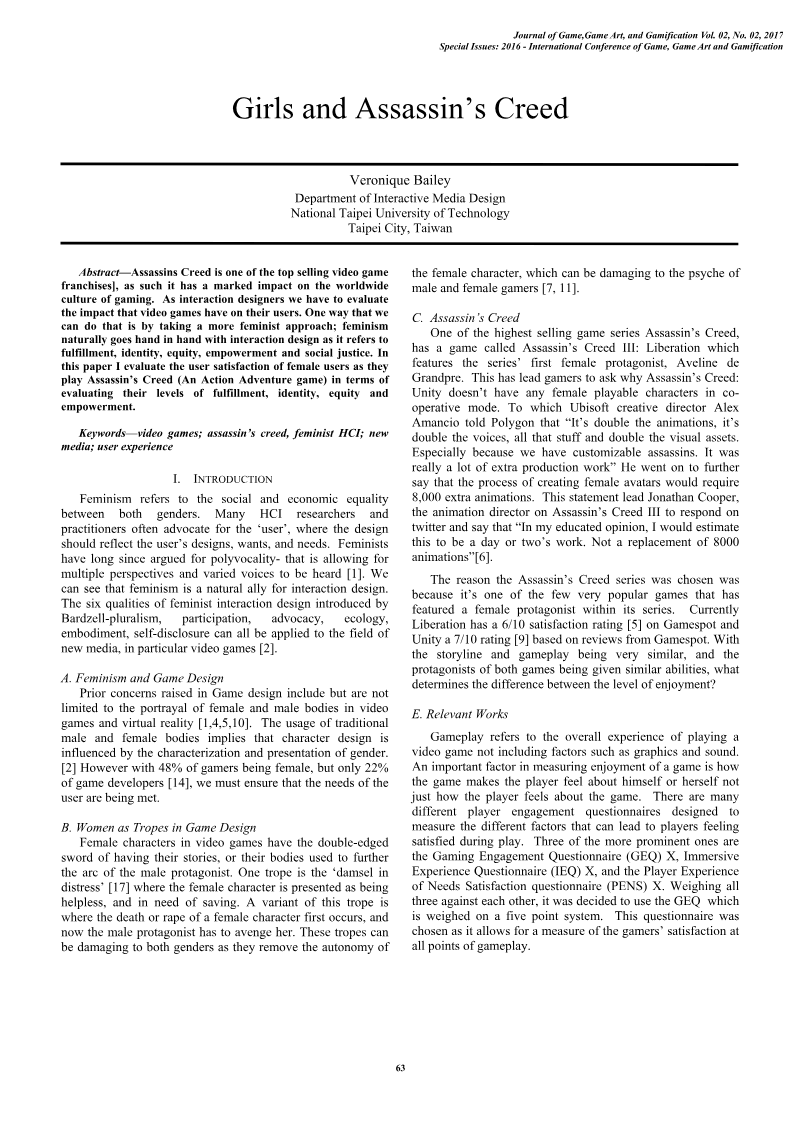
This research evaluates the impact of gender representation in video games through a feminist interaction design lens, specifically examining user satisfaction within the Assassin’s Creed franchise.
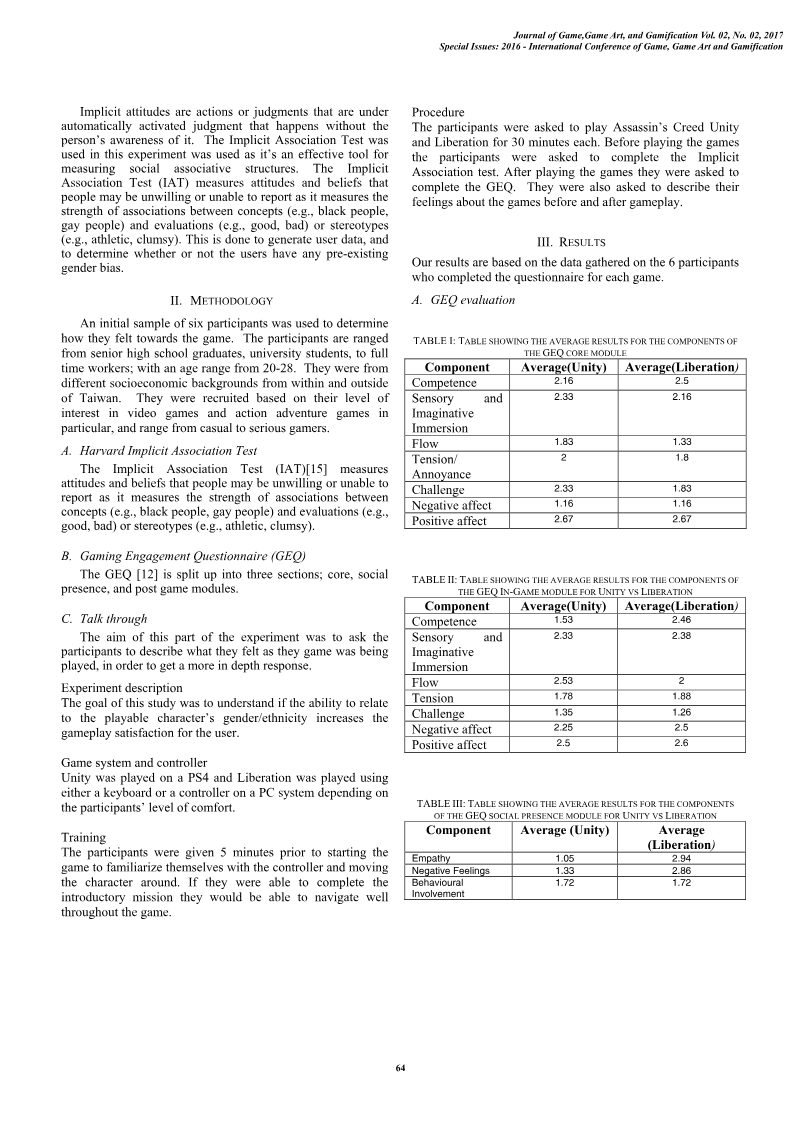
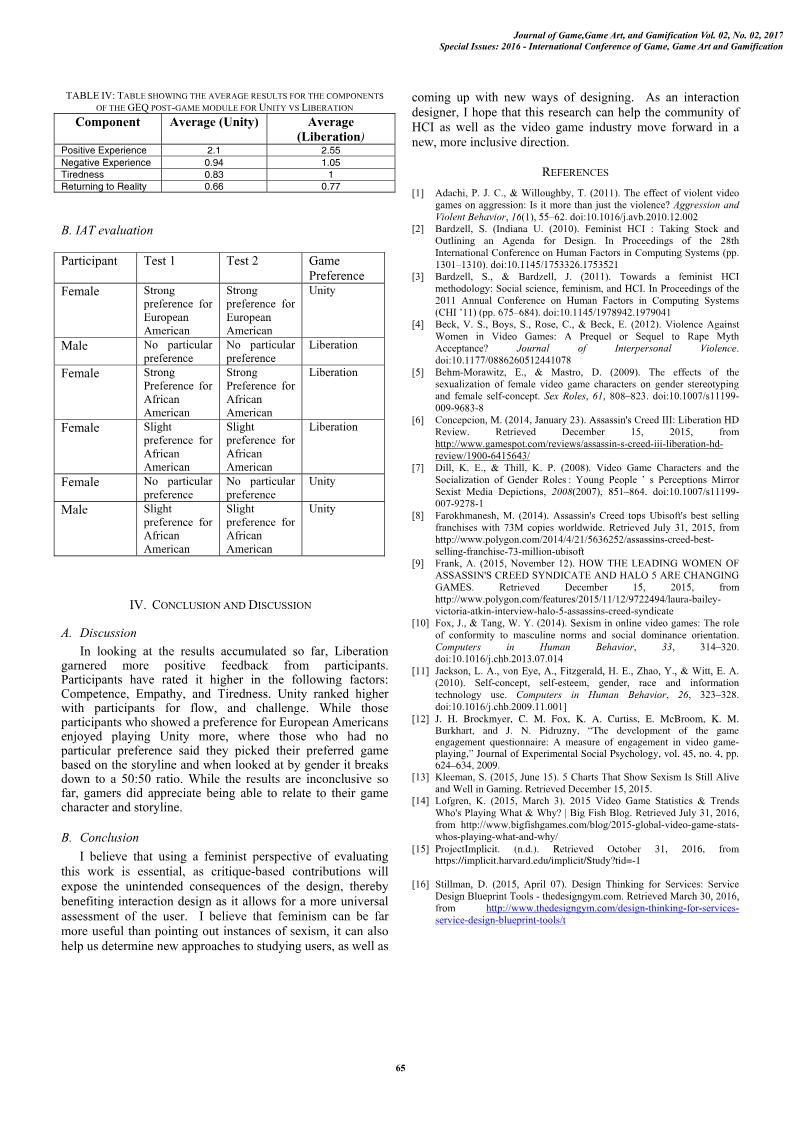
- A comparative study of Assassin’s Creed Liberation (female lead) and Assassin’s Creed Unity (male lead) found that the female-led title scored higher in player competence, empathy, and positive experience.
- Assassin’s Creed Unity outperformed Liberation in metrics related to flow and gameplay challenge, suggesting a trade-off between narrative relatability and mechanical engagement.
- The research utilized a sample of six participants aged 20 to 28 in Taiwan, employing the Harvard Implicit Association Test and the Gaming Engagement Questionnaire to measure user experience.
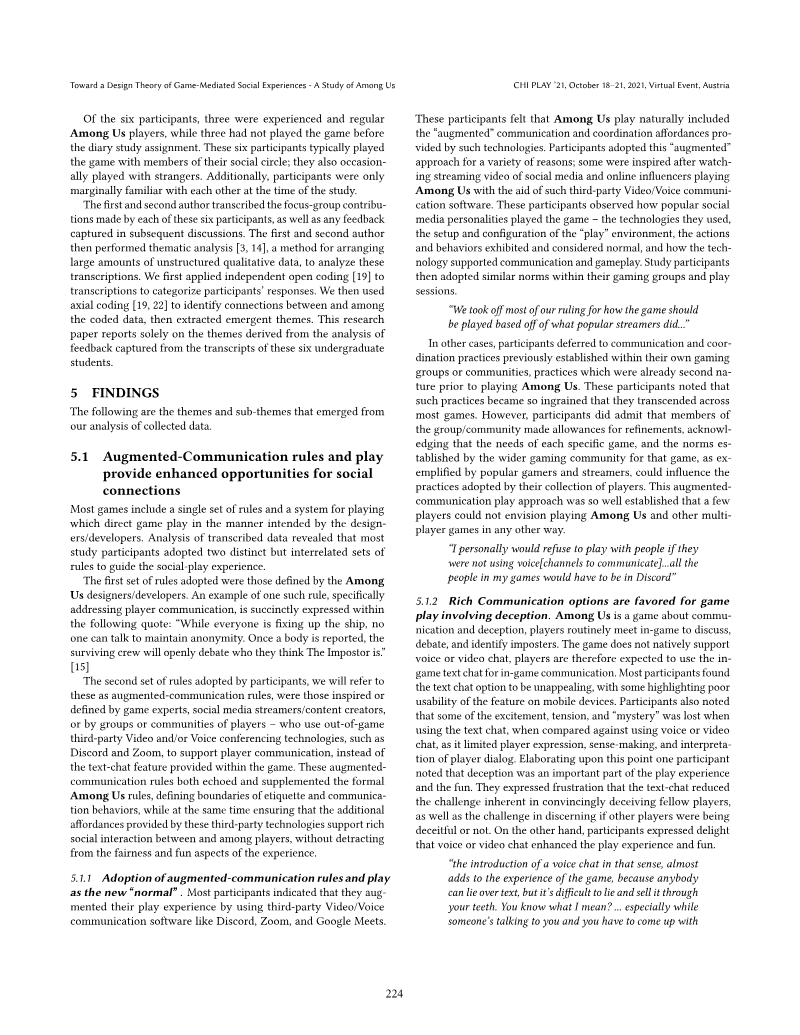
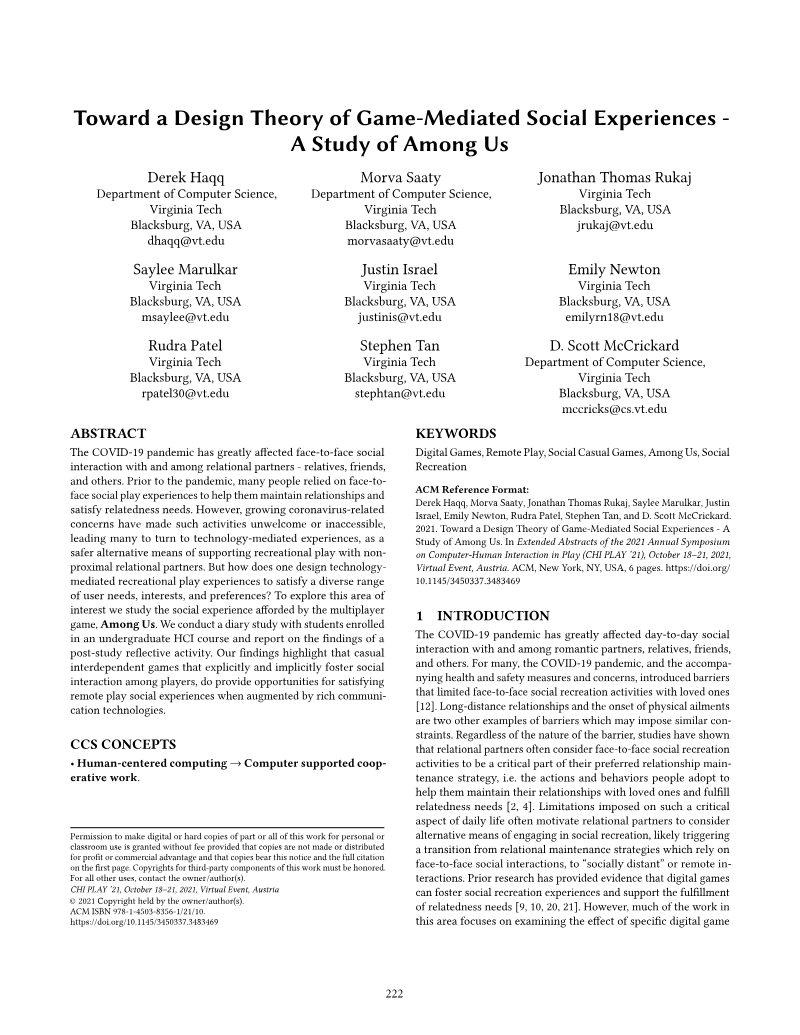
Toward a Design Theory of Game-Mediated Social Experiences: A Study of Among Us
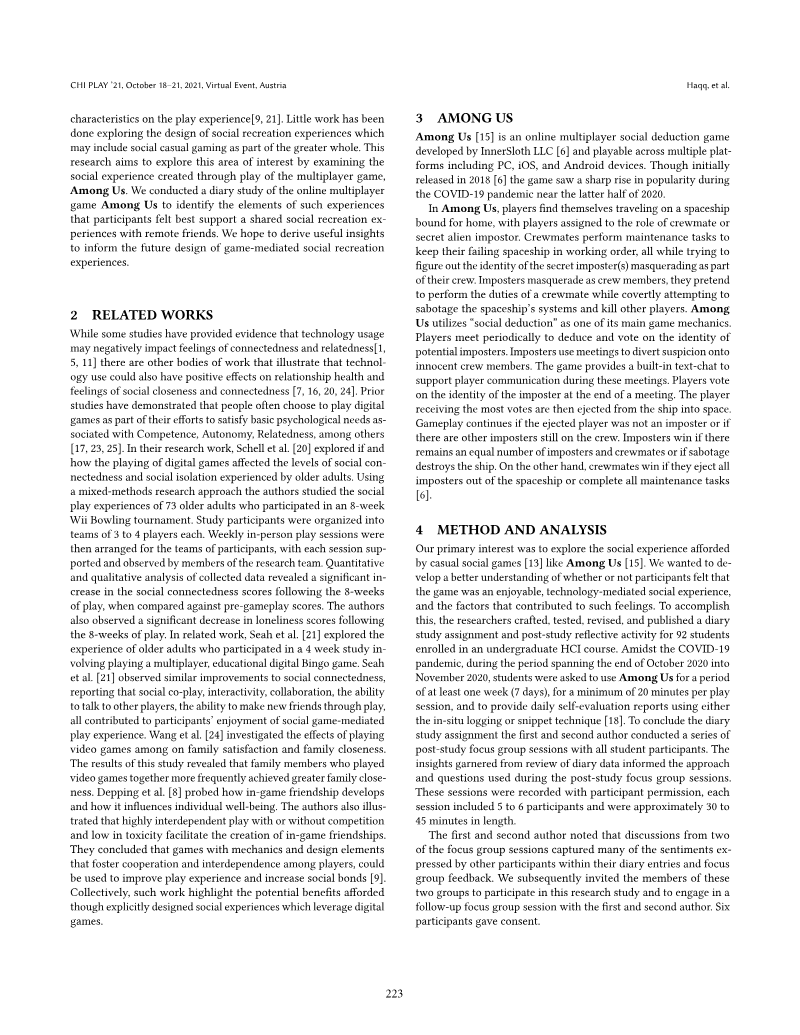
Social deduction games function as vital catalysts for remote human connection by providing a structured environment that facilitates both competitive gameplay and informal social interaction.
- The success of modern social deduction games relies primarily on the integration of third-party communication tools rather than complex native game mechanics.
- Players prioritize social interaction over competitive objectives, often treating in-game tasks as a backdrop for conversation rather than the primary focus of play.
- The 'augmented-communication' model demonstrates that users actively modify game sessions to facilitate deeper interpersonal bonding through external voice and video software.
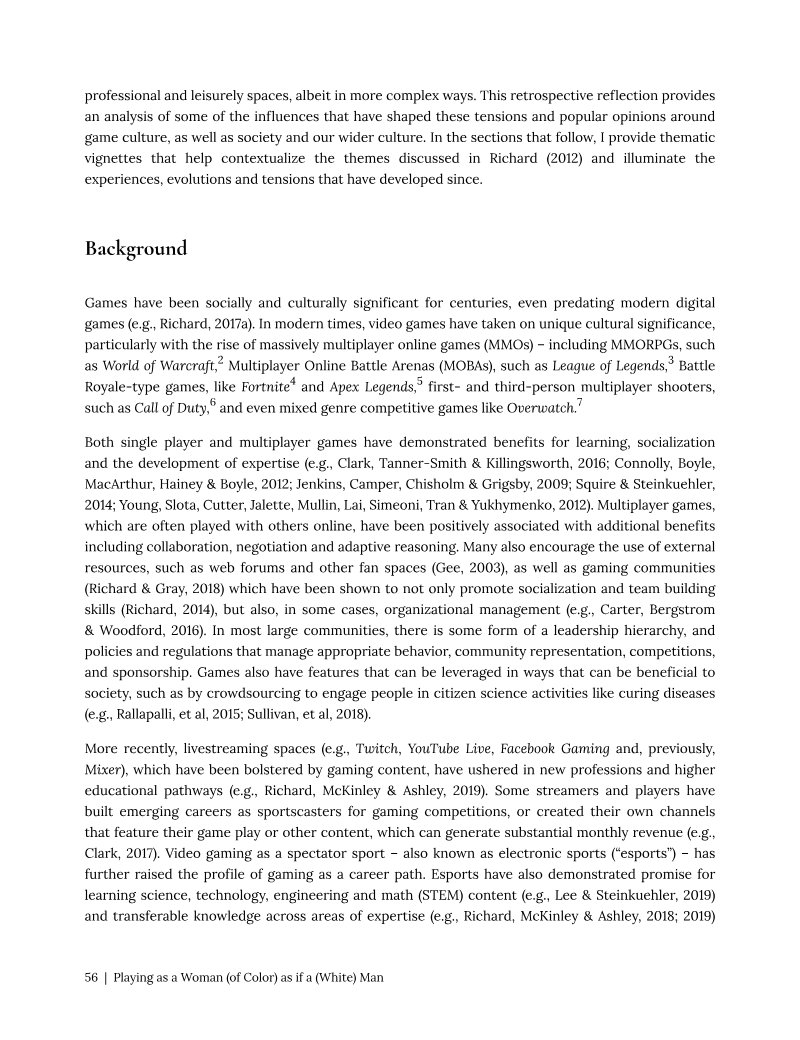

Well Played Retrospective: The Past, Pandemic and Future of Video Games, Value and Meaning
The Well Played project, established in 2003, serves as a foundational platform for the scholarly and critical analysis of video games, bridging the divide between academic theory and practical game design.
- The Well Played project, established in 2003, has transitioned from live gameplay sessions at events like IndieCade and Games for Change into a peer-reviewed journal and book collection focused on the qualitative analysis of player experiences.
- During the COVID-19 pandemic, games functioned as critical 'third places' that facilitated emotional regulation through both hedonic escapism and eudaimonic reflection.
- Digital environments like Fortnite and Spiritfarer provided users with interactive spaces to process complex human emotions such as grief, aging, and social anxiety, often with greater nuance than traditional media.
Reflections on Ludification: Approaching a Conceptual Framework
Ludification functions as a distinct conceptual framework for understanding how computer game structures and attributes increasingly permeate narrative media such as film and television.
- Ludification represents the integration of game architectures into narrative media like film and television, distinct from the behavioristic reward models found in gamification.
- The shift toward ludification necessitates a multidisciplinary analytical approach that moves beyond narrow, incentive-based frameworks to account for complex player motivations and design structures.
- Ludo-interpretation functions as the primary analytical tool, positioning media consumption along a continuum between spontaneous 'paidia' (free play) and disciplined 'ludus' (rule-based play).